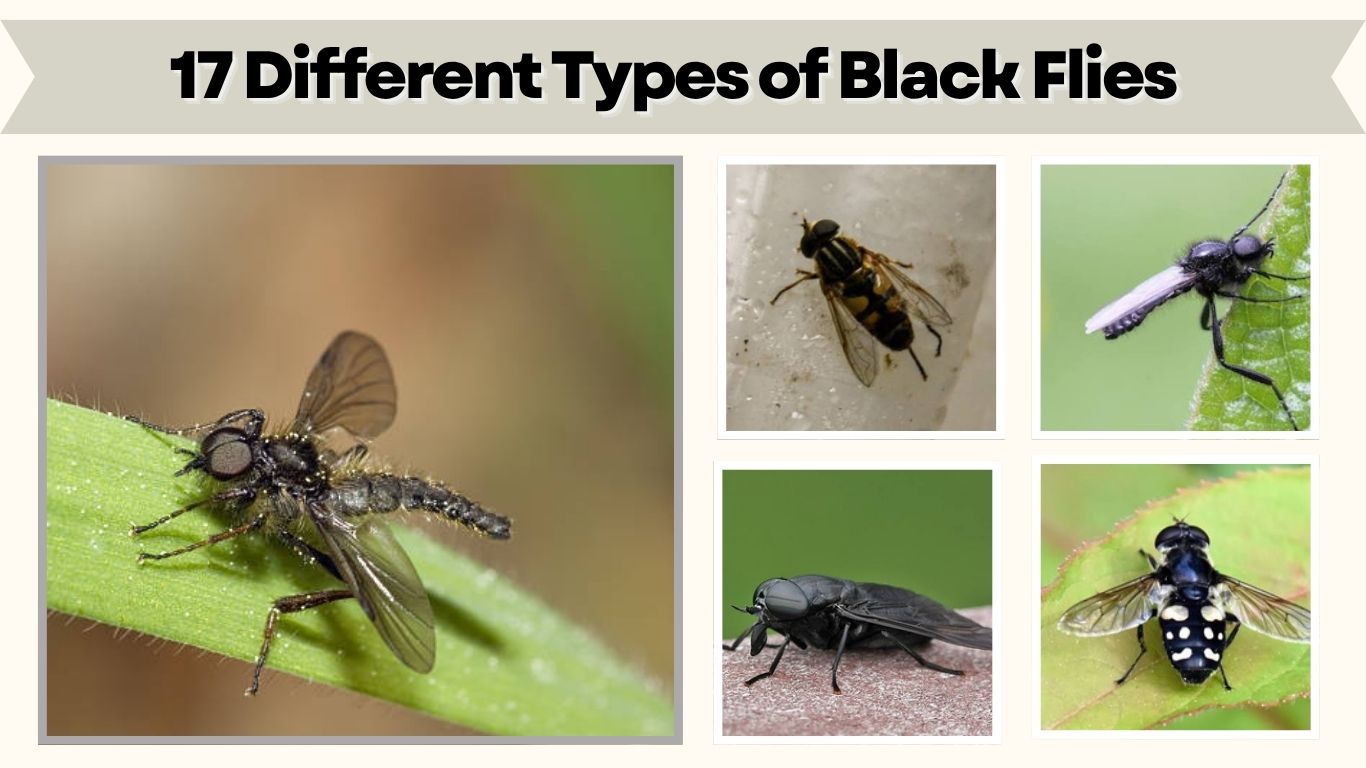
Black flies are small, humpbacked insects commonly found near rivers, streams, forests, wetlands, and other moist environments. Although many species look similar, they can differ in body markings, leg color, size, habitat, and preferred hosts. Female black flies of some species bite humans, birds, livestock, and wildlife to obtain blood for egg development, while males mainly feed on nectar. Their bites may cause pain, itching, redness, and swelling. This guide covers 17 different types of black flies, including their identification features, habitats, feeding behavior, and life cycles, helping readers better understand these tiny but often troublesome insects.
1. Buffalo Gnat
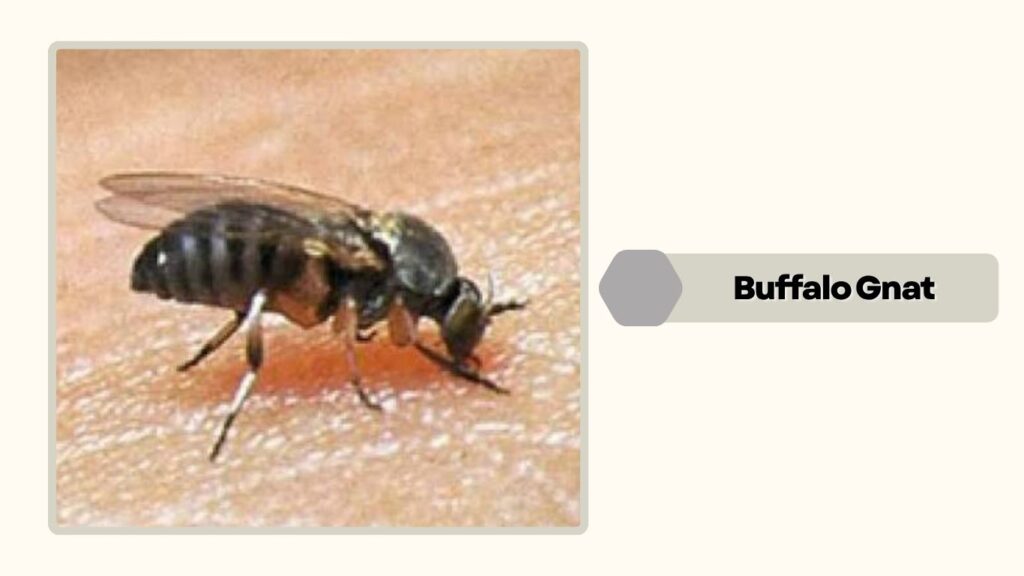
The buffalo gnat is a small, humpbacked black fly belonging to the family Simuliidae. It gets its common name from its rounded thorax, which resembles the hump of a buffalo. These biting flies are commonly found near rivers and streams, where their immature stages develop in clean, fast-moving water.
Identification
- Usually measures about 1.5–5 millimeters long
- Has a small, dark gray or black body
- Features a noticeably rounded, humpbacked thorax
- Possesses broad, transparent wings
- Has short legs and relatively short antennae
- Looks more compact and robust than a mosquito
Habitat and Distribution
Buffalo gnats are strongly associated with flowing freshwater. Their larvae attach themselves to rocks, plants, logs, and other submerged surfaces in rivers and streams. The moving water supplies oxygen and carries tiny organic particles that the larvae collect for food.
Adult buffalo gnats may travel away from their breeding sites and enter gardens, farms, woodland edges, parks, and residential areas. They are often most noticeable during spring and early summer, although their seasonal activity varies by species, temperature, and location.
Feeding and Biting Behavior
Both male and female buffalo gnats consume nectar, plant sap, and other natural sugar sources. However, females of many species also require blood to produce eggs. They may feed on people, livestock, pets, birds, and wild mammals.
Unlike mosquitoes, buffalo gnats do not insert a long, needle-like mouthpart into the skin. The female cuts the skin and feeds on the blood that gathers around the wound. Its bites can cause pain, itching, redness, and swelling, especially when numerous flies attack at once.
Life Cycle and Reproduction
Female buffalo gnats generally deposit their eggs in or near running water. After hatching, the aquatic larvae attach themselves to submerged surfaces and use fan-like mouth structures to filter food particles from the current.
The larvae eventually develop into pupae while remaining underwater. Adult flies emerge from the pupal cases inside air bubbles and rise to the water’s surface. The complete life cycle may take several weeks, depending on the species and environmental conditions.
2. Turkey Gnat
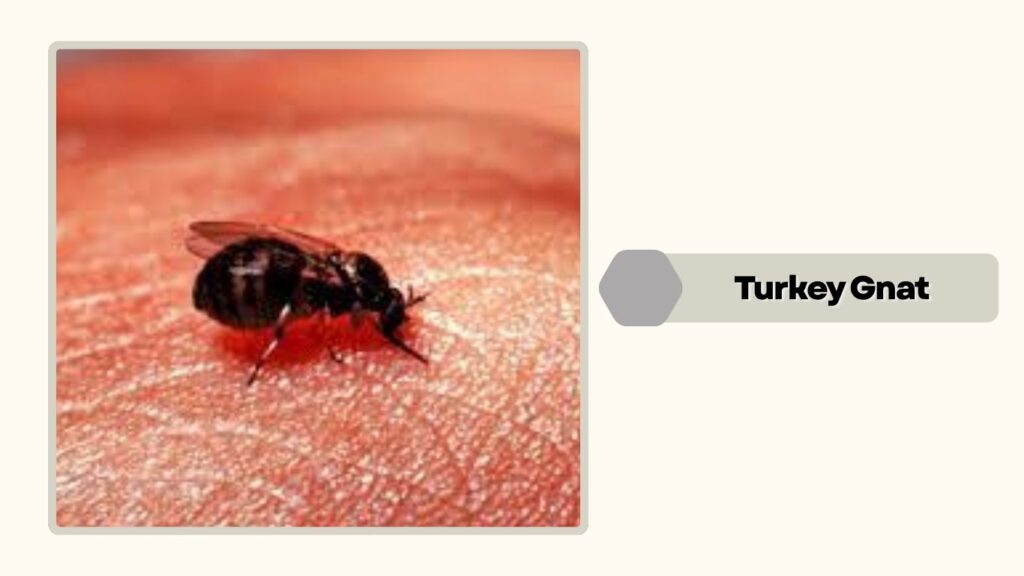
The turkey gnat is a small, blood-feeding black fly known for attacking birds, livestock, wildlife, and humans. It is especially troublesome around poultry farms because large swarms may irritate turkeys and chickens. Like other black flies, its larvae develop in clean, oxygen-rich streams and rivers.
Identification
- Small body measuring approximately 2–5 millimeters
- Dark gray, brownish-black, or black coloration
- Broad, transparent wings
- Short antennae and sturdy legs
- Distinctive hump-shaped thorax
- Compact body that resembles a tiny gnat
Habitat and Distribution
Turkey gnats are most common near flowing freshwater, including creeks, rivers, drainage channels, and spring-fed streams. Their larvae cannot survive well in stagnant water because they depend on currents to bring them oxygen and food.
Adult flies may travel several miles from breeding areas. They often gather around farms, poultry houses, pastures, forests, gardens, and homes located near streams. Populations can become especially noticeable during warm and humid weather.
Feeding and Biting Behavior
Male turkey gnats mainly feed on flower nectar and plant sugars. Females may bite birds and mammals because they need protein from blood to develop their eggs.
The females usually attack exposed skin around the head, neck, ears, and legs. Their bites may cause painful red spots, itching, swelling, and irritation. Large swarms can stress poultry and may interfere with feeding, egg production, and normal behavior.
Life Cycle and Reproduction
Females lay eggs in running water or on wet objects near the water’s surface. After hatching, the larvae attach themselves to rocks, submerged plants, and other solid surfaces.
The larvae filter microscopic food particles from the current before becoming pupae. Adults later emerge from underwater pupal cases and fly to nearby vegetation. Depending on weather and species, several generations may develop in a single year.
3. Window Gnat
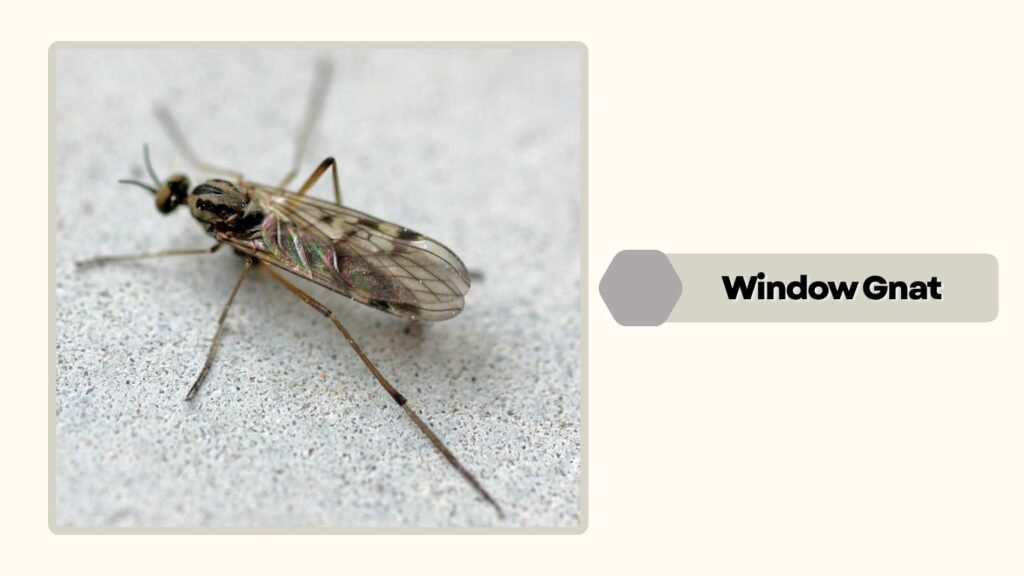
The window gnat is a small black fly that may gather around windows, doors, screens, and other bright areas. It is often noticed indoors after accidentally entering buildings. Most window gnats are harmless, although they may be confused with biting black flies because of their similar dark appearance.
Identification
- Usually measures around 2–6 millimeters long
- Slender or slightly rounded dark body
- Clear or lightly smoky wings
- Relatively long legs compared with many black flies
- Small head with noticeable compound eyes
- Frequently rests on windows or other bright surfaces
Habitat and Distribution
Window gnats are commonly found around damp woodland, gardens, shaded streams, decaying vegetation, and moist soil. Adults are attracted to light, which explains why they often gather on window glass.
They may enter homes through open doors, damaged screens, vents, and small gaps around window frames. Indoor sightings are generally temporary because most species cannot reproduce successfully inside dry buildings.
Feeding and Biting Behavior
Most window gnats feed on nectar, plant fluids, or moisture from decaying organic material. They usually do not seek blood meals and are not considered serious biting pests.
Their main nuisance comes from their tendency to gather around windows in noticeable numbers. Because they are small and dark, homeowners may mistake them for fungus gnats, mosquitoes, drain flies, or biting black flies.
Life Cycle and Reproduction
Female window gnats generally lay eggs in moist outdoor environments where decomposing plant material is available. The larvae feed on fungi, microorganisms, and organic debris.
After completing several larval stages, they pupate in the soil or decaying material. Adults emerge and may be drawn toward artificial lights. Their life cycle is usually faster during warm, humid conditions.
4. Southern Black Fly
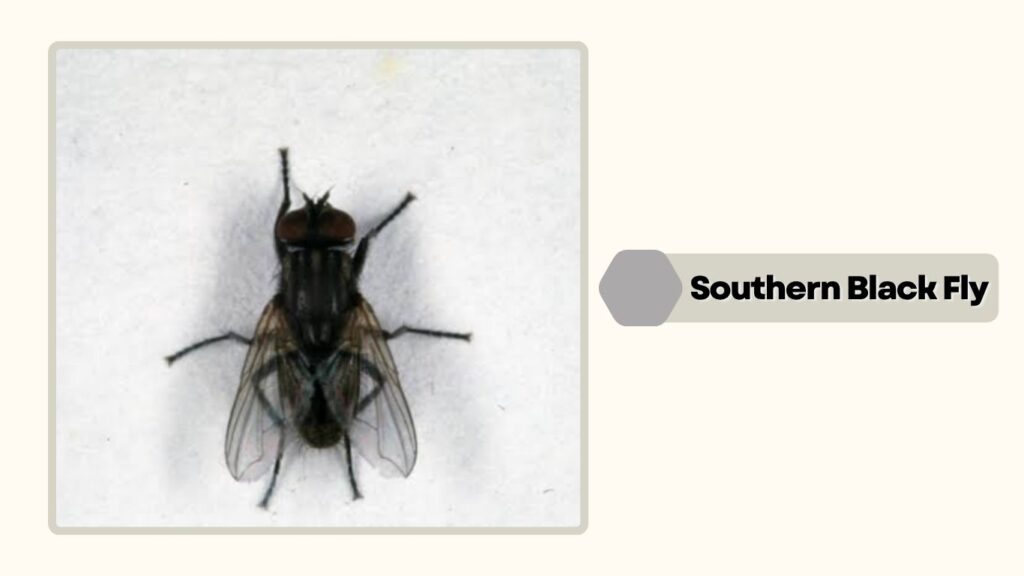
The southern black fly is a small, humpbacked fly commonly found in warm southern regions. It develops in flowing water and may become a serious seasonal nuisance when adults emerge in large numbers. Females of some species bite humans, livestock, birds, and wildlife.
Identification
- Small size, generally between 2 and 5 millimeters
- Dark brown, gray, or black body
- Strongly arched or humpbacked thorax
- Broad, clear wings
- Short antennae and thick legs
- Females possess cutting mouthparts for blood feeding
Habitat and Distribution
Southern black flies breed in rivers, streams, spillways, irrigation channels, and other fast-moving water sources. They are especially abundant where water remains oxygenated and contains submerged vegetation or rocks.
Adults may be encountered in farmland, forests, wetlands, parks, and residential neighborhoods near waterways. Warm temperatures can allow them to remain active for longer periods than black flies living in colder northern regions.
Feeding and Biting Behavior
Adult males consume nectar and other plant-based sugars. Females also use sugar for energy, but many require a blood meal before producing eggs.
These flies often bite around the ears, neck, hairline, arms, and lower legs. A bite may feel sharp and can leave a small bleeding spot. Sensitive individuals may experience itching, redness, swelling, or an allergic reaction.
Life Cycle and Reproduction
Females deposit eggs directly in flowing water or attach them to wet vegetation and rocks. The larvae hatch and anchor themselves to submerged surfaces using specialized structures.
They collect tiny food particles from the current with fan-shaped mouthparts. After pupation, the adults rise to the water’s surface inside small air bubbles. Several generations may occur during a long southern warm season.
5. Northern Black Fly
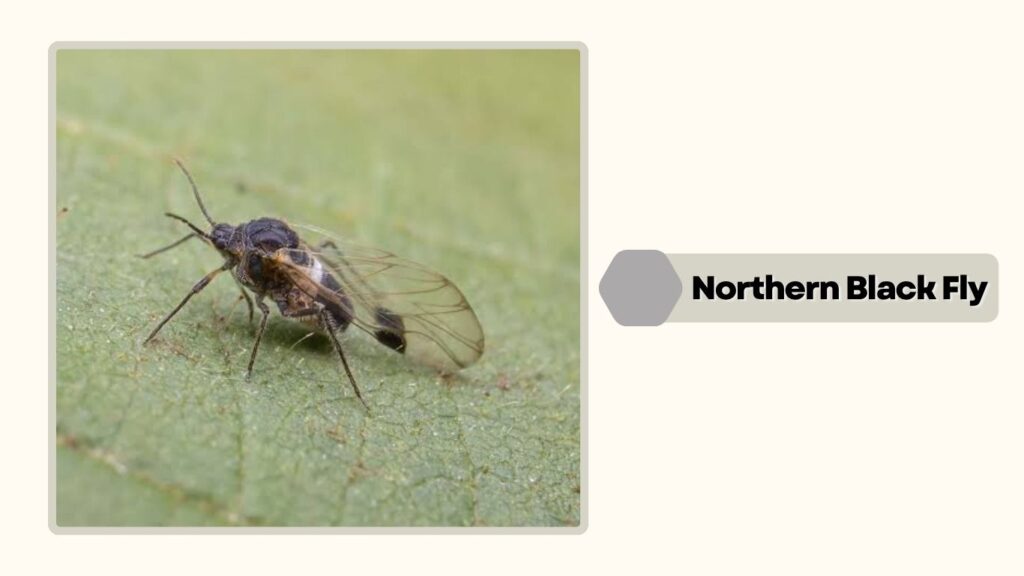
The northern black fly is adapted to cooler climates and is frequently found near rivers, streams, and forested waterways. It can occur in large swarms during spring and early summer. Female northern black flies may bite humans and animals, while males primarily feed on nectar.
Identification
- Usually measures approximately 2–5 millimeters
- Dark gray or glossy black body
- Rounded, hump-shaped thorax
- Short legs and antennae
- Broad wings with visible veins
- Compact appearance compared with mosquitoes
Habitat and Distribution
Northern black flies are widespread in cool temperate and boreal regions. Their larvae develop in cold, clean, rapidly moving water, including mountain streams, forest creeks, and large northern rivers.
Adults may spread into woodlands, campgrounds, hiking trails, farms, and lakeside communities. They are often most active after snowmelt and during periods of high stream flow.
Feeding and Biting Behavior
Males feed on nectar and do not bite. Females of many northern species seek blood from deer, livestock, birds, pets, and humans.
They usually fly during daylight and may swarm around the face and head. Their bites can produce small wounds, itching, swelling, and soreness. Heavy attacks may make outdoor activities uncomfortable, particularly near breeding areas.
Life Cycle and Reproduction
Eggs are laid in or beside moving water. Some species produce eggs that survive cold winter conditions before hatching when temperatures rise.
The larvae attach to submerged rocks, branches, or vegetation and filter food from the current. They later pupate underwater. Adult emergence may occur in large synchronized waves, creating sudden seasonal outbreaks.
6. White-Blotched Black Fly
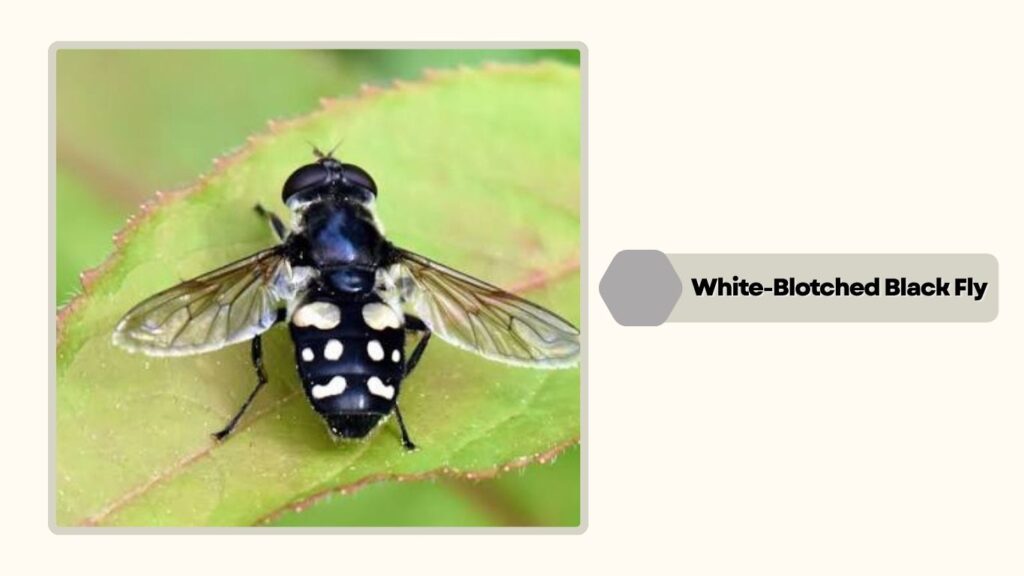
The white-blotched black fly is named for the pale markings or whitish patches visible on parts of its otherwise dark body. These markings can help distinguish it from uniformly black species. It lives near running water, where its larvae complete their development.
Identification
- Small body measuring roughly 2–5 millimeters
- Black or dark gray base coloration
- Pale white or silvery blotches on the body
- Rounded, humpbacked thorax
- Broad, transparent wings
- Short antennae and strong legs
Habitat and Distribution
White-blotched black flies are associated with streams, creeks, and rivers that provide steady currents. Larvae attach to stones, aquatic vegetation, branches, and other objects beneath the water.
Adults may occur in forests, fields, parks, farms, and residential areas near freshwater. Their exact distribution depends on the species, water temperature, oxygen levels, and availability of suitable breeding sites.
Feeding and Biting Behavior
Both sexes use nectar and plant sugars as energy sources. Females of biting species may also feed on the blood of birds or mammals to support egg development.
They are often active during the daytime and may gather around exposed skin. Their bites can create a small painful wound followed by itching or swelling. However, biting intensity varies among species and local populations.
Life Cycle and Reproduction
Females place eggs on wet rocks, submerged plants, or directly in moving water. After hatching, the larvae remain attached to underwater surfaces while filtering organic particles from the current.
The larvae pass through several growth stages before forming underwater pupae. Adults emerge inside bubbles of air and rise to the surface. The entire cycle may be completed within several weeks under favorable conditions.
7. Ornate Black Fly
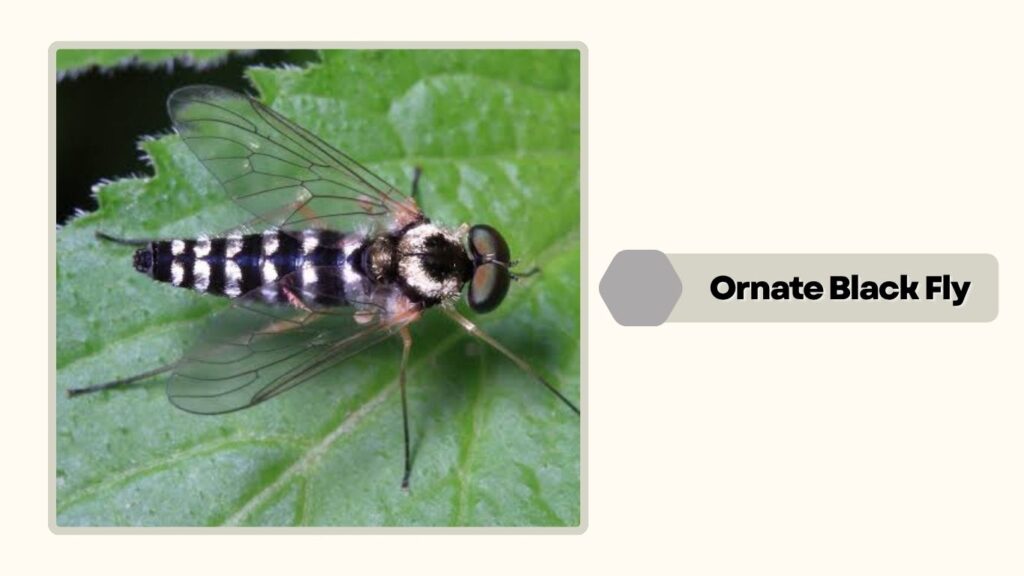
The ornate black fly is recognized by the contrasting patterns and lighter markings on its dark body. Like other members of the black fly family, it has a small, compact shape and a noticeably arched thorax. Its immature stages develop in flowing freshwater, while adults are usually found near vegetation and waterways.
Identification
- Small body measuring about 2–5 millimeters
- Dark gray, brown, or black coloration
- Pale, silvery, or yellowish body markings
- Broad and transparent wings
- Short antennae and sturdy legs
- Rounded, humpbacked thorax
Habitat and Distribution
Ornate black flies live near rivers, creeks, and streams with steady water movement. Their larvae attach to submerged rocks, aquatic plants, branches, and other surfaces where the current remains strong.
Adults may be found in woodland edges, grassy fields, wetlands, parks, and residential areas near flowing water. They are usually more abundant during warm seasons when water conditions support rapid larval development.
Feeding and Biting Behavior
Adult males primarily feed on nectar and plant sugars. Females also consume sugary liquids, but some may take blood meals from birds, livestock, wildlife, or people.
Biting females often target exposed areas such as the neck, ears, arms, and legs. Their bites may cause a sharp sensation followed by redness, itching, or mild swelling. The severity of the reaction depends on individual sensitivity.
Life Cycle and Reproduction
Females deposit eggs in running water or on wet surfaces close to the current. Once hatched, the larvae secure themselves underwater and filter microscopic food particles from passing water.
After several growth stages, the larvae form pupae attached to submerged objects. Adults emerge from the pupal cases, rise through the water, and fly away. Multiple generations may develop during favorable weather.
8. Hairy Black Fly
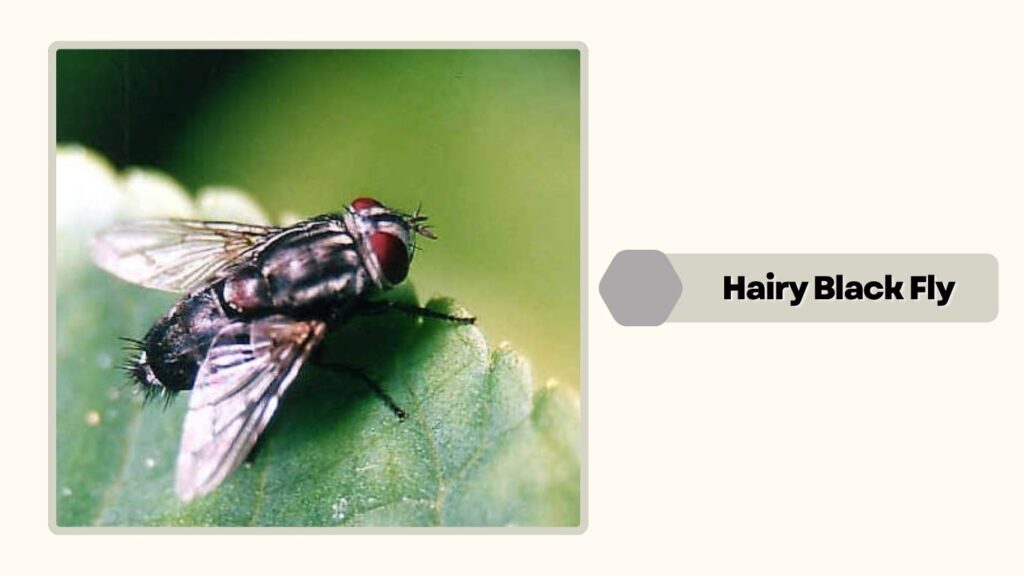
The hairy black fly gets its common name from the fine hairs covering parts of its body, legs, or thorax. These hairs may be difficult to see without close examination, but they help distinguish the fly from smoother-bodied species. It is commonly associated with clean, fast-flowing freshwater.
Identification
- Body length of approximately 2–5 millimeters
- Dark brown, gray, or black body
- Fine hairs on the thorax, abdomen, or legs
- Compact and humpbacked appearance
- Broad, clear wings
- Short antennae and strong legs
Habitat and Distribution
Hairy black flies breed in streams, rivers, and channels with well-oxygenated water. Their larvae attach to underwater rocks, vegetation, logs, and artificial structures.
Adults may occur in forests, pastures, gardens, and communities located near waterways. They generally rest on leaves and shaded vegetation when they are not feeding or searching for mates.
Feeding and Biting Behavior
Males survive on flower nectar and other plant-based sugars. Females of some species require blood before producing eggs and may feed on mammals or birds.
The bite can feel painful because the female cuts the skin rather than piercing it with a needle-like mouthpart. It may leave a small red mark that becomes itchy or swollen. Heavy populations can be especially irritating to livestock and outdoor workers.
Life Cycle and Reproduction
Eggs are laid in clusters on wet rocks, plants, or other surfaces exposed to flowing water. The larvae hatch and attach themselves to submerged objects using a specialized structure at the end of the body.
They collect food from the current before pupating underwater. The adults later escape from the pupal cases and travel to the surface inside air bubbles. Their development rate depends on temperature and water quality.
9. Giant Black Fly
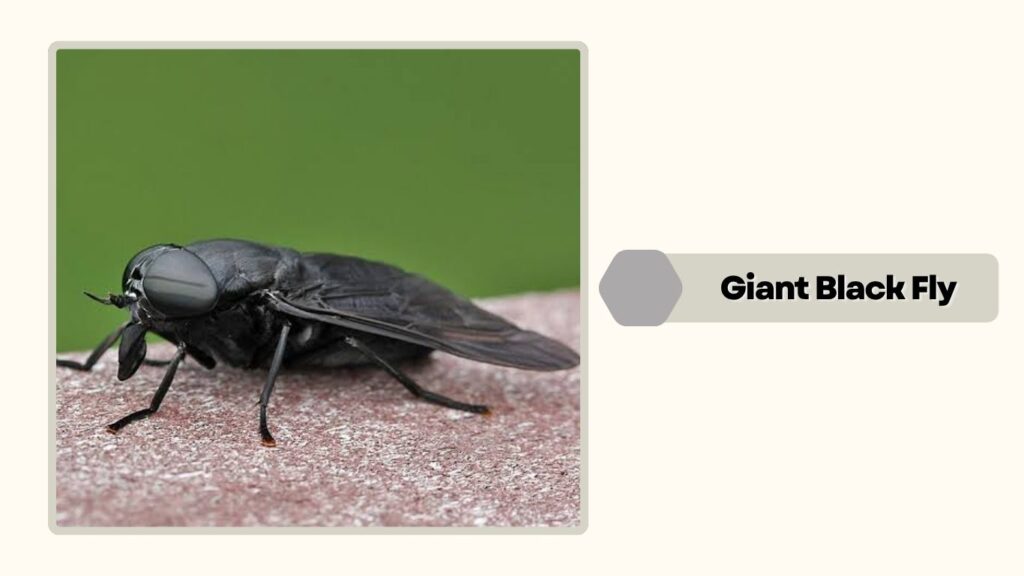
The giant black fly is larger than many other members of the black fly family, although it is still much smaller than a typical housefly. Its sturdy body, broad wings, and pronounced thoracic hump give it a powerful appearance. It usually occurs close to rivers and larger streams.
Identification
- Larger body than most black flies
- Usually measures around 4–7 millimeters
- Dark gray, brownish-black, or black coloration
- Strongly rounded thorax
- Broad, transparent wings
- Thick legs and compact body shape
Habitat and Distribution
Giant black flies are usually associated with rivers, large creeks, and other waterways that provide strong currents. Their larvae need oxygen-rich water and suitable submerged surfaces for attachment.
Adults may travel into nearby forests, farms, parks, and open countryside. They can also appear around homes situated close to major streams or rivers. Activity is often highest during warm, calm daylight hours.
Feeding and Biting Behavior
Male giant black flies feed on nectar and do not bite. Females may consume blood from livestock, wildlife, birds, or humans to obtain nutrients needed for egg development.
Because of their larger size, their bites may feel more noticeable than those of smaller black flies. A bite can produce a tiny bleeding wound, itching, pain, and localized swelling. Repeated bites may cause significant discomfort.
Life Cycle and Reproduction
Females lay eggs in flowing water or attach them to submerged and partially submerged objects. The larvae remain anchored in the current and use fan-shaped mouthparts to collect tiny particles of food.
After completing their larval growth, they form pupae underwater. Adults emerge, float upward in air bubbles, and quickly become capable of flight. The number of annual generations varies according to climate and water temperature.
10. Banded-Leg Black Fly
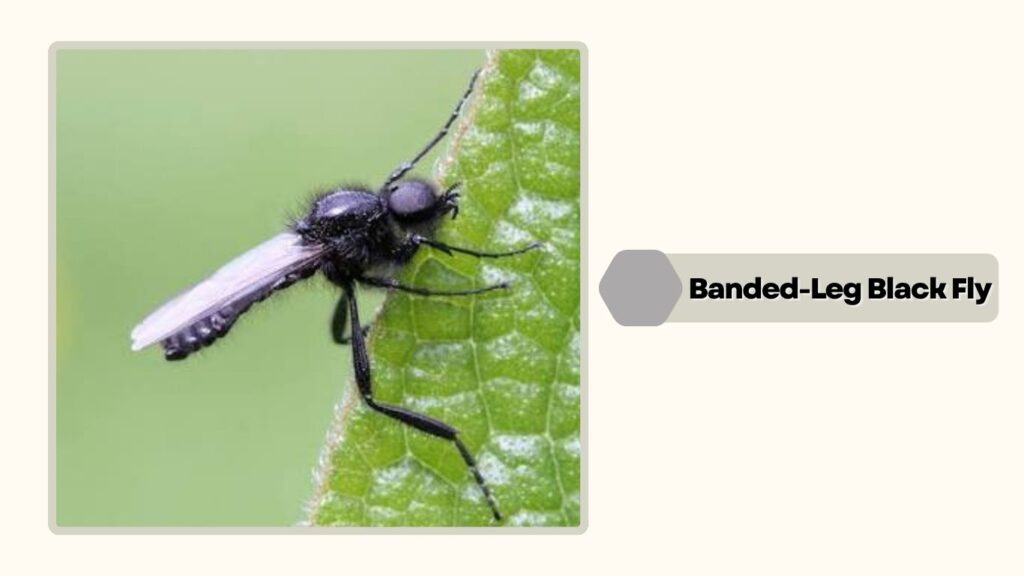
The banded-leg black fly is named for the contrasting light and dark markings visible on its legs. These bands provide a useful identification feature when the insect is viewed closely. It has the typical compact body and humpbacked thorax seen in other black flies.
Identification
- Small body measuring around 2–5 millimeters
- Black, dark brown, or gray body
- Pale bands or rings on the legs
- Short antennae
- Broad, clear wings
- Rounded and strongly arched thorax
Habitat and Distribution
Banded-leg black flies develop in clean rivers, creeks, and streams. The larvae attach to underwater stones, leaves, stems, and woody debris where the current carries oxygen and food.
Adults are often seen in shaded vegetation, woodland clearings, farms, and gardens near water. Their populations may increase after periods of rainfall that raise stream levels and improve breeding conditions.
Feeding and Biting Behavior
Males mainly feed on nectar, while females may require blood for egg production. Depending on the species, females may target birds, mammals, livestock, or humans.
They generally bite during the daytime and may swarm around the head, neck, and lower legs. The bite may cause an immediate stinging feeling followed by itching and redness. Most reactions remain mild, although some people develop stronger swelling.
Life Cycle and Reproduction
Females place their eggs directly in flowing water or on wet materials beside it. The larvae hatch and use silk and attachment structures to remain fixed against the current.
They filter microorganisms and organic particles from the water until they are ready to pupate. Adults emerge underwater and rise to the surface. Several generations may occur during a long warm season.
11. Yellow-Legged Black Fly
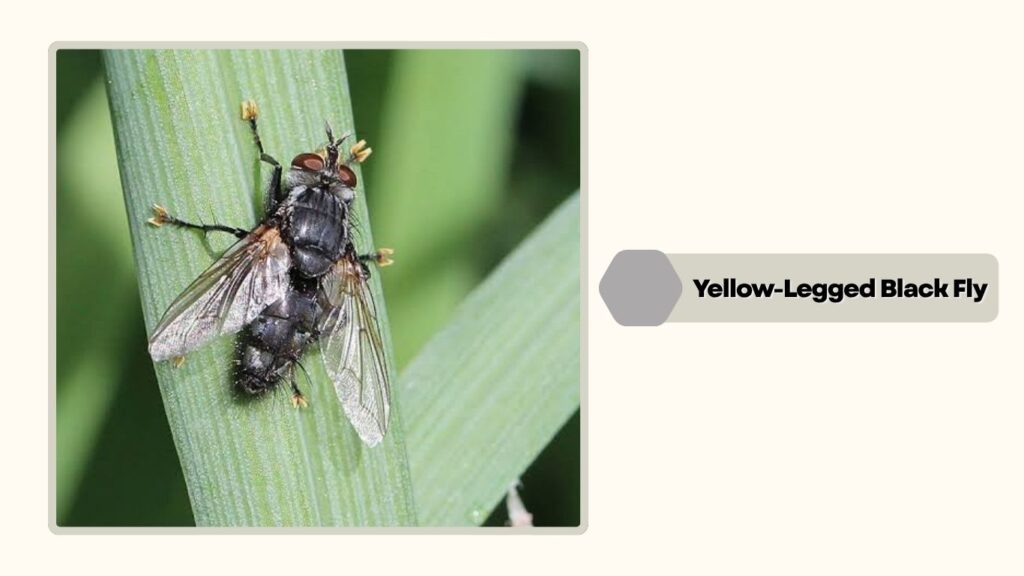
The yellow-legged black fly is distinguished by the yellowish or pale coloration on sections of its legs. Its body remains mostly dark, creating a noticeable contrast. It is a small aquatic-breeding fly that spends its larval and pupal stages in running water.
Identification
- Body length of approximately 2–5 millimeters
- Dark gray, brown, or black body
- Yellowish or pale sections on the legs
- Broad and transparent wings
- Short antennae
- Compact body with a rounded thorax
Habitat and Distribution
Yellow-legged black flies are found near rivers, streams, and spring-fed creeks. Their larvae require constant water movement and often attach to aquatic vegetation, rocks, and submerged branches.
Adults may spread into meadows, forests, farms, trails, and residential areas surrounding the breeding water. They are most noticeable during seasonal emergence periods, particularly in spring and early summer.
Feeding and Biting Behavior
Adult males feed on flower nectar and other sources of natural sugar. Females may also consume nectar but sometimes require a blood meal to complete egg development.
Biting females can attack people, pets, birds, and livestock. They commonly target exposed skin and may leave a painful, itchy spot. Their saliva can cause redness and swelling around the wound.
Life Cycle and Reproduction
The female lays eggs on wet surfaces or releases them into moving water. The larvae hatch and attach themselves to stable underwater objects, where they feed by filtering particles from the current.
When fully developed, they create pupal cases on submerged surfaces. The adult fly emerges underwater, reaches the surface within an air bubble, and begins its terrestrial stage. Warm temperatures can shorten the development period.
12. River Black Fly
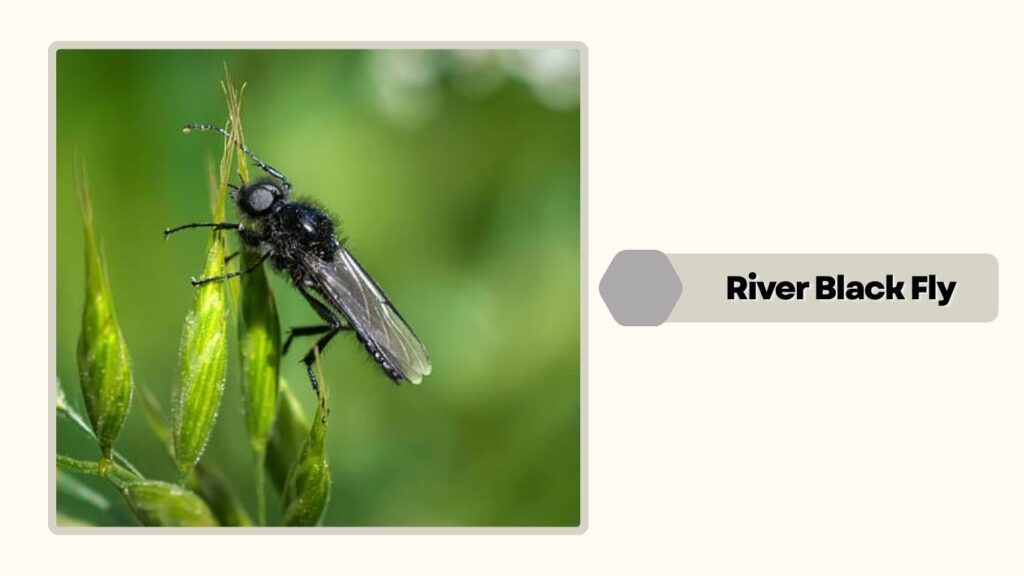
The river black fly is closely associated with rivers and other steadily flowing freshwater habitats. Its larvae depend on moving water for oxygen and food, while the adults live around nearby vegetation, farms, forests, and residential areas. Some females may bite humans or animals when they require blood for egg development.
Identification
- Small body measuring about 2–5 millimeters
- Dark gray, brownish-black, or black coloration
- Broad, transparent wings
- Short antennae and sturdy legs
- Rounded, hump-shaped thorax
- Compact body without the long legs of a mosquito
Habitat and Distribution
River black flies breed in rivers, creeks, spillways, and channels where the water flows continuously. Their larvae attach themselves to rocks, branches, aquatic plants, and other submerged surfaces.
Adults are commonly found along riverbanks, wooded trails, agricultural fields, parks, and homes near waterways. They may travel away from the river while searching for nectar, mates, or suitable hosts.
Feeding and Biting Behavior
Male river black flies feed mainly on nectar and plant sugars. Females also use sugary food for energy, but many species need a blood meal before producing eggs.
Biting females may target humans, livestock, birds, and wildlife. They often attack exposed areas such as the ears, neck, arms, and legs. Their bites can cause a sharp sting, redness, itching, and localized swelling.
Life Cycle and Reproduction
Females lay their eggs directly in moving water or attach them to wet rocks and vegetation. After hatching, the larvae anchor themselves underwater and collect tiny organic particles from the current.
The larvae pass through several stages before becoming pupae. Adults emerge from the water in small air bubbles and quickly fly toward nearby vegetation. Several generations may develop during favorable weather.
13. Marsh Black Fly
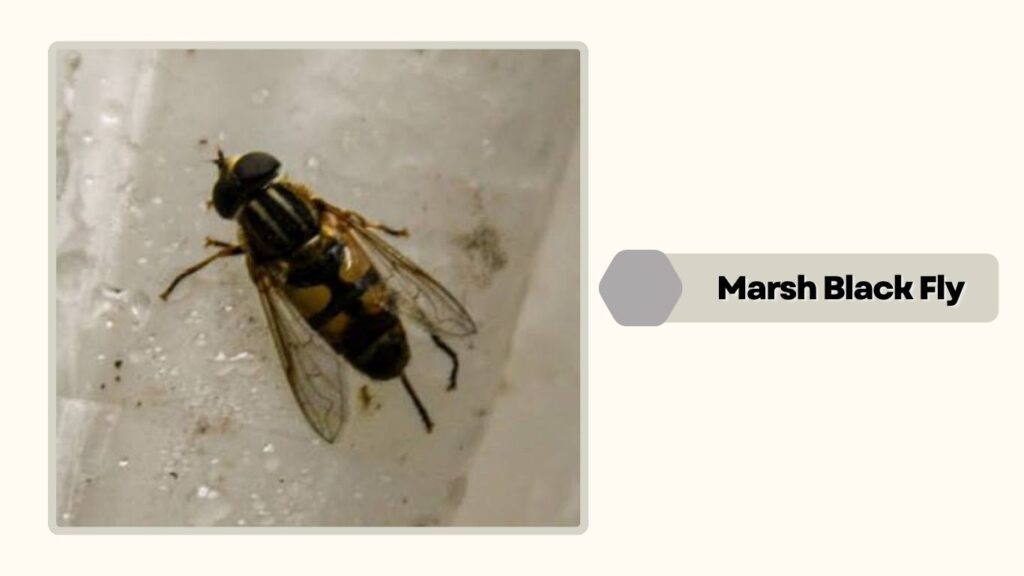
The marsh black fly is often encountered around wetlands, marsh edges, floodplains, and slow-moving waterways connected to faster streams. Although black fly larvae require flowing water, adults may spread into nearby marshy areas where moisture, vegetation, and animal hosts are abundant.
Identification
- Usually measures between 2 and 5 millimeters
- Dark gray or black compact body
- Broad, clear or slightly smoky wings
- Short legs and antennae
- Distinctive rounded thorax
- May have lighter markings on the abdomen or legs
Habitat and Distribution
Marsh black flies are commonly found around wetlands supplied by streams, drainage channels, and flowing outlets. Their larvae develop where water movement is strong enough to provide oxygen.
Adults rest among reeds, grasses, shrubs, and other dense marsh vegetation. They may also move into nearby farms, gardens, woodland edges, and residential areas, especially during periods of high population growth.
Feeding and Biting Behavior
Both males and females feed on nectar and plant sugars. Females of some species also take blood from birds, mammals, or people before laying eggs.
Marsh environments often support large numbers of birds and other animals, giving females many potential hosts. Their bites may cause small bleeding spots, itching, redness, and swelling. Activity is often greatest during calm mornings and evenings.
Life Cycle and Reproduction
Females place eggs in flowing sections of marsh channels, streams, and drainage systems. The larvae attach to submerged plants, stones, or debris and filter food from the passing water.
Once fully grown, they form pupae underwater. Adult flies emerge and rise to the surface before moving into surrounding vegetation. Warm, moist conditions may support several generations in a year.
14. Woodland Black Fly
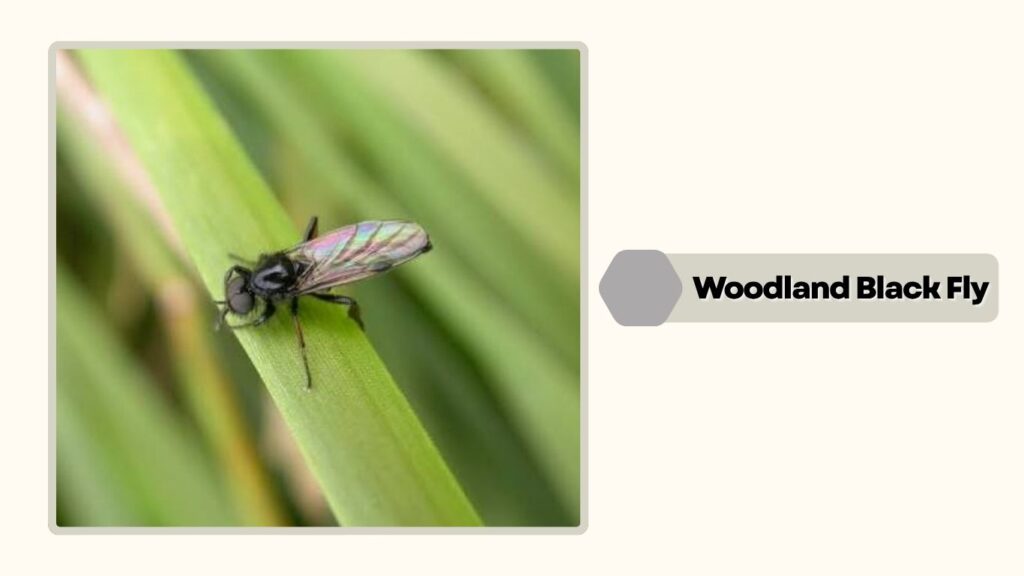
The woodland black fly is commonly found in shaded forests near streams and rivers. Adults may gather along hiking trails, campsites, and wooded clearings, particularly during spring and early summer. Females of biting species can become a nuisance to people and animals spending time outdoors.
Identification
- Small size of approximately 2–5 millimeters
- Dark brown, gray, or black body
- Broad and transparent wings
- Short, sturdy legs
- Compact body with a raised thorax
- Often seen flying around the head and upper body
Habitat and Distribution
Woodland black flies breed in forest streams, creeks, and small rivers with clean, flowing water. The larvae attach themselves to submerged leaves, twigs, roots, rocks, and aquatic vegetation.
Adults prefer cool, shaded, and humid environments. They are frequently encountered in forests, wooded parks, camping areas, and trails located near their aquatic breeding sites.
Feeding and Biting Behavior
Male woodland black flies feed on flower nectar and plant fluids. Females may also feed on nectar, but some need blood to mature their eggs.
They may swarm around walkers, campers, wildlife, and domestic animals. Bites are commonly found around the scalp, ears, neck, wrists, and ankles. The affected skin may become itchy, tender, red, or swollen.
Life Cycle and Reproduction
Eggs are laid in streams or on wet objects close to flowing water. Larvae remain attached to submerged surfaces and use specialized mouth fans to collect microscopic food.
After several larval stages, they pupate underwater. Adults emerge in air bubbles and move toward shaded forest vegetation. Seasonal emergence may occur in large waves when temperature and stream conditions are suitable.
15. Bird Black Fly
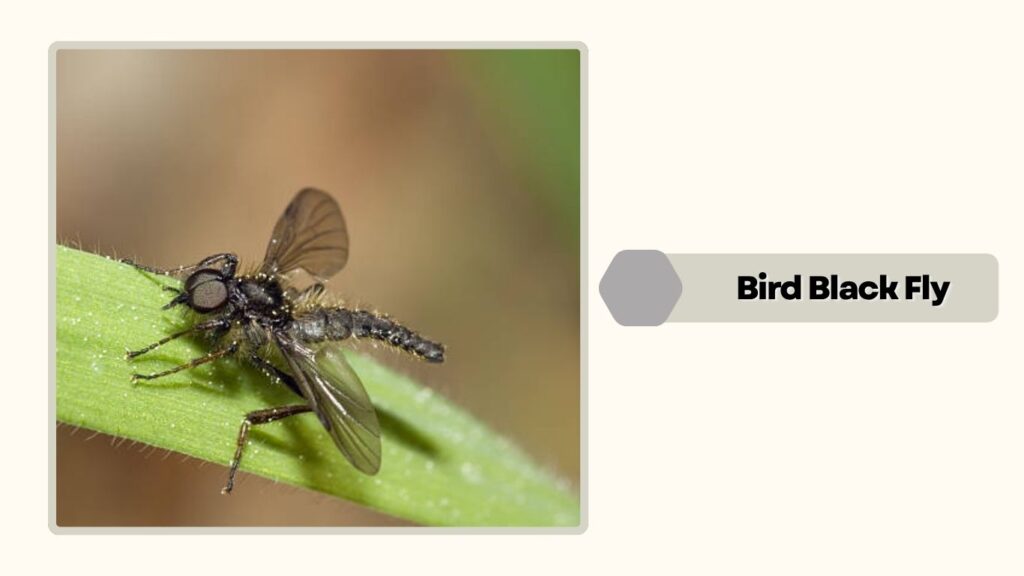
The bird black fly is a general name used for black flies that primarily feed on birds. These flies may attack poultry, songbirds, waterfowl, and other wild or domestic bird species. Heavy infestations can cause irritation and stress, particularly around farms and bird nesting areas.
Identification
- Small body measuring approximately 2–4 millimeters
- Dark gray, brown, or black coloration
- Humpbacked thorax
- Broad, clear wings
- Short antennae and strong legs
- Females have mouthparts adapted for cutting skin
Habitat and Distribution
Bird black flies develop in rivers, creeks, streams, and other areas of moving freshwater. Adults may gather near poultry houses, wetlands, forests, roosting areas, and bird nesting sites.
They are more common in locations where both suitable flowing water and large bird populations are present. Adults may travel several miles in search of hosts.
Feeding and Biting Behavior
Males feed on nectar and do not take blood. Females of bird-feeding species seek blood from areas with limited feather coverage, including around the eyes, head, neck, and legs.
Large numbers of bites may cause birds to become restless, stop feeding, or leave their nests. Severe attacks can contribute to blood loss and breathing difficulties when flies enter the nostrils or other sensitive areas.
Life Cycle and Reproduction
Females lay eggs in moving water after obtaining a blood meal. The larvae attach to underwater rocks, plants, or debris and feed on microscopic particles carried by the current.
They eventually pupate beneath the water. Adults emerge, mate, and search for nectar or bird hosts. The life cycle can repeat several times during warm months.
16. Deer Black Fly
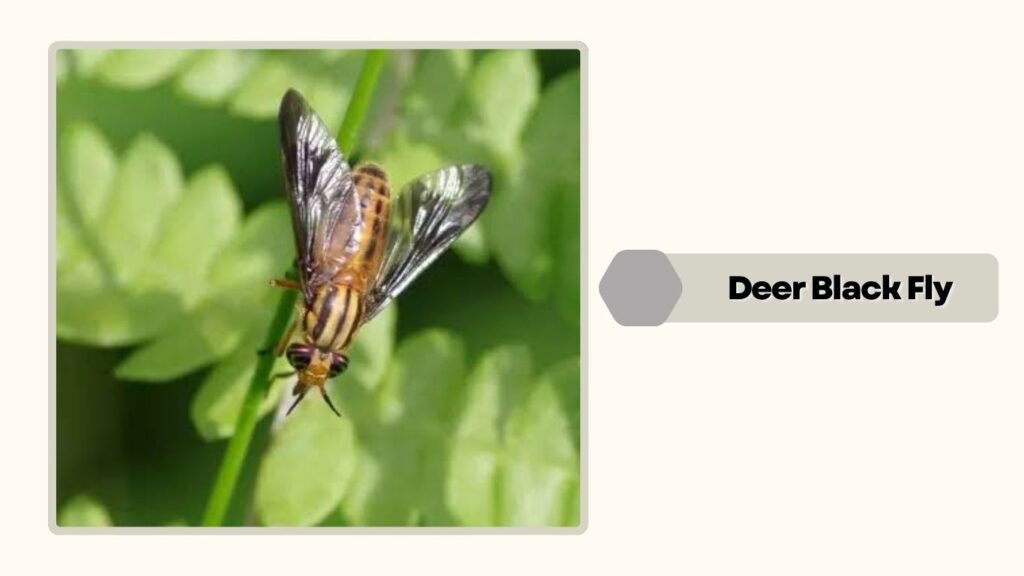
The deer black fly is known for feeding on deer and other large mammals. It is commonly found in forests, wetlands, and rural areas near rivers or streams. Although deer may be a preferred host, females can also bite livestock, pets, wildlife, and humans.
Identification
- Small body around 2–5 millimeters long
- Dark brown, gray, or black coloration
- Rounded, humpbacked thorax
- Broad and transparent wings
- Short legs and antennae
- Compact shape that appears stockier than a mosquito
Habitat and Distribution
Deer black flies breed in clean, flowing rivers, forest creeks, and mountain streams. Adults move into wooded habitats, meadows, deer trails, farms, and parks in search of food and hosts.
They are often abundant in areas with healthy deer populations and nearby freshwater. Seasonal activity is usually strongest during spring and early summer.
Feeding and Biting Behavior
Male deer black flies feed on nectar, while females may take blood to obtain protein for egg production. They can detect movement, body heat, and carbon dioxide from potential hosts.
Females may bite around the head, neck, ears, and legs. The bite can feel sharp and may continue bleeding briefly. Itching, redness, and swelling can develop afterward.
Life Cycle and Reproduction
After feeding, females deposit eggs in or near moving water. The larvae attach to submerged rocks, vegetation, and wood while filtering tiny food particles.
Larvae eventually form pupal cases beneath the water. Adults emerge and rise to the surface inside air bubbles. Their development can be rapid when water temperature and food availability are favorable.
17. Arctic Black Fly
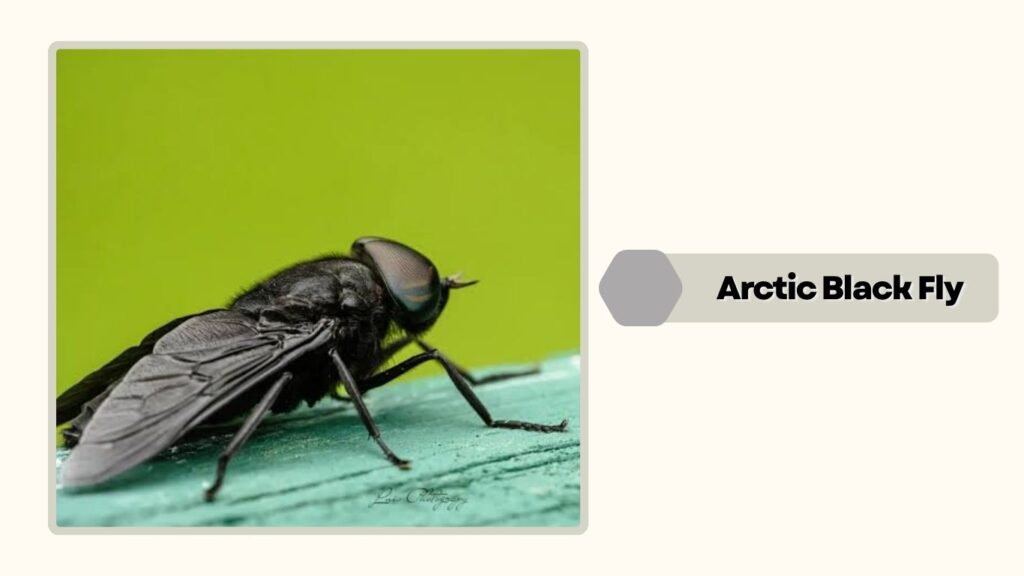
The Arctic black fly is adapted to cold northern environments and can survive in regions with short summers and long winters. During the warmer months, adults may emerge in enormous numbers near tundra rivers and streams, creating intense biting conditions for wildlife and people.
Identification
- Small body measuring around 2–5 millimeters
- Dark gray, brownish-black, or black body
- Dense body hairs that may help in cool conditions
- Broad, transparent wings
- Short legs and antennae
- Prominent hump-shaped thorax
Habitat and Distribution
Arctic black flies occur in northern tundra, boreal forest, and subarctic regions. Their larvae develop in cold rivers, snowmelt streams, and fast-flowing channels.
Adults are found around tundra vegetation, lakeshores, river valleys, wildlife migration routes, and northern settlements. Their activity is concentrated in the brief summer season when temperatures rise above freezing.
Feeding and Biting Behavior
Males feed on nectar from available northern flowers. Females may seek blood from caribou, reindeer, birds, other mammals, and humans.
Large swarms can surround animals and repeatedly attack exposed skin. Bites may cause pain, bleeding, itching, and swelling. Heavy fly pressure can disrupt feeding, resting, and migration behavior in wildlife.
Life Cycle and Reproduction
Females lay eggs in cold, flowing water. Depending on the species, eggs or larvae may remain dormant through winter and continue developing after the spring thaw.
The larvae attach to submerged surfaces and feed during the short warm season. They pupate underwater before adults emerge rapidly and often in synchronized groups. This allows the flies to complete their life cycle before cold conditions return.
FAQs
1. Are all black flies dangerous to humans?
No, not all black flies are dangerous. Many species feed only on nectar and plant sugars, while females of some species bite humans or animals. Their bites are usually painful and itchy but are rarely serious unless a person experiences a strong allergic reaction or receives many bites.
2. Where do black flies usually live?
Black flies are commonly found near clean, fast-flowing rivers, creeks, and streams. Their larvae develop underwater by attaching to rocks, plants, and submerged debris. Adult flies may travel into nearby forests, farms, gardens, parks, and residential areas while searching for nectar or blood hosts.
3. Why do black fly bites become swollen?
Black fly bites swell because the female cuts the skin and releases saliva that helps prevent blood from clotting. The immune system reacts to this saliva, causing redness, itching, soreness, and swelling. Reactions may be stronger in sensitive people or after multiple bites.
4. What time of year are black flies most active?
Black flies are generally most active during spring and early summer, especially after streams rise from rainfall or melting snow. However, their exact season varies by species and climate. In warmer regions, some black flies may produce multiple generations and remain active for longer periods.
5. How can you avoid black fly bites?
Wear long sleeves, long trousers, socks, and a hat when black flies are active. Apply an appropriate insect repellent to exposed skin and clothing, and avoid spending long periods near rivers or streams during peak activity. Fine-mesh head nets can provide additional protection in heavy swarms.