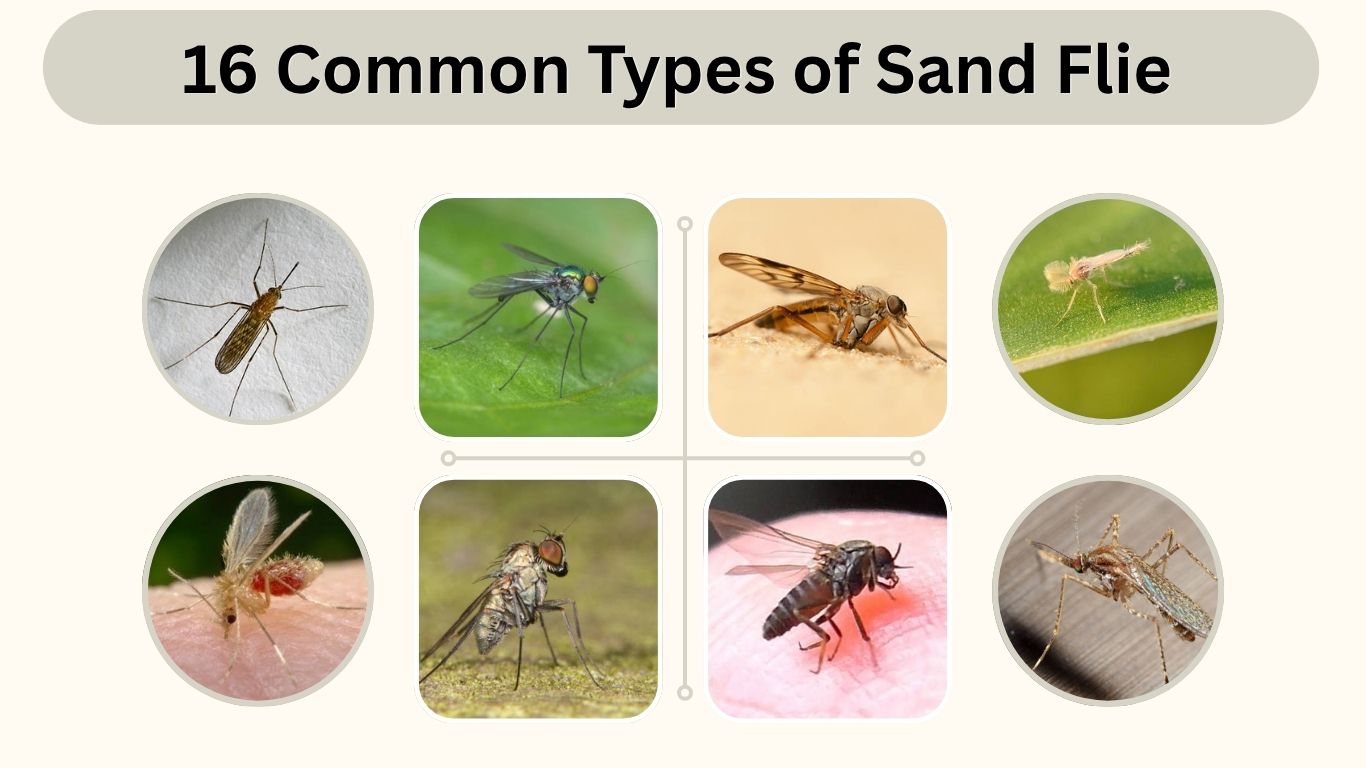
Sand flies are tiny, hairy insects commonly found in warm regions of Africa, Asia, Europe, and the Americas. Although many species look alike, they can differ in distribution, habitat, feeding preferences, and disease-transmission potential. Most adults remain hidden in dark, humid places during the day and become active from dusk to dawn. Male sand flies feed on plant sugars, while females of many species bite humans and animals to obtain blood for egg development. This guide covers 16 common types of sand flies, including their identification, habitats, feeding behavior, and life cycles, helping readers understand these small but important insects.
1. Old World Sand Fly
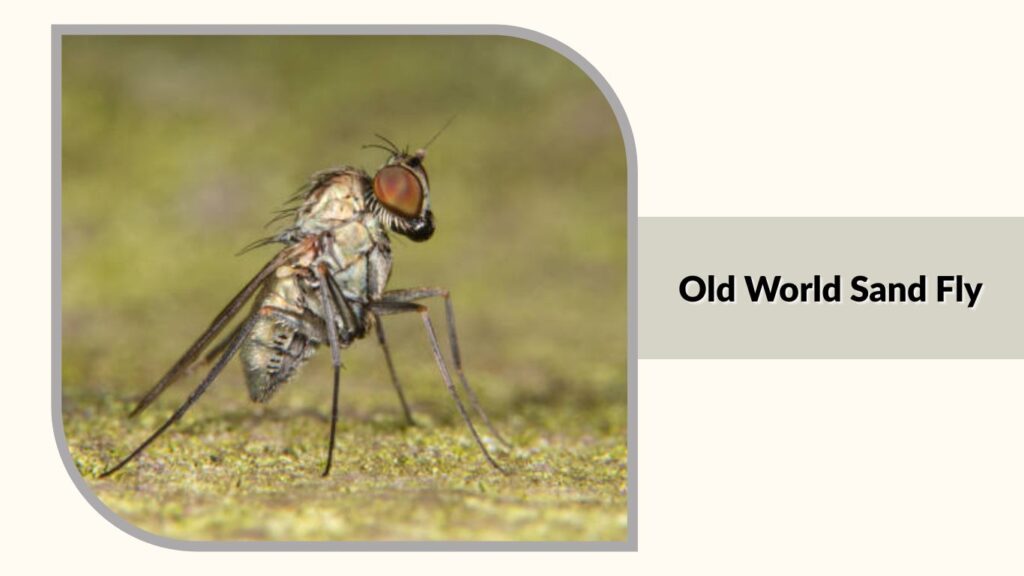
The Old World sand fly is a tiny, hairy insect found across parts of Africa, Asia, southern Europe, and the Middle East. The name generally refers to sand flies belonging to the genus Phlebotomus. These weak-flying insects are most active from dusk to dawn and usually remain close to sheltered resting and breeding locations.
Identification
- Usually measures about 1.5–3.5 millimeters long
- Has a pale yellow, light brown, or sandy-colored body
- Body, wings, and legs are covered with fine hairs
- Features large, dark compound eyes
- Has long, slender legs and antennae
- Holds its narrow wings upright in a V shape while resting
Old World sand flies are smaller and hairier than mosquitoes. Their unusual upright wing position is one of their most recognizable characteristics.
Habitat and Distribution
Old World sand flies inhabit tropical, subtropical, and warm temperate regions. They are commonly found in forests, deserts, villages, animal shelters, caves, stone walls, rodent burrows, and cracks around buildings.
Adults prefer humid, shaded places protected from wind and direct sunlight. Unlike many mosquitoes, sand flies do not breed in standing water. Their larvae develop in damp soil and organic material containing decaying leaves, animal waste, fungi, and other natural debris.
Feeding and Biting Behavior
Both males and females feed on plant sugars and nectar for energy. However, females of many species also require blood to develop their eggs. They may bite humans, dogs, livestock, rodents, birds, and other animals.
Old World sand flies usually feed during twilight and nighttime hours. Their flight is nearly silent, and their tiny size allows them to pass through ordinary mosquito netting. Some species can transmit parasites responsible for leishmaniasis, although not every sand fly carries disease.
Life Cycle and Reproduction
The life cycle consists of four stages: egg, larva, pupa, and adult. Females generally lay their eggs in dark, humid places containing nutrient-rich organic material.
After hatching, the larvae feed on decomposing plant matter, fungi, animal feces, and microscopic organisms. They pass through several growth stages before becoming pupae. Adults later emerge and begin searching for sugar sources, mates, and suitable hosts. Development time varies depending on temperature, humidity, food availability, and species.
2. New World Sand Fly
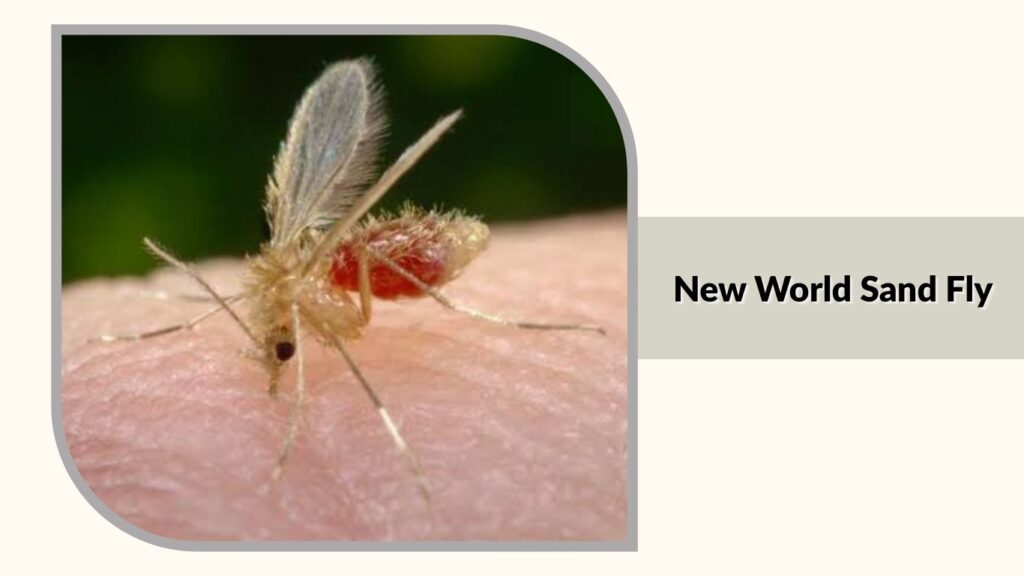
The New World sand fly is a tiny, hairy insect found mainly in Central America, South America, Mexico, and parts of the Caribbean. Most species belong to the subfamily Phlebotominae and include several genera native to the Americas. These delicate insects usually remain hidden during the day and become active around dusk and at night.
Identification
- Usually measures about 1.5–4 millimeters long
- Has a pale brown, grayish, or sandy-colored body
- Body and wings are covered with fine hairs
- Possesses long legs and segmented antennae
- Holds its narrow wings upright while resting
- Has a small head with dark compound eyes
New World sand flies are often mistaken for tiny moths or mosquitoes. However, their hairy bodies, hopping flight, and raised wings make them easier to recognize at close range.
Habitat and Distribution
New World sand flies occur in tropical forests, farmland, caves, animal burrows, villages, and humid woodland. They prefer shaded places with high moisture and protection from strong wind.
Their larvae develop in damp soil rich in decomposing leaves, animal waste, fungi, and other organic material. Adults may rest inside tree holes, rock cracks, houses, animal shelters, and dense vegetation during daylight hours.
Feeding and Biting Behavior
Males and females consume plant sugars for energy. Females of many species also take blood meals from humans, rodents, dogs, birds, reptiles, and other animals.
They usually bite exposed skin during evening and nighttime hours. The bite may cause itching, redness, swelling, and irritation. Some New World species can transmit parasites associated with cutaneous and mucocutaneous leishmaniasis.
Life Cycle and Reproduction
Females lay eggs in dark, humid places containing decaying organic material. The eggs hatch into small larvae that feed on fungi, plant debris, and microscopic matter.
After passing through several larval stages, they form pupae. Adults later emerge and begin searching for sugar, mates, and suitable hosts. Warm temperatures and high humidity generally speed up development.
3. Mediterranean Sand Fly
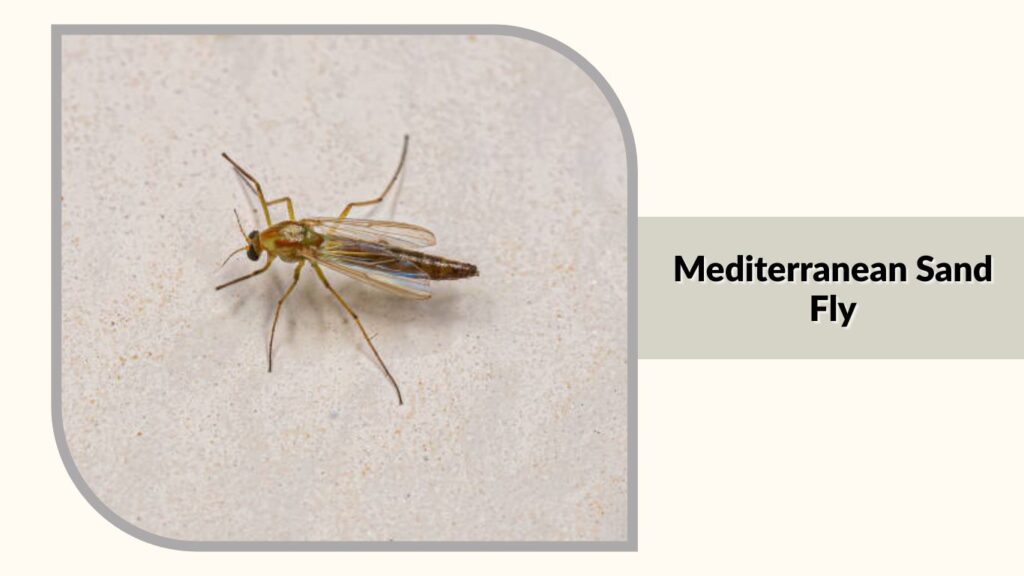
The Mediterranean sand fly is commonly found in countries surrounding the Mediterranean Sea, including parts of southern Europe, North Africa, and western Asia. It thrives in warm, dry climates but requires humid, sheltered locations for breeding and resting.
Identification
- Tiny body measuring approximately 2–3.5 millimeters
- Pale yellow, beige, or light brown coloration
- Hairy body, legs, and wings
- Long, thin legs
- Narrow wings held upward in a V shape
- Weak, short-distance flight
Its small size and pale coloration allow it to blend into dusty walls, stone surfaces, and dry vegetation. It is most easily identified by its hairy appearance and upright resting wings.
Habitat and Distribution
Mediterranean sand flies inhabit coastal villages, rocky hillsides, farms, gardens, caves, stone walls, and animal shelters. They frequently rest inside cracks, cellars, barns, and shaded outdoor structures.
Larvae develop in moist soil and organic debris rather than water. Suitable breeding sites may include leaf litter, rodent burrows, manure, compost, and soil beneath stones.
Feeding and Biting Behavior
Both sexes feed on nectar and plant fluids. Female Mediterranean sand flies may also bite humans, dogs, rodents, and livestock to obtain protein for egg production.
They are usually active between sunset and sunrise. Their bites may cause small red bumps, itching, and irritation. Certain species are important carriers of parasites that cause leishmaniasis in humans and dogs.
Life Cycle and Reproduction
Females deposit eggs in humid, protected areas containing organic matter. The larvae hatch and feed on decaying vegetation, fungi, and animal material.
The larval period includes several growth stages before pupation. Adults emerge when temperature and humidity are favorable. Population numbers often rise during late spring, summer, and early autumn.
4. Indian Sand Fly
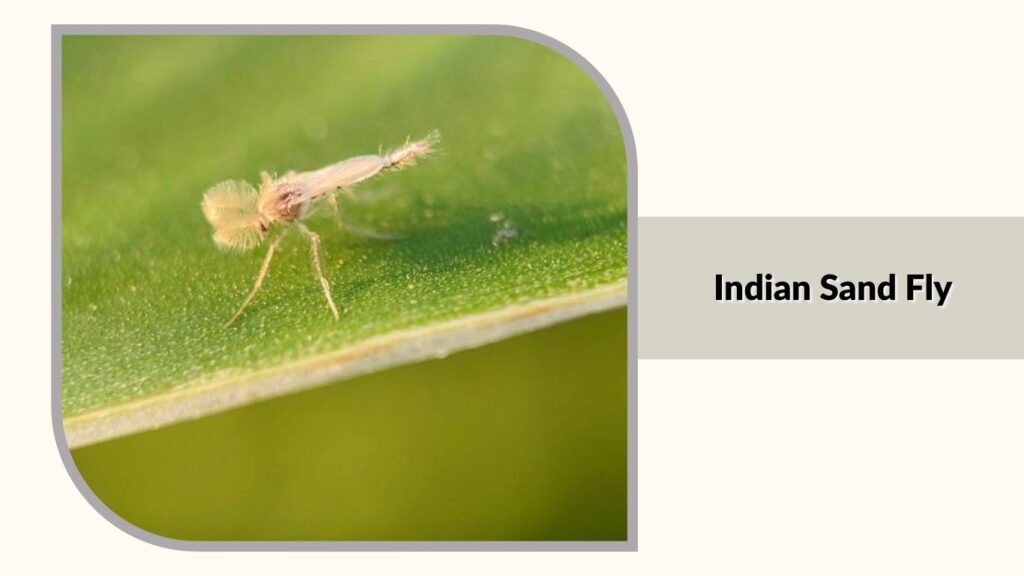
The Indian sand fly is found across parts of the Indian subcontinent, including India, Bangladesh, Nepal, and surrounding regions. It is especially associated with warm, humid rural environments where suitable resting places, organic soil, and animal hosts are available.
Identification
- Usually measures between 2 and 3.5 millimeters
- Pale brown or yellowish body
- Dense hairs covering the body and wings
- Long legs and antennae
- Pointed wings held upright when resting
- Small size and quiet, hopping flight
The Indian sand fly is much smaller than a mosquito. Its hairy wings and compact body are useful identification features, although species-level identification often requires microscopic examination.
Habitat and Distribution
Indian sand flies are commonly found in villages, cattle sheds, mud houses, wall cracks, rodent burrows, gardens, and areas containing damp organic soil. They prefer dark, humid places during the daytime.
Larvae develop in soil enriched with animal waste, plant debris, fungi, and other decomposing materials. They do not require ponds, drains, or standing water for reproduction.
Feeding and Biting Behavior
Males obtain energy from plant sugars. Females may feed on humans, cattle, dogs, rodents, and other mammals before producing eggs.
They are most active at night and may enter homes through small cracks, open doors, and unscreened windows. Bites can cause itching and swelling. Some species in the region can transmit visceral leishmaniasis.
Life Cycle and Reproduction
Females lay eggs in damp soil, wall cracks, animal shelters, and places rich in decaying organic material. The larvae feed on microscopic fungi and debris after hatching.
They pass through four larval stages before becoming pupae. Adults emerge and usually stay close to their breeding environment because they are weak flyers. Several generations may occur during warm, humid seasons.
5. Oriental Sand Fly
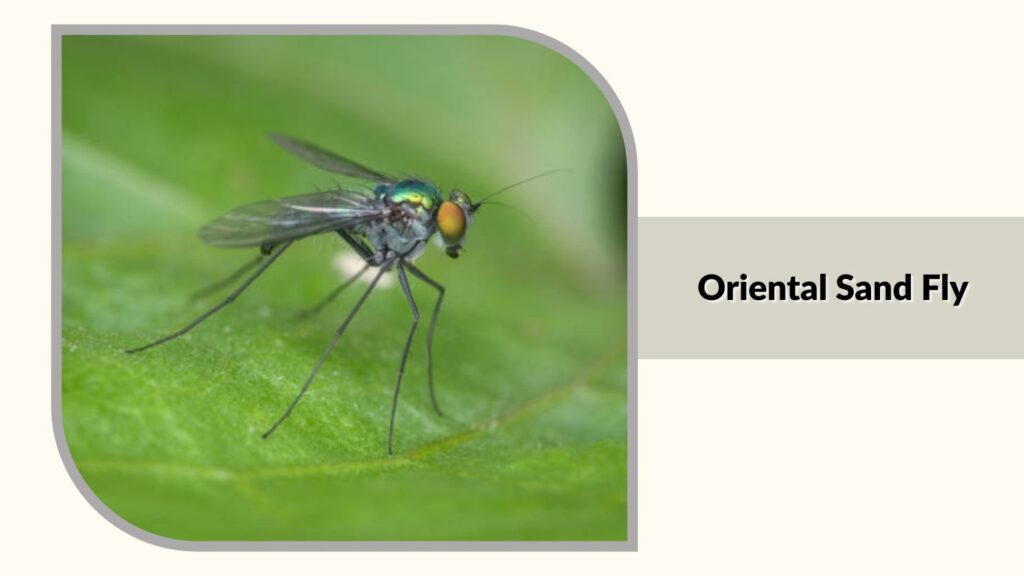
The Oriental sand fly is found in warm areas of South Asia, Southeast Asia, and nearby tropical regions. It prefers protected environments with moisture, shade, and decomposing organic material. Adults are mostly nocturnal and may be difficult to notice because of their tiny size.
Identification
- Measures approximately 1.5–4 millimeters long
- Light brown, grayish, or sandy coloration
- Hairy wings and body
- Long, slender legs
- Beaded-looking antennae
- Wings remain raised above the abdomen at rest
Its flight is weak and often appears as short hops rather than smooth, continuous movement. The insect may resemble a tiny moth because of the fine hairs covering its wings.
Habitat and Distribution
Oriental sand flies may inhabit tropical forests, farms, gardens, villages, caves, animal shelters, and shaded building interiors. They often rest in cool, dark cracks during daylight hours.
Breeding sites include humid soil, leaf litter, manure, compost, animal burrows, and decomposing vegetation. Dense vegetation and poorly ventilated shelters can provide favorable conditions.
Feeding and Biting Behavior
Adults feed on nectar, fruit juices, and plant secretions. Females of blood-feeding species may bite people, livestock, dogs, rodents, and wild animals.
Biting generally occurs after sunset. The bite may initially go unnoticed but can later become itchy, red, and swollen. Disease-transmission risk depends on the species, local parasites, and geographic region.
Life Cycle and Reproduction
Eggs are placed in damp, shaded sites containing enough organic material to support the larvae. The larvae remain hidden while feeding on fungi and decomposing matter.
After completing their larval development, they pupate in the same protected habitat. Adults emerge several days later and begin feeding. The entire life cycle may take several weeks under suitable conditions.
6. Egyptian Sand Fly
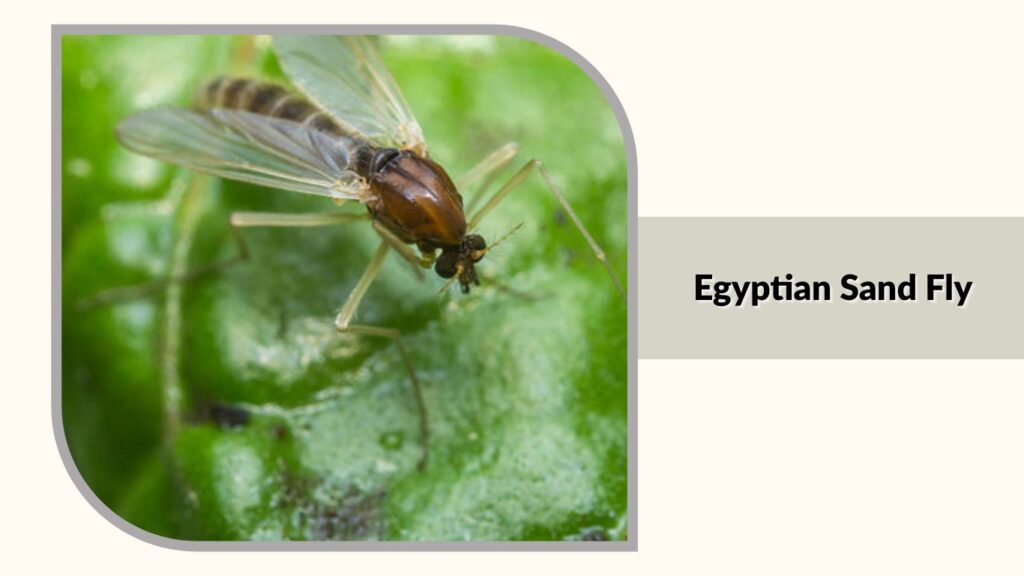
The Egyptian sand fly occurs in Egypt and other dry regions of North Africa and the Middle East. Although it lives in arid environments, it depends on small pockets of humidity and organic material for breeding. It often shelters in caves, animal burrows, old buildings, and cracks in stone walls.
Identification
- Small body measuring about 2–4 millimeters
- Pale tan, yellowish, or light brown color
- Fine hairs covering the body and wings
- Long legs compared with body size
- Upright, narrow wings
- Dark eyes and long antennae
Its sandy coloration helps it blend into desert soil, stone walls, and dusty indoor surfaces. It is most active in low-light conditions and rarely flies far from sheltered locations.
Habitat and Distribution
Egyptian sand flies inhabit deserts, oases, villages, archaeological sites, animal shelters, and rocky landscapes. They rest in dark, humid microhabitats during the hot daytime hours.
Common breeding areas include rodent burrows, manure-rich soil, wall cracks, caves, and places beneath stones. Even in dry regions, these locations can retain enough moisture for larval survival.
Feeding and Biting Behavior
Both sexes feed on natural sugar sources. Females may also seek blood from humans, camels, dogs, rodents, livestock, and other animals.
They usually bite during the evening and nighttime. Bites can produce itching, small welts, and localized swelling. Some Egyptian sand fly species may transmit leishmaniasis or sand fly fever viruses.
Life Cycle and Reproduction
Females lay eggs in moist, sheltered places where organic debris is present. The larvae hatch and feed on fungi, decaying plant material, and animal waste.
After several larval stages, they form pupae and later emerge as adults. Development may slow during extreme heat or dryness, while warmer humid periods can support increased population growth.
7. Arabian Sand Fly
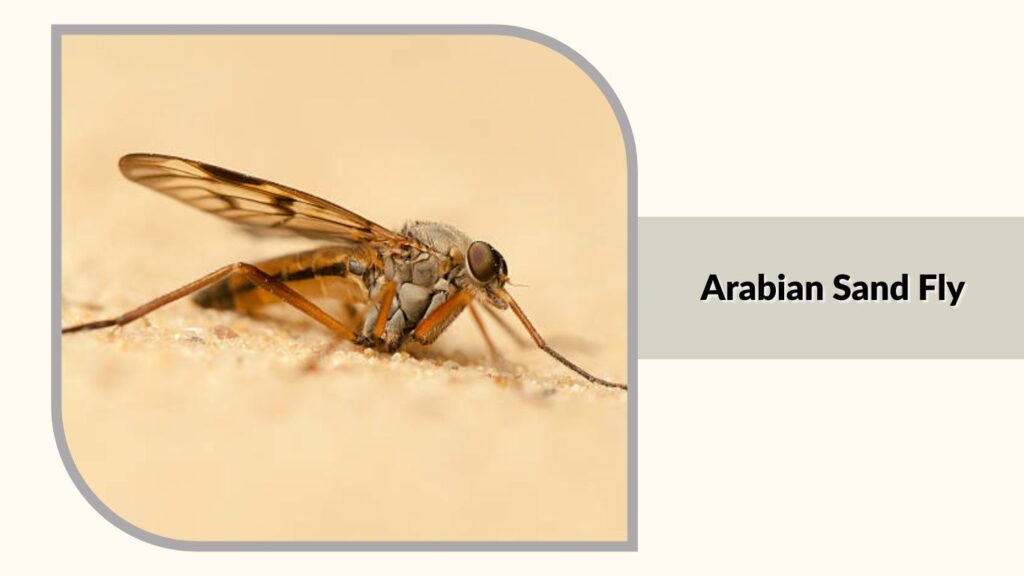
The Arabian sand fly is found across parts of the Arabian Peninsula and nearby Middle Eastern regions. It is adapted to hot, dry climates but depends on shaded, humid microhabitats for resting and reproduction. Adults are mainly active from dusk through the night and usually remain close to animal shelters, rock crevices, burrows, and human settlements.
Identification
- Usually measures around 2–4 millimeters long
- Has a pale tan, yellowish, or light brown body
- Body and wings are covered with fine hairs
- Possesses long, slender legs and antennae
- Holds narrow wings upright while resting
- Has a weak, hopping style of flight
Habitat and Distribution
Arabian sand flies occur in deserts, rocky valleys, oases, villages, livestock shelters, caves, and rodent burrows. During the daytime, they hide in cool, dark places protected from direct sunlight and strong winds.
Their larvae develop in moist soil mixed with animal droppings, decomposing vegetation, fungi, and other organic matter. Even in desert environments, cracks, burrows, and shaded shelters can retain enough moisture for development.
Feeding and Biting Behavior
Both males and females consume plant sugars for energy. Females of many species also require a blood meal before producing eggs. They may bite humans, livestock, dogs, rodents, and wild mammals.
Biting generally occurs after sunset. The bite may cause a small red bump, itching, irritation, or swelling. Certain species in the region can transmit parasites or viruses, although most individual sand flies are not infected.
Life Cycle and Reproduction
Females lay eggs in humid, sheltered places containing organic material. The larvae hatch and feed on microscopic fungi, animal waste, and decaying plant matter.
They pass through several larval stages before forming pupae. Adults later emerge and remain near suitable feeding and resting sites. Development is usually fastest during warm periods with sufficient humidity.
8. Persian Sand Fly
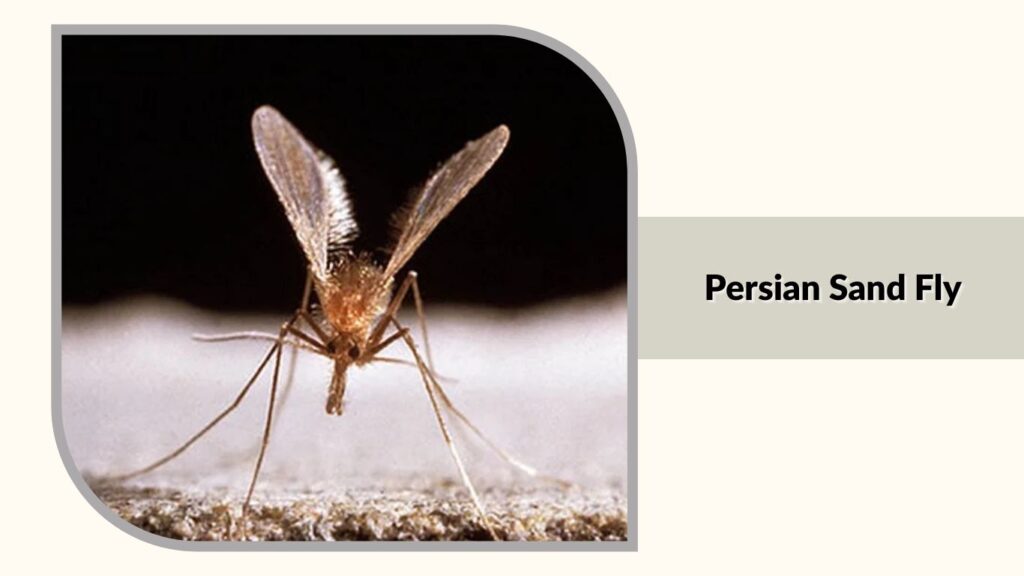
The Persian sand fly occurs mainly in Iran and neighboring parts of Central and western Asia. It inhabits both dry rural landscapes and populated areas where rodents, livestock, and protected breeding sites are available. Like most sand flies, it is tiny, hairy, and primarily active during the evening and nighttime.
Identification
- Small body measuring approximately 2–4 millimeters
- Pale brown, beige, or sandy coloration
- Hair-covered body and narrow wings
- Long legs and segmented antennae
- Dark compound eyes
- Wings form a raised V shape at rest
Habitat and Distribution
Persian sand flies may live in semi-deserts, agricultural regions, villages, gardens, caves, and animal shelters. They frequently rest inside mud walls, stone cracks, storage buildings, and underground burrows.
Larvae develop in damp soil containing leaf litter, manure, fungi, and decomposing organic debris. Rodent burrows are particularly suitable because they offer stable humidity, shade, and food for developing larvae.
Feeding and Biting Behavior
Adult males feed on nectar and plant secretions. Females may also use sugar sources but often require blood to mature their eggs.
They may feed on rodents, dogs, livestock, humans, and other mammals. Bites usually occur at night and can leave itchy, inflamed spots. Some species associated with this region may help transmit different forms of leishmaniasis.
Life Cycle and Reproduction
Females deposit eggs in protected, humid environments. Once hatched, the larvae feed on fungi, microorganisms, and decomposing material around their breeding site.
After completing four larval stages, they pupate in dry but sheltered areas. Adults emerge when temperatures are suitable. Their populations often increase during warmer months and decline during cold or extremely dry periods.
9. Chinese Sand Fly
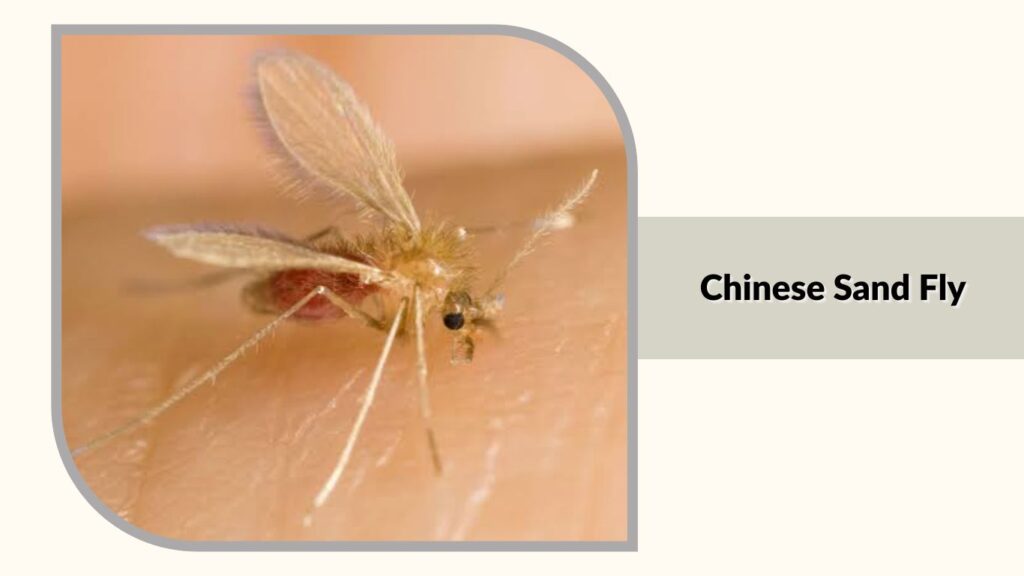
The Chinese sand fly is found in several regions of China and neighboring parts of East and Central Asia. It may live in rural villages, mountain valleys, caves, animal shelters, and rodent habitats. These delicate insects usually avoid bright daylight and become active during calm evening and nighttime conditions.
Identification
- Usually measures about 2–3.5 millimeters long
- Pale yellowish-brown or gray body
- Fine hairs covering the wings and thorax
- Long, delicate legs
- Narrow wings held upright
- Small head with long antennae
Habitat and Distribution
Chinese sand flies inhabit warm valleys, dry plateaus, forests, farms, caves, and residential areas. During the day, they hide in wall cracks, cellars, animal pens, tree holes, and underground burrows.
Their larvae develop in damp, shaded ground containing decaying vegetation and animal matter. Unlike mosquitoes, Chinese sand flies do not lay their eggs in open standing water.
Feeding and Biting Behavior
Both sexes rely on sugars from plants, fruits, or nectar. Females of blood-feeding species may bite humans, dogs, livestock, rodents, and wildlife.
They are most active around dusk and overnight. Their small size allows them to enter homes through tiny openings. Bites can cause itching, redness, and swelling, while certain species may transmit leishmaniasis in endemic areas.
Life Cycle and Reproduction
Females lay eggs in cracks, burrows, soil, or other humid places containing organic debris. The larvae feed on fungi, decomposing matter, and microorganisms.
They develop through several larval stages before pupating. Adults emerge after development is complete and begin seeking plant sugars and hosts. Seasonal activity varies with altitude, rainfall, humidity, and temperature.
10. Brazilian Sand Fly
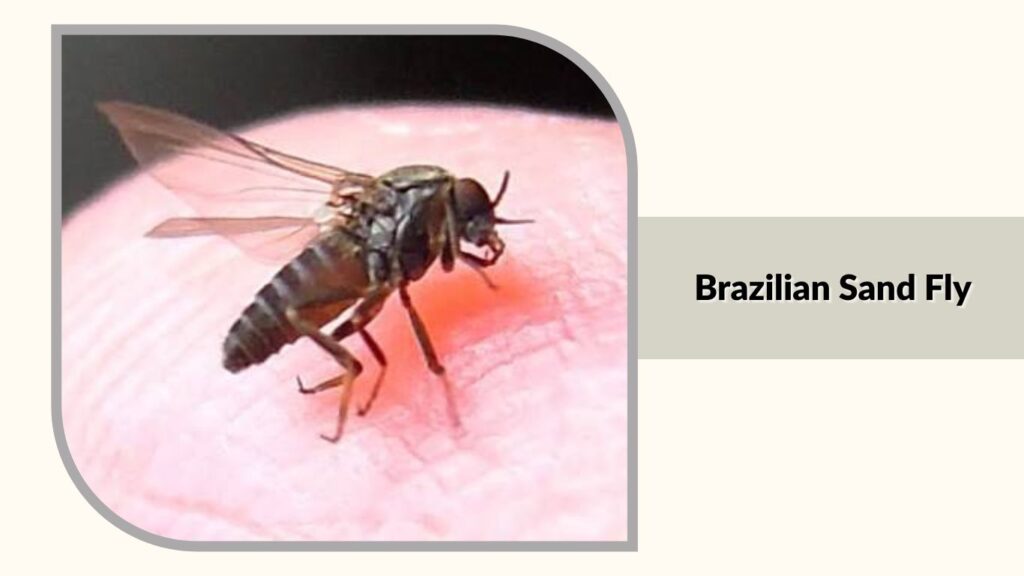
The Brazilian sand fly is found throughout many tropical and subtropical regions of Brazil. Numerous species occur in rainforests, dry woodlands, farms, villages, and urban edges. They are usually active at night and may rest in vegetation, tree hollows, houses, and animal shelters during the daytime.
Identification
- Body length of approximately 1.5–4 millimeters
- Pale brown, gray, or sandy coloration
- Hairy wings and body
- Long legs and antennae
- Narrow wings held above the back
- Short, weak, hopping flight
Habitat and Distribution
Brazilian sand flies live in the Amazon rainforest, Atlantic forests, savannas, rural settlements, and peri-urban communities. They prefer places with shade, humidity, and decomposing organic material.
Larvae may develop in forest soil, leaf litter, animal burrows, tree-root cavities, poultry shelters, and areas containing manure or plant debris. Adults generally remain near suitable breeding and host locations.
Feeding and Biting Behavior
Males feed entirely on plant-based sugars. Females also consume sugar but may bite humans, dogs, rodents, sloths, livestock, and other animals to obtain blood.
Bites may leave small, itchy bumps and can occur in groups on exposed skin. Several Brazilian species are medically important because they may transmit parasites associated with cutaneous, mucocutaneous, or visceral leishmaniasis.
Life Cycle and Reproduction
Females lay their eggs in humid, protected places rich in organic matter. The larvae hatch and feed on fungi, leaf fragments, animal waste, and microscopic organisms.
After passing through four larval stages, they pupate and later emerge as adults. Warm temperatures and high humidity may allow several generations to develop throughout the year.
11. Peruvian Sand Fly
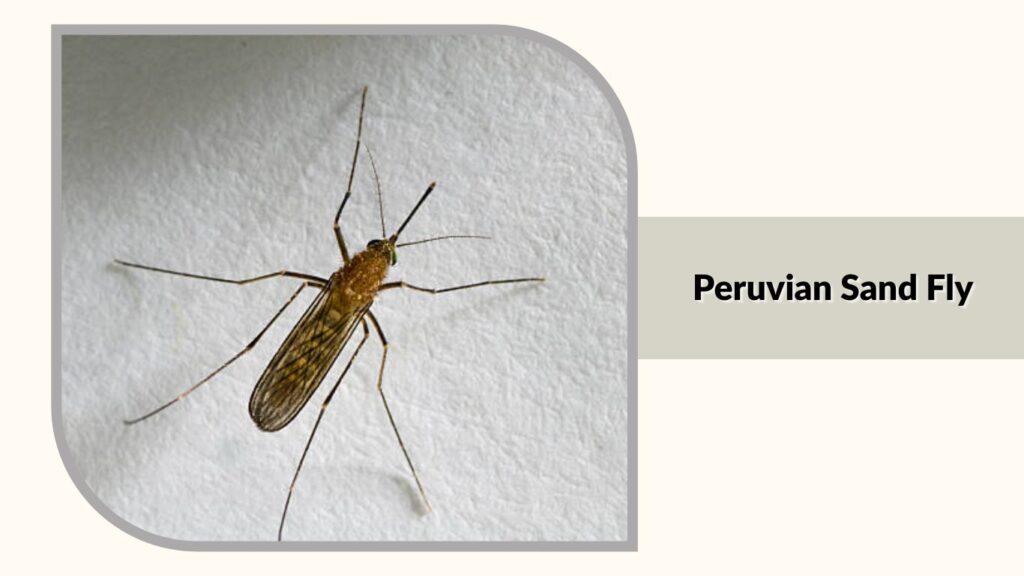
The Peruvian sand fly occurs in diverse habitats across Peru, from humid tropical forests to dry Andean valleys and coastal regions. Different species are adapted to different elevations and climates. Adults are most active during low-light conditions and usually stay near sheltered resting sites.
Identification
- Small body measuring about 2–4 millimeters
- Light brown, tan, or gray coloration
- Fine hairs on the body, wings, and legs
- Long, thin antennae
- Dark, rounded eyes
- Upright wings forming a V shape
Habitat and Distribution
Peruvian sand flies may inhabit Amazonian forests, mountain valleys, caves, farms, villages, and rocky slopes. They often rest in tree trunks, wall cracks, animal shelters, rodent burrows, and dense vegetation.
Larvae develop in humid soil and decomposing organic matter. Even in dry areas, protected cracks and underground spaces may provide enough moisture to support their development.
Feeding and Biting Behavior
Both males and females consume nectar and plant sugars. Females may additionally take blood from humans, dogs, rodents, livestock, and wild animals.
Most biting takes place after sunset, although some forest species may be active during shaded daytime periods. The bites can cause irritation and itching. Several Peruvian species are capable of transmitting cutaneous or mucocutaneous leishmaniasis.
Life Cycle and Reproduction
Females place eggs in dark, humid locations containing organic material. The larvae remain hidden while feeding on fungi, microorganisms, plant debris, and animal waste.
They pass through four larval stages before becoming pupae. Adults emerge once development is complete and begin searching for sugar sources, mates, and blood hosts. Their activity often increases during warm or rainy periods.
12. Colombian Sand Fly
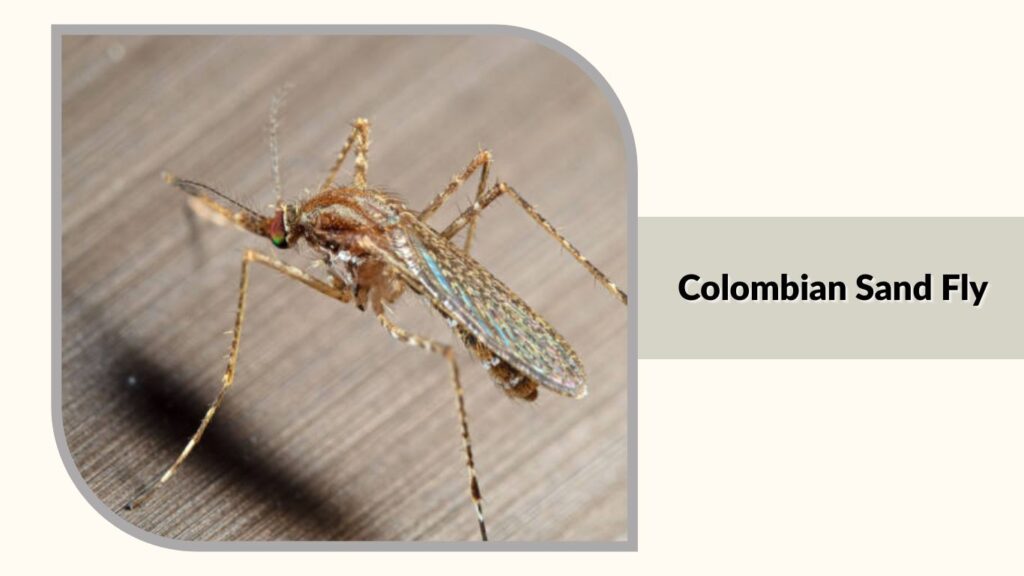
The Colombian sand fly occurs in tropical forests, rural settlements, farms, and mountain valleys throughout Colombia. Many species thrive in warm, humid environments containing dense vegetation and decomposing organic matter. Adults usually rest in shaded locations during the day and become more active around dusk and at night.
Identification
- Usually measures about 1.5–4 millimeters long
- Has a pale brown, gray, or yellowish body
- Body and wings are covered with fine hairs
- Possesses long legs and segmented antennae
- Holds its narrow wings upright while resting
- Flies in short, weak, hopping movements
Habitat and Distribution
Colombian sand flies are found in rainforests, coffee-growing regions, farms, villages, caves, and forest edges. They may hide inside tree holes, animal shelters, wall cracks, leaf litter, and rodent burrows during daylight hours.
Their larvae develop in moist soil containing fungi, animal waste, decaying leaves, and other organic materials. Adults usually remain close to places that provide shelter, humidity, and suitable animal hosts.
Feeding and Biting Behavior
Both males and females feed on plant sugars for energy. Females of many species also take blood meals from humans, dogs, livestock, rodents, and wild mammals to support egg production.
Bites commonly occur during evening and nighttime hours. They may create small, itchy, red bumps on exposed skin. Some Colombian sand fly species can transmit parasites responsible for cutaneous or mucocutaneous leishmaniasis.
Life Cycle and Reproduction
Females lay eggs in dark, humid areas rich in organic matter. After hatching, the larvae feed on fungi, decomposing plant material, animal droppings, and microorganisms.
The larvae pass through several growth stages before pupating. Adults later emerge and search for nectar, mates, and blood hosts. Warm temperatures and consistent humidity can support multiple generations each year.
13. Mexican Sand Fly
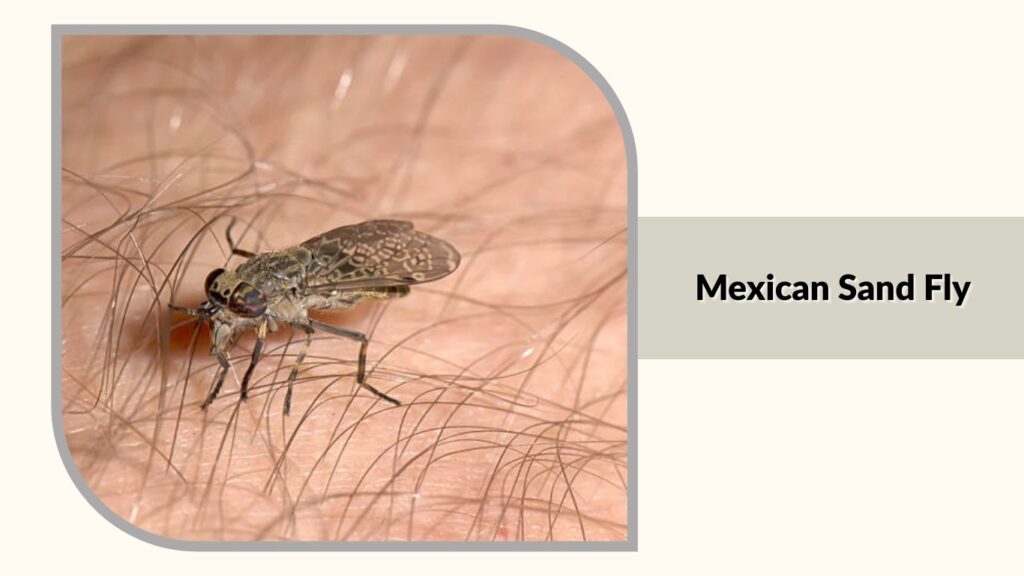
The Mexican sand fly is found in tropical and subtropical parts of Mexico, especially in forests, caves, agricultural areas, and rural communities. These tiny insects are weak flyers and usually stay near sheltered breeding and resting locations.
Identification
- Body length of approximately 2–4 millimeters
- Pale tan, grayish, or light brown coloration
- Hairy body, wings, and legs
- Long, slender antennae
- Narrow wings held in a raised position
- Small head with dark compound eyes
Habitat and Distribution
Mexican sand flies inhabit humid forests, dry woodlands, farms, caves, animal shelters, and villages. During the daytime, they rest in shaded cracks, tree cavities, rock openings, and underground burrows.
Larvae develop in damp soil mixed with leaf litter, fungi, manure, and decaying organic debris. They do not breed in standing water like mosquitoes.
Feeding and Biting Behavior
Adult males obtain energy from nectar and plant fluids. Females also consume natural sugars but may need blood from humans, dogs, rodents, birds, or livestock before laying eggs.
They generally bite after sunset and may target exposed areas such as the arms, face, neck, and legs. The bites can become itchy and swollen. Certain species in Mexico are associated with the transmission of cutaneous leishmaniasis.
Life Cycle and Reproduction
Females deposit eggs in humid, protected places where organic material is available. Larvae hatch and remain hidden while feeding on microscopic fungi and decomposing debris.
After completing four larval stages, they form pupae. Adults emerge after several days and begin looking for food and mates. Development is faster during warm and humid conditions.
14. Central American Sand Fly
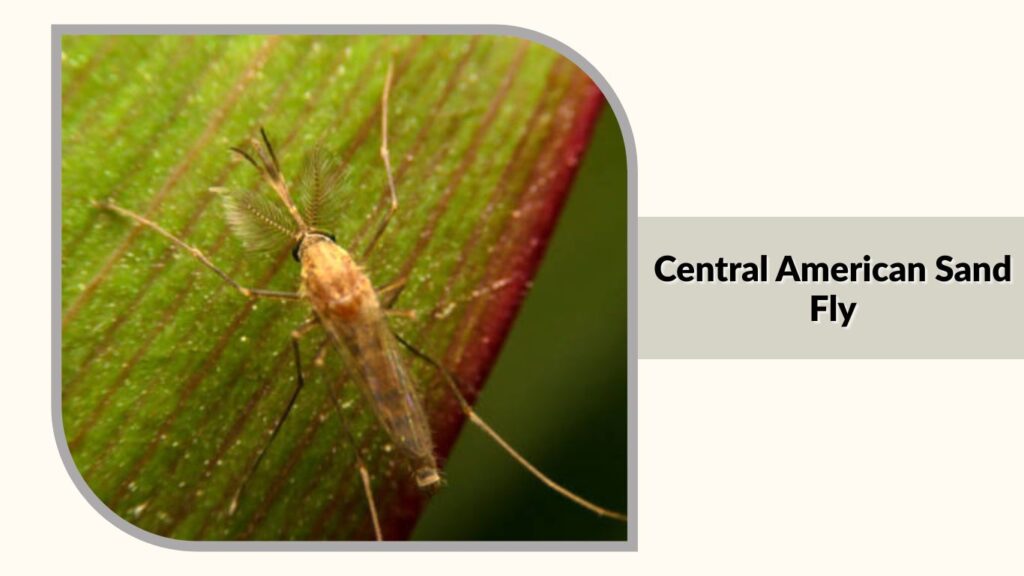
The Central American sand fly is distributed across countries such as Guatemala, Belize, Honduras, Costa Rica, Nicaragua, El Salvador, and Panama. It commonly inhabits tropical forests and rural communities where humidity and organic debris provide favorable breeding conditions.
Identification
- Usually measures between 1.5 and 4 millimeters
- Pale beige, brown, or gray body
- Fine hairs cover the wings and thorax
- Long legs compared with its small body
- Antennae appear segmented or bead-like
- Wings are held upright in a V shape
Habitat and Distribution
Central American sand flies occur in rainforests, plantations, villages, caves, animal burrows, and woodland edges. They often rest beneath leaves, inside wall cracks, or in dark animal shelters during daylight hours.
Their larvae develop in damp ground containing decomposing leaves, animal feces, fungi, and other organic substances. Dense vegetation helps maintain the humid conditions they require.
Feeding and Biting Behavior
Both sexes feed on sugars from plants, fruits, and nectar. Female sand flies may also bite humans, dogs, rodents, livestock, reptiles, and wild mammals.
Most species feed around dusk or at night, although some forest species may bite in deeply shaded places during the day. Bites can cause itching, irritation, and small swollen welts. Some species can transmit leishmaniasis parasites.
Life Cycle and Reproduction
Females lay eggs in moist, shaded areas containing suitable larval food. The larvae hatch and feed on decomposing matter and microorganisms while remaining hidden from sunlight.
They pass through several developmental stages before forming pupae. Adults emerge once conditions are favorable. In warm tropical regions, reproduction may continue during much of the year.
15. African Sand Fly
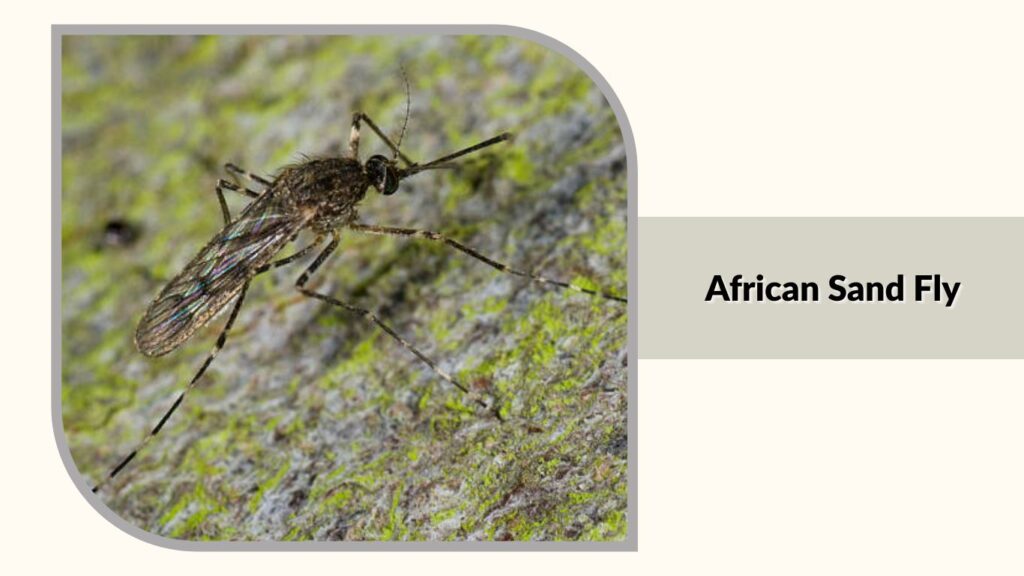
The African sand fly is found across many parts of North, East, West, Central, and southern Africa. Different species inhabit deserts, savannas, tropical forests, villages, and mountain regions. Adults are tiny and usually become active during calm evening and nighttime conditions.
Identification
- Small body measuring around 1.5–4 millimeters
- Pale yellow, tan, gray, or light brown color
- Dense hairs on the body and wings
- Long legs and antennae
- Dark, rounded compound eyes
- Narrow wings held upright while resting
Habitat and Distribution
African sand flies may live in forests, dry grasslands, deserts, caves, termite mounds, animal shelters, and human settlements. They spend the daytime in cool, protected locations such as wall cracks, burrows, and shaded vegetation.
Their larvae develop in humid soil enriched with plant debris, animal waste, fungi, and microorganisms. Suitable breeding areas can exist even in dry regions when burrows or cracks retain moisture.
Feeding and Biting Behavior
Males feed on nectar and plant-based sugars. Females may additionally feed on humans, dogs, rodents, livestock, hyraxes, and other animals to obtain protein for egg development.
They typically bite after sunset, and their bites may produce redness, itching, or swelling. Several African species are medically important because they can transmit visceral or cutaneous leishmaniasis.
Life Cycle and Reproduction
Females place eggs in dark, humid habitats containing organic material. The larvae hatch and feed on fungi, decaying vegetation, animal droppings, and microscopic organisms.
After passing through four larval stages, they pupate. Adults later emerge and stay close to sheltered environments. Temperature, rainfall, and humidity strongly influence their seasonal abundance.
16. Cave Sand Fly
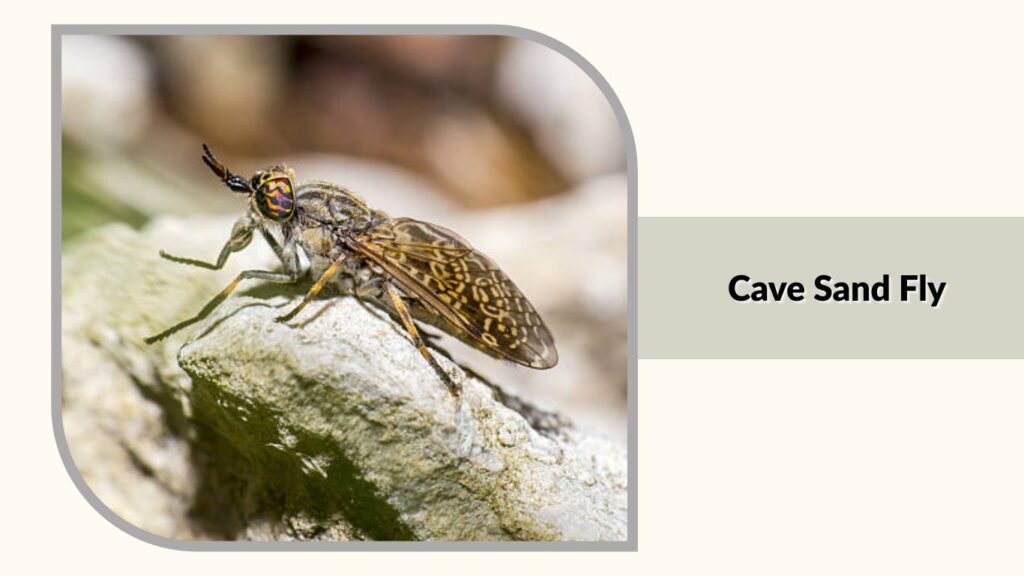
The cave sand fly is commonly associated with caves, rocky crevices, tunnels, mines, and other dark underground habitats. These environments provide stable temperatures, high humidity, and protection from sunlight and wind. Adults may also leave caves at night to search for blood hosts or sugar sources.
Identification
- Usually measures approximately 2–4 millimeters
- Pale gray, tan, or light brown body
- Fine hairs covering the wings and thorax
- Long, delicate legs
- Narrow wings held upright at rest
- Weak flight with short hopping movements
Habitat and Distribution
Cave sand flies inhabit limestone caves, rock shelters, abandoned mines, underground animal dens, and cracks in cliffs. Some may also occur in cellars, ruins, tunnels, and poorly lit buildings near natural caves.
The larvae develop in moist cave soil containing bat droppings, animal waste, fungi, decaying plant matter, and other organic debris. Stable humidity makes underground habitats suitable for year-round survival.
Feeding and Biting Behavior
Adults feed on plant sugars when available, while females of many species also require blood. They may bite bats, rodents, cave-dwelling mammals, humans, and domestic animals.
Biting activity usually increases after dark. People entering infested caves may experience numerous small bites on exposed skin. These bites can cause itching, redness, and localized swelling, although disease risk varies by region and species.
Life Cycle and Reproduction
Females deposit eggs in damp cracks, cave soil, or organic material protected from drying. Larvae hatch and feed on fungi, microorganisms, animal droppings, and decomposing matter.
They pass through several larval stages before becoming pupae. Adults emerge within the sheltered underground environment and may remain nearby throughout their lives. Stable cave conditions can support overlapping generations.
FAQs
1. What are sand flies?
Sand flies are tiny, hairy insects found in warm tropical, subtropical, and temperate regions. They usually measure less than 4 millimeters long and are most active from dusk to dawn. Unlike mosquitoes, their larvae develop in damp soil and decaying organic material rather than standing water.
2. Do all sand flies bite humans?
No, only female sand flies of blood-feeding species bite humans and animals. They need protein from blood to develop their eggs. Male sand flies feed entirely on nectar and plant sugars. Even among females, biting preferences vary depending on the species and available hosts.
3. Are sand fly bites dangerous?
Most sand fly bites cause only redness, itching, swelling, and mild irritation. However, some species can transmit parasites that cause leishmaniasis or viruses responsible for sand fly fever. The actual risk depends on the region, species, and whether the fly carries a disease-causing organism.
4. Where do sand flies usually breed?
Sand flies breed in dark, humid places containing decomposing organic matter. Common sites include leaf litter, animal burrows, wall cracks, caves, manure-rich soil, tree holes, and livestock shelters. They do not normally lay eggs in ponds, containers, or other sources of standing water.
5. How can you prevent sand fly bites?
Wear long sleeves, trousers, and socks when sand flies are active. Apply an appropriate insect repellent to exposed skin and clothing, use fine-mesh bed nets, and keep windows properly screened. Reducing damp organic debris and sealing cracks around buildings may also help limit nearby resting and breeding sites.