
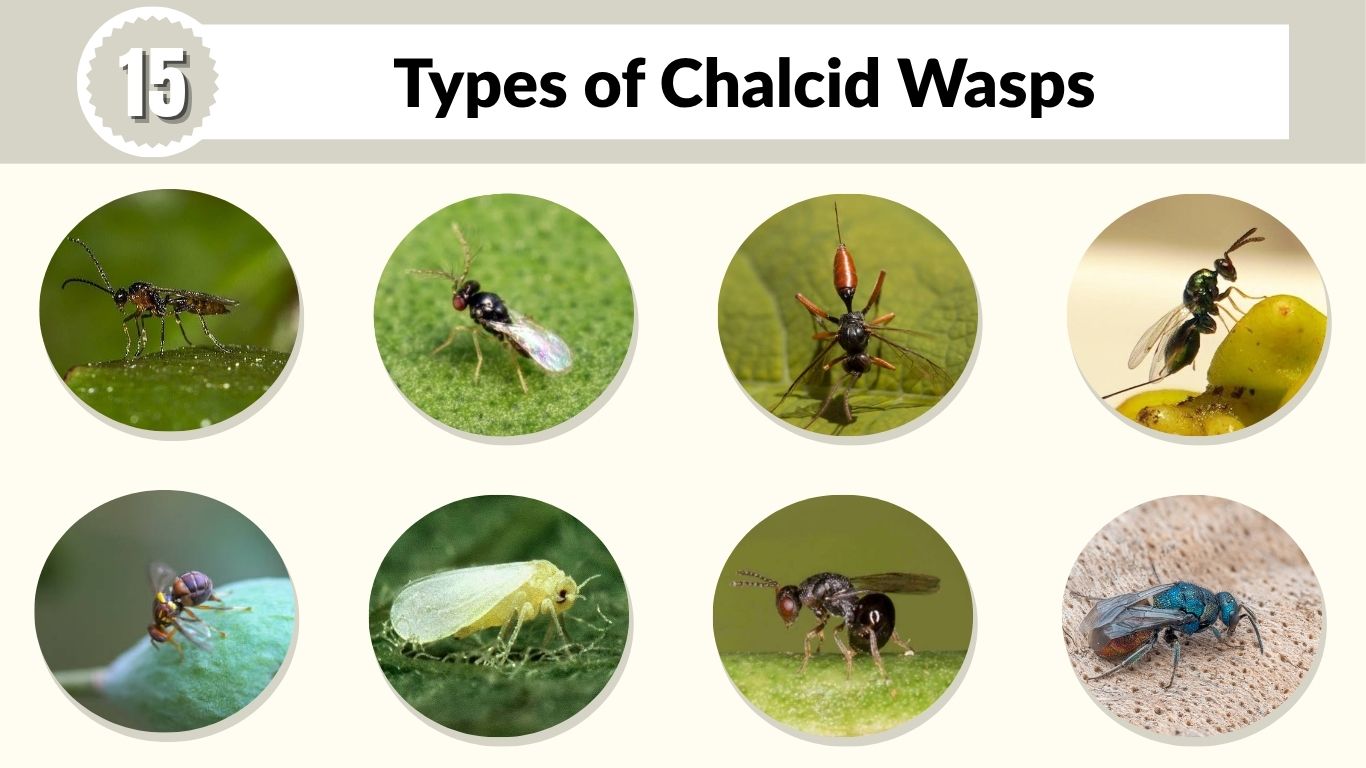
Chalcid wasps are fascinating, tiny insects known for their diverse appearances and remarkable relationships with other insects and plants. Belonging to the superfamily Chalcidoidea, these wasps include beneficial parasitoids, fig pollinators, and gall-forming species. Many help control agricultural pests naturally, while others influence plant growth. In this guide, we explore 15 types of Chalcid wasps, highlighting their identification features, habitats, life cycles, unique behaviors, and ecological importance.
1. Jewel Wasp (Nasonia vitripennis)
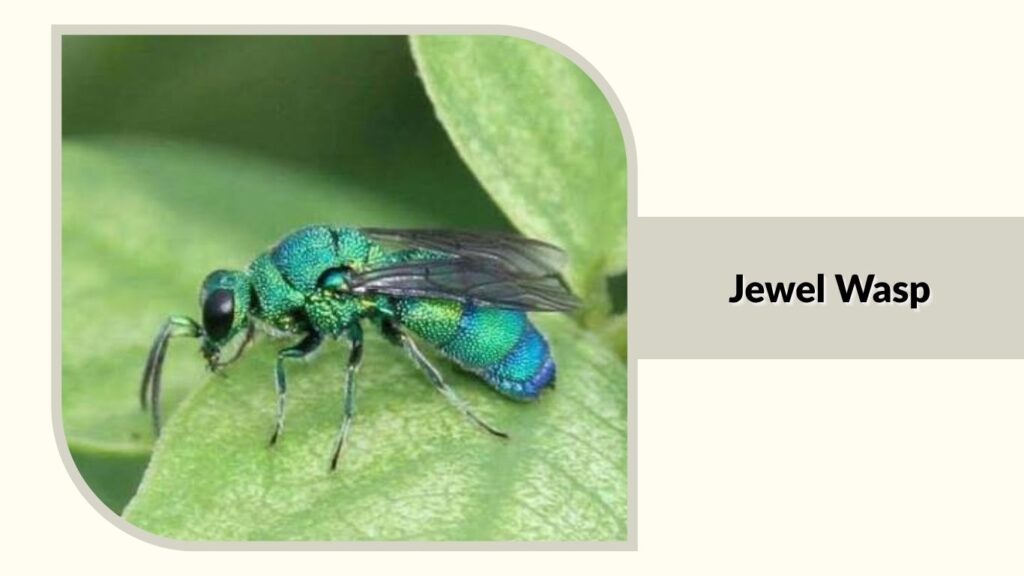
The Jewel Wasp is a tiny parasitic wasp belonging to the Pteromalidae family within the chalcid wasp superfamily, Chalcidoidea. It is recognized for its shiny, metallic body and unusual reproductive behavior. This beneficial insect primarily attacks fly pupae and plays an important role in natural pest control.
Identification
- Scientific Name: Nasonia vitripennis
- Family: Pteromalidae
- Size: Approximately 1.8–2.3 mm long in females
- Color: Metallic greenish-blue to black
- Wings: Transparent in females; short and reduced in males
- Antennae: Short, segmented, and dark
- Distinctive Feature: Shiny metallic body with yellowish-brown legs
Habitat and Distribution
Jewel Wasps occur worldwide in forests, grasslands, agricultural landscapes, and areas containing decomposing organic matter. They are frequently associated with bird nests, animal carcasses, and locations where blowflies and other suitable host flies develop.
Life Cycle and Behavior
Female Jewel Wasps deposit eggs onto fly pupae inside their protective puparia. After hatching, the larvae feed externally on the developing flies. Several wasps may develop within a single host. Adults eventually emerge by chewing small holes through the puparium.
Importance in Nature
Jewel Wasps help regulate fly populations and are valuable subjects in genetic and evolutionary research. Scientists study them to understand insect reproduction, parasitoid behavior, and biological pest control.
2. Common Fig Wasp (Blastophaga psenes)
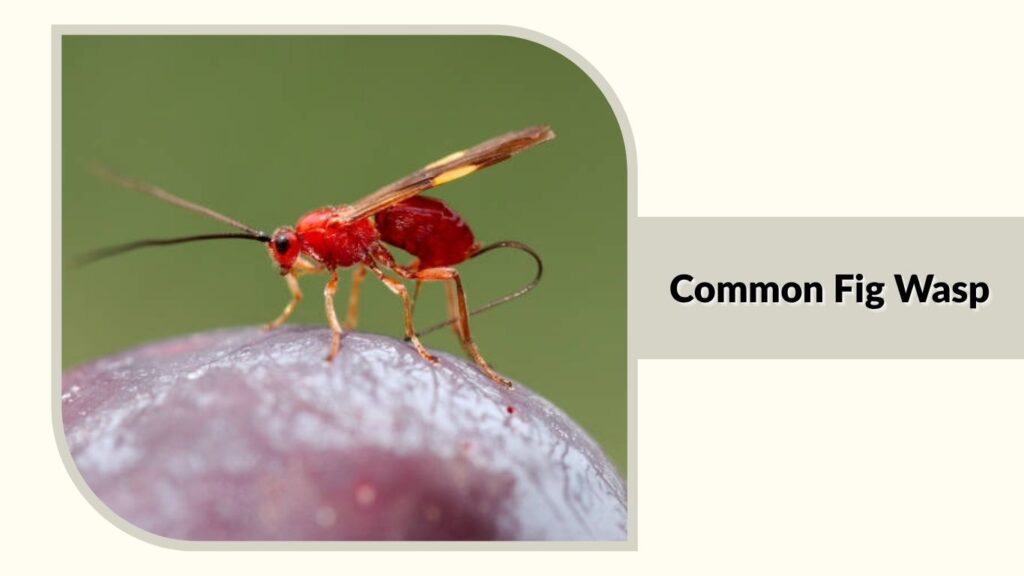
The Common Fig Wasp is a tiny pollinating wasp belonging to the Agaonidae family within the Chalcidoidea superfamily. Unlike many other chalcid wasps, this species has a mutually beneficial relationship with fig trees. It plays an essential role in pollinating certain varieties of edible figs.
Identification
- Scientific Name: Blastophaga psenes
- Family: Agaonidae
- Size: Approximately 2 mm long
- Color: Shiny black in females; pale brown in males
- Wings: Transparent in females; absent in males
- Antennae: Short and segmented
- Distinctive Feature: Tiny body adapted for entering figs through narrow openings
Habitat and Distribution
Common Fig Wasps occur throughout Mediterranean regions and other areas where compatible fig trees grow. They are closely associated with common fig trees (Ficus carica) and depend on suitable figs for reproduction.
Life Cycle and Behavior
Female wasps enter receptive figs through tiny openings called ostioles. Inside suitable male figs, they deposit eggs within specialized flowers. Their offspring develop inside these structures before emerging as adults. Wingless males mate with females inside the figs, allowing the females to leave carrying pollen.
Importance in Nature
Common Fig Wasps are essential pollinators of fig varieties that require fertilization. Their relationship with fig trees represents a remarkable example of plant-insect mutualism.
3. Eucalyptus Gall Wasp (Ophelimus maskelli)
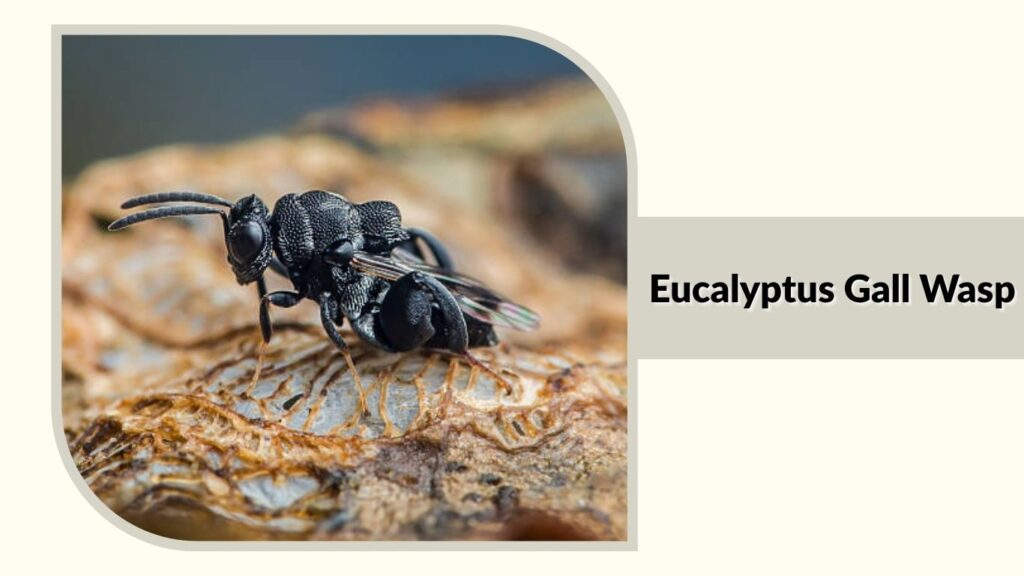
The Eucalyptus Gall Wasp is a tiny gall-forming insect belonging to the Eulophidae family. This species is known for producing numerous small, raised galls on eucalyptus leaves. Although harmless to humans, severe infestations can damage trees, reduce leaf growth, and cause premature defoliation.
Identification
- Scientific Name: Ophelimus maskelli
- Family: Eulophidae
- Size: Approximately 0.8–1.1 mm long
- Color: Dark brown to black
- Wings: Transparent with reduced venation
- Antennae: Short and segmented
- Distinctive Feature: Produces small, pimple-like galls on both surfaces of eucalyptus leaves
Habitat and Distribution
Eucalyptus Gall Wasps originate from Australia but have spread to several Mediterranean countries and other regions. They mainly inhabit eucalyptus plantations, nurseries, and urban landscapes containing susceptible trees, especially river red gum (Eucalyptus camaldulensis).
Life Cycle and Behavior
Female wasps deposit eggs into young eucalyptus leaves. After hatching, the larvae feed within plant tissues, causing small rounded galls to develop. The larvae complete their development inside these protective structures before emerging as adults through tiny holes.
Importance in Nature
Unlike beneficial parasitoid wasps, this species is considered a eucalyptus pest. Heavy infestations can cause leaf shedding, weakened growth, and damage to young trees. Natural enemies help suppress its populations in affected regions.
4. Blue Gum Chalcid Wasp (Leptocybe invasa)
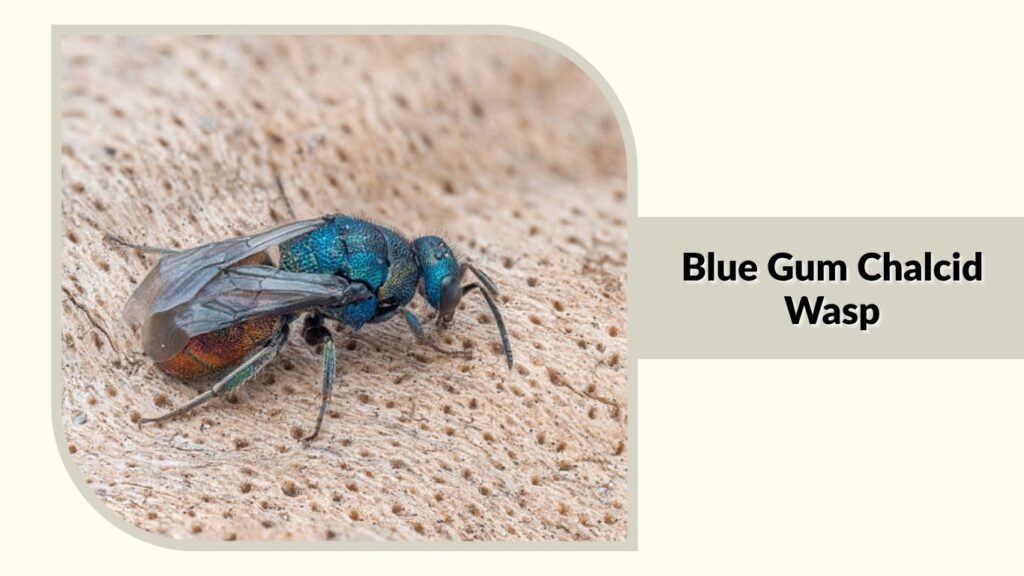
The Blue Gum Chalcid Wasp is a small gall-forming insect belonging to the Eulophidae family. It is particularly known for damaging eucalyptus trees by creating swollen galls on leaves, stems, and leaf stalks. This species is an important forestry pest in several countries where eucalyptus trees are commercially cultivated.
Identification
- Scientific Name: Leptocybe invasa
- Family: Eulophidae
- Size: Approximately 1.1–1.4 mm long
- Color: Dark brown with metallic blue-green reflections
- Wings: Transparent with faint smoky markings
- Antennae: Short, segmented, and brownish
- Distinctive Feature: Produces raised galls on eucalyptus leaf veins, petioles, and young stems
Habitat and Distribution
Blue Gum Chalcid Wasps are associated with eucalyptus trees and occur in Africa, Asia, Europe, Australia, and other regions. They are frequently found in eucalyptus nurseries, plantations, and urban landscapes, especially where susceptible young trees are growing.
Life Cycle and Behavior
Female wasps deposit eggs inside tender eucalyptus tissues. The developing larvae stimulate abnormal plant growth, creating protective galls. They feed and develop inside these swollen structures before emerging as adults through small exit holes.
Importance in Nature
These wasps can cause significant damage to young eucalyptus trees. Severe infestations may result in distorted leaves, reduced growth, and weakened branches. Biological control using natural parasitoids is an important management approach.
5. Citrus Gall Wasp (Bruchophagus fellis)
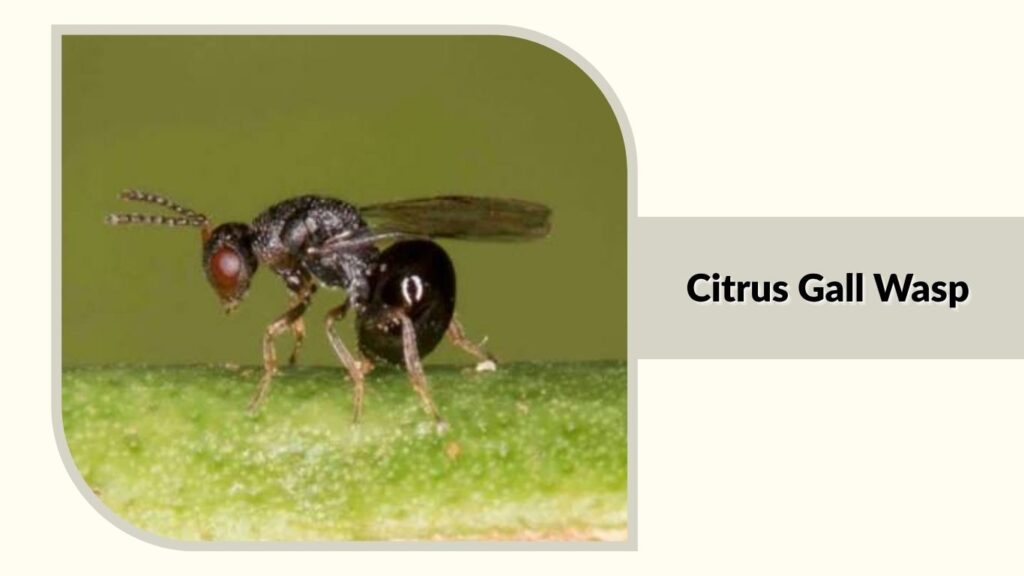
The Citrus Gall Wasp is a tiny insect belonging to the Eurytomidae family within the chalcid wasp superfamily. It is a significant pest of citrus trees in Australia, particularly lemon, orange, and grapefruit trees. This species causes distinctive woody swellings on branches that can reduce tree productivity and fruit quality.
Identification
- Scientific Name: Bruchophagus fellis
- Family: Eurytomidae
- Size: Approximately 2.5 mm long
- Color: Shiny black
- Wings: Transparent with delicate veins
- Antennae: Short, dark, and segmented
- Distinctive Feature: Causes large, woody galls on young citrus branches
Habitat and Distribution
Citrus Gall Wasps are native to Australia and occur throughout several major citrus-growing regions. They are particularly associated with backyard citrus gardens, commercial orchards, and areas containing Australian finger lime trees.
Life Cycle and Behavior
Female wasps lay eggs beneath the soft bark of young citrus shoots. After hatching, the larvae feed inside the stems, stimulating the formation of swollen woody galls. The larvae remain inside these structures for several months before pupating. Adults usually emerge during spring or early summer.
Importance in Nature
Citrus Gall Wasps can weaken branches and reduce fruit production. Heavy infestations may cause branch dieback and stunted growth. Timely removal of infested branches before adult emergence can help manage their populations.
6. Greenhouse Whitefly Parasitoid Wasp (Encarsia formosa)
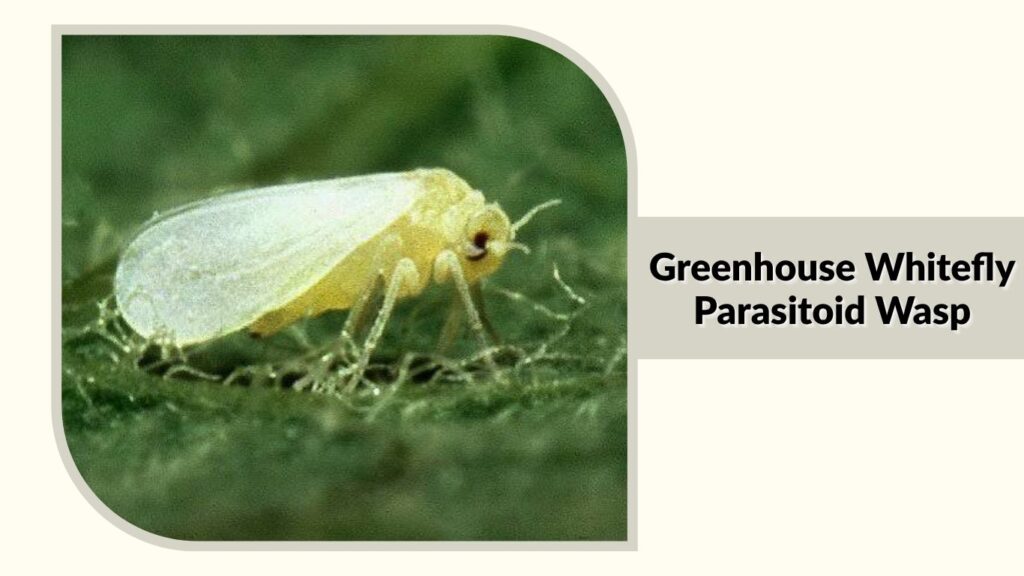
The Greenhouse Whitefly Parasitoid Wasp is a tiny beneficial insect belonging to the Aphelinidae family. It is widely used in biological pest control programs to manage whitefly populations in greenhouses. This species is particularly valuable for protecting vegetables, ornamental plants, and other greenhouse crops from damaging whitefly infestations.
Identification
- Scientific Name: Encarsia formosa
- Family: Aphelinidae
- Size: Approximately 0.4–0.6 mm long
- Color: Black head and thorax with a yellow abdomen in females
- Wings: Transparent with delicate fringes
- Antennae: Short and segmented
- Distinctive Feature: Parasitized greenhouse whitefly pupae turn black
Habitat and Distribution
Greenhouse Whitefly Parasitoid Wasps are widely distributed and commonly occur in greenhouses, nurseries, and protected agricultural environments. They are especially associated with tomato, cucumber, pepper, and ornamental crops where whiteflies reproduce.
Life Cycle and Behavior
Female wasps lay individual eggs inside whitefly nymphs. The developing larvae consume their hosts internally, eventually causing the whitefly pupal cases to darken. Adult wasps emerge through small circular holes. Females can also kill whitefly nymphs by feeding directly on their body fluids.
Importance in Nature
These wasps are among the most widely used biological control agents against greenhouse whiteflies. They help reduce pest populations, limit crop damage, and support environmentally responsible greenhouse production.
7. California Red Scale Parasitoid Wasp (Aphytis melinus)
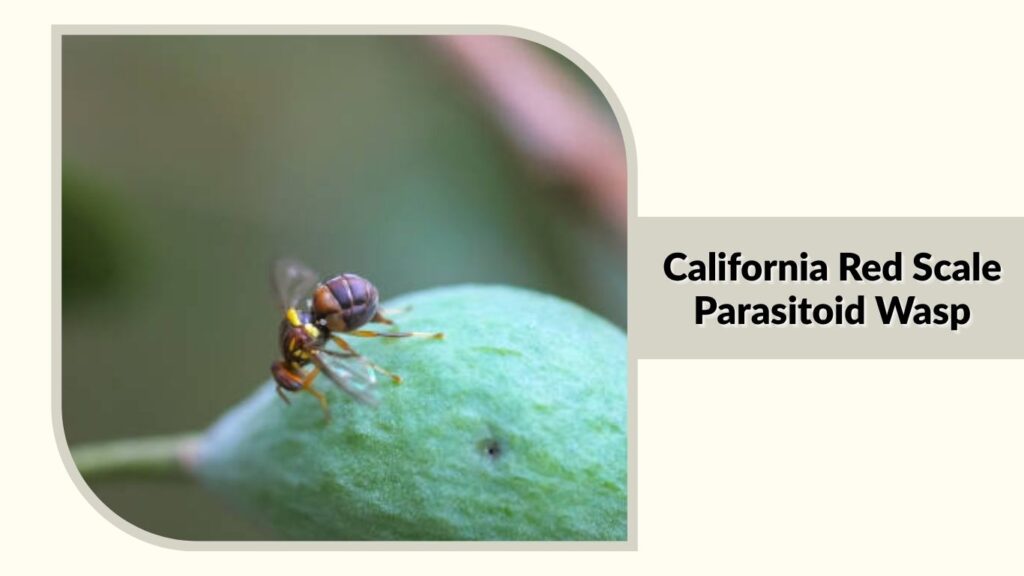
The California Red Scale Parasitoid Wasp is a tiny beneficial insect belonging to the Aphelinidae family. It primarily attacks armored scale insects that damage citrus trees and ornamental plants. This species is widely recognized as an effective biological control agent, especially in commercial citrus orchards.
Identification
- Scientific Name: Aphytis melinus
- Family: Aphelinidae
- Size: Approximately 1.5–2 mm long
- Color: Pale yellow body with translucent wings
- Wings: Two pairs of delicate, transparent wings
- Antennae: Short, club-shaped, and segmented
- Distinctive Feature: Leaves small, round emergence holes in parasitized scale covers
Habitat and Distribution
California Red Scale Parasitoid Wasps occur in citrus-growing regions, particularly California and other warm agricultural areas. They inhabit orange, lemon, grapefruit, and ornamental trees affected by armored scale insects.
Life Cycle and Behavior
Female wasps insert their ovipositors beneath the protective covers of scale insects and deposit eggs on the host bodies. After hatching, the larvae feed externally on the scale insects, eventually killing them. Under favorable temperatures, development from egg to adult takes approximately two weeks.
Importance in Nature
These parasitoids are valuable biological control agents against California red scale and several related pests. Their activity helps protect citrus fruit, reduce scale infestations, and limit the need for chemical insecticides.
8. Chinese Chestnut Gall Parasitoid Wasp (Torymus sinensis)
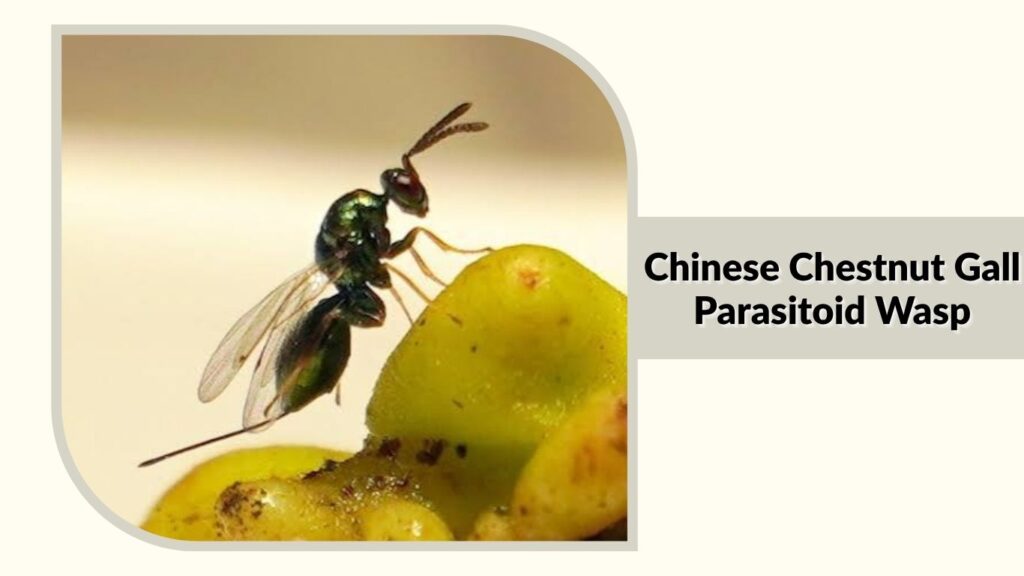
The Chinese Chestnut Gall Parasitoid Wasp is a beneficial insect belonging to the Torymidae family. It is widely recognized for controlling Asian chestnut gall wasps, which damage chestnut trees by producing abnormal growths on leaves and branches. This parasitoid has been introduced into several countries for biological pest management.
Identification
- Scientific Name: Torymus sinensis
- Family: Torymidae
- Size: Approximately 2.5 mm long
- Color: Metallic green body with yellowish legs
- Wings: Clear and delicately veined
- Antennae: Slender, dark, and segmented
- Distinctive Feature: Females possess a long ovipositor extending beyond the abdomen
Habitat and Distribution
Chinese Chestnut Gall Parasitoid Wasps originate from China but have been introduced into Japan, Europe, and North America. They mainly inhabit chestnut orchards, forests, and wooded landscapes where Asian chestnut gall wasps occur.
Life Cycle and Behavior
Female wasps deposit eggs inside developing chestnut galls, typically near the larvae of their host. After hatching, the parasitoid larvae feed externally on the gall wasp larvae. They remain inside the galls through winter and emerge as adults the following spring.
Importance in Nature
These wasps help suppress Asian chestnut gall wasp populations, reducing damage to chestnut trees. They are important biological control agents in commercial chestnut production and forest management.
9. Minute Egg Parasitoid Wasp (Trichogramma pretiosum)
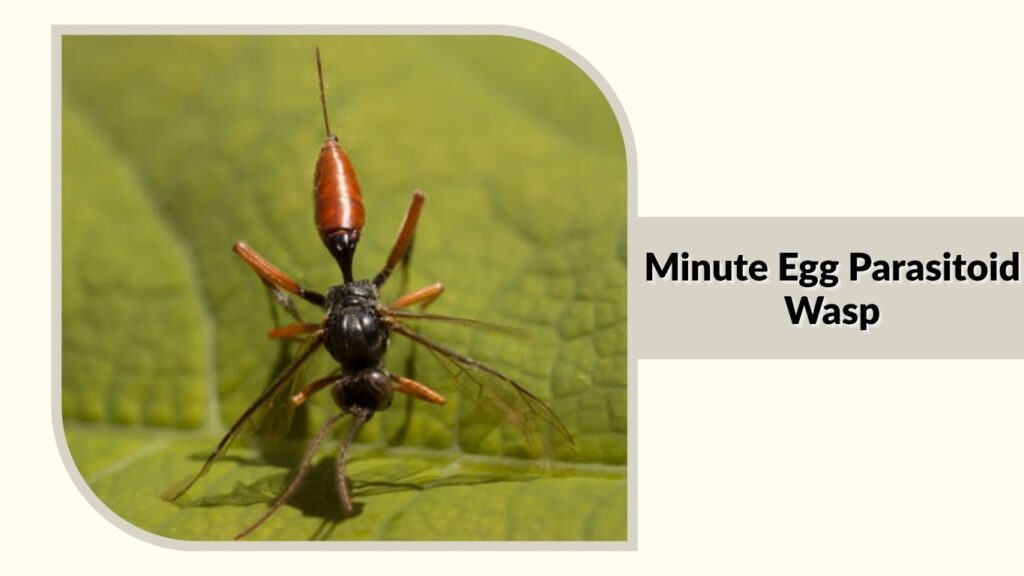
The Minute Egg Parasitoid Wasp is an extremely small beneficial insect belonging to the Trichogrammatidae family. It is commonly used in agricultural pest management because it attacks insect eggs before they hatch into destructive larvae. Despite its tiny size, this species plays an important role in controlling several moth pests.
Identification
- Scientific Name: Trichogramma pretiosum
- Family: Trichogrammatidae
- Size: Approximately 0.5–1 mm long
- Color: Yellowish-brown with darker markings
- Wings: Transparent with fine marginal hairs
- Antennae: Short and segmented
- Distinctive Feature: Parasitized moth eggs often turn black before adult wasps emerge
Habitat and Distribution
Minute Egg Parasitoid Wasps inhabit agricultural fields, vegetable gardens, grasslands, and areas containing suitable moth hosts. They occur throughout much of the Americas and are frequently associated with cotton, corn, tomato, and other crops.
Life Cycle and Behavior
Female wasps deposit eggs inside freshly laid moth eggs. The developing larvae consume the host embryos, preventing caterpillars from hatching. After pupation, adult wasps emerge through small circular openings in the darkened eggs.
Importance in Nature
These wasps help control agricultural pests, including corn earworms and cotton bollworms. They are commercially reared for biological control programs and can reduce crop damage when released under suitable conditions.
10. Asian Citrus Psyllid Parasitoid Wasp (Tamarixia radiata)
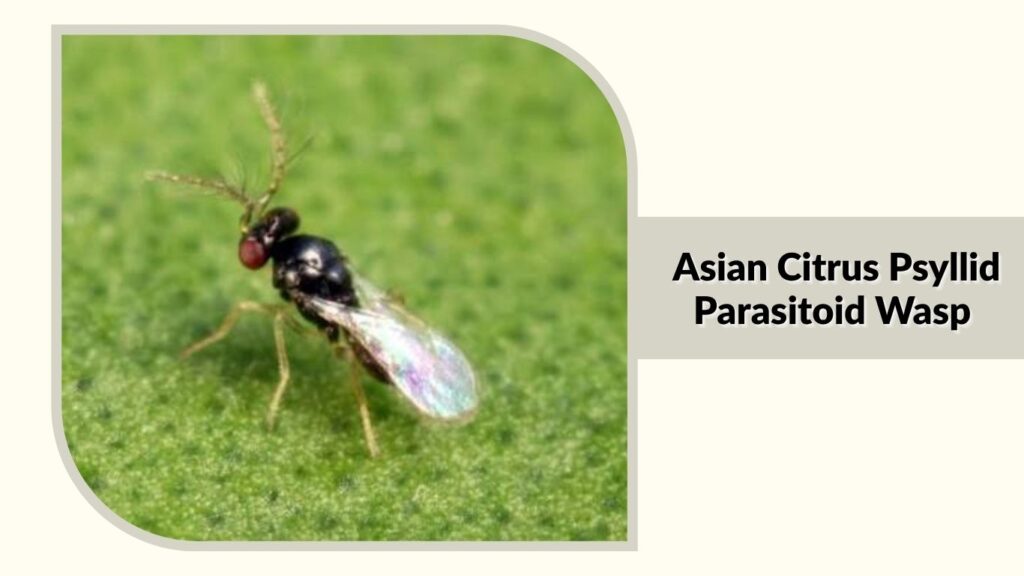
The Asian Citrus Psyllid Parasitoid Wasp is a tiny beneficial insect belonging to the Eulophidae family. It primarily attacks Asian citrus psyllids, which spread the bacteria responsible for citrus greening disease. This species is an important biological control agent in citrus-growing regions worldwide.
Identification
- Scientific Name: Tamarixia radiata
- Family: Eulophidae
- Size: Approximately 0.9–1.0 mm long
- Color: Mostly black with pale-colored legs
- Wings: Transparent with pale yellow veins
- Antennae: Short and segmented; longer in males
- Distinctive Feature: Adult wasps emerge through circular holes in parasitized psyllid nymphs
Habitat and Distribution
Asian Citrus Psyllid Parasitoid Wasps originate from South Asia and occur in several tropical and subtropical regions. They inhabit citrus orchards, gardens, and agricultural areas where Asian citrus psyllids feed on young leaves and shoots.
Life Cycle and Behavior
Female wasps deposit eggs underneath living psyllid nymphs. After hatching, the larvae feed externally on their hosts, eventually killing them. They pupate beneath the hardened remains of the nymphs before emerging as adults.
Under favorable conditions, development takes approximately 11–12 days.
Importance in Nature
These wasps help suppress Asian citrus psyllid populations, potentially reducing the spread of citrus greening disease. They cannot cure infected trees but are valuable components of integrated citrus pest management programs.
11. House Fly Pupal Parasitoid Wasp (Muscidifurax raptor)
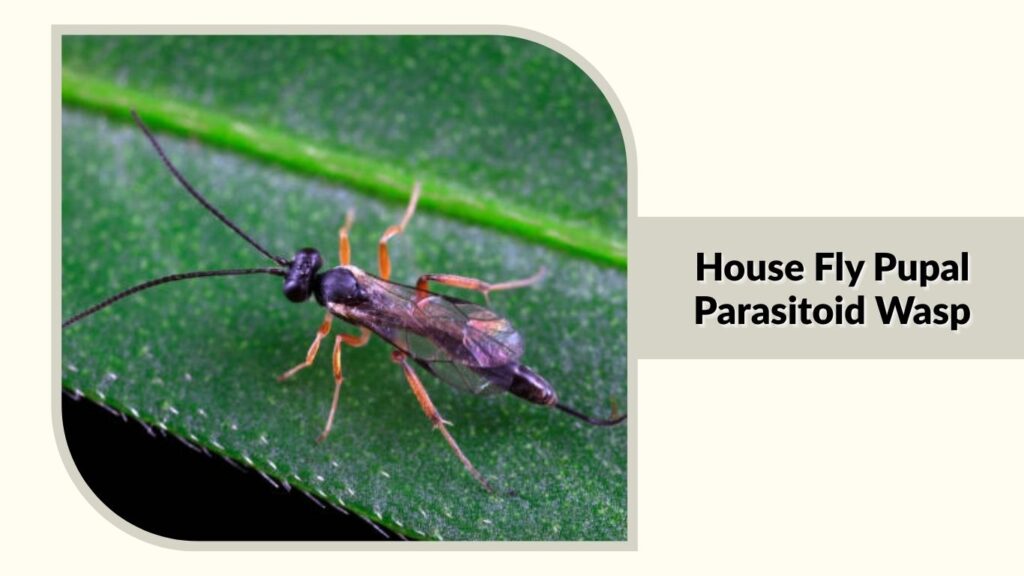
The House Fly Pupal Parasitoid Wasp is a tiny beneficial insect belonging to the Pteromalidae family. It primarily attacks house flies, stable flies, and other nuisance flies that reproduce around livestock facilities. This parasitoid is especially valuable for reducing fly populations in agricultural environments.
Identification
- Scientific Name: Muscidifurax raptor
- Family: Pteromalidae
- Size: Approximately 1–2 mm long
- Color: Shiny black body
- Wings: Transparent with delicate venation
- Antennae: Short, dark, and segmented
- Distinctive Feature: Develops inside fly puparia and emerges through small circular openings
Habitat and Distribution
House Fly Pupal Parasitoid Wasps inhabit livestock farms, poultry facilities, dairy barns, and areas containing decomposing organic material. They occur in various regions worldwide and are particularly useful in agricultural environments where house flies are abundant.
Life Cycle and Behavior
Female wasps locate fly pupae and puncture them using their ovipositors. They deposit eggs inside the puparia, allowing the developing larvae to feed on the fly pupae.
Under favorable conditions, adult wasps emerge approximately 19–21 days after egg laying. Females may also kill additional fly pupae through host feeding.
Importance in Nature
These parasitoids help reduce house fly and stable fly populations around livestock facilities. They are commercially available for biological control programs and can support reduced insecticide use when combined with proper sanitation and manure management.
12. Spalangia Fly Parasitoid Wasp (Spalangia cameroni)
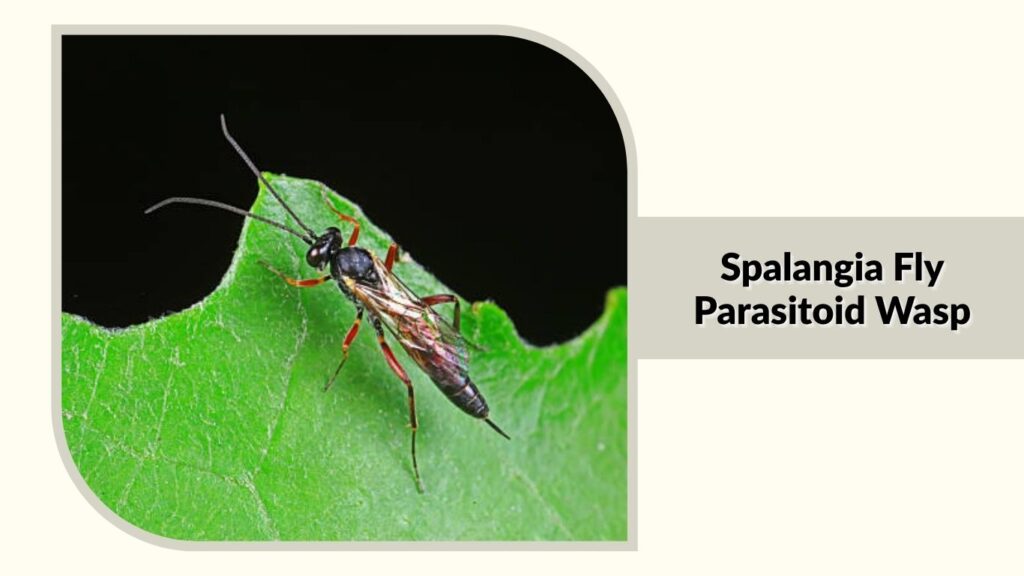
The Spalangia Fly Parasitoid Wasp is a tiny beneficial insect traditionally classified in the Pteromalidae family. It primarily attacks house flies and stable flies, making it an important natural enemy of nuisance insects. This species is particularly valuable in livestock farming environments where flies reproduce in manure and other organic materials.
Identification
- Scientific Name: Spalangia cameroni
- Family: Pteromalidae (traditional classification)
- Size: Approximately 2 mm long
- Color: Shiny black with partly yellowish feet
- Wings: Transparent with reduced venation
- Antennae: Short, dark, and segmented
- Distinctive Feature: Small, elongated body with a glossy surface
Habitat and Distribution
Spalangia Fly Parasitoid Wasps occur in various regions worldwide. They inhabit livestock farms, poultry facilities, stables, and agricultural areas where fly pupae are abundant. Females actively search manure, bedding, and decomposing organic materials for suitable hosts.
Life Cycle and Behavior
Female wasps locate fly pupae and insert their ovipositors through the protective puparium. They deposit eggs onto the developing flies inside. After hatching, the larvae consume their hosts before pupating within the puparia. Adult wasps eventually emerge through small openings.
Importance in Nature
These wasps help suppress house fly and stable fly populations. They are used in biological control programs, particularly when combined with proper manure management and sanitation practices.
13. Cabbage White Pupal Parasitoid Wasp (Pteromalus puparum)
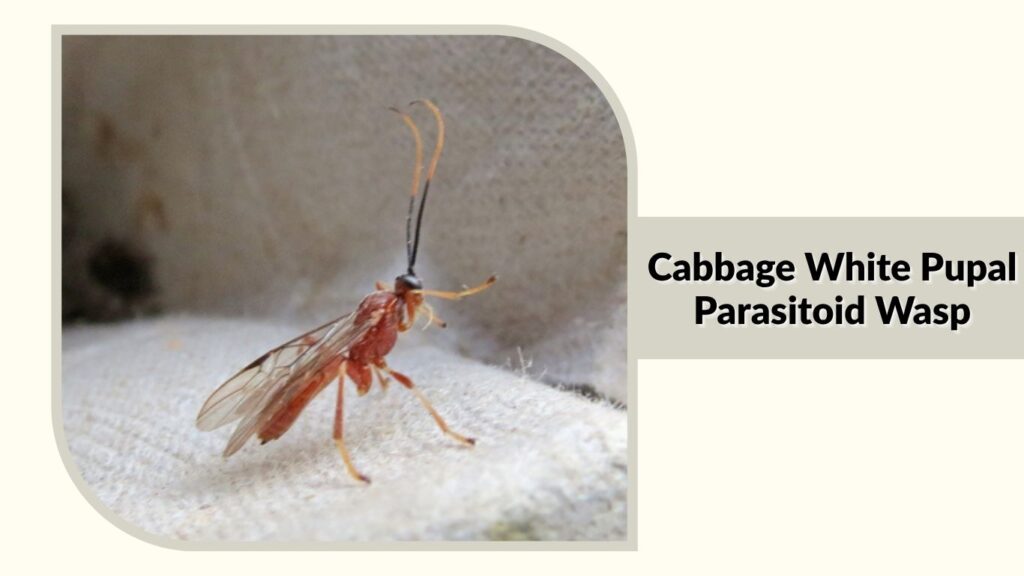
The Cabbage White Pupal Parasitoid Wasp is a small beneficial insect belonging to the Pteromalidae family. It primarily attacks the pupae of cabbage white butterflies and several other butterfly species. This parasitoid contributes to the natural regulation of caterpillars that feed on cabbage, broccoli, cauliflower, and related vegetables.
Identification
- Scientific Name: Pteromalus puparum
- Family: Pteromalidae
- Size: Approximately 2–3 mm long
- Color: Dark metallic blue with a greenish sheen
- Wings: Transparent with pale brown veins
- Antennae: Brown, segmented, and slightly clubbed
- Distinctive Feature: Multiple adult wasps may emerge from a single butterfly chrysalis
Habitat and Distribution
Cabbage White Pupal Parasitoid Wasps occur across many parts of the world. They inhabit vegetable gardens, agricultural fields, grasslands, and areas supporting cabbage white butterflies. Adults search vegetation for suitable butterfly pupae.
Life Cycle and Behavior
Females insert their ovipositors into butterfly pupae and deposit several eggs inside. The developing larvae feed internally on the host tissues, eventually killing the butterfly. Multiple parasitoids can complete their development within one chrysalis before emerging as adults.
Importance in Nature
These wasps help reduce populations of cabbage white butterflies by preventing parasitized pupae from developing into adults. They are beneficial insects in agricultural ecosystems, although they may also parasitize non-pest butterfly species.
14. Citrus Blackfly Parasitoid Wasp (Encarsia perplexa)
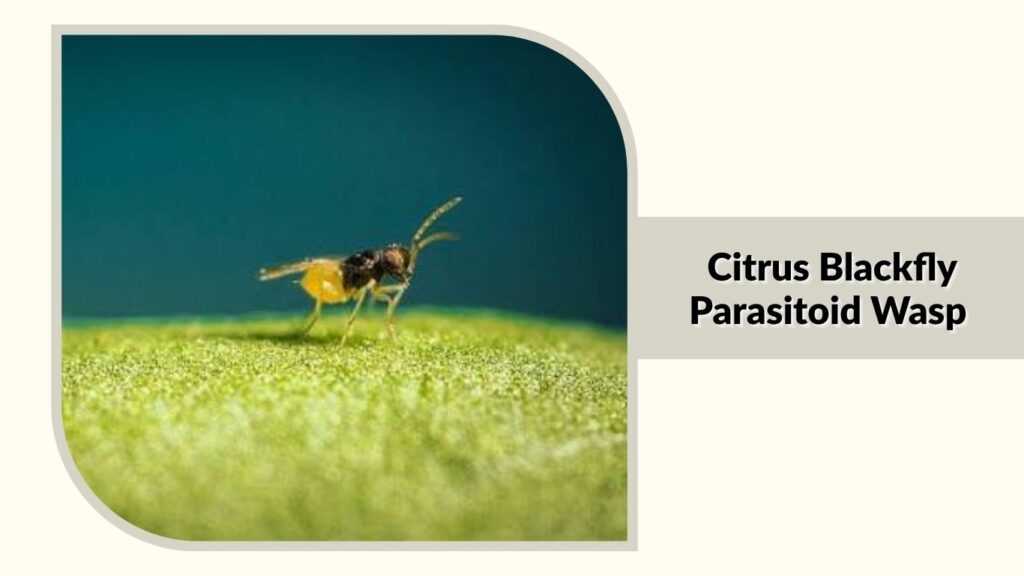
The Citrus Blackfly Parasitoid Wasp is a tiny beneficial insect belonging to the Aphelinidae family. It primarily attacks citrus blackflies, which damage citrus trees by feeding on plant sap and producing honeydew. This species has been introduced into several countries to help control citrus blackfly populations naturally.
Identification
- Scientific Name: Encarsia perplexa
- Family: Aphelinidae
- Size: Approximately 0.75–1.1 mm long
- Color: Females have a pale yellowish thorax and partly dark brown abdomen
- Wings: Transparent with slightly smoky central areas
- Antennae: Short, containing eight segments
- Distinctive Feature: Produces round emergence holes in parasitized citrus blackfly cases
Habitat and Distribution
Citrus Blackfly Parasitoid Wasps originate from parts of Asia, including India and Vietnam. They have been introduced into several tropical and subtropical regions, including Mexico, Florida, Texas, and Caribbean countries. They inhabit citrus orchards, gardens, and areas where citrus blackflies occur.
Life Cycle and Behavior
Females deposit eggs inside citrus blackfly nymphs, particularly second-stage nymphs. The developing parasitoids consume host tissues internally before completing their development.
Under favorable laboratory conditions, the life cycle takes approximately 30–35 days.
Importance in Nature
These wasps are effective natural enemies of citrus blackflies. They help maintain low pest populations, reducing honeydew accumulation and sooty mold growth on citrus leaves.
15. Brown Soft Scale Parasitoid Wasp (Metaphycus luteolus)
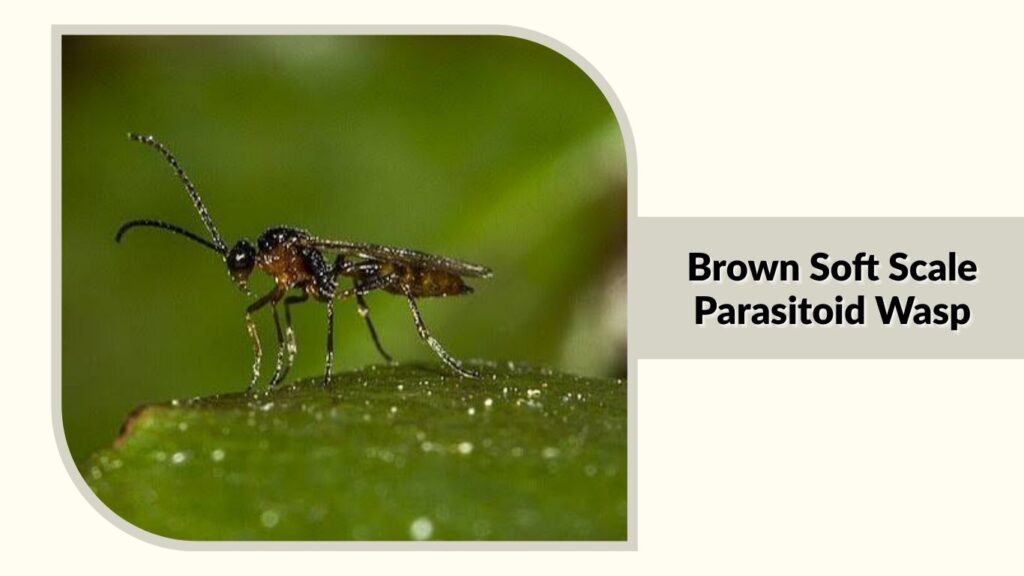
The Brown Soft Scale Parasitoid Wasp is a tiny beneficial insect belonging to the Encyrtidae family. It primarily attacks soft scale insects, particularly brown soft scales that feed on citrus trees and ornamental plants. This species contributes to natural pest control by reducing scale populations before infestations become severe.
Identification
- Scientific Name: Metaphycus luteolus
- Family: Encyrtidae
- Size: Approximately 1–2 mm long
- Color: Yellowish to brown, with darker markings
- Wings: Transparent with reduced venation
- Antennae: Short, segmented, and slightly clubbed
- Distinctive Feature: Parasitized scale insects develop small, circular emergence holes
Habitat and Distribution
Brown Soft Scale Parasitoid Wasps occur in citrus-growing regions and other areas supporting soft scale insects. They are particularly associated with California orchards and vegetation containing susceptible scale colonies. Adults search plant leaves and stems for suitable hosts.
Life Cycle and Behavior
Female wasps deposit eggs inside living soft scale insects. Their larvae develop internally, gradually consuming the host tissues. Depending on host size and other conditions, more than one parasitoid may develop inside a single scale insect.
After pupation, adults emerge through openings in the dead host’s covering.
Importance in Nature
These wasps provide natural biological control of brown soft scales and related pests. Their activity helps protect citrus trees, ornamental plants, and agricultural crops from scale insect infestations.
FAQs
1. What are Chalcid wasps?
Chalcid wasps are small insects belonging to the superfamily Chalcidoidea, which includes numerous families and thousands of species. Most are parasitoids that develop on or inside other insects, although some pollinate plants or form galls. They occur worldwide and play important roles in natural ecosystems and agricultural pest management.
2. Are Chalcid wasps harmful to humans?
Most Chalcid wasps are harmless to humans. They generally do not display aggressive behavior or defend large colonies like social wasps. Although some species possess ovipositors that resemble stingers, these structures are primarily used for reproduction. Many species are beneficial because they naturally control agricultural and garden pests.
3. What do Chalcid wasps eat?
Adult Chalcid wasps may feed on flower nectar, honeydew, or fluids obtained from host insects. Their larvae have diverse feeding habits. Many develop as parasitoids of aphids, flies, caterpillars, or scale insects, while others consume plant tissues or develop inside figs through specialized relationships with their host plants.
4. Where do Chalcid wasps live?
Chalcid wasps inhabit forests, grasslands, agricultural fields, gardens, orchards, and tropical environments worldwide. Different species prefer habitats containing suitable host insects or plants. Some are commonly found around citrus trees, eucalyptus plantations, vegetable gardens, and greenhouses, where their host insects provide opportunities for feeding and reproduction.
5. How do Chalcid wasps help control pests?
Many Chalcid wasps control pests by laying eggs inside or on insect hosts. Their larvae develop by consuming the hosts, preventing them from reaching adulthood or reproducing. Certain species are used in biological control programs against whiteflies, scale insects, fruit flies, and other agricultural pests, reducing dependence on chemical insecticides.
