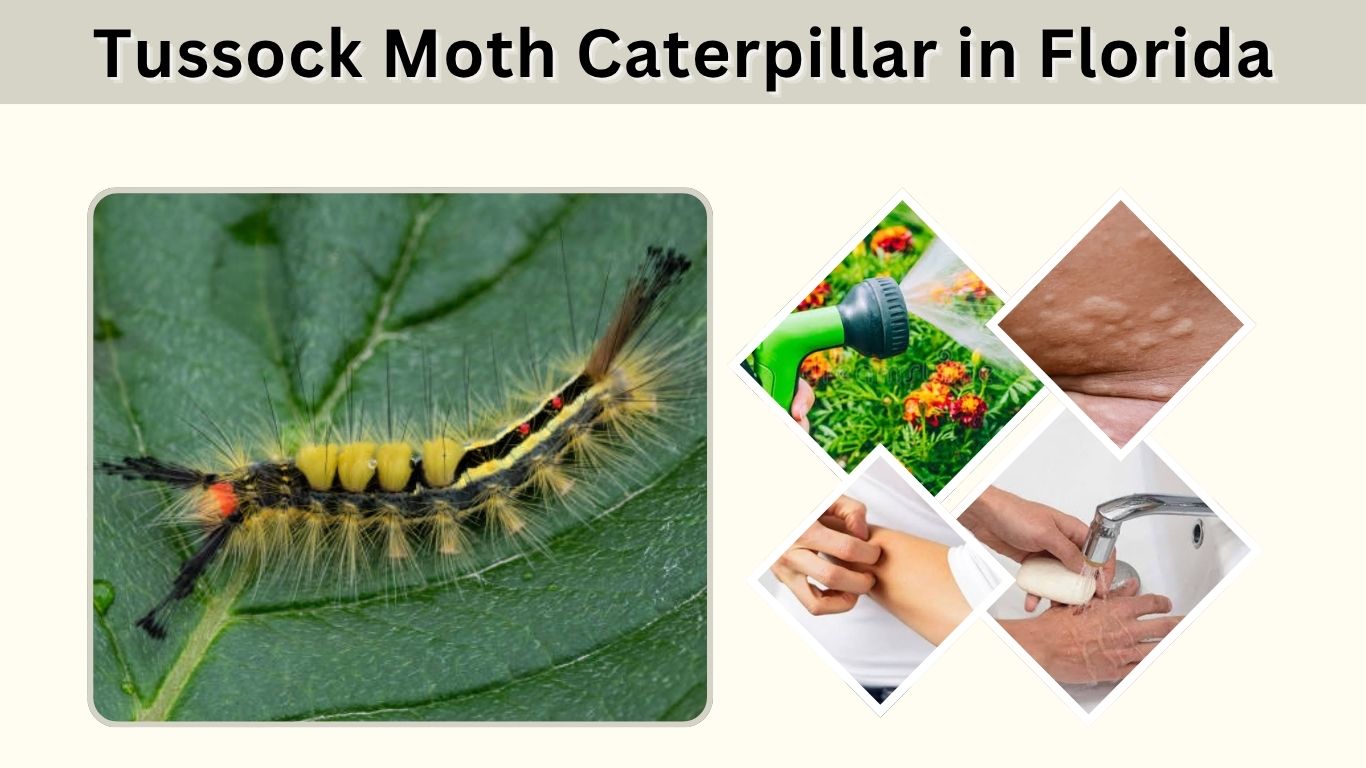
Tussock moth caterpillars are a familiar spring sight throughout Florida. These hairy larvae often feed on oak trees before crawling onto walls, patios, vehicles and outdoor furniture to form cocoons. Their colorful tufts may look attractive, but direct contact should be avoided because loose hairs can cause itching, redness and dermatitis in sensitive people. Florida’s most common species is the fir tussock moth, although white-marked and definite tussock moth caterpillars also occur in the state.
Florida Tussock Moth Caterpillar Quick Facts
| Feature | Information |
| Main Florida species | Fir, white-marked and definite tussock moths |
| Most common species | Fir tussock moth |
| Scientific genus | Orgyia |
| Main season | February through April |
| Common host | Oak trees |
| Diet | Leaves of trees and shrubs |
| Human risk | Irritating hairs may cause dermatitis |
| Plant damage | Usually limited on mature trees |
| Adult female | Commonly wingless |
| Best response | Avoid contact or remove mechanically |
Three Orgyia species are regularly reported in Florida: the fir tussock moth (O. detrita), white-marked tussock moth (O. leucostigma) and definite tussock moth (O. definita). The fir tussock moth is generally the most abundant, while the definite tussock moth is encountered less frequently.
What Does a Florida Tussock Moth Caterpillar Look Like?
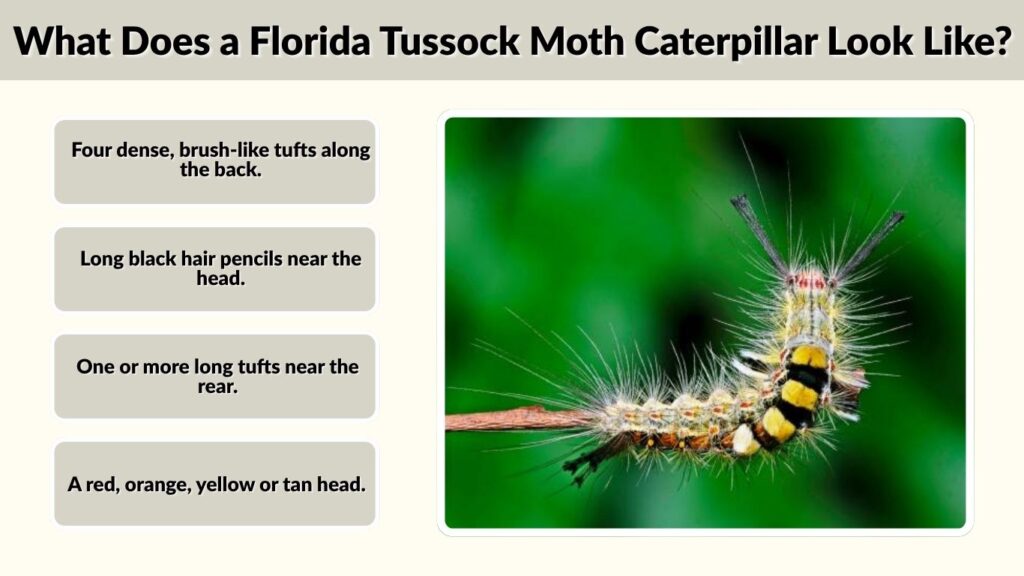
These caterpillars have conspicuous tufts of hair that make them appear soft or fuzzy. However, the hairs can become embedded in skin and should not be touched.
Identification Features
Most Florida tussock moth caterpillars have:
- Four dense, brush-like tufts along the back
- Long black hair pencils near the head
- One or more long tufts near the rear
- A red, orange, yellow or tan head
- Dark, pale gray or yellowish body coloration
- Small colored spots along the back and sides
- Numerous fine hairs covering the body
The fir tussock moth commonly has a red head, dark body, orange spots and four pale dorsal tufts. White-marked tussock moth caterpillars are usually lighter and have yellow markings. The less-common definite tussock moth generally has a yellow or tan head.
Where Are They Commonly Found?
The caterpillars spend their early development feeding in trees, especially oaks. As they mature, they descend and wander across nearby surfaces while looking for places to form cocoons.
They may appear on:
- House walls and siding
- Patios and outdoor furniture
- Fences and mailboxes
- Vehicles and boats
- Playground equipment
- Tree trunks
- Building eaves
- Picnic tables
Their presence on a building does not mean they are eating wood or damaging the structure. They are generally searching for protected pupation sites.
When Is Tussock Moth Caterpillar Season in Florida?
Florida’s main tussock moth season occurs during late winter and early spring. Eggs commonly begin hatching between February and March as oak trees produce tender new leaves.
The larvae feed for several weeks and become particularly noticeable during March and April. By April, many mature caterpillars leave their host trees and attach cocoons to buildings, vegetation and other nearby objects. Seasonal timing can vary somewhat with location, temperature and weather.
Heavy numbers in spring are usually a natural seasonal event rather than evidence of a new invasive species. The caterpillars often disappear within a few weeks after completing their feeding stage.
Are Florida Tussock Moth Caterpillars Poisonous?
Florida tussock moth caterpillars should not be handled, although they do not bite or deliberately sting like wasps. Their hairs can detach, penetrate or irritate the skin and produce an inflammatory or allergic reaction.
The common fir tussock moth does not deliver a conventional venomous sting. However, contact with its hairs or hair-containing cocoon may produce localized itching, burning, redness and swelling. Sensitivity varies: one person may have no reaction, while another develops a noticeable rash.
The caterpillars should not be confused with Florida’s more medically significant stinging species, including puss, saddleback, Io moth and hag moth caterpillars. Those species possess toxin-associated spines capable of causing more intense reactions.
What Does a Tussock Moth Caterpillar Rash Look Like?
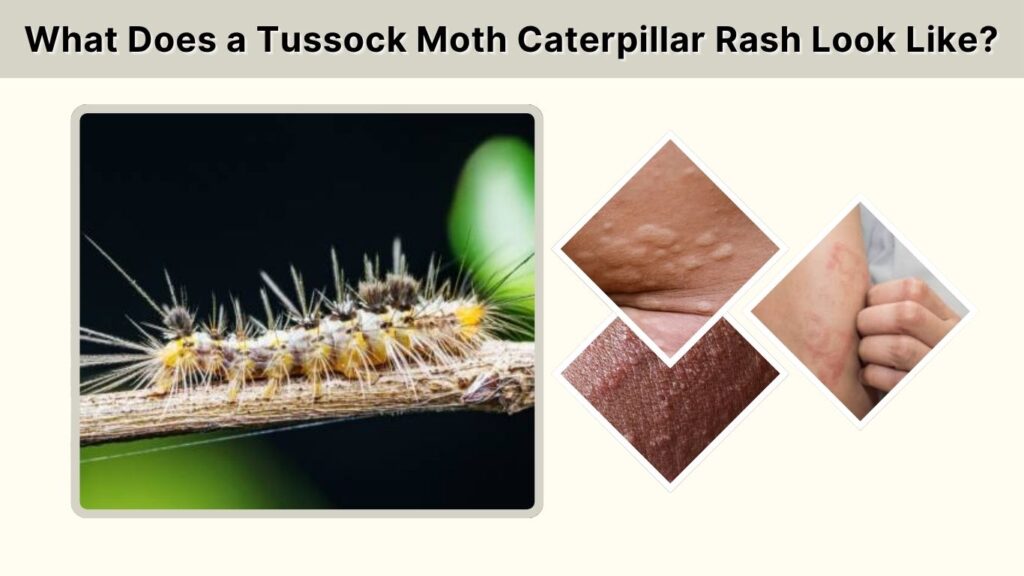
A reaction may begin shortly after touching a caterpillar, cocoon or contaminated object. Loose hairs can also remain on clothing, furniture or gardening equipment.
Possible symptoms include:
- Small red or discolored bumps
- Itching or burning
- Localized swelling
- Raised welts
- A prickling sensation
- Irritated patches where hairs contacted the skin
- Eye irritation if airborne hairs enter the eyes
The rash may resemble contact dermatitis, heat rash or other insect-related irritation. Pictures alone cannot confirm the cause because several skin conditions produce similar symptoms.
How to Treat a Tussock Moth Caterpillar Rash
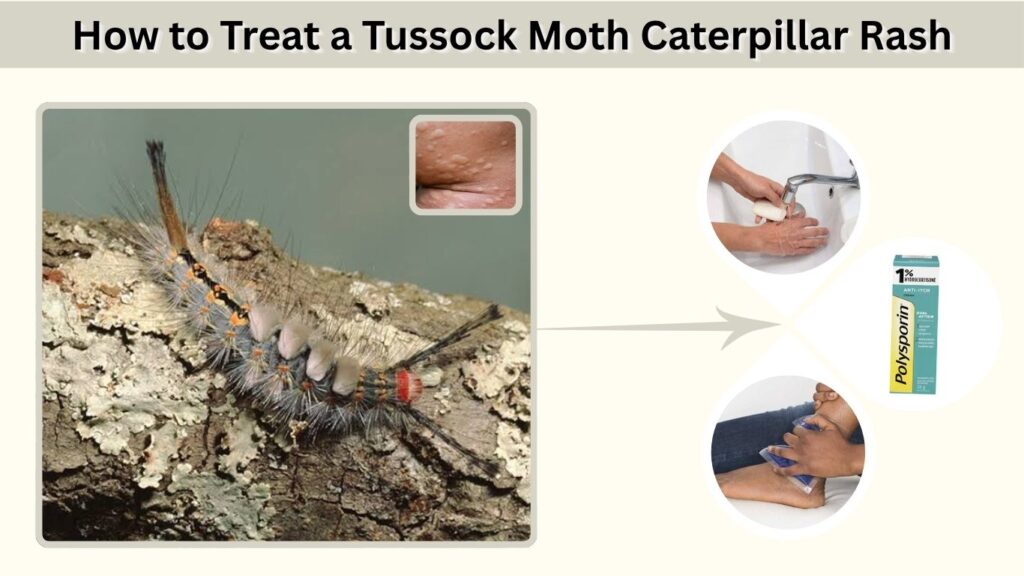
Treatment begins by removing any hairs that may still be attached to the skin.
Remove the Hairs
Do not rub the affected area because this can push the hairs deeper into the skin.
Place adhesive tape over the exposed area, press gently and pull it away. Repeat with fresh pieces of tape to lift out remaining hairs. Wash the skin gently with soap and water afterward.
Reduce Itching and Swelling
A cold compress may help relieve discomfort. A pharmacist or healthcare professional may recommend calamine lotion, hydrocortisone cream or an oral antihistamine based on the person’s age, symptoms and medical history.
Wash contaminated clothing separately and rinse gardening tools or outdoor objects that may contain loose hairs.
When to Seek Medical Help
Contact a healthcare professional when:
- Pain or swelling becomes severe
- The rash continues spreading
- Blisters develop across a large area
- Hairs enter the eye
- Symptoms do not improve
- The affected person is very young or highly allergic
Difficulty breathing, facial or throat swelling, dizziness or fainting requires emergency medical attention because these may indicate a serious allergic reaction.
Do Tussock Moth Caterpillars Damage Trees?
The caterpillars feed primarily on fresh foliage. Oaks are especially common hosts in Florida, although some species also consume leaves from maple, willow, elm, apple and other trees or shrubs.
Small larvae create holes in leaves, while mature caterpillars may consume most of a leaf except its larger veins. Healthy, established oak trees usually tolerate this seasonal feeding and recover without treatment. Young trees, small ornamentals or heavily infested shrubs may experience more noticeable defoliation.
How to Get Rid of Tussock Moth Caterpillars
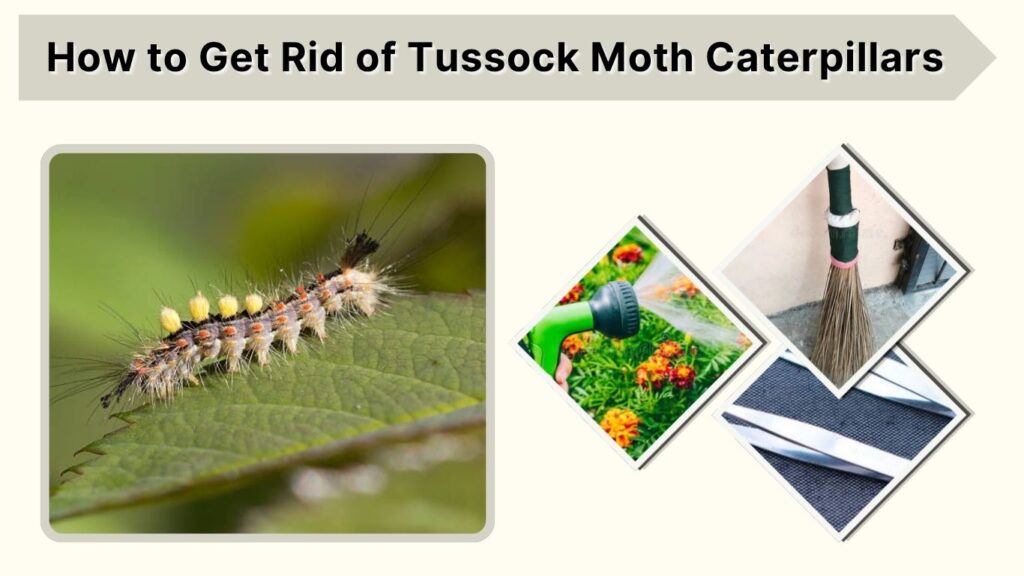
Control is often unnecessary. Birds, parasitoid wasps, predatory insects, pathogens and weather naturally reduce their numbers.
Safe Mechanical Removal
Wear gloves, long sleeves and eye protection. Avoid crushing caterpillars or cocoons with bare hands.
Small numbers can be:
- Swept into a container with a long-handled broom
- Sprayed from small plants with a garden hose
- Collected using disposable tools
- Removed from surfaces with tweezers
- Dropped into soapy water when control is necessary
Avoid dry sweeping near your face because this may release hairs into the air. UF/IFAS recommends mechanical relocation rather than pesticides when caterpillars are simply crawling on buildings or other surfaces.
When Treatment May Be Needed
A caterpillar-control product may be considered when large numbers are actively defoliating a valuable young tree or shrub. Products containing Bacillus thuringiensis var. kurstaki, commonly called Bt-k, can control susceptible young caterpillars after they consume treated foliage.
Bt is most effective against small, actively feeding larvae. It will not remove wandering mature caterpillars, egg masses or completed cocoons. Follow the product label and avoid unnecessary broad-spectrum insecticide use.
Tussock Moth Life Cycle
Eggs hatch during spring when suitable foliage becomes available. The caterpillars eat and molt repeatedly before leaving their host plants to form cocoons.
The cocoon contains silk mixed with larval hairs, so it can also irritate skin. Male moths emerge with functional wings and fly in search of females. Females of these Florida species are generally wingless and remain on or close to their cocoons, where they mate and deposit egg masses.
FAQs
Do Florida tussock moth caterpillars sting?
They do not deliberately sting, but their irritating hairs can contact the skin and cause itching, burning, swelling or welts. Avoid touching both the caterpillars and their cocoons.
What month do tussock moth caterpillars appear in Florida?
They usually begin appearing during February or March and are most conspicuous in March and April. Their exact timing varies with weather and location.
Are white-marked tussock moth caterpillars found in Florida?
Yes. The white-marked tussock moth occurs in Florida, although the fir tussock moth is generally more common. White-marked larvae typically have a lighter body, red head and four pale dorsal tufts.
Should I spray tussock moth caterpillars?
Usually not. Mature trees normally tolerate their feeding, and wandering caterpillars disappear after pupation. Mechanical removal is preferable unless young larvae are causing serious defoliation to a valuable plant.
Can tussock moth cocoons cause a rash?
Yes. Caterpillar hairs are incorporated into the cocoon and may remain irritating after the larva pupates. Wear gloves and protective clothing when removing old cocoons.