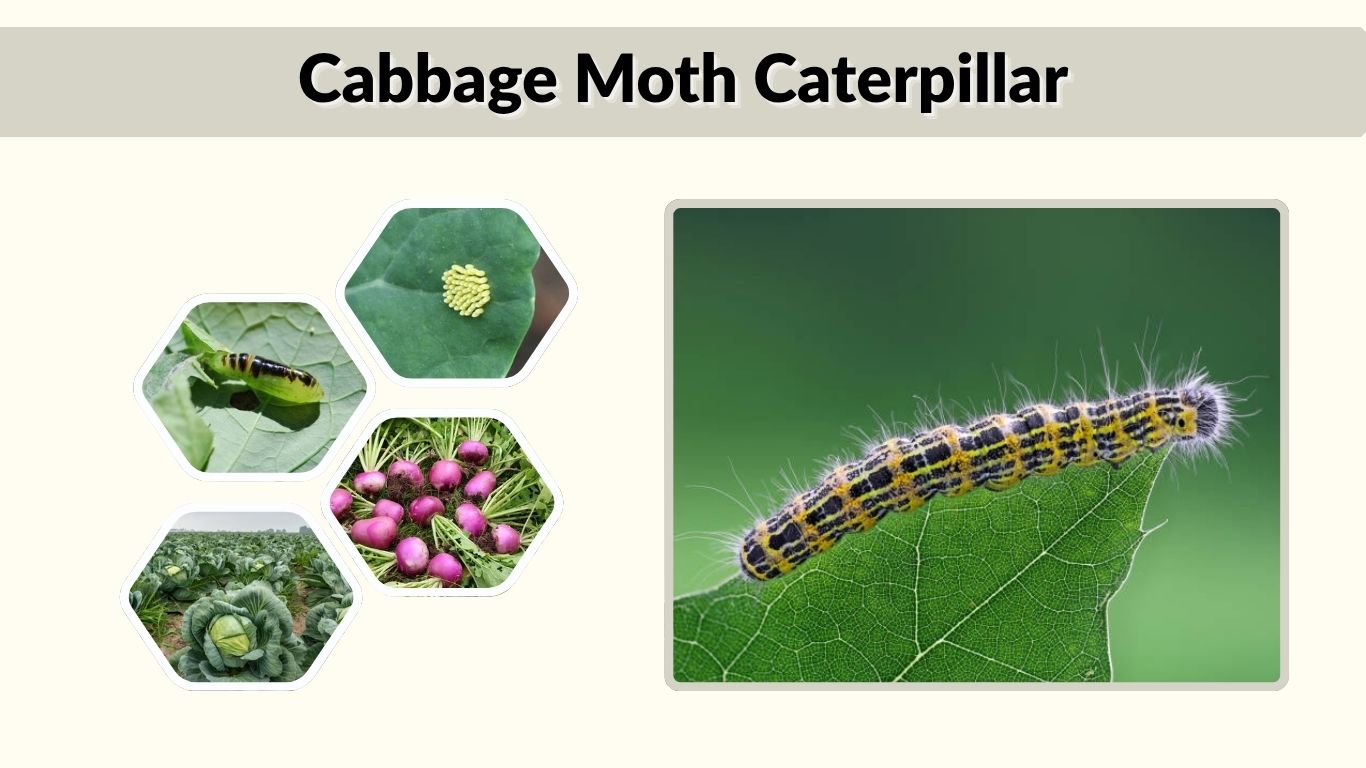
The cabbage moth caterpillar is a destructive garden pest that feeds on cabbage, broccoli, cauliflower, kale, Brussels sprouts, and other brassica crops. The name commonly refers to the larva of the cabbage moth, Mamestra brassicae, especially in the United Kingdom and Europe. However, gardeners sometimes use “cabbage moth” for several green caterpillars found on vegetables. Correct identification matters because cabbage moths, cabbage loopers, cabbage white butterflies, and diamondback moths differ in appearance and behavior.
Cabbage Moth Caterpillar Quick Facts
The true cabbage moth is a gray-brown nocturnal moth whose caterpillars may be green, brown, or nearly black. Mature larvae can become large and may hide deep inside developing cabbage heads, where they are difficult to detect.
| Feature | Information |
| Scientific name | Mamestra brassicae |
| Adult type | Nocturnal moth |
| Caterpillar color | Green, brown, or almost black |
| Mature length | Approximately 40–50 mm |
| Primary hosts | Cabbage and other brassicas |
| Main damage | Holes, skeletonized leaves, and damaged heads |
| Active period | Mainly summer through early autumn |
| Overwintering stage | Usually a pupa in the soil |
| Human danger | Not considered a medically important stinging caterpillar |
What Does a Cabbage Moth Caterpillar Look Like?
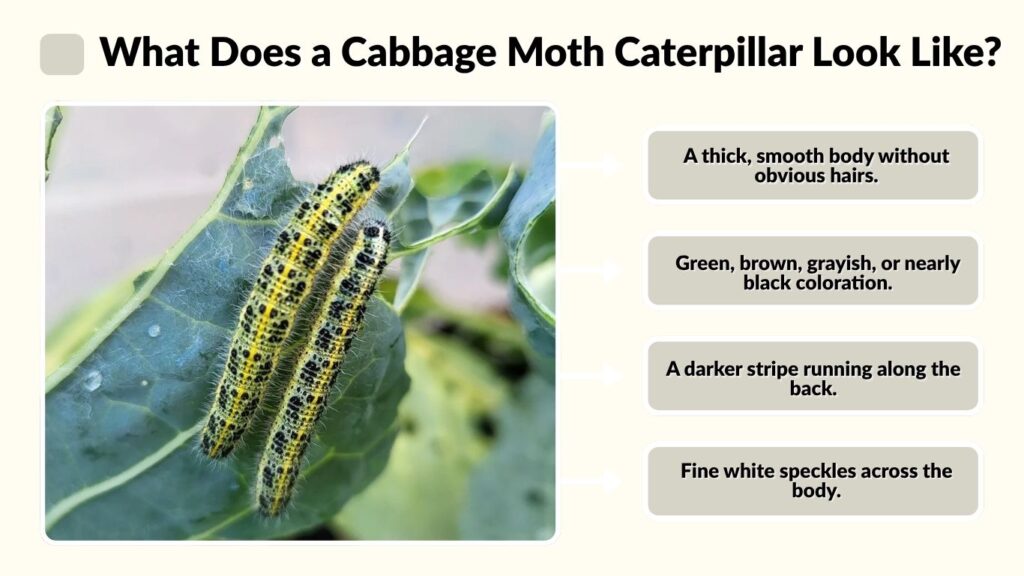
Cabbage moth caterpillars change considerably as they grow. Newly hatched larvae are usually green, but older individuals may become brownish green, dark brown, or almost black.
Identification Features
A mature cabbage moth caterpillar commonly has:
- A thick, smooth body without obvious hairs
- Green, brown, grayish, or nearly black coloration
- A darker stripe running along the back
- Fine white speckles across the body
- A pale yellow, green, or brownish stripe along each side
- A rounded head
- A mature length of about 40–50 millimeters
The adult moth is mottled grayish brown. Its forewings show a pale-edged, kidney-shaped marking and an irregular light line near the wing margin.
Eggs
Female cabbage moths lay groups of small, pale eggs on brassica leaves. The eggs are roughly hemispherical and become darker shortly before hatching. A batch may contain dozens of eggs, allowing many caterpillars to appear on one plant at the same time.
Cabbage Moth or Cabbage White Caterpillar?
The term “cabbage moth caterpillar” is frequently applied to caterpillars that belong to different moth and butterfly species.
| Caterpillar | Appearance | Movement and damage |
| True cabbage moth | Smooth, green to dark brown | Hides inside leaves and cabbage heads |
| Small cabbage white | Velvety pale green | Moves slowly and feeds individually |
| Large cabbage white | Yellow-black and visibly hairy | Often feeds in groups on outer leaves |
| Cabbage looper | Light green with pale side stripes | Moves by arching its body into a loop |
| Diamondback moth | Small, slender, pale green | Wiggles when touched and creates window-like damage |
The true cabbage moth and small cabbage white can be especially damaging because they may move into the center of cabbage plants. Large cabbage white caterpillars generally remain more visible on the outer foliage.
Cabbage Looper Moth Caterpillar
The cabbage looper, Trichoplusia ni, is especially common in North American gardens. Its caterpillar is pale green with narrow white lines along its sides. Because it lacks several middle pairs of legs, it bends its body into a characteristic loop while moving. Mature loopers can reach approximately 1½ inches long.
White Cabbage Caterpillar
The caterpillar often called a white cabbage moth caterpillar is usually the larva of a cabbage white butterfly, not a moth. The small cabbage white caterpillar is velvety green with faint yellow stripes, while the large cabbage white caterpillar is yellow and black with noticeable hairs.
What Do Cabbage Moth Caterpillars Eat?
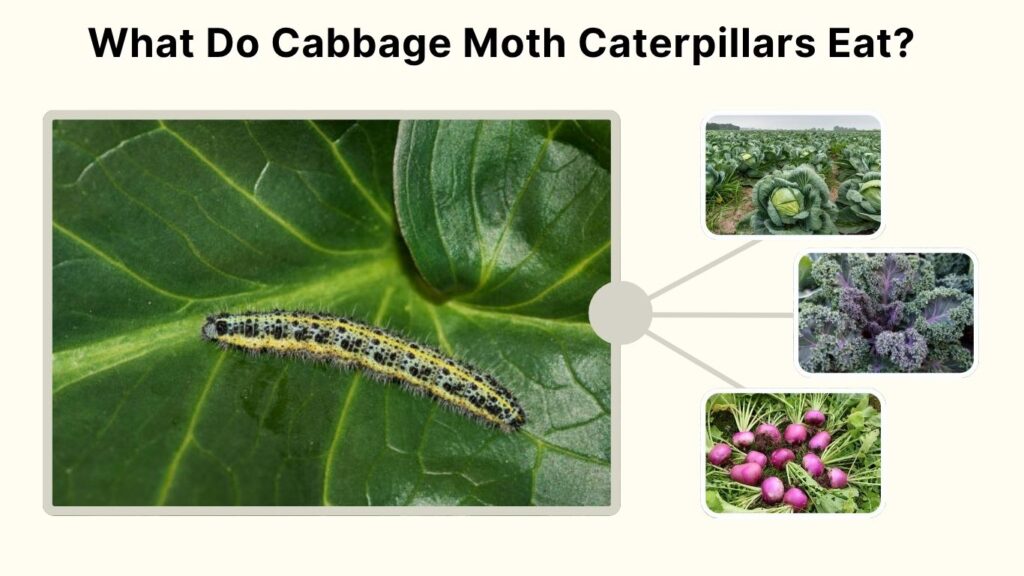
Cabbage moth caterpillars feed mainly on brassicas, including:
- Cabbage
- Broccoli
- Cauliflower
- Kale
- Brussels sprouts
- Turnips
- Swedes
- Radishes
- Horseradish
- Mustard plants
- Ornamental brassicas
The true cabbage moth can also feed on potatoes and several other vegetables, although vegetable brassicas are among its most vulnerable hosts.
Signs of Cabbage Moth Caterpillar Damage
Young larvae initially make small holes in leaves. As they grow, they consume larger areas and may leave only the major veins. Severe feeding can skeletonize foliage, stunt young plants, and interfere with the development of cabbage, broccoli, or cauliflower heads.
Common signs include:
- Ragged or irregular holes in leaves
- Partially skeletonized foliage
- Caterpillar droppings inside the plant
- Damaged or contaminated cabbage heads
- Caterpillars hidden between tightly folded leaves
- Young plants with severely reduced growth
- Leaves with thin, transparent “windowpane” areas
Dark green or brown droppings near feeding holes often reveal a hidden caterpillar. Damage near the center of a cabbage is particularly serious because the caterpillar and its waste can make the harvested head unusable.
Cabbage Moth Caterpillar Life Cycle
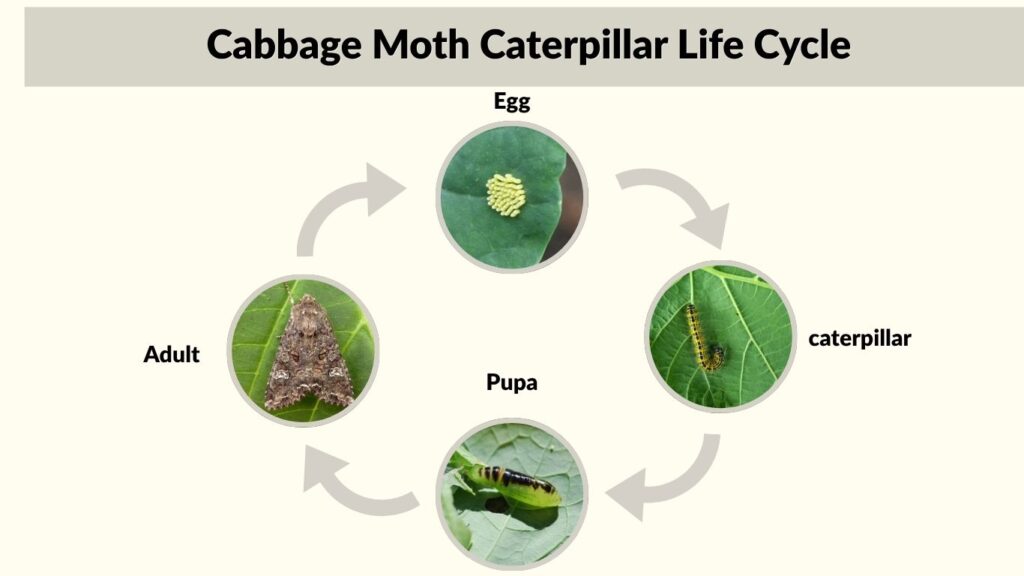
The cabbage moth develops through four main stages: egg, caterpillar, pupa, and adult moth.
Egg and Caterpillar Stages
Adults from the first generation generally emerge during late spring or early summer. Females lay batches of eggs on host plants, and the young larvae begin feeding after hatching.
The caterpillars feed through several growth stages before becoming fully mature. Early larvae may remain on outer leaves, while larger individuals frequently move deeper into the plant.
Pupa and Adult Moth
After completing their feeding, cabbage moth caterpillars leave the plant and pupate in the soil. The species usually overwinters as a pupa, although some may survive winter as larvae.
In the UK, two main generations typically occur. First-generation larvae feed during June and July, while a second and often more damaging generation feeds from August into October.
How to Get Rid of Cabbage Moth Caterpillars
The most effective control program combines regular inspection, physical exclusion, hand removal, garden sanitation, and careful use of approved treatments when necessary.
Inspect Plants Regularly
Check brassicas at least once a week, paying close attention to:
- Leaf undersides
- Newly forming heads
- Folded inner leaves
- Leaf veins
- Areas containing fresh droppings
Remove egg clusters and small caterpillars before they move into the center of the plant. Young larvae are easier to control and cause less damage than mature caterpillars.
Handpick Caterpillars
For a small garden, handpicking is often the simplest method. Wear gloves, remove visible caterpillars and eggs, and place them in a container of soapy water.
Open cabbage leaves carefully because mature caterpillars may hide deep inside the head. Remove badly damaged leaves when doing so will not harm the developing crop.
Protect Plants With Row Covers
Cover young brassicas with fine insect mesh, horticultural fleece, or floating row cover before adult moths begin laying eggs.
Secure the edges so moths cannot crawl underneath. Keep the material raised above the foliage when possible, because some moths and butterflies may lay eggs through netting that touches the leaves.
Remove Host Weeds and Crop Residue
Wild mustard, shepherd’s purse, and other plants in the cabbage family can support caterpillar populations. Remove these weeds from around the growing area.
After harvest, clear heavily infested leaves and crop debris rather than leaving protected places where pests may survive.
Encourage Natural Enemies
Birds, predatory insects, parasitoid wasps, and flies can reduce caterpillar numbers. Avoid unnecessary broad-spectrum insecticide applications that may kill these beneficial species.
Some parasitoid wasps lay eggs in caterpillars, eventually killing them. Natural control may not stop immediate feeding, but it helps reduce later generations.
Cabbage Moth Caterpillar Spray Options
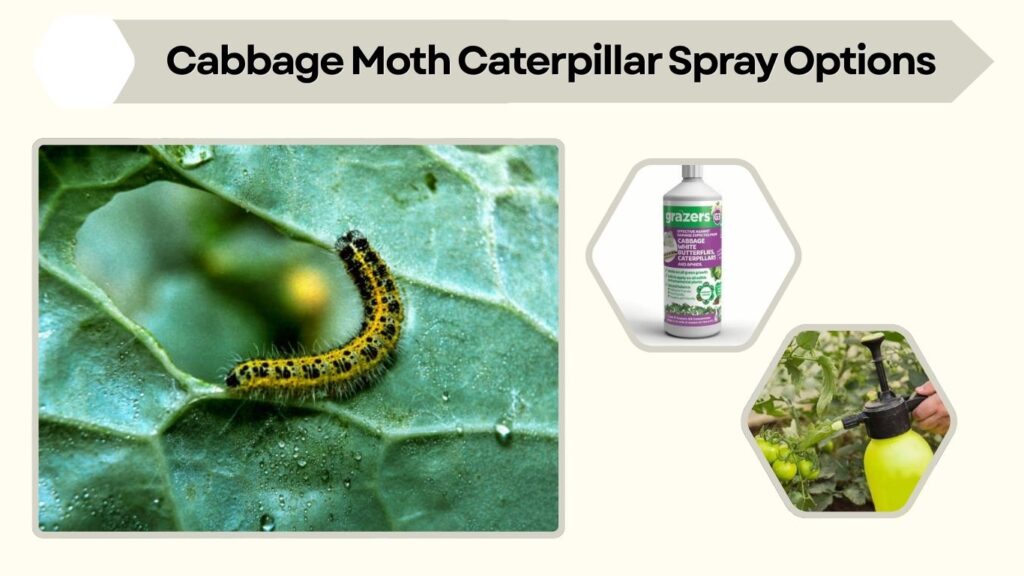
When physical controls are insufficient, use only a product labeled for edible brassicas and the specific caterpillar being treated. Spray coverage must usually reach both sides of the leaves and the areas where young caterpillars are feeding.
Products containing Bacillus thuringiensis var. kurstaki, commonly called Bt, can be effective against several young brassica caterpillars. However, effectiveness against the true cabbage moth may vary, so accurate identification and local guidance are important. Other lower-risk options may include spinosad, neem-based products, or pyrethrins where approved.
Always follow the pesticide label, including:
- Approved plants and pests
- Mixing instructions
- Protective clothing requirements
- Application frequency
- Pollinator precautions
- The required waiting period before harvest
Avoid spraying flowering plants when bees and other pollinators are active.
Is the Cabbage Moth Caterpillar Poisonous?
The common cabbage moth caterpillar is not known as a dangerous stinging caterpillar. It does not have the prominent venomous spines associated with species such as puss or saddleback caterpillars.
However, any caterpillar may carry plant sap, pesticides, soil, or microorganisms on its body. Wearing gloves while removing garden pests is sensible, particularly for people with sensitive skin.
The cabbage tree emperor moth caterpillar is a completely different African emperor moth species and should not be confused with the true cabbage moth that damages vegetable brassicas.
FAQs
What is the scientific name of the cabbage moth caterpillar?
The true cabbage moth is scientifically named Mamestra brassicae. Its caterpillar is a variable green, brown, or dark larva that feeds on cabbage and other vegetable crops.
Does a cabbage moth caterpillar turn into a white moth?
No. The true cabbage moth becomes a mottled gray-brown moth. Green caterpillars associated with white butterflies are usually small or large cabbage white butterfly larvae.
Where do cabbage moth caterpillars make their cocoons?
After feeding, true cabbage moth caterpillars usually enter the soil and form pupae underground. They do not normally create an obvious hanging cocoon on the cabbage plant.
Can cabbage recover from caterpillar damage?
Established plants can tolerate a limited amount of outer-leaf damage. Young plants or crops with heavily damaged centers may become stunted, fail to form proper heads, or produce contaminated vegetables.
What is the best way to control cabbage moth caterpillars?
Use fine mesh before eggs are laid, inspect plants frequently, remove eggs and larvae by hand, clear crop debris, and protect natural predators. Apply a labeled caterpillar treatment only when other methods are insufficient.