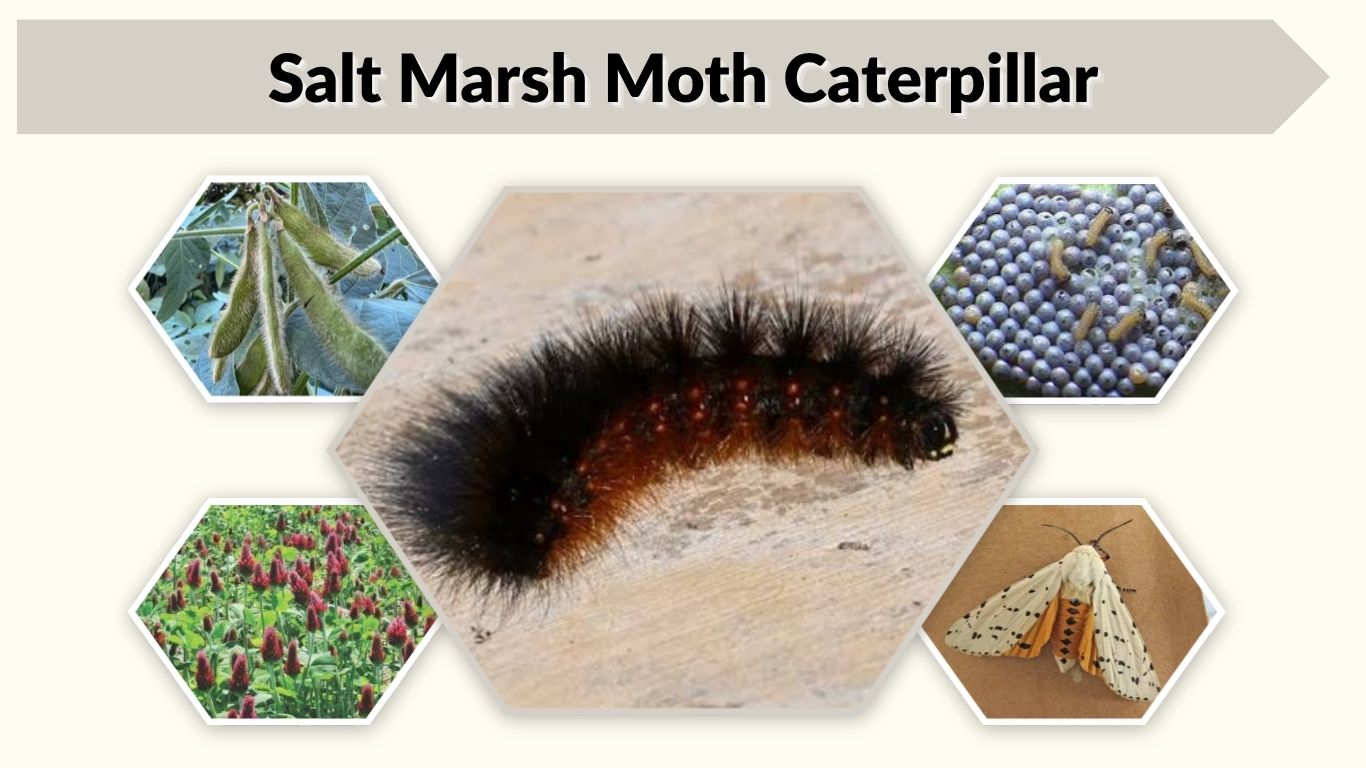
The salt marsh moth caterpillar is a large, hairy larva found across much of North America. Its scientific name is Estigmene acrea, and it eventually transforms into a striking white moth marked with black spots and an orange-yellow abdomen. Despite its common name, the caterpillar is not restricted to salt marshes. It lives in gardens, fields, meadows, roadsides, and other places containing broadleaf plants. Its long hairs are not venomous, but they may irritate sensitive skin, so unnecessary handling is best avoided.
Salt Marsh Caterpillar Quick Facts
The salt marsh moth belongs to the tiger moth group within the family Erebidae. Older publications may place it in the former family Arctiidae, which is now generally treated as a subfamily of Erebidae.
| Feature | Information |
| Scientific name | Estigmene acrea |
| Other names | Saltmarsh caterpillar, salt marsh tiger moth, Acrea moth |
| Caterpillar length | Nearly 2 inches when mature |
| Caterpillar colors | Yellow, brown, reddish-brown, gray or black |
| Primary food | Broadleaf weeds, vegetables and field crops |
| Preferred weed host | Pigweed |
| Adult appearance | White moth with black spots and an orange abdomen |
| Safety | Does not have venomous, stinging hairs |
| Distribution | Most of the United States into Central America |
Mature larvae commonly approach 2 inches in length. Their appearance varies considerably, so color alone is not always sufficient for identification.
What Does a Salt Marsh Moth Caterpillar Look Like?
Salt marsh moth caterpillars have thick bodies covered with long hairs arising from raised bumps called tubercles. Some individuals look almost entirely black, while others are yellow, straw-colored, gray, rusty brown or a mixture of several colors.
Identification Features
Look for these characteristics:
- A body measuring up to approximately 2 inches
- Dense tufts of long hair on every segment
- Yellow, brown, orange, gray or black coloration
- A dark head
- Small colored bumps beneath the hairs
- A tendency to curl into a ball when disturbed
- Slow movement across soil, paths or vegetation
Young caterpillars often feed together, but older larvae become solitary and may wander considerable distances while searching for food or a place to pupate.
Is the Salt Marsh Moth Caterpillar Poisonous?
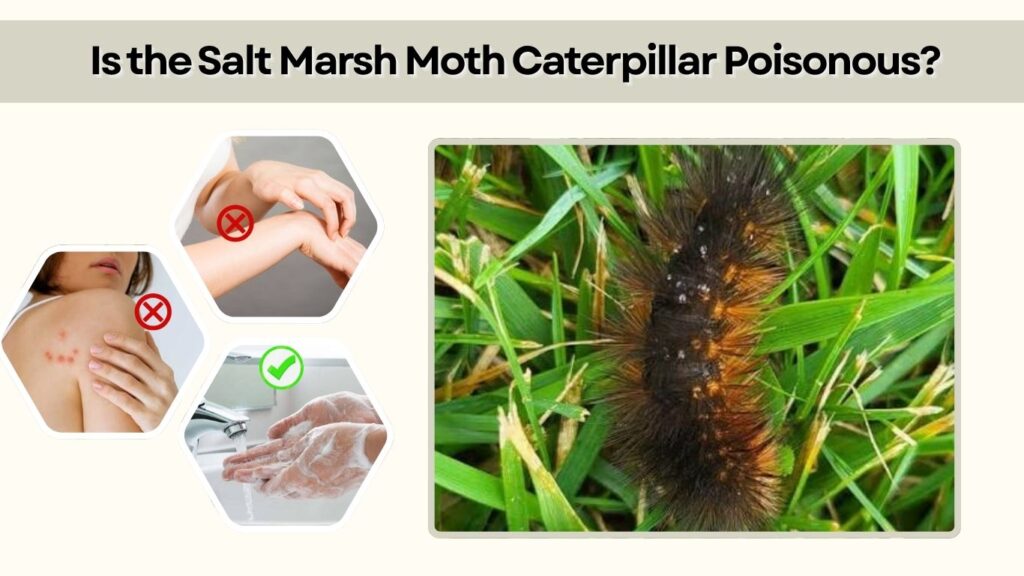
Salt marsh moth caterpillars are not considered poisonous to touch, and their hairs do not contain the venom-delivering structures found on genuinely stinging caterpillars. Texas A&M AgriLife Extension specifically notes that the hairs are not venomous and do not sting.
However, the hairs can cause temporary itching or irritation in sensitive people. Skin reactions are more likely when someone repeatedly handles the caterpillar or presses its hairs against bare skin.
After accidental contact:
- Wash the area gently with soap and water.
- Avoid rubbing or scratching the skin.
- Use adhesive tape to lift out loose hairs if necessary.
- Seek medical advice for persistent swelling, widespread rash or breathing difficulty.
Children and pets should not be encouraged to handle unfamiliar hairy caterpillars because several other species have genuinely venomous spines.
Does a Salt Marsh Caterpillar Sting?
No. It cannot actively sting like a bee, wasp or saddleback caterpillar. The visible hairs are primarily defensive and may make the larva difficult or unpleasant for predators to swallow.
People sometimes describe skin irritation as a “sting,” but that sensation is generally caused by physical contact with the hairs rather than injected venom.
What Do Salt Marsh Moth Caterpillars Eat?
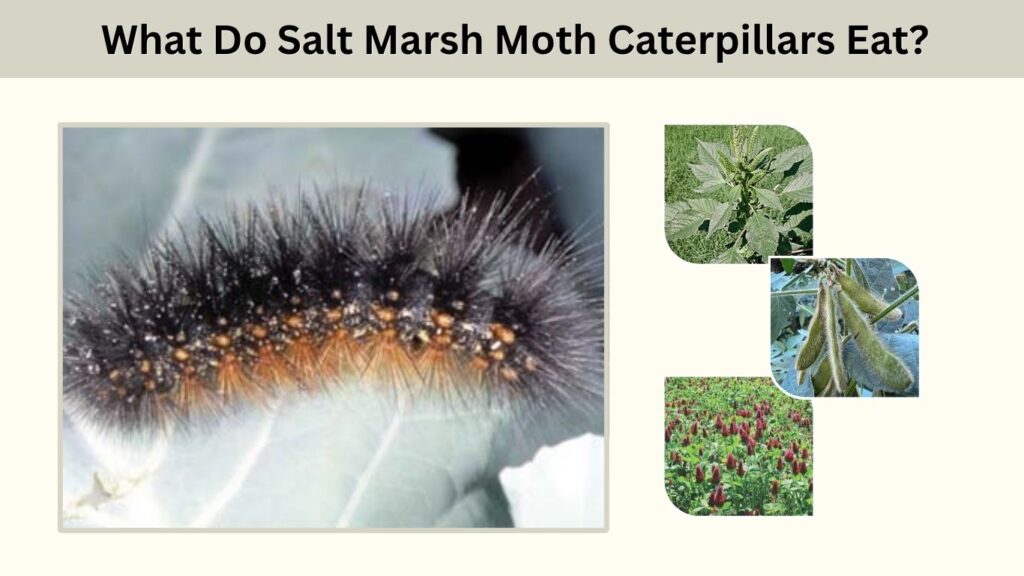
Salt marsh caterpillars are generalist herbivores capable of feeding on many broadleaf plants. Their varied diet allows them to survive in farms, gardens, vacant lots, fields and natural habitats.
Common Host Plants
Their food plants include:
- Pigweed
- Clover and alfalfa
- Cotton and soybean
- Cabbage and lettuce
- Beans and peas
- Beets and carrots
- Corn
- Tomatoes
- Onions
- Tobacco
- Mallow
- Ground cherry
- Dog fennel
Pigweed is considered one of their preferred weed hosts. Grasses are not usually preferred despite the insect’s salt-marsh-related name.
Plant Damage
Newly hatched larvae remain together and scrape soft tissue from leaves, leaving a skeleton-like network of veins. As they mature, they separate and chew larger, irregular holes.
Serious damage is most likely when large numbers move from weeds into vegetable or field crops. A few caterpillars in a healthy home garden rarely justify broad pesticide use.
Salt Marsh Moth Caterpillar Life Cycle
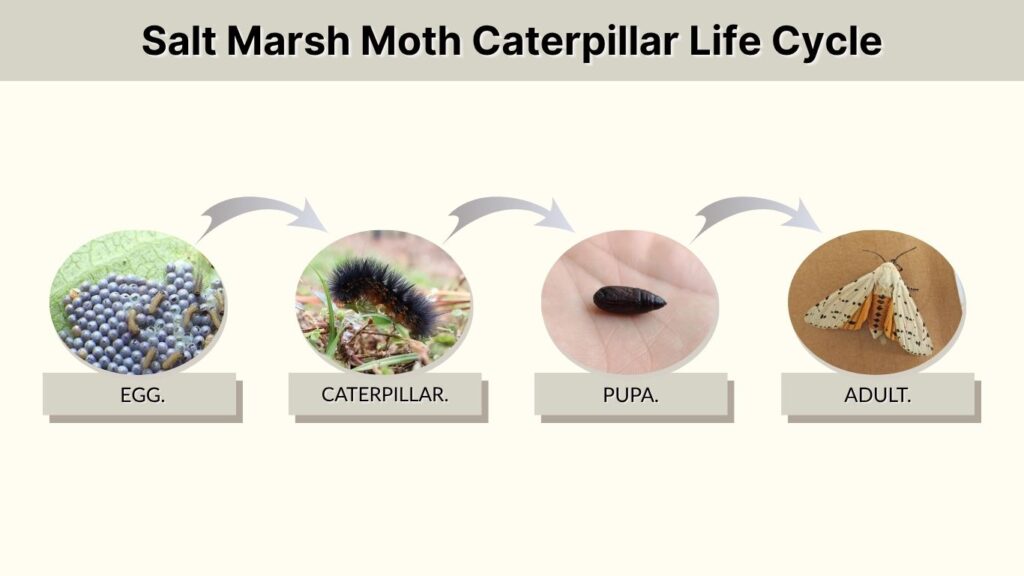
The salt marsh moth undergoes complete metamorphosis through four stages: egg, caterpillar, pupa and adult moth.
Eggs
Females deposit clusters containing many small, round eggs, commonly on the undersides of leaves. The eggs are yellow when first laid and later become grayish or whitish before hatching.
Caterpillar Stage
The young larvae initially stay together and feed as a group. They molt several times, becoming larger and hairier with every stage.
Older caterpillars disperse and feed individually. Depending on climate and season, mature larvae may overwinter before completing their transformation.
Cocoon and Pupa
A fully grown caterpillar creates a loose cocoon using silk mixed with some of its body hairs. Pupation commonly occurs among leaf litter or close to the soil.
In regions with cold winters, mature larvae may overwinter and pupate during spring. Development can be much faster under warm laboratory conditions; one rearing study completed the entire life cycle in approximately six weeks.
Adult Salt Marsh Moth
The adult has white forewings covered with scattered black spots. Females usually have white hindwings, while males often have yellow-orange hindwings. Both sexes possess an orange or yellow abdomen marked with rows of black spots.
Adults are nocturnal and may visit outdoor lights. They do not feed and use the energy stored during the caterpillar stage for reproduction.
Where Are Salt Marsh Caterpillars Found?
The species occurs throughout the United States and extends into Canada, Mexico and Central America. It is especially common as an agricultural pest in southern and southwestern parts of the United States.
Typical habitats include:
- Meadows and grasslands
- Farms and vegetable gardens
- Roadsides
- Field borders
- Open woodland
- Prairies
- Weedy vacant land
- Coastal areas and salt marsh surroundings
The name originated from an early report involving salt-grass hay near Boston. It does not mean that the caterpillar requires salty water or marsh vegetation.
Salt Marsh vs. Giant Leopard Moth Caterpillar
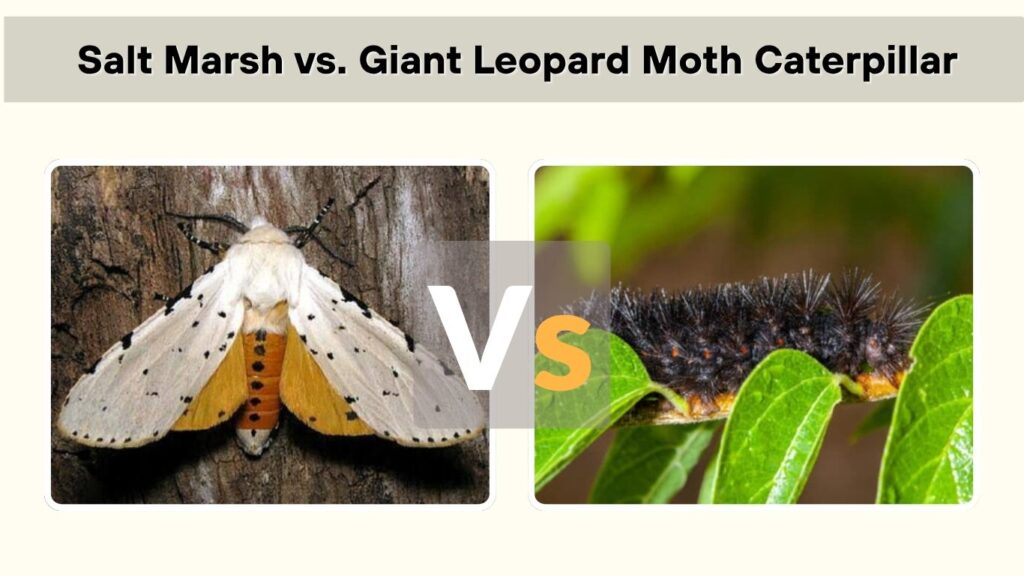
The salt marsh caterpillar can be confused with the giant leopard moth caterpillar because both are large, dark and hairy.
| Feature | Salt marsh caterpillar | Giant leopard moth caterpillar |
| Scientific name | Estigmene acrea | Hypercompe scribonia |
| Hair color | Variable yellow, brown, orange, gray or black | Usually uniformly shiny black |
| Hair length | Often uneven and mixed in color | Stiff black hairs of similar length |
| Skin between hairs | Usually not marked by obvious red rings | Red bands become visible when curled |
| Adult moth | White with smaller black spots and orange abdomen | Large white moth with bold hollow black spots |
| Mature length | About 2 inches | Up to approximately 3 inches |
A giant leopard moth caterpillar usually reveals distinctive red bands between its body segments when it curls into a ball. Salt marsh caterpillars are more variable and may show a mixture of black, brown, yellow and orange hairs.
Caring for a Salt Marsh Moth Caterpillar
A caterpillar found on a plant can usually be left outdoors. Keeping one temporarily for observation requires fresh food, ventilation and regular cleaning.
Basic Care
- Feed it leaves from the plant on which it was found.
- Use a ventilated container with enough room to move.
- Replace wilted leaves and remove droppings daily.
- Keep the container away from direct sunlight.
- Do not keep the enclosure excessively wet.
- Add dry leaves and loose material when the caterpillar stops eating.
- Avoid handling the caterpillar directly.
Switching abruptly to an unfamiliar plant may cause feeding refusal. Research colonies have been raised successfully on alfalfa followed by kidney bean leaves, demonstrating the species’ ability to use multiple broadleaf hosts.
Do not transport or release the caterpillar in a different region. Allowing a locally collected individual to return to the same immediate area after observation is the most responsible approach.
FAQs
How big does a salt marsh moth caterpillar get?
A mature salt marsh caterpillar grows to nearly 2 inches long. Its dense hairs make it appear larger and bulkier than its actual body.
Can you touch a salt marsh caterpillar?
Its hairs do not sting or contain venom, but they may irritate sensitive skin. It is safer to move the caterpillar with a leaf, container or soft brush rather than bare hands.
Why is it called a salt marsh caterpillar?
The name came from an early record of the insect damaging salt-grass hay near Boston. The caterpillar actually feeds mostly on broadleaf weeds and crops rather than salt-marsh grasses.
What does a salt marsh caterpillar turn into?
It becomes a medium-sized tiger moth with white, black-spotted wings and an orange-yellow abdomen. Male moths commonly have orange or yellow hindwings.
Are salt marsh caterpillars harmful to gardens?
A few usually cause limited damage, but groups of young larvae can skeletonize leaves. Heavy populations may defoliate vegetables and field crops, especially after moving from nearby weeds.