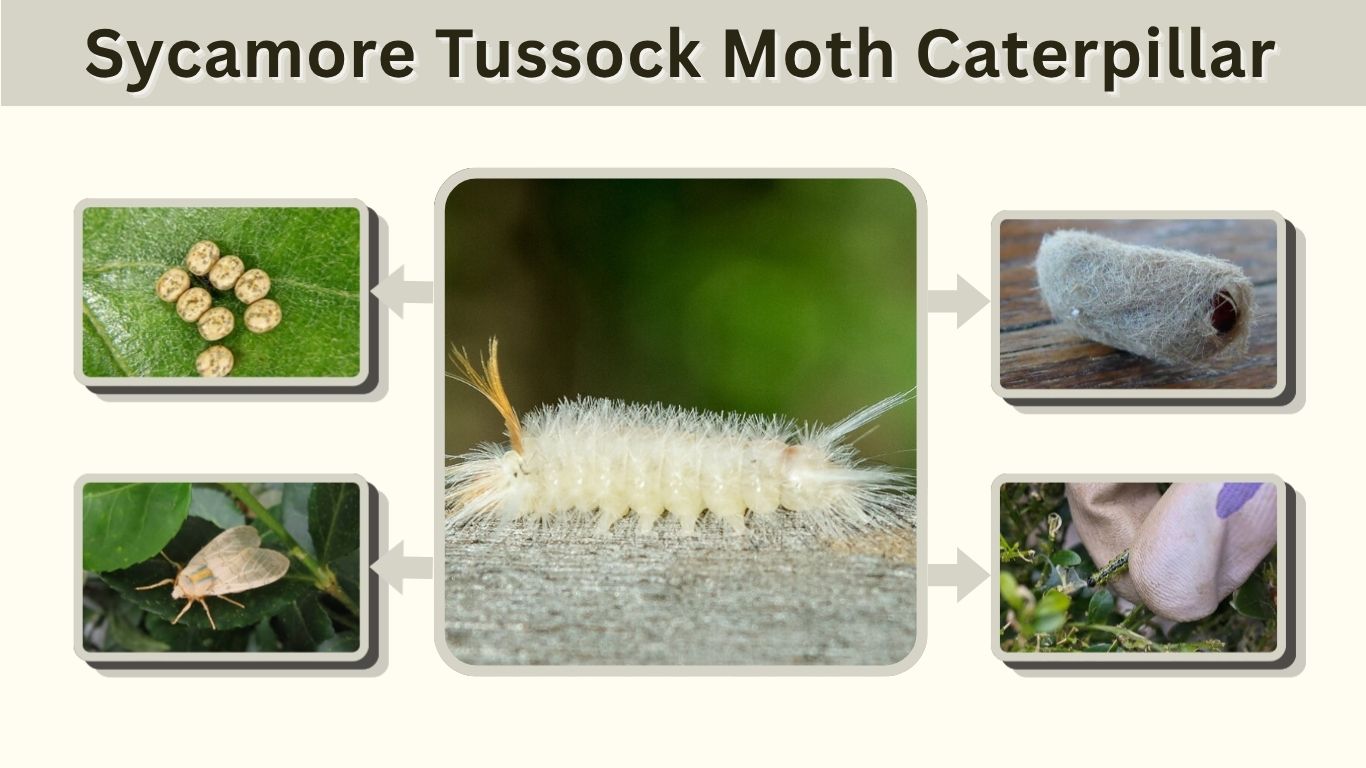
The sycamore tussock moth caterpillar is a fuzzy, pale caterpillar commonly found feeding on sycamore trees in eastern North America. Known scientifically as Halysidota harrisii, it has dense whitish or yellowish hairs along with distinctive orange hair pencils. Although it does not bite or sting like a bee, contact with its hairs can irritate sensitive skin and occasionally cause a rash or hives. Understanding its appearance, diet, habitat, life cycle, and potential skin effects makes encounters with this caterpillar easier to handle safely.
What Is a Sycamore Tussock Moth Caterpillar?
The sycamore tussock moth caterpillar is the larval stage of Halysidota harrisii, a moth in the family Erebidae. It is strongly associated with American sycamore trees and occurs across much of eastern North America. Young caterpillars may feed together, while older larvae tend to spread out as they grow.
Identification
Common identification features include:
- Scientific name: Halysidota harrisii
- Body length: Commonly about 1–1.5 inches when mature
- Body color: White, cream, or pale yellow
- Head: Yellow-orange to reddish-orange
- Body covering: Dense, soft-looking hairs
- Hair pencils: Long orange and white tufts
- Host plant: Primarily sycamore
- Season: Most noticeable during warmer months
The combination of a fuzzy pale body, colored head, and long hair pencils at the ends is particularly distinctive.
Black Tufts and Orange Hair Pencils
Color can vary slightly between individuals and developmental stages. The long tufts are often called hair pencils and may appear orange, rusty, white, or darker depending on lighting and the individual caterpillar.
These tufts make the caterpillar look dramatic, but they are primarily defensive structures. Avoid using color alone for identification because several related tussock and tiger moth caterpillars have similar fuzzy appearances.
Is the Sycamore Tussock Moth Caterpillar Poisonous?
The sycamore tussock moth caterpillar is not usually described as poisonous in the sense that touching it causes systemic poisoning. However, its hairs can produce contact irritation, and a documented case involved hives and an allergic response after exposure. For this reason, it is better to admire these caterpillars without handling them directly.
Does a Sycamore Tussock Caterpillar Sting?
It does not have a stinger like a bee or wasp.
When people describe a sycamore tussock moth caterpillar “sting,” they are generally referring to irritation after the caterpillar’s fine hairs contact the skin. Caterpillar hairs can become embedded or irritate sensitive tissue, producing itching, redness, or raised bumps.
Reactions vary considerably. One person may experience little or no irritation while another develops a noticeable rash.
Is It Venomous?
It is more accurate to focus on its irritating hairs than to call the species dangerously venomous.
Hairy caterpillars should generally not be handled because several unrelated species can look similar, and some fuzzy caterpillars have much more medically significant defensive hairs.
Children should be especially discouraged from picking up unidentified caterpillars.
Sycamore Tussock Moth Caterpillar Rash and Hives
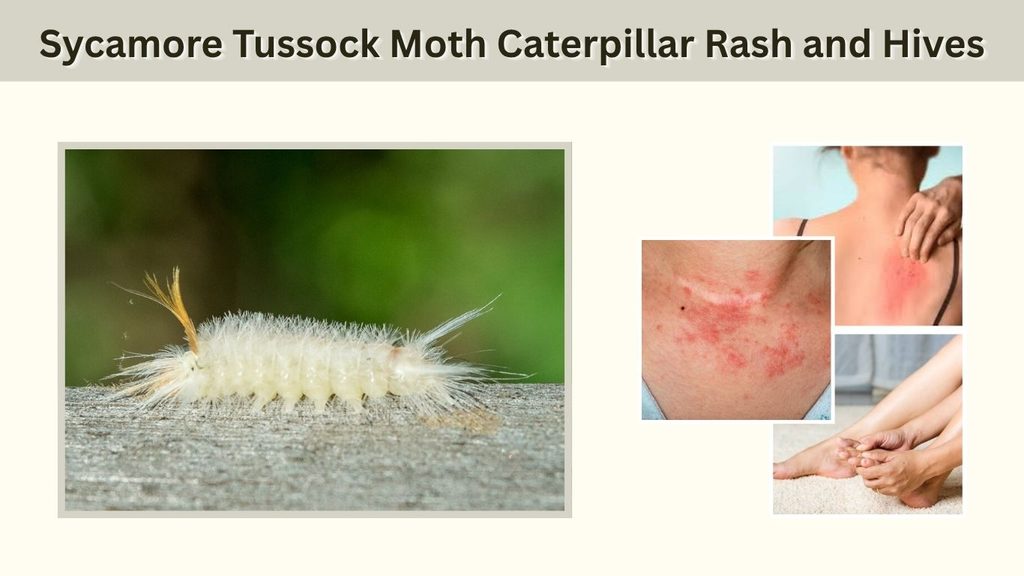
Skin reactions are among the most common concerns after someone accidentally touches a fuzzy caterpillar. Sycamore tussock moth caterpillar hairs have been associated with urticaria, or hives, and contact dermatitis. Most localized caterpillar-hair reactions are managed by removing remaining hairs and treating symptoms, but serious allergic symptoms require medical attention.
Possible Symptoms After Contact
A reaction may include:
- Redness
- Itching
- Small raised bumps
- Burning or tingling
- Localized swelling
- Welts or hives
- Skin tenderness
Symptoms can appear shortly after contact. Severity depends on individual sensitivity, how many hairs contacted the skin, and where exposure occurred.
Sycamore Tussock Moth Caterpillar Rash Treatment
Do not rub the affected area, as rubbing can push hairs farther into the skin.
Adhesive tape can be gently applied and removed to lift loose hairs, followed by washing the area with soap and water. A cool compress may help reduce discomfort. An over-the-counter anti-itch treatment may also help when used according to its label. General guidance for irritating caterpillar hairs recommends similar steps.
Seek prompt medical attention for difficulty breathing, swelling of the mouth or throat, severe widespread hives, eye exposure, or other significant symptoms.
Can a Sycamore Tussock Moth Caterpillar Bite?
People sometimes describe skin irritation as a bite, but these caterpillars do not normally bite humans defensively. Their mandibles are specialized for chewing leaves rather than attacking people. Most uncomfortable encounters result from contact with body hairs rather than from the mouthparts.
Why Does Contact Hurt or Itch?
The hairs function partly as protection from predators.
When skin brushes against them, individual hairs may detach or produce mechanical irritation. The immune system can then respond with redness and itching.
This explains why someone may develop symptoms without ever feeling an obvious bite or conventional sting.
What Do Sycamore Tussock Moth Caterpillars Eat?
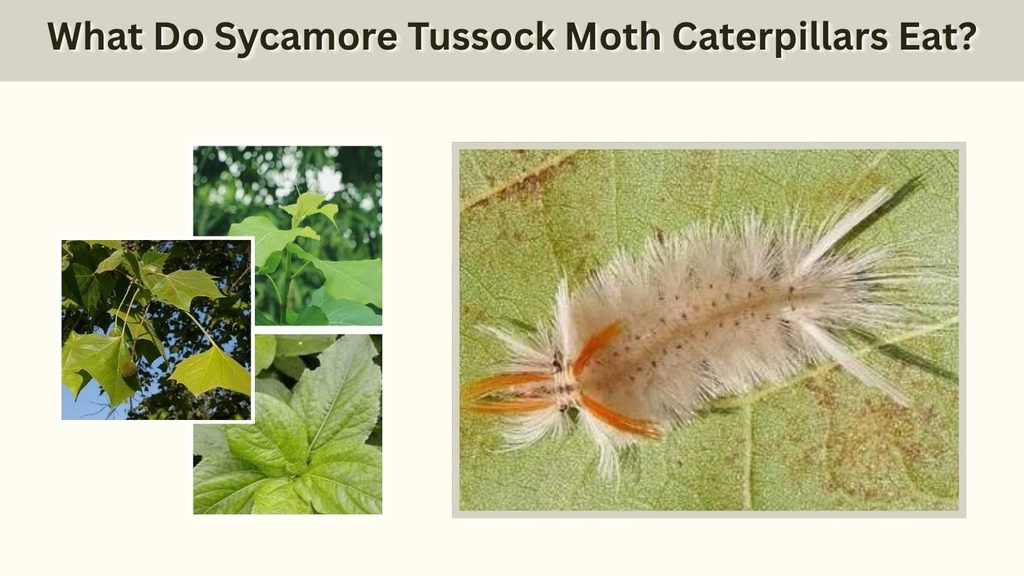
Sycamore tussock moth caterpillars are specialists strongly associated with sycamore trees. The American sycamore (Platanus occidentalis) is their primary larval host. Young caterpillars initially feed together and skeletonize leaves, while larger larvae consume most of the leaf tissue except major veins.
Caterpillar Diet
Their feeding primarily involves:
- American sycamore leaves
- Tender leaf tissue
- Leaves of suitable Platanus host trees
They are not household pests and do not eat clothing, furniture, stored foods, or wooden structures.
Can They Damage Sycamore Trees?
Large populations can remove noticeable amounts of foliage.
However, established healthy trees can often tolerate some caterpillar feeding. Natural predators and other ecological factors normally help regulate populations. Significant management is more likely to be considered when unusually high numbers repeatedly defoliate valuable trees.
Sycamore Tussock Moth Caterpillar Habitat
Because the larvae depend heavily on sycamores, their habitat closely follows the distribution of these trees. They occur in eastern North America, including areas from parts of the Midwest and New England southward to Florida and Texas.
Where Are They Found?
You may encounter them in:
- Sycamore trees
- Deciduous forests
- Riverbanks
- Stream corridors
- Parks
- Residential yards
- Streets planted with sycamores
- Wooded suburban areas
Sycamores naturally favor moist environments, so caterpillars may be particularly noticeable around rivers and low-lying wooded areas.
Are Sycamore Tussock Moth Caterpillars Invasive?
They are native to eastern North America rather than an introduced invasive species.
Seeing several caterpillars on a tree does not automatically indicate an ecological problem. They form part of the natural food web and provide prey for predators and parasitoids.
Sycamore Tussock Moth Life Cycle
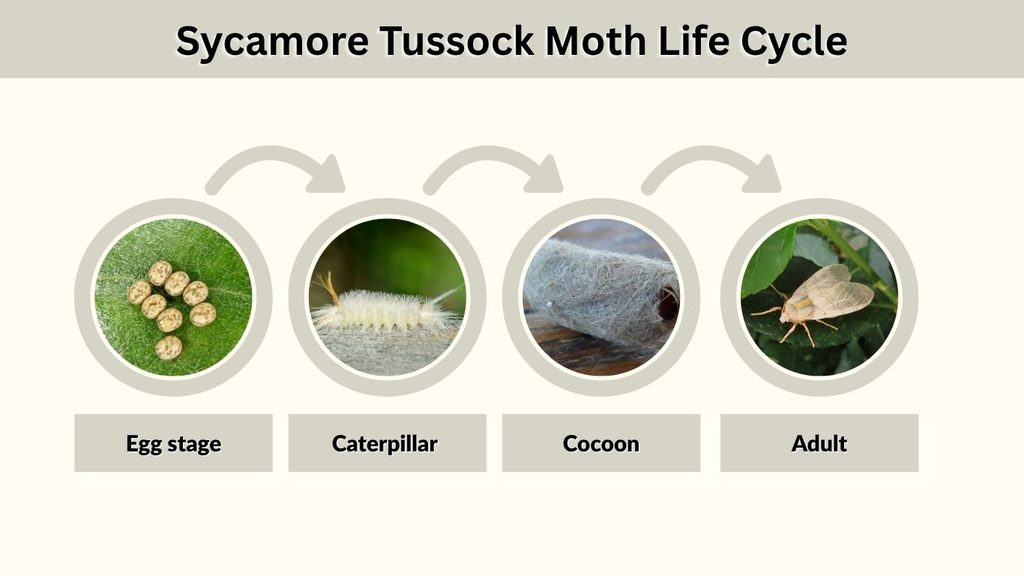
Like other moths, the sycamore tussock moth undergoes complete metamorphosis through egg, larva, pupa, and adult stages. The caterpillar is the feeding and growing stage, while adults are responsible mainly for reproduction and dispersal.
Egg and Caterpillar Stage
Adults emerge and females lay eggs on sycamore leaves or bark. After hatching, young larvae commonly feed together.
As they develop, the caterpillars pass through several molts. Older caterpillars disperse and feed more independently.
The larvae can become especially noticeable as they wander away from trees looking for protected pupation sites.
Cocoon and Adult Moth
Mature caterpillars form cocoons in protected locations. The species can overwinter in the cocoon stage, with adults emerging the following season. BugGuide reports adults emerging from overwintered cocoons around May and June, followed by additional seasonal development depending on location.
Adult sycamore tussock moths are pale yellowish or tan with darker markings and a wingspan of roughly 50 mm.
How to Get Rid of Sycamore Tussock Moth Caterpillars
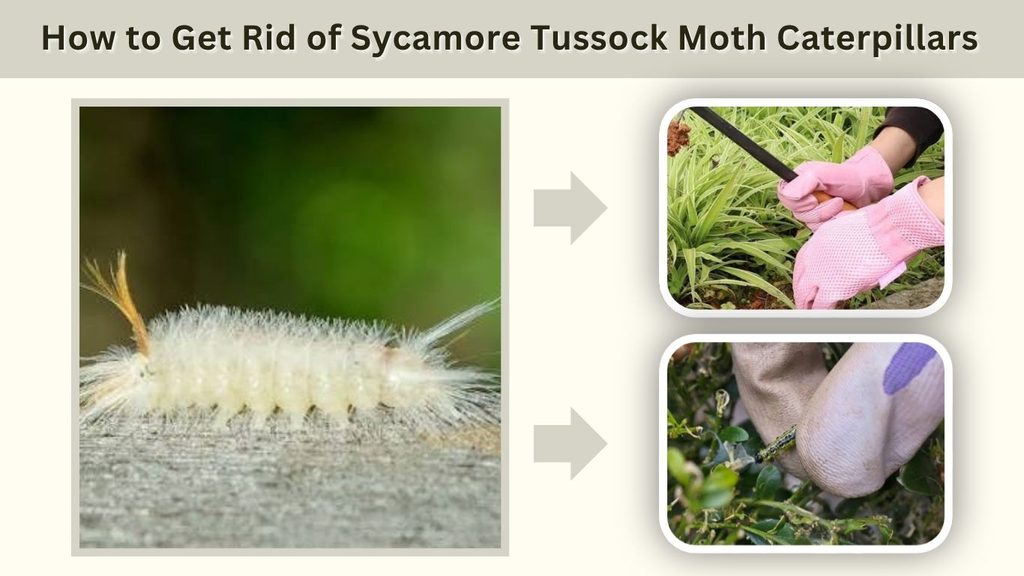
A few caterpillars on a mature sycamore rarely justify aggressive treatment. Avoid touching them directly, especially with bare hands. Management is more appropriate when large populations are causing significant defoliation or caterpillars are repeatedly entering areas where people may contact them.
Safe Control Options
Consider these steps:
- Avoid handling caterpillars with bare hands.
- Wear gloves and long sleeves when working nearby.
- Remove isolated caterpillars with tools rather than fingers.
- Keep children and pets away from concentrations.
- Remove fallen caterpillars from patios and play areas carefully.
- Monitor sycamore trees for heavy leaf loss.
- Preserve natural predators where possible.
- Seek professional advice for severe infestations.
Pesticide treatment is generally unnecessary for small numbers. Natural enemies normally help control sycamore tussock moth populations.
FAQs
Sycamore tussock caterpillars look soft and harmless, but their dense hairs make direct handling unnecessary. Most questions concern whether these caterpillars are poisonous, whether they sting, and what to do after accidental skin contact.
Are sycamore tussock moth caterpillars dangerous?
They are not considered highly dangerous, but their hairs can irritate skin and have been associated with hives and, rarely, stronger allergic reactions. Avoid direct contact.
Do sycamore tussock moth caterpillars sting?
They do not have a conventional stinger. The “sting” people describe usually results from irritating hairs contacting the skin.
What does a sycamore tussock moth caterpillar look like?
It typically has a fuzzy white, cream, or yellowish body, an orange-to-reddish head, and distinctive long orange and white hair pencils.
What do sycamore tussock moth caterpillars eat?
They primarily feed on sycamore leaves, especially American sycamore. Young larvae may feed in groups before dispersing as they mature.
What should I do if I touch one?
Avoid rubbing the area. Gently remove loose hairs with adhesive tape, wash with soap and water, and monitor for symptoms. Seek medical help promptly for breathing difficulty, significant swelling, eye exposure, or a severe reaction.