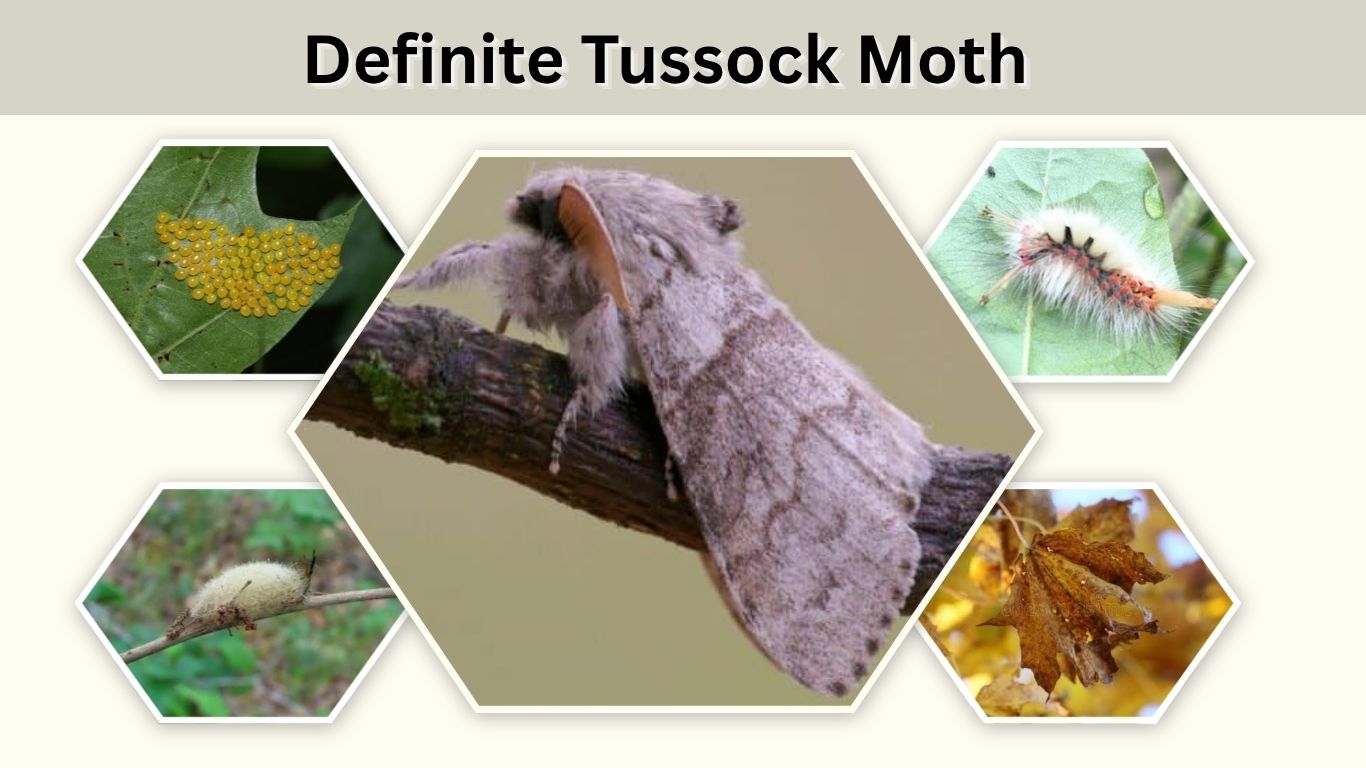
The definite tussock moth (Orgyia definita) is a native North American moth best recognized during its colorful caterpillar stage. Its yellow head, pale body, upright hair tufts, and long hair pencils give it an unusual appearance. Although the caterpillar does not aggressively sting or bite, its detachable hairs can irritate sensitive skin. The larvae feed on several deciduous trees and shrubs, but serious outbreaks are uncommon. Learning its markings, seasonal life cycle, host plants, and safe handling practices makes this striking moth easier to identify and manage.
What Is a Definite Tussock Moth?
Also called the definite-marked tussock moth, this species belongs to the family Erebidae and subfamily Lymantriinae. It occurs across the eastern United States and is most frequently reported in northeastern and mid-Atlantic areas. Like other members of Orgyia, it displays dramatic differences between the caterpillar, male moth, and female moth.
Scientific Name and Range
The accepted scientific name is Orgyia definita. Its habitats include deciduous woodlands, forest edges, fields, nurseries, gardens, and landscaped areas containing suitable host plants.
Seasonal timing changes with climate. Caterpillars may occur from spring through early fall, with earlier development and additional generations possible in warm regions. The species is native, not invasive.
What Do Adult Moths Look Like?
Adult males are small, dark grayish-brown moths with feathery antennae and patterned wings. They fly in search of females, which release an attractive scent.
Females have reduced wings and cannot fly. A female remains near her cocoon, mates, and deposits her eggs there. Most people notice the caterpillars rather than the inconspicuous adults.
How to Identify the Caterpillar
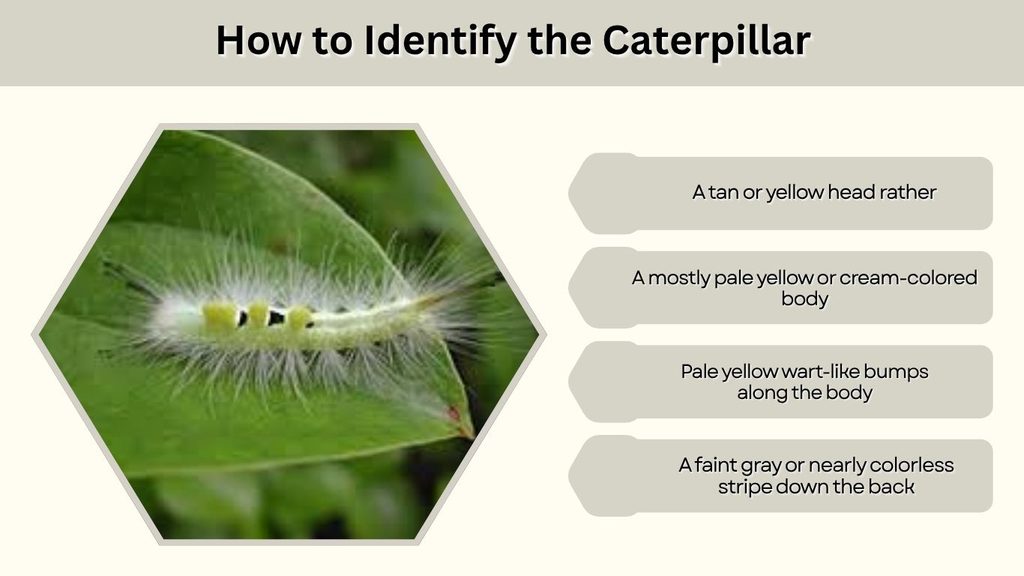
A definite tussock moth larva has the “toothbrush” shape shared by several Orgyia caterpillars. Color is especially useful, although the head, tufts, body markings, host plant, and location should be considered together.
Key Identification Features
Mature larvae may reach roughly 1 to 1.5 inches long. Look for this combination:
- A tan or yellow head rather than a bright red one
- A mostly pale yellow or cream-colored body
- Four dense cream-to-yellow tussocks along the back
- Pale yellow wart-like bumps along the body
- A faint gray or nearly colorless stripe down the back
- Long, dark hair pencils projecting near the front and rear
- Two pale glandular spots toward the rear of the back
The yellow head and generally light coloration are especially useful for separating this species from related tussock moths.
Definite vs. White-Marked Tussock Caterpillar
The white-marked tussock moth caterpillar has a similar arrangement of four dorsal tufts, but it usually has a conspicuous red head, a darker back, and red glandular spots. The definite tussock caterpillar is much more yellow overall and has a yellow or tan head.
Do not rely on the four back tufts alone. Several tussock moth larvae share this feature, while young caterpillars may not show their mature pattern.
Is the Definite Tussock Moth Caterpillar Poisonous?
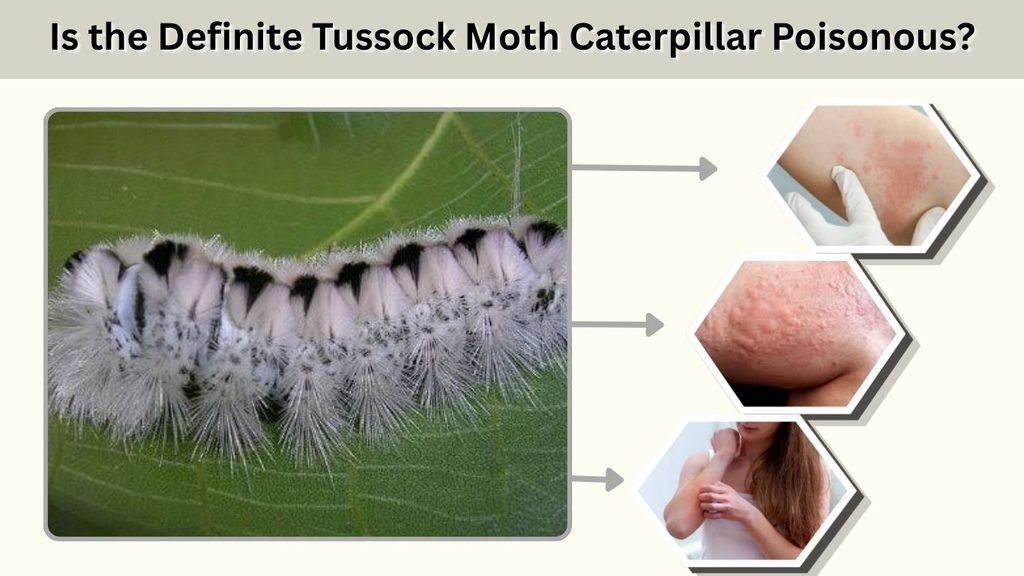
Calling this caterpillar poisonous is misleading. It is not considered poisonous in the ordinary sense and does not bite or attack. However, its detachable defensive hairs can cause an irritant or allergic skin reaction. Observe it without direct handling.
Possible Symptoms After Contact
Reactions vary from none to itching, redness, burning, bumps, swelling, or hives. Children may be exposed more often because they pick up colorful caterpillars.
Cocoon hairs can also irritate, so do not handle cocoons barehanded. Eye exposure, inhaled hairs, or a severe allergic response needs medical attention.
What to Do After Touching One
If caterpillar hairs contact your skin:
- Avoid rubbing or scratching the area.
- Press sticky tape gently against the skin and lift it away to remove loose hairs.
- Wash the area with soap and water.
- Apply a wrapped cold pack for short intervals to reduce discomfort.
- Wash exposed clothing separately before wearing it again.
Flush an exposed eye with plenty of clean water and seek medical care. Get urgent help for breathing difficulty, facial or throat swelling, wheezing, or another severe reaction.
Host Plants and Feeding Damage
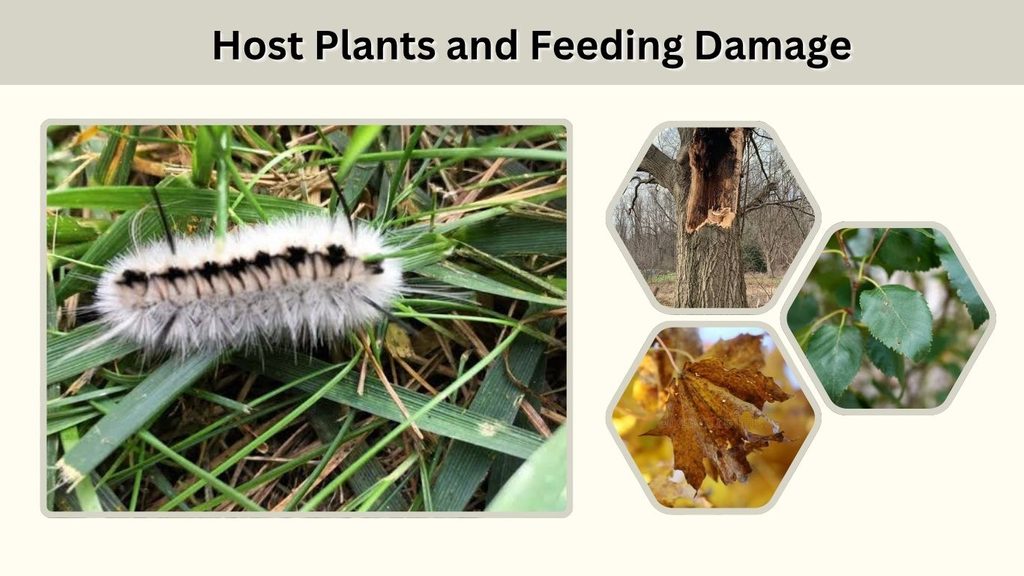
Definite tussock moth larvae chew the foliage of deciduous trees and shrubs. Their broad diet allows them to appear in forests, gardens, orchards, and nurseries. A few caterpillars usually cause only cosmetic leaf loss, while a dense local population can remove substantial foliage from a small or stressed plant.
Common Host Plants
Reported hosts include:
- Willow
- Oak
- Maple
- Birch
- Basswood
- Elm
- Hackberry
- Apple
- Cherry
- Ash
- Boxelder
- Blueberry and witch hazel
Host use can vary by region. Willow is particularly important, and the Florida population has been confirmed on willow.
Is the Definite Tussock Moth a Problem?
Usually, no. Heavy populations are uncommon, and established trees generally tolerate minor feeding. Concern increases when many larvae defoliate a young or stressed tree.
Before treating, confirm the pest and estimate the leaf loss. Scattered chewing rarely justifies pesticide use. Natural enemies and weather often reduce populations.
Life Cycle of Orgyia definita
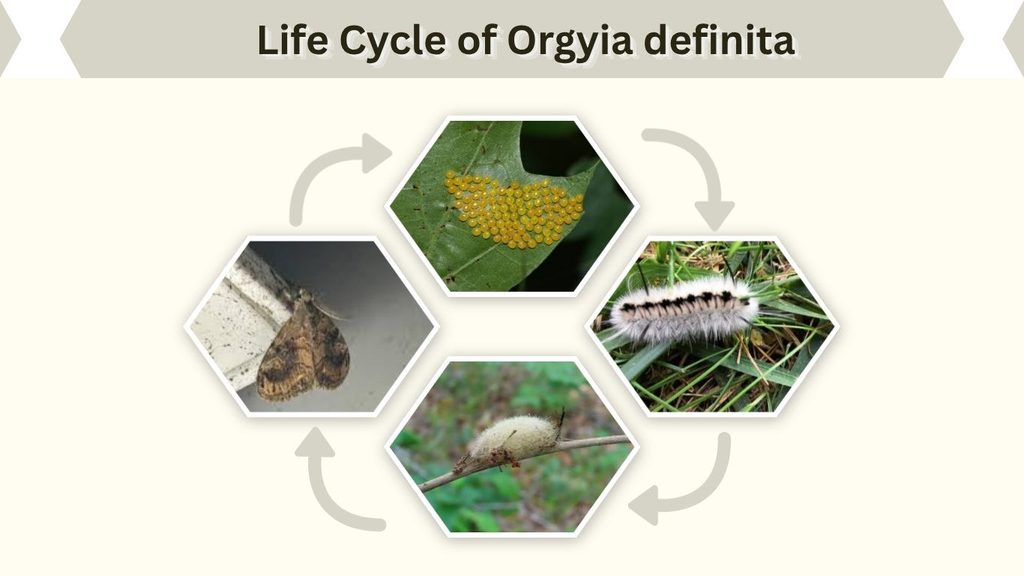
The definite tussock moth passes through egg, larva, pupa, and adult stages. Timing varies with climate, but eggs usually overwinter. The flightless female lays her eggs close to her cocoon.
From Egg to Adult
- Egg: The female lays an egg mass on or near her old cocoon and covers it with protective material and body hairs.
- Larva: Young caterpillars hatch and begin eating leaves. Some disperse on silk strands carried by air.
- Pupa: A mature larva spins a silken cocoon containing some of its irritating hairs.
- Adult: A winged male seeks a flightless female. After mating, the female lays eggs and the cycle begins again.
Caterpillars may appear from April through September in parts of the Northeast. In Florida, O. definita can complete two generations.
How to Manage Definite Tussock Moth Larvae
Management should match the population and the plant’s condition. A few larvae on a healthy tree rarely require intervention. Avoid touching larvae or cocoons, and keep children and pets away from active areas.
Practical Control Steps
- Monitor vulnerable young trees for increasing leaf loss.
- Wear gloves, long sleeves, and eye protection if removal is necessary.
- Use a tool rather than bare hands to move a small number of caterpillars.
- Avoid crushing or brushing dry cocoons, which may release hairs.
- Ask a local extension service to confirm the species if damage is extensive.
- Consider a labeled caterpillar-control product only when the population threatens plant health.
If treatment is justified, products containing Bacillus thuringiensis var. kurstaki work best on small, actively feeding caterpillars. Follow the entire product label and avoid unnecessary broad-spectrum spraying that could kill natural enemies and other non-target insects.
FAQs
These answers cover the moth’s abundance, safety, and potential effects on trees.
Is the Definite Tussock Moth Rare?
Its abundance varies geographically. It is widespread in eastern North America, relatively common in parts of the Northeast, but considered rare in Florida. Local sightings may be sporadic.
Can a Definite Tussock Moth Caterpillar Sting?
It cannot actively sting like a bee or wasp. Contact with its detachable hairs can nevertheless cause a stinging or itching sensation and a localized rash.
Are Adult Definite Tussock Moths Harmful?
Adult moths do not damage clothing, stored food, people, or buildings. The larval stage causes leaf feeding, while the adult stage is primarily devoted to reproduction.
Should I Kill a Single Caterpillar?
Usually not. Leave it undisturbed when it poses no immediate contact risk. If it is on a walkway or play area, move it indirectly with a tool while wearing protective clothing.
Can Definite Tussock Moths Kill Trees?
A few larvae are unlikely to kill a healthy tree. Severe or repeated defoliation may weaken young or stressed plants, but major outbreaks of this particular species are uncommon.