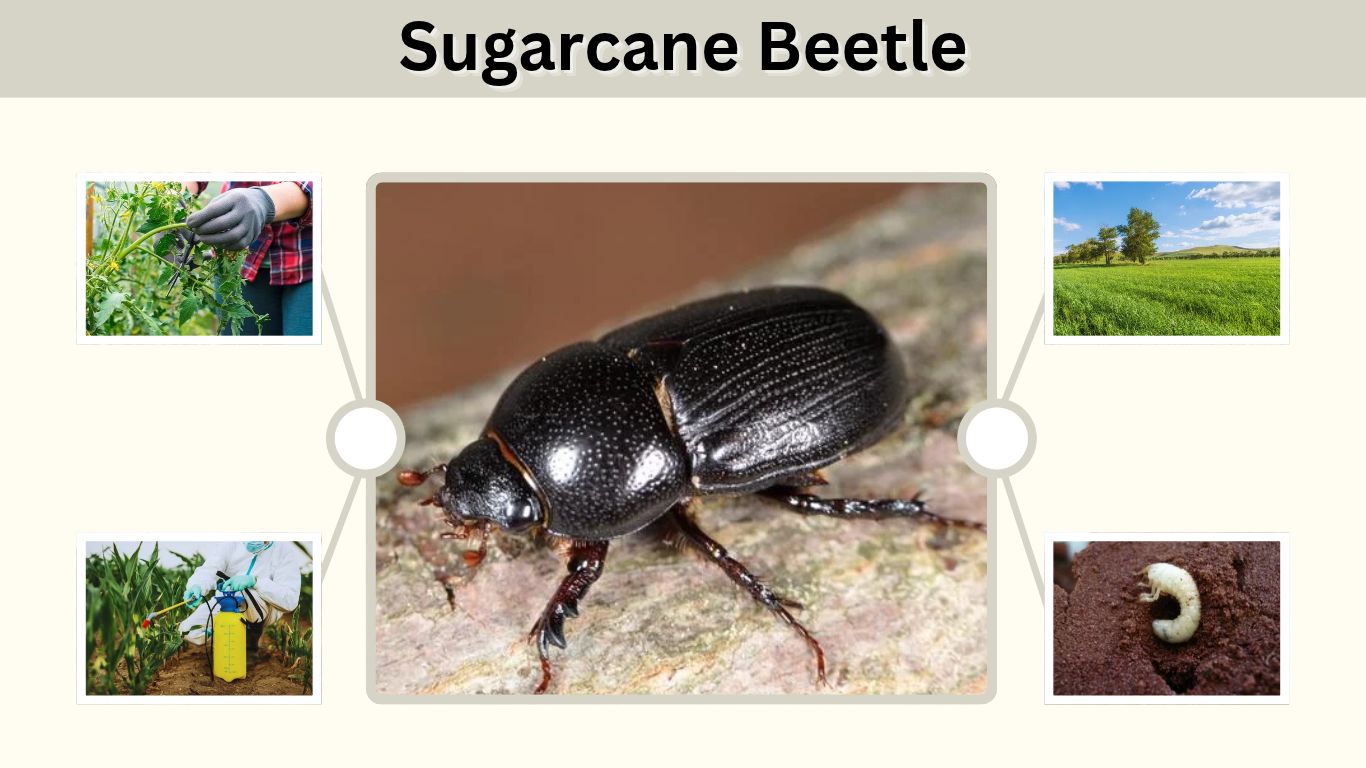
The sugarcane beetle is a dark-colored agricultural pest known for damaging sugarcane, corn, turfgrass, and several other crops. These beetles spend much of their lives underground, where they feed on plant roots and stems. Although their populations are usually low, occasional outbreaks can cause serious crop losses and weaken young plants. Both adult beetles and their white grub larvae contribute to different types of damage. Understanding sugarcane beetle identification, habitat, feeding habits, life cycle, and control methods can help farmers and gardeners protect vulnerable crops and recognize infestations before they become severe.
What Is a Sugarcane Beetle?
The sugarcane beetle (Euetheola humilis) is a scarab beetle belonging to the family Scarabaeidae and subfamily Dynastinae. It is also known as the rough-headed corn stalk beetle.
This beetle is native to the Americas and is particularly common in the southeastern United States. Despite its name, it attacks several agricultural crops, including corn, rice, sweet potatoes, and sugarcane.
Why Are Sugarcane Beetles Agricultural Pests?
Sugarcane beetles are considered agricultural pests because adult beetles chew into roots, crowns, and lower stems.
Their feeding can weaken plants, interfere with growth, and occasionally kill young seedlings.
Severe outbreaks may reduce crop establishment and create significant economic losses, particularly in fields with favorable beetle habitats.
Sugarcane Beetle Identification
Sugarcane beetles have sturdy, rounded bodies and dark-colored outer shells. Their strong front legs are adapted for digging through soil.
Although they resemble other black scarab beetles, their body shape and feeding behavior provide useful identification clues.
Physical Characteristics
- Common Name: Sugarcane Beetle
- Scientific Name: Euetheola humilis
- Family: Scarabaeidae
- Subfamily: Dynastinae
- Body Length: Approximately 13 mm or ½ inch
- Body Color: Dull black to dark brown
- Body Shape: Rounded, stout, and dome-shaped
- Wing Covers: Fine rows of small punctures
- Legs: Strong front legs adapted for digging
- Habitat: Agricultural fields, grasslands, lawns, and soil
What Does a Black Sugarcane Beetle Look Like?
Adult sugarcane beetles have broad, dark bodies with a noticeably rounded thorax.
Their wing covers contain fine, lengthwise rows of punctures. The front legs are flattened and equipped with structures that help them dig.
Unlike larger rhinoceros beetles, this species does not possess a prominent horn.
Where Do Sugarcane Beetles Live?
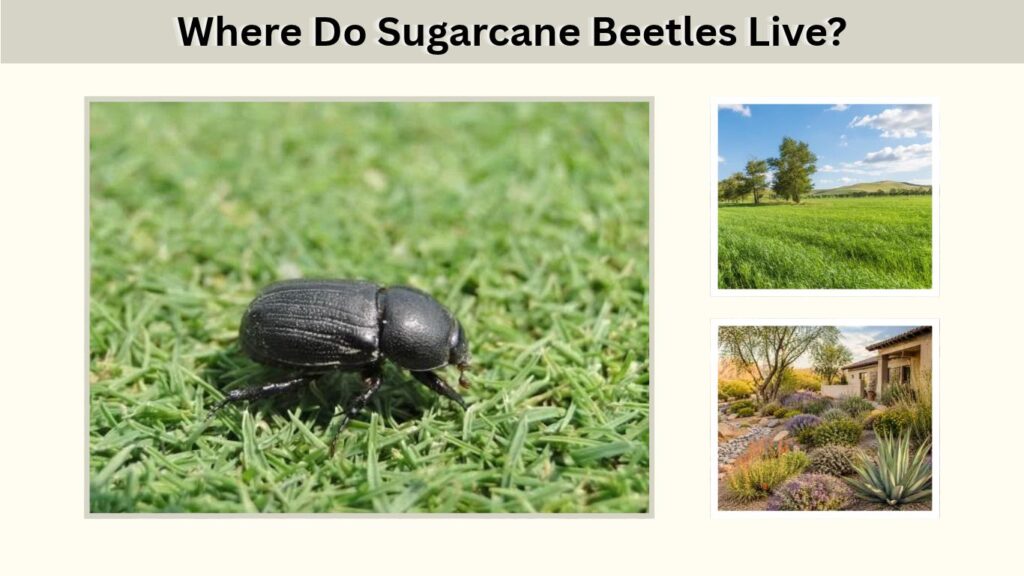
Sugarcane beetles commonly inhabit agricultural landscapes, grasslands, and areas containing suitable soil and vegetation.
In the United States, they are particularly associated with southern states, including Louisiana, Mississippi, Georgia, Florida, Alabama, and Texas.
Sugarcane Beetle Habitat
Adults spend considerable time in soil around plant roots and lower stems.
They may also appear around buildings, roads, and outdoor lights during seasonal flights.
Females deposit eggs in moist soil, where developing larvae feed on organic material and plant roots.
What Do Sugarcane Beetles Eat?
Sugarcane beetles feed on several agricultural crops and wild grasses. Their feeding preferences differ between adults and larvae.
Adult beetles cause much of the economically important damage to young corn plants, while larvae generally consume decaying organic matter and grass roots.
Sugarcane Beetle Feeding Behavior
Adult beetles frequently chew around the underground portions of plants.
In cornfields, they may bore into the lower stalk or crown, interfering with normal development.
Larvae feed primarily on decaying vegetation and roots of grasses or weeds. High grub populations may occasionally damage turfgrass.
Sugarcane Beetle Life Cycle
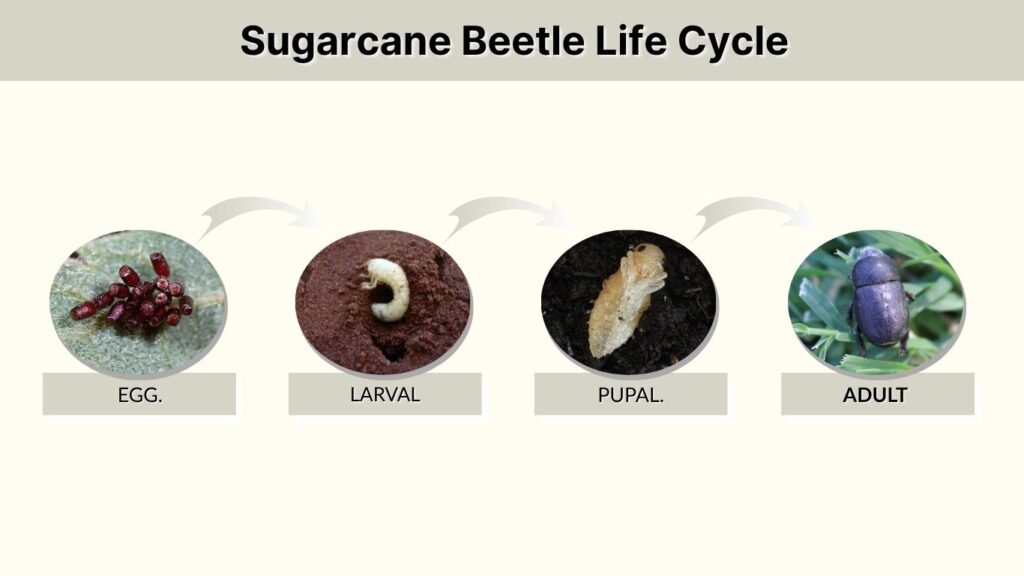
Sugarcane beetles undergo complete metamorphosis, developing through four distinct stages. In much of their North American range, they generally produce one generation annually.
Their seasonal activity depends on temperature, soil conditions, and geographic location.
Four Stages of Development
- Egg Stage: Female beetles lay small, white eggs in moist soil during warmer months.
- Larval Stage: Eggs hatch into creamy-white grubs with reddish-brown heads. Larvae feed underground while increasing in size.
- Pupal Stage: Mature larvae transform into pupae in the soil before developing into adults.
- Adult Stage: Newly developed beetles emerge, reproduce, and eventually seek protected locations for overwintering.
When Do Adult Sugarcane Beetles Emerge?
In the southeastern United States, overwintered adults commonly become active during spring.
A second period of adult flight may occur during autumn when newly developed beetles emerge.
Adult beetles are attracted to artificial lights, which explains their appearance around buildings and outdoor lighting.
Sugarcane Beetle Damage to Crops
Sugarcane beetles can damage several agricultural crops, although injury severity depends on beetle populations and plant growth stages.
Young plants are particularly vulnerable because injury near the roots or lower stems can interfere with their development.
Common Signs of Sugarcane Beetle Damage
- Damaged Stems: Chewing injuries near or below the soil surface
- Stunted Growth: Plants developing more slowly than expected
- Deadheart Symptoms: Central shoots dying after damage near the growing point
- Wilting Plants: Reduced growth caused by damaged roots or stems
- Missing Seedlings: Young plants dying after severe feeding
- Visible Beetles: Dark adult beetles around damaged plant bases
- Weak Turfgrass: Occasional root injury associated with high grub populations
Sugarcane Beetle Damage in Corn
Corn is one of the important host crops of Euetheola humilis.
Adults feed around the crown and roots of young plants, creating irregular holes near ground level.
Damaged corn may develop stunted growth, dead central shoots, or abnormal tillering. Severe attacks can kill seedlings and reduce plant populations.
Sugarcane White Grub Beetles
Sugarcane beetle larvae are white grubs that develop underground.
These larvae have pale, curved bodies, reddish-brown heads, and three pairs of legs.
Mature Euetheola humilis larvae can reach approximately 32 millimeters in length.
Do Sugarcane Beetle Grubs Damage Roots?
Yes, sugarcane beetle grubs can feed on roots, particularly those of grasses and weeds.
However, adult Euetheola humilis generally cause more important damage in corn.
Other sugarcane pests, including Australian greyback canegrubs, cause extensive root damage primarily during their larval stage.
Sugarcane Beetle Control Methods
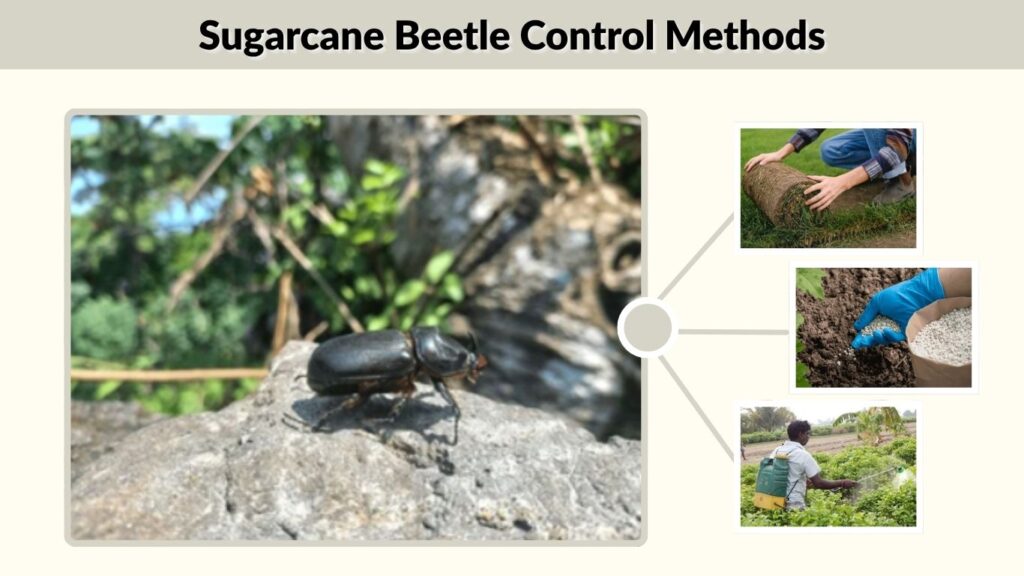
Effective sugarcane beetle control depends on early detection, crop management, and selecting appropriate treatments.
Because adult beetles often feed below the soil surface, controlling established infestations can be difficult.
How to Control Sugarcane Beetles
- Inspect Fields Regularly: Examine plant bases for feeding damage and adult beetles.
- Avoid High-Risk Rotations: Consider the risk when planting corn directly after established grass or sod.
- Maintain Healthy Crops: Proper fertilization and irrigation improve plant growth and resilience.
- Monitor Seasonal Activity: Watch for adult beetles during spring emergence and autumn flights.
- Manage Outdoor Lighting: Reduce unnecessary nighttime lighting around buildings to discourage beetle gatherings.
- Use Registered Treatments: Follow locally recommended preventive insecticide programs when economic risks justify treatment.
Can Insecticides Kill Sugarcane Beetles?
Certain registered insecticides can reduce sugarcane beetle populations and crop damage.
In corn, preventive seed treatments and appropriately registered at-planting soil applications may provide protection.
However, rescue treatments after substantial damage has occurred are often ineffective.
Farmers should follow current local agricultural recommendations and product labels.
Sugarcane Beetles in Australia
Australia also has destructive sugarcane beetle pests, but they are not necessarily the same species as the North American sugarcane beetle.
The greyback cane beetle (Dermolepida albohirtum) is a significant Australian sugarcane pest whose larvae feed on sugarcane roots.
Did Cane Toads Control Sugarcane Beetles?
Cane toads were introduced into Australia in 1935 to control beetles damaging sugarcane crops.
However, the introduction failed to provide effective beetle control. Cane toads subsequently became invasive and caused serious ecological problems.
This example demonstrates the importance of evaluating biological control methods before introducing non-native species.
How to Prevent Sugarcane Beetle Infestations
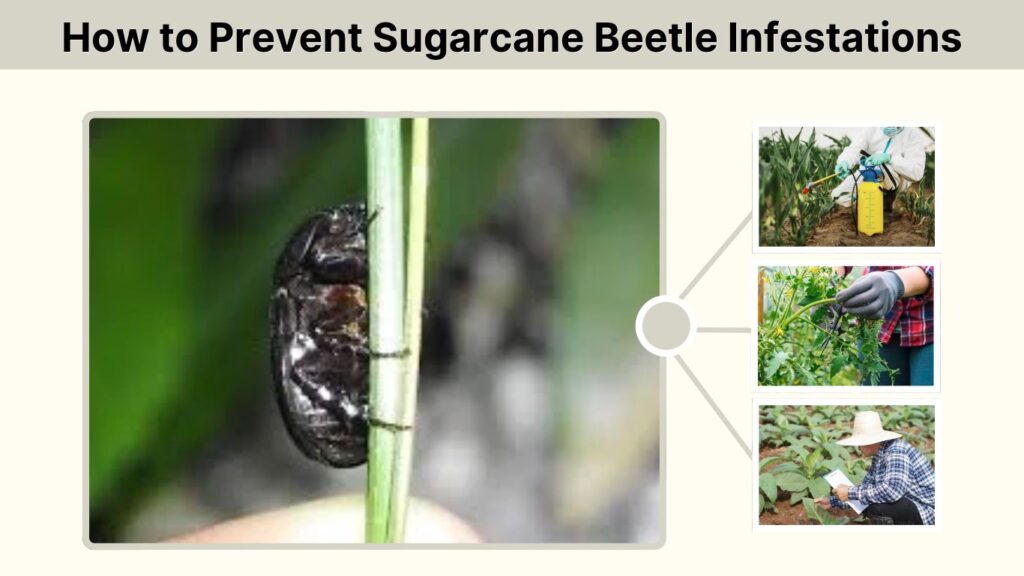
Long-term prevention involves identifying high-risk fields and maintaining suitable crop management practices.
Because sugarcane beetle outbreaks are sporadic, routine monitoring is often more appropriate than unnecessary pesticide applications.
Preventive Crop Management
Farmers should inspect previously affected fields before planting and monitor crops during vulnerable growth stages.
Avoid planting susceptible crops immediately after grass-dominated fields when local beetle populations are known to be high.
Seek guidance from agricultural extension specialists when recurring infestations cause economic damage.
FAQs
1. What Is the Scientific Name of the Sugarcane Beetle?
The scientific name of the North American sugarcane beetle is Euetheola humilis. It belongs to the family Scarabaeidae and subfamily Dynastinae. This species damages several crops, particularly corn, sugarcane, rice, and sweet potatoes.
2. What Do Sugarcane Beetle Larvae Look Like?
Sugarcane beetle larvae are creamy-white, C-shaped grubs with reddish-brown heads and six legs. Mature larvae can reach approximately 32 millimeters long. They develop underground and primarily feed on decaying organic material and grass roots.
3. How Do Sugarcane Beetles Damage Corn?
Adult sugarcane beetles chew into corn roots, crowns, and lower stems. Their feeding can cause stunted growth, damaged growing points, deadheart symptoms, and seedling death. Young corn plants are particularly vulnerable during spring beetle activity.
4. Are Sugarcane Beetles Dangerous to Humans?
Sugarcane beetles are not venomous and do not sting humans. Their main importance involves agricultural crop damage. Adult beetles may occasionally become nuisance pests around lights and buildings, but they do not normally threaten human health.
5. How Can Farmers Control Sugarcane Beetles?
Farmers can manage sugarcane beetles through regular field inspections, avoiding high-risk crop rotations, maintaining healthy crops, and using registered preventive treatments when necessary. Early management is important because controlling established infestations can be difficult.