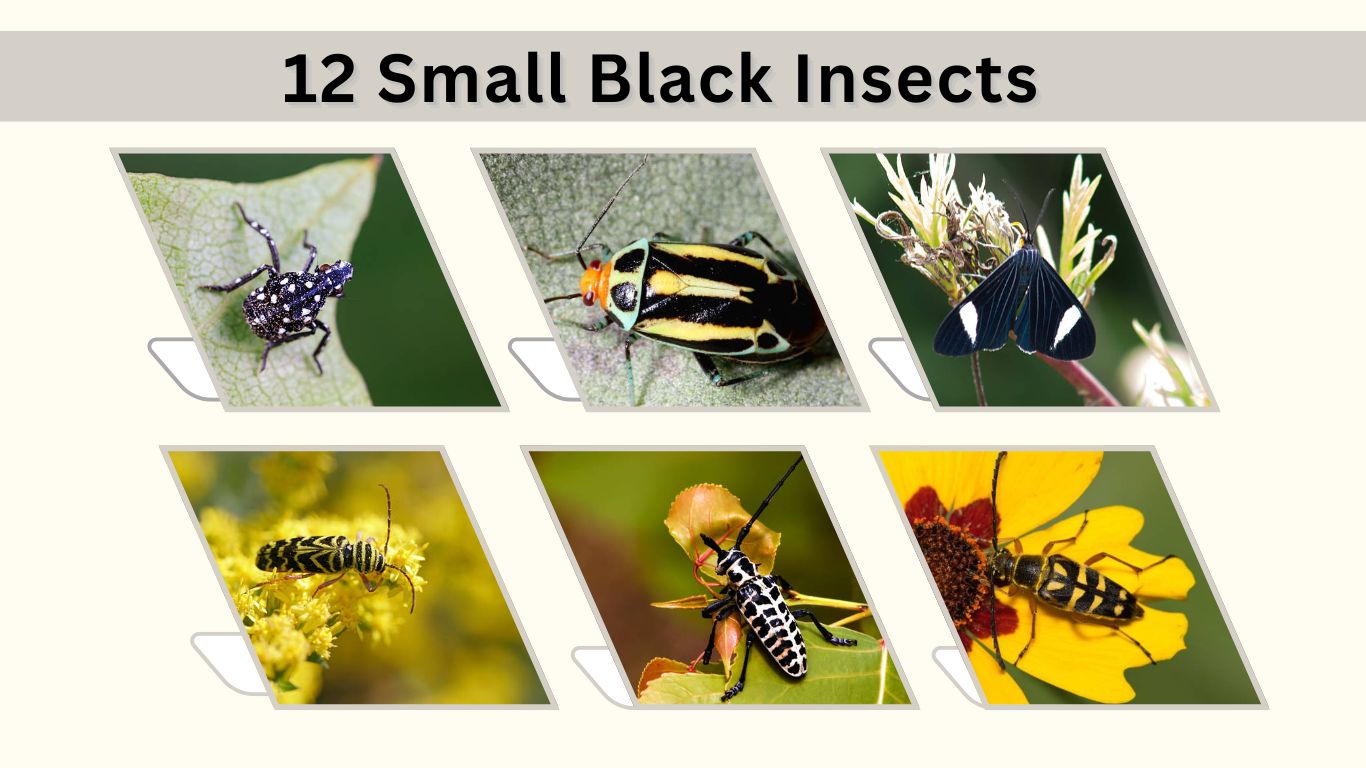
Small black insects with white stripes can be found on trees, garden plants, firewood, flowers, and sometimes inside homes. Many are beetles, while others may be plant bugs, moths, or spotted lanternfly nymphs. Some are harmless outdoor visitors, but others can damage trees, crops, or ornamental plants. This guide helps you identify them by appearance, habitat, behavior, and possible damage.
1. Banded Alder Borer
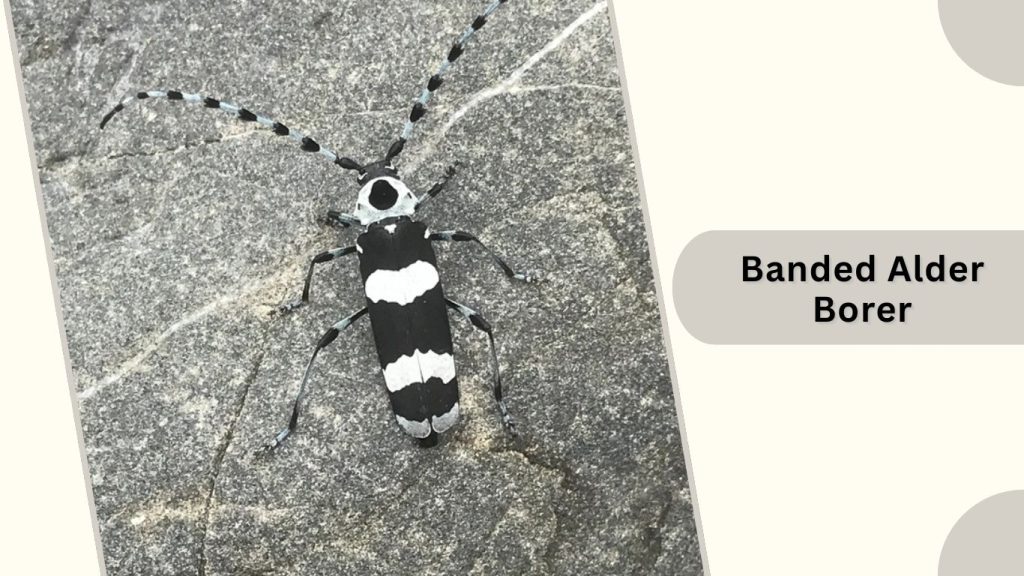
The banded alder borer is a striking black insect with bold white bands across its body. It is usually found outdoors around trees, logs, and firewood. Although it may enter homes by accident, it does not normally infest indoor furniture or dry structural wood.
Identification
- Long black body with clear white bands
- Very long antennae
- Black-and-white striped legs
- Hard, narrow beetle body
- Often seen near logs, trees, or firewood
Where Banded Alder Borers Come From
Banded alder borers usually come from dead or dying hardwood trees. Their larvae develop inside alder, ash, maple, oak, and other weakened wood. Adults may appear near firewood piles, tree trunks, fences, or outdoor lights during warm months.
Are Banded Alder Borers Harmful?
Banded alder borers do not bite or sting people. They are not considered dangerous household pests. Their larvae mostly feed in dead or stressed wood, so they are more of an outdoor tree insect than an indoor problem.
How to Get Rid of Banded Alder Borers
Move firewood away from the home and avoid storing logs indoors for long periods. Seal gaps around doors, windows, and vents. If one appears inside, remove it with a cup, vacuum, or paper towel and release it outside.
2. Asian Longhorned Beetle
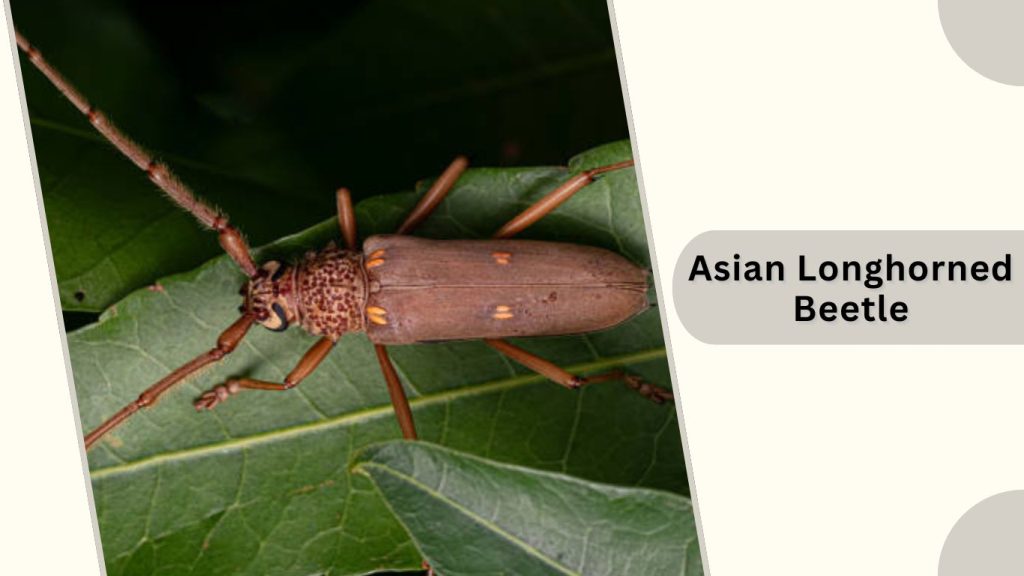
The Asian longhorned beetle is a large black beetle with white spots and banded antennae. It is an important tree pest because its larvae bore into hardwood trees. If you find one, proper identification is important.
Identification
- Shiny black body with white spots
- Very long black-and-white antennae
- Large beetle compared with many household insects
- Pale or bluish-looking legs
- Round exit holes may appear in trees
Where Asian Longhorned Beetles Come From
Asian longhorned beetles come from infested hardwood trees. They commonly attack maple, birch, elm, willow, ash, poplar, and other trees. Larvae tunnel deep inside trunks and branches, while adults may be seen on bark, logs, or nearby surfaces.
Are Asian Longhorned Beetles Harmful?
They do not usually harm people or pets, but they can seriously damage trees. Heavy infestations can weaken and kill healthy hardwood trees. Because this beetle is invasive in some areas, suspected sightings should be reported to local agricultural authorities.
How to Get Rid of Asian Longhorned Beetles
Do not move firewood from areas where this beetle may be present. Capture or photograph the insect for identification. If you suspect an Asian longhorned beetle, contact a local extension office, agriculture department, or pest professional.
3. White-Spotted Sawyer Beetle
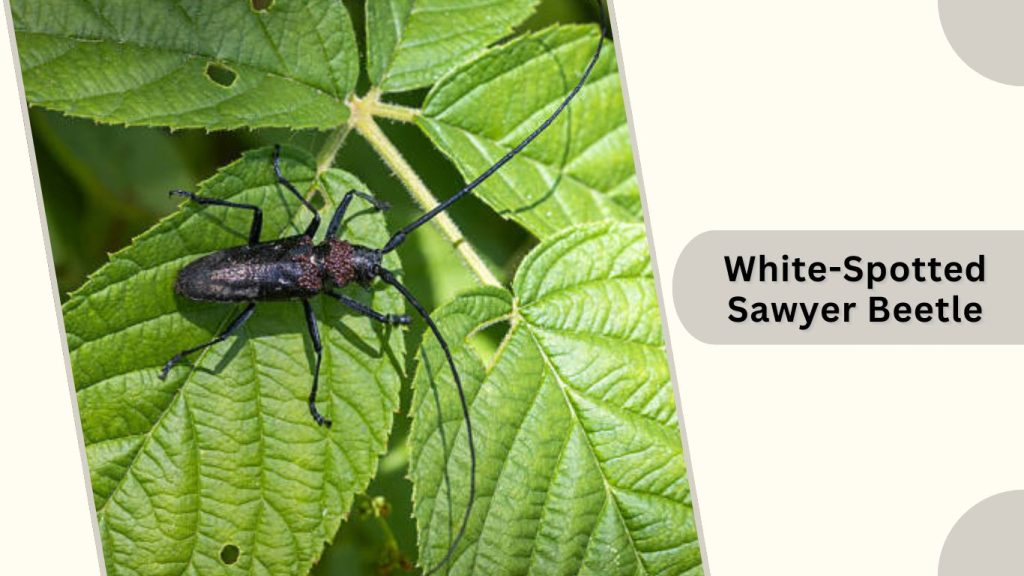
The white-spotted sawyer beetle is a dark longhorned beetle with a noticeable white spot near the base of its wing covers. It is often found around pine trees, spruce, fir, logs, and firewood. It may accidentally enter homes when firewood is brought inside.
Identification
- Dark black or grayish body
- One clear white spot near the wing covers
- Long antennae, especially in males
- Rough-looking body surface
- Often found near pine or conifer wood
Where White-Spotted Sawyer Beetles Come From
White-spotted sawyer beetles come from dead, dying, or recently cut conifer trees. Their larvae develop under bark and inside wood. Firewood, logs, and freshly cut lumber are common ways these beetles appear near homes.
Are White-Spotted Sawyer Beetles Harmful?
White-spotted sawyer beetles do not bite or sting people. They usually do not damage dry indoor wood. However, they can be confused with other wood-boring beetles, so identification is useful if many appear around the home.
How to Get Rid of White-Spotted Sawyer Beetles
Store firewood outdoors and away from the house. Bring in only the wood you plan to burn soon. Seal entry points around windows, doors, and vents. If adults appear indoors, vacuum or remove them and check nearby firewood.
4. Cottonwood Borer
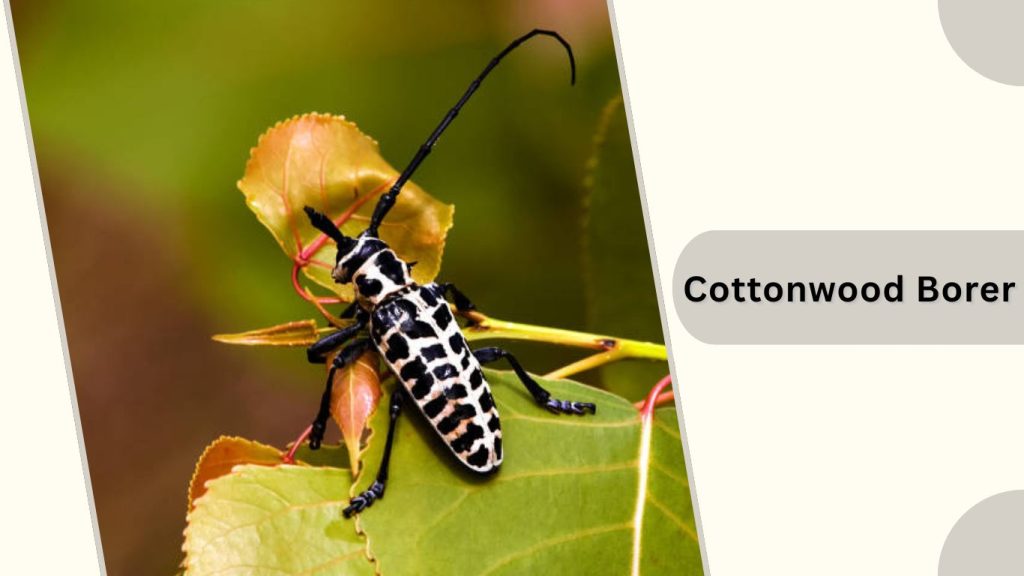
The cottonwood borer is a large black insect with white or pale stripes and patches. It is mostly found around cottonwood, poplar, and willow trees. Its bold pattern can look alarming, but it is mainly a tree pest rather than a household insect.
Identification
- Large black body with white markings
- Long antennae
- Thick legs and hard wing covers
- Bold striped or patched appearance
- Often seen near cottonwood or willow trees
Where Cottonwood Borers Come From
Cottonwood borers come from trees, especially cottonwood, poplar, and willow. Their larvae feed inside roots, lower trunks, and stems. Adults may be seen walking on bark, soil near tree bases, logs, or outdoor surfaces during warm weather.
Are Cottonwood Borers Harmful?
Cottonwood borers do not bite or sting people. Their main concern is tree damage. Larvae can weaken young or stressed trees, sometimes causing decline or breakage. They do not usually infest indoor furniture, flooring, or dry wood.
How to Get Rid of Cottonwood Borers
Keep trees healthy with proper watering and care. Remove dead wood and avoid stacking fresh logs near the house. If a tree shows heavy damage, consult an arborist or pest expert. Indoor chemical treatment is usually not needed.
5. Zebra Longhorn Beetle
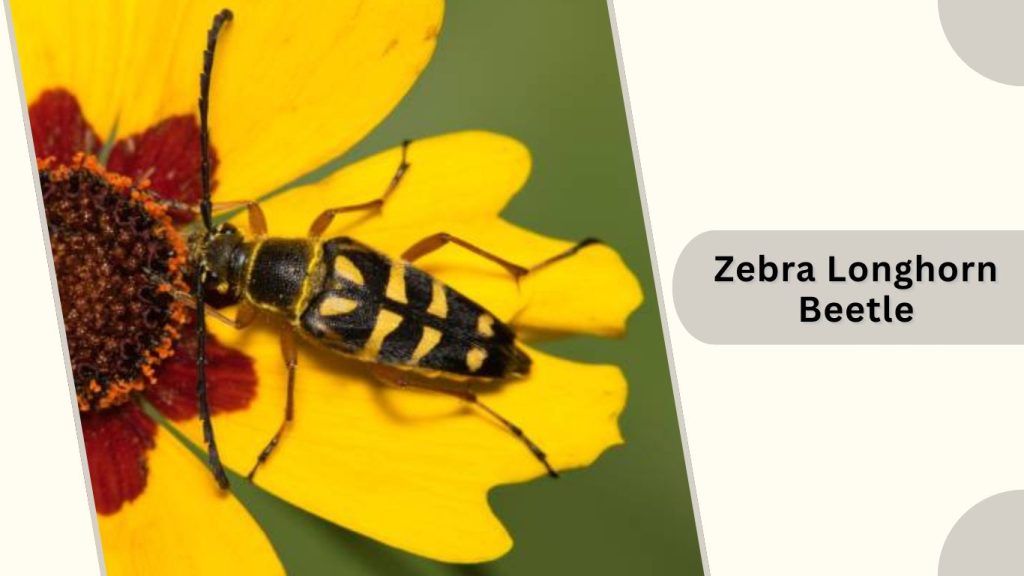
The zebra longhorn beetle is a small to medium black beetle with pale white or yellowish stripes. It is usually found on flowers, shrubs, logs, and wooded areas. Like many longhorn beetles, it has long antennae and a narrow body.
Identification
- Black body with pale zebra-like stripes
- Long antennae
- Slender beetle shape
- May be seen on flowers or wood
- Striped pattern across the wing covers
Where Zebra Longhorn Beetles Come From
Zebra longhorn beetles usually come from outdoor wooded areas. Their larvae develop in dead branches, decaying wood, or weakened trees, depending on the species. Adults may visit flowers for nectar and pollen, especially during warm weather.
Are Zebra Longhorn Beetles Harmful?
Most zebra longhorn beetles are not harmful to people. They do not bite or sting and are not common indoor pests. Their larvae usually use dead or weakened wood rather than healthy household materials.
How to Get Rid of Zebra Longhorn Beetles
If one enters the home, remove it and release it outside. Keep firewood stored away from the house and inspect logs before bringing them indoors. Repair window screens and seal small gaps to prevent accidental entry.
6. Ivory-Marked Beetle
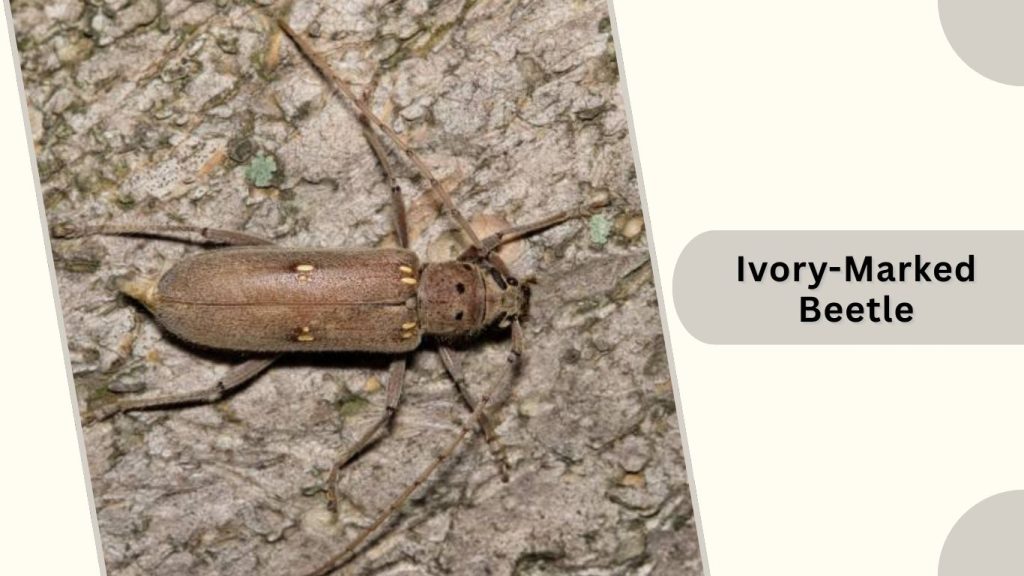
The ivory-marked beetle is a black or dark brown longhorned beetle with pale ivory-colored marks on its wing covers. It is usually associated with hardwood trees and firewood. Adults may be seen near lights, logs, or wooded areas.
Identification
- Dark body with pale ivory marks
- Long antennae
- Narrow, hard beetle body
- Light marks may look like short white stripes
- Often associated with hardwood trees or logs
Where Ivory-Marked Beetles Come From
Ivory-marked beetles develop in dead, dying, or weakened hardwood trees. They may be linked to oak, hickory, maple, and other hardwoods. Adults can emerge from firewood or lumber if wood was stored with larvae inside.
Are Ivory-Marked Beetles Harmful?
Ivory-marked beetles do not bite or sting people. They are not usually a serious indoor pest. Their larvae mainly feed in dead or weakened wood, not finished furniture or properly dried structural lumber.
How to Get Rid of Ivory-Marked Beetles
Store firewood outdoors, away from walls and doors. Bring logs inside only when ready to use them. Vacuum or remove any adults found indoors. If many beetles emerge from wood, remove the infested firewood from the home.
7. Hickory Borer
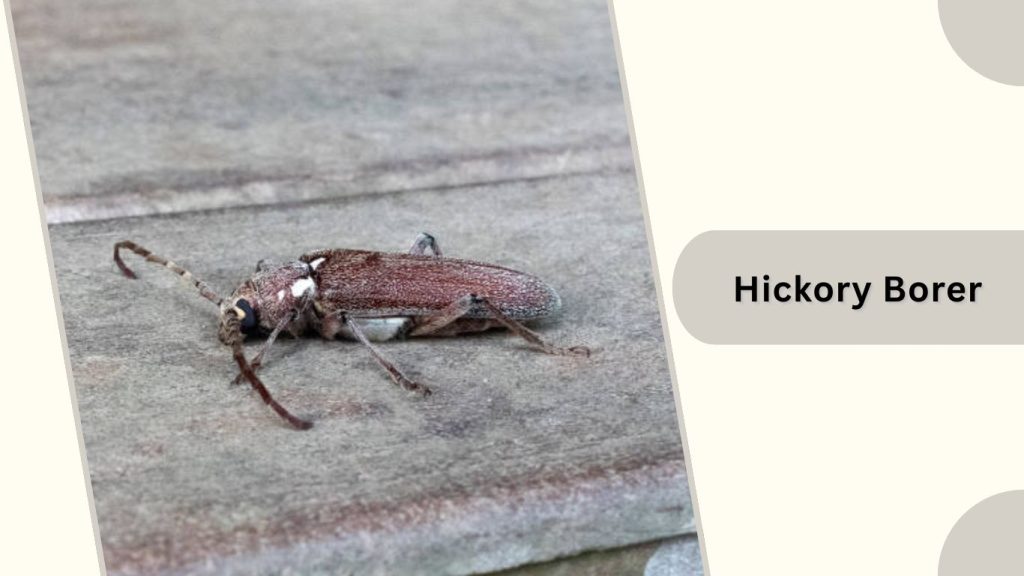
The hickory borer is a black beetle with yellowish-white bands that can look like white stripes from a distance. It is usually found around hickory, pecan, oak, and other hardwood trees. Its striped body may also make people confuse it with certain wasps.
Identification
- Black body with pale yellow or whitish bands
- Long antennae
- Narrow, hard beetle body
- Wasp-like striped appearance
- Often found near hardwood logs or trees
Where Hickory Borers Come From
Hickory borers usually come from dead, dying, or recently cut hardwood trees. Their larvae develop under bark and inside wood. Firewood, storm-damaged branches, and freshly cut logs can bring them close to homes.
Are Hickory Borers Harmful?
Hickory borers do not bite or sting people. They are not a major indoor pest, but they may damage stressed or recently cut hardwood trees. If they appear inside, they usually came from firewood rather than from furniture or house framing.
How to Get Rid of Hickory Borers
Store firewood outside and away from doors, windows, and walls. Do not keep logs indoors for long periods. Remove dead branches from nearby trees and seal small entry gaps. Indoor treatment is usually not needed if the wood source is removed.
8. Locust Borer
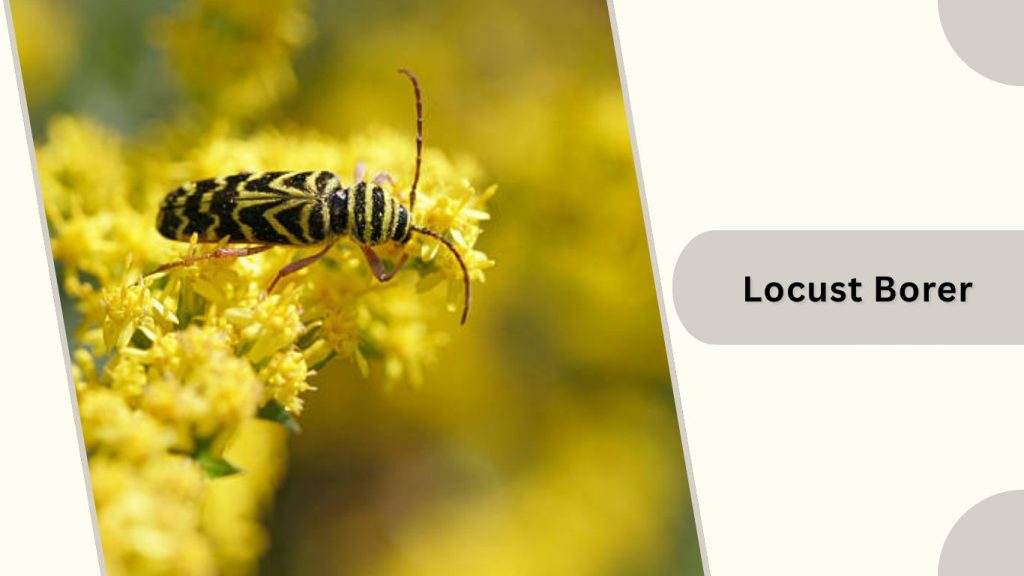
The locust borer is a black beetle with yellow or whitish stripes across its body. It is commonly found around black locust trees and flowers. Because of its striped body, it can look like a small wasp, but it is actually a longhorned beetle.
Identification
- Black body with pale yellow or white stripes
- Long antennae
- Narrow body shape
- Often seen on goldenrod flowers
- Wasp-like pattern but hard beetle wings
Where Locust Borers Come From
Locust borers come from black locust trees. Their larvae tunnel into trunks and branches, especially in stressed or damaged trees. Adults are often seen outdoors in late summer or fall, feeding on flower pollen before laying eggs on bark.
Are Locust Borers Harmful?
Locust borers are not harmful to humans and do not sting. Their main damage is to black locust trees. Larval tunneling can weaken trees, cause branch breakage, and make young or stressed trees decline over time.
How to Get Rid of Locust Borers
Keep black locust trees healthy with proper care. Remove dead or damaged branches and avoid wounding tree bark. If beetles enter the house, remove them manually. For serious tree infestations, ask an arborist about proper control.
9. Striped Flea Beetle
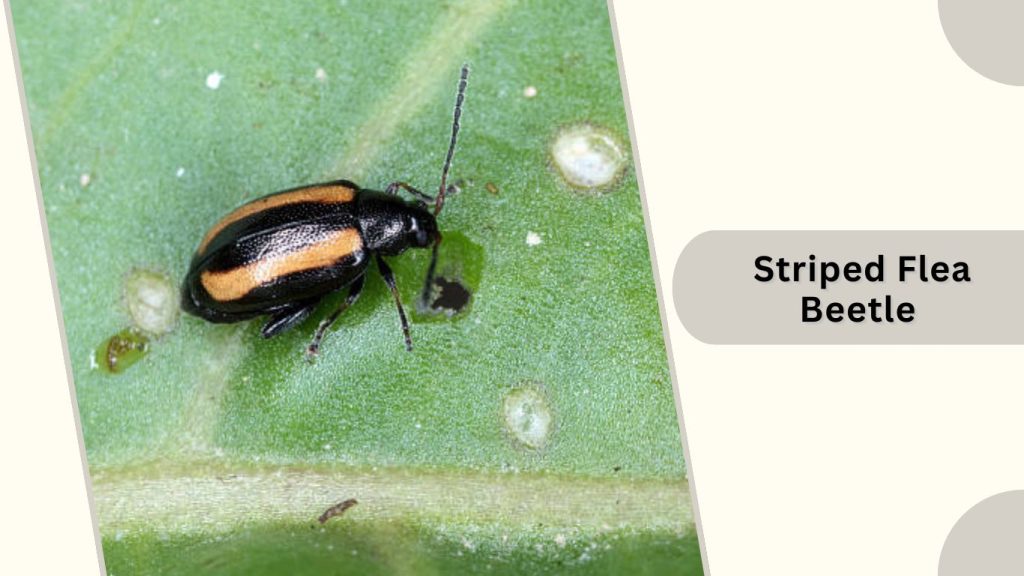
Striped flea beetles are tiny black insects with pale yellow or whitish stripes on their backs. They are common garden pests, especially on cabbage, radish, mustard, broccoli, and other leafy crops. They jump quickly when disturbed, similar to fleas.
Identification
- Very small black beetle
- Pale stripes running along the back
- Enlarged hind legs for jumping
- Chews tiny round holes in leaves
- Moves quickly when touched
Where Striped Flea Beetles Come From
Striped flea beetles come from gardens, weeds, soil, and crop areas. Adults may overwinter in plant debris and become active in warm weather. They often move onto young vegetable plants soon after seedlings emerge.
Are Striped Flea Beetles Harmful?
Striped flea beetles do not bite or sting people. Their main problem is plant damage. They chew small “shot holes” in leaves, which can seriously weaken young seedlings. Heavy feeding may reduce plant growth and crop quality.
How to Get Rid of Striped Flea Beetles
Use row covers to protect young plants. Remove weeds and old plant debris where beetles hide. Sticky traps can help monitor them. Neem oil or insecticidal soap may reduce activity, but repeated control may be needed for heavy infestations.
10. Four-Lined Plant Bug
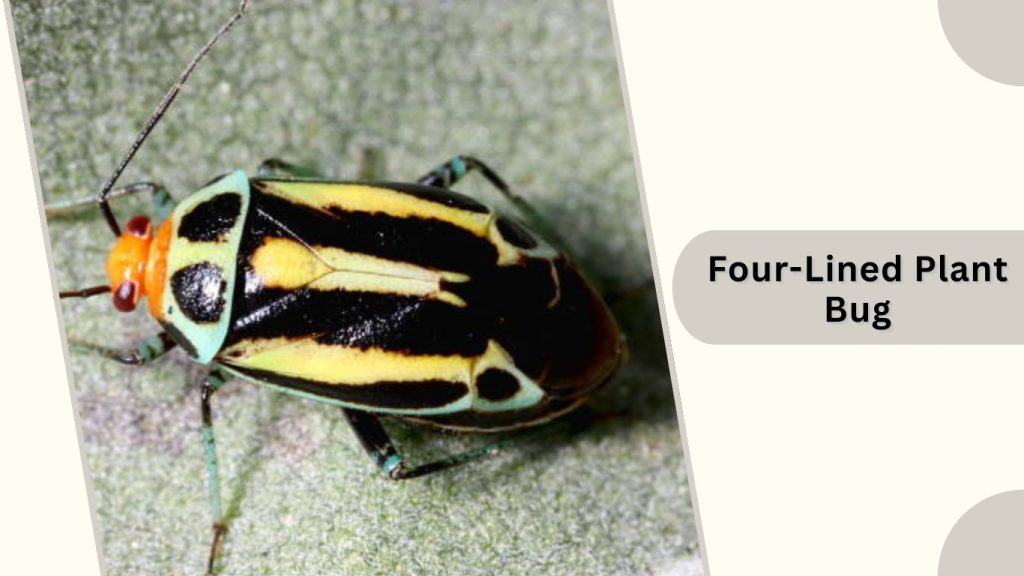
The four-lined plant bug is a small black and yellow-striped insect that may look black and white in some lighting. It is common on herbs, flowers, vegetables, and ornamental plants. It is mostly noticed because of the small spots it leaves on leaves.
Identification
- Small oval body
- Four dark lines running down the back
- Yellow, greenish, or pale background color
- Fast-moving when disturbed
- Leaves small round spots on plants
Where Four-Lined Plant Bugs Come From
Four-lined plant bugs come from gardens, weeds, herbs, shrubs, and flowering plants. They overwinter as eggs in plant stems. In spring, young nymphs hatch and feed on tender leaves before becoming winged adults.
Are Four-Lined Plant Bugs Harmful?
They do not bite or sting people. Their damage is mainly cosmetic plant spotting. Leaves may develop many small dark or pale spots where the bugs feed. Most healthy plants recover, but heavy feeding can make ornamentals look unattractive.
How to Get Rid of Four-Lined Plant Bugs
Remove weeds and old plant stems where eggs may be hidden. Prune damaged growth if needed. Spray plants with water to knock bugs off, or use insecticidal soap on young nymphs. Healthy plants usually tolerate light damage.
11. White-Striped Black Moth
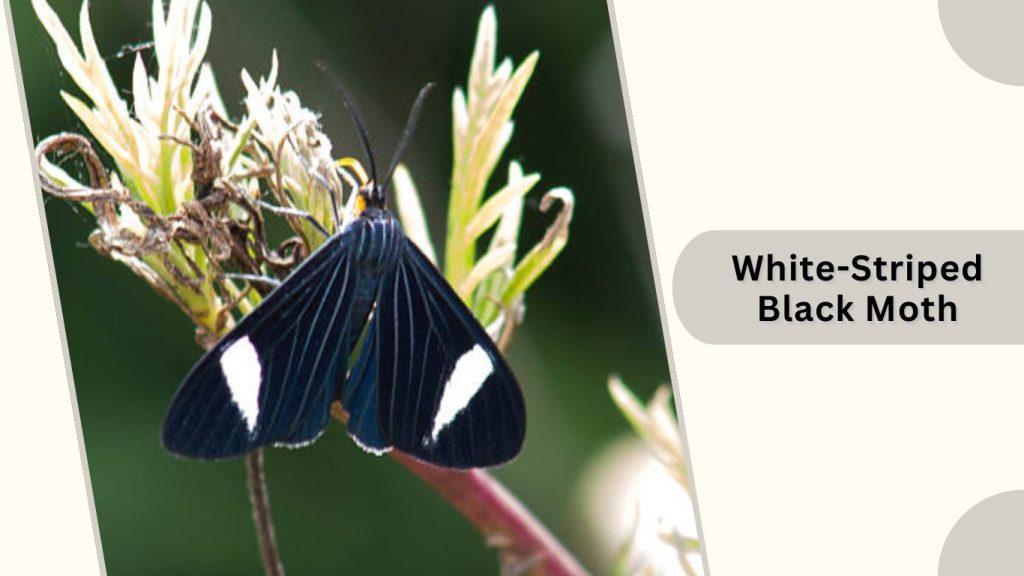
A white-striped black moth is a small dark moth with pale or white lines across its wings. Several moth species can fit this description, and many are harmless outdoor insects. They may enter homes at night because they are attracted to lights.
Identification
- Small black or dark-colored moth
- White or pale stripes on wings
- Powdery wings when touched
- Flies mostly at night
- Often seen near porch lights or windows
Where White-Striped Black Moths Come From
These moths usually come from outdoor plants, grasses, shrubs, or trees. Their caterpillars feed on plant material, depending on the species. Adults may fly indoors through open doors or damaged screens, especially when lights are on at night.
Are White-Striped Black Moths Harmful?
Most white-striped black moths are not harmful to people. They do not bite or sting. A few moth larvae may feed on garden plants, but occasional adult moths indoors are usually just accidental visitors.
How to Get Rid of White-Striped Black Moths
Turn off unnecessary outdoor lights at night or switch to less attractive lighting. Repair window screens and seal door gaps. If moths enter, catch and release them outside or vacuum them. Check plants only if you see repeated activity.
12. Spotted Lanternfly Nymph
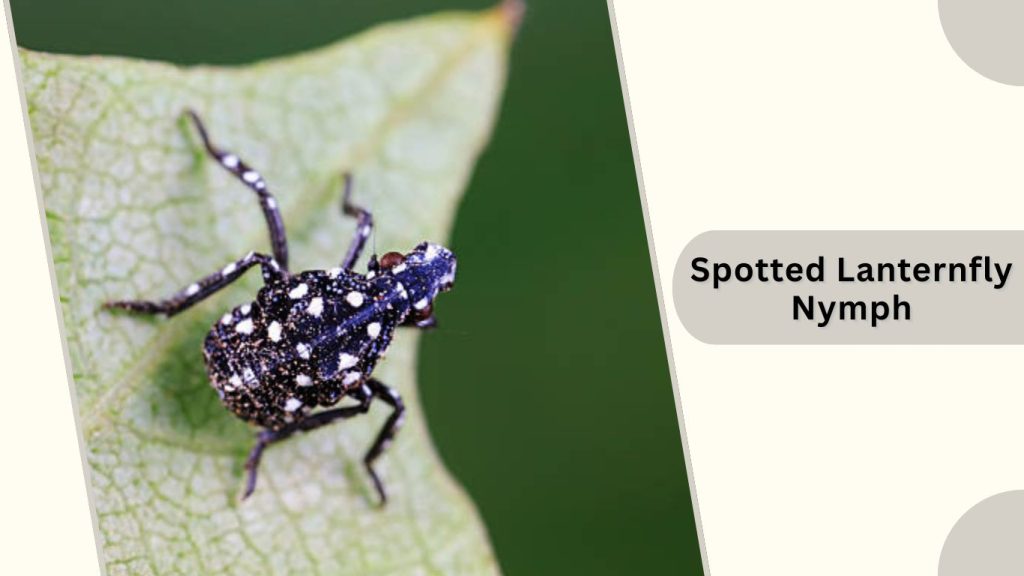
Spotted lanternfly nymphs are small black insects with bright white spots. They are often found on trees, vines, outdoor furniture, fences, vehicles, and garden plants. Young nymphs are mostly black and white, while older nymphs develop red patches.
Identification
- Small black body with white spots
- Jumps quickly when disturbed
- Often found in groups
- Older nymphs may show red coloring
- Feeds on plant stems and leaves
Where Spotted Lanternfly Nymphs Come From
Spotted lanternfly nymphs hatch from egg masses laid on hard surfaces such as tree bark, stones, outdoor furniture, vehicles, and firewood. They feed on plant sap and are commonly found on grapevines, tree-of-heaven, fruit trees, maples, and ornamentals.
Are Spotted Lanternfly Nymphs Harmful?
They do not bite or sting people. However, they can harm plants by sucking sap and producing sticky honeydew. Heavy infestations may weaken plants, damage grapevines, attract ants, and cause black sooty mold on surfaces.
How to Get Rid of Spotted Lanternfly Nymphs
Scrape and destroy egg masses, crush nymphs when possible, and remove tree-of-heaven if it attracts them. Use sticky bands carefully on trees to avoid catching birds or beneficial wildlife. Report sightings if they are invasive in your area.