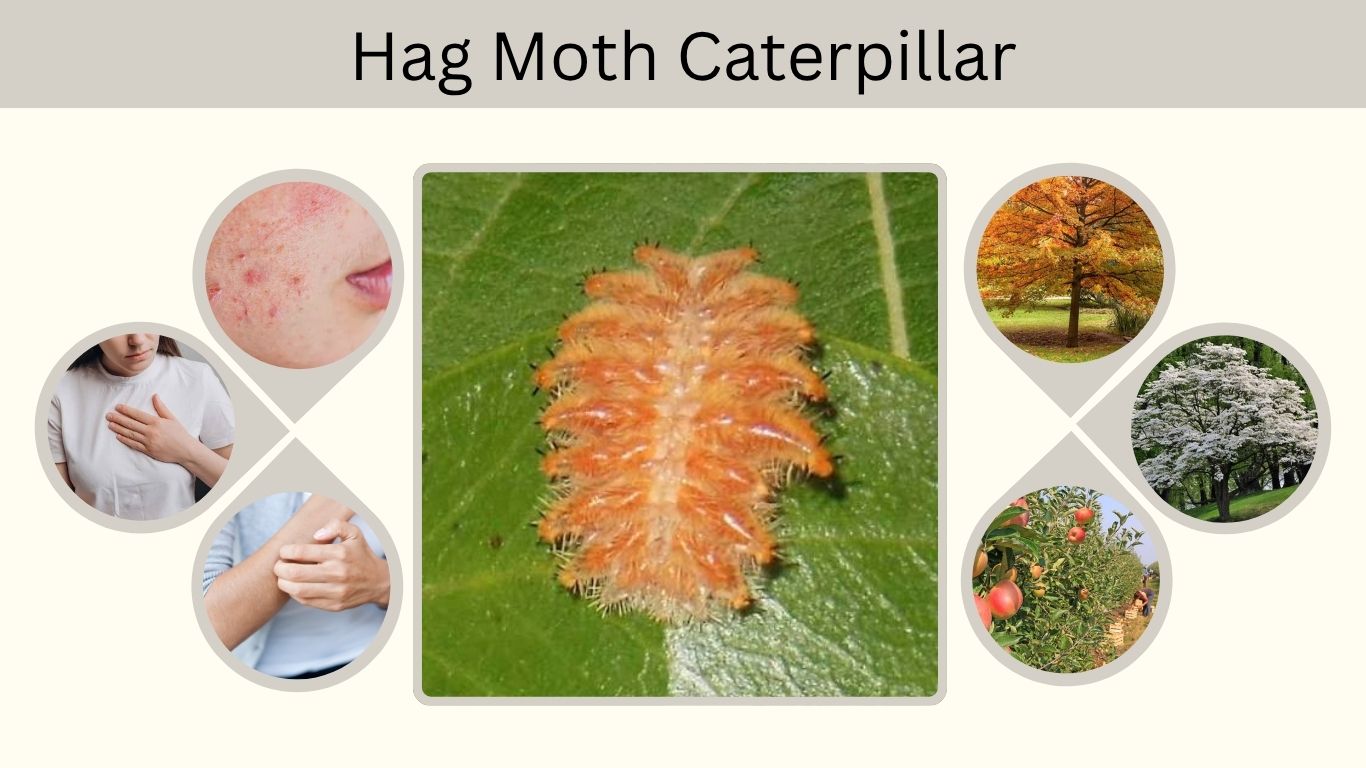
The hag moth caterpillar is one of the strangest-looking caterpillars in eastern North America. It is also called the monkey slug because it moves like a slug and has hairy, curled “arms” that make it look more like a tiny sea creature than a normal caterpillar. Although it rarely causes serious plant damage, it can sting and irritate skin if handled. Virginia Cooperative Extension identifies it as Phobetron pithecium, a native species found in shrubby fields and deciduous forests in the eastern half of the United States.
What Is a Hag Moth Caterpillar?
The hag moth caterpillar is the larval stage of the hag moth, a moth in the slug caterpillar family, Limacodidae. Caterpillars in this family have reduced legs and move in a smooth, gliding motion instead of walking like many common caterpillars.
Quick Identification
- Brown, hairy, flattened body
- Several curled, fleshy side appendages
- Some “arms” are longer and twisted
- Smooth, slug-like movement
- Head often hidden from above
- Full-grown size about 1 inch
- Often found on hardwood trees and shrubs
The caterpillar’s long side appendages are not real walking legs. Its true legs are underneath the body, and the visible curled parts mainly help with camouflage and defense.
Why Is It Called Monkey Slug?
The name “monkey slug” comes from its unusual body shape and movement. It looks fuzzy and odd, while its reduced legs allow it to glide across leaves like a slug. Mississippi State University Extension notes that monkey slugs belong to the slug caterpillar group, which is known for unusual appearance, odd movement, and the ability to sting if mishandled.
Hag Moth Caterpillar Sting
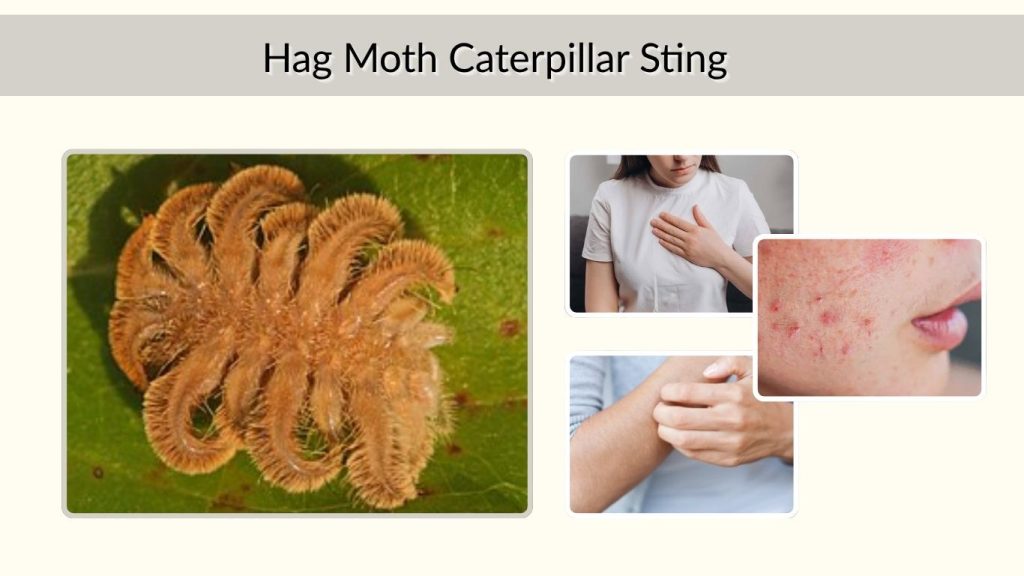
The hag moth caterpillar can sting, but it does not sting with a tail or bite with its mouth. The reaction comes from short, stout, hollow spines hidden under the longer hairy appendages. These spines connect to toxin glands in the skin and can cause irritation when pressed against human skin.
Sting Symptoms
A hag moth caterpillar sting may cause:
- Burning feeling
- Itching
- Redness
- Local swelling
- Skin irritation
- Soreness for several days
Virginia Cooperative Extension compares the reaction to a bee-sting-like irritation and says the contact site may remain sore for several days.
Is the Hag Moth Caterpillar Poisonous?
It is better to call it venomous or stinging, not poisonous. A poisonous animal causes harm when eaten or touched in a toxic way, while a venomous animal injects or delivers toxins through spines, fangs, or stingers. The hag moth caterpillar’s problem is contact with stinging spines, not a bite.
Does the Hag Moth Caterpillar Bite?
No, a hag moth caterpillar is not known for biting people. Most human reactions happen when someone touches it, brushes against it, or accidentally presses it against skin. Avoid picking it up with bare hands.
Hag Moth Caterpillar Rash and First Aid
A rash or sting reaction can happen after contact with the caterpillar’s hidden spines. Reactions vary by person. Mississippi State University Extension notes that some people report no sting while others do, likely because contact pressure, contact location, and personal sensitivity can affect the reaction.
What to Do After Contact
- Wash the area with soap and water
- Remove any loose hairs or spines gently
- Apply an ice pack to reduce swelling
- Use anti-itch or steroid cream if needed
- Avoid scratching the irritated skin
- Contact a doctor if the reaction is severe
Virginia Cooperative Extension recommends washing the affected area, using an ice pack for swelling, and using creams or lotions containing steroids to reduce discomfort. People sensitive to insect stings should consult a physician.
Where Do Hag Moth Caterpillars Live?
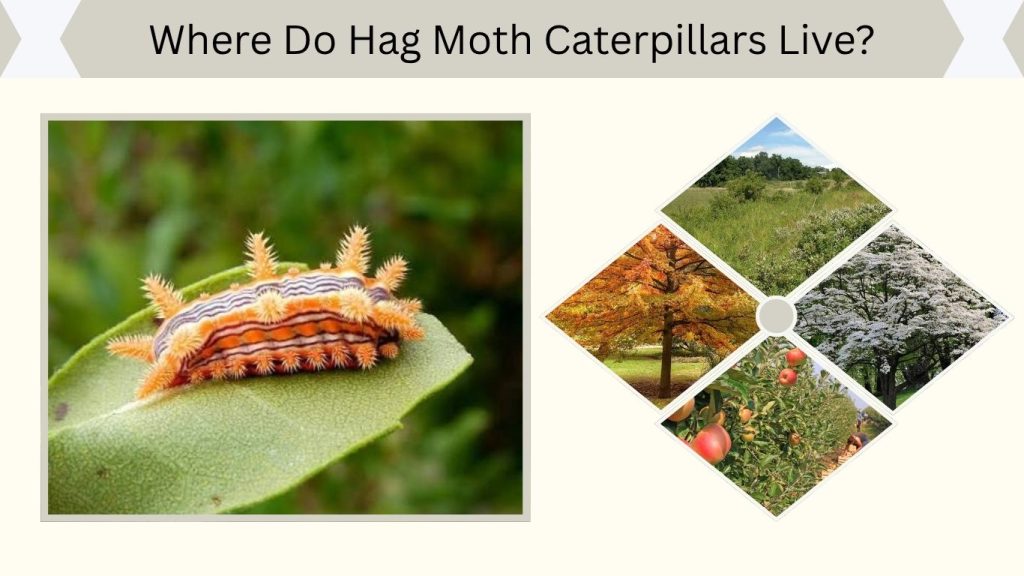
Hag moth caterpillars live mainly in deciduous forests, shrubby fields, orchards, and areas with woody host plants. BugGuide lists the range as eastern North America, from Texas and Florida northward into Quebec and westward to Iowa.
Are They Found in Georgia?
Yes, hag moth caterpillars can be found in Georgia because Georgia is within the eastern United States and has the deciduous forests and host plants they use. They may appear on trees, shrubs, porches, outdoor furniture, or even a car if they crawl away from a nearby plant.
Common Host Plants
Hag moth caterpillars feed on many hardwood trees and shrubs. Common hosts include:
- Oak
- Apple
- Ash
- Dogwood
- Hickory
- Sassafras
- Cherry
- Birch
- Chestnut
- Persimmon
- Walnut
- Willow
- Spirea
Virginia Cooperative Extension says they are generalist feeders commonly found on shade trees and ornamental shrubs, including rose, sassafras, alder, dogwoods, hickories, spirea, oaks, ash, apple, and chestnut.
Hag Moth Caterpillar Life Cycle
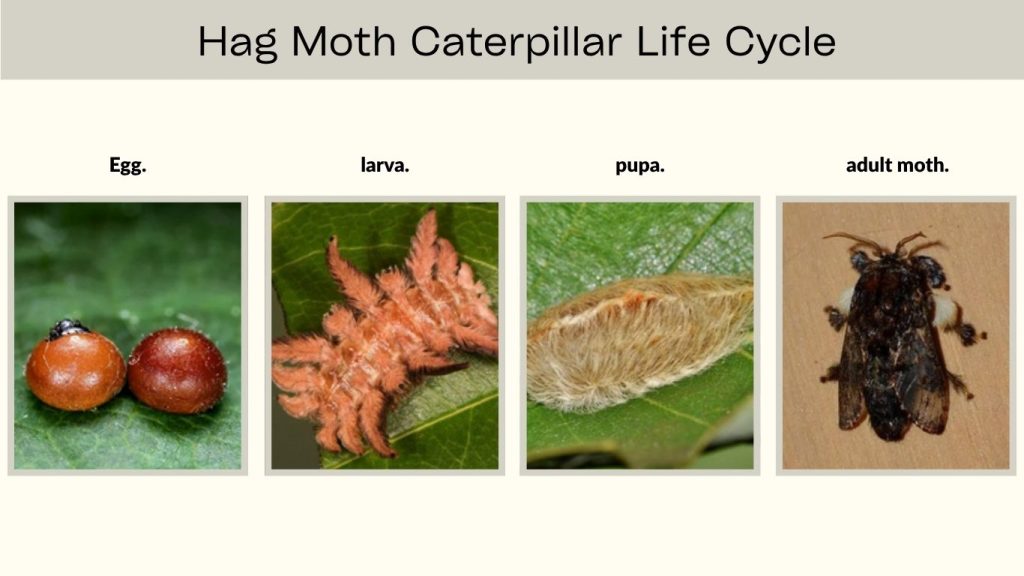
The hag moth has a complete life cycle: egg, larva, pupa, and adult moth. The caterpillar stage is the stage people usually notice because of its strange shape.
| Stage | What Happens |
| Egg | Adult moth lays eggs on or near host plants |
| Caterpillar | Feeds on leaf tissue and grows |
| Cocoon | Mature caterpillar pupates, often in leaf litter |
| Adult moth | Small, hairy moth emerges to mate |
Virginia Cooperative Extension says hag moth caterpillars are usually seen in late summer, and there may be more than one generation per year in the southern United States.
Hag Moth Caterpillar Damage and Control
Hag moth caterpillars are usually not major plant pests. They feed on leaf surfaces but rarely cause serious damage to host plants. The bigger concern is accidental contact with their stinging hairs.
| Question | Answer |
| Does it damage trees badly? | Usually no |
| Should you touch it? | No |
| Should you spray pesticides? | Usually not needed |
| Best control | Avoid contact and remove carefully |
| Main risk | Skin irritation from stinging spines |
How to Remove One Safely
- Do not pick it up with bare hands
- Wear gloves if working near host plants
- Use a stick, leaf, or container to move it
- Keep children and pets away from it
- Avoid crushing it against skin
- Wash hands and tools after contact
If you often work around host plants, Virginia Cooperative Extension suggests wearing long sleeves, gloves, and a wide-brimmed hat in areas where hag moth caterpillars have been seen.
FAQs
What does a hag moth caterpillar look like?
A hag moth caterpillar is brown, hairy, and flattened, with several curled appendages along its sides. These appendages make it look like a strange spider, leaf scrap, or sea creature. It moves smoothly like a slug instead of walking normally.
Is a hag moth caterpillar dangerous?
It can be dangerous if handled because it has hidden stinging spines. The sting usually causes burning, itching, redness, and soreness. Most reactions are local, but sensitive people should be more careful and seek medical advice if symptoms are severe.
Does a hag moth caterpillar bite?
No, the hag moth caterpillar does not usually bite people. The irritation comes from contact with stinging spines under its hairy appendages. This is why people often feel a sting after touching or brushing against it.
Where are hag moth caterpillars found?
They are found in the eastern half of the United States, mostly in deciduous forests, shrubby fields, and areas with hardwood trees and ornamental shrubs. They may appear on oak, apple, ash, dogwood, hickory, cherry, and other host plants.
How do you get rid of a hag moth caterpillar?
For one caterpillar, move it carefully with a stick, leaf, or container while wearing gloves. Pesticide is usually unnecessary because hag moth caterpillars rarely cause major plant damage. The best control is avoiding direct contact and keeping children away.