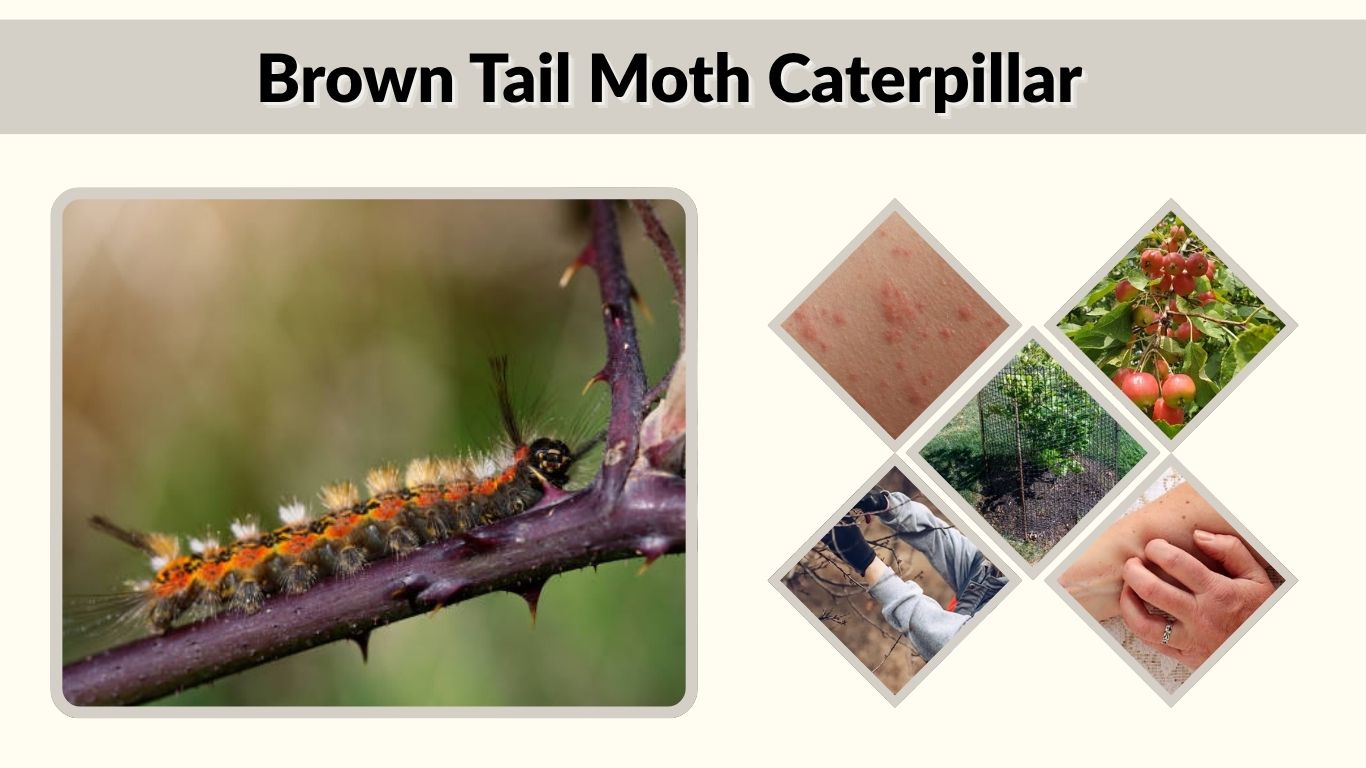
The brown tail moth caterpillar, also written as browntail moth caterpillar or brown-tail moth caterpillar, is best known for its toxic hairs. These tiny hairs can cause an itchy, poison ivy-like rash and, in some people, breathing problems. The caterpillar also damages trees and shrubs by feeding on leaves. It is a major concern in Maine and Cape Cod, especially during spring and early summer.
What Is a Brown Tail Moth Caterpillar?
The brown tail moth caterpillar is the larval stage of the invasive browntail moth, Euproctis chrysorrhoea. It feeds on foliage, builds webs, and later becomes a white adult moth with a brown tail tip.
Brown Tail Moth Caterpillar Identification
A mature brown tail moth caterpillar is usually dark brown and hairy. The most useful identification feature is the pair of red-orange dots near the rear end of the body.
Key signs include:
- Brown, hairy caterpillar
- About 1–1.5 inches long when mature
- Broken white stripes along the sides
- Two red-orange dots near the tail end
- Often found in groups on host trees
- Toxic hairs that can irritate skin and lungs
Maine CDC describes the caterpillars as brown, about 1.5 inches long, with broken white stripes on each side and two red-orange spots near the hind end.
Brown Tail Moth Caterpillar Size
Young caterpillars are small and may be difficult to notice. By late spring or early summer, they become much easier to identify because they reach full size and develop more visible markings.
Brown Tail Moth Caterpillar Rash
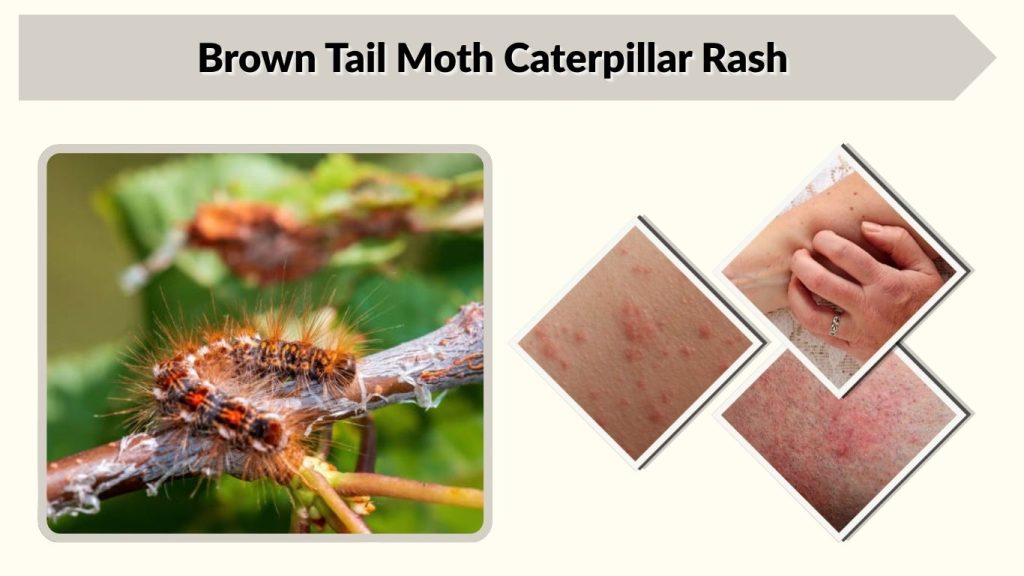
The rash is the main reason people search for this caterpillar. Brown tail moth caterpillars have microscopic hairs that break off and remain in the environment. These hairs can touch your skin directly or become airborne and land on clothing, outdoor furniture, bedding, pets, or tools.
Rash Symptoms
Common brown tail moth caterpillar rash symptoms include:
- Red bumps
- Intense itching
- Burning or irritated skin
- Rash similar to poison ivy
- Symptoms lasting hours, days, or sometimes weeks
- Breathing trouble in sensitive people
Maine CDC says most people develop a localized rash lasting from a few hours to several days, while sensitive people may have a severe rash lasting several weeks. Inhaled hairs can also cause breathing problems that may require emergency care.
Is Brown Tail Moth Caterpillar Rash Contagious?
The rash itself is not contagious like an infection. However, the toxic hairs can move from clothing, pets, bedding, tools, or outdoor surfaces to your skin. This can make it seem like the rash is spreading. Wash exposed clothes and shower after working or walking in infested areas.
Brown Tail Moth Caterpillar Rash Treatment
There is no specific cure for brown tail moth rash. Treatment usually focuses on reducing itching and irritation.
Common relief methods include:
- Cool bath with baking soda
- Hydrocortisone cream
- Calamine lotion
- Cool shower after exposure
- Washing clothes after outdoor activity
- Avoiding scratching
Maine CDC recommends home remedies such as cool baths with baking soda, hydrocortisone cream, and calamine lotion. Seek emergency medical care if you have trouble breathing, trouble swallowing, or swelling of the mouth, tongue, or throat.
Brown Tail Moth Caterpillar Life Cycle
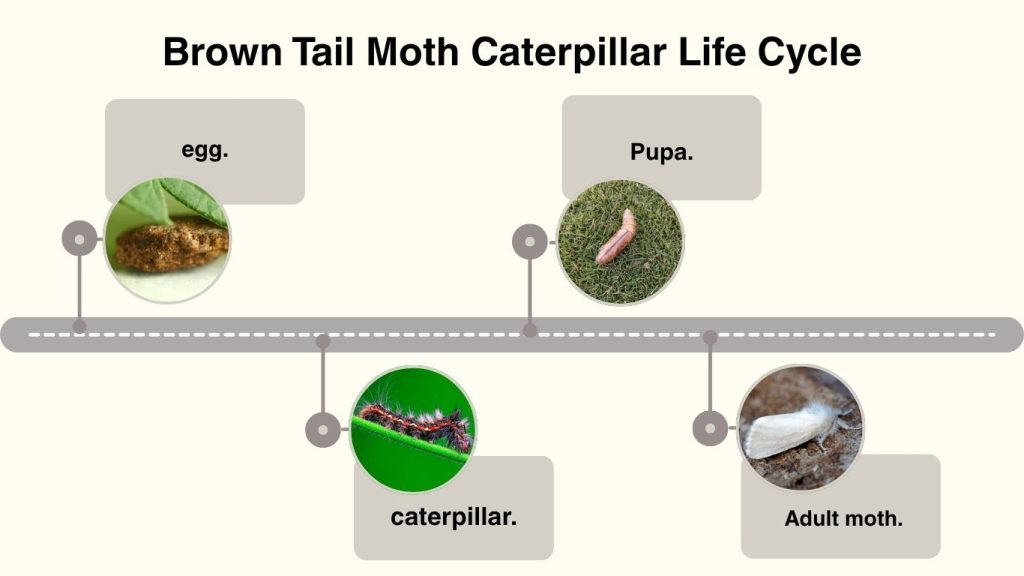
Brown tail moth caterpillars are active during two main parts of the year. They emerge from winter webs in mid-April and feed until June. A new generation hatches in August and feeds until early October before entering winter webs.
| Stage | What Happens |
| Egg | Eggs hatch into young caterpillars |
| Young caterpillar | Feeds and begins developing toxic hairs |
| Winter web | Caterpillars overwinter in silk webs on host trees |
| Mature caterpillar | Feeds heavily in spring and early summer |
| Cocoon/pupa | Caterpillars pupate in silk packets |
| Adult moth | White moths fly mainly in July and August |
Brown Tail Moth Caterpillar Season
The highest risk period for rash exposure is usually April through July. Caterpillars, shed skins, and cocoons can all contain toxic hairs. The hairs may remain toxic in the environment for one to three years, especially in heavily infested areas.
Brown Tail Moth Caterpillar Cocoon
When ready to pupate, brown tail moth caterpillars may tie leaves together with white silk to form a pupal packet. They may also pupate in sheltered places such as roof overhangs, siding, decks, vehicles, or outdoor equipment. These pupal packets can contain toxic hairs, so they should be handled carefully.
Brown Tail Moth Caterpillar Nest
Brown tail moth nests are often called winter webs. They are usually found at the tips of branches on host trees. These webs protect young caterpillars through winter.
Brown Tail Moth Nest vs Tent Caterpillar
Brown tail moth nests can be confused with tent caterpillar webs or fall webworm webs. Brown tail moth winter webs are usually smaller and found at branch tips. Fall webworm nests are often large and visible in late summer, especially August and September.
| Feature | Brown Tail Moth | Tent Caterpillar / Fall Webworm |
| Main concern | Toxic hairs and rash | Mostly tree feeding damage |
| Web timing | Winter and spring | Often spring or late summer |
| Web location | Branch tips | Crotches or larger branch areas |
| Rash risk | High from toxic hairs | Usually much lower |
Where Do Brown Tail Moth Caterpillars Live?
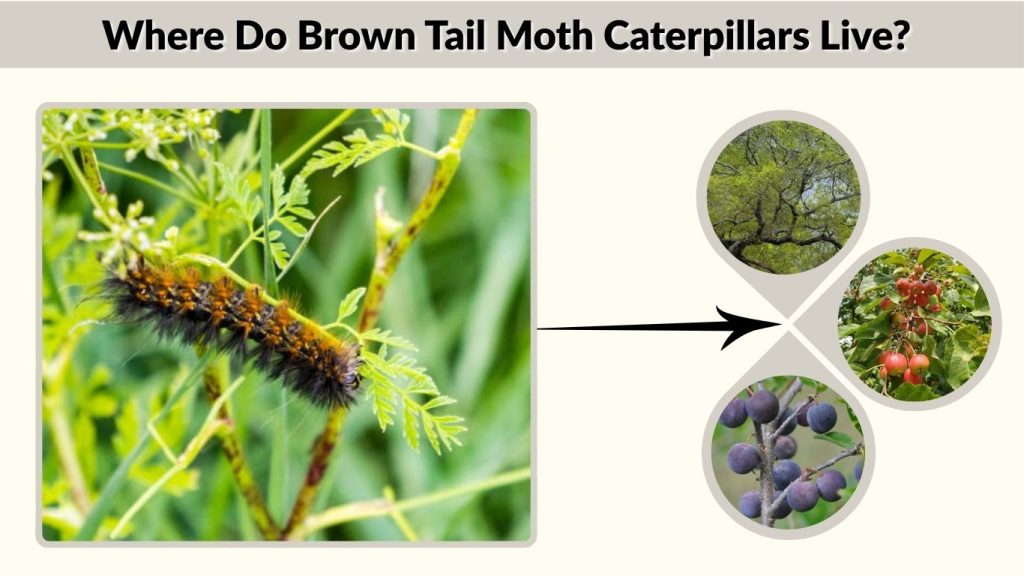
Brown tail moth caterpillars are a major issue in parts of Maine and Cape Cod. Maine Forest Service says populations are found in patches along the coast and up to about 60 miles inland, with heavy concentrations in mid-coastal Maine and the capital region.
Host Trees and Plants
Brown tail moth caterpillars feed on many broadleaf trees and shrubs. Common hosts include:
- Oak
- Apple
- Crabapple
- Pear
- Birch
- Cherry
- Beach plum
- Rugosa rose
- Other hardwood trees and shrubs
Maine Forest Service lists oak, apple, cherry, beach plum, and rugosa rose as host plants, while its FAQ also notes apple, crabapple, pear, birch, cherry, and other hardwoods.
Brown Tail Moth Caterpillar Look-Alikes
Several hairy caterpillars can look similar at first glance. Common look-alikes include tent caterpillars, fall webworms, and spongy moth caterpillars, formerly called gypsy moth caterpillars. The two red-orange dots near the rear are one of the best clues for brown tail moth identification.
Brown Tail Moth vs Gypsy Moth Caterpillar
A spongy moth caterpillar has rows of blue and red spots along its back. A brown tail moth caterpillar is darker, hairier, and has two red-orange dots near the tail end. Both can feed on trees, but brown tail moth is especially known for toxic hairs that cause rash.
Brown Tail Moth vs Tent Caterpillar
Tent caterpillars usually build more obvious silk tents in tree branches. Brown tail moth webs are more often seen as smaller winter webs near branch tips. Brown tail moth caterpillars are also more medically concerning because of their toxic hairs.
How to Get Rid of Brown Tail Moth Caterpillars
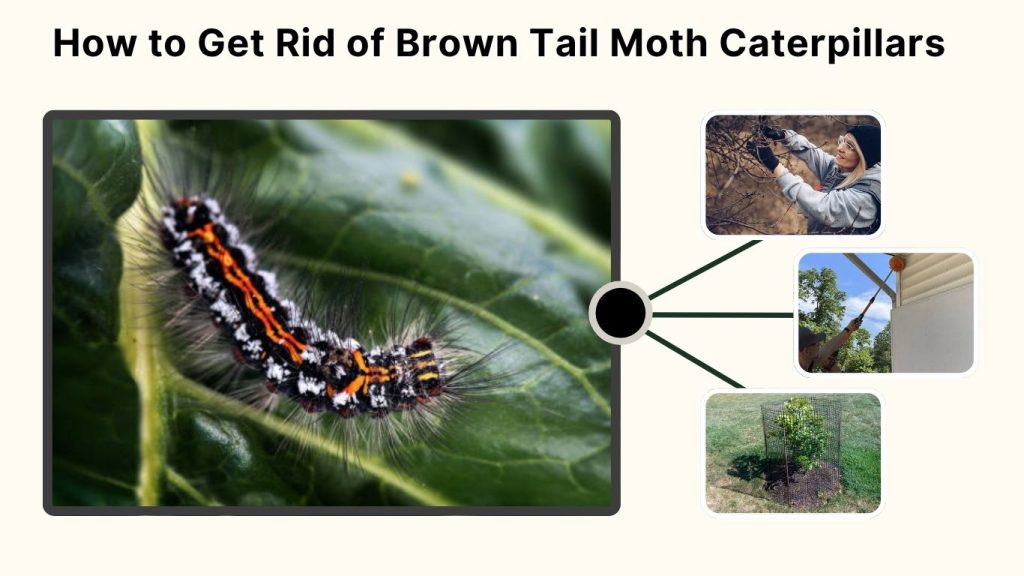
Control should focus on reducing exposure to toxic hairs and limiting caterpillar numbers before they spread.
Remove Winter Webs
For small trees and shrubs, winter web removal is one of the best control steps. Maine Forest Service recommends clipping webs between October and mid-April, before caterpillars emerge and start feeding. Webs should be destroyed after removal.
Use Safe Removal Methods
If caterpillars or cocoons are on buildings, use protection and avoid direct contact. Maine Forest Service recommends using a wet/dry vacuum with a HEPA filter and a few inches of soapy water to remove caterpillars from the side of a house.
Brown Tail Moth Caterpillar Spray and Pesticide
Pesticides may be used, but timing matters. Maine Forest Service says pesticide treatments should be done before the end of May because later treatment does not reduce human exposure to toxic hairs as effectively. They also recommend hiring a licensed pesticide applicator and using only products labeled for the treatment site.
Brown Tail Moth Caterpillar and Dogs
Dogs can carry toxic hairs on their fur after walking, rolling, or lying in infested areas. The rash is a bigger concern for humans, but pets may help transfer hairs indoors. If your dog has been outside in a high-risk area, wipe or bathe the dog carefully and wash bedding.
FAQs
What does a brown tail moth caterpillar look like?
A brown tail moth caterpillar is dark brown and hairy, with broken white stripes along the sides. The easiest identification mark is two red-orange dots near the rear end. Mature caterpillars are usually around 1–1.5 inches long.
How do you treat brown tail moth caterpillar rash?
Use symptom relief such as a cool bath with baking soda, hydrocortisone cream, or calamine lotion. Wash exposed clothing and shower after possible contact. Get emergency help if you have breathing trouble, throat swelling, or trouble swallowing.
Is brown tail moth caterpillar rash contagious?
No, the rash itself is not contagious. However, toxic hairs can remain on clothes, pets, bedding, tools, or outdoor furniture. If those hairs touch your skin later, they can cause new irritation and make it seem like the rash is spreading.
When is brown tail moth caterpillar season?
The biggest rash-risk season is usually April through July. Caterpillars feed heavily in spring and early summer, then pupate. A new generation appears later in summer and enters winter webs before cold weather.
How do I kill brown tail moth caterpillars naturally?
Remove winter webs by clipping them from small trees between October and mid-April, then destroy the webs safely. For caterpillars on buildings, a HEPA wet/dry vacuum with soapy water can help. Wear protective clothing to avoid toxic hairs.