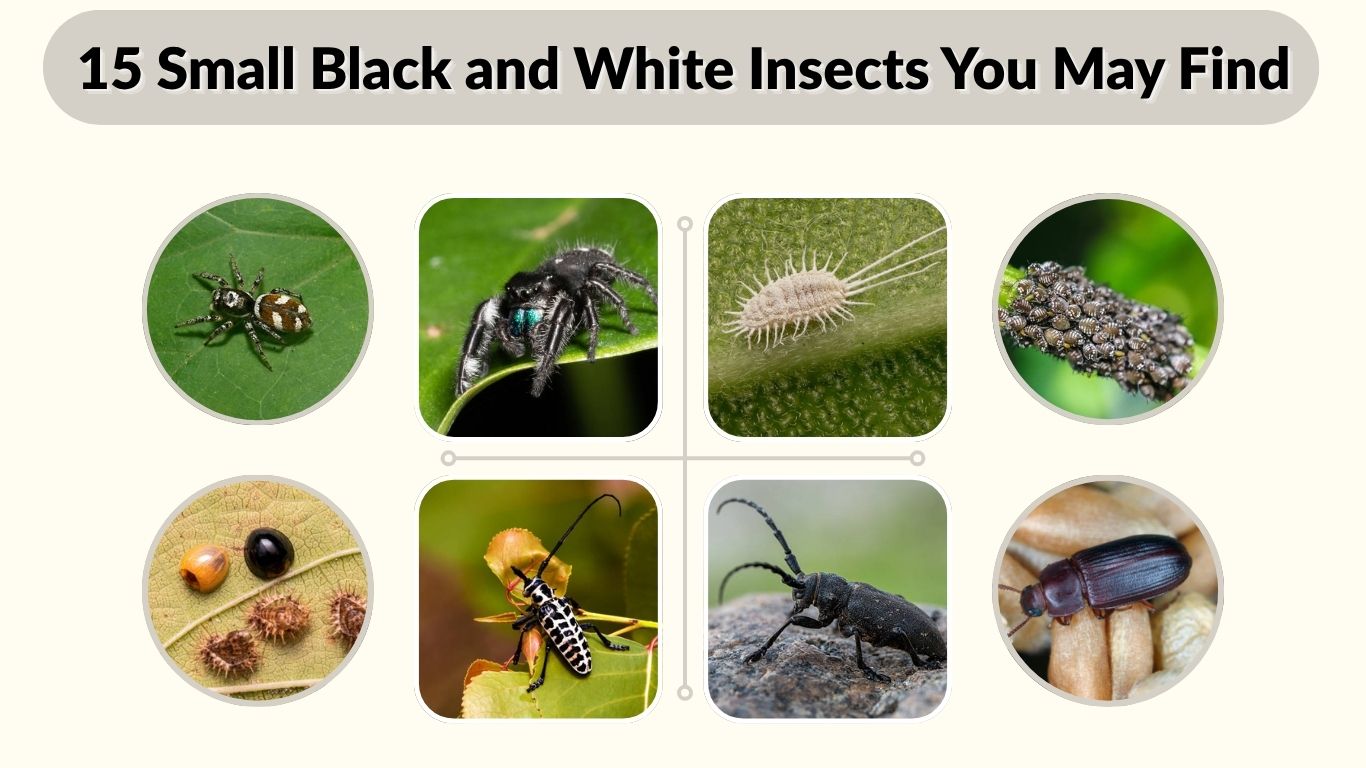
Small black and white insects can appear in homes, gardens, trees, closets, pantries, and around windows. Some are harmless outdoor visitors, while others can damage plants, stored food, fabrics, or trees. Carpet beetles, larder beetles, spotted lanternfly nymphs, aphids, scale insects, and black-and-white beetles all have different habits, so correct identification matters. This guide covers 15 common black and white insects, where they come from, whether they are harmful, and how to manage them.
1. Carpet Beetle
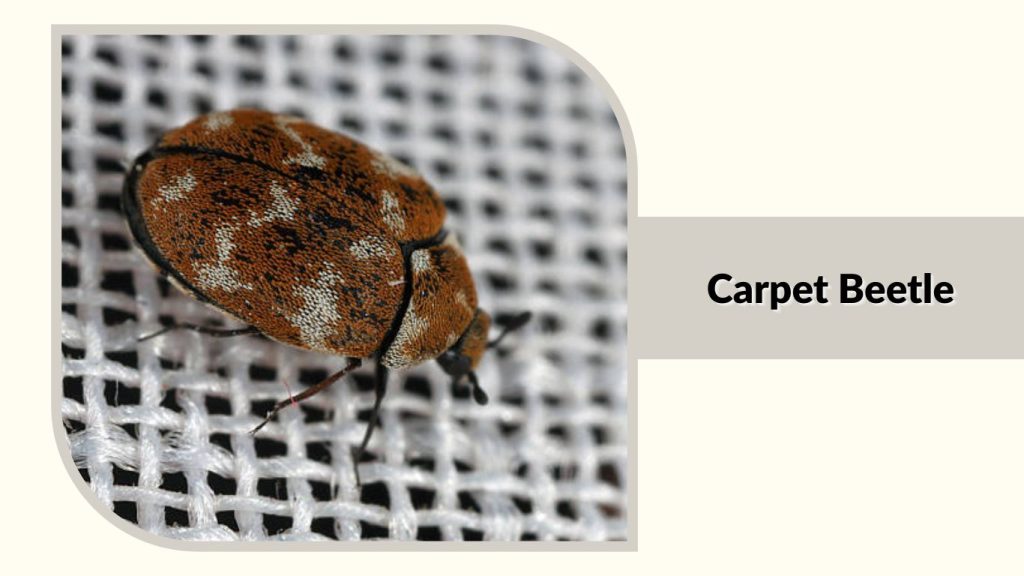
Carpet beetles are small black and white insects often found near carpets, closets, windowsills, stored clothing, and upholstered furniture. Adult carpet beetles may look harmless, but their larvae can damage natural fabrics, rugs, feathers, wool, and stored materials.
Identification
- Small oval-shaped body
- Black, white, tan, orange, or yellow pattern
- Adults may fly toward windows or lights
- Larvae are brown, hairy, and worm-like
- Often found near fabric, lint, pet hair, or dead insects
Where Carpet Beetles Come From
Carpet beetles may enter through open windows, doors, vents, flowers, or old fabrics. Indoors, they can survive in hidden dust, pet hair, wool clothing, carpets, blankets, and storage boxes. Their larvae prefer dark, quiet areas where natural fibers or organic debris are available.
Are Carpet Beetles Harmful?
Carpet beetles do not bite or sting humans. However, their larvae can damage clothing, carpets, blankets, and upholstery. Some people may also get skin irritation from larval hairs, which can look like small itchy bites.
How to Get Rid of Carpet Beetles
Vacuum carpets, closets, baseboards, and under furniture carefully. Wash or dry-clean affected clothing and store wool or silk items in sealed containers. Remove lint, pet hair, and dead insects. Sticky traps can help monitor adult beetles.
2. Larder Beetle
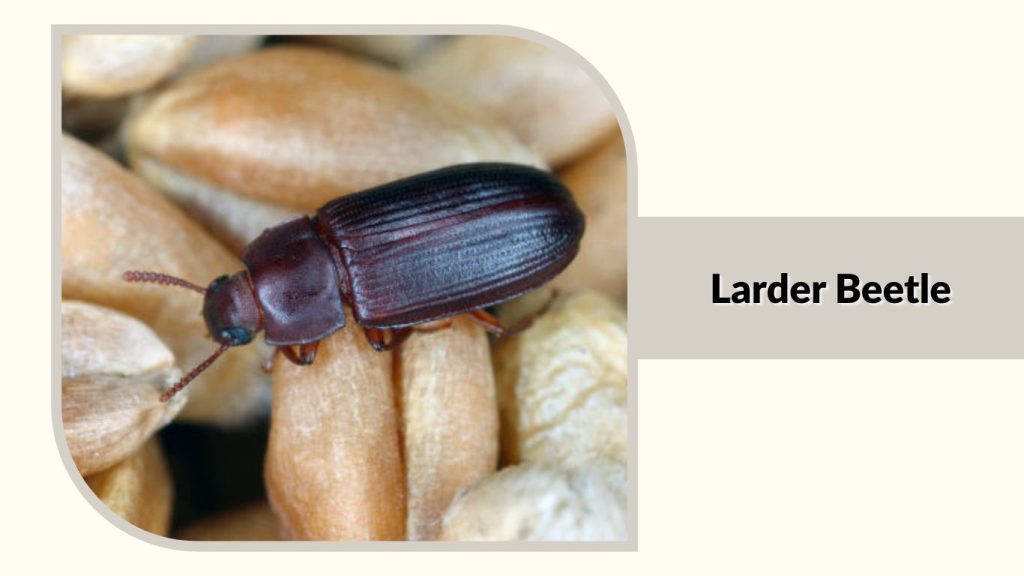
Larder beetles are black and white insects often found in kitchens, pantries, storage rooms, and areas with pet food or animal-based products. They are known for feeding on dried meat, cheese, pet food, dead insects, and other high-protein materials.
Identification
- Oval black body
- Pale yellow or whitish band across the wings
- Dark spots inside the light band
- About 1/4 to 3/8 inch long
- Larvae are brown, hairy, and tapered
Where Larder Beetles Come From
Larder beetles may enter homes from outdoors or come from infested food products. They are attracted to stored meats, pet food, hides, feathers, dead rodents, dead insects, and old animal-based materials. Sometimes their presence points to a hidden dead pest in a wall, attic, or crawl space.
Are Larder Beetles Harmful?
Larder beetles do not usually bite people. Their main problem is food contamination and damage to stored products. Their larvae may also bore into soft wood or packaging when they are ready to pupate.
How to Get Rid of Larder Beetles
Find and remove the food source first. Throw away infested food, clean pantry shelves, vacuum cracks, and store pet food in airtight containers. If beetles keep appearing, check for dead insects, rodents, or animal nests hidden nearby.
3. White-Marked Spider Beetle
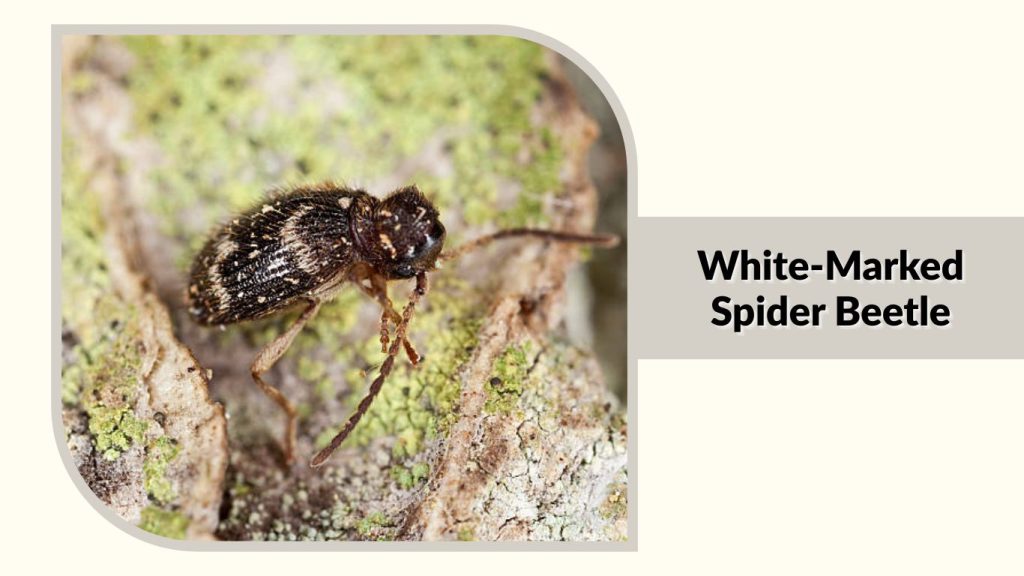
The white-marked spider beetle is a small black and white insect with a rounded body and long legs. It can look like a tiny spider, which is why many people misidentify it. These beetles are usually found in storage areas, pantries, old buildings, and places with dry organic material.
Identification
- Small rounded body
- Long legs and antennae
- Dark body with pale or white markings
- Spider-like appearance
- Slow-moving compared with many beetles
Where White-Marked Spider Beetles Come From
White-marked spider beetles often come from stored food, old grains, dried plant material, bird nests, rodent nests, and hidden organic debris. They may live in wall voids, attics, basements, or storage boxes where food crumbs and dry material collect.
Are White-Marked Spider Beetles Harmful?
These beetles do not bite or sting people. They are mainly nuisance pests, but they can contaminate stored foods and dry materials. Their presence may also suggest old food debris, bird nests, or rodent nesting material nearby.
How to Get Rid of White-Marked Spider Beetles
Inspect stored food, dry goods, old boxes, and hidden corners. Vacuum cracks and remove old organic debris. Seal pantry foods in airtight containers and discard anything infested. Also check attics or wall areas if beetles keep returning.
4. Checkered Beetle
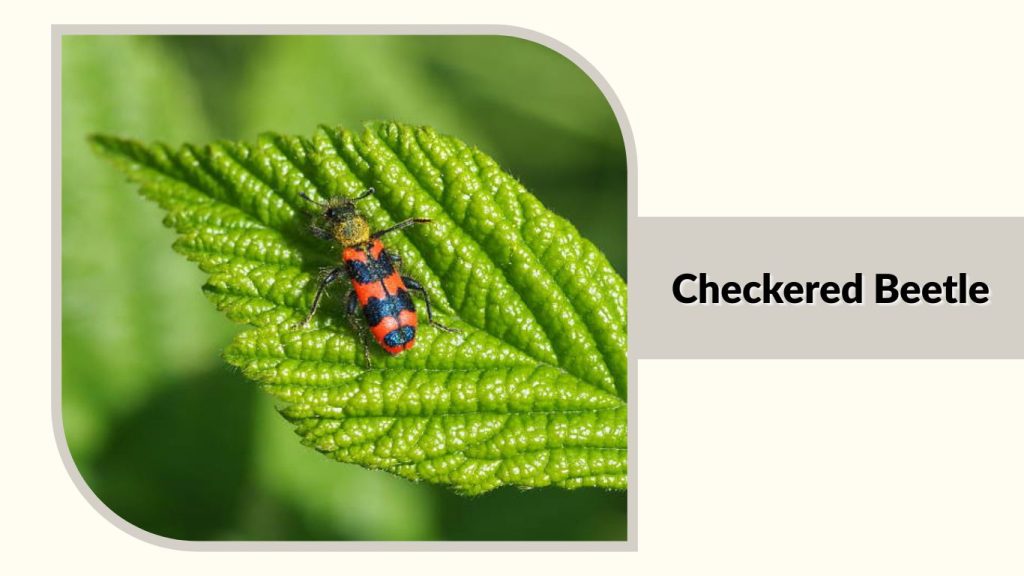
Checkered beetles are black and white patterned insects that may be found on flowers, trees, wood, or sometimes indoors near windows. Many species are outdoor insects, but they may enter homes accidentally. Their patterned bodies make them easier to notice.
Identification
- Elongated body shape
- Black, white, red, orange, or yellow markings
- Often has a checkered pattern
- Some species have hairy bodies
- Usually seen on flowers, bark, or wood
Where Checkered Beetles Come From
Checkered beetles usually come from outdoor areas such as gardens, trees, logs, flowers, and wooded spaces. Some species feed on other insects, while others may be linked to dry animal materials or stored products. They may enter homes through open doors, windows, or firewood.
Are Checkered Beetles Harmful?
Most checkered beetles are not harmful to people. Some are beneficial because they prey on other insects. A few may be associated with stored foods or dried animal matter, but they are not usually serious household pests.
How to Get Rid of Checkered Beetles
If only one or two appear indoors, vacuum them or release them outside. Check firewood, stored products, and window gaps if they appear often. Keeping doors screened and reducing outdoor light near entrances can help prevent entry.
5. Banded Alder Borer
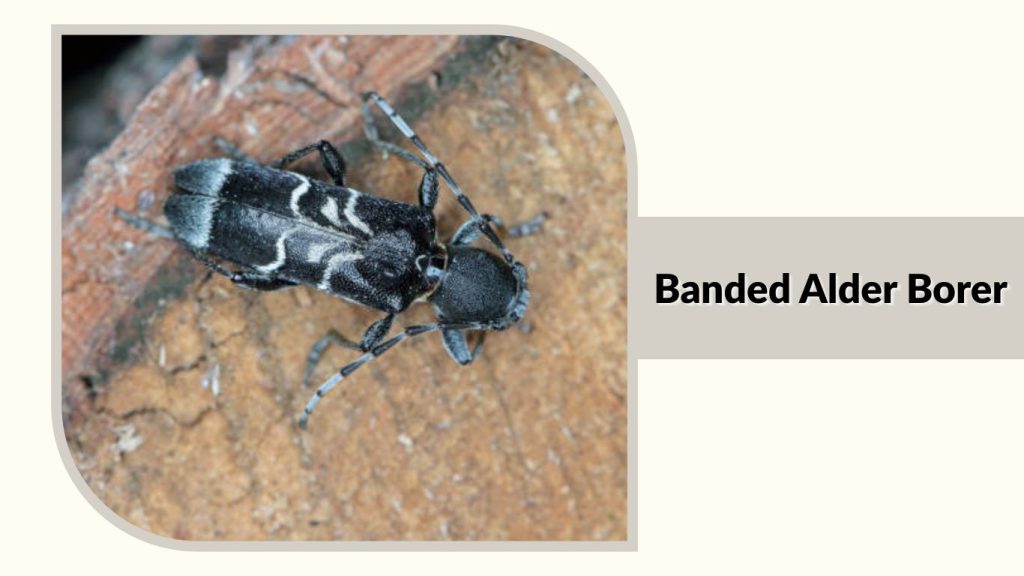
The banded alder borer is a striking black and white beetle with long antennae. It is usually found outdoors around alder, ash, maple, oak, and other trees. Although it may enter homes accidentally, it does not normally infest indoor wood or furniture.
Identification
- Long black body with bold white bands
- Very long antennae
- Black and white striped legs
- Usually larger than many household beetles
- Often found near trees, logs, or firewood
Where Banded Alder Borers Come From
Banded alder borers come from outdoor trees and recently cut wood. Their larvae develop in dead or dying hardwood trees, branches, and logs. Adults may be seen on tree trunks, firewood piles, or near lights during warm months.
Are Banded Alder Borers Harmful?
Banded alder borers do not bite or sting people. They are not considered a major household pest. However, they may alarm homeowners because of their large size and bold black-and-white pattern. They usually attack dead or weakened wood, not healthy indoor structures.
How to Get Rid of Banded Alder Borers
Move firewood away from the house and avoid storing logs indoors for long periods. Seal gaps around doors and windows. If one enters the home, remove it by hand, with a cup, or by vacuuming. Chemical treatment is usually not needed indoors.
6. Asian Longhorned Beetle
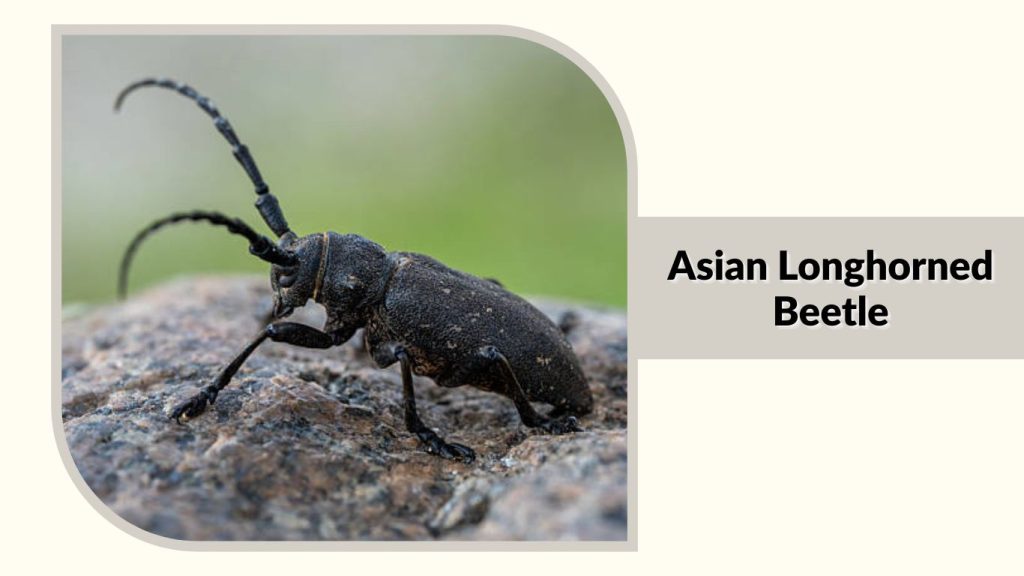
The Asian longhorned beetle is a black insect with clear white spots and very long antennae. It is mostly an outdoor tree pest, but people may notice it near homes, firewood, trees, or windows. Because it can damage hardwood trees, correct identification is important.
Identification
- Shiny black body with white spots
- Very long black-and-white banded antennae
- Six legs with a bluish or pale tint
- Large beetle compared with many household insects
- May leave round exit holes in tree trunks
Where Asian Longhorned Beetles Come From
Asian longhorned beetles come from infested hardwood trees. Their larvae tunnel inside trunks and branches, weakening the tree over time. They are often associated with maple, birch, elm, willow, ash, and other hardwood trees. They may also spread through infested wood or firewood.
Are Asian Longhorned Beetles Harmful?
Asian longhorned beetles do not usually harm people, but they are harmful to trees. Their larvae bore deep into wood and can eventually kill healthy trees. Because of this, they are considered a serious invasive pest in some areas.
How to Get Rid of Asian Longhorned Beetles
Do not move firewood from infested areas. If you suspect an Asian longhorned beetle, take a clear photo and report it to local agriculture or pest authorities. For a single beetle indoors, capture it in a container instead of crushing it so it can be identified.
7. Cottonwood Borer
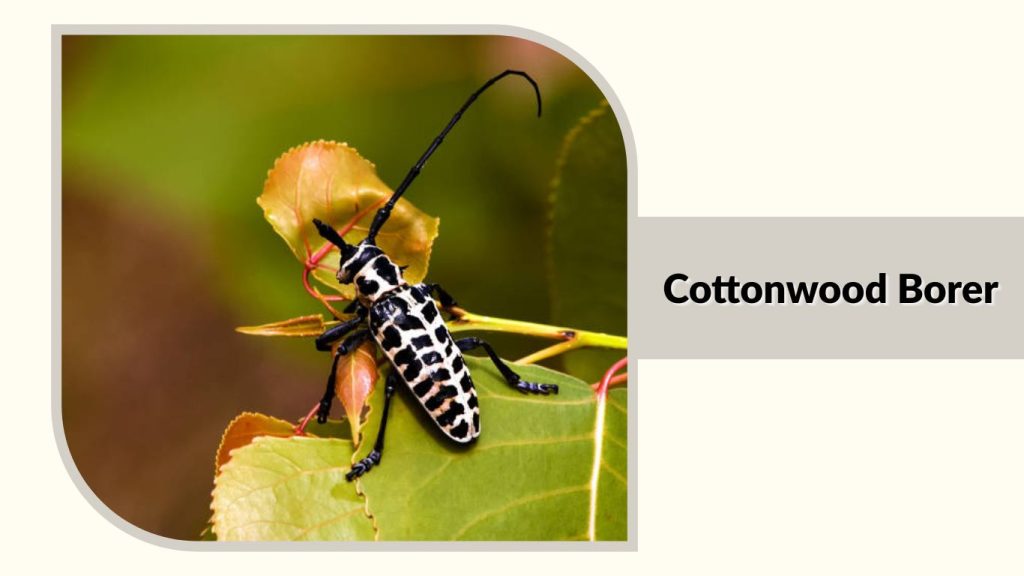
The cottonwood borer is a large black and white beetle with a bold patterned body. It is commonly found around cottonwood, poplar, and willow trees. While it may look scary because of its size, it is mainly a tree pest rather than a household pest.
Identification
- Large black body with white or pale markings
- Long antennae
- Strong legs and hard wing covers
- Often seen near cottonwood, poplar, or willow trees
- Larvae are pale and grub-like inside wood
Where Cottonwood Borers Come From
Cottonwood borers come from tree roots, trunks, and lower stems. Their larvae feed inside cottonwood, poplar, and willow trees, especially young or stressed trees. Adults may be seen walking on tree bark, near roots, or around lights during warm weather.
Are Cottonwood Borers Harmful?
Cottonwood borers do not bite or sting people. Their main damage is to trees. Larvae can weaken roots and trunks, sometimes causing young trees to decline or break. They do not usually infest furniture, flooring, or dry indoor wood.
How to Get Rid of Cottonwood Borers
Keep trees healthy with proper watering and care. Remove badly damaged branches or dead wood. Avoid stacking fresh logs near the house. If trees show heavy damage, contact a local arborist or pest professional for control options.
8. White-Spotted Sawyer Beetle
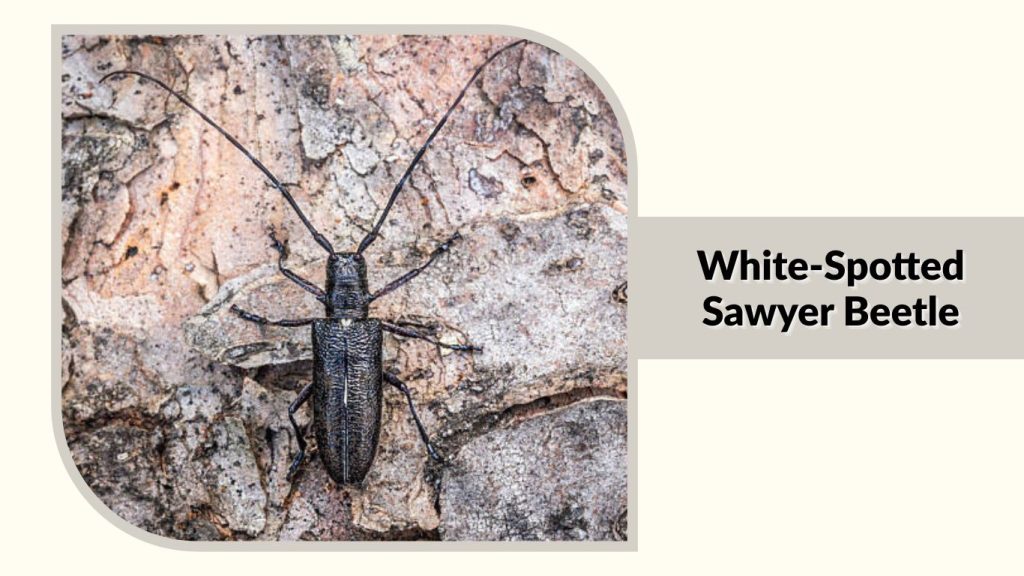
The white-spotted sawyer beetle is a black longhorned beetle with a noticeable white spot near the base of its wing covers. It is often found around pine, spruce, fir, and other conifer trees. It may enter homes accidentally through firewood.
Identification
- Dark black or grayish body
- One clear white spot near the wing covers
- Long antennae, especially in males
- Rough-looking body texture
- Often found near pine logs or firewood
Where White-Spotted Sawyer Beetles Come From
White-spotted sawyer beetles come from conifer trees, especially dead, dying, or recently cut wood. Their larvae tunnel under bark and into wood. They are often brought near homes in firewood, logs, or lumber from infested trees.
Are White-Spotted Sawyer Beetles Harmful?
White-spotted sawyer beetles do not bite or sting people. They are not usually a direct threat to homes, but they may be confused with more serious pests. Their larvae mostly develop in weakened or dead conifer wood.
How to Get Rid of White-Spotted Sawyer Beetles
Store firewood outside and away from the house. Bring in only the amount of wood you plan to burn soon. Seal gaps around windows, doors, and vents. If adults appear indoors, vacuum or remove them and check nearby firewood.
9. Twice-Stabbed Lady Beetle
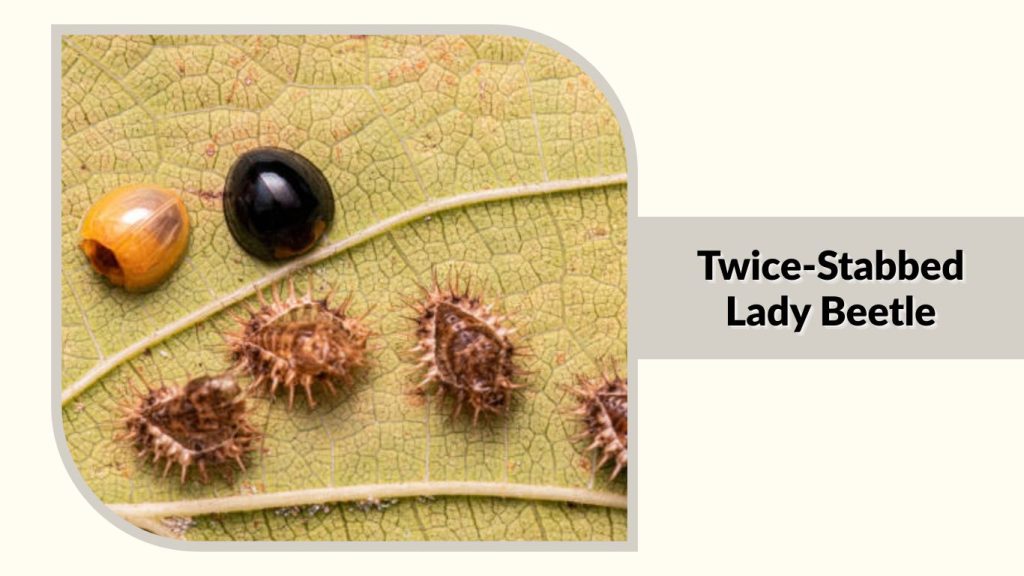
The twice-stabbed lady beetle is a small black beetle with two bright red, orange, or pale spots on its wing covers. Although it is not always black and white, its dark body and contrasting spots make it stand out. It is usually a beneficial insect in gardens and landscapes.
Identification
- Small, rounded beetle body
- Shiny black color
- Two bright spots on the wing covers
- Short legs and antennae
- Similar shape to a ladybug
Where Twice-Stabbed Lady Beetles Come From
Twice-stabbed lady beetles usually come from gardens, trees, shrubs, and areas with scale insects or aphids. They may enter homes accidentally, especially near windows or lights. They are more common outdoors than indoors.
Are Twice-Stabbed Lady Beetles Harmful?
Twice-stabbed lady beetles are not harmful to people. They do not damage clothing, food, or furniture. In fact, they are helpful because they feed on scale insects, aphids, and other soft-bodied plant pests.
How to Get Rid of Twice-Stabbed Lady Beetles
If they appear indoors, gently remove them and release them outside. Seal window gaps and repair screens to keep them from entering. Avoid spraying them in the garden because they can naturally help reduce plant pests.
10. Mealybug Destroyer Larva
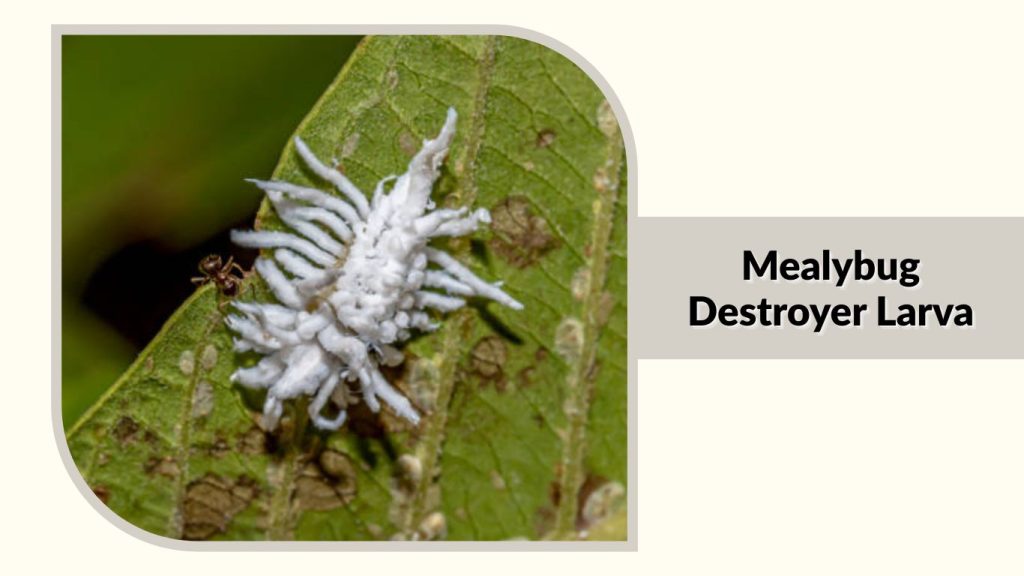
Mealybug destroyer larvae are small insects that often look white, fuzzy, and waxy. Many people mistake them for mealybugs, but they are actually helpful lady beetle larvae that feed on mealybugs and other soft-bodied plant pests.
Identification
- White, fuzzy, wax-covered body
- Looks similar to a mealybug
- Moves more actively than plant pests
- Small and oval-shaped
- Often found on infested houseplants or garden plants
Where Mealybug Destroyer Larvae Come From
Mealybug destroyer larvae appear where mealybugs, aphids, or scale insects are present. They may come from gardens, greenhouses, or plants brought indoors. Because they follow pest populations, seeing them may mean your plant already has a pest problem.
Are Mealybug Destroyer Larvae Harmful?
Mealybug destroyer larvae do not bite or sting people. They are beneficial insects because they eat pests that damage plants. Their fuzzy white appearance may look alarming, but they are usually helping control the infestation.
How to Get Rid of Mealybug Destroyer Larvae
In most cases, you should not remove them. Instead, inspect the plant for mealybugs and other pests. If you must move them, gently relocate them to another infested plant. Avoid broad insect sprays because they can kill these helpful larvae.
11. Spotted Lanternfly Nymph
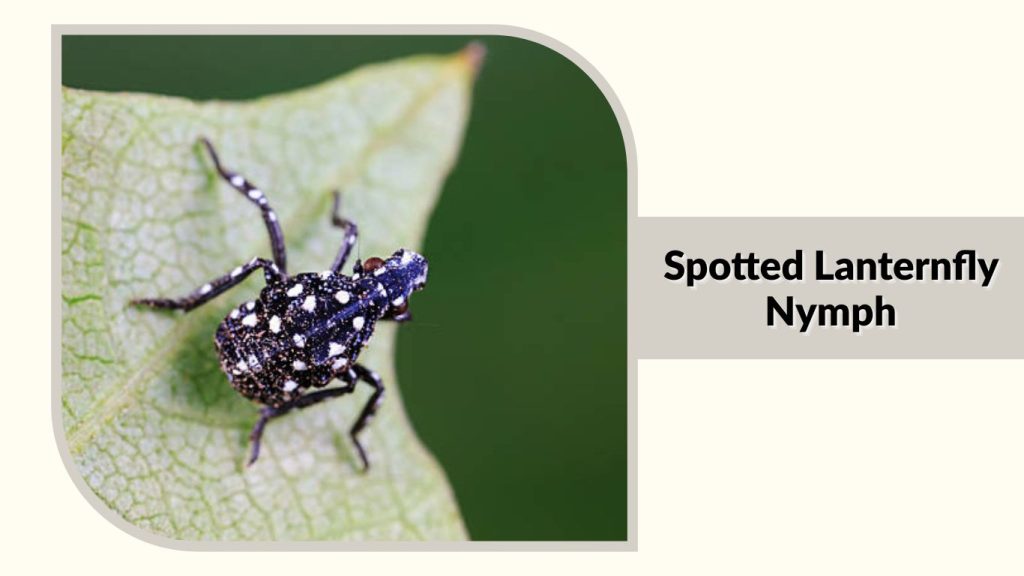
Spotted lanternfly nymphs are small black insects with bright white spots. They are often seen on plants, trees, vines, fences, outdoor furniture, and garden surfaces. As they grow, older nymphs may develop red patches, but young nymphs are mostly black and white.
Identification
- Small black body with white spots
- Jumps quickly when disturbed
- Older nymphs may show red coloring
- Often found in groups on plants or trees
- Adult stage has larger patterned wings
Where Spotted Lanternfly Nymphs Come From
Spotted lanternfly nymphs come from egg masses laid on trees, rocks, outdoor furniture, vehicles, firewood, and other hard surfaces. They hatch in spring and feed on plant sap. They are often found on tree-of-heaven, grapevines, fruit trees, maples, and ornamental plants.
Are Spotted Lanternfly Nymphs Harmful?
Spotted lanternfly nymphs do not bite or sting people. However, they can harm plants by sucking sap from stems, branches, and leaves. Heavy infestations may weaken trees, damage grapevines, and leave sticky honeydew that attracts ants and causes sooty mold.
How to Get Rid of Spotted Lanternfly Nymphs
Scrape and destroy egg masses when found. Crush nymphs if possible, use sticky bands carefully on tree trunks, and remove tree-of-heaven if it is attracting them. Report sightings in areas where spotted lanternflies are invasive.
12. Black and White Aphid
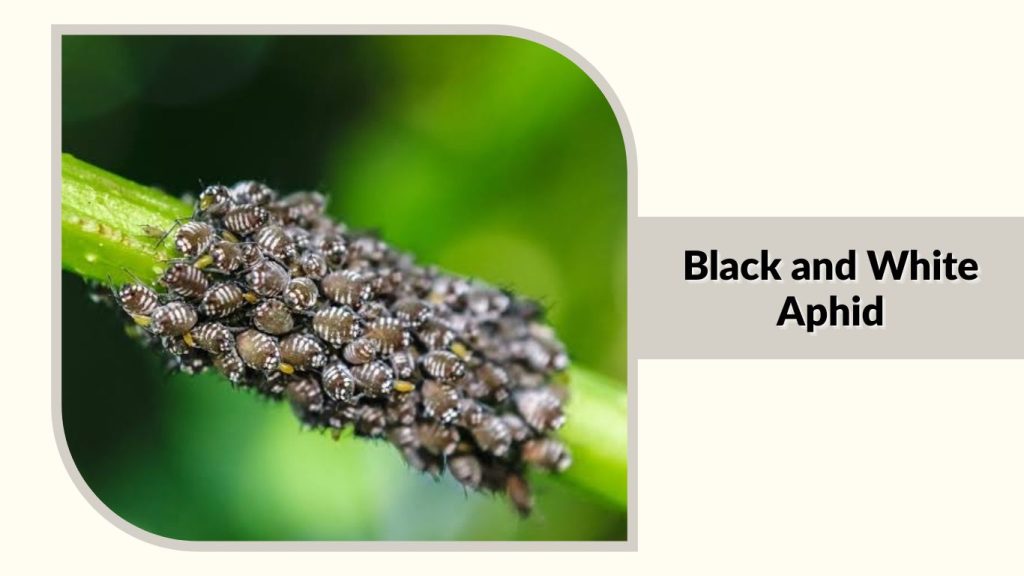
Black and white aphids are tiny soft-bodied insects that gather on plant stems, leaf undersides, buds, and new growth. Some aphids look dark with pale markings or waxy white coating, making them appear black and white from a distance.
Identification
- Tiny pear-shaped body
- Black, gray, white, or mixed coloring
- Often found in clusters
- May have two small tubes at the back
- Can be winged or wingless
Where Black and White Aphids Come From
Aphids usually come from infested plants, outdoor gardens, weeds, or new houseplants. They reproduce quickly in warm conditions and often spread from plant to plant. Winged aphids may fly indoors through open windows or arrive on cut flowers and nursery plants.
Are Black and White Aphids Harmful?
Aphids do not bite or sting people. Their main damage is to plants. They suck sap from leaves and stems, causing curled leaves, yellowing, weak growth, and sticky honeydew. The honeydew may attract ants or lead to black sooty mold.
How to Get Rid of Black and White Aphids
Spray plants with water to knock aphids off. Prune heavily infested shoots and check leaf undersides often. Insecticidal soap or neem oil can help when applied directly to the insects. Ladybugs and lacewing larvae can also reduce aphid numbers naturally.
13. Scale Insect
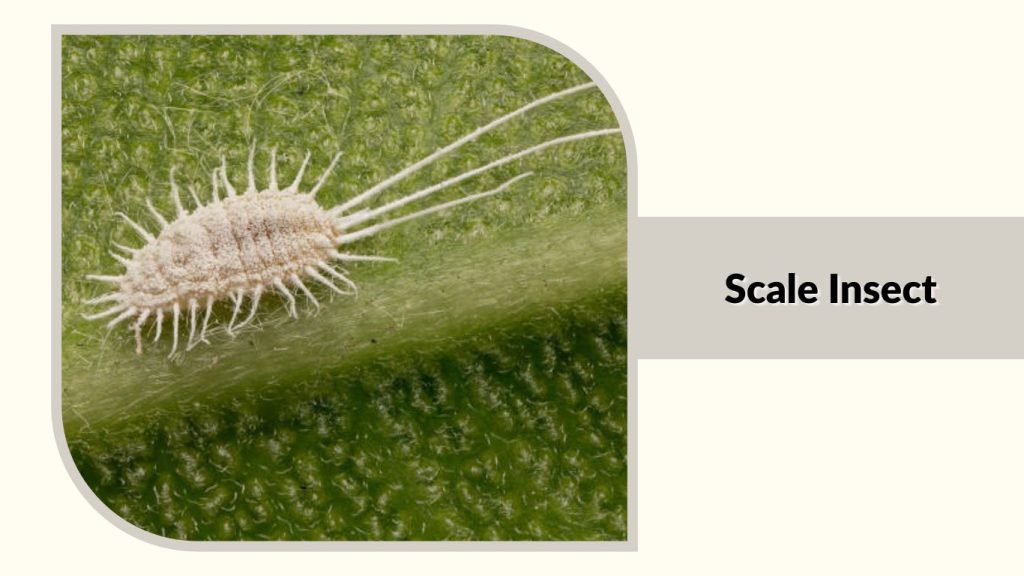
Scale insects are small plant pests that may look like black, white, brown, gray, or shell-like bumps on stems and leaves. Some species have waxy white coverings, while others appear dark and hard. They are often mistaken for dirt, eggs, or plant disease.
Identification
- Small round or oval bumps on plants
- May be black, white, brown, or gray
- Often attached firmly to stems or leaves
- Some produce cottony or waxy white material
- Sticky honeydew may appear on nearby surfaces
Where Scale Insects Come From
Scale insects often come from infested houseplants, outdoor shrubs, trees, or greenhouse plants. They can spread slowly from plant to plant. Crawlers, the young mobile stage, move to new feeding sites before settling down and forming their protective covering.
Are Scale Insects Harmful?
Scale insects do not bite or sting humans. They harm plants by sucking sap from leaves, stems, and branches. Heavy infestations can cause yellow leaves, leaf drop, weak growth, branch dieback, and sticky residue that may lead to sooty mold.
How to Get Rid of Scale Insects
Wipe small infestations with a cotton swab dipped in rubbing alcohol. Prune badly infested branches and wash leaves with soapy water. Horticultural oil or insecticidal soap can help control crawlers. Repeat treatment may be needed because scale insects are protected by their coverings.
14. Zebra Jumping Spider
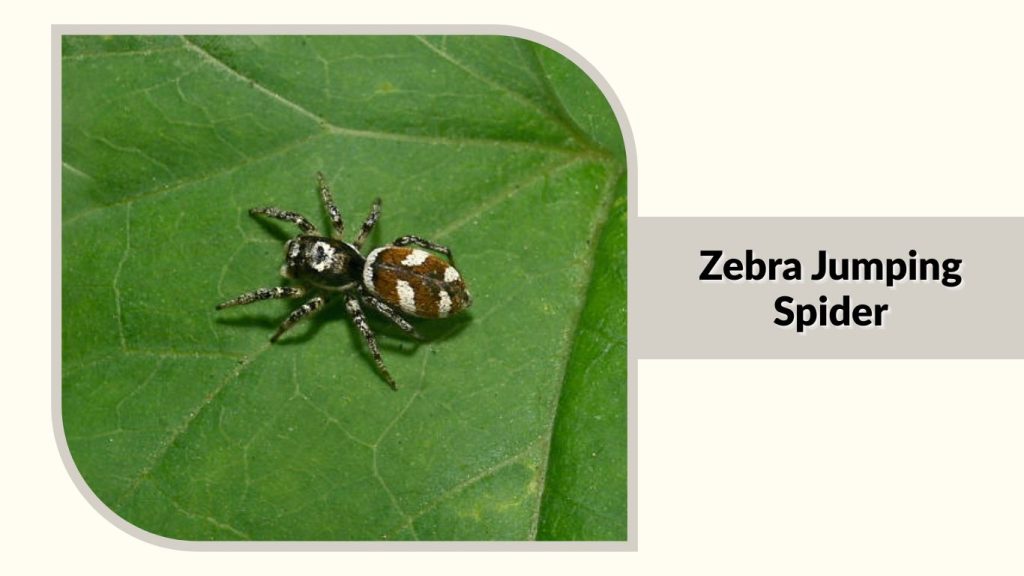
The zebra jumping spider is a small black and white spider often found on walls, windowsills, fences, rocks, and outdoor surfaces. Although it is not an insect, many people include it when searching for small black and white bugs because of its tiny size and striped pattern.
Identification
- Small compact body
- Black and white striped pattern
- Large front-facing eyes
- Short, quick jumping movements
- Often seen on sunny walls or windowsills
Where Zebra Jumping Spiders Come From
Zebra jumping spiders usually come from outdoor walls, gardens, porches, fences, and window areas. They may enter homes accidentally through gaps, open doors, or window screens. They prefer places where small insects are available for food.
Are Zebra Jumping Spiders Harmful?
Zebra jumping spiders are not dangerous to people. They are not aggressive and usually jump away when disturbed. They can bite if handled roughly, but bites are uncommon and usually mild. They are helpful because they eat small flies, gnats, and other insects.
How to Get Rid of Zebra Jumping Spiders
Gently catch and release them outside if they enter your home. Seal gaps around windows and doors, repair screens, and reduce small flying insects indoors. Since they are beneficial predators, chemical control is usually unnecessary.
15. Bold Jumping Spider
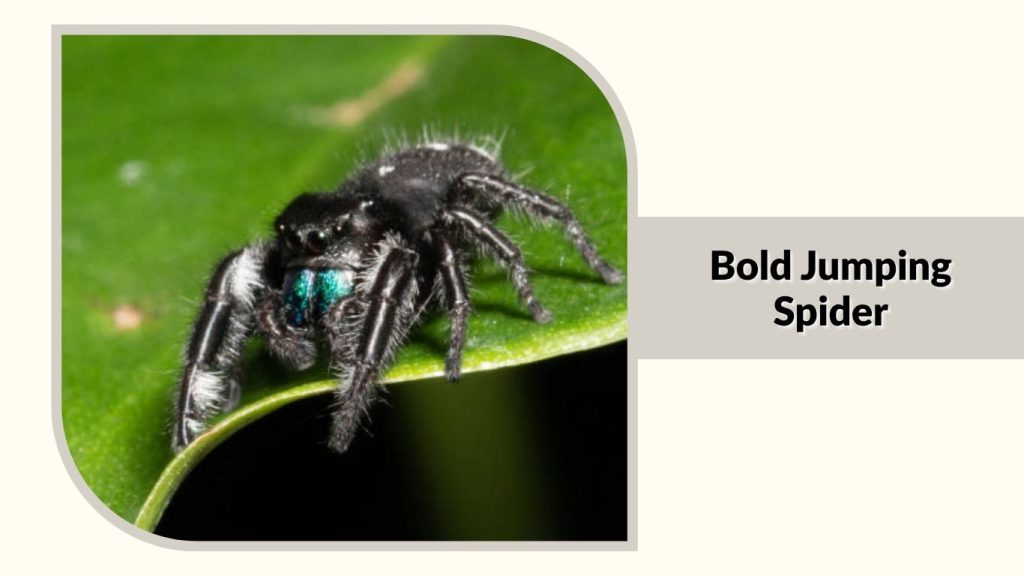
The bold jumping spider is a small black spider with white markings on its body. Like the zebra jumping spider, it is not a true insect, but it is commonly mistaken for a black and white insect because of its size, pattern, and active movement.
Identification
- Small black body with white spots or bands
- Stocky shape with short legs
- Large front-facing eyes
- Quick jumping behavior
- Sometimes has shiny green or blue mouthparts
Where Bold Jumping Spiders Come From
Bold jumping spiders are commonly found in gardens, around windows, on walls, near lights, and in areas with small insects. They may enter homes while hunting prey. They do not infest food, clothing, or wood.
Are Bold Jumping Spiders Harmful?
Bold jumping spiders are generally harmless to people and pets. They are not aggressive and prefer to escape. A bite is rare and usually only happens if the spider is squeezed or handled. Their main benefit is natural insect control.
How to Get Rid of Bold Jumping Spiders
Remove them with a cup and paper, then release them outside. Keep windows screened, seal cracks, and reduce indoor insects that attract spiders. Avoid unnecessary pesticides because jumping spiders help control flies, gnats, mosquitoes, and other small pests.