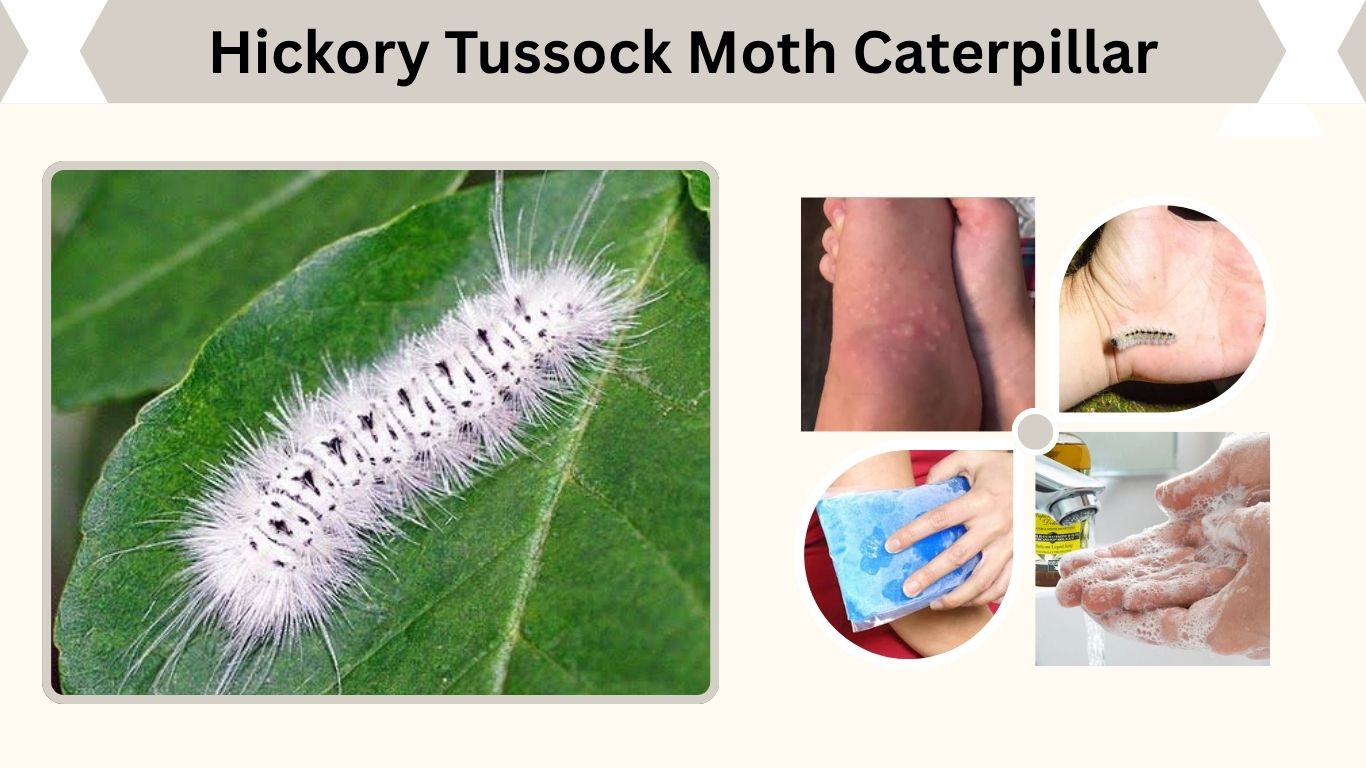
The hickory tussock moth caterpillar is a fuzzy white and black caterpillar often seen in late summer and early fall. It may look soft, but touching it can cause an itchy rash in some people. This caterpillar is the larval stage of the hickory tussock moth, also called the hickory tiger moth. In this guide, you’ll learn how to identify it, where it lives, what it eats, and what to do after skin contact.
What Is a Hickory Tussock Moth Caterpillar?
The hickory tussock moth caterpillar is the immature stage of Lophocampa caryae. It belongs to the Erebidae family and is also known as the hickory tiger moth. The adult moth is far less noticeable than the caterpillar, which gets attention because of its white body, black markings, and long hairs.
Common Names
This caterpillar is searched under several names, including:
- Hickory tussock moth caterpillar
- White hickory tussock moth caterpillar
- Hickory tussock caterpillar moth
- Hickory tiger moth caterpillar
- Black and white hickory tussock caterpillar
- Fuzzy hickory tussock moth caterpillar
People sometimes call it a “white poisonous caterpillar,” but that phrase can be misleading. Its hairs can irritate skin, and some people have stronger reactions than others. It is best treated as a “look but don’t touch” caterpillar.
What Does It Turn Into?
The hickory tussock moth caterpillar turns into an adult hickory tussock moth, or hickory tiger moth. According to Butterflies and Moths of North America, the adult has yellowish forewings with brown shading and pale translucent markings. Adult moths are usually seen around May and June, while caterpillars are more common later in summer.
Hickory Tussock Moth Caterpillar Identification
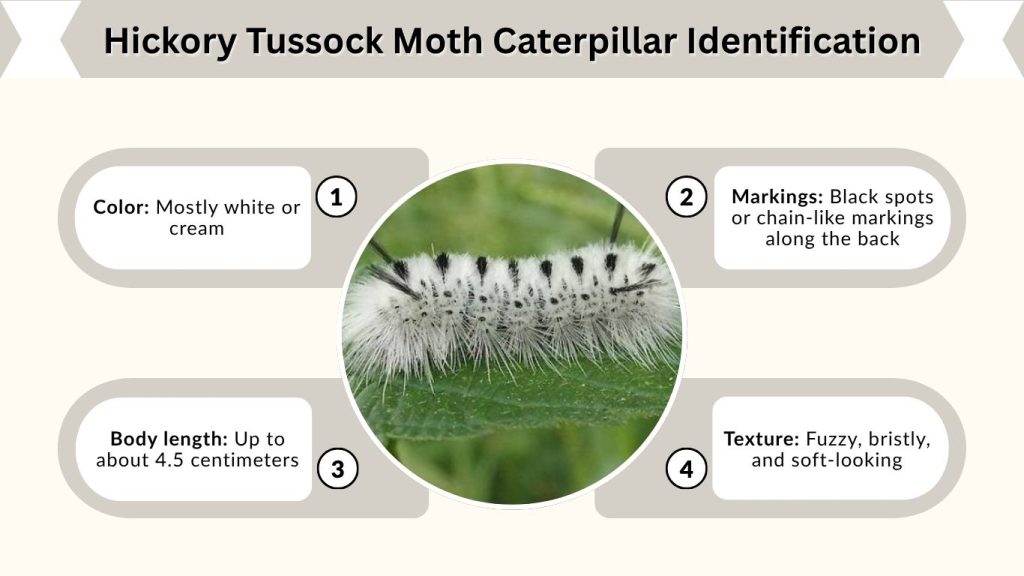
This caterpillar is fairly easy to recognize because of its bright white hairs and black tufts. However, many fuzzy caterpillars can look similar, so careful identification matters.
Key Identification Features
- Color: Mostly white or cream
- Markings: Black spots or chain-like markings along the back
- Hair tufts: Long white hairs with black tufts near the front and back
- Body length: Up to about 4.5 centimeters
- Texture: Fuzzy, bristly, and soft-looking
- Behavior: Often seen crawling on leaves, tree trunks, siding, grass, or the ground
Eastern Ontario Health Unit describes the caterpillar as white and fluffy with black chain-like markings on the back and long black hairs near the front and rear.
Hickory Tussock Moth Caterpillar vs Similar Caterpillars
| Caterpillar | Main Look | Skin Risk |
| Hickory tussock moth caterpillar | White with black tufts and black back markings | Can cause rash |
| White-marked tussock moth caterpillar | Gray/yellow body with red head and hair pencils | Can irritate skin |
| Woolly bear caterpillar | Black and brown fuzzy bands | Usually mild irritation only |
| American dagger moth caterpillar | Yellow fuzzy body with black lashes | Can irritate skin |
| Milkweed tussock moth caterpillar | Orange, black, and white tufts | Usually avoid touching |
A safe rule is simple: do not handle fuzzy or spiny caterpillars with bare skin unless you are certain they are harmless.
Is the Hickory Tussock Moth Caterpillar Poisonous?
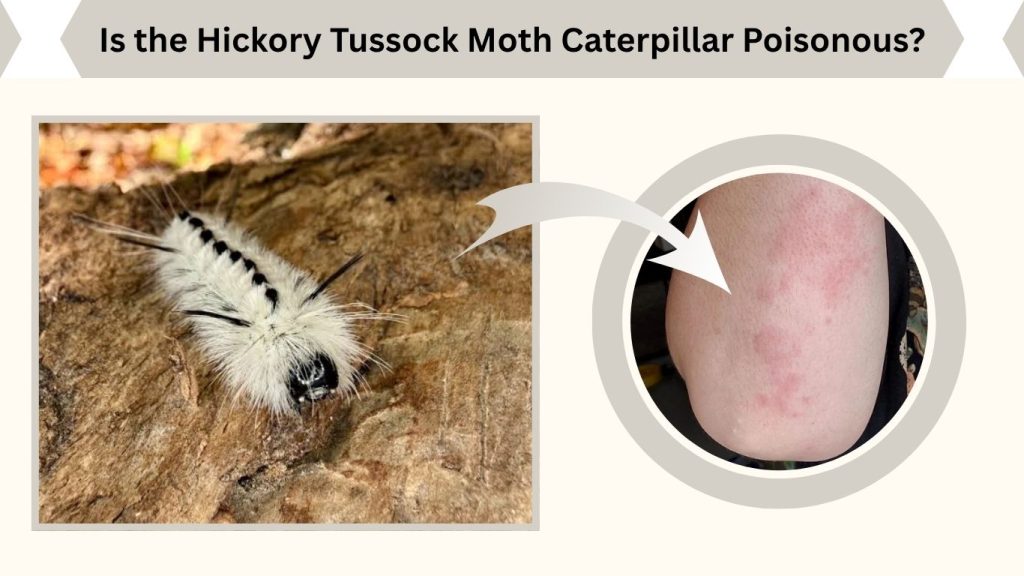
Many people search “is the hickory tussock moth caterpillar poisonous?” because the caterpillar is often described online as poisonous, venomous, or stinging. The most accurate answer is that its hairs can cause skin irritation, especially in sensitive people.
Some sources describe the caterpillar as venomous, while extension sources often explain the problem as urticating or bristle-like hairs that can puncture or irritate skin. University of Maine Cooperative Extension says its bristlelike hairs can cause a rash in sensitive individuals, and Michigan State University explains that urticating hairs can puncture skin and cause localized irritation.
Does It Bite or Sting?
The hickory tussock moth caterpillar does not bite like a mosquito, ant, or spider. The problem comes from contact with its hairs. These hairs can break off, lodge in the skin, and trigger itching, burning, redness, or swelling.
Many people call this a “sting,” but it is usually a contact reaction from hairs rather than a bite. Poison Control notes that caterpillar hairs or spines can cause pain, itching, burning, swelling, and blistering when they contact human skin.
Hickory Tussock Moth Caterpillar Rash
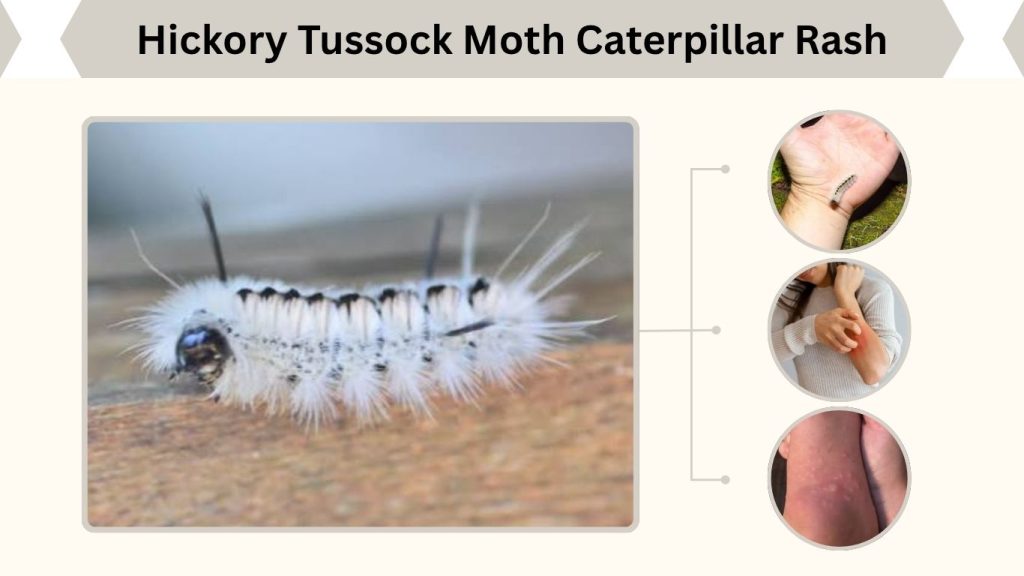
A rash is the most common concern. Not everyone reacts the same way. One person may touch the caterpillar and feel only mild itching, while another may develop a painful rash.
Common Symptoms
Symptoms may include:
- Redness
- Itching
- Burning feeling
- Swelling
- Tenderness
- Small bumps or welts
- Headache in some cases
- Nausea in some cases
- Allergic reaction in sensitive people
Eastern Ontario Health Unit says symptoms can range from slight skin redness to burning, swelling, pain, headache, nausea, or allergic reaction.
How Long Does the Rash Last?
A mild rash may improve within a short time, but stronger reactions can last longer depending on the person, the amount of contact, and whether hairs remain in the skin. UNH Extension notes that rashes from most tussock caterpillars usually do not last very long, but hickory tussock moth caterpillars can cause more severe reactions in some people.
Avoid scratching the area, because scratching can push hairs deeper into the skin and increase irritation.
Hickory Tussock Moth Caterpillar Rash Treatment
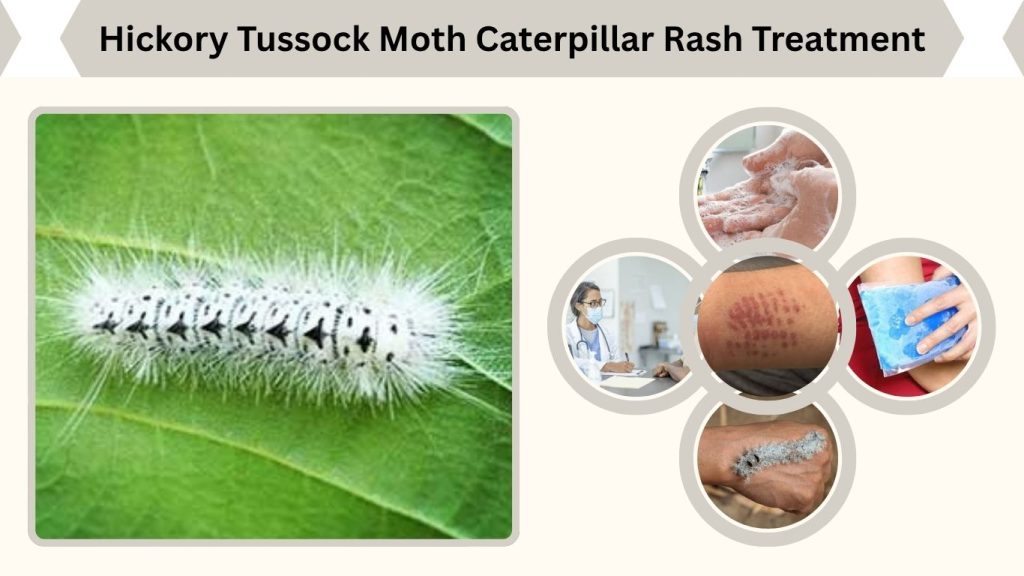
The first step is to remove any hairs from the skin and reduce irritation. Do not touch the caterpillar again with bare hands.
| Step | What to Do | Why It Helps |
| 1 | Remove the caterpillar with a tool, not fingers | Prevents more contact |
| 2 | Apply tape and lift it off gently | Helps remove tiny hairs |
| 3 | Wash with soap and water | Cleans the affected skin |
| 4 | Use ice packs or a cool compress | Reduces swelling and burning |
| 5 | Use calamine or hydrocortisone if needed | Helps itching and irritation |
| 6 | Seek medical help for severe symptoms | Needed for allergic reactions |
Poison Control recommends removing caterpillar hairs with tape, washing the area with soap and water, and using baking soda paste or hydrocortisone for itching. The Eastern Ontario Health Unit also recommends soap and water, calamine lotion, and ice packs for itching or swelling.
When to Call a Doctor
Get medical advice if the reaction spreads, becomes very painful, affects the eyes or mouth, causes trouble breathing, or includes signs of a serious allergy. Children, pets, and people with sensitive skin should be watched carefully after contact.
Where Do Hickory Tussock Moth Caterpillars Live?
The hickory tussock moth caterpillar is found in parts of North America. Butterflies and Moths of North America lists its range from Nova Scotia to the mountains of North Carolina, west to Ontario, Wisconsin, and Texas, while noting it is absent from much of the Midwest part of its range.
Common Locations
You may see it in:
- Deciduous forests
- Backyards
- Parks
- Tree-lined streets
- Gardens
- Wooded edges
- Leaf litter in fall
- On siding, decks, porches, or fences
Maine Forest Service notes that larger caterpillars wander a lot and may be found on the ground, undergrowth, or even climbing siding.
What Do Hickory Tussock Moth Caterpillars Eat?
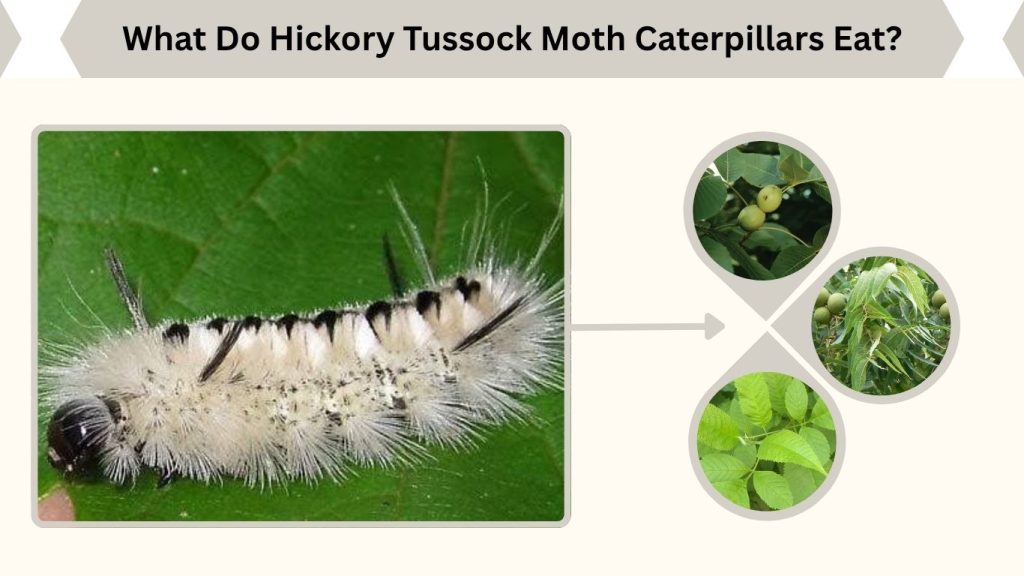
The caterpillar feeds on many hardwood trees and shrubs. Despite the name “hickory,” it does not eat only hickory.
Common host plants include:
- Hickory
- Pecan
- Walnut
- American hornbeam
- Ash
- Elm
- Oak
- Willow
- Birch
- Quaking aspen
- Basswood
- Black locust
- Sumac
University of Maine Cooperative Extension lists hickory, pecan, walnut, American hornbeam, ash, elm, oak, and willow as hosts, while Maine Forest Service says they feed on a wide array of hardwood trees and often prefer birch, quaking aspen, basswood, and black locust in Maine.
Life Cycle of the Hickory Tussock Moth Caterpillar
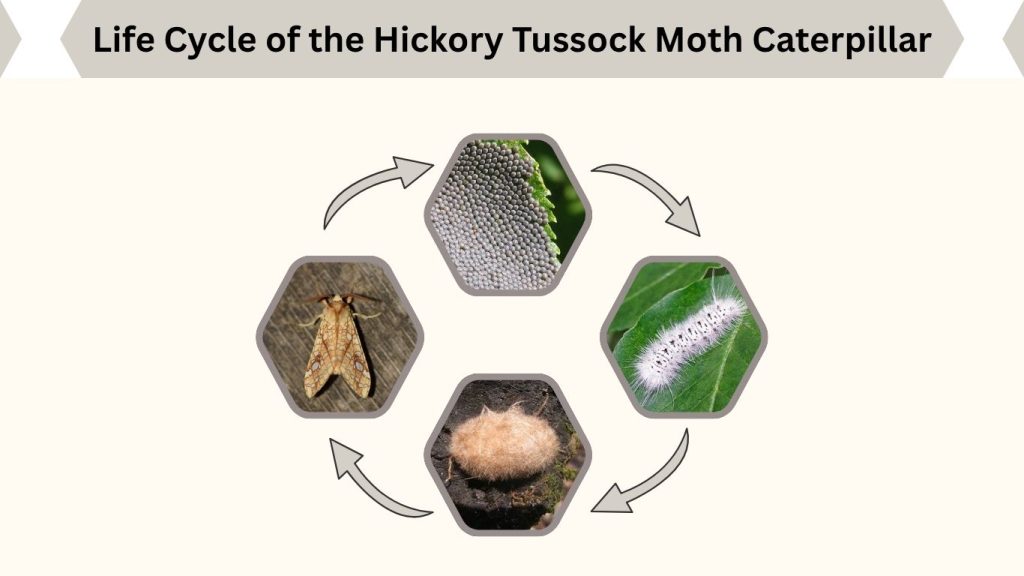
The life cycle includes egg, caterpillar, cocoon, and adult moth. Adult moths fly in early summer, females lay eggs on host trees, and caterpillars hatch and feed through summer into early fall.
Maine Forest Service says moths fly in June and July, caterpillars are found in July, August, and September, and winter is spent in cocoons in leaf litter or under bark.
Cocoon Safety
The cocoon can also cause irritation because the caterpillar uses its own hairs when spinning it. University of Maine Cooperative Extension warns that cocoons can cause a rash if people contact them, especially while raking leaves after a year with many caterpillars.
How to Get Rid of Hickory Tussock Moth Caterpillars
In most cases, control is not necessary. These caterpillars are native insects and usually do not cause serious long-term damage to trees. Maine Forest Service says they may strip an occasional tree but generally do little harm to the forest.
For safe control:
- Do not touch them with bare hands
- Keep children and pets away
- Wear gloves, long sleeves, and eye protection if moving them
- Use a stick, leaf, cardboard, or container to relocate one
- Avoid crushing them with bare skin contact
- Be careful when raking leaves if many were present
- Contact a local extension office or pest professional for heavy outbreaks
Michigan State University says late-season feeding usually does little damage because plants are already preparing for winter, so the best strategy is often to leave hairy caterpillars alone.
Hickory Tussock Moth Caterpillar and Pets
Dogs and cats may sniff, lick, or bite fuzzy caterpillars out of curiosity. If a pet mouths one, the hairs may irritate the mouth, tongue, lips, or digestive tract. Signs may include drooling, pawing at the mouth, vomiting, swelling, or discomfort.
Do not try to remove hairs from a pet’s mouth with bare fingers. Rinse gently if safe, prevent more contact, and call a veterinarian if your pet ate the caterpillar or shows swelling, vomiting, breathing trouble, or unusual behavior.
Hickory Tussock Moth Caterpillar Spiritual Meaning
Some people search for the spiritual meaning of the hickory tussock moth caterpillar because its white and black pattern looks striking. Spiritually, people may interpret caterpillars as symbols of transformation, patience, growth, or change. However, these meanings are cultural or personal, not scientific. From a natural history view, the caterpillar’s main meaning is biological: it is a native moth larva using hairs and warning colors as protection.
FAQs
Can you touch a hickory tussock moth caterpillar?
No, you should not touch it with bare hands. Its hairs can irritate the skin and cause an itchy or burning rash in some people.
Is the hickory tussock moth caterpillar poisonous to humans?
It is often called poisonous, but the main risk is skin irritation from its hairs. Some people may have stronger allergic reactions, so it is best to avoid contact.
What does a hickory tussock moth caterpillar turn into?
It turns into the hickory tussock moth, also called the hickory tiger moth. The adult moth is yellowish with brown shading and pale markings.
What should I do for a hickory tussock moth caterpillar rash?
Use tape to lift hairs from the skin, wash with soap and water, apply a cool compress, and use calamine or hydrocortisone for itching. Seek medical help for severe reactions.
Are hickory tussock moth caterpillars invasive?
No, they are native in their range. They may appear in large numbers during some years, but they are part of the local ecosystem and usually do not cause serious tree damage.