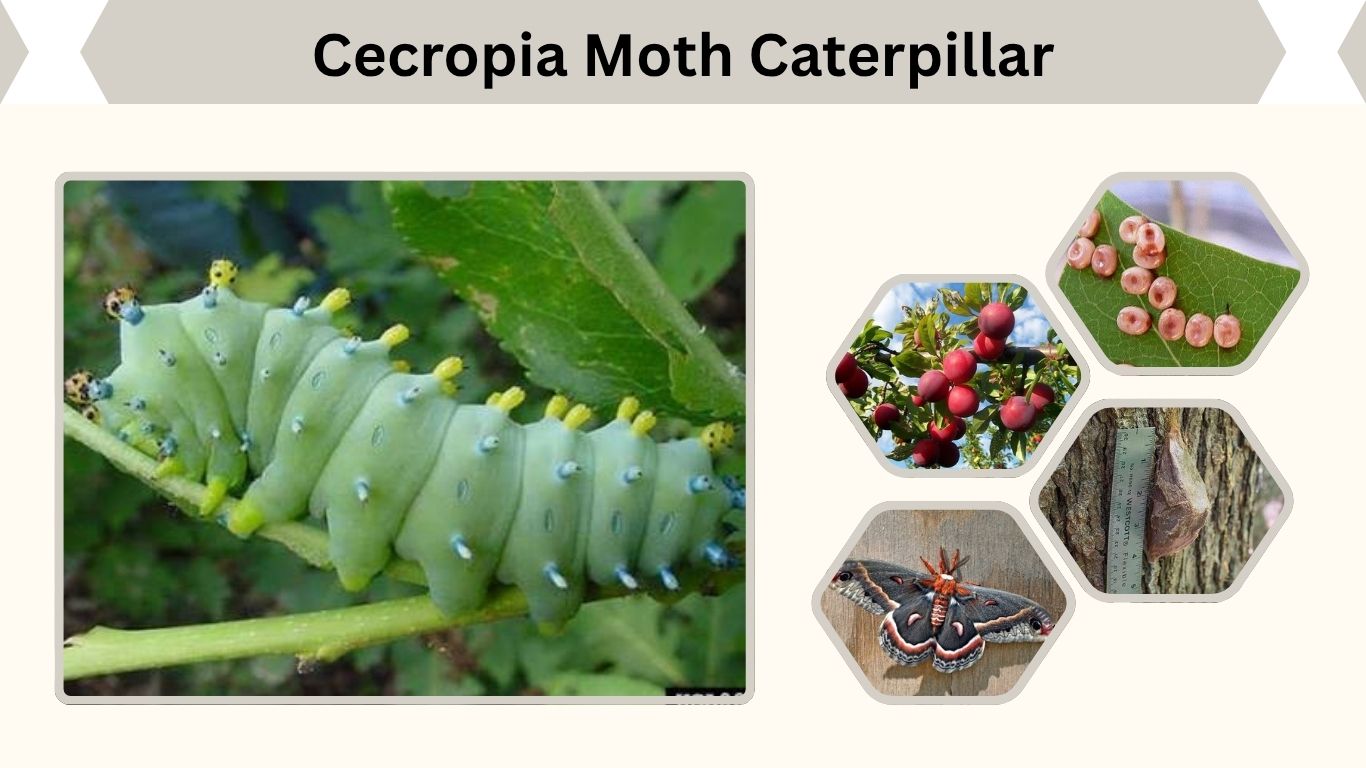
The cecropia moth caterpillar is one of the most colorful and impressive caterpillars in North America. It grows into the giant cecropia moth, the largest native moth on the continent. This caterpillar is famous for its large green body, bright yellow, blue, and orange tubercles, and its ability to feed on many trees and shrubs. Although it looks strange and even dangerous, the cecropia moth caterpillar does not sting. Learning its food plants, life cycle, cocoon stage, and care needs can help you identify it safely.
What Is a Cecropia Moth Caterpillar?
A cecropia moth caterpillar is the larval stage of the cecropia moth, scientifically known as Hyalophora cecropia. It belongs to the giant silk moth family, Saturniidae. This caterpillar spends its life eating leaves and growing quickly before spinning a tough silk cocoon.
Species Overview
The cecropia moth is a giant silk moth native to North America. The adult moth is known for its large wingspan, reddish-brown wings, white crescent marks, and dramatic eye-like patterns. The caterpillar is just as noticeable because it becomes large, bright green, and covered in colorful bumps.
The caterpillar stage is the feeding stage. Adult cecropia moths do not feed, so the caterpillar must store enough energy to complete metamorphosis and support the short adult life.
Why People Notice This Caterpillar
People often notice cecropia moth caterpillars because they are large, colorful, and unusual-looking. Mature caterpillars can reach about 4 inches long, and some sources report they can grow slightly larger. University of Kentucky describes full-grown cecropia caterpillars as bluish green and up to four inches long, with yellow projections along the back.
Cecropia Moth Caterpillar Identification
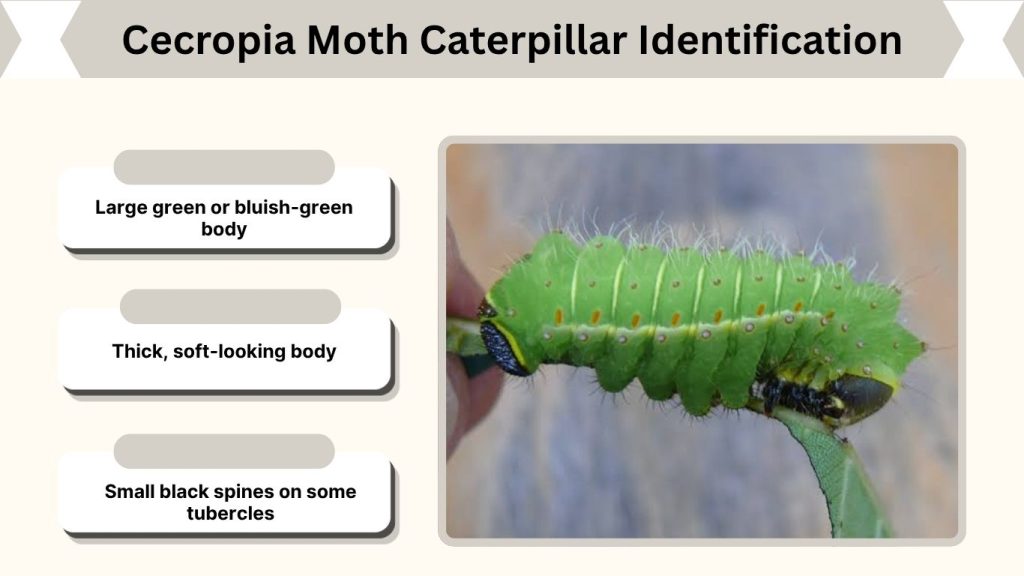
Cecropia moth caterpillars change appearance as they grow. Young caterpillars look dark, while older ones become bright green with colorful raised tubercles.
What Does a Cecropia Moth Caterpillar Look Like?
A mature cecropia moth caterpillar has a thick green or bluish-green body. It has rows of raised bumps, also called tubercles. The larger tubercles near the front are often yellow or orange with small dark spines, while others may be blue.
The caterpillar may look spiky, but it does not have venomous stinging hairs like some dangerous caterpillars.
Key Identification Features
- Large green or bluish-green body
- Bright yellow, orange, and blue tubercles
- Thick, soft-looking body
- Small black spines on some tubercles
- Found on tree and shrub leaves
- Can grow around 4 inches long
- Eventually spins a brown silk cocoon
The bright colors can make the caterpillar look poisonous, but identification should be based on the full body pattern, host plant, and size.
Is the Cecropia Moth Caterpillar Poisonous?
Many people search for “cecropia moth caterpillar poisonous” or “cecropia moth caterpillar sting.” The short answer is that it does not sting, but it should still be handled gently or left alone.
Does a Cecropia Moth Caterpillar Sting?
No, cecropia moth caterpillars do not sting. BugGuide notes that cecropia moth larvae do not sting, although they can contain defensive compounds in their body fluids.
This means it is not like a puss caterpillar or saddleback caterpillar, which can cause painful stings. However, any caterpillar can cause skin irritation in sensitive people, and wild caterpillars should not be handled unnecessarily.
Is It Safe to Touch?
It is best not to touch the caterpillar unless needed. If you must move one, use a leaf or soft stick and avoid squeezing it. The caterpillar’s body is delicate, and rough handling can injure it.
If you touch one, wash your hands afterward. This protects both you and the caterpillar.
Cecropia Moth Caterpillar Food
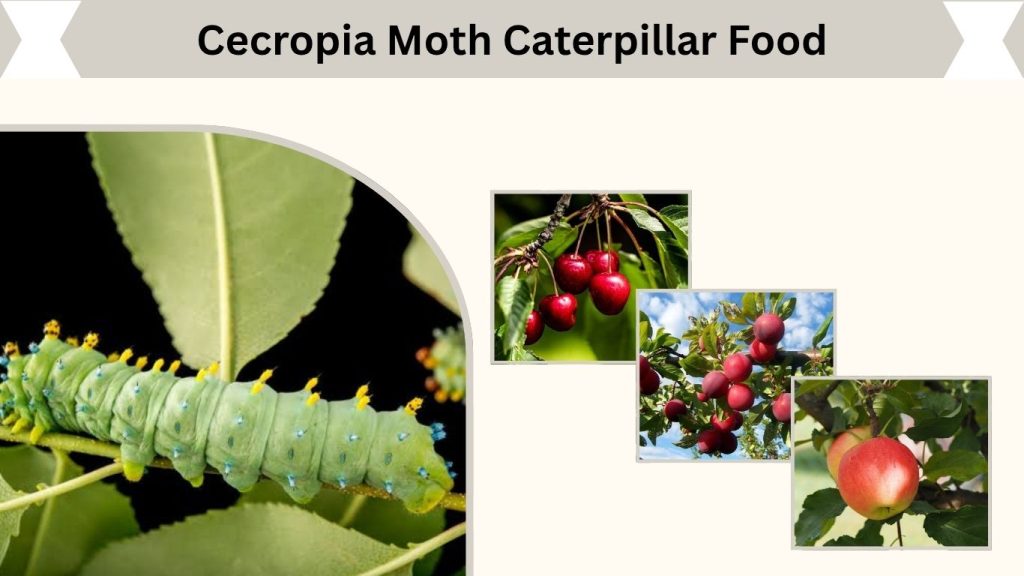
Cecropia moth caterpillars eat leaves from many trees and shrubs. They are not picky compared with some caterpillars that rely on only one plant species.
What Does the Cecropia Moth Caterpillar Eat?
Iowa State University lists many host plants for cecropia caterpillars, including wild cherry, plum, maple, willow, boxelder, apple, crabapple, lilac, walnut, elm, birch, and poplar. University of Kentucky also lists host plants such as cherry, plum, apple, elderberry, box elder, maple, birch, willow, linden, elm, sassafras, and lilac.
Common food plants include:
- Cherry
- Plum
- Apple
- Crabapple
- Maple
- Willow
- Birch
- Poplar
- Boxelder
- Lilac
- Elm
- Walnut
- Elderberry
- Sassafras
- Linden
Best Host Plants for Raising
If you are raising a cecropia moth caterpillar, use the plant it was found eating whenever possible. Caterpillars often do best when kept on the same host plant after collection.
Do not switch food plants suddenly unless necessary. If you must switch, offer fresh leaves from a known host plant and watch whether the caterpillar accepts them.
Cecropia Moth Caterpillar Diet and Feeding Behavior
The diet of a cecropia moth caterpillar is simple: fresh leaves. Its job is to eat, grow, molt, and store energy for the adult moth stage.
How Much Do They Eat?
Cecropia caterpillars can eat a lot as they mature. Iowa State University notes that during their roughly 60-day caterpillar life span, they can consume a large amount of foliage, although they are usually scattered and rarely cause serious defoliation except on very small plants.
Younger caterpillars eat less, while late-stage caterpillars eat much more. A mature caterpillar may consume several leaves in a short time.
Do They Damage Trees?
Usually, cecropia moth caterpillars do not seriously damage trees. They are often present in low numbers. A healthy established tree can usually tolerate some leaf feeding.
Small seedlings, young shrubs, or newly transplanted plants may be more vulnerable if a large caterpillar eats many leaves.
Cecropia Moth Caterpillar Size
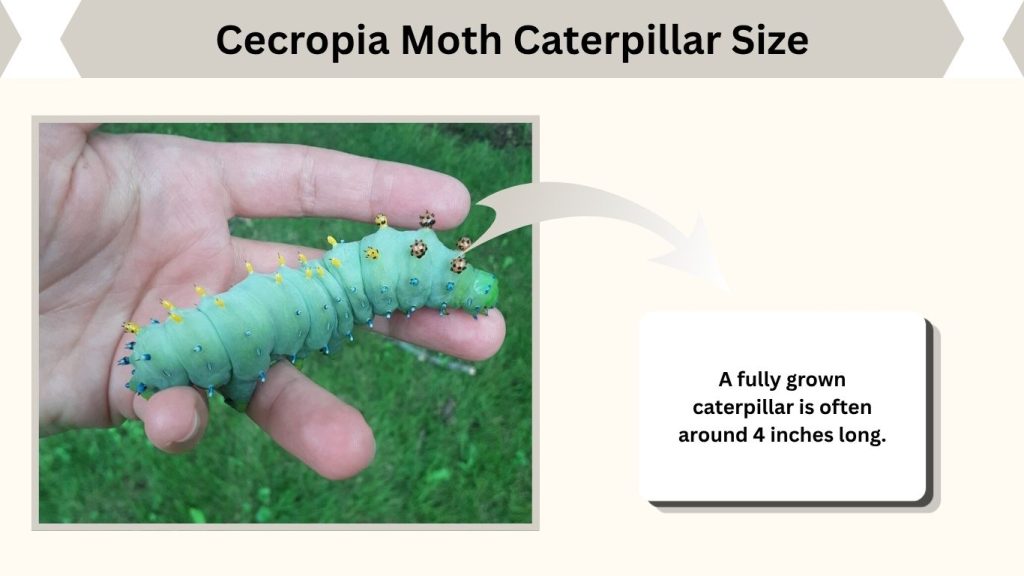
The cecropia moth caterpillar becomes very large compared with many garden caterpillars. Its size is one reason people find it so surprising.
How Big Do Cecropia Moth Caterpillars Get?
A fully grown caterpillar is often around 4 inches long. Some may be slightly shorter or longer depending on food quality, health, and stage. Tyler Arboretum notes that cecropia caterpillars can grow up to about 4.5 inches.
The caterpillar becomes thick-bodied as it nears the cocoon stage. At this point, it may stop eating and begin searching for a place to spin its cocoon.
Size by Stage
| Stage | Approximate Appearance |
| Newly hatched | Tiny and dark |
| Early instars | Small, dark, often blackish |
| Middle instars | Growing larger, color begins changing |
| Late instars | Green body with colorful tubercles |
| Mature caterpillar | Large, thick, about 4 inches |
Size alone is not enough for identification, but a large green caterpillar with colorful tubercles is a strong clue.
Cecropia Moth Caterpillar Stages and Instars
Caterpillars grow by molting. Each growth stage between molts is called an instar. Cecropia caterpillars go through several instars before making a cocoon.
What Are Instars?
An instar is a stage between molts. Because a caterpillar’s outer skin cannot stretch forever, it must shed the old skin and grow into a larger one. The National Park Service explains that cecropia caterpillars molt through separate instar stages as they grow.
Early instars may look dark and spiny. Later instars become greener and more colorful.
Cecropia Caterpillar Stage Changes
| Stage | Color and Look |
| First instar | Small, dark, often black |
| Second instar | Larger, still dark or changing |
| Third instar | More color appears |
| Fourth instar | Green body becomes clearer |
| Fifth instar | Large green body with colorful tubercles |
| Cocoon stage | Brown silk cocoon attached to branch |
The final caterpillar stage is the most dramatic and most often photographed.
Cecropia Moth Caterpillar Life Cycle
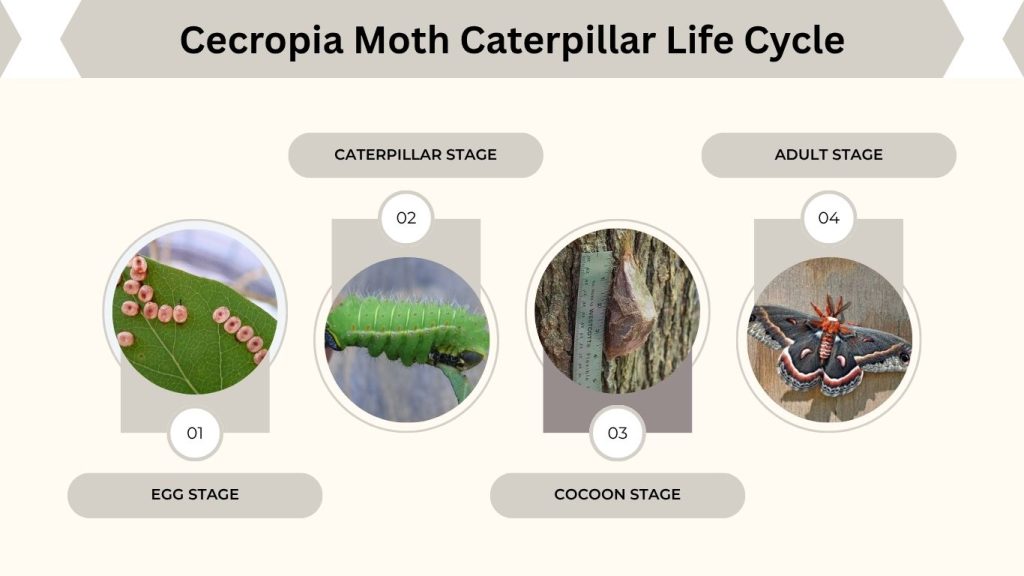
The cecropia moth has a complete life cycle: egg, caterpillar, pupa, and adult moth. In many regions, it completes one generation per year.
Egg to Caterpillar
Female cecropia moths lay eggs on host plants. Tiny caterpillars hatch and begin feeding on leaves. Young caterpillars may feed near each other at first, but older caterpillars are usually solitary.
As the caterpillar grows, it molts several times. Each stage allows it to become larger and more colorful.
Caterpillar to Adult Moth
When fully grown, the caterpillar spins a silk cocoon, usually attached to a twig or branch. It pupates inside the cocoon and often remains there through winter. The adult moth emerges later, usually in spring or early summer depending on climate.
The adult moth lives only a short time and does not feed. Its main purpose is to mate and reproduce.
Cecropia Moth Caterpillar Cocoon
The cocoon is one of the most important parts of the cecropia moth life cycle. It protects the pupa while it transforms into an adult moth.
What Does the Cocoon Look Like?
A cecropia moth cocoon is usually brown, tough, and made of silk. It may be attached lengthwise to a twig or branch. It can look like a dry leaf, plant bundle, or rough brown case.
The cocoon helps protect the pupa from weather, predators, and winter conditions.
What to Do If You Find a Cocoon
If you find a cecropia moth cocoon, it is usually best to leave it where it is. If it is in danger from pruning, mowing, or construction, move the branch gently to a protected outdoor place with similar conditions.
Do not keep the cocoon indoors through winter unless you know how to provide natural cold conditions. Warm indoor temperatures can cause the moth to emerge too early, when no mates or food plants are available.
Cecropia Moth Caterpillar Care
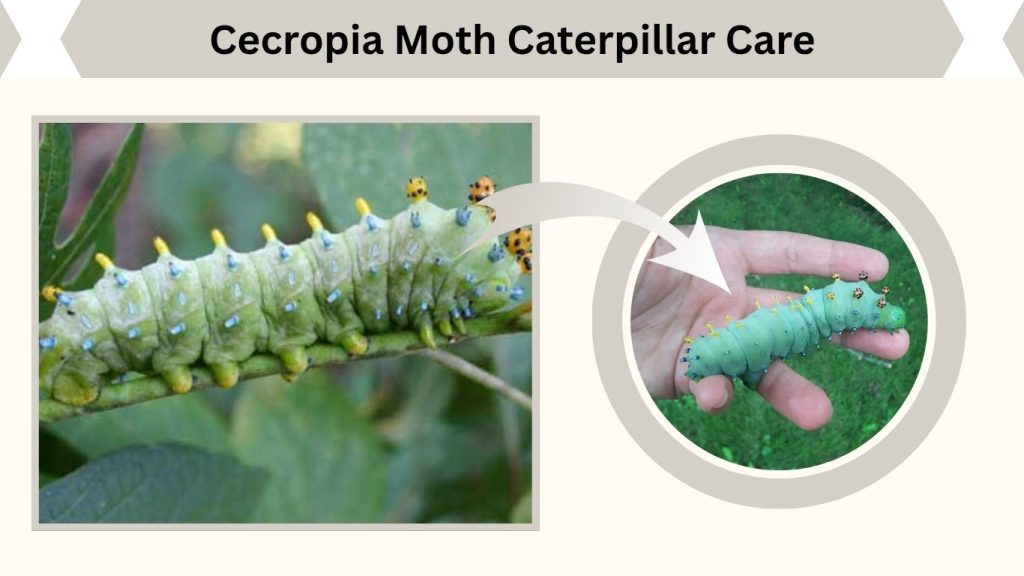
Some people raise cecropia moth caterpillars for education or photography. Care must be clean, gentle, and based on fresh host plant leaves.
How to Raise a Cecropia Moth Caterpillar
Keep the caterpillar in a ventilated container with fresh leaves from its host plant. Replace leaves daily or whenever they wilt. Remove droppings, called frass, to prevent mold.
Basic care tips include:
- Use the same host plant it was found on
- Provide fresh leaves daily
- Keep the container ventilated
- Avoid direct hot sunlight
- Remove frass regularly
- Do not overcrowd caterpillars
- Avoid pesticides on leaves
- Provide twigs for cocoon spinning
Never feed leaves from plants treated with insecticide, herbicide, or other chemicals.
Common Care Mistakes
One of the biggest mistakes is feeding the wrong leaves. Another is keeping the caterpillar in a sealed container with poor airflow. Mold, wilted leaves, heat, and rough handling can all harm caterpillars.
If the caterpillar stops eating near full size, it may be preparing to pupate. Give it twigs or a suitable place to spin a cocoon.
Cecropia Moth Caterpillar Range
Cecropia moths are found across much of eastern North America and parts of Canada. Searches for Ontario, Minnesota, Ohio, Illinois, Texas, and Winnipeg show that people often find them in many regions.
Where Are Cecropia Moth Caterpillars Found?
Cecropia moth caterpillars are commonly associated with deciduous trees and shrubs. They may be found in forests, gardens, orchards, parks, woodland edges, and suburban yards where host plants grow.
They can occur in parts of the United States and Canada, but local abundance varies. Habitat quality, pesticide use, predators, parasites, and weather can affect how often people see them.
Are They Found in California or Texas?
Cecropia moths are mainly associated with eastern North America. Records or lookalikes in western areas should be checked carefully because similar giant silk moth caterpillars may occur in different regions. In Texas, cecropia or related large silk moth species may be encountered depending on location, but exact identification is important.
Cecropia Moth Caterpillar vs Luna Moth Caterpillar
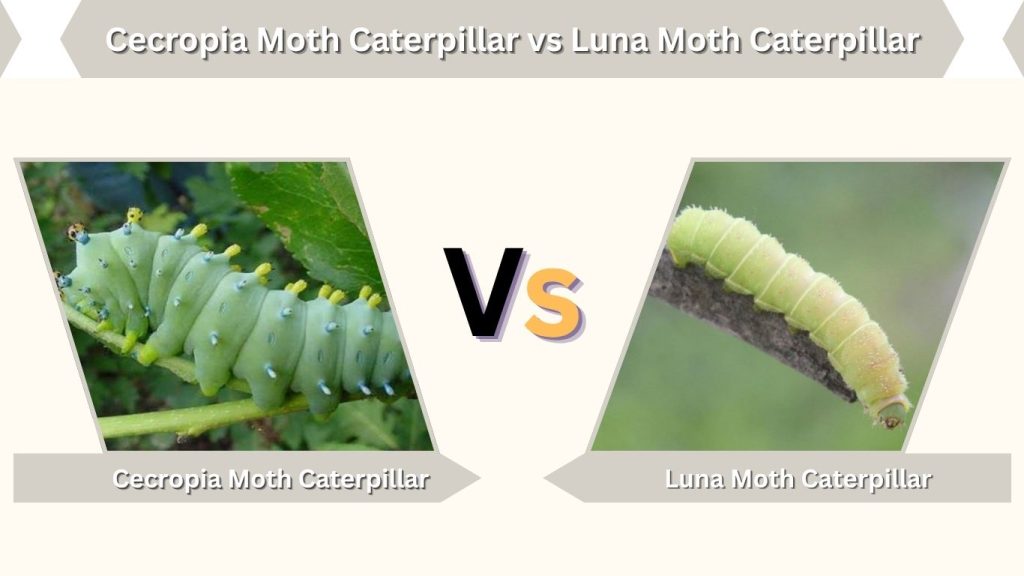
Cecropia and luna moth caterpillars are both large green caterpillars from the giant silk moth family, so they are often confused.
Main Differences
| Feature | Cecropia Moth Caterpillar | Luna Moth Caterpillar |
| Body color | Green or bluish-green | Bright green |
| Tubercles | Large colorful yellow, orange, blue bumps | Smaller bumps, less colorful |
| Mature size | Around 4 inches | Usually smaller to similar |
| Cocoon | Tough silk cocoon attached to branch | Often in leaf litter or loose leaf cocoon |
| Adult moth | Brown, red, white giant moth | Pale green moth with long tails |
The colorful raised tubercles are the best clue for cecropia. Luna caterpillars are smoother-looking and lack the bold orange, yellow, and blue bumps.
Cecropia vs Polyphemus Caterpillar
Polyphemus moth caterpillars are also green and large, but they usually have a smoother green body with smaller markings. Cecropia caterpillars are more dramatic because of their colorful tubercles.
Cecropia Moth Caterpillar on Tomato Plant
Some people report large caterpillars on tomato plants and wonder if they are cecropia caterpillars. Most large tomato-eating caterpillars are tomato hornworms or tobacco hornworms, not cecropia moth caterpillars.
How to Tell the Difference
Tomato hornworms often have a horn-like tail and diagonal white stripes. Cecropia caterpillars have colorful tubercles and no long tail horns.
If a large green caterpillar is eating tomato leaves, check for the tail horn first. That is usually a sign of a hornworm, not a cecropia moth caterpillar.
Cecropia Moth Caterpillar Parasites and Threats
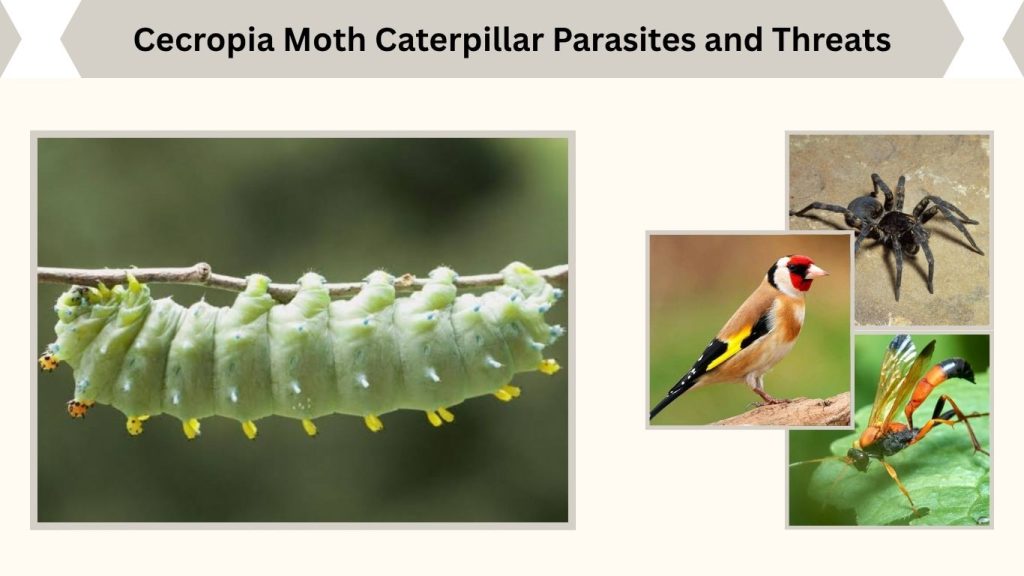
Cecropia moth caterpillars face many natural dangers. They may be eaten by birds, spiders, insects, mammals, and other predators. Parasitoids can also attack them.
Common Threats
Animal Diversity Web notes that cecropia moths can host parasitoids such as tachinid flies, braconid wasps, ichneumonid wasps, and chalcid wasps. The University of Florida also notes that some cecropia populations may be affected by introduced biological control agents, including the tachinid fly Compsilura concinnata.
Threats include:
- Birds
- Spiders
- Predatory insects
- Parasitoid flies
- Parasitic wasps
- Pesticides
- Habitat loss
- Extreme weather
Avoiding unnecessary pesticide use can help support cecropia moths and other native insects.
Cecropia Moth Caterpillar for Sale
Some people search for cecropia moth caterpillars for sale. This may be for education, photography, or raising silk moths. However, buying or moving live insects can be regulated.
Should You Buy One?
Before buying cecropia caterpillars, check local laws. Moving live insects across state, provincial, or national borders can spread disease, parasites, or nonlocal genetics.
It is usually better to observe local caterpillars naturally or raise only legally obtained individuals from your area.
Responsible Raising
Never release captive insects from unknown sources into the wild. If you raise a local caterpillar, keep it on safe host plants and allow the adult moth to emerge outdoors at the right season.
FAQs
Is the cecropia moth caterpillar poisonous?
The cecropia moth caterpillar does not sting and is not considered dangerous like venomous stinging caterpillars. However, it may contain defensive compounds, and sensitive people should avoid handling it.
What does a cecropia moth caterpillar eat?
It eats leaves from many trees and shrubs, including cherry, apple, maple, willow, birch, poplar, lilac, elm, walnut, plum, and boxelder.
How big does a cecropia moth caterpillar get?
A mature cecropia moth caterpillar usually grows to about 4 inches long, and some may reach around 4.5 inches in good conditions.
What does a cecropia moth caterpillar cocoon look like?
The cocoon is brown, tough, and made of silk. It is often attached to a twig or branch and may look like a dry leaf or rough plant bundle.
What is the difference between a luna moth and cecropia moth caterpillar?
A cecropia caterpillar has large colorful yellow, orange, and blue tubercles. A luna moth caterpillar is usually smoother green with smaller markings and less dramatic bumps.