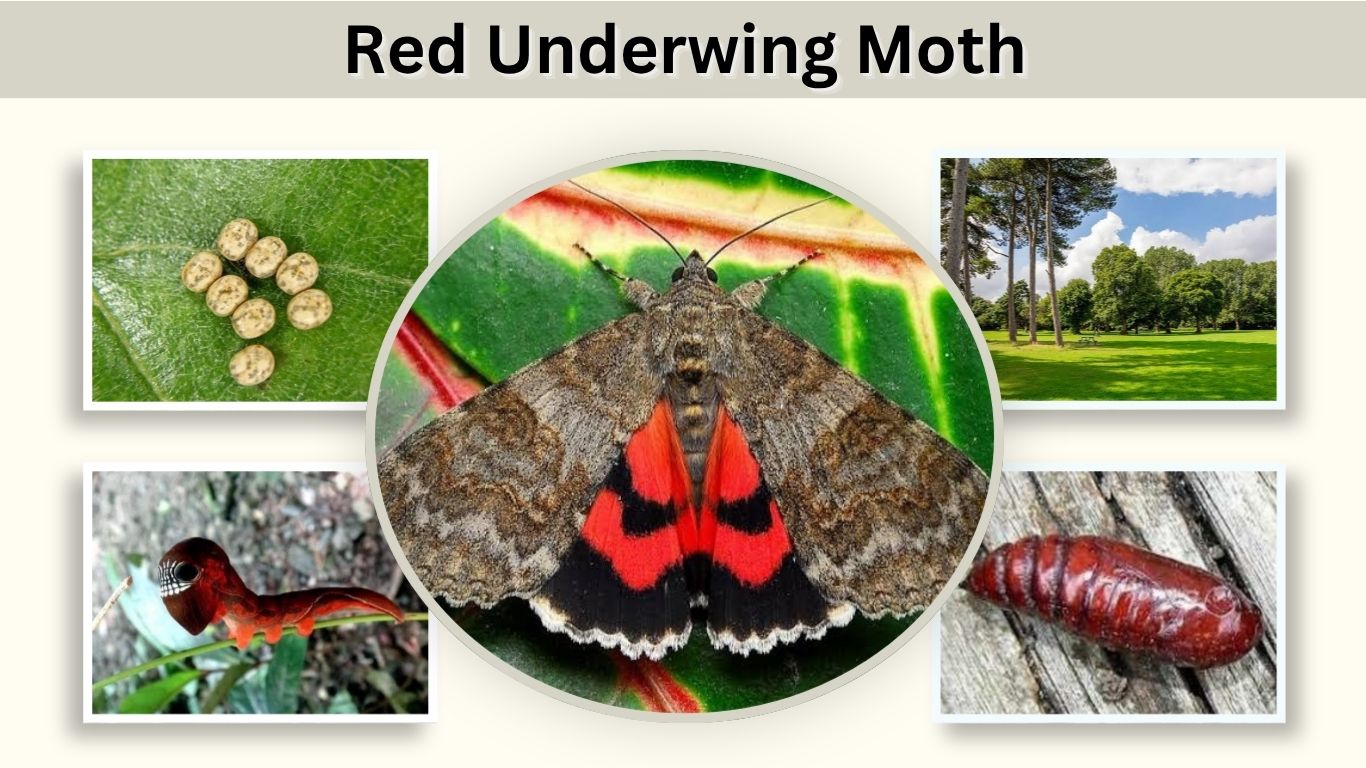
The Red Underwing moth (Catocala nupta) is a large, striking moth best known for the brilliant red-and-black hindwings hidden beneath its gray-brown forewings. At rest, it can look surprisingly similar to tree bark, but when disturbed, the moth suddenly reveals its colorful underwings. The species is widespread across much of England and Wales and is associated especially with places where poplars and willows grow. Despite its dramatic appearance, the Red Underwing moth is not poisonous or dangerous to people.
What Is a Red Underwing Moth?
The Red Underwing, scientifically known as Catocala nupta, belongs to the family Erebidae. It is one of the larger British moths and is particularly noticeable in late summer.
Its unusual coloration serves two purposes. When resting, the muted gray and brown forewings help it blend into tree bark and walls. When it takes flight, the bright red hindwings suddenly become visible, creating a dramatic contrast.
Adults are commonly recorded in August and September in Britain and may be attracted to light and sugary bait.
Red Underwing Moth Identification
Look for these characteristics:
- Scientific name: Catocala nupta
- Family: Erebidae
- Wingspan: approximately 65–80 mm
- Forewings: gray to brownish gray
- Forewing pattern: irregular dark zigzag markings
- Hindwings: bright pinkish red or crimson
- Hindwing markings: broad black bands
- Body: gray-brown and well camouflaged
- Activity: primarily nocturnal
When its wings are closed, the brilliant hindwing colors are almost completely hidden.
Brown or Grey Moth With Red Underwings
People often describe this species as a large brown moth with red underwings or a grey moth with red underwings.
Both descriptions can fit the Red Underwing because the visible forewings are mottled gray, brown and charcoal. Their irregular pattern helps the moth disappear visually against tree bark.
The most important identification clue appears when the moth opens its wings. The hindwings display a strong reddish or pinkish-red background crossed by black bands.
This combination of dull forewings and colorful hindwings is characteristic of many Catocala underwing moths.
How Large Is a Red Underwing Moth?
The Red Underwing is a large moth, with a wingspan usually around 65–80 mm. Some recording sources report somewhat larger measurements depending on the individuals measured.
Its broad wings and heavy-looking body can make it appear even larger when it suddenly flies from a wall or tree trunk.
Because the moth stays motionless during the day, people may overlook it until they get very close.
Red Underwing Moth Caterpillar
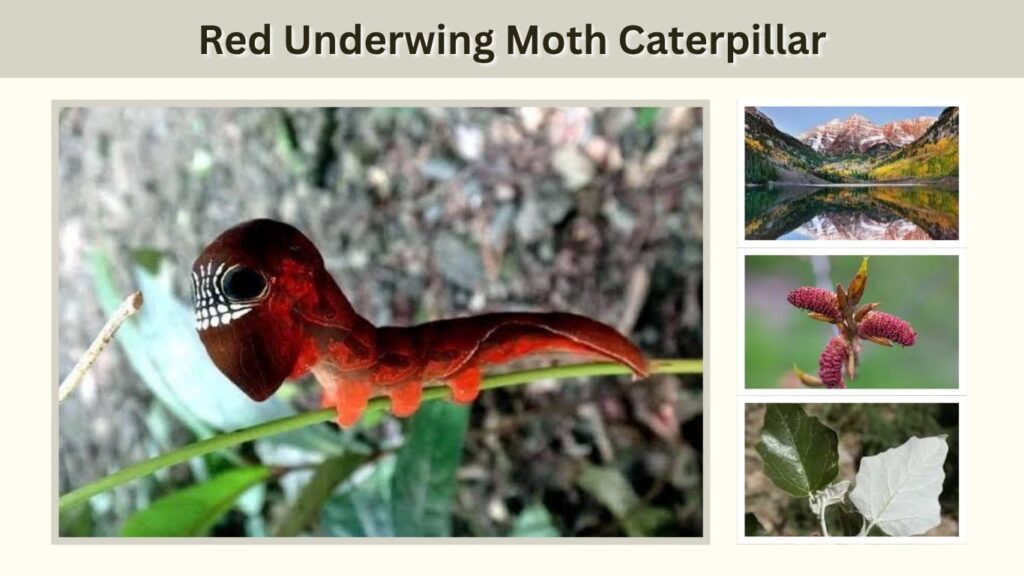
The Red Underwing moth caterpillar looks very different from the colorful adult.
Larvae are generally grayish or brownish and have cryptic coloration that helps them blend with twigs and bark. This camouflage is especially useful because the caterpillars feed on woody plants such as willow and poplar.
The larval stage is primarily seen during spring and early summer.
What Do Red Underwing Caterpillars Eat?
Their main food plants include:
- Willow
- Black poplar
- White poplar
- Aspen
- Other Populus species
The abundance of these trees strongly influences where the species can successfully reproduce.
Red Underwing Moth Life Cycle
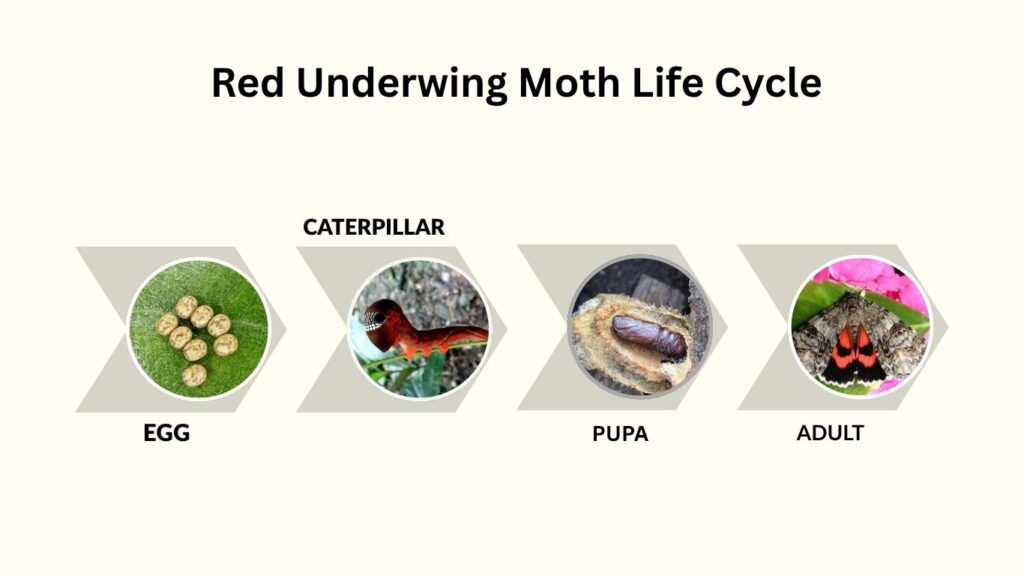
Like other moths, the Red Underwing undergoes complete metamorphosis:
Egg → Caterpillar → Pupa → Adult
Its life cycle is closely connected with deciduous trees, especially willows and poplars.
Egg
The Red Underwing spends winter primarily in the egg stage. The eggs remain dormant through the colder months before hatching as conditions become suitable.
Caterpillar
Caterpillars emerge in spring and feed on leaves of willow and poplar.
They grow through several molts before becoming mature enough to pupate. Larvae are typically present through spring into early summer.
Red Underwing Moth Pupa
Once fully developed, the caterpillar enters the pupal stage.
The pupa is normally protected in a concealed location among vegetation or leaf material. Inside, the caterpillar undergoes its final transformation into an adult moth.
Adult
Adults generally begin appearing during summer, with the main British flight period occurring in August and September.
They are nocturnal but can easily be encountered during the daytime when resting on tree trunks, fences and walls.
Red Underwing Moth Habitat
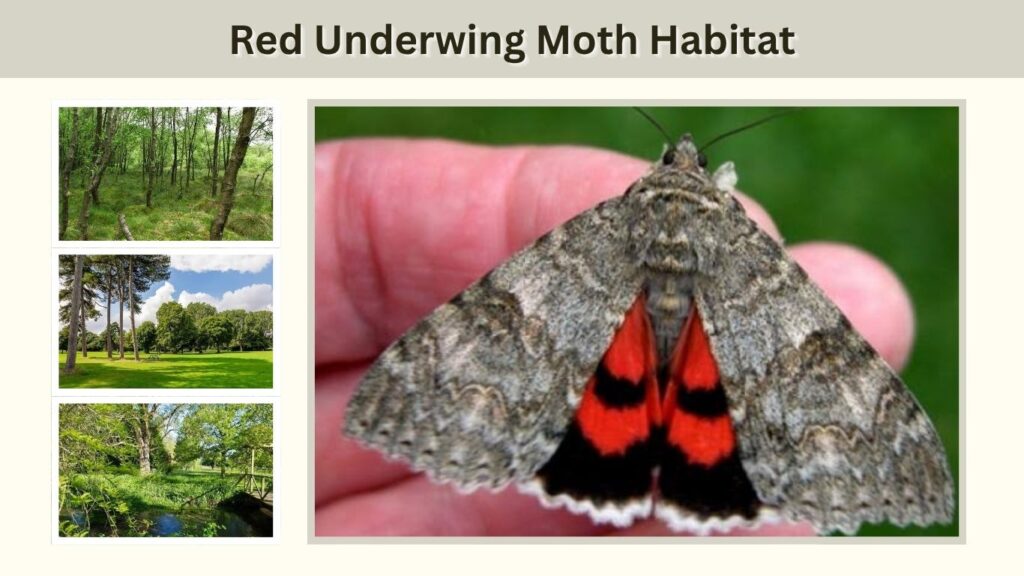
Red Underwing moths occur in several habitats where their larval food plants are available.
Typical habitats include:
- Woodland
- Wet woodland
- Riverbanks
- Parks
- Gardens
- Scrub
- Marshy areas
- Tree-lined urban environments
Areas containing mature willow and poplar trees are particularly suitable.
During the day, adults may rest on tree trunks, fences, buildings or walls where their patterned forewings provide excellent camouflage.
Red Underwing Moth in the UK
The Red Underwing moth is well established in the UK, particularly across England and Wales.
It has historically been more common in southern Britain, but records show its range extending northward. Butterfly Conservation classifies it as a common species rather than a UK conservation-priority moth.
August and September are particularly good months to look for adults.
Unlike some much rarer crimson underwing species, Catocala nupta can appear in gardens and urban areas if suitable trees are nearby.
Are Red Underwing Moths Present in the USA?
The true Red Underwing, Catocala nupta, is primarily a Palearctic species associated with Europe and parts of Asia, rather than a typical North American moth.
However, the USA and Canada have numerous native species belonging to the same genus, Catocala. Some also possess striking red, orange, pink or yellow hindwings.
For example, the Ilia Underwing (Catocala ilia) is a North American species. Therefore, seeing a large gray moth with colorful red or orange hindwings in the USA does not necessarily mean it is the European Red Underwing.
Geographic location should always be considered when identifying Catocala moths.
Is the Red Underwing Moth Poisonous?
No, the Red Underwing moth is not considered poisonous or dangerous to humans.
Its intense red-and-black hindwings may look like a warning signal, but they are primarily associated with predator avoidance rather than a threat to people.
Adults do not sting and are not aggressive. The caterpillars are also not known as medically significant stinging caterpillars.
If a Red Underwing lands on a wall, tree, clothing or outdoor furniture, it can normally be left alone to move away by itself.
Why Does the Red Underwing Have Bright Red Wings?
The colorful hindwings are mostly concealed when the moth is resting.
If a predator approaches, the moth can suddenly fly and display the vivid red-and-black pattern. This rapid flash of color may startle or confuse the predator.
When the moth lands again, it closes its wings and the bright colors disappear beneath its camouflaged forewings. Against bark or another mottled surface, the moth can then become difficult to locate.
This strategy is commonly described as flash coloration and helps explain why a moth with such brilliant hindwings has extremely subdued forewings.
Red Underwing Moth Meaning and Symbolism
There is no scientifically established spiritual meaning associated with seeing a Red Underwing moth.
However, people interested in moth symbolism sometimes associate its dramatic transition from camouflaged gray wings to brilliant red underwings with ideas such as hidden strength, transformation, change and revealing something previously unseen.
These interpretations are cultural or personal symbolism rather than biological facts.
Red Underwing vs Crimson Underwing Moths
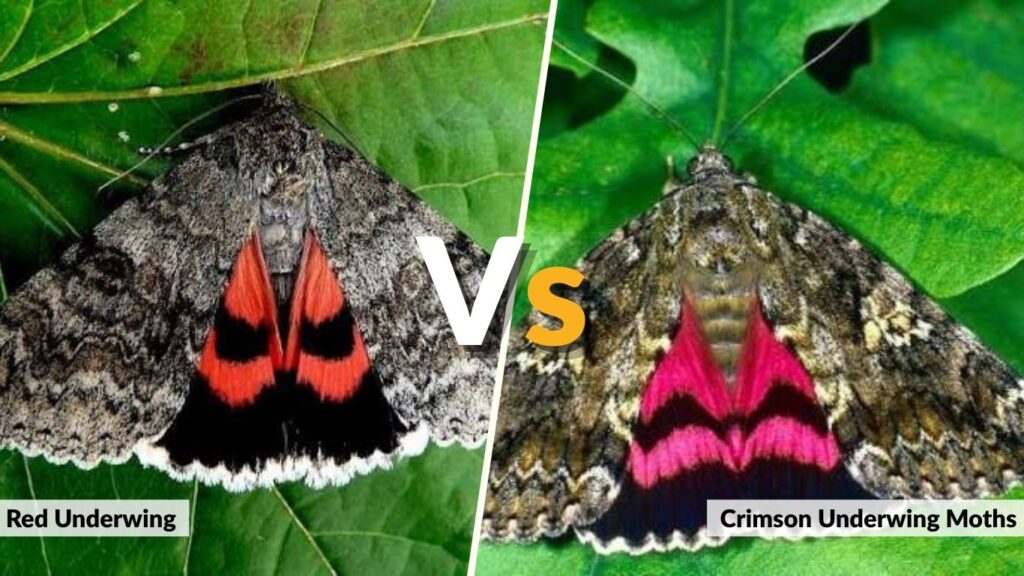
The Red Underwing is not the only British moth with colorful red hindwings.
Species such as the Dark Crimson Underwing can appear similar, but they differ in forewing patterns, hindwing band shapes, size and distribution.
The Dark Crimson Underwing is considerably scarcer in Britain and is considered a conservation-priority species, whereas the Red Underwing is much more widespread.
Careful examination of both forewing markings and hindwing patterns is important when identifying these large underwing moths.
FAQs
Is a Red Underwing moth dangerous?
No. Red Underwing moths are harmless to humans and do not sting or behave aggressively.
How big is a Red Underwing moth?
Adults generally have a wingspan of approximately 65–80 mm, making them one of the larger moths found in Britain.
What does a Red Underwing caterpillar eat?
The caterpillar primarily feeds on willows and poplars, including black poplar, white poplar and aspen.
Where can I find Red Underwing moths?
They inhabit woodland, parks, gardens, scrub and riverbanks, particularly in areas containing willow and poplar trees.
When can you see Red Underwing moths in the UK?
Adults are most commonly seen during August and September, often resting during the day and flying after dark.