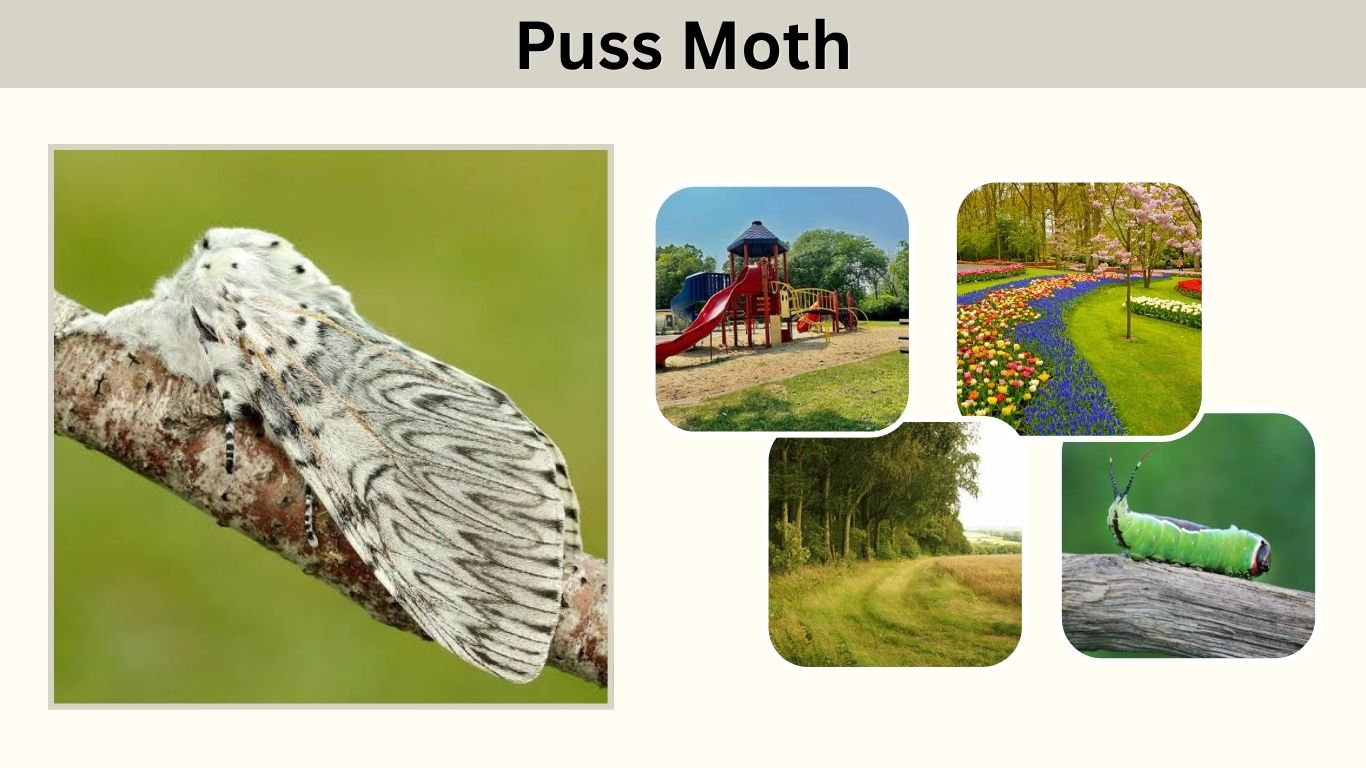
The puss moth is known for its fluffy body and an extraordinary caterpillar that looks almost like a tiny creature wearing a mask. However, the name can cause confusion. The European puss moth, Cerura vinula, is different from the American puss caterpillar, which becomes a southern flannel moth and can deliver a painful venomous sting. Understanding that distinction helps you identify these insects correctly. This guide covers their appearance, food plants, habitats, life cycles, defensive behavior, and the precautions to take when you encounter them.
What Is a Puss Moth?
The European puss moth belongs to the family Notodontidae, a group called prominent moths. Its common name refers to the adult’s soft, catlike appearance. The caterpillar looks completely different: it becomes a large green larva with unusual markings and a forked tail. Because another insect carries a similar common name, location and scientific identification are useful when reading about it.
European Puss Moth: Cerura vinula
Cerura vinula is the species usually meant by “puss moth” in Britain. It is a moth, not a butterfly. Its pale adult and distinctive green caterpillar are two stages of the same insect.
American Puss Caterpillar: Megalopyge opercularis
In the United States, “puss caterpillar” commonly means Megalopyge opercularis, the southern flannel moth’s larva. It belongs to Megalopygidae and is also called an asp, particularly in Texas. Its soft-looking coat conceals venomous spines.
What Does a Puss Moth Look Like?
Adult moths and caterpillars need to be identified separately because their shapes, colors, and body coverings change during development. For the European species, look for a pale, furry adult or a green caterpillar with a dark saddle and two tails. Photographs showing the insect from above and from the side are more useful than color alone for checking its identity.
Adult Puss Moth Identification
- Wings: White or grayish-white, marked with dark spots and wavy lines.
- Body: Thickly covered with pale hairs, creating a fluffy appearance.
- Wingspan: Usually around 45–70 millimeters.
- Sex differences: Females are generally larger than males.
European Puss Moth Caterpillar Identification
- Body color: Mainly green in older larvae.
- Back marking: A dark saddle bordered with pale or white lines.
- Head surround: A pinkish or reddish area with false eye markings.
- Rear end: Two long tail structures, with extendable pinkish filaments.
- Young larvae: Much darker than mature caterpillars.
These features distinguish it from the compact, fur-covered American puss caterpillar.
Where Do Puss Moths Live and What Do They Eat?
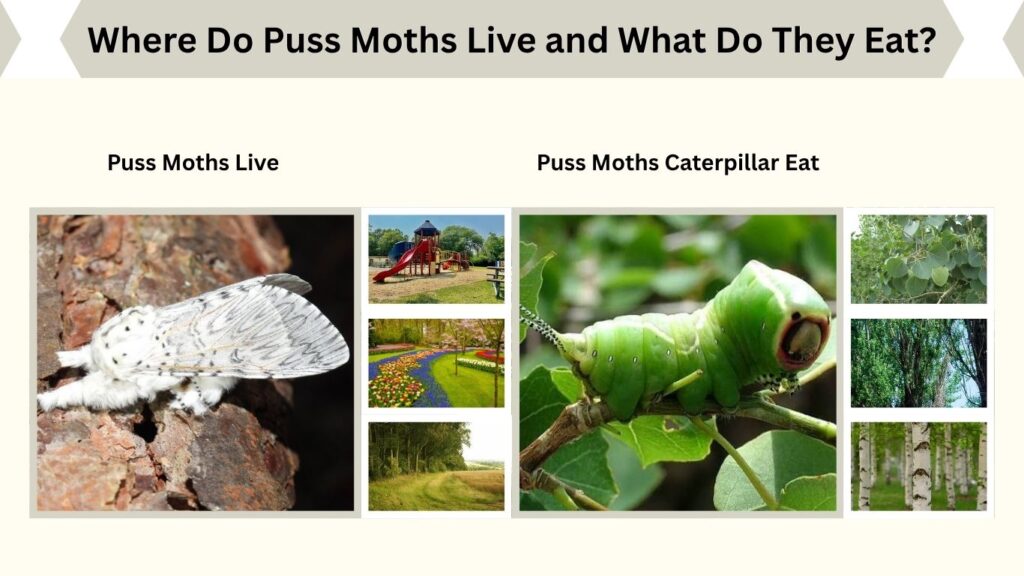
European puss moths occur across much of Britain and elsewhere in Europe. Their caterpillars depend on suitable trees, so finding food plants is the best starting point for locating them. Parks, gardens, woodland edges, hedgerows, and wetland margins can all provide habitat. A caterpillar on a path may simply be moving away from its feeding site before making a cocoon.
European Caterpillar Food Plants
The main food plants include:
- Willows, including sallows.
- Poplars.
- Aspen, which is a type of poplar.
The larvae chew leaves. These host records describe caterpillar food, not a diet of leaves for adult moths.
American Puss Caterpillar Habitat
Southern flannel moths occur in the eastern and southern United States, including Florida and Texas. Their caterpillars feed on various trees and shrubs, including oaks and elms. They may also wander onto outdoor furniture, fences, and buildings.
Puss Moth Life Cycle
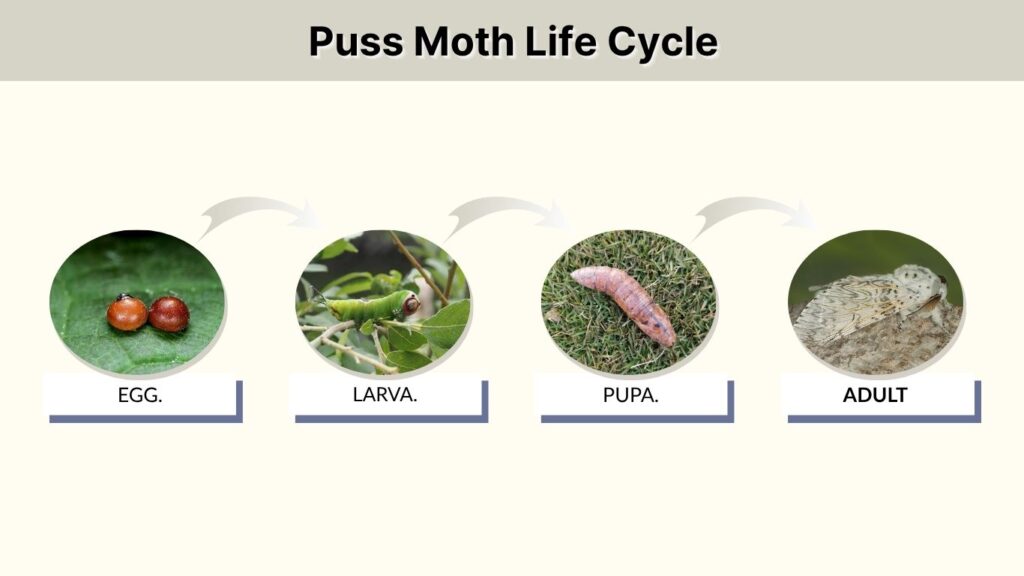
The European puss moth develops through egg, larva, pupa, and adult stages. Its changing appearance can make separate stages look like unrelated insects. Small dark hatchlings become green caterpillars, then disappear inside a tough cocoon before emerging as pale moths. Development follows the seasons, and winter is usually spent as a pupa rather than as an adult flying around outdoors.
Eggs and Growing Caterpillars
Females lay orange-brown eggs on host leaves, often singly or in small groups. The hatchlings feed and pass through successive molts. As they mature, their green coloring, dark saddle, and distinctive head markings become more obvious.
Cocoon and Pupa
A fully grown caterpillar may turn purplish before pupating. It mixes silk with chewed bark to create a hard, camouflaged cocoon attached to a suitable surface. The pupa usually remains inside through winter; some individuals stay there for two winters.
Adult Season and Lifespan
In Britain, adults are typically seen from May to July, and caterpillars from June to September. These are seasonal observation periods, not the lifespan of one individual. Adults fly at night and can be attracted to lights.
Why Does the Caterpillar Have a Strange Face?
The European puss moth caterpillar’s unusual appearance is part of its defense. Its green body helps it blend with foliage, while more conspicuous markings become prominent when it is disturbed. Raising the front of its body and moving its tails can make it appear threatening. The display is directed at potential predators and should be observed without provoking the insect.
False Eyes and Moving Tails
The large dark marks around the head are false eyes, not its actual seeing organs. Together with the reddish surround, they create the impression of a larger face. The twin tails can reveal pinkish filaments that the caterpillar waves.
Can It Spray Acid?
Yes. Cerura vinula caterpillars can release formic acid from a gland near the front of the body as a defense. Descriptions of “spitting acid” refer to this secretion. Keep your face away and avoid handling or disturbing the caterpillar.
Are Puss Moth Caterpillars Dangerous?
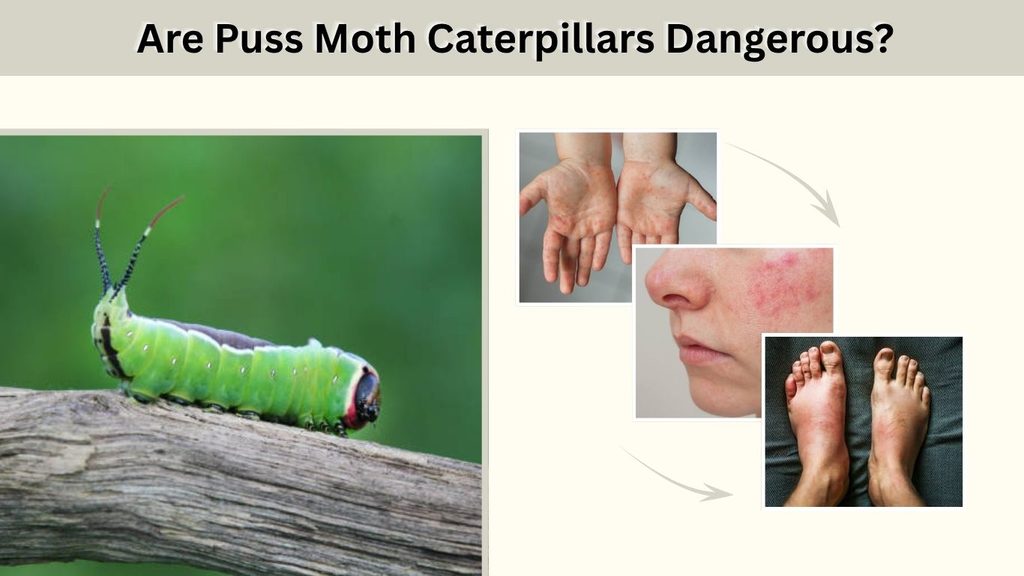
The answer depends on which species you mean. The European puss moth caterpillar is not the American asp responsible for venomous stings, although its defensive secretion is a reason to leave it alone. The American puss caterpillar has a different defense: hidden spines that can inject venom when pressed against skin. A soft or furry appearance does not establish safety.
American Puss Caterpillar Stings
Contact can cause intense burning or throbbing pain, redness, swelling, and a rash. Some people also develop nausea or headache. The injury commonly described as a “puss moth bite” is usually contact with venomous spines rather than a bite.
Is the Adult Moth Venomous?
The southern flannel moth’s adult does not retain its caterpillar’s venomous stinging spines. The European adult puss moth is also not a stinging insect. Nevertheless, avoid unnecessary handling, which can damage their wings.
Puss Caterpillar Sting Treatment and Prevention
If you touch a suspected American puss caterpillar, stop handling it and avoid rubbing the affected skin. Broken spines can remain embedded, so first aid matters. Reactions vary, and severe pain deserves medical advice. The steps below address contact with a stinging caterpillar; they are not a treatment for every rash or a substitute for assessment when symptoms are serious.
Immediate First Aid
- Remove the caterpillar with a tool, without touching it directly.
- Gently lift embedded hairs or spines with adhesive tape; use fresh pieces.
- Wash the area with soap and water.
- Apply a cold pack wrapped in cloth.
- Contact a poison center or clinician for advice; U.S. Poison Control is 1-800-222-1222.
When to Get Urgent Help
Call emergency services for breathing difficulty, throat or tongue swelling, fainting, or rapidly worsening symptoms. Seek prompt medical care for severe persistent pain or eye exposure. Do not put adhesive tape on the eyes.
Managing Caterpillars Around Your Home
Keep children and pets away from suspected stinging caterpillars. If several appear near play areas or entrances, ask a local extension service or qualified pest professional about identification and management. Avoid picking them up, even if they appear dead.
FAQs
Most confusion about puss moths comes from using one common name for different insects. The European species and the American puss caterpillar differ in appearance, family, distribution, and defenses. These answers address common identification questions, but a photograph and location remain valuable. Never test whether a caterpillar stings by touching it, and keep unfamiliar specimens away from children and pets.
What Does a Puss Moth Caterpillar Turn Into?
A European puss moth caterpillar becomes Cerura vinula, a fluffy, pale moth. An American puss caterpillar becomes the southern flannel moth, Megalopyge opercularis.
Are Puss Moth Caterpillars Furry?
The mature European caterpillar is mainly green and lacks a dense fur coat. The American puss caterpillar has long hairs that hide its body and venomous spines.
Can You Touch a European Puss Moth Caterpillar?
It is better to observe it without touching. Although it lacks the American puss caterpillar’s stinging defense, it can spray formic acid when disturbed.
Why Is My Puss Moth Caterpillar Turning Purple?
A mature Cerura vinula caterpillar commonly becomes purplish as it prepares to pupate. It may stop feeding and wander in search of a cocoon site.
Are Puss Moths Found in Texas?
Texas has the southern flannel moth and its venomous puss caterpillar, commonly called an asp. Do not assume a Texas “puss caterpillar” is the European Cerura vinula.