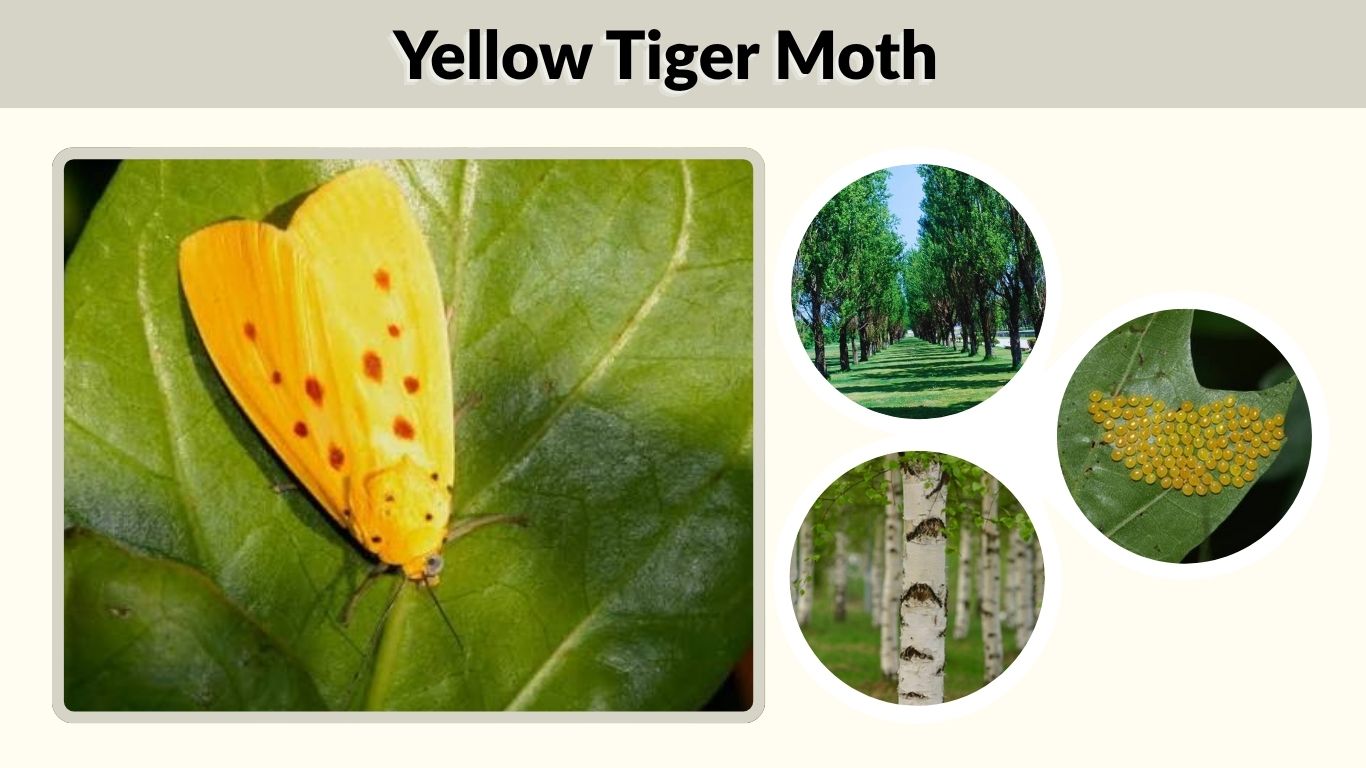
A yellow moth resting near your porch or a fuzzy caterpillar crossing a leaf can be surprisingly difficult to identify. The name yellow tiger moth is used loosely, and several different insects can match that description. One important example is the yellow-spotted tiger moth, also called the spotted tussock moth. Another familiar insect, the yellow woolly bear, becomes a mostly white Virginian tiger moth. This guide explains their differences, identifying features, habitats, food plants, and life cycles so you can understand what you have found.
What Is a Yellow Tiger Moth?
Yellow tiger moth is an informal description rather than a reliable species identification. Yellow wings, yellow body markings, and yellow caterpillar hairs can lead people to use the same name for different insects. Scientific names help separate them. For the moths discussed here, the most useful distinction is between the yellow-spotted tiger moth and the caterpillar commonly called the yellow woolly bear.
Yellow-Spotted Tiger Moth
The yellow-spotted tiger moth, Lophocampa maculata, is also known as the spotted tussock moth. Despite that common name, it belongs to the tiger moth group, Arctiinae, within the family Erebidae.
Virginian Tiger Moth
Spilosoma virginica is the Virginian tiger moth. Its caterpillar is commonly called the yellow woolly bear or yellow bear, although individuals can have pale, yellow, reddish, or brown hairs. The adult is predominantly white.
Yellow Tiger Moth Identification
Start by deciding whether you are looking at an adult moth or a caterpillar. Then compare several features together: overall pattern, wing markings, hair arrangement, and location. A photograph taken from above helps with adult identification, while side views reveal caterpillar markings. Yellow coloring alone cannot reliably distinguish these species from other moths or hairy caterpillars found in the same area.
Adult Yellow-Spotted Tiger Moth Features
- Forewings: Deep yellow with brown markings that often merge into irregular bands.
- Hindwings: Paler yellow, partly translucent, and generally unmarked.
- Wingspan: Approximately 35–43 millimeters, or 1.4–1.7 inches.
- Overall appearance: A mottled yellow-and-brown moth rather than a uniformly yellow insect.
Yellow-Spotted Tiger Moth Caterpillar Features
- Body covering: Dense hairs give the caterpillar a woolly appearance.
- Middle section: Usually a broad yellow or orange area.
- Ends: Dark or black hairs toward both ends.
- Long hairs: Pale, projecting hairs may extend from the darker areas.
Young caterpillars and regional forms can look different. Treat these features as identification clues rather than a guarantee.
Yellow Tiger Moth Habitat and Food Plants
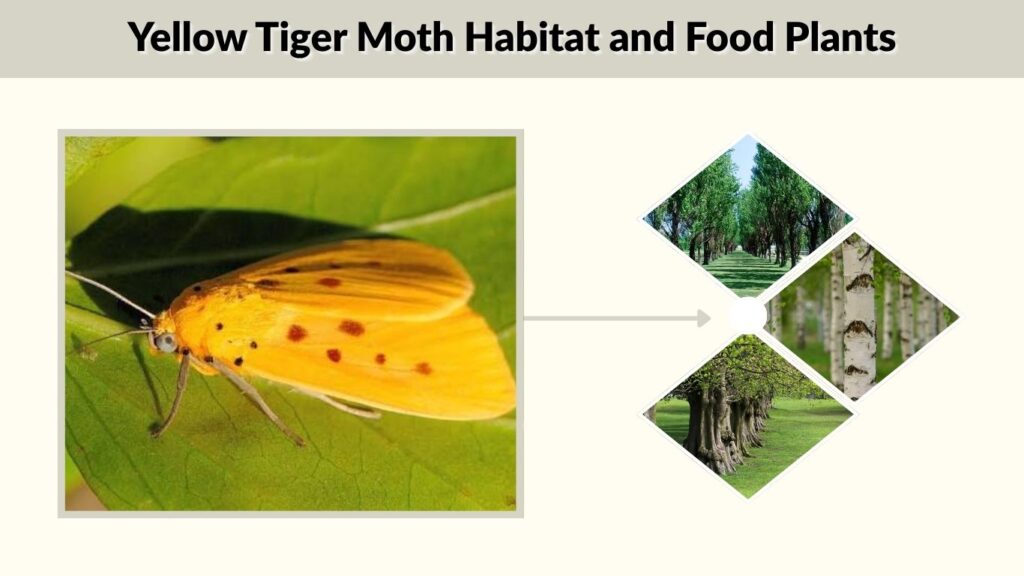
Food plants provide another useful clue when identifying a yellow tiger moth caterpillar. The yellow-spotted tiger moth is associated with deciduous trees across parts of North America, including southern Canada and much of the western United States. The Virginian tiger moth also occurs widely in North America, and its caterpillars can appear in gardens, fields, woodland edges, and other vegetated places.
Yellow-Spotted Tiger Moth Host Plants
Its caterpillars eat leaves from several kinds of trees, including:
- Willows and poplars.
- Birches and alders.
- Maples and oaks.
- Basswoods.
A nearby tree is only a clue: caterpillars sometimes wander away from their feeding sites.
What Yellow Woolly Bears Eat
Virginian tiger moth caterpillars have a broad diet that includes weeds, vegetables, and other plants. Young larvae may feed together, while older ones spread out. Their feeding can leave irregular holes in leaves.
Life Cycle and Seasonal Behavior
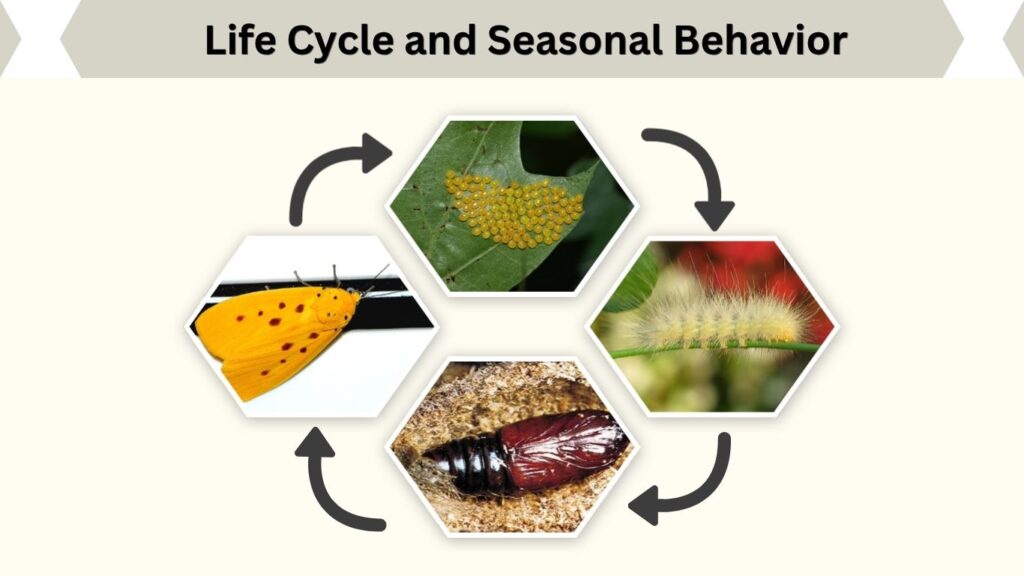
These moths develop through four stages: egg, caterpillar, pupa, and adult. The familiar fuzzy caterpillar is the feeding and growing stage, while the winged adult produces the next generation. Timing depends on the species and local conditions. A life cycle described for the yellow-spotted tiger moth should therefore not automatically be applied to a yellow woolly bear found in a garden.
From Egg to Adult
Female moths lay eggs on vegetation. After hatching, caterpillars eat leaves and molt as they grow. A mature caterpillar forms a cocoon and pupates inside it. The adult eventually emerges, expands its wings, and becomes capable of flight.
Yellow-spotted tiger moths generally have one generation annually and overwinter as pupae.
When You Might See Them
Yellow-spotted tiger moth adults are often recorded from May through July, with caterpillars appearing later in summer. Adults are active at night and may visit lights. Virginian tiger moths can produce multiple generations, extending their seasonal activity.
Similar Moths and Common Confusion
A black-and-yellow moth or a moth with yellow hindwings is not necessarily the yellow-spotted tiger moth. Several species share these colors, and some vary considerably between individuals. Compare the complete wing pattern rather than one bright patch. The same caution applies to caterpillars: similar hair colors do not mean that two larvae will become the same kind of adult moth.
Garden Tiger Moth
The garden tiger moth, or great tiger moth, is Arctia caja. Its forewings usually have chocolate-brown patches separated by cream or white markings. The hindwings can be yellow to orange with prominent dark spots, unlike the generally unmarked hindwings of Lophocampa maculata.
Yellow Caterpillars That Become White Moths
A yellow woolly bear becoming a white Virginian tiger moth is a normal transformation. Caterpillar coloration does not predict adult wing color. However, several other moths also have white adults, so white wings alone cannot confirm Spilosoma virginica.
Are Yellow Tiger Moths Harmful?
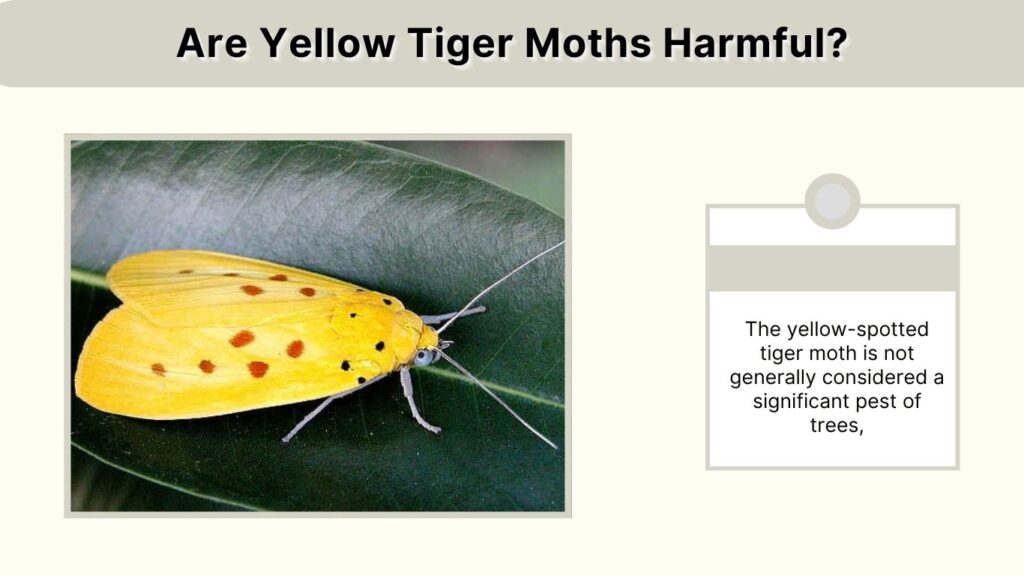
Finding one moth or caterpillar does not automatically indicate a pest problem. Yellow-spotted tiger moths are not generally considered important plant pests, while yellow woolly bears rarely cause serious damage in ordinary garden situations. Identification still matters before deciding what to do. Consider the number of caterpillars, the amount of leaf loss, and whether the affected plant is young or established.
Caterpillar Hairs and Handling
Avoid touching unfamiliar hairy caterpillars. Yellow-spotted tiger moth caterpillar hairs can cause skin irritation, and similar-looking species may also be irritating. Photographing the insect where it rests usually provides useful identification details without handling it.
What to Do in Your Garden
- Leave isolated caterpillars undisturbed when feeding damage is minor.
- Check affected plants again to see whether leaf loss is increasing.
- Avoid applying insecticide simply because a moth visits a light.
- Seek local identification advice if many caterpillars are damaging vulnerable plants.
FAQs
Common names make these moths seem more alike than they really are. The questions below clarify the differences most useful for identification and everyday garden decisions. Whenever possible, record where and when you found the insect and take clear photographs. Those details are more informative than describing it only as yellow, spotted, fuzzy, or striped, especially when several similar species occur nearby.
Is the Yellow-Spotted Tiger Moth a Spotted Tussock Moth?
Yes. Both names refer to Lophocampa maculata. The word “tussock” describes its caterpillar’s tufts of hair; the species belongs to the tiger moth group.
What Does a Yellow Woolly Bear Turn Into?
The caterpillar commonly called the yellow woolly bear, Spilosoma virginica, becomes a Virginian tiger moth. Its adult wings are mostly white, sometimes with small black spots.
Are All Yellow Tiger Moth Caterpillars the Same Species?
No. Yellow hairs occur in several moth species. Hair arrangement, body markings, location, and the plant being eaten help narrow the identification.
Are Yellow-Spotted Tiger Moths Beneficial?
They are part of native woodland biodiversity and generally do not require control. Their ecological value does not mean they should be described as insects that actively control garden pests.
Should I Remove a Yellow Tiger Moth Caterpillar?
Usually, an isolated caterpillar causing little damage can be left alone. If several are stripping a small plant, confirm their identity before choosing a management approach.