
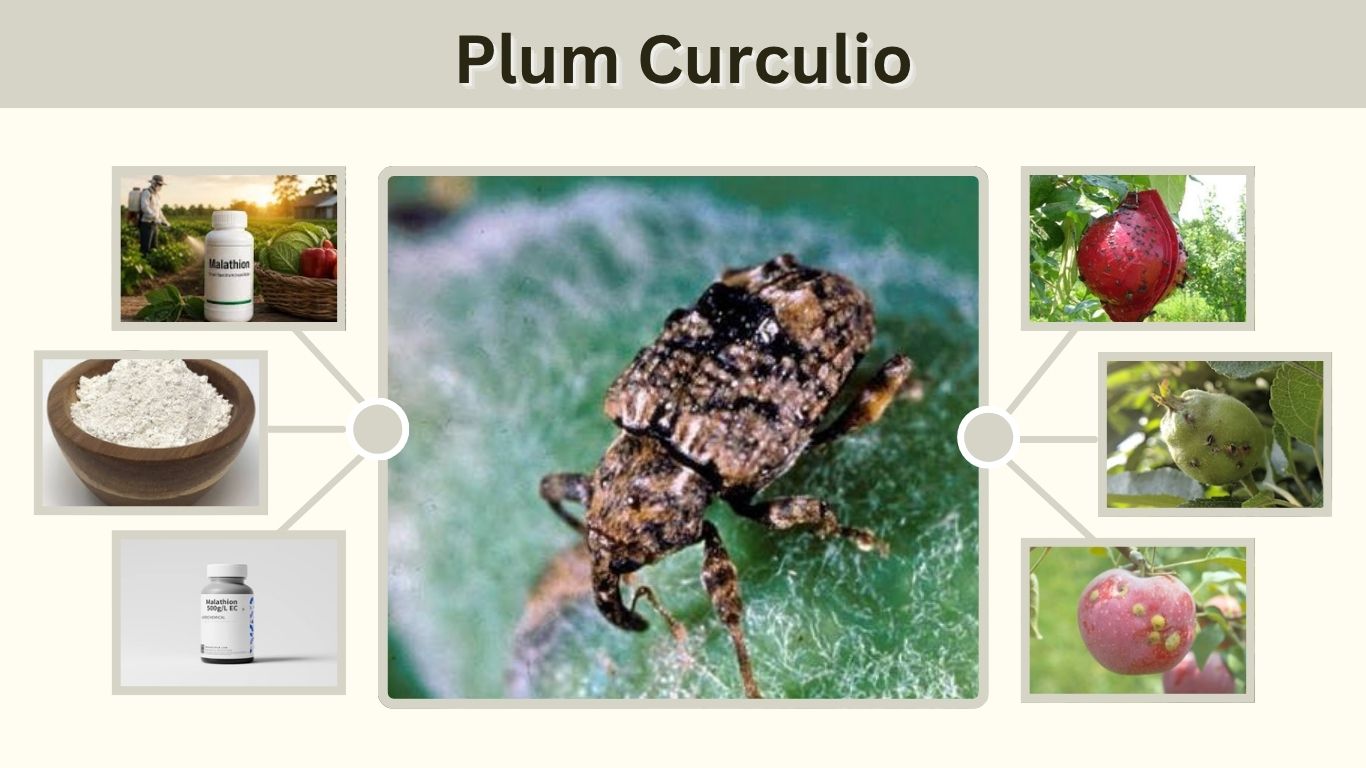
Plum curculio is a destructive fruit pest that attacks apples, peaches, plums, cherries, and several other fruit crops. These small, brown weevils damage developing fruits by feeding on their surfaces and laying eggs beneath the skin. Their larvae grow inside fruits, causing internal damage, premature fruit drop, and reduced harvest quality. Controlling plum curculio requires early identification, regular monitoring, and properly timed treatments. This guide explains plum curculio identification, life cycle, common damage symptoms, effective insecticides, organic control methods, and practical strategies for protecting backyard and commercial orchards.
What Is Plum Curculio?
Plum curculio (Conotrachelus nenuphar) is a small beetle belonging to the family Curculionidae. It is native to North America and is a major pest of fruit trees, particularly in eastern and central regions.
Despite its name, plum curculio attacks more than plum trees. Apples, peaches, nectarines, cherries, pears, and certain berries can also become infested.
Adults overwinter in sheltered locations near orchards and become active during spring when temperatures rise.
Plum Curculio Identification
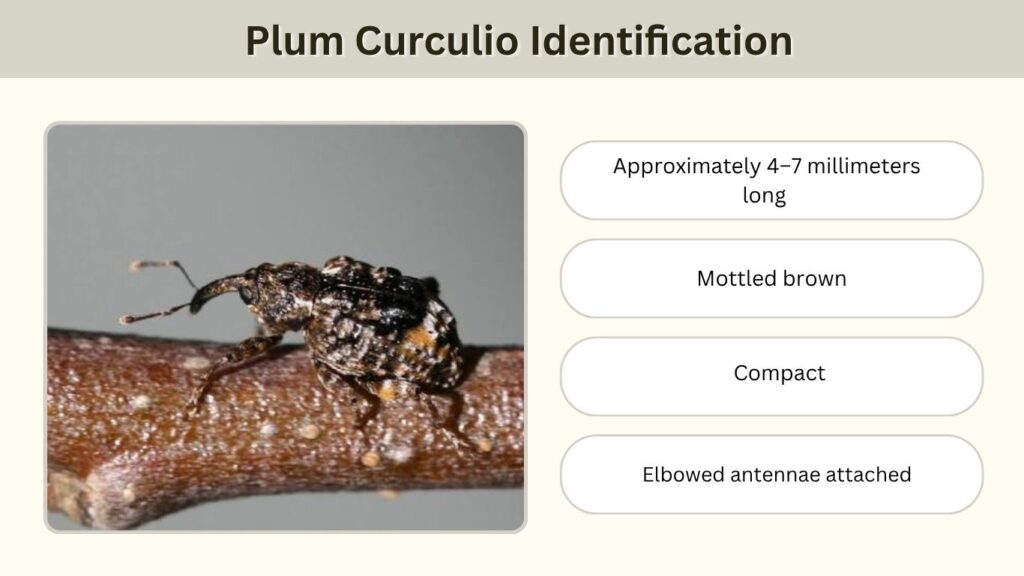
Identifying plum curculio correctly helps growers distinguish it from other weevils and fruit-feeding insects. Adults have distinctive snouts, mottled bodies, and raised bumps on their wing covers. Their larvae look like small, white worms living inside developing fruits.
What Does an Adult Plum Curculio Look Like?
- Size: Approximately 4–7 millimeters long.
- Color: Mottled brown, gray, and black.
- Body shape: Oval, compact, and somewhat rough.
- Snout: Long, curved, and directed downward.
- Antennae: Elbowed antennae attached to the snout.
- Wings: Functional wings that allow adults to fly.
- Appearance: Raised bumps create a rough, irregular body surface.
Plum Curculio Larvae Identification
Plum curculio larvae are creamy-white, legless grubs with brown heads. Their bodies are slightly curved and segmented.
They feed inside fruit tissue, making them difficult to detect without cutting open damaged fruits.
Plum Curculio Life Cycle
Plum curculio undergoes complete metamorphosis, developing through egg, larva, pupa, and adult stages. It generally produces one generation annually in northern regions and may produce two generations in warmer southern areas.
Understanding these developmental stages is important because treatments primarily target exposed adults before they lay eggs.
Egg and Larval Development
Adult females lay eggs beneath the skin of young fruits during spring. Each female cuts a distinctive crescent-shaped opening around the egg-laying site.
Eggs hatch within several days, and larvae begin feeding inside the fruit.
After approximately two to three weeks, mature larvae leave fallen or damaged fruits and enter the soil.
Pupal and Adult Stages
Larvae pupate underground and eventually develop into adult beetles.
New adults may emerge during summer, depending on the region. They feed before seeking sheltered overwintering sites.
The following spring, surviving adults become active again and begin another reproductive cycle.
Plum Curculio Damage to Fruit Trees
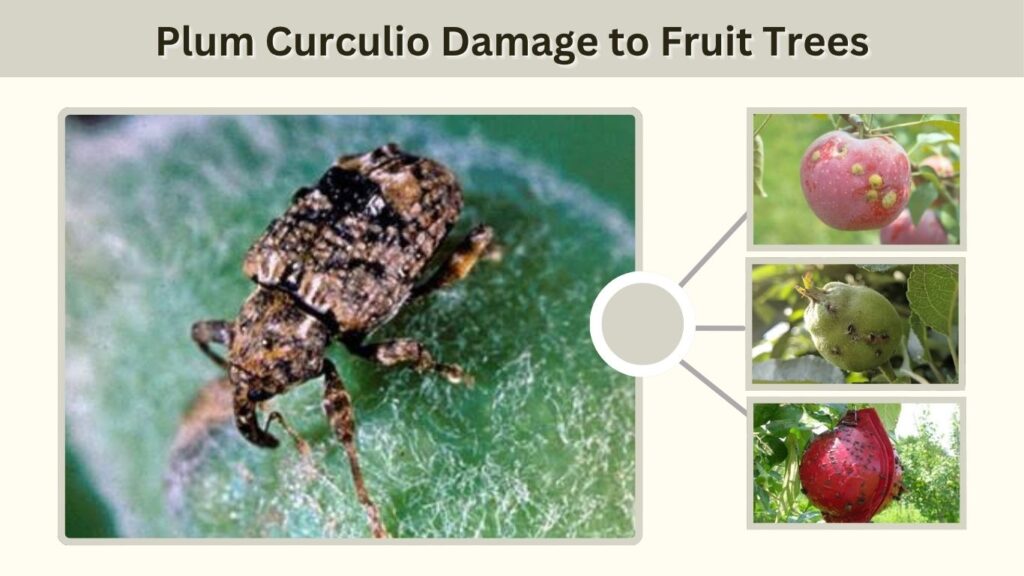
Plum curculio damage occurs when adults feed on developing fruits and females deposit eggs beneath the skin. Larval feeding can further destroy internal tissues.
Infested fruits may become deformed, develop scars, or fall prematurely. Severe infestations can significantly reduce marketable fruit production.
Common Signs of Plum Curculio Damage
- Crescent-shaped scars: Distinctive marks caused by egg laying.
- Small feeding holes: Round punctures made by adult beetles.
- Premature fruit drop: Infested fruits may fall before ripening.
- Internal tunnels: Larvae feed through fruit flesh.
- Deformed fruits: Injured areas may become raised or distorted.
- Discolored tissue: Feeding injuries can promote decay.
Plum Curculio Damage on Apples and Peaches
On apples, egg-laying scars may remain visible as raised or corky crescent-shaped marks. Larvae often cannot complete development in healthy, expanding apples, but injured fruit may drop prematurely.
On peaches and plums, larvae can develop inside the flesh, sometimes causing early fruit drop and serious internal damage.
Plum Curculio Traps and Monitoring
Monitoring plum curculio activity helps determine when adult beetles enter orchards and when treatments may be necessary. Adults frequently move from nearby wooded areas into fruit trees during spring.
Trapping methods are useful for detecting early activity, although traps alone rarely provide complete control.
Common Plum Curculio Traps
- Pyramid traps: Dark structures that attract and capture crawling adults.
- Trunk traps: Installed around trees to intercept beetles.
- Baited traps: Use attractants such as benzaldehyde to improve detection.
- Beating sheets: Capture adults shaken from branches.
- Visual monitoring: Detects fresh crescent scars on young fruit.
Monitoring should begin around bloom, with regular inspections continuing after petal fall.
How to Get Rid of Plum Curculio Naturally
Natural plum curculio control focuses on preventing reproduction and reducing the number of larvae completing development.
Collecting fallen fruit is particularly valuable because larvae often leave damaged fruit and pupate in the soil.
Organic Plum Curculio Control
Kaolin clay is one of the better-supported organic management options. When sprayed onto fruit and foliage, it creates a protective white coating that discourages adult feeding and egg laying.
Applications typically begin after petal fall and require repeated coverage as fruits grow or rainfall removes the coating.
Beneficial nematodes and certain entomopathogenic fungi have also been investigated, but their effectiveness under orchard conditions varies.
Neem oil and spinosad are not considered reliable stand-alone treatments for plum curculio.
Best Insecticide for Plum Curculio Control
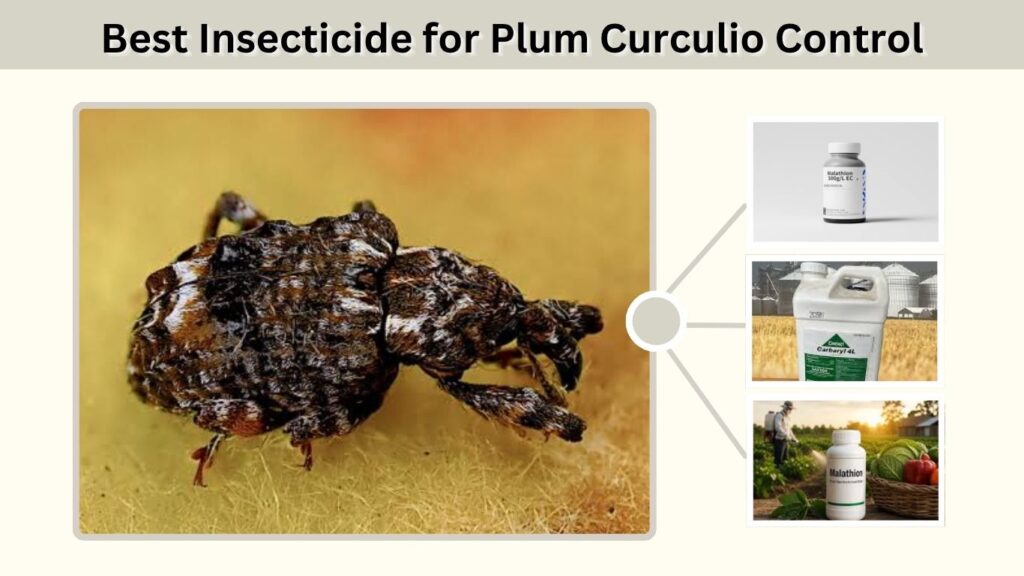
Effective insecticides target adult plum curculios before eggs are deposited inside fruit. Once larvae develop beneath the fruit surface, conventional sprays cannot reliably reach them.
Insecticide selection depends on the crop, local regulations, pest pressure, and treatment timing.
Recommended Plum Curculio Insecticides
Products containing carbaryl, malathion, indoxacarb, or certain other registered active ingredients may provide control where their labels permit application.
Some commercial orchard programs also use products containing phosmet, acetamiprid, or other effective ingredients.
Not every formulation is registered for every fruit crop. Always consult local extension guidance and follow the product label, including application restrictions and harvest intervals.
When to Spray for Plum Curculio
The critical treatment period usually begins shortly after petal fall, when adults become active and developing fruits are vulnerable.
Additional applications may be necessary depending on weather, adult activity, and fresh damage.
Never apply insecticides during bloom when bees and other pollinators are visiting flowers.
How to Prevent Plum Curculio Infestations
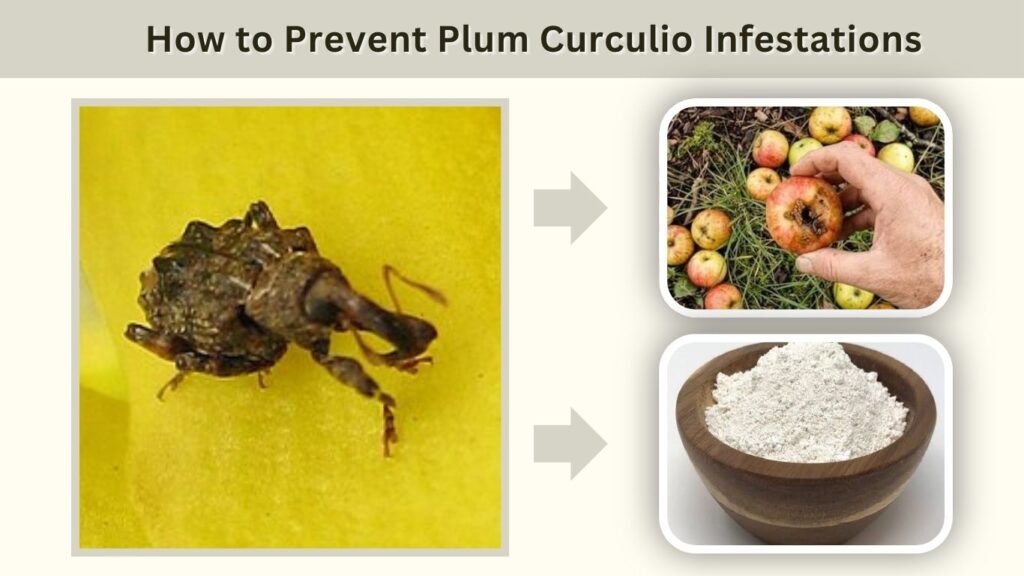
Preventing plum curculio requires consistent orchard sanitation, early monitoring, and appropriate seasonal management. Trees near woodland edges often experience higher infestation pressure because adults overwinter in surrounding vegetation.
Combining cultural practices with carefully timed protection can reduce fruit losses.
Effective Plum Curculio Prevention Tips
- Remove fallen and infested fruits regularly.
- Inspect young fruits for crescent-shaped scars.
- Monitor trees immediately after flowering.
- Use kaolin clay when appropriate for organic management.
- Keep records of previous infestation locations.
- Prune trees to improve canopy accessibility and spray coverage.
- Follow regional extension recommendations for treatment timing.
FAQs
1. Does Neem Oil Kill Plum Curculio?
Neem oil is not considered a dependable treatment for plum curculio. It may affect certain garden insects, but evidence of effective plum curculio control is limited. Kaolin clay and properly timed, registered insecticides generally provide more reliable protection.
2. Can Plum Curculio Fly?
Yes, adult plum curculios have functional wings and can fly between trees. They also crawl along branches and trunks. Their activity increases during favorable spring weather, particularly as developing fruits become available for feeding and egg laying.
3. What Is the Best Organic Spray for Plum Curculio?
Kaolin clay is among the most effective organic options for plum curculio management. It creates a protective coating that discourages feeding and egg laying. Thorough application and repeated coverage after fruit growth or heavy rainfall are important.
4. Can You Eat Apples Damaged by Plum Curculio?
Apples with superficial, healed plum curculio scars may remain edible after washing and removing damaged areas. However, fruits containing larvae, extensive tunnels, or decay should be discarded. Inspect affected apples carefully before eating them.
5. When Is Plum Curculio Most Active?
Plum curculio adults become active during spring, especially around bloom and petal fall. Warm weather encourages movement, feeding, and egg laying. The most important monitoring period generally extends through the first several weeks after flowering.
