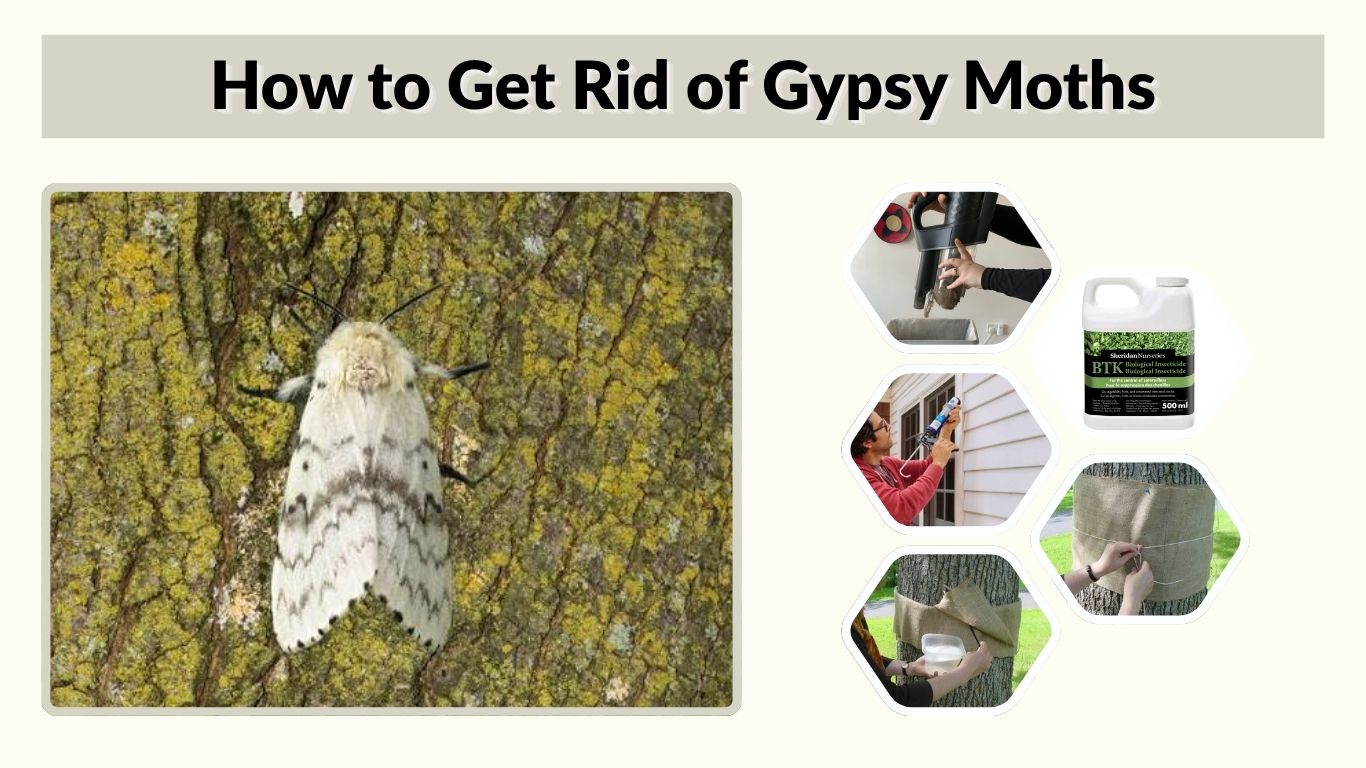
The best way to get rid of gypsy moths—now officially called spongy moths—is to target different life stages at the correct time. Remove egg masses from fall through early spring, control newly hatched caterpillars with physical barriers or Btk, and collect larger caterpillars beneath burlap bands. Adult moth traps are useful for monitoring but rarely control an established infestation. Protecting vulnerable trees and preventing egg masses from traveling on firewood, vehicles, or outdoor equipment are equally important parts of long-term management.
The Best Way to Get Rid of Gypsy Moths
Spongy moths produce one generation annually. Because each egg mass may contain hundreds of eggs, removing egg masses before they hatch offers homeowners one of the simplest ways to reduce next spring’s caterpillar population.
Control Methods by Season
Follow this general schedule:
- Fall and winter: Find and destroy fuzzy tan egg masses.
- Early spring: Inspect trees as eggs begin hatching.
- Mid-to-late spring: Use Btk while caterpillars are young.
- Early summer: Collect larger caterpillars with burlap bands.
- Summer: Remove accessible pupae and monitor adult moth activity.
- Before moving: Inspect vehicles, firewood, furniture, and outdoor equipment.
These methods can protect individual trees and yards. However, they cannot eliminate an established regional population during a widespread outbreak.
Identify the Pest Before Treatment
Spongy moth caterpillars feed on oaks and hundreds of other trees and shrubs. Correct identification prevents native tent caterpillars and other harmless insects from being killed unnecessarily.
Spongy Moth Identification
Mature caterpillars have:
- Five pairs of blue spots followed by six pairs of red spots
- A mottled gray, brown, yellowish, or black body
- Long bristle-like hairs
- A fully grown length of approximately 1½ to 2½ inches
- No permanent communal tent
Newly hatched caterpillars are much smaller, dark, and hairy. They may release silk threads that carry them between trees, but they do not construct the large webs associated with eastern tent caterpillars.
Are Gypsy Moth Nests Really Nests?
What appears to be a gypsy moth nest is usually an egg mass. Each mass resembles an oval patch of tan or yellowish felt and may be attached to:
- Tree bark
- Branches
- Rocks and fences
- Siding and walls
- Firewood
- Outdoor furniture
- Trailers and vehicles
- Lawn and camping equipment
Spongy moth caterpillars do not build tents. A large web located in the fork of a tree is more likely to belong to eastern tent caterpillars.
How to Get Rid of Gypsy Moth Eggs
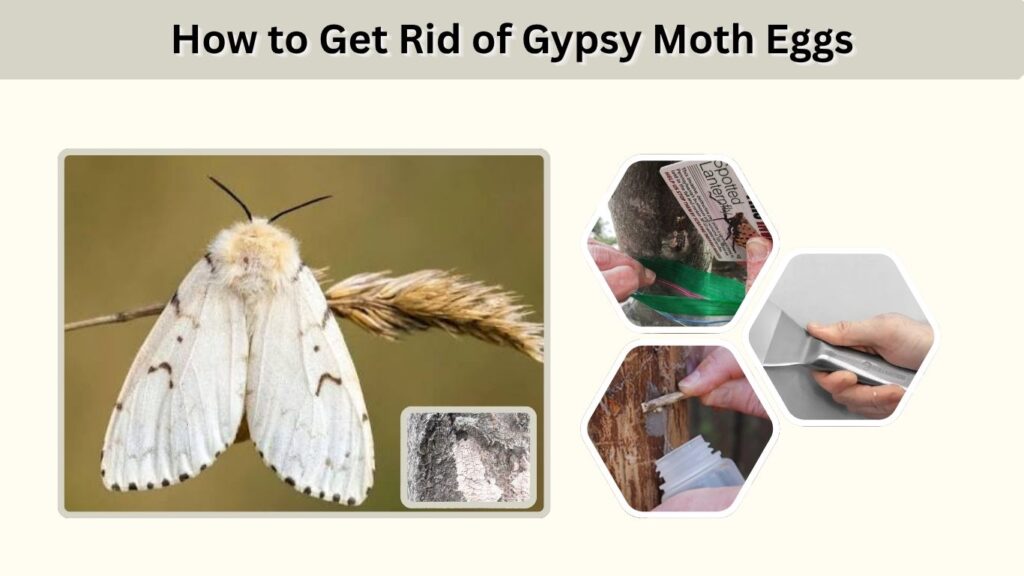
Egg masses remain in place from late summer until spring, making this the easiest life stage to target. Inspect both the tree and nearby objects because females do not deposit eggs exclusively on bark.
Remove Egg Masses Manually
Wear gloves and long sleeves because hairs surrounding the eggs can irritate sensitive skin. Use a putty knife, stiff brush, or scraper to remove each mass.
Drop the masses directly into a container of hot water mixed with dish detergent. Keep them submerged before placing them in a sealed bag for disposal. Do not simply scrape them onto the ground because some eggs may remain viable.
Inspect hidden areas beneath branches, behind signs, under furniture, and around wheel wells. The USDA also recommends checking outdoor household items before they are moved from infested locations.
Treating Inaccessible Egg Masses
Egg masses high in mature trees are difficult to reach safely. Avoid climbing unstable ladders or cutting healthy branches. An arborist may recommend dormant horticultural oil or another locally approved treatment that smothers eggs.
Only use a product whose label specifically permits application to spongy moth egg masses and the type of tree being treated.
How to Get Rid of Gypsy Moth Caterpillars Naturally
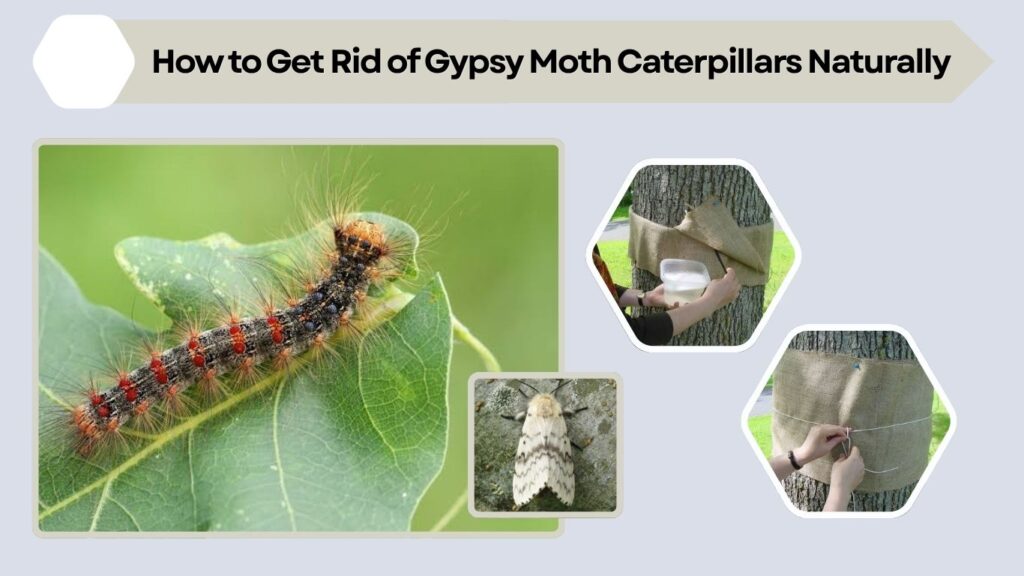
Natural and mechanical methods work best on small properties with a manageable number of trees. Begin early, before caterpillars grow large and consume most of the foliage.
Hand Removal
Knock accessible caterpillars into a bucket of soapy water using a brush or similar tool. Avoid touching them with bare hands because their hairs can cause an itchy rash.
Hand removal is practical for young trees and small infestations. It becomes ineffective when thousands of caterpillars are feeding throughout a neighborhood or forest.
Use Burlap Bands
Older caterpillars often feed at night and travel down the trunk to hide during the day. A burlap band creates an accessible shelter where they can be collected.
To make a burlap trap:
- Wrap a strip of burlap around the trunk at chest height.
- Tie a cord around the middle of the fabric.
- Fold the upper half downward to form a shaded flap.
- Check beneath the flap every afternoon.
- Knock caterpillars and pupae into soapy water.
- Remove the band after caterpillar activity ends.
Burlap does not kill caterpillars automatically. It must be checked frequently to be effective.
Use Barrier Bands Carefully
Sticky barrier bands may intercept small caterpillars climbing the trunk. Place the sticky material on a protective wrap rather than directly on the bark. Petroleum jelly, tape, or adhesive applied directly to a tree can damage its bark.
Check bands regularly for debris and trapped non-target insects or small animals. Remove them after the caterpillar season.
Support Natural Control
Birds, mice, beetles, parasitic insects, fungal diseases, and a naturally occurring virus help reduce spongy moth populations. During some outbreaks, diseased caterpillars become abundant and cause the population to collapse.
Avoid destroying caterpillars hanging head-down or in an inverted V position. These may have died from natural pathogens that can spread to other spongy moth caterpillars.
Using Btk and Other Insecticides
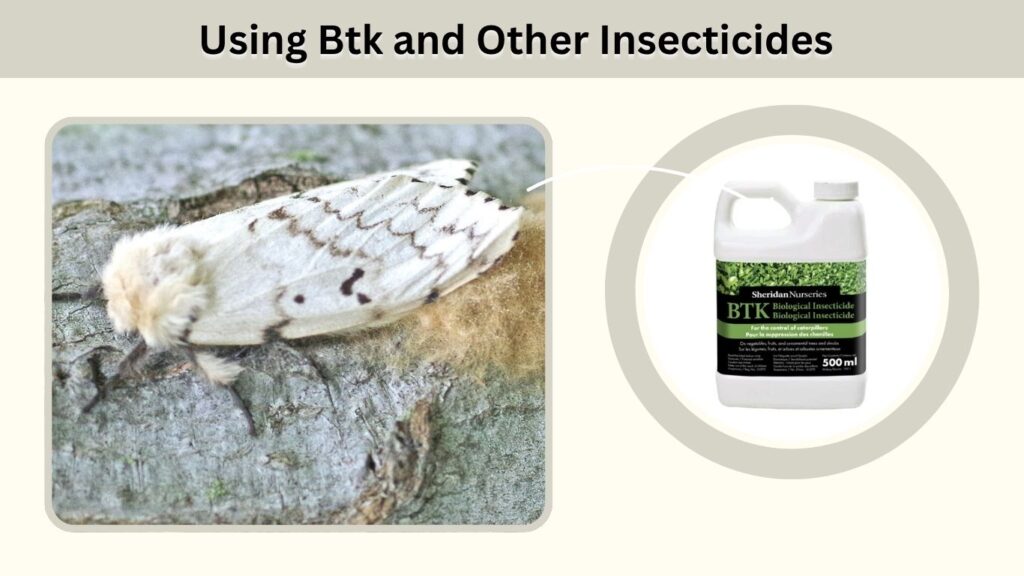
Spraying should be based on caterpillar size, tree health, infestation severity, and local regulations. Treating after trees are already defoliated provides little benefit.
Btk for Young Caterpillars
Bacillus thuringiensis subsp. kurstaki, commonly called Btk, is a biological insecticide. Caterpillars must consume treated leaves for it to work.
Btk is most effective when:
- Caterpillars are young and under approximately one inch long
- Leaves have recently opened
- Caterpillars are actively feeding
- Rain is not expected immediately after application
- The entire affected canopy can be treated safely
Although Btk has a relatively narrow target range, it can kill other butterfly and moth caterpillars feeding on sprayed leaves. Apply it only where necessary and follow every instruction on the product label.
Conventional Pesticides
Some contact insecticides are labeled for spongy moth caterpillars, but they may also harm bees, native insects, aquatic organisms, and other wildlife. They become less useful after caterpillars grow large and do not work against egg masses or pupae unless the label specifically states otherwise.
Consider hiring a licensed tree-care professional when:
- A valuable mature tree requires treatment
- The canopy cannot be reached from the ground
- Several large trees are threatened
- Conifers are being defoliated
- Pesticide drift could reach water, gardens, or neighboring properties
Never combine pesticides or increase the application rate beyond label instructions.
How to Get Gypsy Moths Off Trees
Removing every caterpillar is rarely possible, so prioritize high-value, young, recently planted, stressed, or evergreen trees. Healthy mature hardwoods can often survive one defoliation, but repeated attacks increase the chance of decline.
Protecting Individual Trees
A practical tree-protection program includes:
- Removing egg masses before spring
- Applying Btk while larvae are small
- Installing and checking burlap bands
- Collecting accessible pupae
- Watering trees during dry conditions
- Maintaining a shallow mulch layer away from the trunk
- Avoiding unnecessary pruning or fertilization during stress
Contact an arborist if a tree loses most of its leaves, has dead branches, shows bark damage, or could fall onto a house or power line.
Helping Defoliated Trees Recover
Deciduous trees may produce another set of leaves after caterpillar feeding ends. Water deeply during drought, control competing weeds, and avoid damaging the roots.
Conifers are more vulnerable because they may not replace lost needles. A pine, spruce, or hemlock that has lost a large percentage of its foliage should be inspected by a qualified arborist.
How to Get Rid of Gypsy Moths in the House
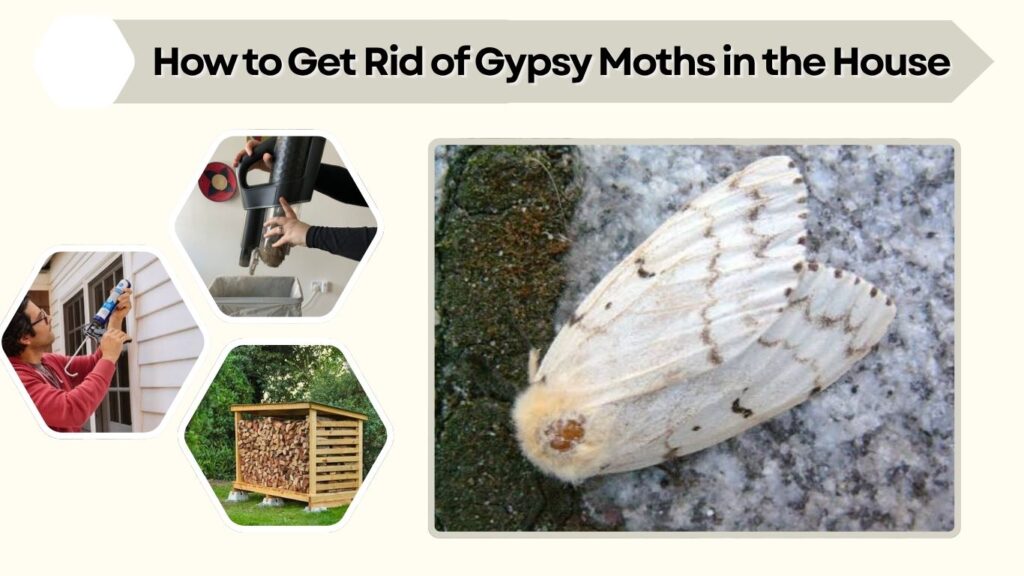
Spongy moth caterpillars and adults do not normally reproduce indoors. They usually enter accidentally through doors, windows, vents, siding gaps, firewood, or objects brought inside.
Indoor Removal Steps
- Vacuum caterpillars and moths without touching them.
- Empty the vacuum outdoors into a sealed bag.
- Wash surfaces that may contain irritating hairs.
- Repair window screens and seal exterior gaps.
- Keep firewood outside until needed.
- Inspect furniture, toys, and equipment before bringing them indoors.
- Reduce unnecessary exterior lighting during adult moth activity.
Indoor pesticide spraying is generally unnecessary for occasional invaders.
How Did Gypsy Moths Get to the United States?
Étienne Léopold Trouvelot brought European spongy moths to Medford, Massachusetts, around 1868 or 1869. He reportedly hoped to cross them with silkworms to develop a hardier silk-producing insect.
Some escaped and became established. The first major local outbreak appeared several years later, and the moth gradually spread through parts of the northeastern and midwestern United States and into Canada.
Human transportation continues to spread egg masses. Moving firewood, campers, trailers, vehicles, and outdoor household items can carry the pest far beyond the distance it would naturally travel.
FAQs
What is the fastest way to get rid of gypsy moths?
Remove egg masses before they hatch and treat young caterpillars early. Large caterpillars are harder to control, making correct timing more important than using a stronger product.
Does dish soap kill gypsy moth caterpillars?
Dropping caterpillars into soapy water can kill collected individuals. Spraying dish soap over an entire tree is not recommended because it may damage leaves and affect other insects.
Do pheromone traps get rid of gypsy moths?
Pheromone traps primarily monitor male moths and detect new populations. They generally do not capture enough males to control an established infestation.
How do you treat a gypsy moth caterpillar rash?
Wash exposed skin with soap and water, change contaminated clothing, and use a cool compress. Seek medical help for serious swelling, eye exposure, breathing difficulty, or a worsening reaction.
Can gypsy moths be completely eliminated?
A small, newly introduced population may sometimes be eradicated by agricultural authorities. Once spongy moths are established across a large region, homeowners can suppress local numbers and protect trees but cannot eliminate the regional population.