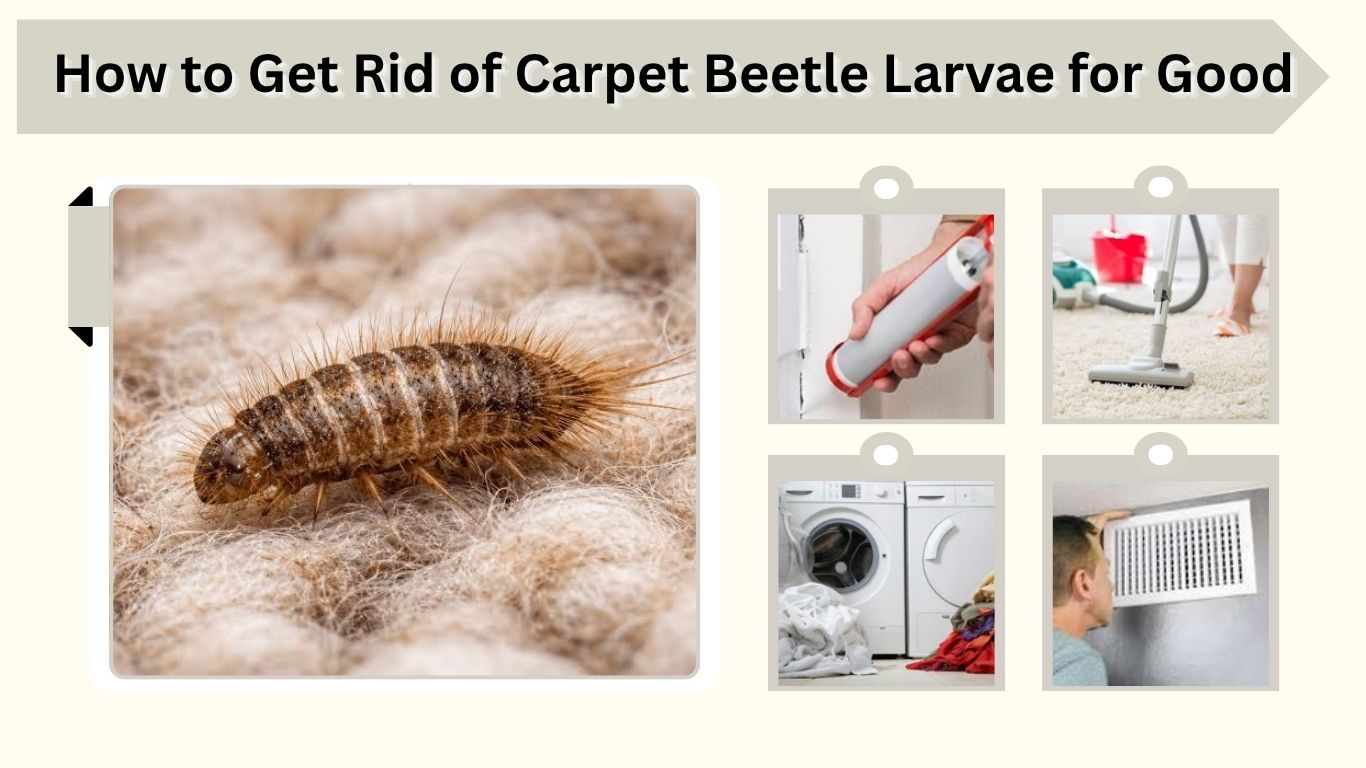
To get rid of carpet beetle larvae, locate the material they are feeding on, vacuum all affected areas thoroughly, and treat washable fabrics with hot water or a heated dryer. Clean beneath furniture, inside closets, along carpet edges, and around vents where hair and lint collect. Insecticide may help with severe infestations, but cleaning and removing the hidden food source are more important than spraying visible larvae.
Confirm That They Are Carpet Beetle Larvae
Carpet beetle larvae are small, slow-moving, bristly insects that often resemble hairy worms. Depending on the species, they may be tan, brown, banded, reddish, or almost black. Their shed skins look like dry, hollow versions of the larvae.
Common evidence includes:
- Brown, hairy larvae or empty casings
- Irregular holes in wool and other natural materials
- Threadbare patches on rugs or upholstery
- Damage around cuffs, collars, folds, and seams
- Larvae beneath furniture or along baseboards
- Adult carpet beetles gathering near windows
Finding one adult beetle does not necessarily indicate a serious infestation. Control is needed when larvae, shed skins, or feeding damage are repeatedly found.
Where Do Carpet Beetle Larvae Come From?
Adult carpet beetles can fly through open windows, doors, and vents. They may also enter on cut flowers or infested belongings. Females lay their eggs close to materials that will feed the developing larvae.
Larvae commonly consume wool, fur, feathers, silk, leather, pet hair, dead insects, and other animal-based materials. Some species may also infest pet food, seeds, cereals, and similar stored products. They prefer dark, quiet areas that remain undisturbed for long periods.
How to Get Rid of Carpet Beetle Larvae
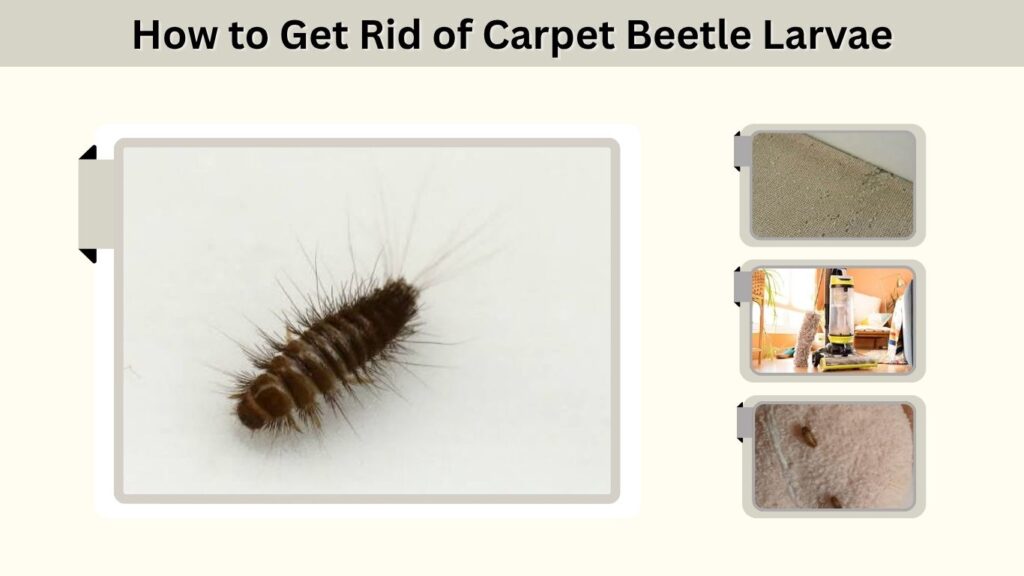
Successful control requires more than killing the larvae you can see. You must find their hidden feeding site and remove eggs, food debris, larvae, and adults from the surrounding area.
1. Find the Source of the Infestation
Inspect every location containing natural fibers or accumulated organic debris. Pay particular attention to:
- Wool carpets, rugs, and clothing
- Feather or down pillows
- Upholstered couches and chairs
- Closets and storage boxes
- Carpet edges and baseboards
- Heating vents and air ducts
- Pet beds and areas containing animal hair
- Attics, chimneys, and wall voids
- Bird, bee, wasp, or rodent nests
- Stored pet food and birdseed
Check fabric seams, folds, cuffs, collars, and the undersides of rugs. Heavily infested disposable items should be sealed in a bag before removal so larvae do not spread through the house.
2. Vacuum Every Affected Area
Vacuuming removes larvae, eggs, adult beetles, shed skins, hair, lint, and dead insects. Use a crevice attachment around baseboards, carpet edges, closet corners, furniture legs, floor vents, and cracks.
Move beds, couches, cabinets, and other heavy objects so you can clean beneath them. Vacuum both sides of removable rugs and inspect the padding beneath wall-to-wall carpeting where possible. Empty the vacuum outside immediately or seal and discard the bag.
Vacuum repeatedly during the following weeks. One cleaning may miss hidden eggs or larvae deep inside furniture, carpet edges, and inaccessible gaps.
3. Wash or Dry-Clean Infested Fabrics
Wash suitable clothes, blankets, bedding, curtains, and washable rugs in hot water. Use a heated dryer when the item’s care label permits it. Professional dry cleaning is appropriate for wool suits, delicate coats, silk, and other materials that cannot be washed normally.
Cleaning kills the insects while also removing perspiration, food residue, and oils that can attract them. After treatment, store vulnerable fabrics in airtight bags or tightly sealed containers.
4. Freeze Items That Cannot Be Washed
Small, heat-sensitive items may be sealed inside plastic and placed in a sufficiently cold freezer. University of Kentucky guidance recommends holding items at 0°F, or approximately −18°C, for at least one week; colder commercial-style freezing may work faster. Allow frozen objects to return to room temperature before unwrapping them to reduce condensation.
Freezing may damage fragile materials, finishes, or valuable collections. Consult a conservation or pest-management professional before treating antiques or irreplaceable objects.
5. Remove Hidden Food Sources
Vacuum pet hair, lint, dead insects, cobwebs, feathers, and other debris from quiet areas. Check attics and roof spaces for abandoned animal nests or carcasses, but remove wildlife materials only when doing so is safe and legal.
Wash pet bedding and clean around food bowls. Transfer pet food, birdseed, and dry goods into airtight containers. A few larvae can survive as long as a concealed food source remains available.
How to Get Rid of Carpet Beetle Larvae in Specific Places
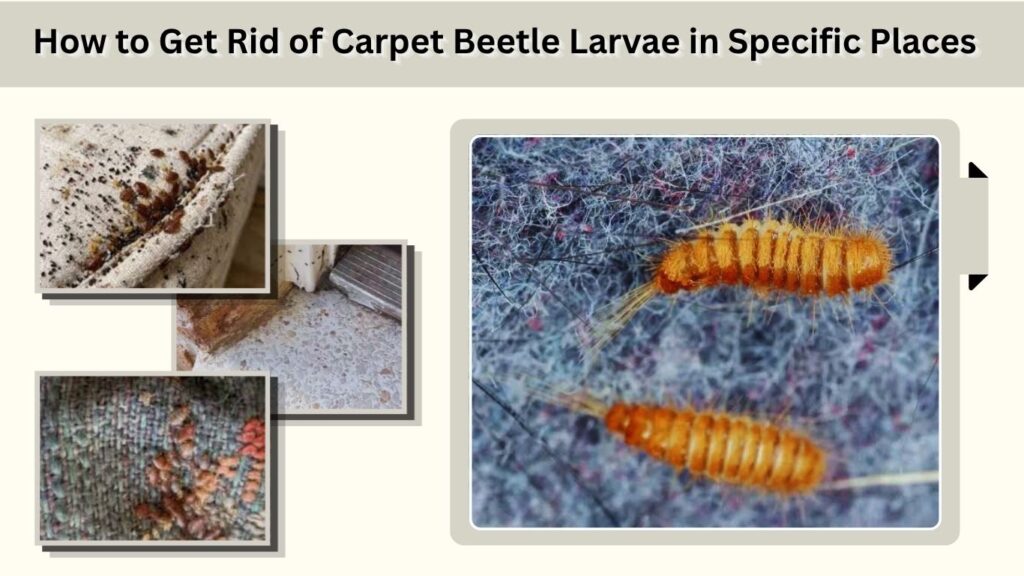
In a Bed or Mattress
Carpet beetle larvae may wander onto a bed, but they do not feed on people or require blood. Inspect the bed frame, mattress seams, area beneath the bed, nearby carpet edges, and feather-filled pillows.
Vacuum the mattress and frame, wash the bedding, and clean beneath nearby furniture. Do not apply insecticide directly to a mattress or bedding. Mattresses or pillows filled with feathers or animal hair may require professional treatment if the larvae have entered the stuffing.
In a Couch
Remove cushions and vacuum seams, folds, the underside, and the internal frame. Check whether the furniture contains feathers, wool, hair, or natural fabric. Surface spraying may not reach larvae inside the stuffing, so heavily infested furniture may require professional treatment or disposal.
On Clothes
Place affected garments in sealed bags until they can be washed, dried, or dry-cleaned. Clean nearby clothes even when no larvae are visible, paying special attention to wool, fur, silk, and feather-containing items.
Clean the closet shelves, corners, floor, and baseboards before returning treated clothing. Store seasonal garments in airtight containers.
On Walls
Larvae seen on walls may be wandering away from a feeding site to molt or pupate. Vacuum them, then inspect the nearest closet, rug, vent, stored box, or piece of upholstered furniture. Spraying the wall alone will not eliminate the source.
In a Car
Vacuum beneath seats, around carpet edges, inside the trunk, and between seat cushions. Remove pet hair, crumbs, dead insects, wool blankets, feather-filled accessories, and stored clothing. Wash removable mats and fabrics according to their care instructions.
Persistent activity may indicate larvae inside upholstery or an inaccessible section of the vehicle, in which case professional pest treatment may be necessary.
Can You Get Rid of Carpet Beetle Larvae Naturally?
Thorough vacuuming, hot laundering, heated drying, freezing, sanitation, and airtight storage are the most dependable nonchemical methods. These approaches remove the insects and the materials that support them.
Cedar blocks and cedar chests should not be treated as reliable control methods. Cedar oils lose effectiveness with age, and established larvae may survive unless the container is tightly sealed. Essential oils may repel some insects temporarily, but they are unlikely to eliminate eggs and larvae hidden inside fabrics or furniture.
Should You Use Insecticide?
Insecticide should supplement cleaning rather than replace it. Choose only a product whose label specifically lists carpet beetles and permits use in the intended location.
Treat labeled cracks, carpet edges, baseboards, closet floors, undersides of rugs, and gaps beneath furniture. Never spray clothing, bedding, mattresses, or surfaces that contact skin unless the label explicitly allows it. Avoid contaminating food, children’s belongings, or pet areas.
Contact a licensed pest-control professional when larvae continue appearing after extensive cleaning, the source is inside a wall or attic, or valuable furniture and collections are affected.
Do Carpet Beetle Larvae Get in Your Skin or Hair?
Carpet beetle larvae do not live inside human skin, infest the scalp, or feed on blood. A larva may accidentally crawl onto hair, clothing, or bedding, but it cannot establish itself on a person.
Their detachable hairs may irritate sensitive skin and create itchy bumps that resemble bites. Wash exposed skin and clothing and clean the surrounding environment. Seek medical advice for persistent or severe skin symptoms because many other conditions can cause similar irritation.
How to Prevent Carpet Beetle Larvae from Returning
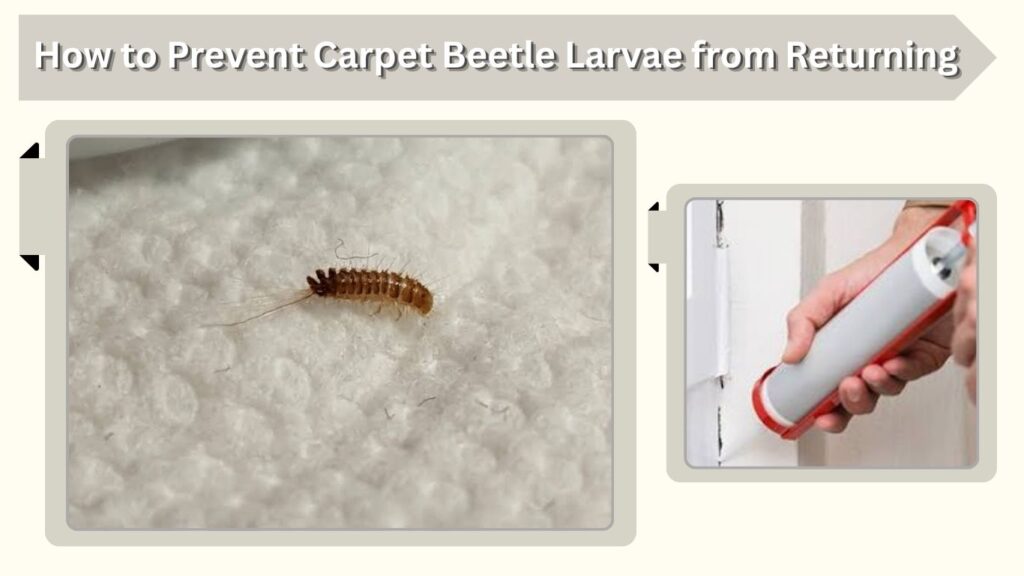
Repair damaged window screens and seal gaps around doors and vents. Vacuum regularly, particularly beneath furniture and around carpet edges. Clean natural-fiber clothing before storage and keep it inside sealed containers.
Inspect secondhand rugs, furniture, clothing, taxidermy, and dried decorative materials before bringing them indoors. Check cut flowers for adult beetles and remove abandoned nests or dead insects from attics and other hidden spaces.
FAQs
Are carpet beetle larvae hard to get rid of?
They can be difficult to eliminate because they hide in dark areas and feed on many materials. Control becomes much easier once the main food source is located and removed.
What kills carpet beetle larvae immediately?
Direct vacuum removal, suitable heat, hot laundering, dry cleaning, or sufficiently prolonged freezing can kill larvae. However, lasting control requires removing eggs and hidden food sources as well.
Can carpet beetle larvae get into your bed?
Yes, they may crawl onto beds or feed on feather, wool, hair, and lint nearby. They do not live on people or behave like bed bugs.
How often should you vacuum during an infestation?
Vacuum thoroughly when the infestation is discovered and repeat regularly over the following weeks. Concentrate on carpet edges, closets, vents, furniture, and locations where larvae or shed skins appear.
Will carpet beetle larvae go away on their own?
Usually not while a suitable food source remains. Their numbers may appear to decrease temporarily, but hidden larvae can continue developing in clothing, furniture, nests, lint, or other organic debris.