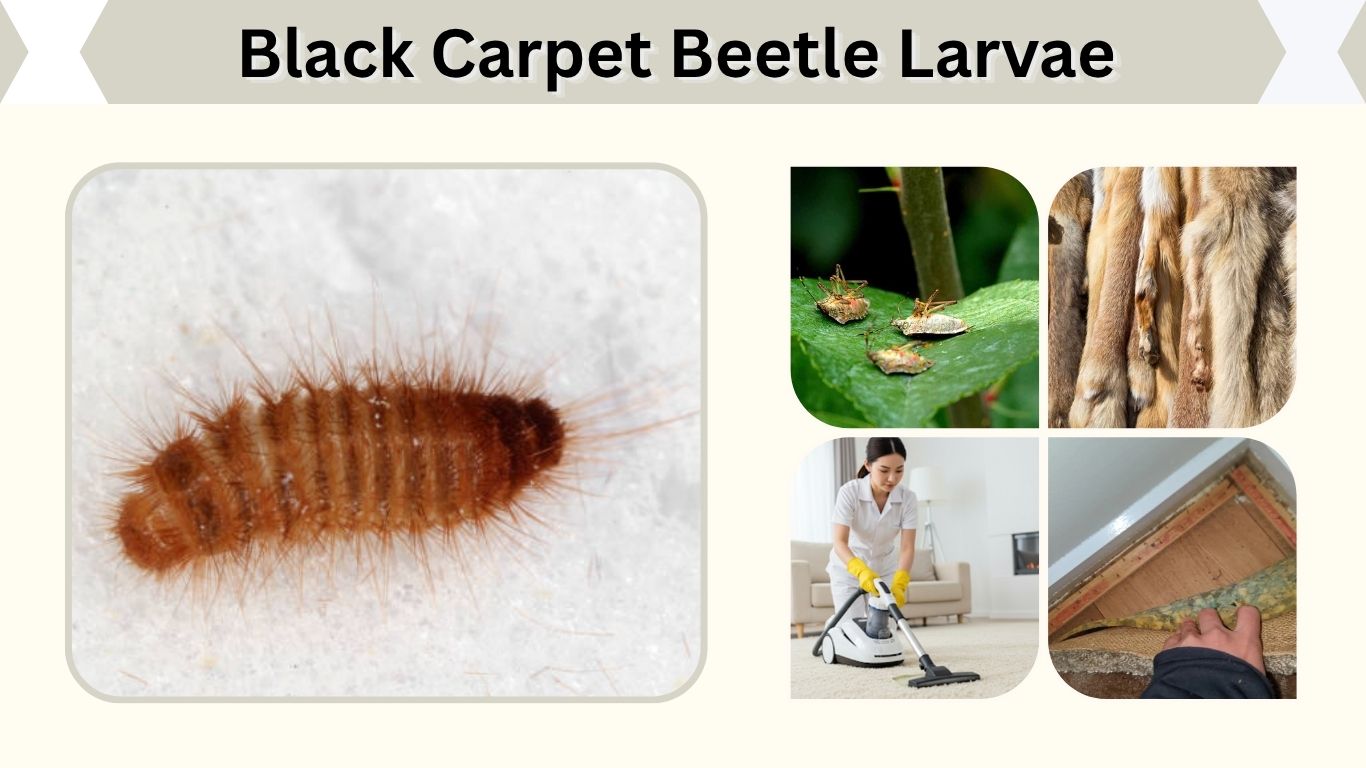
Black carpet beetle larvae are small, brown, hairy household pests that damage wool, fur, leather, feathers, silk, stored foods, and other organic materials. Scientifically known as Attagenus unicolor, the larvae hide in dark, undisturbed areas such as closets, carpet edges, vents, furniture, and storage boxes. They do not bite people, but their loose hairs can cause an itchy rash in sensitive individuals. Effective treatment requires finding their food source, cleaning thoroughly, and treating infested items.
Black Carpet Beetle Larvae Quick Facts
| Feature | Description |
| Scientific name | Attagenus unicolor |
| Family | Dermestidae |
| Appearance | Elongated, brown, hairy, and tapered |
| Size | Approximately 6–12 mm when mature |
| Distinctive feature | Long tuft of hairs at the rear |
| Main foods | Wool, fur, feathers, leather, hair, grain, and dried foods |
| Common locations | Closets, carpets, vents, bedrooms, and storage areas |
| Do they bite? | No |
| Main damage | Fabric and stored-product damage |
| Best treatment | Source removal, vacuuming, heat, freezing, and sanitation |
Adult black carpet beetles are small, shiny black or dark brown beetles. The larvae look completely different and are responsible for nearly all household damage.
What Do Black Carpet Beetle Larvae Look Like?
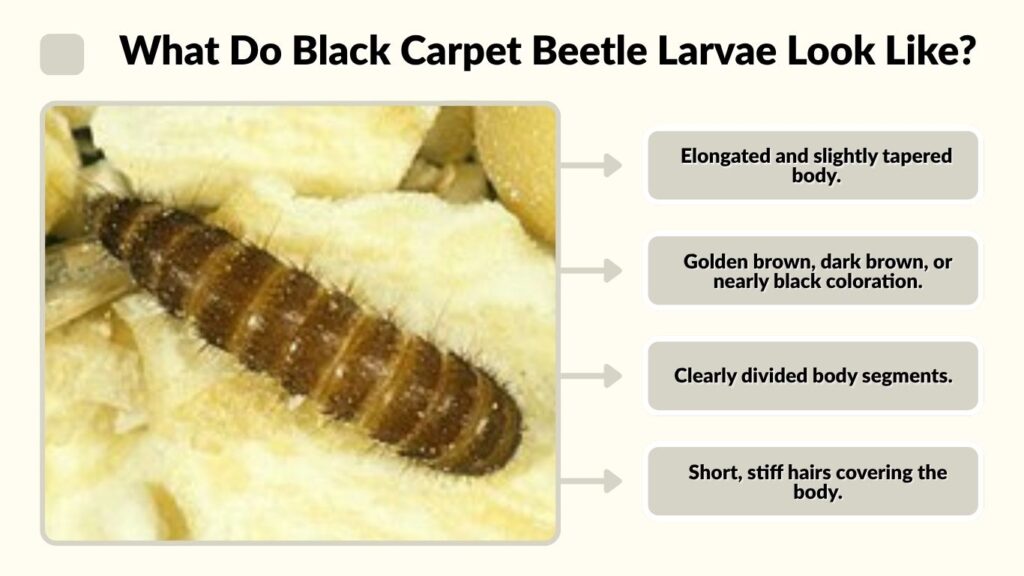
Black carpet beetle larvae have elongated, carrot-shaped bodies that are broader near the head and gradually taper toward the rear. Their color ranges from golden brown to chocolate brown or almost black.
Identification Features
- Elongated and slightly tapered body
- Golden brown, dark brown, or nearly black coloration
- Clearly divided body segments
- Short, stiff hairs covering the body
- Long golden-brown hair tuft at the rear
- Three pairs of tiny legs near the head
- Slow crawling movement
- Harder, smoother appearance than varied carpet beetle larvae
Mature larvae may measure around 8 mm, although some can approach 12.7 mm. Their long rear hair tuft is one of the most dependable identification features.
Are Black Carpet Beetle Larvae Actually Black?
Not always. Young larvae may be light golden or reddish brown. They generally become darker as they grow and may eventually appear chocolate brown or nearly black.
A very dark larva is not automatically a black carpet beetle. Larder beetle larvae, clothes moth caterpillars, varied carpet beetle larvae, and other household insects can be confused with them.
Banded Black Carpet Beetle Larvae
Segment boundaries can give black carpet beetle larvae a slightly banded appearance when viewed closely. However, strongly contrasting bands and several fan-shaped rear hair clusters are more characteristic of varied carpet beetle larvae.
Black carpet beetle larvae are generally more elongated and end in one conspicuous tuft of long hairs.
Where Do Black Carpet Beetle Larvae Come From?
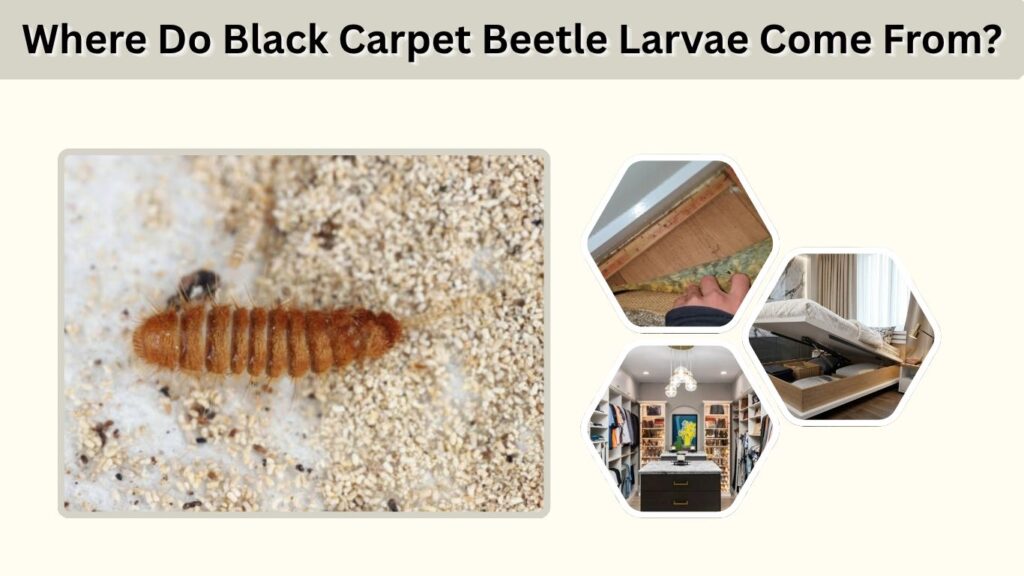
Adult beetles may fly indoors through windows, doors, vents, or gaps around the building. They can also arrive inside infested furniture, clothing, dried food, animal products, or secondhand belongings.
Females lay eggs close to materials that their larvae can eat. Under ordinary indoor conditions, the eggs may hatch within approximately one to two weeks. The larvae then move into dark, protected places and may remain in that stage for many months. UC IPM reports a typical black carpet beetle larval period of approximately 166–330 days.
Common Indoor Hiding Places
Black carpet beetle larvae may be found:
- Beneath carpets and rugs
- Along baseboards and carpet edges
- Inside closets and drawers
- Under beds and heavy furniture
- Inside upholstered furniture
- Around heating and air-conditioning vents
- In attics, basements, and wall voids
- Among stored clothes and blankets
- Near pet hair and dried pet food
- Inside grain, cereal, flour, or birdseed containers
They do not create a centralized nest. An infestation develops wherever suitable food remains available.
What Do Black Carpet Beetle Larvae Eat?
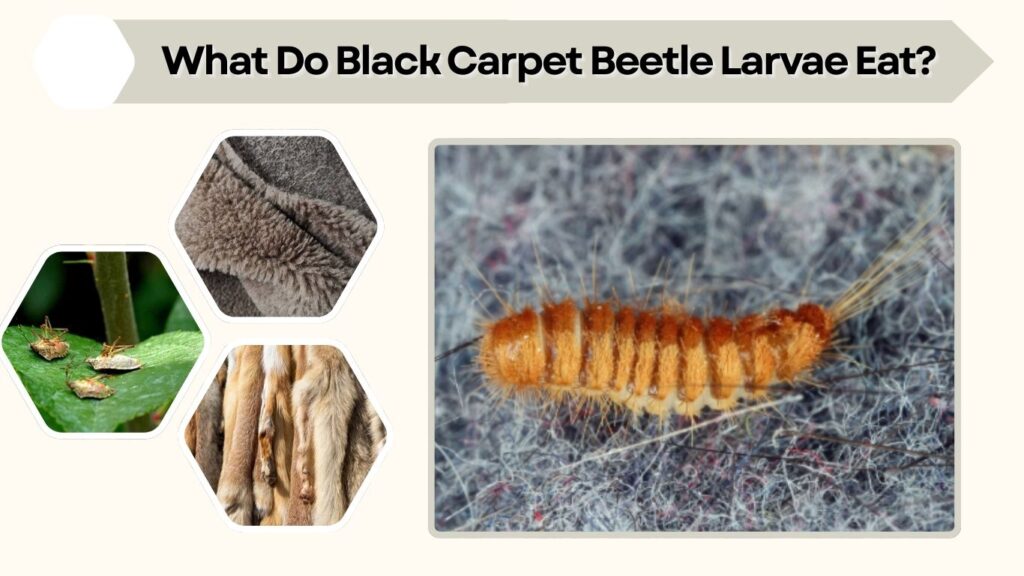
Black carpet beetle larvae can digest keratin, a protein present in many animal-derived materials. They also have a wider diet than some other carpet beetle species.
Common foods include:
- Wool clothing and carpets
- Fur and animal hides
- Feathers and down
- Silk
- Leather
- Felt
- Pet and human hair
- Dead insects
- Dried animal remains
- Grain, cereal, flour, and seeds
- Dried pet food and birdseed
Cotton, polyester, and other synthetic materials are rarely attacked unless blended with wool or contaminated by food, perspiration, or body oils.
Signs of a Black Carpet Beetle Larvae Infestation
The larvae often remain hidden, so damage or discarded skins may be noticed before a live insect appears.
Common Warning Signs
- Irregular holes in wool clothing
- Thin or bare patches on carpets
- Damage along seams, folds, cuffs, and collars
- Hollow brown larval skins
- Live larvae beneath furniture
- Damage to feathers or upholstered items
- Larvae inside dry food packages
- Adult black beetles near windows
- Unexplained itchy skin irritation
A single adult near a window does not necessarily indicate an infestation. Repeated larvae, shed skins, or damaged materials are stronger evidence that the beetles are breeding indoors.
Black Carpet Beetle Larvae in Beds
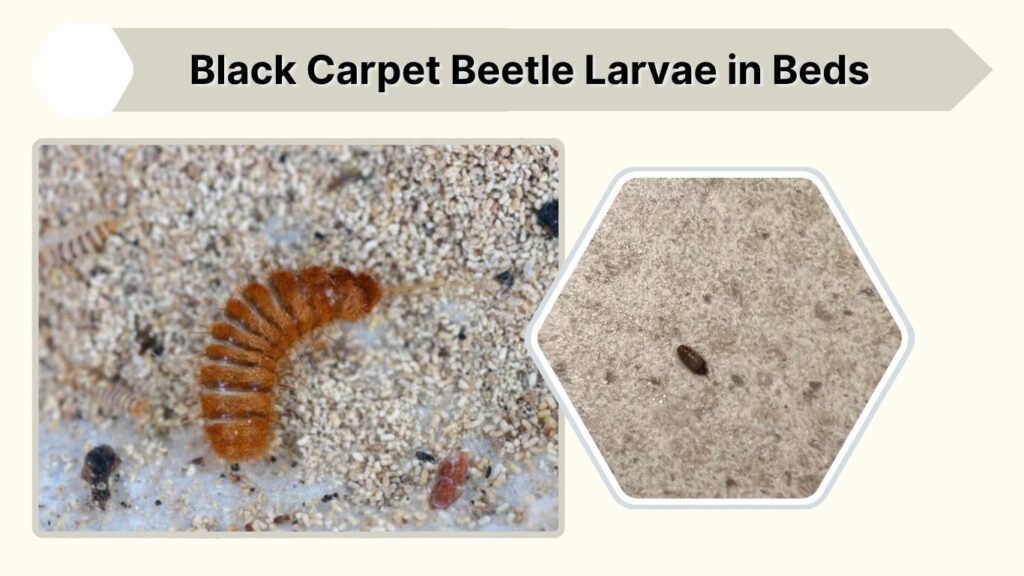
Black carpet beetle larvae may crawl across beds, but they do not feed on people or blood. They may be attracted to feather pillows, wool blankets, accumulated hair, lint, dead insects, or natural materials around the bed.
Inspect:
- Mattress seams and labels
- The bed frame and headboard
- Beneath the mattress
- Carpet edges around the bed
- Feather or down pillows
- Stored clothing beneath the bed
- Nearby vents and upholstered furniture
A modern foam mattress is not usually their primary food. Finding larvae on a mattress often means the actual source is somewhere nearby.
Do Black Carpet Beetle Larvae Bite?
Black carpet beetle larvae do not bite, sting, or burrow into human skin. Their jaws are designed to chew dry organic materials rather than living tissue.
However, their hairs can detach and cause carpet beetle dermatitis. Symptoms may include:
- Small itchy red bumps
- Burning or irritated patches
- Blister-like eruptions
- Eye irritation
- Occasional respiratory irritation
Only some people react to the hairs, and reactions may become more likely after prolonged exposure. Because many conditions resemble insect-related dermatitis, a persistent or severe rash should be assessed by a healthcare professional.
How to Get Rid of Black Carpet Beetle Larvae
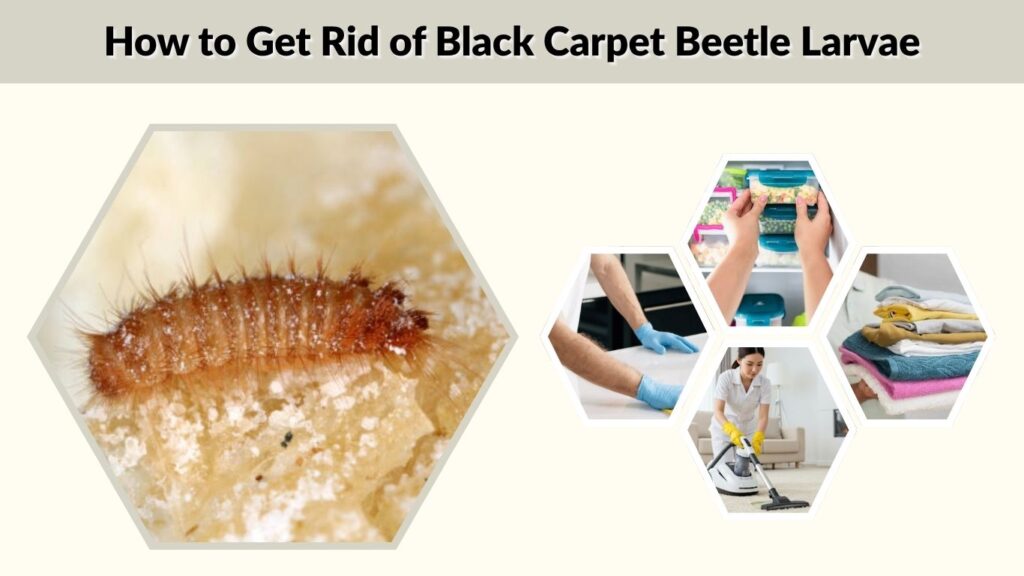
Killing visible larvae is not enough. Long-term control depends on locating and removing the materials supporting them.
1. Locate the Food Source
Inspect wool, fur, feathers, stored foods, pet bedding, furniture, vents, attics, closets, and storage boxes. Look for live larvae, shed skins, holes, or powdery debris.
Seal heavily infested disposable items in plastic before removing them from the house.
2. Vacuum Thoroughly
Vacuum carpet edges, baseboards, closets, vents, furniture seams, and spaces beneath heavy objects. Remove pet hair, lint, dead insects, and food debris.
Empty the vacuum outdoors immediately or seal and discard its bag. Repeat cleaning regularly for several weeks because hidden eggs may continue hatching.
3. Treat Clothes and Fabrics
Wash suitable items in hot water and dry them using the hottest setting permitted by the care label. Dry-clean delicate wool, fur, and silk.
After treatment, store vulnerable materials in airtight bags or sealed containers.
4. Freeze Suitable Objects
Heat-sensitive objects may be sealed and frozen, provided freezing will not damage them. The entire object must remain cold long enough for the temperature to reach hidden larvae and eggs.
5. Clean Stored Food Areas
Discard infested grain, flour, cereal, pet food, or birdseed. Vacuum shelves and cracks before transferring replacement products into airtight containers.
6. Use Insecticide Carefully
Cleaning and source removal may eliminate a small infestation without pesticides. For persistent activity, a product specifically labelled for carpet beetles may be applied to permitted cracks, baseboards, carpet edges, or voids.
Never spray clothing, bedding, mattresses, food, or skin-contact surfaces unless the label expressly permits it. Professional pest control may be necessary when the source is inside a wall, attic, duct, or valuable piece of furniture.
Black Carpet Beetle Larvae vs Varied Carpet Beetle Larvae
| Feature | Black Carpet Beetle Larva | Varied Carpet Beetle Larva |
| Shape | Long and carrot-shaped | Shorter and broader |
| Color | Golden brown to nearly black | Brown with distinct lighter bands |
| Surface | Relatively smooth and firm | Densely fuzzy |
| Rear hairs | One long tail-like tuft | Several spreading hair tufts |
| Maximum size | Often larger | Usually around 4–5 mm |
| Food | Fabrics and many stored foods | Mainly animal-derived materials |
Both species require similar control, but accurate identification helps reveal whether stored food or natural-fiber fabrics are the more likely source.
FAQs
Are black carpet beetle larvae dangerous?
They are not venomous and do not bite. Their main risks are damage to household materials and allergic skin irritation caused by contact with their hairs.
What kills black carpet beetle larvae?
Vacuuming, suitable heat, hot laundering, dry cleaning, prolonged freezing, and properly labelled insecticides can kill them. Removing the hidden food source remains essential.
Why are black carpet beetle larvae on my wall?
Larvae may climb walls while searching for food or a protected place to molt and pupate. Inspect nearby vents, closets, furniture, carpets, and stored items.
Can black carpet beetle larvae live in human hair?
No. They do not infest the scalp or live permanently in human hair. They may consume shed hair collected beneath furniture or inside vents.
Will black carpet beetle larvae disappear on their own?
They may continue developing as long as wool, fur, feathers, dried food, hair, dead insects, or another food source remains available. Cleaning and source removal are normally required.