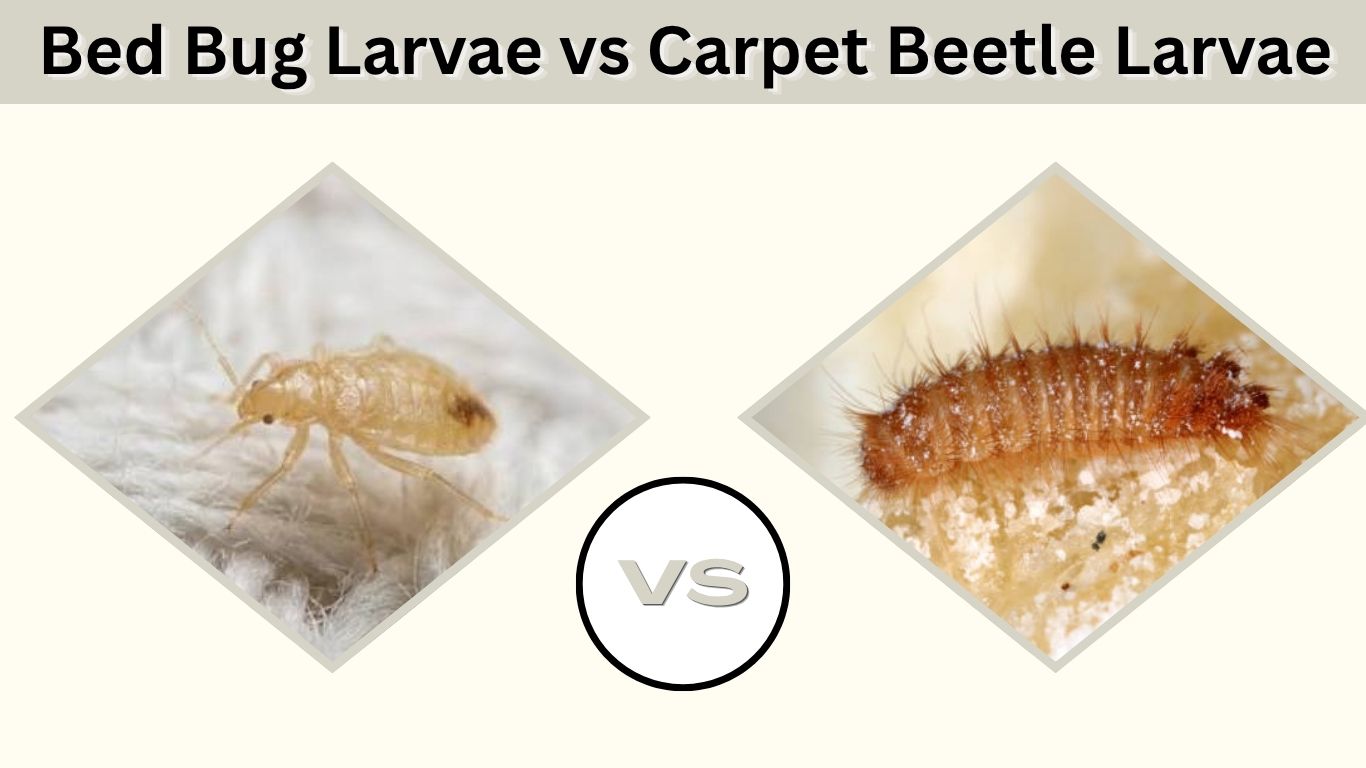
Bed bug larvae and carpet beetle larvae are often confused, especially when either pest appears near a bed. However, bed bugs do not have a true larval stage. Their young are called nymphs, and they resemble small, pale versions of adult bed bugs. Carpet beetles undergo complete metamorphosis and produce hairy, worm-like larvae. Bed bug nymphs feed on blood, while carpet beetle larvae eat natural fibers, animal-based materials, hair, lint, and dead insects.
Bed Bug vs Carpet Beetle Larvae at a Glance
The fastest way to distinguish these pests is to examine their body shape and texture. Bed bug nymphs are flat and smooth with six visible legs. Carpet beetle larvae are elongated, tapered, and covered in bristles.
| Feature | Bed Bug Nymph | Carpet Beetle Larva |
| Immature-stage name | Nymph | Larva |
| Body shape | Flat, broad, and oval | Elongated and tapered |
| Surface | Smooth | Hairy or bristly |
| Color | Nearly colorless to reddish brown | Cream, tan, brown, or banded |
| Legs | Six clearly visible legs | Three pairs of tiny legs near the head |
| Food | Human and animal blood | Wool, fur, feathers, hair, and dead insects |
| Main location | Mattresses, frames, furniture, and cracks | Carpets, closets, vents, fabrics, and furniture |
| Skin reaction | Actual bites | Irritation from loose hairs |
| Fabric damage | No | Yes |
| Dark fecal spots | Common sign | Not typical |
Bed bug nymphs pass through five immature stages before becoming adults. Carpet beetle larvae grow through repeated molts before becoming pupae and then adult beetles.
Do Bed Bug Larvae Exist?
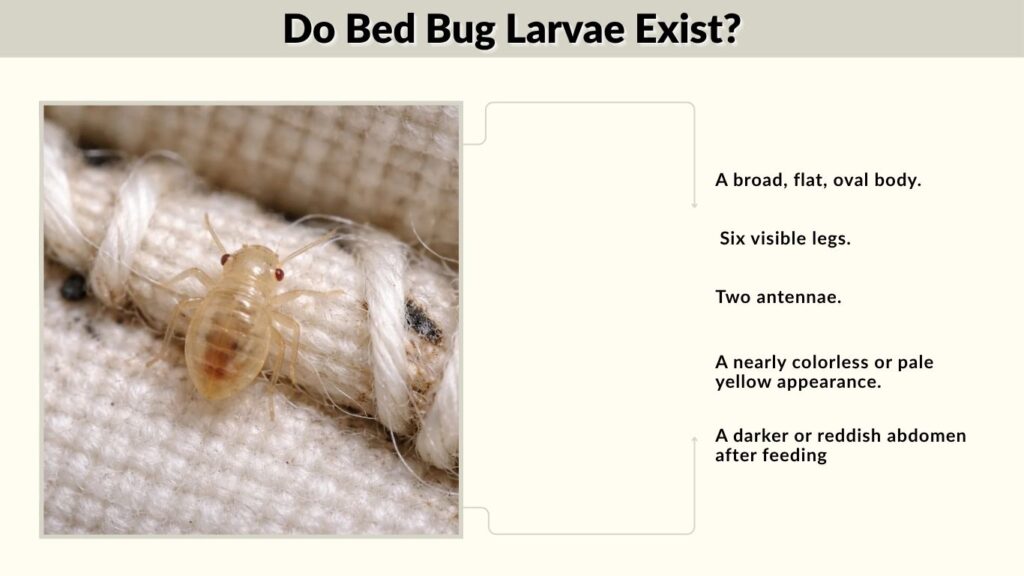
Bed bugs undergo incomplete metamorphosis, consisting of egg, nymph, and adult stages. Therefore, the frequently used phrase “bed bug larva” is technically incorrect.
What Does a Baby Bed Bug Look Like?
A newly hatched bed bug nymph is approximately 1.5 mm long. It has:
- A broad, flat, oval body
- Six visible legs
- Two antennae
- A nearly colorless or pale yellow appearance
- A darker or reddish abdomen after feeding
- No wings
- The same general shape as an adult bed bug
Nymphs become darker and larger as they pass through successive growth stages. After a blood meal, the digestive tract may appear bright red through the young bug’s translucent body.
What Does a Carpet Beetle Larva Look Like?
Carpet beetle larvae look more like miniature hairy caterpillars than baby bed bugs. Their exact appearance depends on the species, but most have:
- An elongated or oval body
- Brown, cream, or golden coloration
- Dark and light bands in some species
- Numerous stiff hairs
- A tapered rear end
- Longer hair tufts near the abdomen’s tip
- Three pairs of tiny legs near the head
Varied carpet beetle larvae are short, broad, and strongly banded. Black carpet beetle larvae are longer, darker, and more carrot-shaped, with a prominent terminal hair tuft.
Bed Bug vs Carpet Beetle Larvae in a Bed
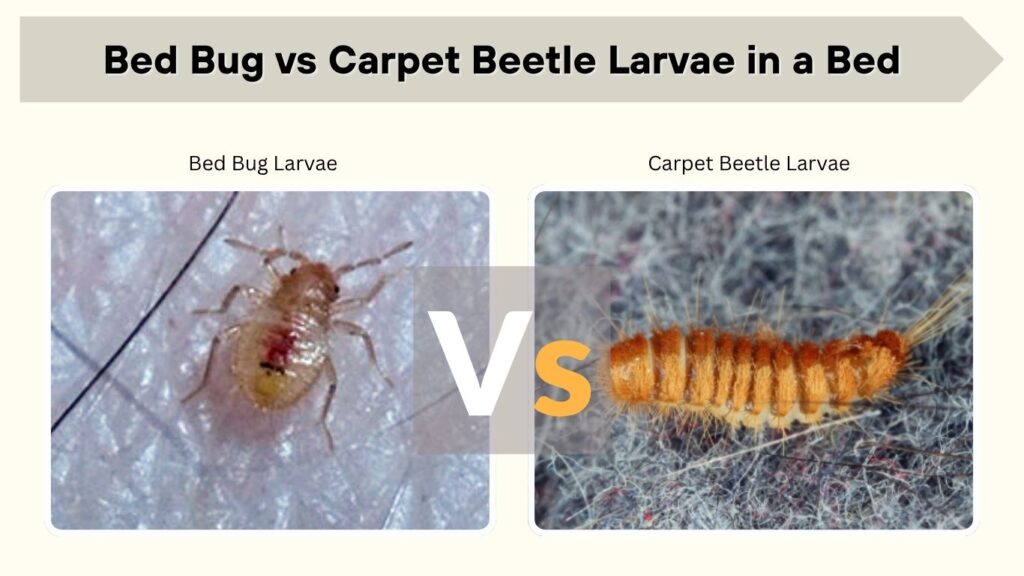
Both pests may be discovered around beds, but they are present for completely different reasons.
Why Bed Bugs Live Near Beds
Bed bugs hide near sleeping people because they need blood meals. Common hiding locations include:
- Mattress seams and labels
- Box springs
- Bed-frame joints
- Headboards
- Upholstered furniture
- Baseboard gaps
- Cracks near sleeping areas
They generally remain hidden during inactive periods and emerge when a host is available. Evidence may include live insects, pale eggs, shed skins, dark fecal spots, or rusty stains on bedding.
Why Carpet Beetle Larvae Appear on Beds
Carpet beetle larvae do not seek sleeping people. A larva may crawl onto a bed from a nearby infestation or feed on animal-based materials around it.
Possible food sources include:
- Feather or down pillows
- Wool blankets
- Hair and lint beneath the bed
- Natural-fiber carpets
- Dead insects near windows
- Upholstered headboards
- Stored clothing
- Pet hair
Modern foam mattresses are not usually suitable food. Finding a carpet beetle larva on a mattress often means that the source is beneath the bed, inside nearby furniture, along the carpet edge, or within a natural-fiber item. Carpet beetle larvae feed on materials such as wool, fur, feathers, silk, hair, leather, dried foods, and dead insects.
Carpet Beetle Larvae vs Bed Bug Bites
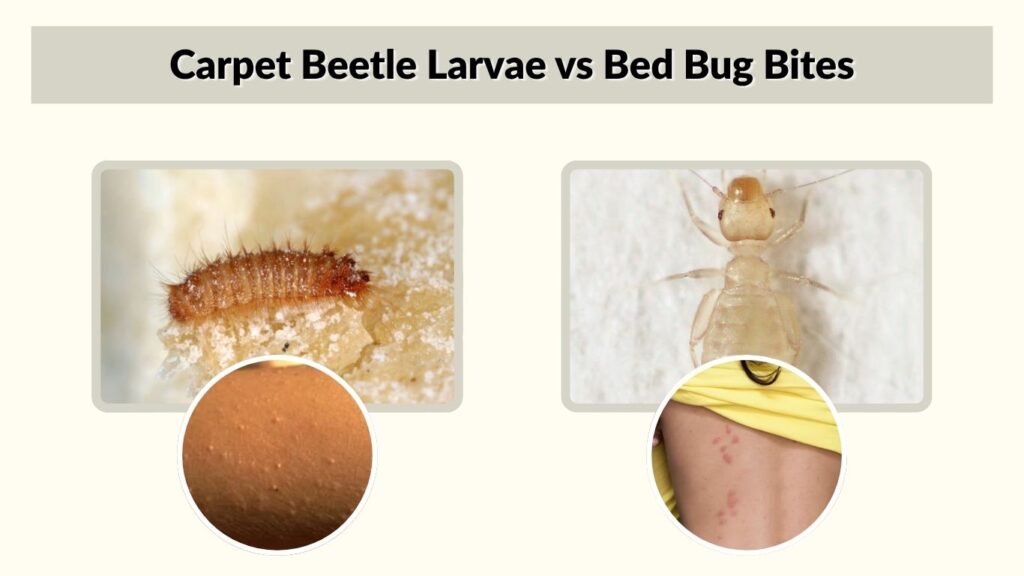
Skin irritation is another major source of confusion. Bed bugs bite, whereas carpet beetle larvae do not.
Bed Bug Bites
Bed bugs use piercing mouthparts to obtain blood. Some people develop itchy, red, swollen bumps, while others show little or no visible reaction.
Marks may appear:
- Individually
- In clusters
- In an irregular line
- On arms, legs, shoulders, neck, or other exposed skin
Skin marks alone cannot confirm a bed bug infestation. Other insects, allergies, infections, and skin conditions can produce similar symptoms. Physical evidence around the sleeping area is more dependable than the bite pattern.
Carpet Beetle Larvae Rash
Carpet beetle larvae do not bite or drink blood. However, their detachable hairs and body fluids can cause an allergic skin reaction called carpet beetle dermatitis.
Symptoms may include:
- Small itchy bumps
- Red or irritated patches
- Burning or prickling sensations
- Raised welts
- Occasional blister-like areas
- Eye or respiratory irritation in sensitive people
The irritation can appear after a person contacts infested clothing, bedding, furniture, or airborne larval hairs. A persistent or severe rash should be examined by a healthcare professional because appearance alone cannot identify its cause.
Bed Bug Shell vs Carpet Beetle Larval Skin
Both pests shed their outer coverings as they grow, but their discarded skins look very different.
Bed Bug Shed Skin
A bed bug shell is:
- Flat and broadly oval
- Pale yellow or nearly transparent
- Smooth rather than hairy
- Shaped like a complete bed bug
- Equipped with visible legs and antennae
These skins are often found around mattress seams, bed frames, upholstered furniture, or other hiding places.
Carpet Beetle Larval Casing
A carpet beetle casing is:
- Elongated or tapered
- Brown or banded
- Covered in hairs
- Dry and hollow
- Similar to a tiny hairy worm
Larval skins may accumulate beneath furniture, inside closets, near carpet edges, or beside damaged fabrics. They can remain after the live insects have moved elsewhere, so finding one should trigger a wider inspection.
Damage Caused by Each Pest
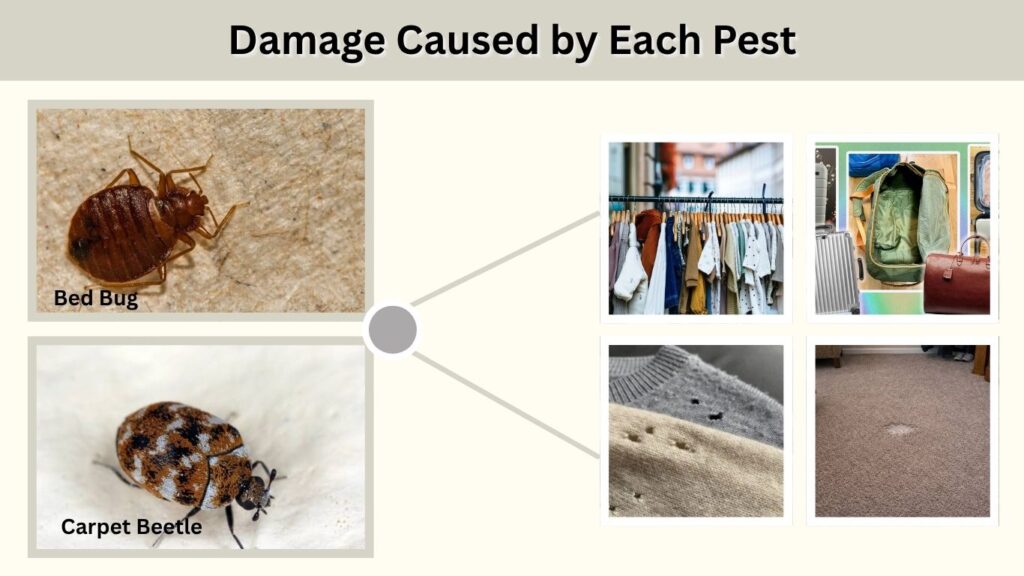
The type of damage around the house provides another useful identification clue.
Bed Bug Evidence
Bed bugs do not eat clothing, carpets, wood, or stored food. Signs include live bugs, eggs, shed skins, rusty stains, and dark fecal spots near sleeping areas.
An infestation may spread between rooms through furniture, luggage, clothing, or cracks, but holes in fabrics are not a typical sign.
Carpet Beetle Damage
Carpet beetle larvae chew materials containing animal proteins. Damage may include:
- Irregular holes in wool clothing
- Bare patches along carpet edges
- Damage to fur, feathers, or leather
- Thinning around garment seams and folds
- Holes in upholstered furniture
- Infested pet food, grain, or birdseed
Synthetic fabrics are generally not eaten unless blended with natural fibers or contaminated by hair, perspiration, food, or body oils.
Carpet Beetle Larvae vs Other Household Pests
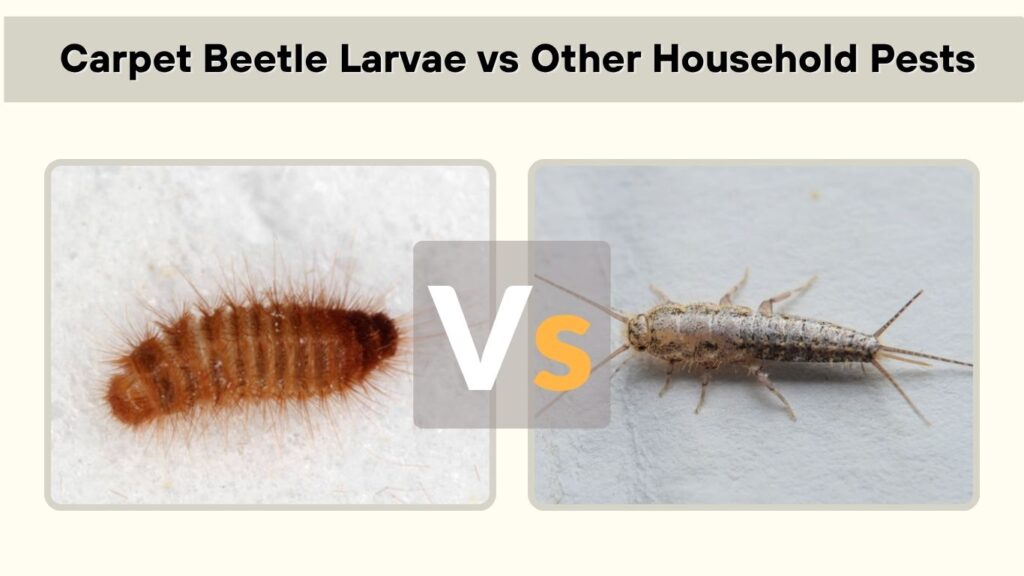
Several indoor insects can resemble carpet beetle larvae, especially when viewed quickly.
Carpet Beetle Larvae vs Clothes Moth Larvae
Clothes moth larvae are pale, smooth caterpillars with brown heads. They may produce silk webbing, tubes, or cases around infested material. Carpet beetle larvae are darker and visibly hairy, and they do not create silk webbing.
Both can damage wool, fur, feathers, and other animal fibers.
Carpet Beetle Larvae vs Larder Beetle Larvae
Larder beetle larvae are larger, dark brown, and densely hairy. They often have two curved spines near the rear and feed on dried meat, cheese, pet food, hides, feathers, and animal remains.
Carpet beetle larvae are generally smaller and may have spreading hair tufts rather than paired, hook-like rear spines.
Carpet Beetle Larvae vs Maggots
Maggots are fly larvae with pale, smooth, legless bodies. They commonly develop in garbage, spoiled food, manure, or decaying animal material.
Carpet beetle larvae have visible hairs, firmer bodies, and tiny legs near the head. They are commonly associated with dry natural materials rather than wet decay.
Carpet Beetle Larvae vs Silverfish
Silverfish are wingless adult insects rather than larvae. They have flat, tapering bodies, long antennae, six visible legs, and three tail-like filaments.
Silverfish move quickly and may damage paper, glue, starch, and stored materials. Carpet beetle larvae move more slowly and have hairy, segmented bodies.
What to Do After Identifying the Pest
Correct identification is essential because bed bugs and carpet beetles require different treatment strategies.
For Bed Bugs
Inspect the mattress, box spring, frame, headboard, and nearby furniture. Reduce clutter, use suitable mattress encasements, and avoid moving untreated belongings into other rooms.
Bed bug control is often difficult and may require a qualified pest-management professional. Avoid applying pesticides to beds or skin unless the product label specifically permits that use.
For Carpet Beetle Larvae
Locate the source by checking carpets, closets, woolens, furniture, vents, pet bedding, stored foods, and old animal nests. Vacuum thoroughly, wash or dry-clean vulnerable fabrics, and store treated belongings in sealed containers.
Removing the food source is more important than spraying individual larvae.
FAQs
Are carpet beetle larvae mistaken for bed bugs?
Yes. Both may be found around bedrooms, but carpet beetle larvae are hairy and elongated. Bed bugs and their nymphs are flat, smooth, oval insects with clearly visible legs.
Are baby bed bugs hairy?
No. Bed bug nymphs are smooth-bodied and nearly transparent when newly hatched. A noticeably hairy, brown, worm-like insect is more likely to be a carpet beetle or another beetle larva.
Which is worse, bed bugs or carpet beetle larvae?
Bed bugs are generally the greater direct health and treatment concern because they feed on blood and can spread throughout sleeping areas. Carpet beetle larvae primarily damage fabrics and may cause allergic irritation.
Can carpet beetle larvae and bed bugs live together?
Yes, both could occur in the same home because they require different foods and hiding conditions. Finding carpet beetle larvae does not prove that bed bugs are absent, so all evidence should be examined separately.
How can I confirm which pest I have?
Capture the insect with clear tape or place it in a sealed container. Examine whether it is flat and oval or elongated and hairy. A local extension office, entomologist, or pest professional can confirm uncertain specimens.