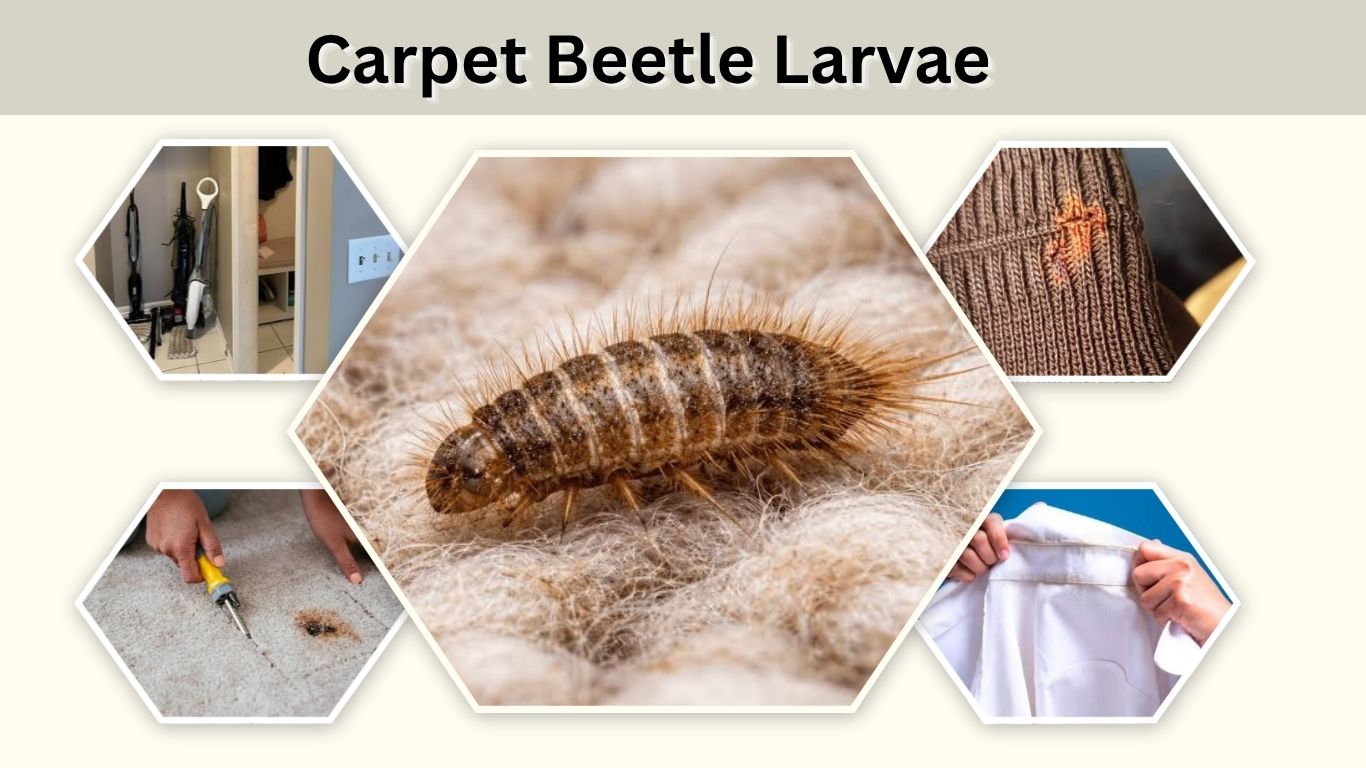
Carpet beetle larvae are small, hairy household pests that feed on wool, fur, feathers, silk, leather, pet hair, dead insects, and other animal-based materials. They often hide beneath furniture, along carpet edges, inside closets, and among stored clothes. Although they do not bite, their loose hairs can irritate sensitive skin. Finding and removing their food source is the most important step in eliminating an infestation.
Carpet Beetle Larvae Quick Facts
| Feature | Description |
| Appearance | Brown, tan, cream, or nearly black and covered in hairs |
| Size | Usually about 3–8 mm, depending on species |
| Diet | Wool, fur, feathers, silk, leather, hair, lint, and dead insects |
| Common locations | Closets, carpets, bedrooms, vents, furniture, and attics |
| Harm to people | Do not bite, but hairs may cause skin irritation |
| Main signs | Live larvae, shed skins, fabric holes, and dusty debris |
| Best control | Find the source, vacuum thoroughly, and heat-treat fabrics |
The larvae cause household damage; adult carpet beetles generally feed outdoors on pollen and nectar. Adults seen near windows may indicate that eggs or larvae are present somewhere inside the building.
What Do Carpet Beetle Larvae Look Like?
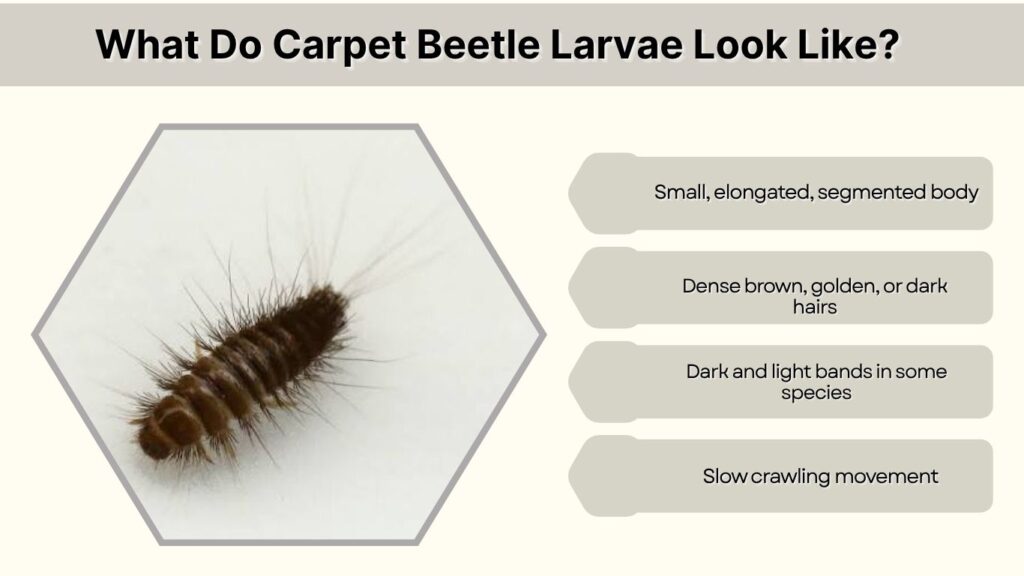
Carpet beetle larvae resemble tiny, hairy caterpillars or bristly worms. Their segmented bodies are usually widest near the front and taper toward the rear. Depending on the species, they may appear golden brown, reddish brown, banded, cream-colored, or almost black.
Identification Features
- Small, elongated, segmented body
- Dense brown, golden, or dark hairs
- Three pairs of tiny legs near the head
- Dark and light bands in some species
- One or more long hair tufts at the rear
- Slow crawling movement
- Shed skins that preserve the larva’s shape
Varied carpet beetle larvae are commonly around 4–4.5 mm long and have uneven brown bands with thick, backward-pointing hair tufts near the rear. Identifying the precise species can be difficult without magnification because young larvae of several species look similar.
Black Carpet Beetle Larvae
Black carpet beetle larvae are elongated and may reach approximately 8 mm when fully grown. Their bodies range from light brown to almost black and usually end in a long tuft of brown hairs. They are less strongly banded than varied carpet beetle larvae.
Varied Carpet Beetle Larvae
Varied carpet beetle larvae are shorter, broader, and noticeably banded. They are often called woolly bears because their bodies are densely covered in hairs. The distinctive clusters of hair at the abdomen’s tip may spread outward when the larva is disturbed.
Where Do Carpet Beetle Larvae Come From?
Adult carpet beetles can fly indoors through open windows, doors, and vents. They may also arrive on cut flowers or infested secondhand fabrics, furniture, taxidermy, dried foods, and stored belongings.
Females place eggs near a suitable larval food source. Eggs commonly hatch in roughly two weeks under warm indoor conditions, after which the larvae move into dark, quiet spaces to feed.
Possible sources include:
- Wool clothing or rugs
- Feather-filled pillows
- Fur, leather, and animal hides
- Pet hair accumulating beneath furniture
- Dead insects in windows, vents, or attics
- Bird, rodent, bee, or wasp nests
- Stored pet food, grain, or birdseed
- Animal remains in wall voids or chimneys
Carpet beetles do not build a centralized “nest.” An infestation develops around one or more hidden food sources, which must be found before long-term control is possible.
Signs of a Carpet Beetle Larvae Infestation
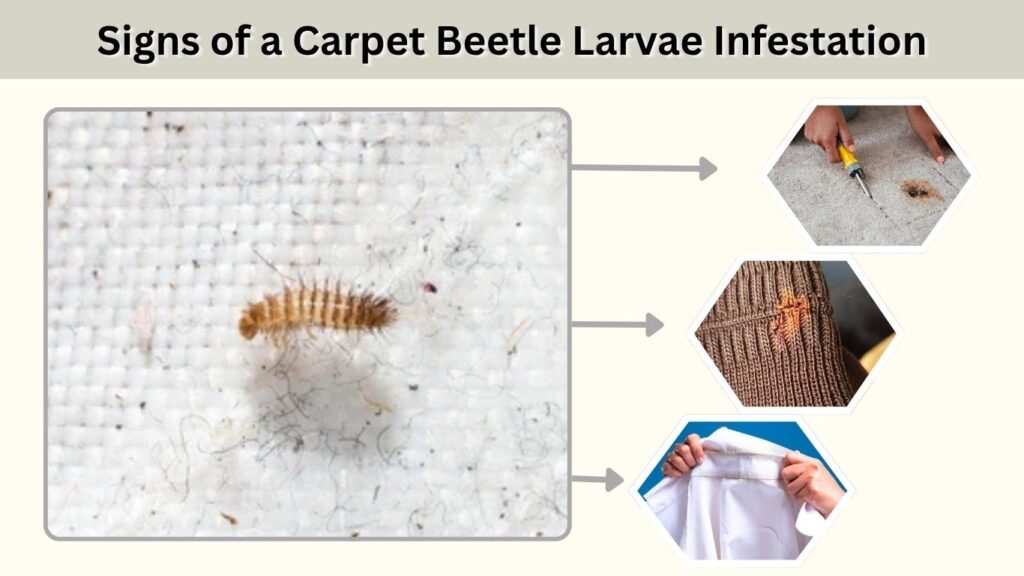
Seeing one adult beetle does not always mean that a serious infestation exists. Repeated sightings of larvae, fabric damage, or numerous shed skins are more significant.
Common Warning Signs
- Irregular holes in wool clothing or carpets
- Thinning patches along carpet edges
- Damage around cuffs, collars, seams, and fabric folds
- Larvae beneath beds, dressers, and upholstered furniture
- Empty brown larval casings
- Fine, dusty droppings near damaged materials
- Adult beetles gathering on windowsills
Unlike clothes moth larvae, carpet beetle larvae do not normally leave silk webbing on damaged items. Their empty casings look like dry, hollow, hairy shells and are left behind each time the growing larvae molt.
Carpet Beetle Larvae in Bedrooms and Beds
Bedrooms provide many undisturbed hiding places, including carpet edges, closets, baseboards, stored clothing, vents, and spaces beneath heavy furniture. Larvae may also feed on hair, lint, feathers, wool blankets, and other organic materials that collect around a bed.
Carpet Beetle Larvae in a Mattress
Modern foam mattresses are not usually a primary food source. However, larvae may live around seams, beneath the mattress, inside the bed frame, or in old mattresses and pillows containing wool, hair, or feathers.
Remove the bedding, inspect seams and the frame, vacuum every surface, and wash suitable bedding at the hottest safe setting. Do not spray insecticide directly onto mattresses, pillows, clothing, or bedding.
Carpet Beetle Larvae on Walls
Larvae sometimes crawl onto walls when searching for new food, a protected place to molt, or a site to pupate. Vacuum visible larvae and inspect nearby closets, carpets, vents, furniture, and stored fabrics to locate the actual source.
Do Carpet Beetle Larvae Bite?
Carpet beetle larvae do not bite people or drink blood. Their mouthparts are adapted for chewing dry animal material rather than feeding on living skin.
However, tiny hairs shed by the larvae can contact the skin and trigger an itchy rash known as carpet beetle dermatitis. Reactions may include small red bumps, itching, burning, or irritated patches. Sensitive people may react after touching infested objects or sleeping near contaminated fabrics.
Wash exposed skin and clothing and avoid scratching. A persistent, severe, or unexplained rash should be evaluated by a healthcare professional because many skin conditions and other pests can cause similar marks.
Carpet Beetle Larvae vs Bed Bugs
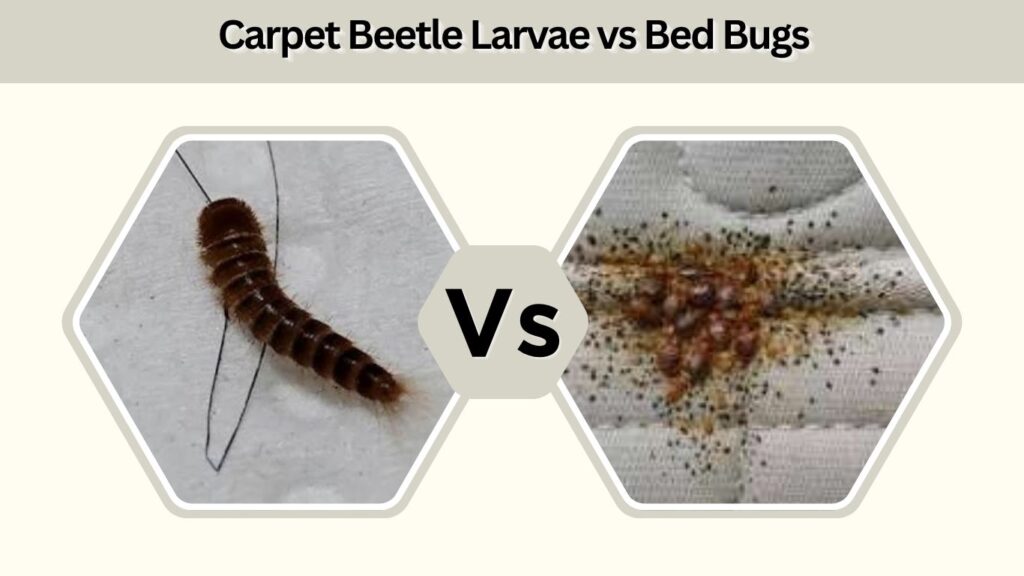
| Feature | Carpet Beetle Larvae | Bed Bugs |
| Body | Hairy and tapered | Flat, oval, and smooth |
| Color | Brown, banded, or nearly black | Reddish brown |
| Legs | Tiny legs near the head | Six clearly visible legs |
| Feeding | Natural fibers and animal materials | Human and animal blood |
| Skin effects | Hairs may irritate skin | Bites can cause itchy marks |
| Common evidence | Shed hairy casings and fabric damage | Dark fecal spots, eggs, and blood marks |
Bed bugs do not have a larval stage. Young bed bugs are called nymphs, and they resemble smaller, paler adults. Carpet beetle larvae are noticeably hairier and do not require blood meals.
How to Get Rid of Carpet Beetle Larvae
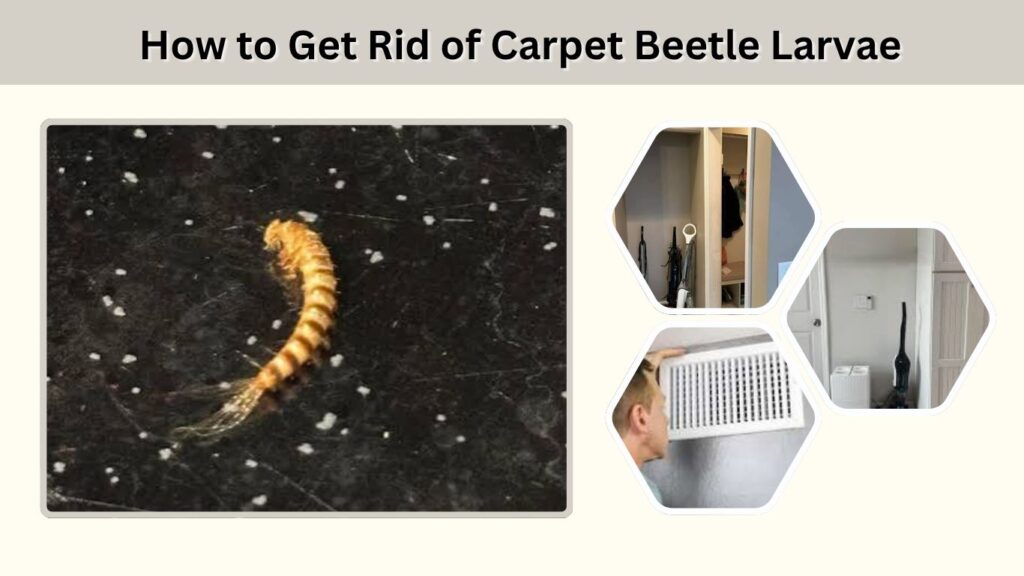
Successful treatment begins with locating every infested material. Spraying visible larvae without removing their food will rarely solve the problem.
1. Find and Remove the Source
Inspect carpet edges, closets, fabric folds, furniture undersides, vents, attics, stored boxes, pet bedding, dried foods, and old animal nests. Seal heavily infested items in bags before discarding them to prevent larvae from spreading.
2. Vacuum Thoroughly
Vacuum beneath furniture, around baseboards, inside closets, along rug edges, and inside accessible vents. This removes larvae, eggs, adults, shed hairs, lint, and food debris. Empty the vacuum outdoors or seal and discard its bag immediately.
3. Treat Clothing and Fabrics
Hot laundering, tumble drying with suitable heat, or professional dry cleaning kills eggs and larvae in washable fabrics. Clean items before placing them in airtight containers or garment bags.
4. Freeze Suitable Items
Objects that cannot be washed may sometimes be sealed in plastic and frozen. UC IPM recommends about two weeks below 0°F or −18°C, provided freezing will not damage the item.
5. Use Insecticide Carefully
Insecticides may be useful for severe infestations in cracks, carpet edges, baseboards, or other labeled locations. Use only a product specifically labeled for carpet beetles and follow every instruction. Never spray clothing, bedding, or skin-contact surfaces unless the label expressly permits it. Professional pest control is appropriate when the source is inaccessible or larvae continue appearing after extensive cleaning.
How to Prevent Carpet Beetle Larvae
Vacuum regularly, remove pet hair and dead insects, clean natural-fiber clothing before storage, and use airtight containers for vulnerable fabrics. Repair damaged screens and seal openings around windows, doors, and vents. Remove abandoned animal nests only when it is safe and legal to do so.
Inspect secondhand furniture, rugs, dried flowers, and stored fabrics before bringing them inside. Cleanliness does not guarantee prevention, but removing hidden food sources makes it much harder for larvae to survive.
FAQs
Are carpet beetle larvae dangerous?
They are not venomous, do not spread through the body, and do not bite. Their primary risks are damage to household materials and skin irritation caused by contact with their hairs.
Why am I finding carpet beetle larvae in my bed?
Larvae may wander onto a bed from nearby carpeting, furniture, closets, or feather-filled items. Inspect the entire bedroom rather than assuming that the mattress is the original source.
What kills carpet beetle larvae immediately?
Direct removal, suitable heat, hot laundering, dry cleaning, and properly applied freezing can kill larvae. An insecticide labeled for carpet beetles may also kill exposed individuals, but it will not provide lasting control unless the food source is removed.
How far can carpet beetle larvae travel?
Larvae can crawl away from their original food source while searching for food or a protected place to molt and pupate. They may therefore appear on walls or in rooms where no obvious fabric damage is visible.
Do carpet beetle larvae live in human hair?
They do not infest the scalp or live permanently in human hair. A larva may accidentally crawl onto a person, but repeated scalp irritation is more likely to have another cause and should be evaluated appropriately.