
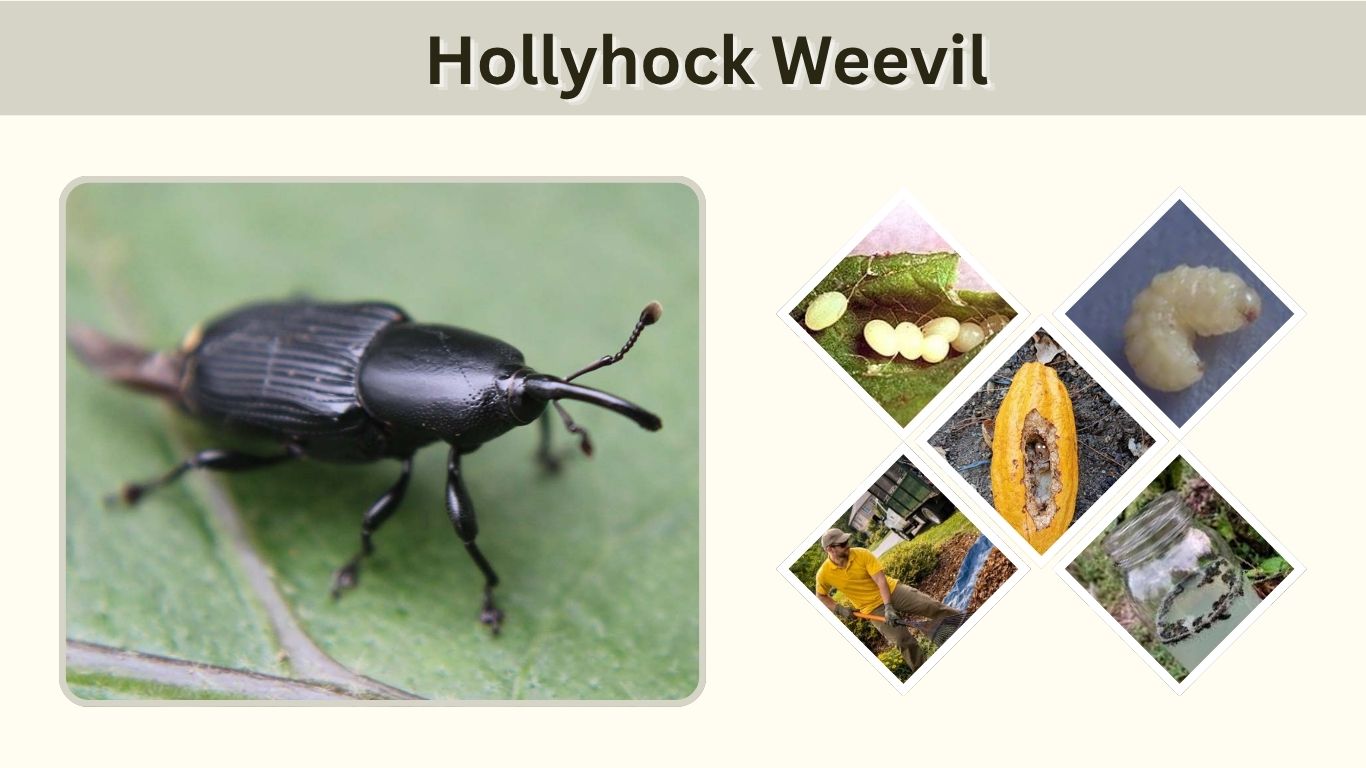
The hollyhock weevil is a small, destructive beetle that attacks hollyhock plants, damaging leaves, flower buds, and developing seeds. These tiny insects use their long snouts to feed on plant tissues and lay eggs inside flower buds. Their larvae consume developing seeds, reducing flower production and natural reseeding. Although hollyhock weevils rarely kill established plants, heavy infestations can significantly affect their appearance and reproduction. Understanding hollyhock weevil identification, damage symptoms, life cycle, and treatment methods can help gardeners protect their flowers and prevent recurring infestations.
What Is a Hollyhock Weevil?
The hollyhock weevil (Rhopalapion longirostre) is a small beetle belonging to the family Brentidae and order Coleoptera. It primarily attacks hollyhocks (Alcea rosea), a popular flowering plant grown in ornamental gardens.
Originally native to parts of Europe and western Asia, this insect has spread across many regions of North America. Adult weevils commonly gather around developing flower buds, where they feed, mate, and reproduce.
Hollyhock Weevil Identification
Hollyhock weevils have several distinctive physical characteristics that make them recognizable.
- Scientific Name: Rhopalapion longirostre
- Common Name: Hollyhock weevil
- Family: Brentidae
- Order: Coleoptera
- Adult Size: Approximately 0.10–0.15 inch long, excluding some of the elongated snout
- Body Color: Grayish-black with fine hairs
- Leg Color: Orange to reddish-orange
- Snout: Long and narrow, particularly in females
- Larvae: Small, cream-colored, legless grubs with brown heads
Female hollyhock weevils have noticeably longer snouts than males. They use these specialized mouthparts to chew deep openings into flower buds for egg-laying.
Hollyhock Weevil Damage and Symptoms
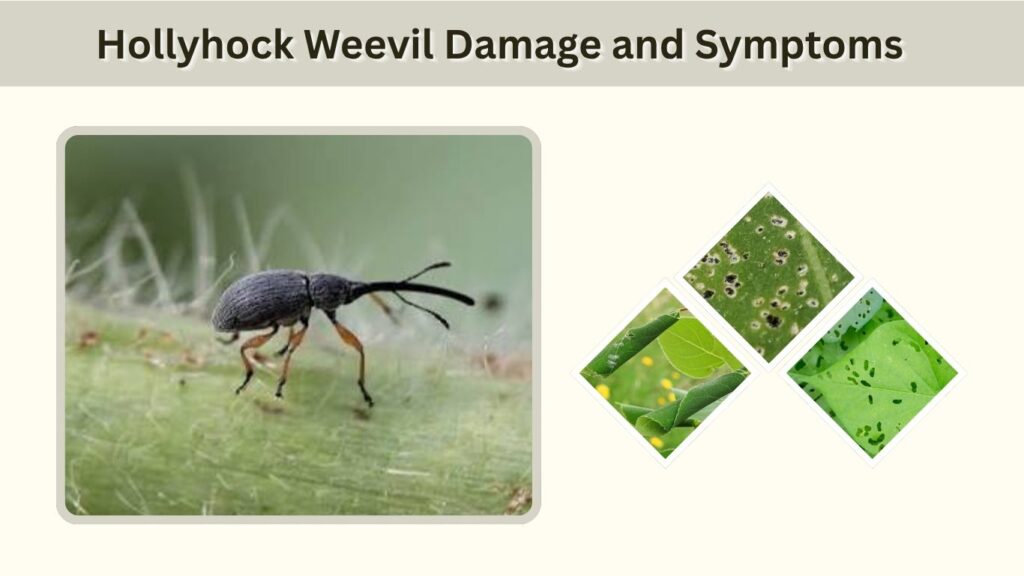
Hollyhock weevils damage plants during both their adult and larval stages. Adult beetles feed on tender leaves, stems, and flower buds, while larvae develop inside seed-producing structures.
Although the insects usually cause limited harm to established plants, large populations can interfere with flowering and reduce the number of viable seeds produced.
Common Signs of Hollyhock Weevil Infestation
Several symptoms can indicate that hollyhock weevils are feeding on your plants.
- Small Leaf Holes: Adults chew numerous tiny openings in young leaves.
- Damaged Flower Buds: Feeding punctures may cause buds to develop irregularly.
- Reduced Flowering: Heavily infested plants sometimes produce fewer healthy flowers.
- Distorted Leaves: Emerging leaves may develop a tattered or lace-like appearance.
- Damaged Seeds: Larvae feed inside developing seed structures.
- Visible Beetles: Tiny gray insects with long snouts gather around flower buds.
- Poor Natural Reseeding: Fewer healthy seeds may result in fewer new hollyhock plants.
These symptoms often become noticeable during late spring and summer when adult beetles are actively feeding.
How Hollyhock Weevils Damage Seeds
Seed damage is one of the most important effects of hollyhock weevil infestations.
Female beetles chew openings into developing flower buds and seed-producing structures before depositing their eggs.
After hatching, the larvae feed on developing seeds. Their feeding can destroy seed embryos and reduce the number of viable seeds available for natural reproduction.
Because hollyhocks often depend on self-seeding to maintain their presence in gardens, repeated infestations can gradually reduce plant populations.
Hollyhock Weevil Life Cycle
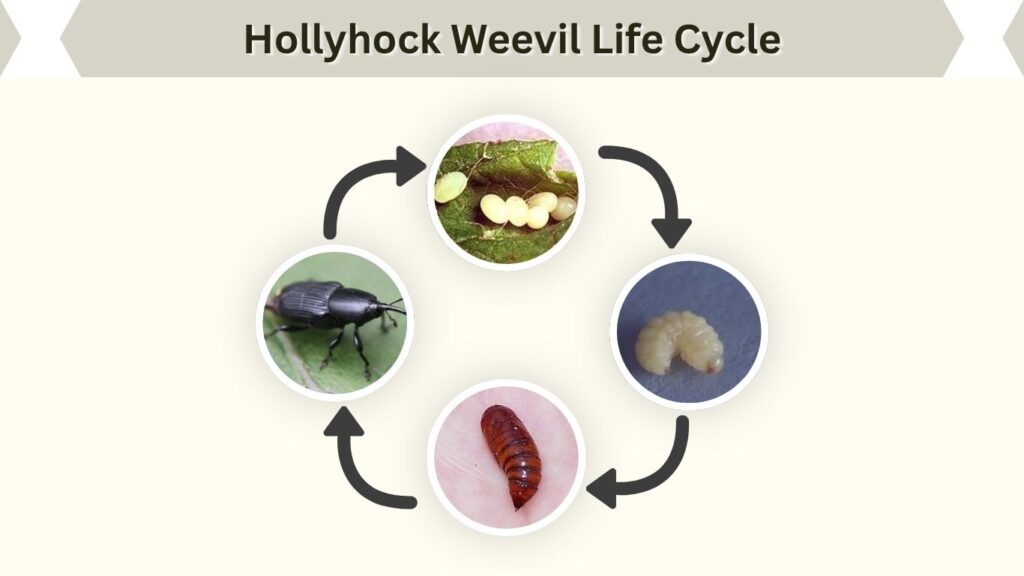
The hollyhock weevil typically produces one generation each year. Its development includes four stages: egg, larva, pupa, and adult.
Understanding this life cycle helps gardeners identify the most effective periods for monitoring, removing infested seed pods, and controlling adult beetles.
Egg and Larval Stages
Adult hollyhock weevils become active during spring and begin feeding on emerging leaves and tender plant tissues.
As flower buds develop, female weevils chew small openings and deposit eggs inside the developing reproductive structures.
The eggs hatch into tiny, cream-colored larvae that feed on developing seeds and surrounding tissues.
Larval development commonly takes several weeks, depending on local conditions.
Pupal and Adult Stages
After completing their feeding period, mature larvae pupate within the seed-producing structures.
New adult weevils generally emerge during late summer, although some individuals may remain inside seed pods longer.
Most hollyhock weevils overwinter as adults in protected locations around previously infested plants.
When temperatures rise the following spring, they return to growing hollyhocks and begin another cycle.
How to Get Rid of Hollyhock Weevils
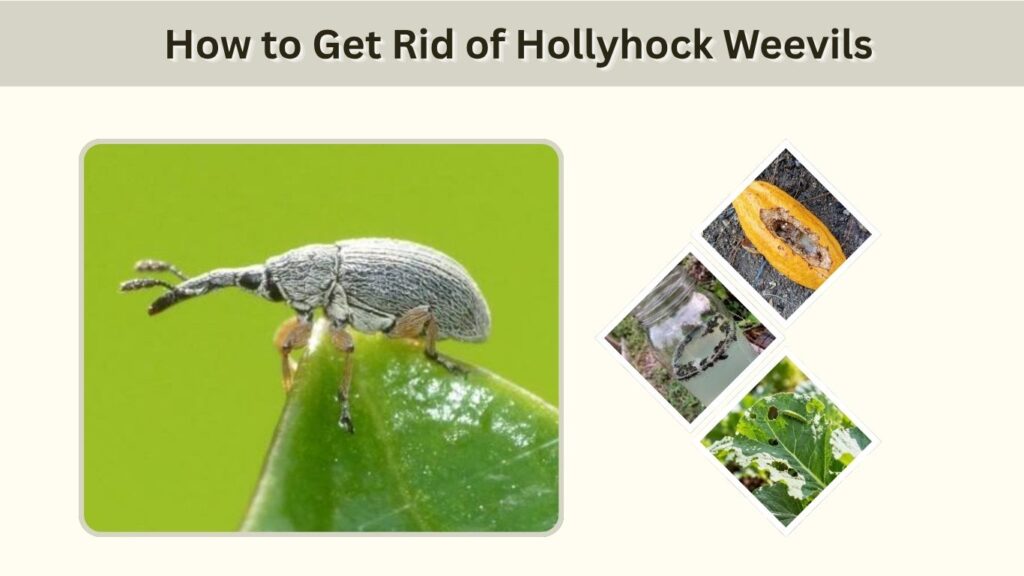
Getting rid of hollyhock weevils is often possible without using chemical insecticides. Because these insects gather around flower buds and readily drop when disturbed, gardeners can remove many of them manually.
Regular monitoring and prompt removal of infested seed pods are particularly effective for small ornamental gardens.
Steps to Remove Hollyhock Weevils Naturally
Follow these methods to control hollyhock weevils.
- Inspect Flower Buds: Examine buds, tender leaves, and stems for adult beetles and feeding holes.
- Shake the Plants: Place a tray, sheet, or container beneath the plant and gently shake the stems to dislodge adult weevils.
- Collect the Beetles: Transfer fallen insects into a container of soapy water to prevent them from returning to the plants.
- Remove Infested Seed Pods: Cut off developing seed pods showing damage before new adults emerge.
- Dispose of Plant Material: Place infested seed pods in sealed household waste rather than garden compost.
- Repeat Regularly: Inspect plants at least twice weekly during periods of active infestation.
Consistent removal of adult insects and infested seed pods can significantly reduce future weevil populations.
Hollyhock Weevil Treatment and Insecticides
Hollyhock weevil treatment depends on infestation severity and the gardener’s preferred management approach.
For minor infestations, handpicking and seed-pod removal are usually sufficient. However, severe infestations may require additional measures to protect developing flowers.
Will Neem Oil Kill Hollyhock Weevils?
Neem oil is sometimes used against garden insects because certain formulations can interfere with feeding and development.
However, reliable evidence demonstrating effective control of hollyhock weevils specifically is limited.
Neem oil is unlikely to reach larvae protected inside developing seeds, making it an unreliable treatment for established internal infestations.
If using a neem-based product, verify that its label permits application to ornamental plants and follow all instructions.
Avoid applying sprays directly to open flowers where bees and other pollinators are visiting.
What Insecticide Kills Hollyhock Weevils?
Some contact insecticides containing permethrin, bifenthrin, or malathion may suppress adult hollyhock weevils when appropriately labeled for the intended use.
These treatments work best against exposed adult beetles before they lay eggs.
Insecticides generally cannot reliably reach larvae protected within developing seed pods.
Because broad-spectrum pesticides may harm bees and beneficial insects, chemical treatment should be reserved for situations where nonchemical methods are insufficient.
Always follow current product labels, local regulations, and pollinator-safety precautions.
How to Prevent Hollyhock Weevil Infestations
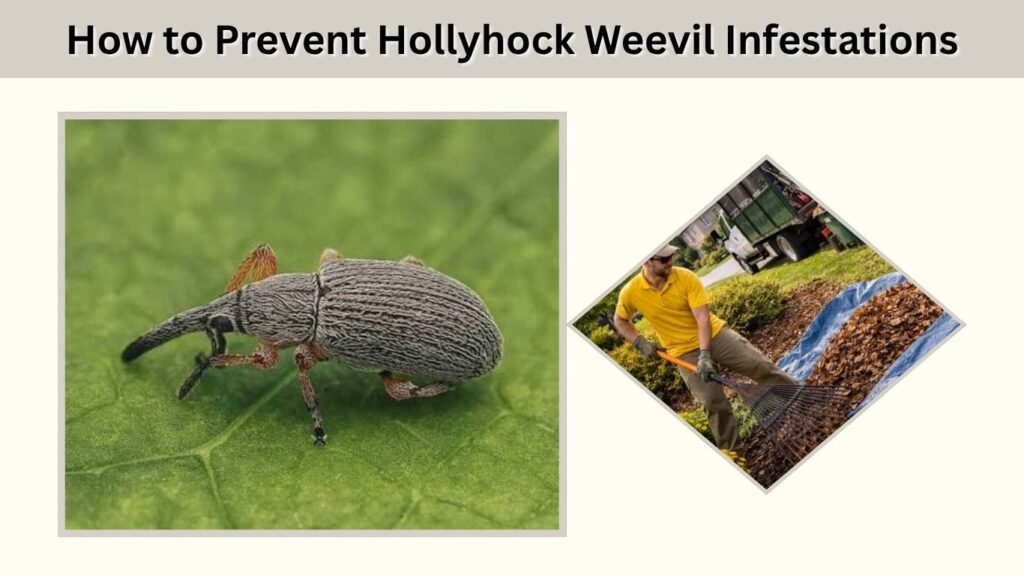
Preventing hollyhock weevil infestations involves regular inspections, garden sanitation, and early removal of developing insects.
Because adult weevils can overwinter around previously infested plants, repeated monitoring is especially important in gardens with a history of damage.
Effective Hollyhock Weevil Prevention Methods
- Inspect Plants Early: Begin checking emerging foliage and developing buds during spring.
- Remove Infested Seed Pods: Cut off affected pods before larvae complete development.
- Clean Garden Beds: Remove fallen seed pods and infested plant debris after the growing season.
- Monitor Flower Buds: Look for adult beetles gathering around unopened flowers.
- Use Healthy Planting Material: Inspect nursery plants and avoid collecting seeds from heavily infested plants.
- Encourage Beneficial Insects: Maintain diverse garden habitats that support natural predators.
- Continue Seasonal Monitoring: Check plants throughout summer, particularly when flowers and seeds are developing.
These preventive practices help interrupt the weevil life cycle and reduce recurring infestations.
What Eats Hollyhock Weevils?
Hollyhock weevils may be eaten by generalist insect predators, including certain birds, spiders, and predatory insects.
However, the effectiveness of individual predators against hollyhock weevils has not been well established.
Encouraging biodiversity through flowering plants and reduced pesticide use can support natural pest regulation.
Gardeners should not rely exclusively on predators to eliminate established infestations. Manual removal and seed-pod sanitation remain more predictable management strategies.
Hollyhock Weevil vs. Other Hollyhock Pests
Hollyhock weevil damage can sometimes resemble symptoms caused by other garden insects.
Flea beetles also produce small holes in leaves, while Japanese beetles may cause extensive skeletonization of foliage.
Hollyhock rust, a fungal disease, produces yellow or orange spots and raised pustules rather than the small feeding holes associated with weevils.
The presence of tiny gray beetles with elongated snouts around flower buds strongly suggests hollyhock weevil activity.
Correct identification helps gardeners select appropriate treatment methods and avoid unnecessary pesticide applications.
FAQs
1. Do Hollyhock Weevils Kill Hollyhock Plants?
Hollyhock weevils rarely kill established plants. Their feeding primarily damages leaves, flower buds, and developing seeds. However, severe infestations may reduce flowering and prevent natural reseeding, gradually affecting the number of hollyhock plants growing in a garden.
2. Can Neem Oil Get Rid of Hollyhock Weevils?
Neem oil may affect some exposed insects, but its effectiveness against hollyhock weevils is not well established. It cannot reliably control larvae developing inside seeds. Handpicking adult beetles and removing infested seed pods are generally more dependable management methods.
3. Where Do Hollyhock Weevils Lay Their Eggs?
Female hollyhock weevils lay eggs inside developing flower buds and seed-producing structures. They use their elongated snouts to chew openings before depositing eggs. After hatching, the larvae feed on developing seeds, reducing their viability and affecting natural reproduction.
4. Are Hollyhock Weevils Harmful to Humans?
Hollyhock weevils are not considered dangerous to humans. They are plant-feeding beetles and are not known to bite or sting people. Their primary impact involves damaging hollyhock leaves, flowers, and seeds rather than creating health risks for gardeners.
5. How Often Should I Check Hollyhocks for Weevils?
Inspect hollyhock plants at least twice weekly during active infestations, particularly when flower buds are developing. Regular monitoring helps detect adult beetles before significant egg-laying occurs. Removing insects and affected seed pods promptly can help prevent future population increases.
