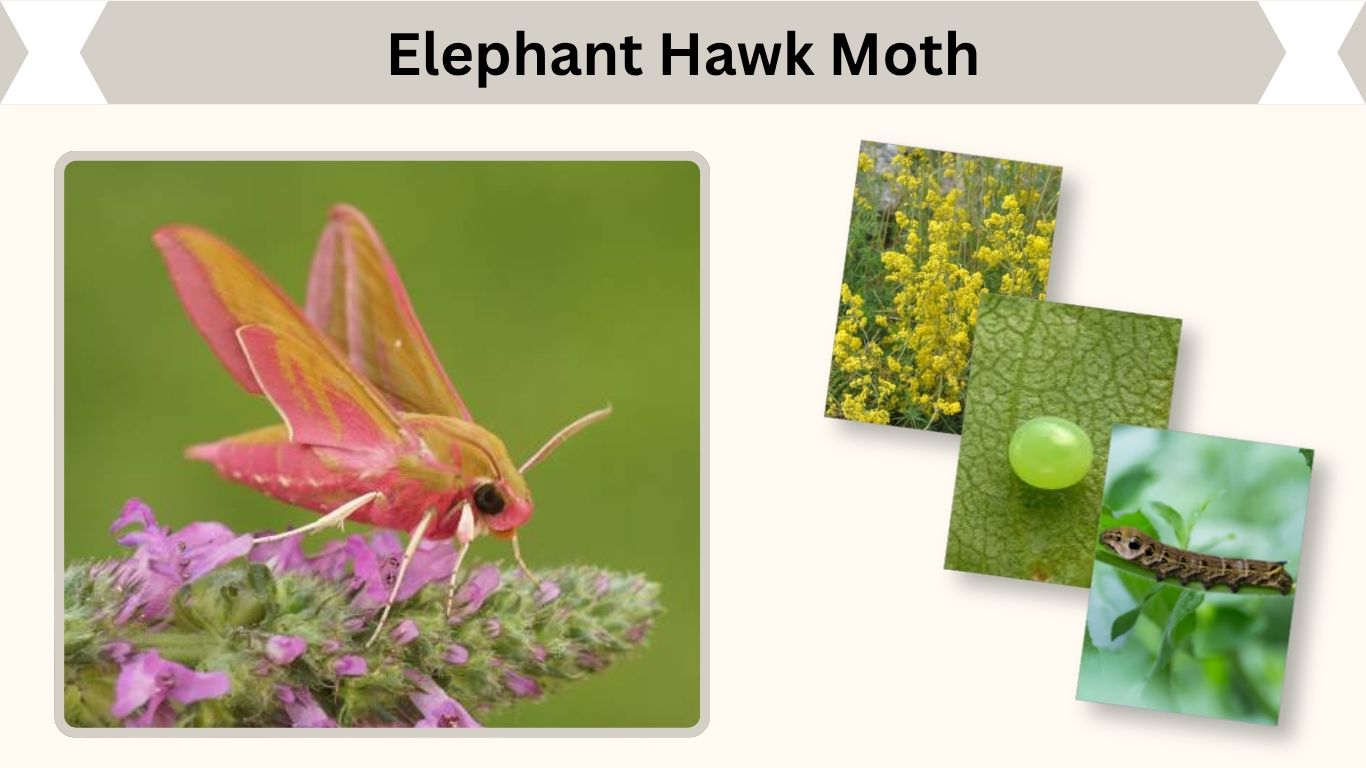
The Elephant Hawk Moth is one of the most colorful and fascinating moths found in Europe and parts of Asia. Its bright pink and olive-green wings make it easy to recognize during warm summer evenings. The caterpillar is also famous for its snake-like appearance, which helps scare away predators in the wild.
Many people search for the elephant hawk moth because of its unusual caterpillar, impressive life cycle, and harmless nature. This moth is active at night and often visits flowers for nectar. In this guide, you will learn about elephant hawk moth identification, habitat, diet, caterpillar care, and important facts about its life stages.
What Is an Elephant Hawk Moth?
The elephant hawk moth is a medium-sized hawk moth known for its fast flight and colorful body. It belongs to the Sphingidae family, which includes many strong-flying moth species. This moth is commonly seen in gardens, woodland edges, and grasslands during late spring and summer.
Scientific Classification
The elephant hawk moth has the scientific name Deilephila elpenor. It belongs to the hawk moth family and is closely related to several other night-flying moth species. Scientists study this moth because of its unique defense behavior and colorful appearance.
Why It Is Called an Elephant Hawk Moth
The caterpillar stage explains the unusual name. The front part of the caterpillar can stretch and resemble a small elephant trunk. When threatened, the caterpillar pulls in its head and displays large eye spots that make it look like a snake.
Elephant Hawk Moth Size and Appearance
Adult elephant hawk moths usually have a wingspan of about 45 to 60 millimeters. Their wings are mostly olive-brown with bright pink markings. The body is thick and streamlined, helping the moth fly quickly while feeding on nectar at night.
Difference Between Elephant Hawk Moth and Small Elephant Hawk Moth
The small elephant hawk moth is a related species but has duller colors and a smaller body. The common elephant hawk moth usually appears brighter and larger, making it easier to identify in gardens and natural habitats.
Elephant Hawk Moth Identification
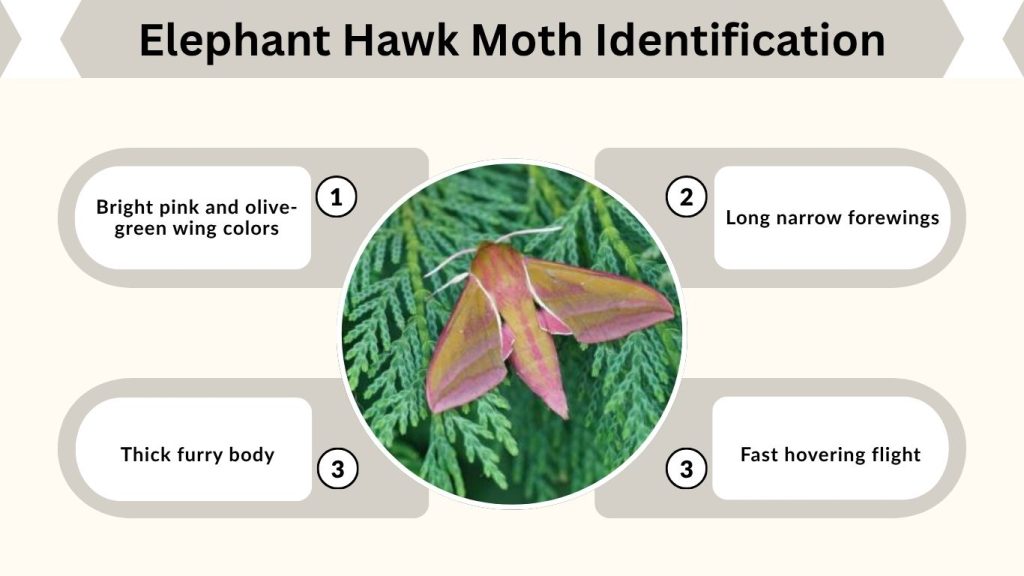
Recognizing the elephant hawk moth is easier once you know its key features. Both the adult moth and caterpillar have unusual markings that help them stand out from other insects. Their colors, body shape, and behavior make identification simple for beginners and wildlife enthusiasts.
Adult Moth Identification
- Bright pink and olive-green wing colors
- Long narrow forewings
- Thick furry body
- Fast hovering flight
- Active mainly at night
Elephant Hawk Moth Caterpillar Identification
- Large fake eye spots near the head
- Thick smooth body texture
- Brown or green body color
- Curved horn near the tail
- Snake-like defensive posture
Male vs Female Elephant Hawk Moth
Male and female moths look very similar, although females are often slightly larger. Females also carry eggs after mating and may appear heavier around the abdomen.
Giant Elephant Hawk Moth Myths
Many online photos make the elephant hawk moth appear giant in size. In reality, it is medium-sized compared to other hawk moth species. Camera angles and close-up photography often create the illusion of a huge insect.
Elephant Hawk Moth Caterpillar
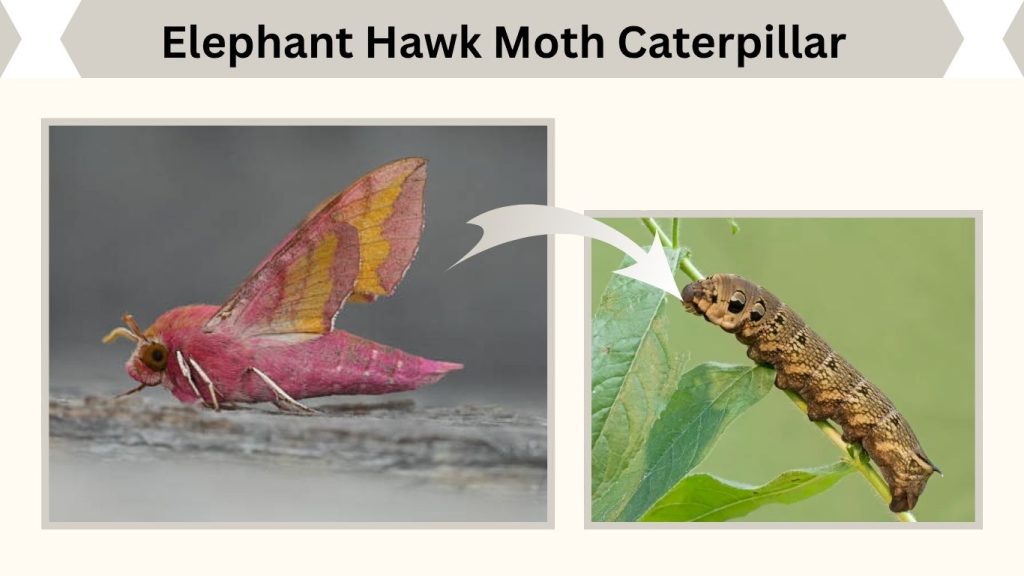
The elephant hawk moth caterpillar is one of the most unusual caterpillars found in nature. Its strange appearance often surprises gardeners and wildlife watchers. Despite its scary snake-like look, the caterpillar is harmless and mainly focuses on feeding before pupation.
Why the Caterpillar Looks Like a Snake
The caterpillar uses mimicry as a defense strategy. When disturbed, it pulls its head inward and expands the front body segments. This creates the appearance of a small snake, helping scare away birds and predators.
Elephant Hawk Moth Caterpillar Size
A fully grown caterpillar can reach around 8 centimeters in length. Young caterpillars are usually green, while older caterpillars often become brown before entering the pupal stage.
Green Elephant Hawk Moth Caterpillar
Green caterpillars are more common during early growth stages. Their green color helps them blend into leaves and stems while feeding during the night.
Caterpillar Features
- Smooth skin without thick hairs
- Large eye-like spots
- Short tail horn
- Thick body shape
- Excellent camouflage ability
Are Elephant Hawk Moths Poisonous?
Many people worry about the elephant hawk moth because of its unusual appearance. However, both the adult moth and caterpillar are considered harmless to humans. They do not contain dangerous venom and are generally safe to observe closely.
Are Elephant Hawk Moths Poisonous to Humans?
Elephant hawk moths are not poisonous. They cannot sting, and they do not release toxins when touched. People can safely handle them gently if necessary.
Are Elephant Hawk Moth Caterpillars Poisonous?
The caterpillars are also harmless. Their snake-like appearance is only meant to frighten predators. They do not inject venom or carry poisonous hairs.
Do Elephant Hawk Moths Bite?
These moths do not bite humans. Adult moths use a long feeding tube called a proboscis to drink nectar from flowers instead of biting or chewing.
Are They Dangerous to Dogs or Pets?
Elephant hawk moth caterpillars are not known to be dangerous to dogs or cats. Still, pets should not eat wild insects because digestive irritation may occur in some cases.
Elephant Hawk Moth Life Cycle
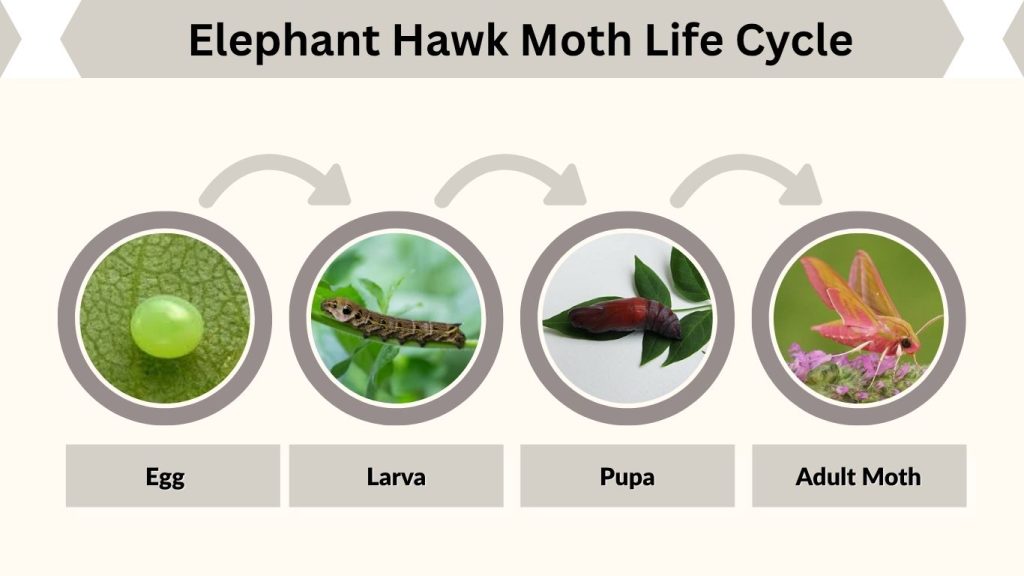
The life cycle of the elephant hawk moth includes four main stages. Each stage plays an important role in the moth’s growth and survival. From tiny eggs to colorful adults, the transformation is fascinating to observe in nature.
Elephant Hawk Moth Eggs
Female moths lay small pale eggs on suitable host plants. The eggs usually hatch within a short period during warm weather conditions.
Caterpillar Stage
After hatching, the caterpillars feed heavily on leaves and grow quickly. This stage lasts several weeks before pupation begins.
Chrysalis and Pupa Stage
Once fully grown, the caterpillar leaves its food plant and searches for loose soil or leaf litter. It then forms a smooth brown pupa underground. During this stage, the caterpillar transforms into an adult moth inside the protective casing.
Adult Moth Stage
The adult elephant hawk moth emerges during late spring or summer. Adult moths are most active during warm evenings and spend much of their time searching for nectar and mates. Their fast flight allows them to hover around flowers like hummingbirds.
Elephant Hawk Moth Lifespan
Most adult elephant hawk moths live for only a few weeks. However, the complete life cycle from egg to adult can last several months depending on weather and environmental conditions.
Elephant Hawk Moth Habitat and Distribution
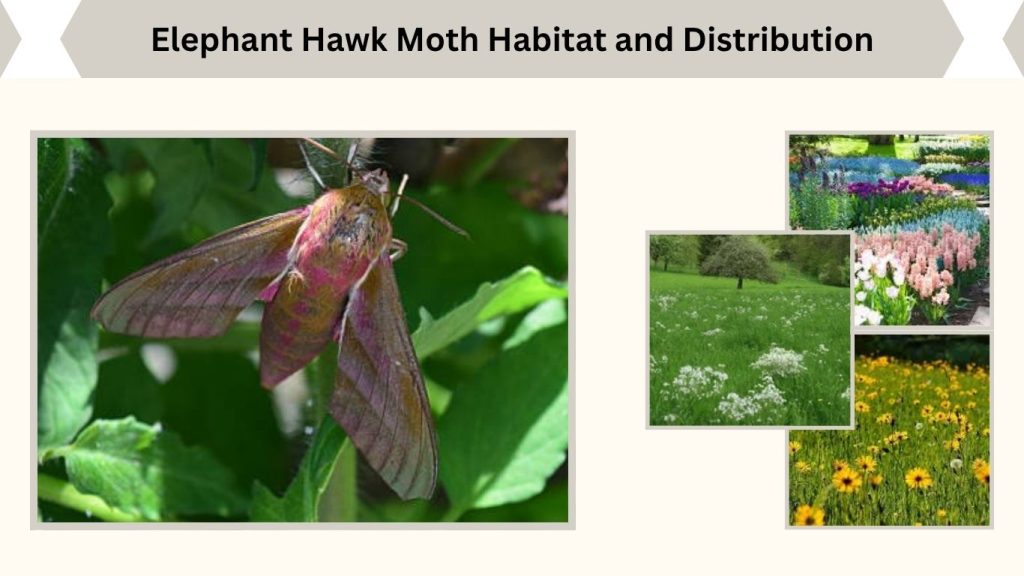
The elephant hawk moth lives in a variety of natural and urban habitats. It adapts well to gardens and countryside areas where flowering plants and host plants are available. This species is common in many parts of Europe and is frequently seen in the United Kingdom.
Where Do Elephant Hawk Moths Live?
These moths prefer places with plenty of vegetation and flowers. They are commonly found in woodland edges, meadows, gardens, and wetlands where caterpillar food plants grow naturally.
Elephant Hawk Moth Range
- United Kingdom
- Europe
- Parts of Asia
- Woodland regions
- Urban gardens and parks
Preferred Habitat Conditions
The moth prefers warm environments with flowering plants for nectar. Caterpillars need access to willowherb and bedstraw plants, which are important for growth and survival.
Elephant Hawk Moth in Australia
The elephant hawk moth is not native to Australia, although related hawk moth species exist there. Reports from Australia are often cases of mistaken identification.
Elephant Hawk Moth Diet and Food
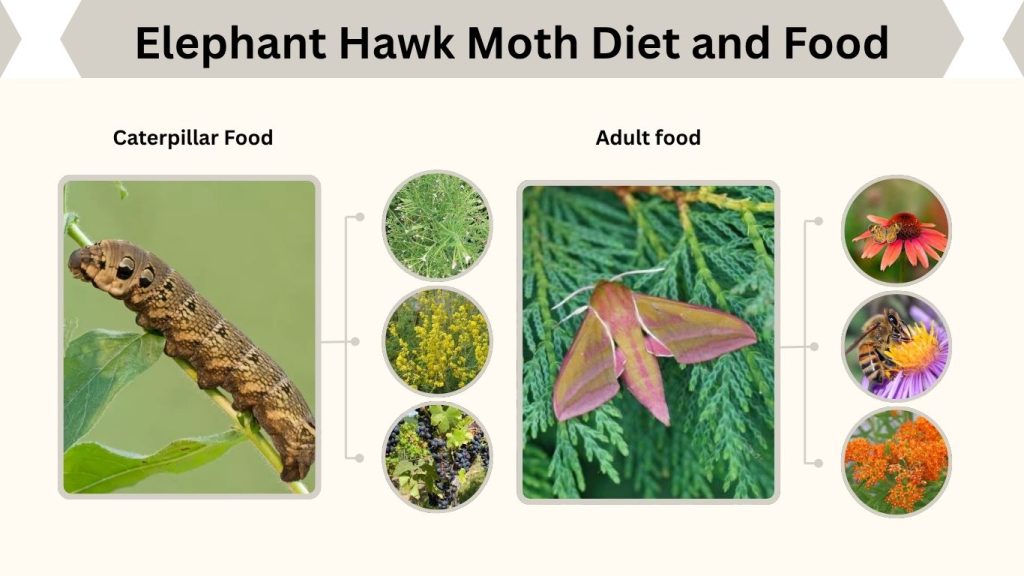
Both adult moths and caterpillars require different food sources during their lives. Caterpillars feed on plant leaves, while adult moths drink nectar from flowers using their long proboscis.
Elephant Hawk Moth Caterpillar Food
- Willowherb leaves
- Rosebay willowherb
- Bedstraw plants
- Fuchsia leaves
- Grapevine plants
What Adult Elephant Hawk Moths Eat
Adult moths mainly feed on flower nectar during the evening and nighttime hours. Their long feeding tube allows them to reach nectar deep inside flowers.
Best Plants to Attract Elephant Hawk Moths
Gardeners can attract these moths by planting nectar-rich flowers and caterpillar host plants. Evening-scented flowers are especially helpful because the moths are active at night.
Elephant Hawk Moth Feeding Behavior
The moth hovers while feeding and can quickly move between flowers. This behavior helps pollinate many garden and wild plants during nighttime hours.
Elephant Hawk Moth Caterpillar Care
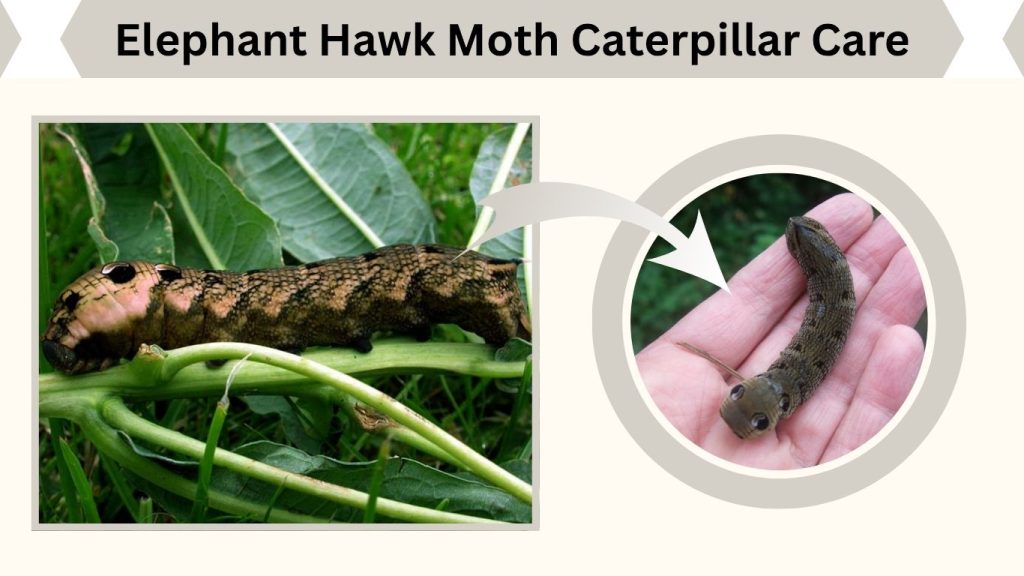
Some people raise elephant hawk moth caterpillars for observation and educational purposes. Proper care is important to keep the caterpillar healthy through all stages of development.
How to Keep an Elephant Hawk Moth Caterpillar
Use a well-ventilated container with fresh food plants placed inside daily. The container should remain clean and dry to prevent mold and disease.
Proper Container Setup
- Good airflow
- Fresh leaves every day
- Paper towel or soil lining
- Protection from direct sunlight
- Enough space for movement
Caring During Pupation
When the caterpillar is ready to pupate, provide loose soil or leaf litter inside the container. Avoid disturbing the pupa during transformation.
Important Care Tips
Caterpillars should never be overcrowded. Clean away old leaves and waste regularly. Always use pesticide-free plants for feeding.
Elephant Hawk Moth Behavior and Adaptations
The elephant hawk moth has several interesting survival adaptations. Its colors, flight style, and caterpillar defenses help protect it from predators in the wild.
Snake Mimic Defense Mechanism
The caterpillar’s eye spots are one of its most famous features. When threatened, it inflates the front part of its body to imitate a snake’s head and scare predators away.
Night Flying Behavior
Adult moths are nocturnal and become active after sunset. Their strong wings allow fast movement between flowers while feeding.
Elephant Hawk Moth Predators
- Birds
- Bats
- Small mammals
- Spiders
- Larger insects
Importance in Nature
Elephant hawk moths play a role in pollination and help support healthy ecosystems. They are also an important food source for some animals.
Elephant Hawk Moth Symbolism and Spiritual Meaning
The elephant hawk moth is often linked with transformation and personal growth. Its dramatic life cycle makes it a popular symbol in art and spiritual beliefs.
Elephant Hawk Moth Spiritual Meaning
Many people see this moth as a symbol of change, renewal, and inner strength. The transformation from caterpillar to moth represents growth and new beginnings.
Meaning in Tattoos and Art
The bright pink colors and unusual shape make the elephant hawk moth popular in tattoo designs and artwork inspired by nature.
Symbolism of Transformation
Like many moths and butterflies, this species represents personal transformation because of its complete metamorphosis during the life cycle.
Interesting Elephant Hawk Moth Facts
The elephant hawk moth is full of surprising features that make it one of the most recognizable moths in Europe. Its bright colors and unusual caterpillars continue to attract wildlife enthusiasts worldwide.
Unique Facts
- One of the UK’s most colorful moths
- Caterpillars imitate snakes for defense
- Strong nighttime flyer
- Important nighttime pollinator
- Often attracted to garden flowers
FAQs
Are elephant hawk moths rare?
No, elephant hawk moths are not considered rare in many parts of Europe and the UK. They are commonly seen during summer months in gardens and countryside areas.
How long do elephant hawk moths live?
Adult elephant hawk moths usually live for only a few weeks. However, the complete life cycle from egg to adult can take several months.
What does an elephant hawk moth caterpillar eat?
The caterpillar mainly eats willowherb, bedstraw, and fuchsia plants. It feeds heavily before entering the pupal stage.
Can elephant hawk moth caterpillars hurt humans?
No, elephant hawk moth caterpillars are harmless. They do not sting, bite, or release venom.
Why does the caterpillar look like a snake?
The caterpillar uses mimicry to scare predators. Its large eye spots and defensive posture make it resemble a small snake.