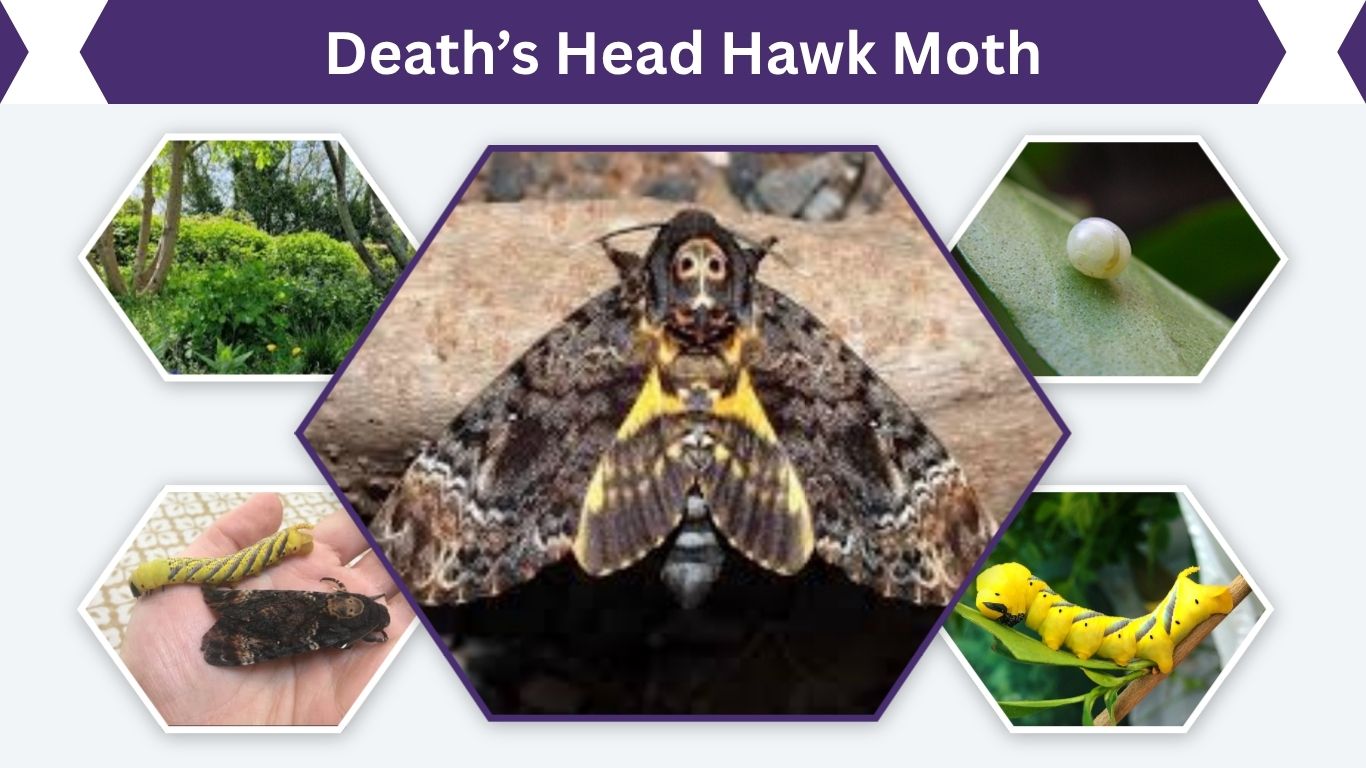
The Death’s Head Hawk Moth (Acherontia atropos) is a fascinating and iconic species known for the skull-like marking on its thorax. Found across Africa, Europe, and parts of the Middle East, it has captured attention in science, folklore, and pop culture. Famous for its unique squeaking sound and nocturnal habits, this moth is both mysterious and visually striking. Understanding its appearance, behavior, life cycle, and symbolism provides insight into why it continues to intrigue researchers and enthusiasts alike.
Death’s Head Hawk Moth Identification and Appearance
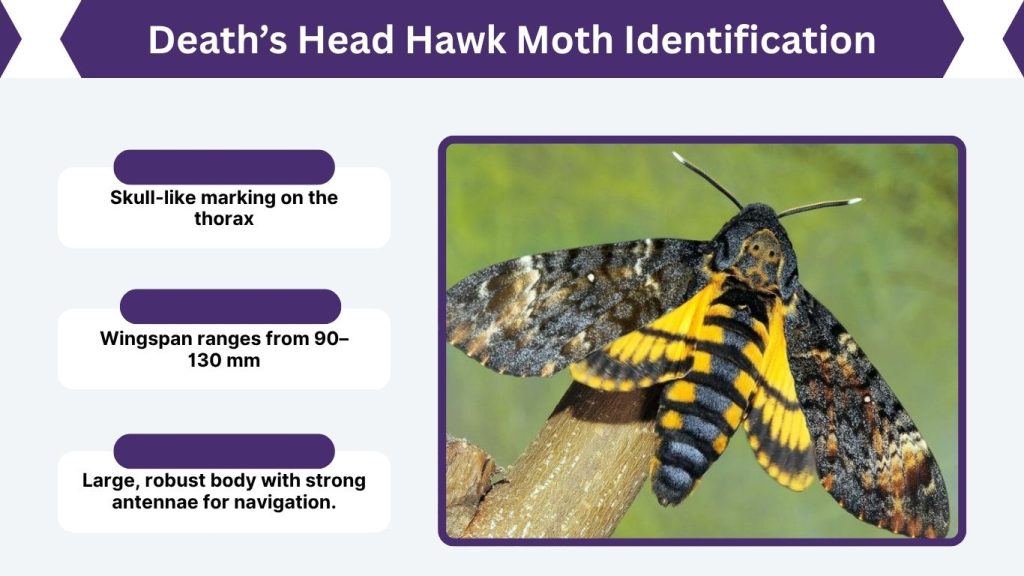
The Death’s Head Hawk Moth is instantly recognizable due to its distinctive skull-shaped pattern. Adults are large, with striking wing colors and a robust body structure. This section describes both physical features and the different life stages, which include caterpillar, pupa, and adult moth. Each stage has unique traits that make the species fascinating and easily distinguishable from other hawk moths.
Physical Features
- Skull-like marking on the thorax, often associated with superstition.
- Wingspan ranges from 90–130 mm, with a combination of yellow, brown, and black.
- Large, robust body with strong antennae for navigation.
- Smooth, scaled wings with subtle patterns for camouflage.
Life Stages
- Caterpillar: Green or brown, sometimes striped, with a prominent horn at the rear.
- Pupa: Encased in a cocoon underground or in loose soil for metamorphosis.
- Adult Moth: Fully winged with the signature skull marking, capable of flying long distances.
Death’s Head Hawk Moth Species and Variants
This moth has several related species and regional variants. While Acherontia atropos is the most widely known, other species have minor differences in size, markings, and behavior. Awareness of these variants helps in identifying and studying the species across different habitats.
Major Species and Variants
- Death’s Head Hawk Moth (Acherontia atropos): Common in Europe and Africa.
- African Death Head Hawk Moth: Larger, slightly darker, native to tropical Africa.
- Greater Death’s Head Hawk Moth: Rare variant, notable for larger wingspan.
Minor Variants
- Differences in wing coloration (more yellow or brown).
- Variation in skull marking shape or visibility.
- Slight differences in caterpillar coloration depending on host plants.
Death’s Head Hawk Moth Distribution and Habitat
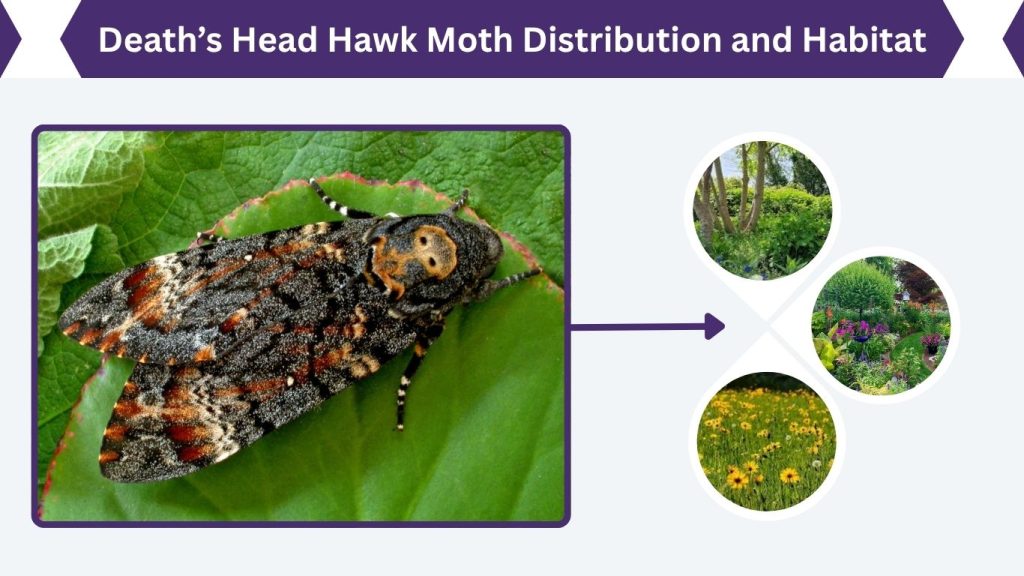
Death’s Head Hawk Moths inhabit regions from Europe to Africa and the Middle East. They are often associated with areas rich in host plants and sometimes appear near beehives. Understanding their preferred habitats and migration patterns is crucial for studying their ecology and for conservation efforts.
Geographic Range
- Found in North Africa, Southern Europe, and the Middle East.
- Occasional sightings in Northern Europe during migration periods.
- Tropical regions of Africa harbor the largest populations.
Typical Habitats
- Gardens, forests, and areas with host plants for caterpillars.
- Near beehives, as adults can feed on honey.
- Occasionally in rural areas where larvae can find loose soil for pupation.
Death’s Head Hawk Moth Behavior and Feeding Habits
These moths are nocturnal and have unique behaviors that set them apart from other moth species. Adults are known for their ability to emit a squeaking sound when disturbed, which may help deter predators. They are also notable for raiding beehives to feed on honey without getting stung.
Adult Behavior
- Nocturnal flying patterns and long-distance migration.
- Squeaking sound produced by thoracic muscles.
- Honey-feeding behavior in beehives, aided by stealth and chemical mimicry.
Caterpillar Feeding Habits
- Feeds primarily on leaves of host plants such as potato, tomato, and other Solanaceae species.
- Eats voraciously during larval stages to accumulate energy for pupation.
- Exhibits defensive behaviors like rearing up when threatened.
Life Cycle of the Death’s Head Hawk Moth
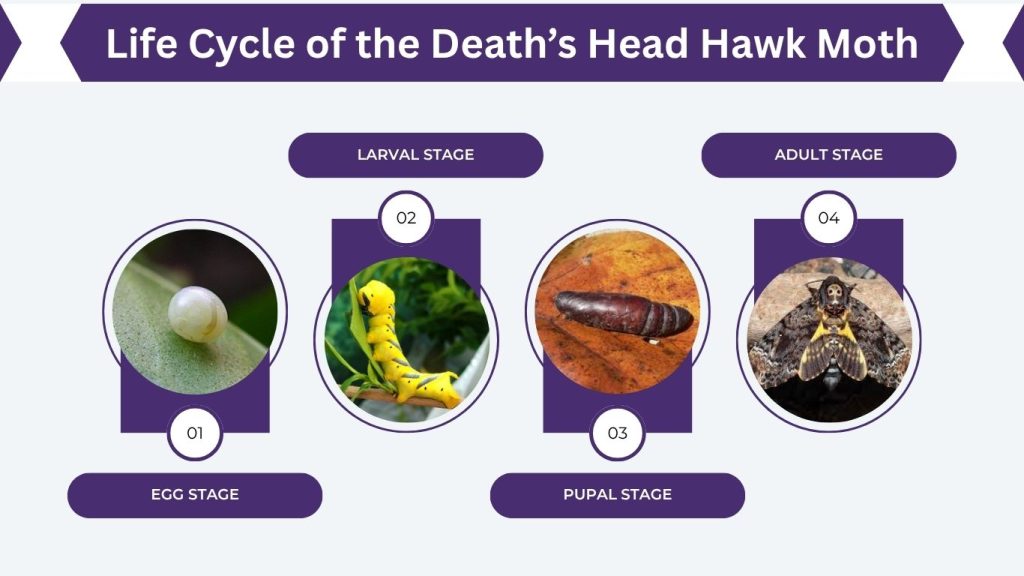
The life cycle of the Death’s Head Hawk Moth is remarkable, demonstrating complete metamorphosis. From egg to caterpillar, pupa, and finally adult moth, each stage has unique adaptations that ensure survival. Understanding this cycle is essential for enthusiasts, researchers, and anyone interested in rearing these moths in captivity.
Egg Stage
- Laid on host plant leaves, usually solitary.
- Incubation lasts 4–10 days depending on temperature.
- Eggs are small, spherical, and pale green, blending with foliage.
Larval Stage (Caterpillar)
- Caterpillars are large, green, brown, or yellow with stripes and a tail horn.
- Feed aggressively on host plant leaves to build energy reserves.
- Undergo several molts before reaching the pupation stage.
Pupal Stage
- Caterpillar burrows into loose soil or leaf litter to form a cocoon.
- Metamorphosis occurs over 2–3 weeks (variable with climate).
- Pupa is dormant but sensitive to environmental conditions.
Adult Stage
- Emerges fully winged with signature skull marking.
- Capable of long nocturnal flights and honey-feeding behavior.
- Lifespan ranges from 2–6 weeks in the wild.
Cultural Significance and Symbolism
The Death’s Head Hawk Moth has fascinated humans for centuries due to its eerie skull-like marking. It features prominently in folklore, art, and modern media, often symbolizing death, mystery, or transformation.
Folklore and Mythology
- Considered an omen in European folklore.
- Associated with death, spirits, and supernatural occurrences.
Modern Cultural References
- Featured in The Silence of the Lambs as a symbol of transformation.
- Popular in tattoos and artistic depictions for its striking appearance.
Spiritual Meaning
- Represents change, mystery, and the cycle of life.
- Used in symbolic art to convey hidden knowledge or mortality.
Death’s Head Hawk Moth Care and Rearing in Captivity
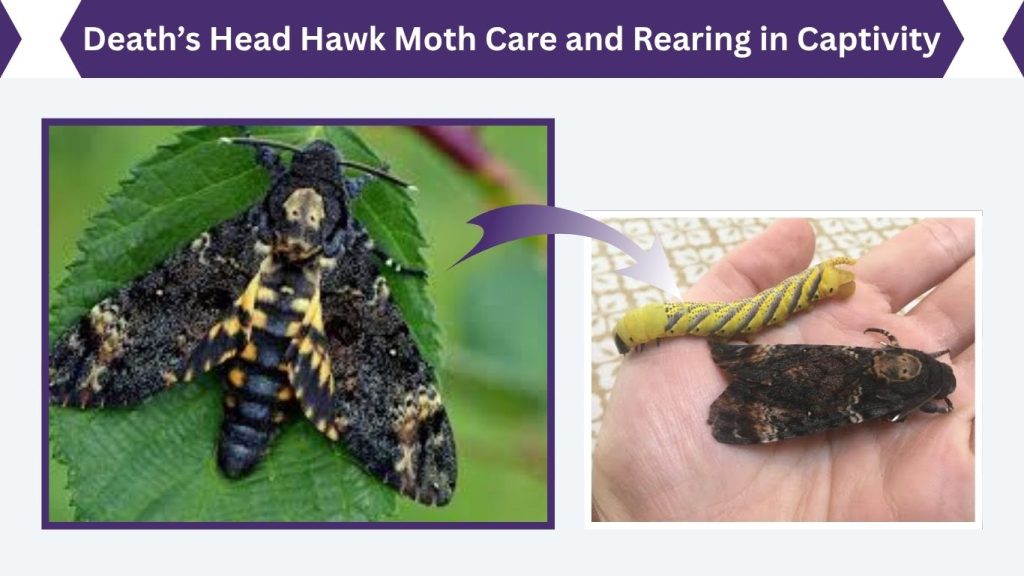
Enthusiasts can rear Death’s Head Hawk Moths in captivity with proper care. Maintaining temperature, humidity, and food supply is critical for healthy development.
Housing and Environment
- Enclosures must be spacious, secure, and ventilated.
- Maintain moderate temperature (22–28°C) and humidity (~60–70%).
- Use branches and host plants for caterpillars.
Feeding in Captivity
- Adults feed on honey or sugar water.
- Caterpillars require fresh leaves from host plants (Solanaceae family).
Breeding and Egg Care
- Collect eggs carefully from host plants.
- Monitor caterpillars for molting and health.
- Ensure pupae remain undisturbed during cocoon stage.
Safety and Interaction with Other Species
Death’s Head Hawk Moths are not poisonous or dangerous to humans, but their interaction with bees is unique. They can enter hives to feed on honey using stealth and chemical mimicry without triggering defensive attacks from bees.
- Safe to handle with minimal stress to the moth.
- Caterpillars are harmless but should not be ingested.
- Avoid overcrowding enclosures in captivity.
Conservation and Rarity
While not currently endangered, some populations are rare due to habitat loss and pesticide use. Preserving host plants and natural habitats is vital for their survival.
- Found in Europe, Africa, and the Middle East; rare in northern regions.
- Protect gardens and forests to maintain breeding grounds.
- Avoid collecting wild specimens excessively; use captive-bred individuals for research or hobbyist rearing.
Fun Facts and Trivia
- Can emit a squeaking sound when disturbed.
- Capable of raiding beehives for honey without getting stung.
- Named for the “death’s head” marking on its thorax.
- Featured in numerous tattoos, drawings, and art due to its striking appearance.
FAQs
Are Death’s Head Hawk Moths poisonous?
No, these moths are not poisonous or venomous. They are completely harmless to humans and pets, though their striking appearance can be intimidating.
What do Death’s Head Hawk Moths eat?
Caterpillars feed primarily on leaves of plants in the Solanaceae family, such as potatoes and tomatoes. Adult moths consume honey, nectar, or sugar solutions, sometimes raiding beehives to obtain honey.
How long do Death’s Head Hawk Moths live?
The adult moth usually lives 2–6 weeks, depending on environmental conditions. The full life cycle, from egg to adult, lasts several months.
Can Death’s Head Hawk Moths be kept as pets?
Yes, they can be reared in captivity with proper care. Caterpillars need fresh host plant leaves, and adults require nectar or honey for feeding. Enclosures should maintain moderate temperature and humidity.
Why is it called the Death’s Head Hawk Moth?
It is named for the distinctive skull-like marking on its thorax, which has historically inspired fascination, symbolism, and references in folklore, art, and modern media.