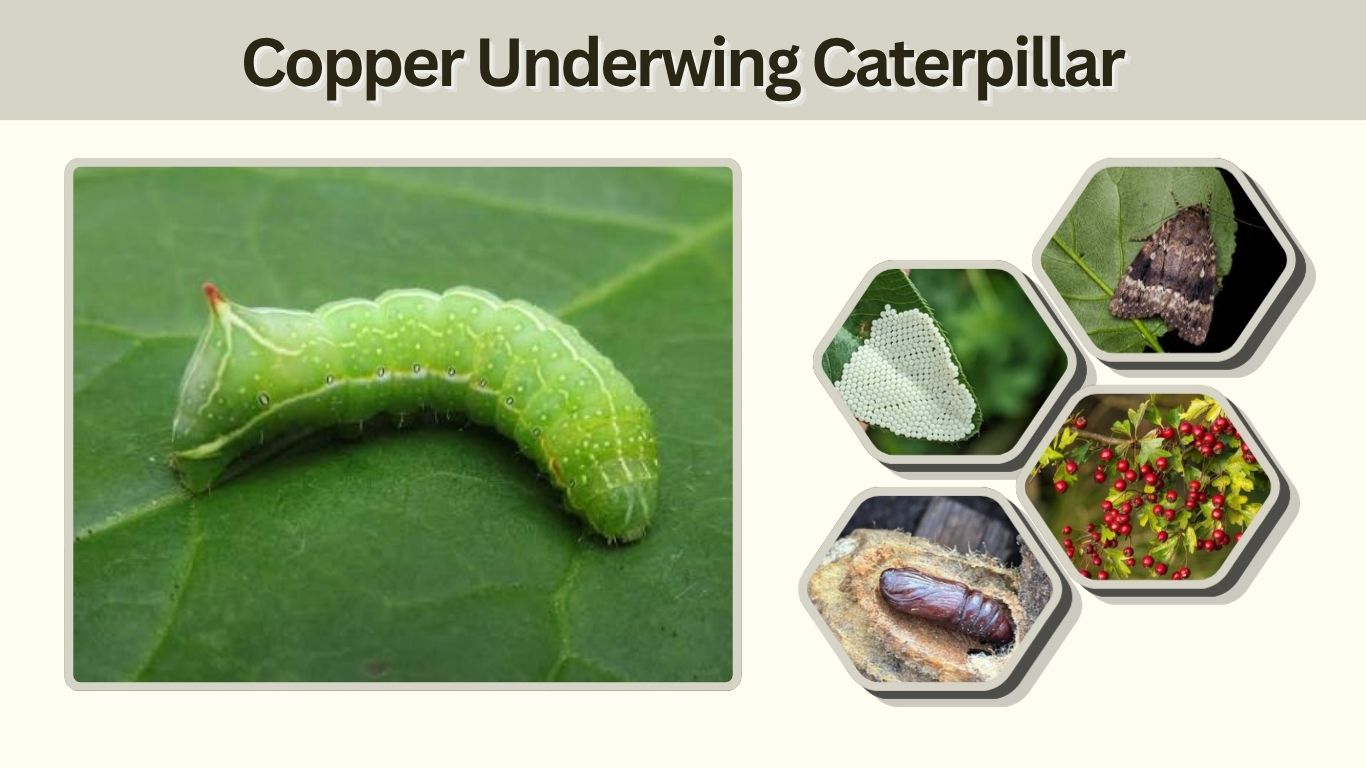
The copper underwing caterpillar is a distinctive green larva found on many trees, shrubs, and garden plants. In North America, the name commonly refers to the American copper underwing (Amphipyra pyramidoides), a noctuid moth whose caterpillar develops a noticeable raised hump toward the rear of its body. Although its unusual appearance can make it seem dangerous, the caterpillar is not considered poisonous or venomous. This guide covers identification, diet, stages, life cycle, adult moth appearance, and whether copper underwing caterpillars are good or bad.
What Is a Copper Underwing Caterpillar?
Copper underwing caterpillars are the larval stage of moths in the genus Amphipyra. The best-known North American species is the American copper underwing, Amphipyra pyramidoides, which occurs across the United States and southern Canada. The related Amphipyra pyramidea is also called the copper underwing and occurs in Europe.
The caterpillars feed mainly on leaves of broad-leaved trees and shrubs. Their bright green coloration helps them blend into foliage during spring and early summer.
Copper Underwing Caterpillar Identification
Look for these typical characteristics:
- Bright green to yellowish-green body
- Pale or whitish stripe along the side
- Small yellow or pale spots
- Fine, short hairs scattered across the body
- Green head
- Noticeably raised or humped section near the rear
- Slender body when young
- Larger and more strongly marked appearance when mature
American copper underwing larvae are especially recognized by their green coloration, pale lines, yellow spotting, and hump on the eighth abdominal segment.
Why Does It Have a Hump?
The raised section near the rear is a normal part of the caterpillar’s body shape rather than an injury or abnormal growth.
This distinctive feature has even contributed to names such as humped green fruitworm and pyramidal green fruitworm associated with copper underwings.
Copper Underwing Caterpillar Stages
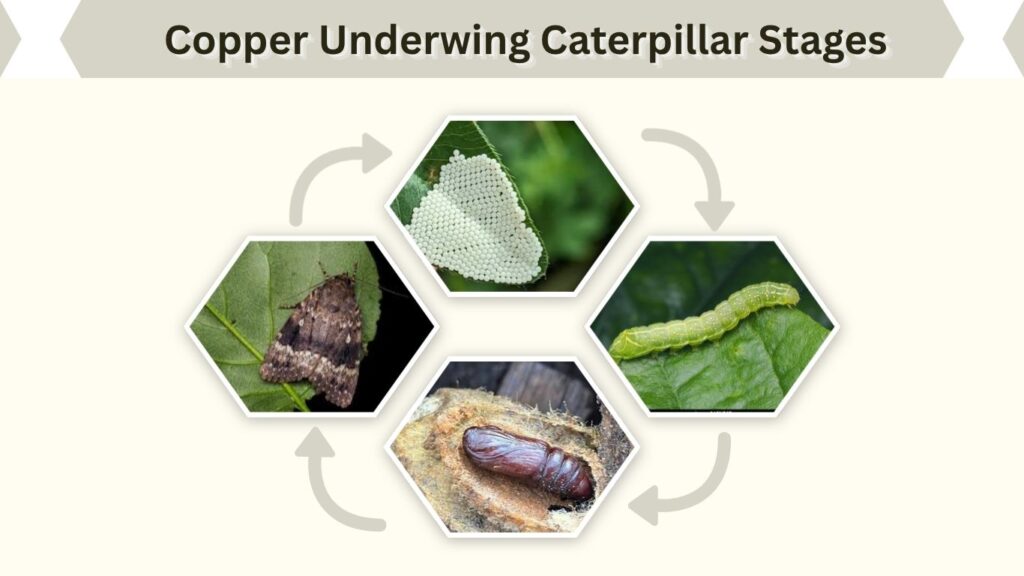
Like other moths, the copper underwing undergoes complete metamorphosis. Its development includes egg, caterpillar, pupa, and adult moth stages.
Each stage looks completely different from the one before it.
1. Egg
American copper underwings generally have one generation each year and overwinter as eggs.
The eggs remain dormant through colder conditions before hatching when temperatures and plant growth become favorable.
2. Baby Caterpillar
Young copper underwing caterpillars are small, slender, and green. Their markings may initially be less obvious than those of mature larvae.
They begin feeding on fresh leaves soon after hatching and increase rapidly in size.
3. Mature Caterpillar
As the caterpillar develops through successive molts, its body becomes larger and the characteristic markings become easier to see.
The rear hump is particularly useful when identifying a mature American copper underwing caterpillar.
4. Pupa
After completing its larval growth, the caterpillar stops feeding and prepares for pupation.
American copper underwing larvae can create a protected shelter by rolling or securing a leaf before transforming into the pupal stage.
5. Adult Moth
The fully developed adult eventually emerges as a brown moth with colorful hindwings hidden beneath its forewings.
Adults reproduce, and females lay eggs that begin the next generation.
What Do Copper Underwing Caterpillars Eat?
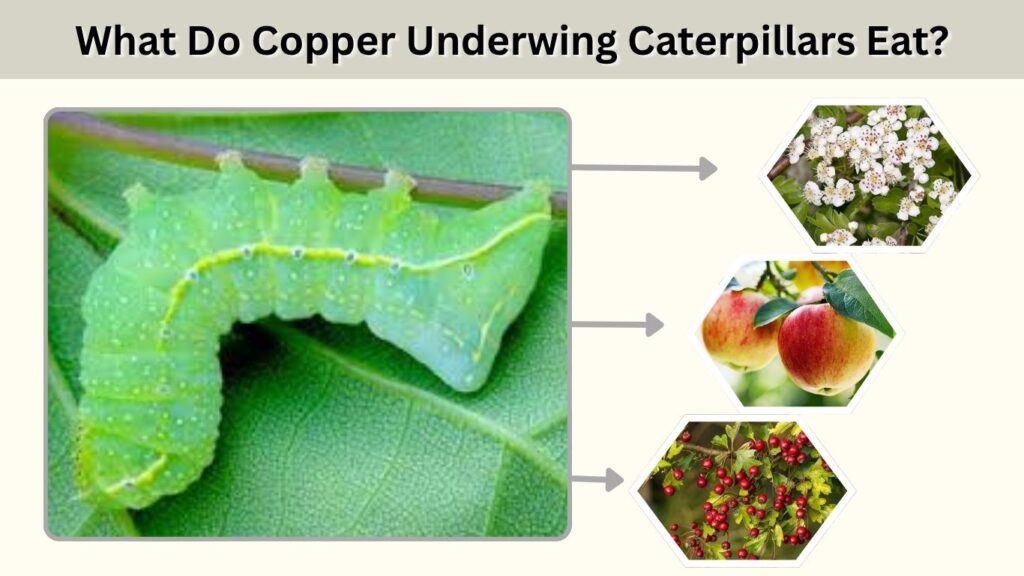
Copper underwing caterpillars are polyphagous, meaning they can feed on a variety of plants rather than depending on one host species.
American copper underwing larvae particularly use woody broad-leaved plants.
Common Food Plants
Their diet can include leaves from:
- Oak
- Maple
- Apple
- Hawthorn
- Walnut
- Basswood
- Grape
- Raspberry
- Greenbrier
- Other deciduous shrubs and trees
American copper underwing larvae have been documented feeding on many of these broadleaf plants.
European copper underwing caterpillars also use numerous trees and shrubs, with oak being one of their principal food plants.
How Do They Feed?
The caterpillar usually remains on foliage and chews leaf tissue.
Small larvae consume relatively little, while larger caterpillars can create more noticeable missing sections along leaf edges. Because individual larvae eventually become fairly large, their feeding can occasionally attract attention on ornamental trees or garden shrubs.
Is the Copper Underwing Caterpillar Good or Bad?
Finding a large green caterpillar on a valuable plant can make gardeners concerned about possible damage. Copper underwing caterpillars are plant feeders, but the presence of one or two does not automatically mean a serious infestation.
Are They Bad for Plants?
Copper underwing caterpillars can:
- Chew holes or edges from leaves
- Remove portions of young foliage
- Feed on ornamental shrubs
- Occasionally feed on fruit trees
- Cause visible damage when several larvae occur together
However, they generally do not require action simply because a single caterpillar has appeared.
Do They Have Any Benefits?
Copper underwings are part of natural woodland and garden food webs.
The caterpillars and adult moths can serve as prey for insect-eating wildlife, while the species itself contributes to the biodiversity of habitats containing deciduous trees and shrubs.
Are Copper Underwing Caterpillars Poisonous?
No, copper underwing caterpillars are not known as poisonous or venomous caterpillars.
Their green body, markings, and raised hump can look unusual, but they do not possess the prominent venomous spines associated with dangerous caterpillars such as puss caterpillars or some slug moth larvae.
Can You Touch One?
It is still better to avoid unnecessarily handling wild caterpillars.
If one needs to be moved, placing a leaf or small container in front of it allows the caterpillar to crawl away without being squeezed or injured. Washing your hands afterward is a sensible precaution when handling insects or plants.
Copper Underwing Moth Identification
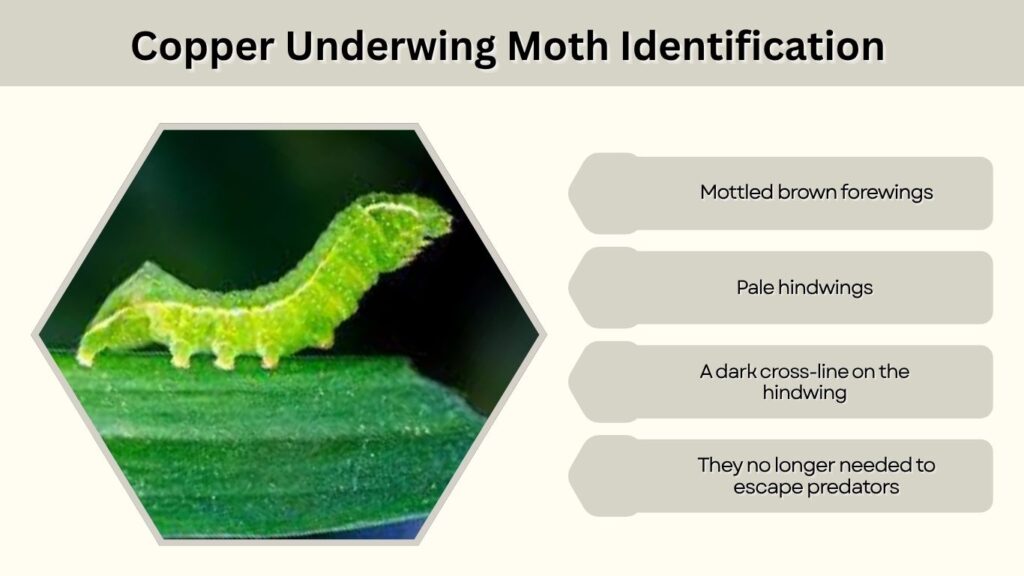
The adult looks dramatically different from the green caterpillar. American copper underwing moths have mottled brown forewings that provide camouflage when they rest against bark or other dark surfaces.
Their brighter hindwings are usually hidden while resting.
What Does a Copper Underwing Moth Look Like?
American copper underwing moths generally have:
- Mottled brown forewings
- Dark and light brown markings
- Pale hindwings
- Coppery-orange coloration on the hindwings
- A dark cross-line on the hindwing
- Broad, triangular wings when spread
- Approximately 38–52 mm wingspan
The orange-copper color that becomes visible on the hindwings explains the common name copper underwing.
American Copper Underwing
The American copper underwing (Amphipyra pyramidoides) occurs in the United States and southern Canada. Adults may be seen from summer into fall, with timing varying by location.
Its brown camouflage can make the moth surprisingly difficult to notice when its wings are closed.
Copper Underwing Caterpillar Life Cycle
The entire copper underwing life cycle follows four major developmental stages. In the American species, only one generation is generally produced each year.
Egg to Caterpillar
The species spends winter in the egg stage. When conditions become suitable, eggs hatch and larvae begin feeding during spring.
Caterpillar to Pupa
Caterpillars grow through a series of molts while eating leaves from trees and shrubs.
Once mature, they stop feeding and prepare for pupation, during which the larval body is reorganized into the adult moth.
Pupa to Adult Moth
Adult American copper underwing moths appear mainly from midsummer into fall. The adults reproduce and produce eggs that remain through winter, completing the annual cycle.
Copper Underwing vs Svensson’s Copper Underwing
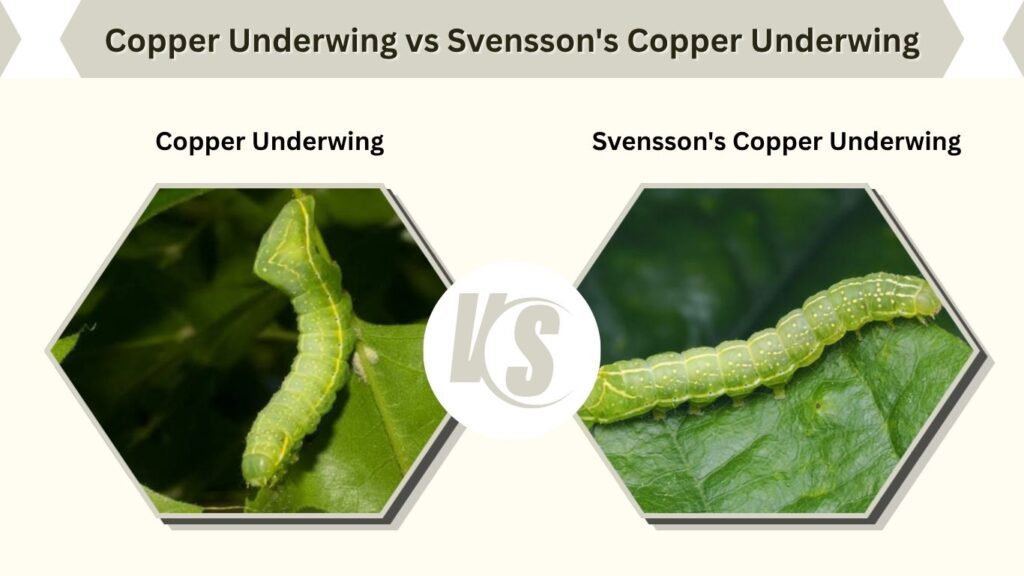
Another species that can cause identification confusion is Svensson’s copper underwing (Amphipyra berbera).
It is particularly similar to the Eurasian copper underwing (Amphipyra pyramidea), and adults can be difficult to separate by casual observation. UKMoths notes that multiple subtle characteristics may be necessary for reliable identification.
Key Points to Remember
- American copper underwing: Amphipyra pyramidoides
- Eurasian copper underwing: Amphipyra pyramidea
- Svensson’s copper underwing: Amphipyra berbera
- All belong to the genus Amphipyra
- Their larvae feed primarily on trees and shrubs
- Adult identification can be more difficult than caterpillar identification
Therefore, location is important when trying to determine exactly which copper underwing species you have found.
FAQs
What Does a Copper Underwing Caterpillar Look Like?
A copper underwing caterpillar is typically bright green with pale longitudinal markings, small yellowish spots, and a distinctive raised hump near the rear. The green coloration provides excellent camouflage while the caterpillar feeds among leaves.
Is a Copper Underwing Caterpillar Poisonous?
No. Copper underwing caterpillars are not known to be poisonous or venomous. They lack the specialized venomous spines associated with dangerous stinging caterpillars. Avoid unnecessary handling, however, because wild caterpillars are delicate and can be easily injured.
What Do Copper Underwing Caterpillars Eat?
American copper underwing caterpillars eat leaves from many broad-leaved woody plants, including oak, maple, apple, hawthorn, walnut, grape, raspberry, basswood, and greenbrier. Their ability to feed on numerous plant species makes them relatively flexible feeders.
Is a Copper Underwing Caterpillar Good or Bad?
It can chew foliage, so gardeners may consider it a minor plant pest. However, a small number of caterpillars normally does not mean a major problem. They are also natural members of woodland and garden ecosystems.
Does a Copper Underwing Caterpillar Become a Butterfly?
No. A copper underwing caterpillar develops into a moth, not a butterfly. After completing its feeding period, the caterpillar enters the pupal stage and later emerges as an adult copper underwing moth with brown forewings and copper-colored hindwings.