
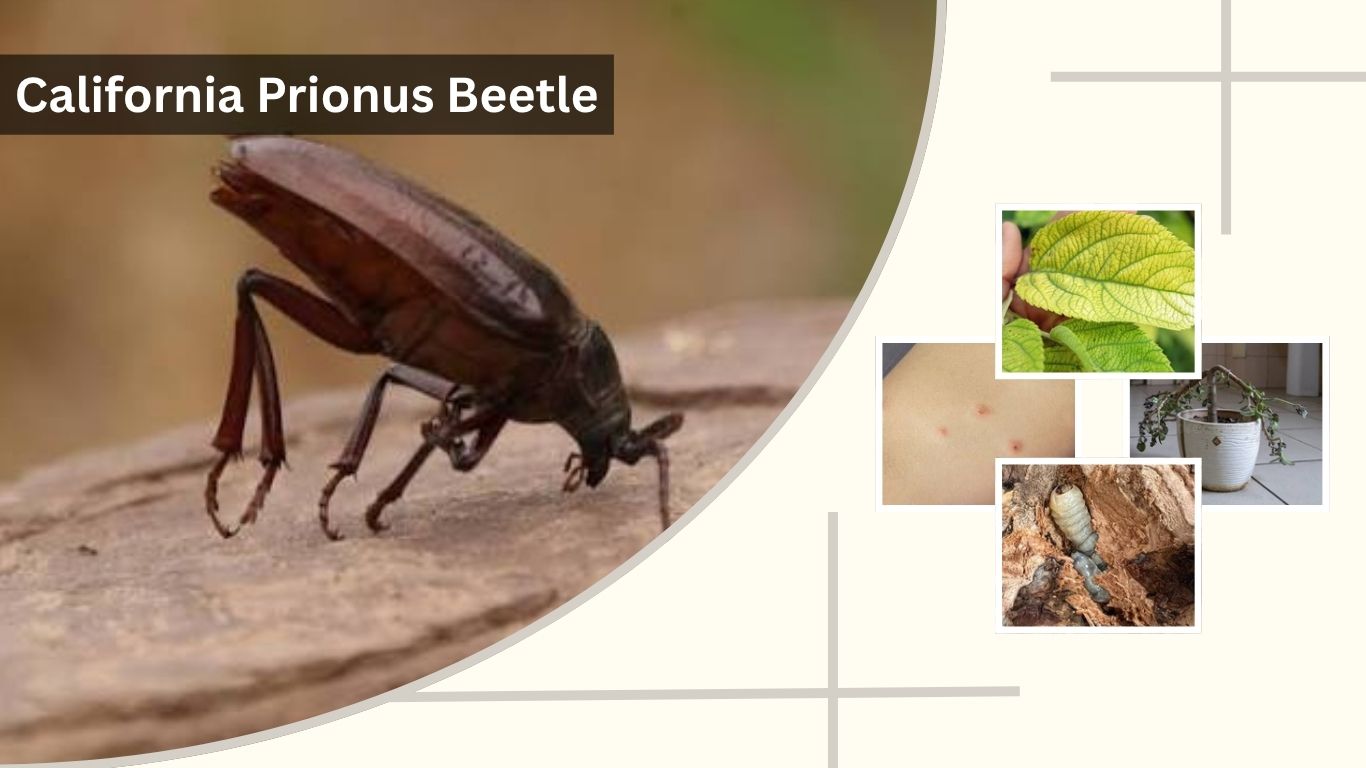
The California prionus beetle is a large, reddish-brown longhorned beetle native to western North America. Also called the California root borer, it often attracts attention because of its powerful jaws, oversized body, and loud buzzing flight near outdoor lights. Although adults are not venomous and usually pose little danger to people, their larvae can seriously damage tree and crop roots underground. Understanding California prionus beetle identification, bites, sounds, feeding habits, life cycle, and control methods can help homeowners recognize these insects and protect vulnerable plants.
What Is a California Prionus Beetle?
The California prionus beetle (Prionus californicus) belongs to the longhorn beetle family Cerambycidae. It is native to western North America and occurs in forests, orchards, gardens, and wooded residential areas.
This species is also known as the California root borer because its larvae develop underground and feed on tree roots. Unlike adults, which live for only a short period, larvae spend several years developing beneath the soil.
Although these beetles contribute to natural decomposition, heavy larval infestations can damage valuable trees and agricultural crops.
California Prionus Beetle Identification
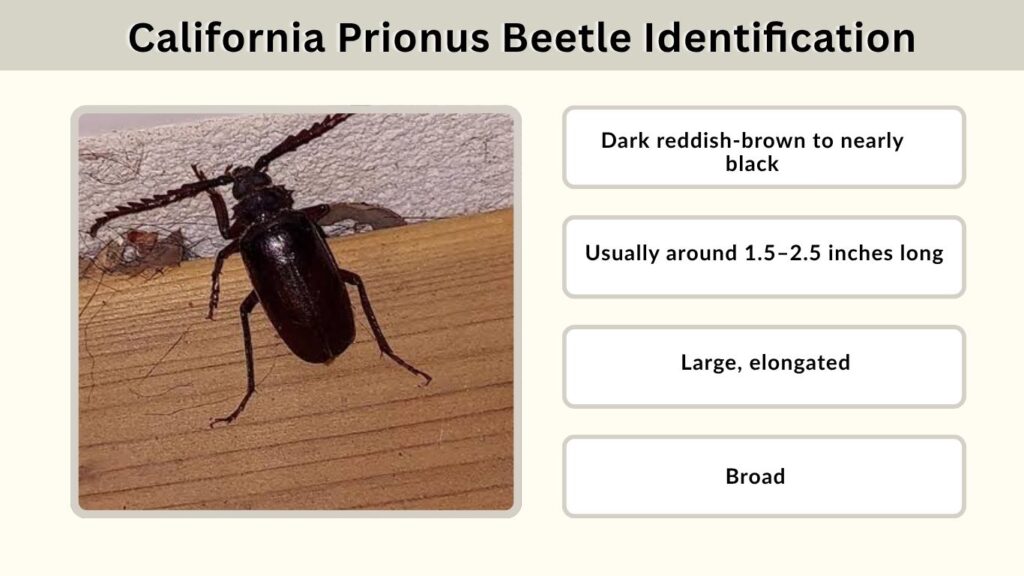
California prionus beetles are among the larger longhorned beetles found in western North America. Adults have sturdy bodies, prominent antennae, and dark reddish-brown coloring.
They commonly measure about 1.5 to 2.5 inches long, although size varies between individuals and sexes.
Physical Characteristics of California Prionus Beetles
Common identifying features include:
- Body color: Dark reddish-brown to nearly black, with a relatively glossy appearance.
- Body size: Usually around 1.5–2.5 inches long.
- Body shape: Large, elongated, and somewhat cylindrical.
- Antennae: Long, segmented, and distinctly sawlike, especially in males.
- Thorax: Broad, with pointed projections along its sides.
- Wings: Hard wing covers protecting functional flight wings.
Male vs. Female California Prionus Beetles
Male California prionus beetles are generally smaller than females and have more strongly serrated antennae. They are active flyers and frequently approach lights during summer evenings.
Females are typically larger, heavier, and less mobile. They produce chemical signals called pheromones that attract males for mating.
Female beetles also possess an ovipositor used during reproduction. This structure may resemble a stinger, but it does not inject venom.
California Prionus Beetle Habitat and Range
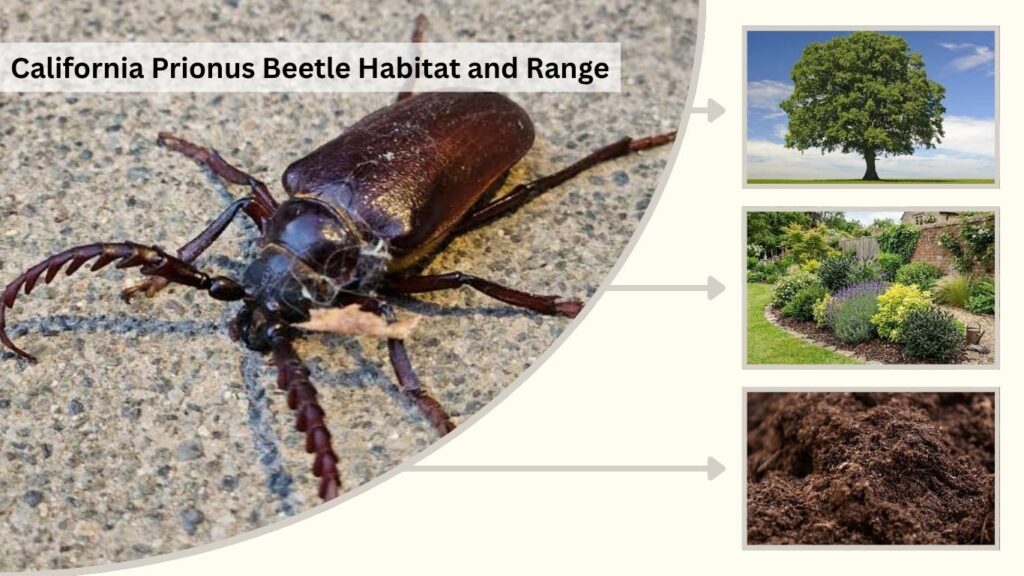
California prionus beetles occur across western North America, from parts of Mexico north into Alaska. They inhabit forests, agricultural landscapes, orchards, and areas containing suitable woody plants.
Despite their common name, they are not restricted to California. Established populations also occur in Washington, Oregon, Idaho, Utah, and other western regions.
Where Do California Prionus Beetles Live?
Adult beetles spend much of their time around trees, shrubs, and soil surfaces where suitable breeding habitats exist.
They are particularly noticeable during summer, when they emerge from underground pupal chambers to reproduce.
Larvae live below the soil surface, feeding on living roots and sometimes dead or decaying woody material. Areas containing susceptible fruit trees and shrubs can support developing populations.
Do California Prionus Beetles Bite?
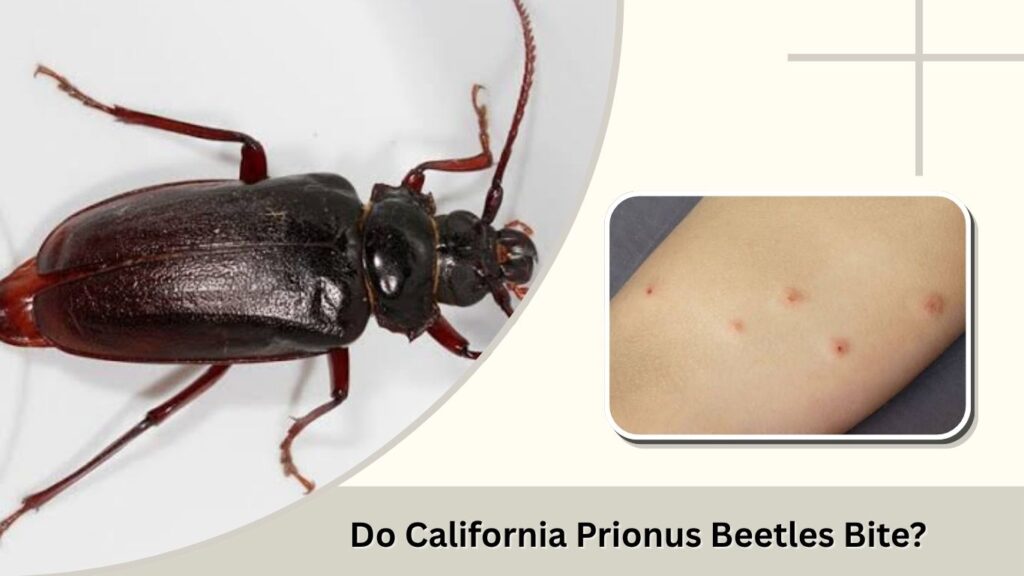
Yes, California prionus beetles can bite humans if handled roughly or trapped against the skin. Their large mandibles are capable of delivering a noticeable pinch.
However, they are not aggressive toward people and do not intentionally seek human contact.
California prionus beetles are not venomous, and they do not have functional stingers. Their primary defenses involve escaping or using their jaws when restrained.
What Happens If a California Prionus Beetle Bites You?
A bite may cause temporary pain, redness, or minor skin irritation. Strong pinches can occasionally break the skin, although serious injuries are uncommon.
Wash the affected area with soap and clean water, then apply a cold compress if necessary.
If the skin is broken, keep the wound clean and monitor for signs of infection.
Avoid picking up these beetles with bare hands. Instead, use a container to relocate them safely.
Why Do California Prionus Beetles Make Sounds?
California prionus beetles can produce a loud buzzing sound while flying. Their relatively large bodies and powerful wings create a noise sometimes compared to a small approaching airplane.
Adults are especially active around dusk and during nighttime hours.
Can California Prionus Beetles Fly?
Yes, California prionus beetles possess functional wings and can fly. Males are particularly active flyers because they search for females during the mating season.
Adults frequently approach artificial lights, including porch lights and illuminated windows.
Their noisy flight can make them seem intimidating, but flying beetles do not normally attack people.
California Prionus Beetle Larvae and Diet
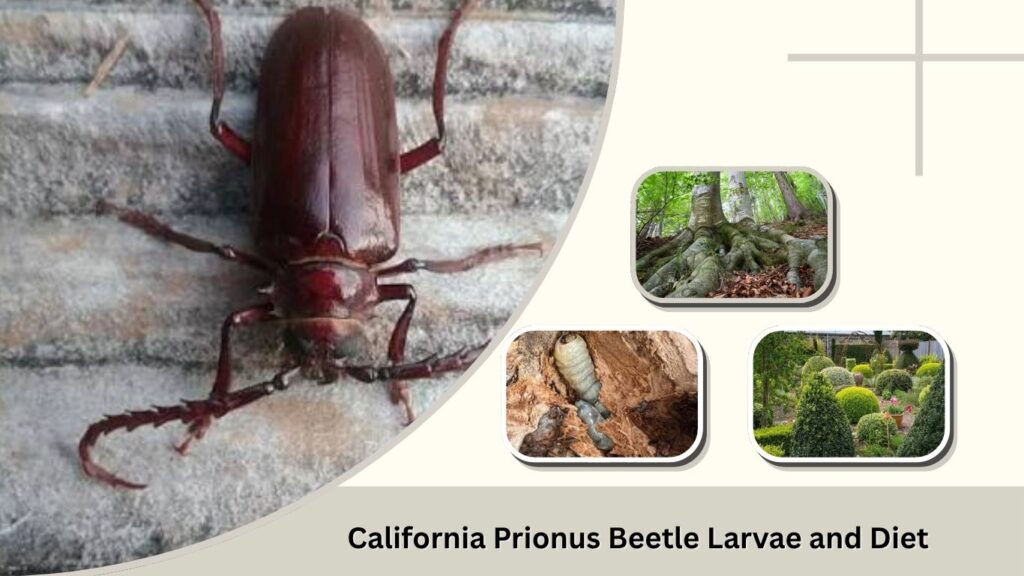
California prionus larvae are responsible for most of the species’ damage to plants. Unlike adults, they spend several years underground consuming woody root tissues.
Their feeding habits allow them to survive in forests and cultivated landscapes, but heavy populations can seriously weaken susceptible plants.
California Prionus Beetle Larvae Appearance
Larvae are large, creamy-white, legless grubs with cylindrical bodies and dark brown heads.
Fully developed larvae may reach approximately 4 inches long. Their powerful mouthparts allow them to chew through woody roots and create extensive feeding tunnels.
What Do California Prionus Beetles Eat?
California prionus larvae feed primarily on the roots of trees, shrubs, and perennial plants.
Common hosts include cherry, peach, apricot, apple, cottonwood, and various ornamental trees. Hop plants are also vulnerable to serious infestations.
Adult California prionus beetles generally do not feed. Their short adult lives focus mainly on mating and reproduction.
California Prionus Beetle Life Cycle
California prionus beetles undergo complete metamorphosis, passing through egg, larval, pupal, and adult stages.
Their complete life cycle typically takes three to five years, with most development occurring underground.
Egg and Larval Stages
After mating, females lay eggs in the soil near suitable host plants.
Newly hatched larvae move underground and locate smaller roots for feeding. As they grow, they attack larger roots and may eventually reach the root crown near the base of the trunk.
Pupal and Adult Stages
Mature larvae construct underground chambers where they transform into pupae.
Adult beetles typically emerge during summer, with emergence timing varying by region and temperature.
Adults usually survive only a few weeks, during which they search for mates and reproduce.
Signs of California Prionus Beetle Damage
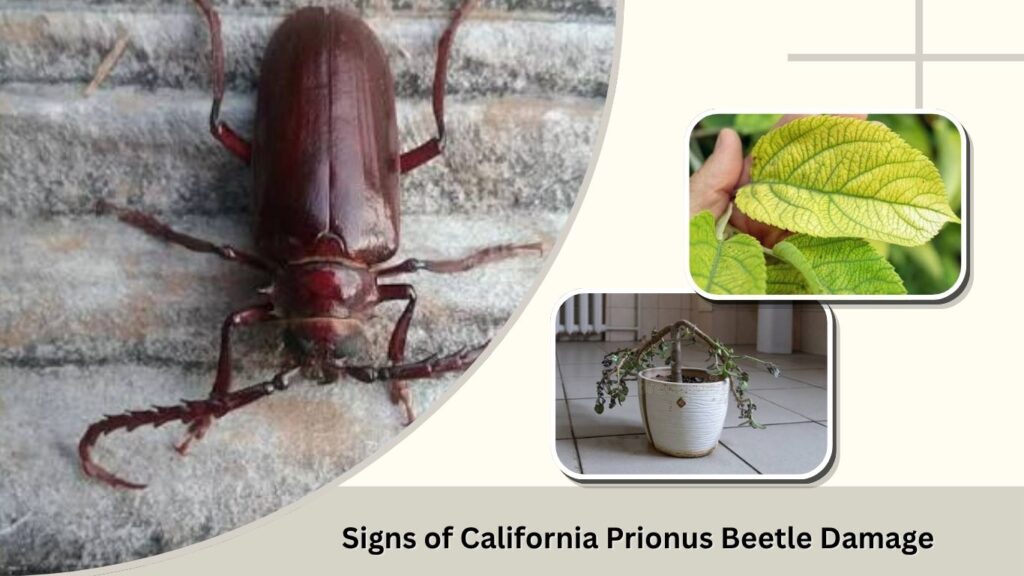
California prionus beetle damage develops mainly beneath the soil surface, making early infestations difficult to recognize.
Larvae chew grooves and tunnels through roots, reducing the plant’s ability to absorb water and nutrients.
Common Signs of Root Borer Infestation
Important warning signs include:
- Yellowing leaves: Foliage becomes pale because damaged roots cannot absorb sufficient nutrients.
- Wilting branches: Trees show moisture stress, particularly during hot weather.
- Reduced growth: New shoots become smaller, and overall plant vigor declines.
- Canopy dieback: Branches gradually weaken or die.
- Damaged roots: Excavated roots show deep feeding grooves or internal tunnels.
- Tree decline: Severe infestations may eventually kill vulnerable trees.
These symptoms can also result from drought, root diseases, or poor soil conditions, so proper identification is essential.
How to Get Rid of California Prionus Beetles
California prionus beetle control is challenging because larvae remain protected underground for several years.
Managing infestations requires accurate identification, regular monitoring, and suitable plant-care practices.
Effective California Prionus Beetle Control Methods
Useful management approaches include:
- Inspect affected trees: Examine declining plants for root damage and other possible causes.
- Monitor adult beetles: Use species-specific pheromone traps where available to detect adult activity.
- Maintain tree health: Provide appropriate irrigation and reduce unnecessary plant stress.
- Manage severely infested plants: Consult a specialist about removing badly damaged plants and infested root material.
- Seek professional advice: Contact a local agricultural extension service when valuable trees or commercial crops are affected.
Does Insecticide Work Against California Prionus?
Insecticide treatment is difficult because developing larvae remain deep within roots and surrounding soil.
There is no universally reliable homeowner spray for eliminating an established infestation.
Some agricultural pest management programs use specialized treatments, but availability and effectiveness depend on the crop, location, and pesticide registration.
Never apply insecticides unless their labels specifically permit the intended application.
How to Prevent California Prionus Beetle Infestations
Prevention focuses on supporting plant health and identifying root problems before significant damage develops.
Healthy, properly maintained trees may better tolerate limited root injury, although even vigorous plants can suffer from heavy infestations.
California Prionus Prevention Tips
- Water appropriately: Prevent severe drought stress without keeping soil constantly saturated.
- Protect root systems: Avoid unnecessary digging and soil compaction around trees.
- Monitor susceptible plants: Inspect fruit trees and ornamental shrubs for unexplained decline.
- Use pheromone monitoring: Track adult activity where suitable monitoring programs are available.
- Investigate root damage: Seek professional identification before choosing pest treatments.
These methods help improve tree resilience and support early infestation detection.
FAQs
1. Are California Prionus Beetles Dangerous?
California prionus beetles are not considered dangerous to humans. They do not possess venom or stingers, although their strong jaws can deliver a painful pinch when handled.
2. Are California Prionus Beetles Invasive?
No. California prionus beetles are native to western North America. However, their larvae can become serious agricultural pests when populations damage fruit trees or other cultivated plants.
3. How Long Do California Prionus Beetles Live?
Their complete life cycle usually lasts three to five years. Most of this period is spent underground as larvae, while adults generally survive only a few weeks.
4. Why Are California Prionus Beetles Attracted to Lights?
Adult California prionus beetles are nocturnal or active around dusk and often respond to artificial lighting. Males are particularly common around outdoor lights during the mating season.
5. Should You Kill a California Prionus Beetle?
Killing an occasional adult is generally unnecessary. If larvae are causing confirmed damage to valuable trees or crops, targeted pest management may be appropriate after professional assessment.
