
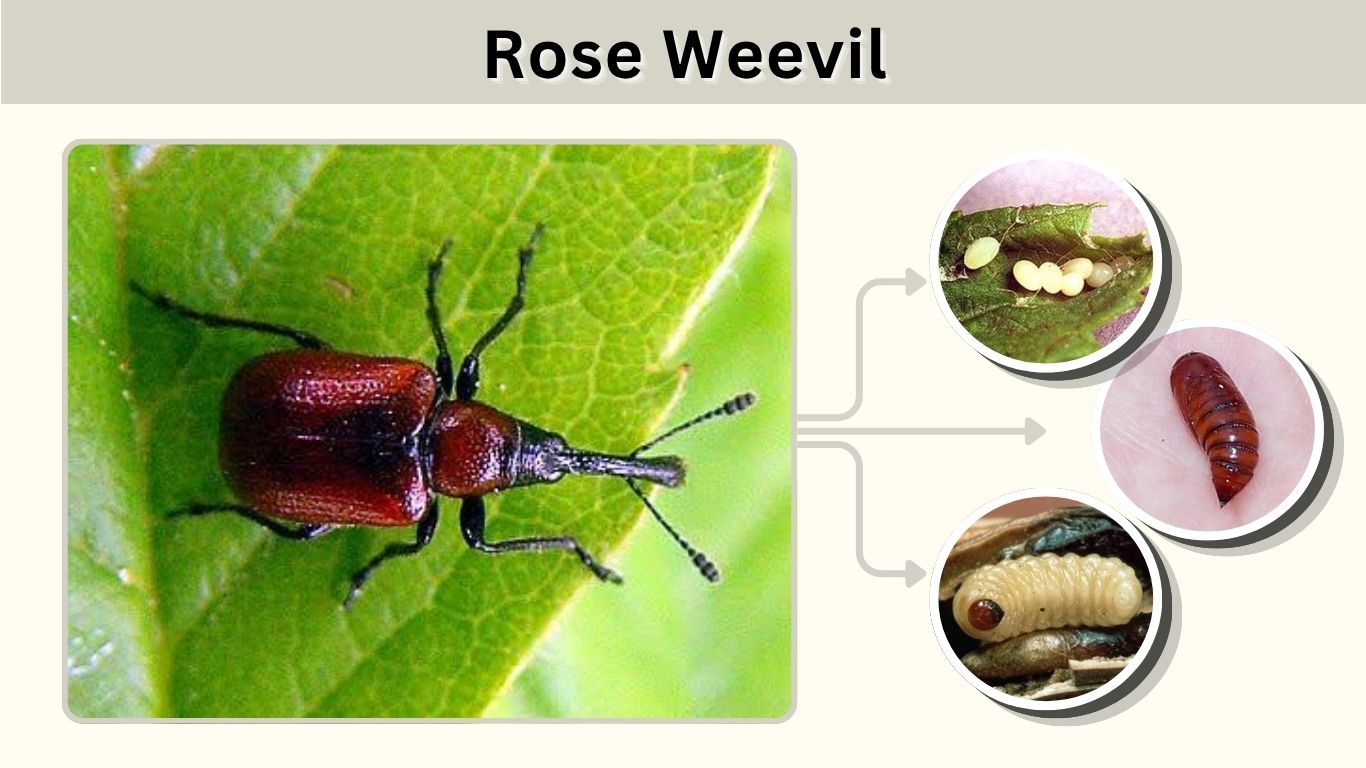
The rose weevil is a common garden pest that damages rose buds, flowers, and leaves through its feeding activities. These small beetles have distinctive snouts and use their specialized mouthparts to puncture developing plant tissues. Some species lay eggs inside rosebuds, where their larvae feed and interfere with flower development. Others attack leaf margins and occasionally feed on roots during their larval stage. Although rose weevils rarely kill established plants, heavy infestations can reduce flowering and damage ornamental growth. Understanding their identification, life cycle, and treatment methods helps protect healthy roses.
What Is a Rose Weevil?
The term rose weevil describes several snout beetles that feed on rose plants. Two commonly encountered species are the rose curculio (Merhynchites bicolor) and Fuller’s rose weevil (Naupactus godmani, also known under older scientific names).
Rose curculios primarily attack flower buds, while Fuller’s rose weevils commonly feed along leaf margins. Both can cause noticeable damage, but their life cycles and feeding habits differ.
Rose Weevil Identification
Rose weevils have distinctive physical characteristics that help gardeners identify them.
- Common Name: Rose weevil or rose curculio
- Scientific Name: Merhynchites bicolor (rose curculio)
- Order: Coleoptera
- Adult Size: Approximately ¼ inch long for rose curculios
- Body Color: Reddish-brown to red with black markings
- Snout: Long and narrow, with specialized chewing mouthparts
- Legs: Usually dark or black
- Larvae: Pale, legless grubs with brown heads
Fuller’s rose weevil looks different. It has a grayish-brown body, a shorter, broader snout, and an adult length of approximately ⅜ inch.
Types of Weevils Found on Roses
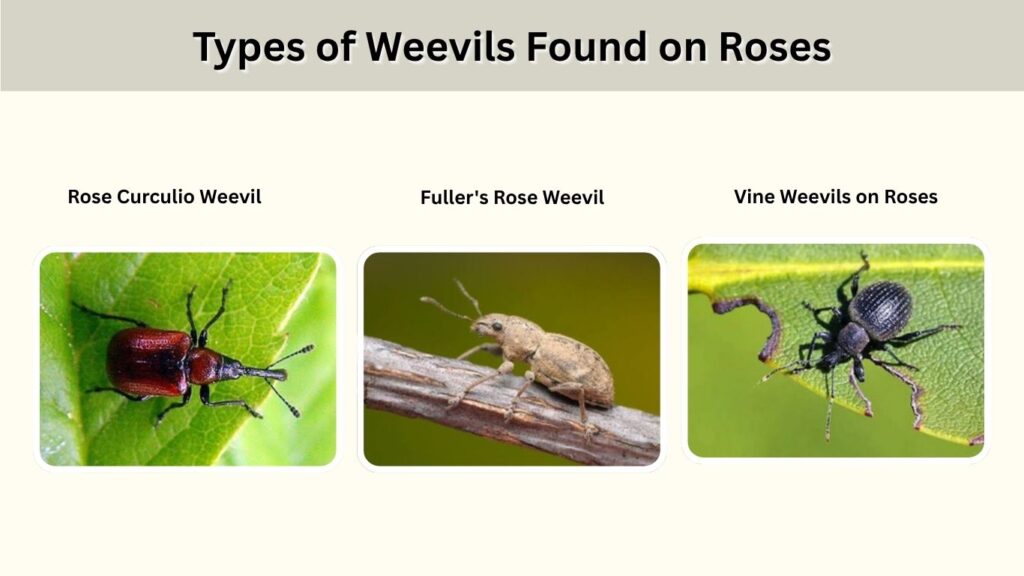
Several weevil species may feed on rose bushes. Identifying the species is important because different weevils attack different parts of the plant.
Rose Curculio Weevil
The rose curculio is a small reddish beetle with a long, narrow snout. It commonly attacks rosebuds and flowers, particularly on certain yellow and white rose varieties.
Adults chew holes into developing buds to feed and deposit eggs. Their larvae develop inside the flowers, often damaging them before they fully open.
Fuller’s Rose Weevil
Fuller’s rose weevil is a grayish-brown beetle that feeds on many ornamental and agricultural plants.
Adults chew irregular notches along leaf margins, giving rose foliage a ragged appearance. Their larvae live underground and feed on roots.
Unlike rose curculios, adult Fuller’s rose weevils cannot fly and usually climb plants to reach their leaves.
Vine Weevils on Roses
Black vine weevils (Otiorhynchus sulcatus) may also attack roses.
Adults feed at night and create notches along leaf edges. Their larvae live in the soil and can damage roots, particularly in container-grown plants.
Heavy root feeding can weaken young or stressed roses, making correct identification essential.
Rose Weevil Damage and Symptoms
Rose weevil damage depends on the species involved and the stage of insect development. Adults typically feed on leaves, buds, or petals, while larvae may damage flower tissues or roots.
Infestations are often most noticeable during the active growing season when roses are producing new foliage and flowers.
Common Signs of Rose Weevil Infestation
Look for the following symptoms:
- Holes in Rosebuds: Small feeding punctures appear on unopened flower buds.
- Damaged Petals: Flowers develop irregular holes or ragged edges.
- Wilting Buds: Severely injured buds may droop or fail to open.
- Notched Leaves: Adult Fuller’s rose weevils chew curved sections from leaf margins.
- Damaged Rose Hips: Rose curculio larvae may feed inside developing fruits.
- Visible Beetles: Small snout beetles appear on flowers, leaves, or stems.
- Poor Flower Development: Heavy infestations reduce the number of healthy blossoms.
These symptoms can resemble damage from other pests, so inspecting plants for actual beetles is helpful.
Rose Weevil Life Cycle
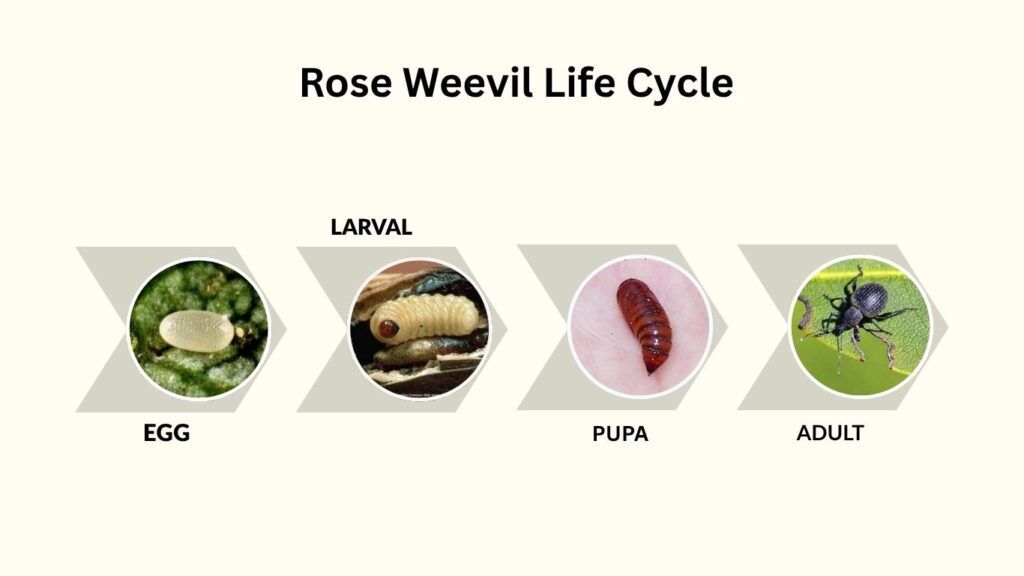
Rose weevils develop through four stages: egg, larva, pupa, and adult. However, the location of these stages varies among species.
Rose curculios generally complete one generation annually, while Fuller’s rose weevils also commonly produce one generation per year.
Rose Curculio Life Cycle
Adult rose curculios emerge from the soil during spring and begin feeding on developing flower buds.
Females chew small openings into buds or rose hips and deposit their eggs inside. After hatching, larvae feed within the developing flower tissues.
Mature larvae eventually leave the flowers, fall to the ground, and enter the soil.
They typically overwinter as mature larvae and pupate during late winter or early spring before emerging as adults.
Fuller’s Rose Weevil Life Cycle
Fuller’s rose weevil reproduces without mating because its populations consist of females.
Adults deposit clusters of eggs in protected locations, including bark crevices and sheltered plant surfaces.
After hatching, the larvae drop into the soil and feed on plant roots for several months.
They eventually pupate underground before emerging as adult beetles. Adults are primarily active at night and feed on foliage.
How to Get Rid of Rose Weevils Naturally
Getting rid of rose weevils often begins with simple physical and cultural control methods. Small infestations can usually be managed without chemical pesticides.
Early detection is especially important for rose curculios because their larvae become difficult to reach once they enter flower buds.
Natural Rose Weevil Control Methods
- Inspect Rosebuds Regularly: Examine developing buds and flowers for feeding holes, damaged petals, and adult beetles.
- Handpick Adult Weevils: Remove visible insects by hand and place them in a container of soapy water.
- Shake Affected Branches: Hold a container beneath infested flowers and gently shake the stems to dislodge adult beetles.
- Remove Damaged Buds: Prune rosebuds containing larvae before the insects complete development.
- Dispose of Infested Flowers: Place affected buds and rose hips in sealed household waste rather than garden compost.
- Monitor Nearby Plants: Inspect other roses and susceptible plants regularly for signs of additional infestations.
Repeating these practices during the growing season can reduce rose curculio populations and help protect new flowers.
Rose Weevil Insecticide Treatment
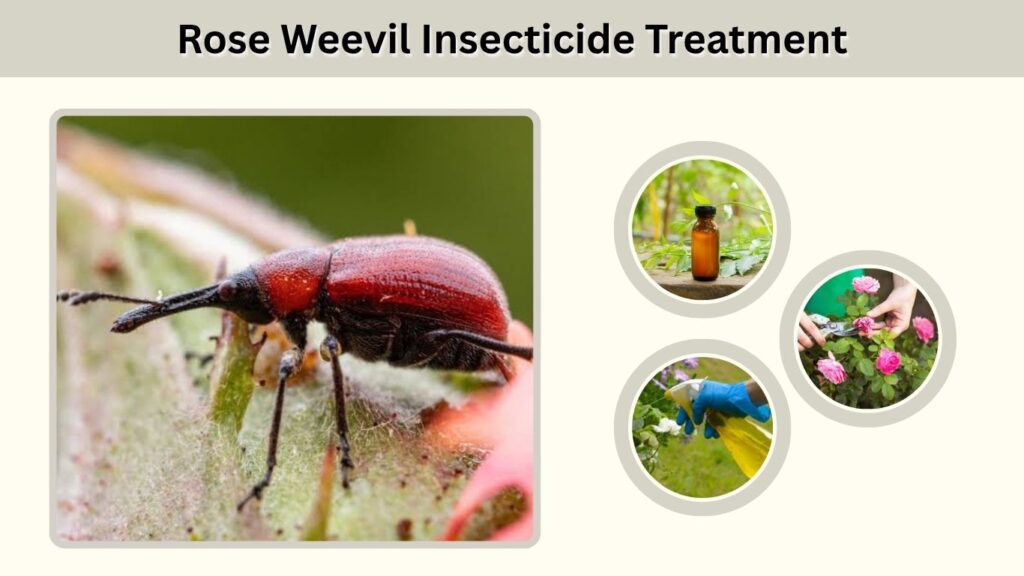
Rose weevil insecticide treatment may be considered when infestations become severe and manual control is insufficient.
However, chemical control depends on identifying the correct weevil species. Products used against exposed adults may not reach larvae protected inside flower buds or underground.
What Insecticide Kills Rose Weevils?
Certain insecticides may control adult rose curculios when appropriately registered and applied according to their labels.
However, routine spraying is generally unnecessary for minor infestations.
For Fuller’s rose weevil, insecticides are usually not recommended in home gardens because feeding damage rarely threatens established, healthy plants.
Broad-spectrum sprays can also harm beneficial insects, including pollinators visiting rose flowers.
Can Neem Oil Control Rose Weevils?
Neem oil is sometimes used against garden pests because it can interfere with feeding or development in susceptible insects.
However, evidence for reliable control of rose curculios or Fuller’s rose weevils is limited.
Neem oil cannot reliably reach rose curculio larvae hidden inside flower buds or Fuller’s rose weevil larvae feeding underground.
For most home gardens, manual removal and targeted sanitation are more dependable first steps.
How to Prevent Rose Weevil Infestations
Preventing rose weevil damage requires regular monitoring and proper rose care. Healthy rose bushes can generally tolerate moderate insect feeding better than plants already weakened by environmental stress.
Gardeners should begin inspecting flower buds during spring and continue monitoring throughout the flowering season.
Effective Rose Weevil Prevention Methods
- Inspect New Growth: Check developing buds and young leaves for feeding damage.
- Remove Infested Buds: Prune damaged flowers before larvae complete development.
- Maintain Garden Sanitation: Collect fallen infested buds and rose hips.
- Keep Roses Healthy: Provide suitable sunlight, water, nutrients, and airflow.
- Monitor Susceptible Varieties: Pay extra attention to roses that experienced previous curculio damage.
- Encourage Natural Predators: Maintain garden diversity and avoid unnecessary broad-spectrum pesticides.
- Reduce Climbing Access: For flightless Fuller’s rose weevils, remove vegetation bridges that allow insects to climb onto plants.
Consistent prevention can reduce recurring damage without unnecessarily exposing beneficial insects to pesticides.
What Eats Rose Weevils?
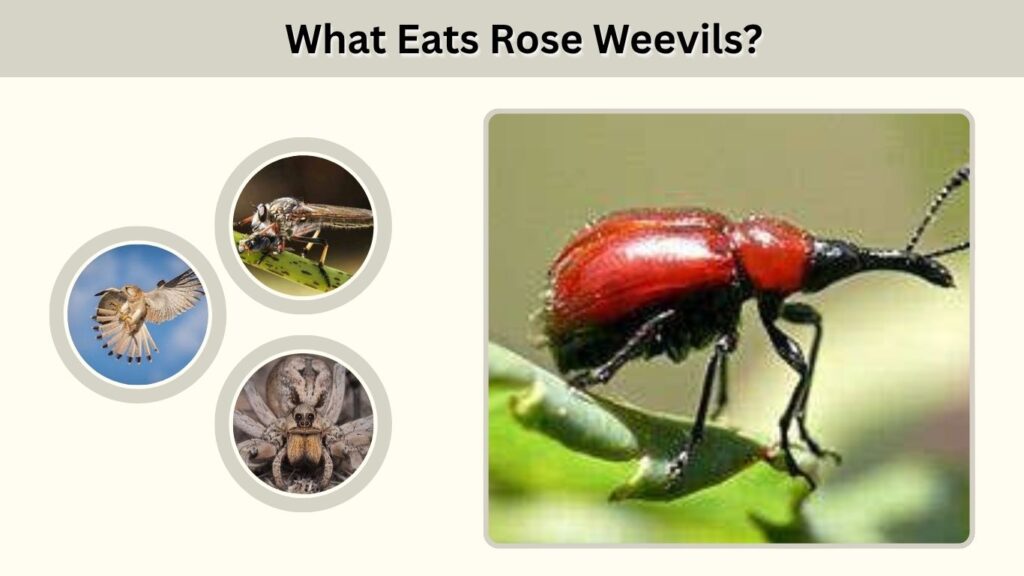
Rose weevils may be attacked by spiders, predatory insects, birds, and other generalist insect predators.
Some species also have specialized natural enemies. For example, the tiny parasitic wasp Fidiobia citri attacks the eggs of Fuller’s rose weevil.
Beneficial soil-dwelling nematodes may help suppress certain weevil larvae under suitable conditions, although results vary with the species, soil moisture, and temperature.
Natural enemies can contribute to pest control, but they may not eliminate severe infestations independently.
FAQs
1. Do Rose Weevils Kill Rose Bushes?
Rose weevils rarely kill established, healthy rose bushes. Rose curculios mainly damage buds and flowers, while Fuller’s rose weevils create notches along leaf edges. Heavy infestations can reduce flowering and affect the plant’s appearance, but serious plant death is uncommon.
2. Can Rose Weevils Fly?
Some rose weevils can fly, but others cannot. Rose curculios are capable of flight, allowing them to move between plants. Adult Fuller’s rose weevils are flightless and generally reach rose foliage by climbing stems or nearby vegetation.
3. What Is the Best Natural Treatment for Rose Weevils?
Handpicking adult beetles and removing infested flower buds are among the best natural control methods for rose curculios. Regular inspection helps prevent additional egg-laying. Fuller’s rose weevils often require little intervention because their feeding damage is generally cosmetic.
4. Are Rose Weevils Harmful to Humans?
Rose weevils are not considered dangerous to humans. They are plant-feeding beetles and are not known to pose a significant biting or stinging risk. Their main impact involves damage to rose foliage, developing flowers, and occasionally plant roots.
5. When Are Rose Weevils Most Active?
Rose curculios commonly become active during spring when rosebuds begin developing. Fuller’s rose weevils are primarily nocturnal, with adults often emerging during summer and fall. Their activity varies with climate, location, and seasonal growing conditions.
