
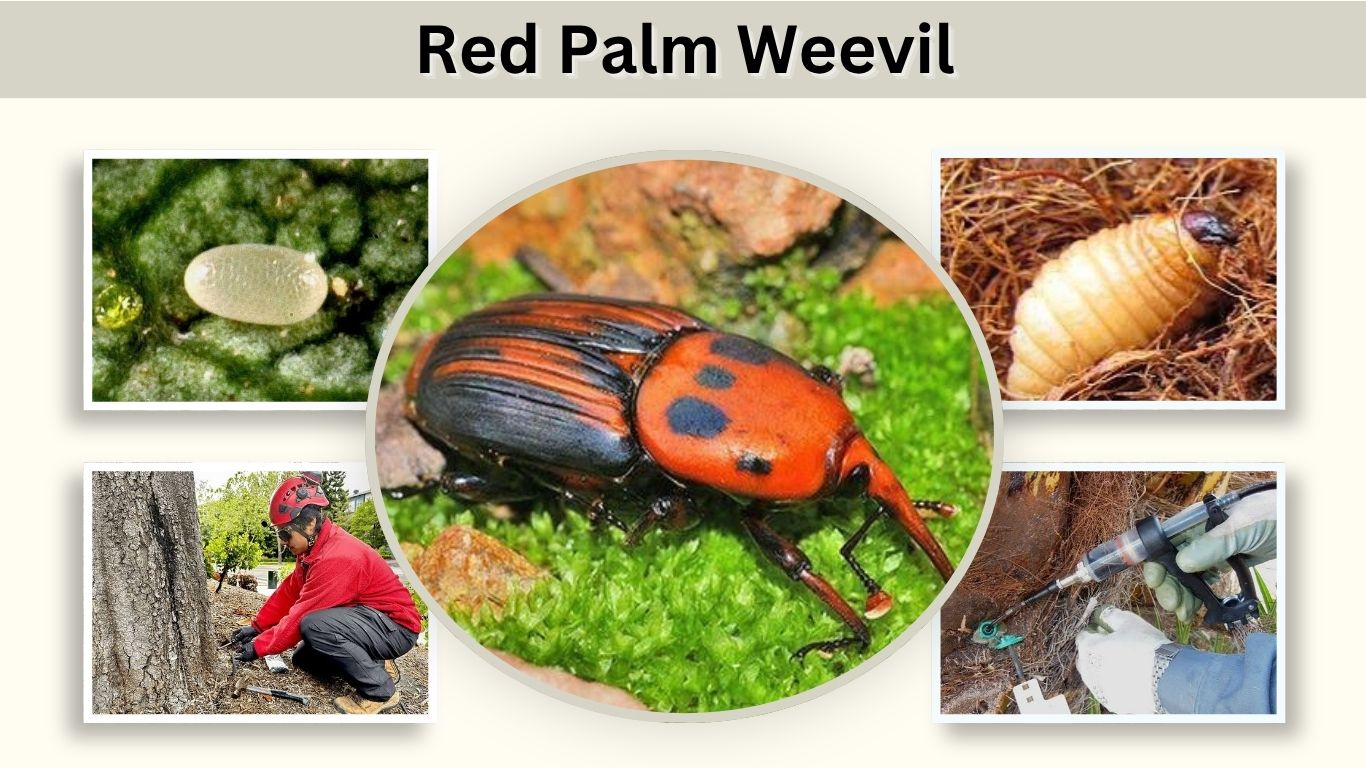
The red palm weevil (Rhynchophorus ferrugineus) is a destructive beetle that attacks coconut palms, date palms, and ornamental palm trees. Its larvae feed deep inside trunks and crowns, causing hidden damage that can eventually kill an entire palm. This reddish-brown insect is especially problematic in tropical and subtropical regions where palms are widely cultivated. Early identification and proper management are essential because severe infestations are difficult to reverse. This guide covers red palm weevil identification, life cycle, habitat, feeding habits, damage symptoms, and effective control methods.
What Is a Red Palm Weevil?
The red palm weevil is a large snout beetle belonging to the family Curculionidae. Originally native to parts of Asia, it has become an important invasive pest in several regions. Unlike ordinary leaf-feeding insects, its larvae bore into palm tissues, damaging vital structures.
Red Palm Weevil Classification
- Scientific Name: Rhynchophorus ferrugineus
- Common Name: Red palm weevil
- Kingdom: Animalia
- Class: Insecta
- Order: Coleoptera
- Family: Curculionidae
- Genus: Rhynchophorus
- Native Range: Southern and Southeast Asia
Physical Appearance and Identification
Adult red palm weevils generally measure 20–40 millimeters long. They have reddish-brown bodies, hard wing covers, and elongated snouts.
Black markings frequently appear on their upper thorax. Males often have a distinctive tuft of hairs on the snout, while females generally have smoother snouts.
Their coloration varies, so identification should consider several physical characteristics.
Red Palm Weevil Life Cycle
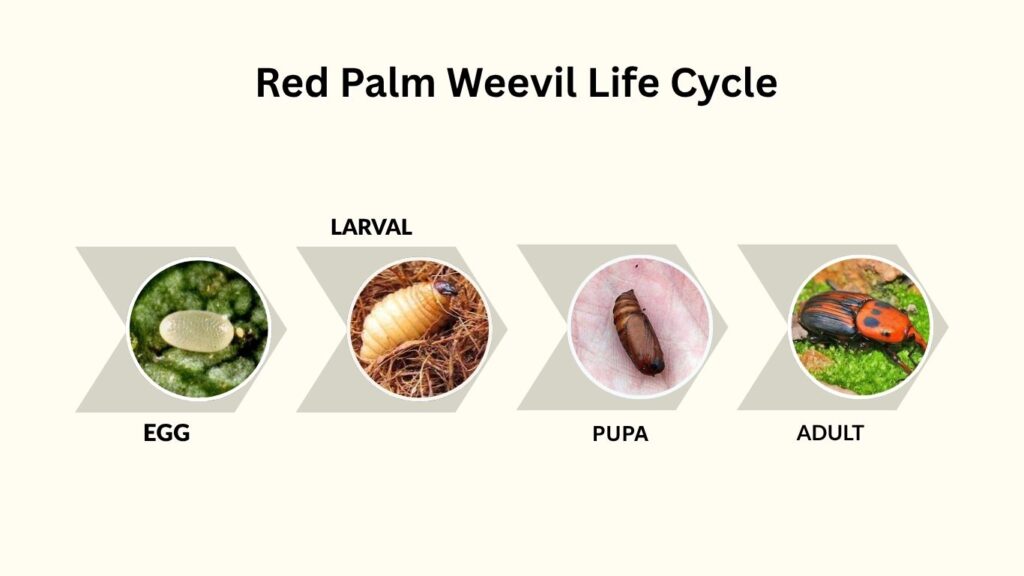
Red palm weevils undergo complete metamorphosis, progressing through egg, larva, pupa, and adult stages. Development depends on environmental conditions, including temperature and host availability. Under favorable conditions, multiple generations may develop annually, allowing populations to increase rapidly.
Eggs and Larval Development
Female weevils deposit eggs in cracks, wounds, and soft areas of palm trees. The eggs hatch within several days.
Newly emerged larvae immediately begin feeding inside palm tissues.
Red palm weevil larvae are creamy-white, legless grubs with brown head capsules. Mature larvae may grow approximately five centimeters long.
Their feeding creates extensive internal tunnels and causes most of the insect’s destructive damage.
Pupal and Adult Stages
When fully developed, larvae construct protective cocoons from palm fibers.
They transform into pupae inside these cocoons before emerging as adults.
Adult weevils can fly between palm trees, locate suitable breeding sites, and begin another reproductive cycle.
Where Do Red Palm Weevils Live?
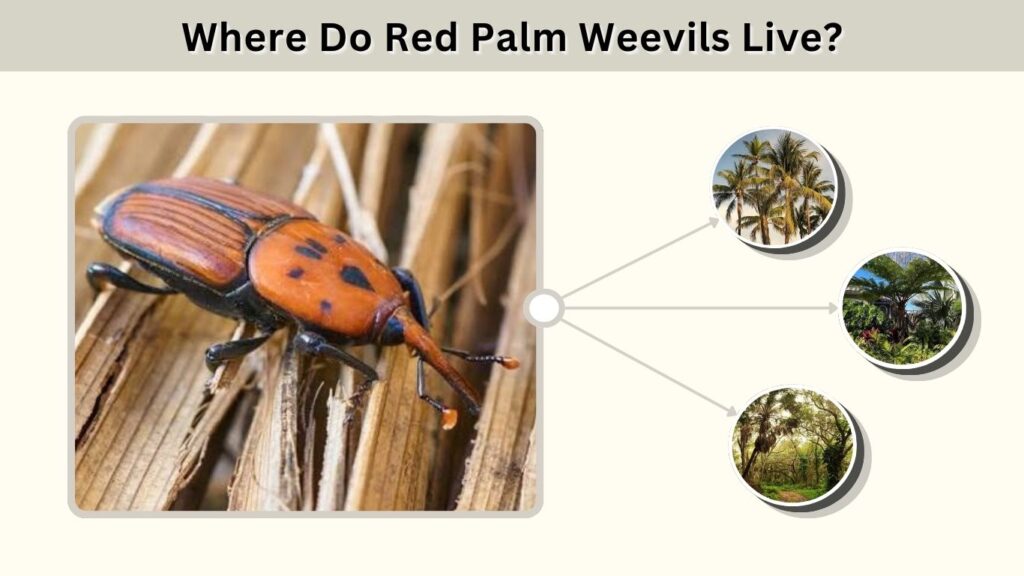
Red palm weevils prefer warm environments where suitable host palms are available. They inhabit coconut plantations, date palm orchards, nurseries, and ornamental landscapes. Their geographical distribution has expanded through the movement of infested planting materials.
Habitat and Geographic Distribution
Red palm weevils occur across parts of Asia, the Middle East, Africa, and Mediterranean Europe.
They are particularly troublesome in countries where date palms and coconut palms contribute significantly to agriculture.
Spain and Italy have also experienced infestations affecting ornamental palms.
Red Palm Weevils in California and Florida
Palm weevils discovered in Laguna Beach, California, were initially identified as red palm weevils. Later genetic research identified them as the related species Rhynchophorus vulneratus.
That population was eradicated in 2015.
Florida has its own native palmetto weevil, Rhynchophorus cruentatus, which should not be confused with the red palm weevil.
Red Palm Weevil Damage in Coconut and Date Palms
Red palm weevil larvae feed inside living palm tissues, damaging crowns, trunks, and growing points. Because this feeding occurs internally, affected trees may appear healthy during early infestation. Visible symptoms often develop only after substantial internal damage.
Common Red Palm Weevil Damage Symptoms
Important warning signs include:
- Yellowing or wilting central leaves.
- Small holes around trunks or leaf bases.
- Brown liquid leaking from damaged tissues.
- Chewed fibers collecting near openings.
- Unusual fermented odors from the trunk.
- Damaged or deformed emerging fronds.
- Weakening or collapse of the palm crown.
Red Palm Weevil Attack in Coconut Trees
Coconut palms are important hosts of the red palm weevil.
Females may deposit eggs inside damaged or weakened palm tissues. After hatching, larvae tunnel through the soft interior and destroy structural tissues.
Severe feeding can damage the central growing point, stopping the production of new leaves.
Once this growing point is destroyed, the coconut palm cannot recover.
How to Control Red Palm Weevils
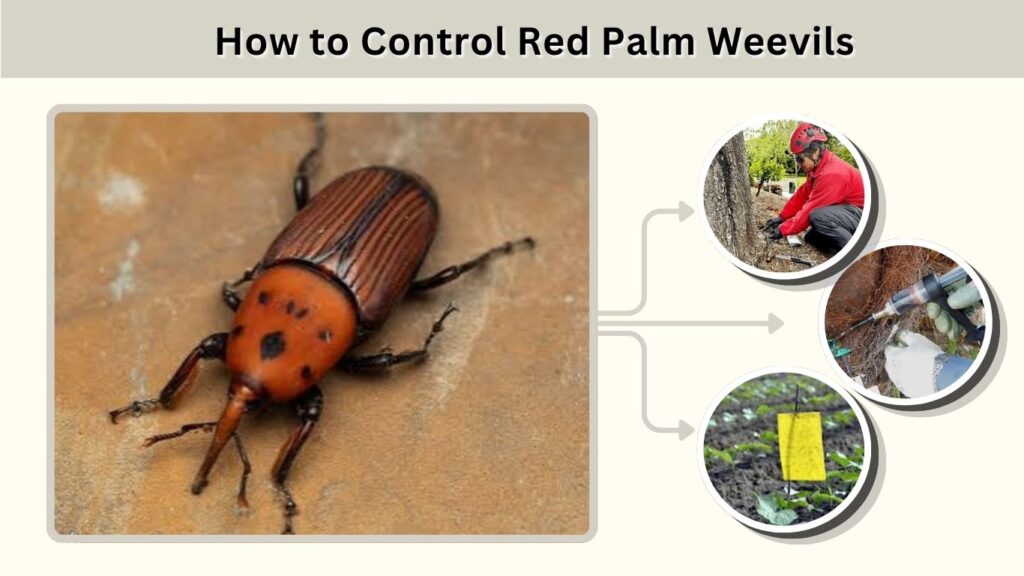
Red palm weevil control requires an integrated approach because larvae remain concealed inside palm trees. Treating visible adult beetles alone rarely eliminates an established infestation. Early detection, pheromone monitoring, sanitation, and appropriate professional treatments provide better management opportunities.
Effective Red Palm Weevil Control Methods
Recommended measures include:
- Regular inspection: Examine crowns, trunks, and leaf bases for early infestation symptoms.
- Pheromone trapping: Monitor adult weevils with suitable aggregation pheromone traps.
- Tree sanitation: Remove infested material following agricultural guidelines.
- Early treatment: Arrange professional treatment before extensive crown damage develops.
- Prevent injuries: Avoid unnecessary cutting that creates attractive egg-laying sites.
- Remove severely damaged trees: Follow local pest management requirements to prevent further spread.
Red Palm Weevil Pheromone Traps
Pheromone traps use chemical attractants to capture adult beetles.
Many systems combine aggregation pheromones with food-based lures to improve trapping efficiency.
Bucket traps and other specialized designs are commonly used in monitoring programs.
However, trapping alone cannot eliminate larvae already developing inside trees.
Red Palm Weevil Insecticide Treatment
Certain registered insecticides may help control red palm weevil populations when applied correctly.
Treatment options differ depending on local regulations, tree species, and infestation severity.
Research and agricultural management programs have evaluated active ingredients such as imidacloprid and spinosad.
Always consult qualified agricultural professionals and follow locally approved pesticide labels.
Biological Control and Prevention
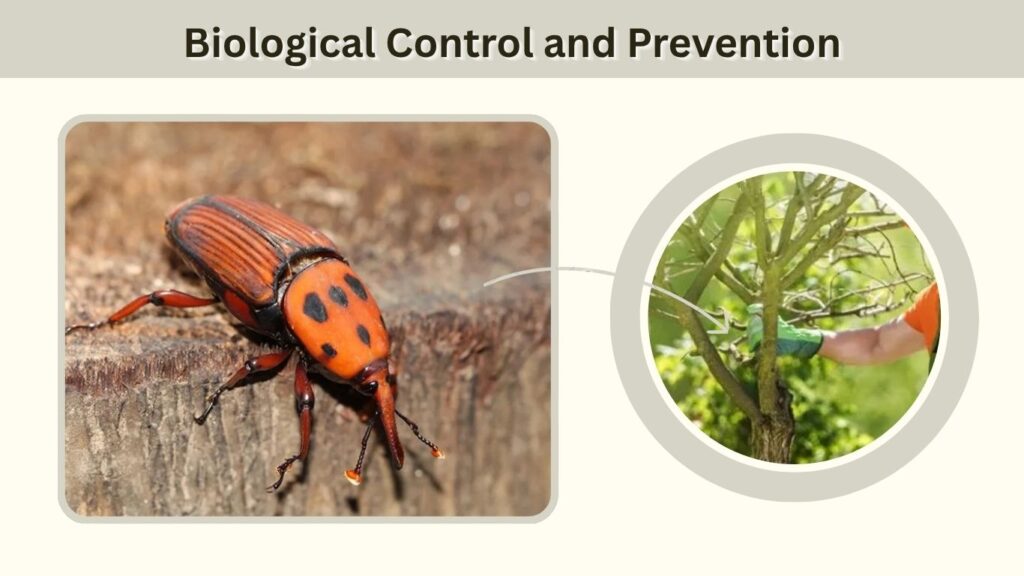
Biological control offers additional opportunities for managing red palm weevils. Researchers have investigated natural enemies, including insect-pathogenic fungi and nematodes. However, their effectiveness varies, and they should be considered alongside established monitoring and sanitation practices.
Biological Control of Red Palm Weevil
Fungi such as Beauveria bassiana can infect susceptible palm weevils under suitable conditions.
Entomopathogenic nematodes have also been studied for controlling larvae.
These approaches may contribute to integrated pest management, although results depend on application methods and environmental conditions.
How to Prevent Red Palm Weevil Infestations
Important preventive measures include:
- Inspect palm trees regularly.
- Avoid unnecessary pruning and trunk wounds.
- Use pest-free nursery plants.
- Maintain appropriate irrigation and nutrition.
- Monitor adult activity with suitable traps.
- Remove heavily infested palm material safely.
- Report unusual infestations to agricultural authorities.
Are Red Palm Weevils Dangerous to Humans?
Red palm weevils are not venomous and do not normally attack humans.
They possess chewing mouthparts that could cause a minor pinch if handled roughly, but they are not considered medically dangerous biting insects.
Their main threat is agriculture. Severe infestations can destroy productive coconut and date palms, causing significant economic losses.
FAQs
1. What Is the Scientific Name of the Red Palm Weevil?
The scientific name of the red palm weevil is Rhynchophorus ferrugineus. It belongs to the family Curculionidae and the order Coleoptera. This beetle is widely recognized as a destructive pest affecting coconut, date, and ornamental palm trees.
2. How Do You Get Rid of Red Palm Weevils?
Controlling red palm weevils requires early detection, pheromone trapping, sanitation, and appropriate professional treatment. Severe infestations may require removing affected palms. Combining several management methods is generally more effective than relying on insecticides or traps alone.
3. What Do Red Palm Weevil Larvae Eat?
Red palm weevil larvae feed on soft internal tissues inside palm trunks and crowns. Their tunneling damages growing structures and weakens affected trees. Heavy larval infestations can destroy the central growing point and eventually kill the palm.
4. Can Red Palm Weevils Kill Coconut Trees?
Yes, red palm weevils can kill coconut trees. Their larvae tunnel through internal tissues, damaging the crown and growing point. Severe infestations prevent healthy leaf development and may cause crown collapse, making recovery impossible.
5. What Is the Best Treatment for Red Palm Weevil?
The best treatment depends on infestation severity, palm species, and local regulations. Early infestations may respond to approved professional treatments, while severely damaged trees may require removal. Pheromone monitoring and sanitation are important supporting measures.
