
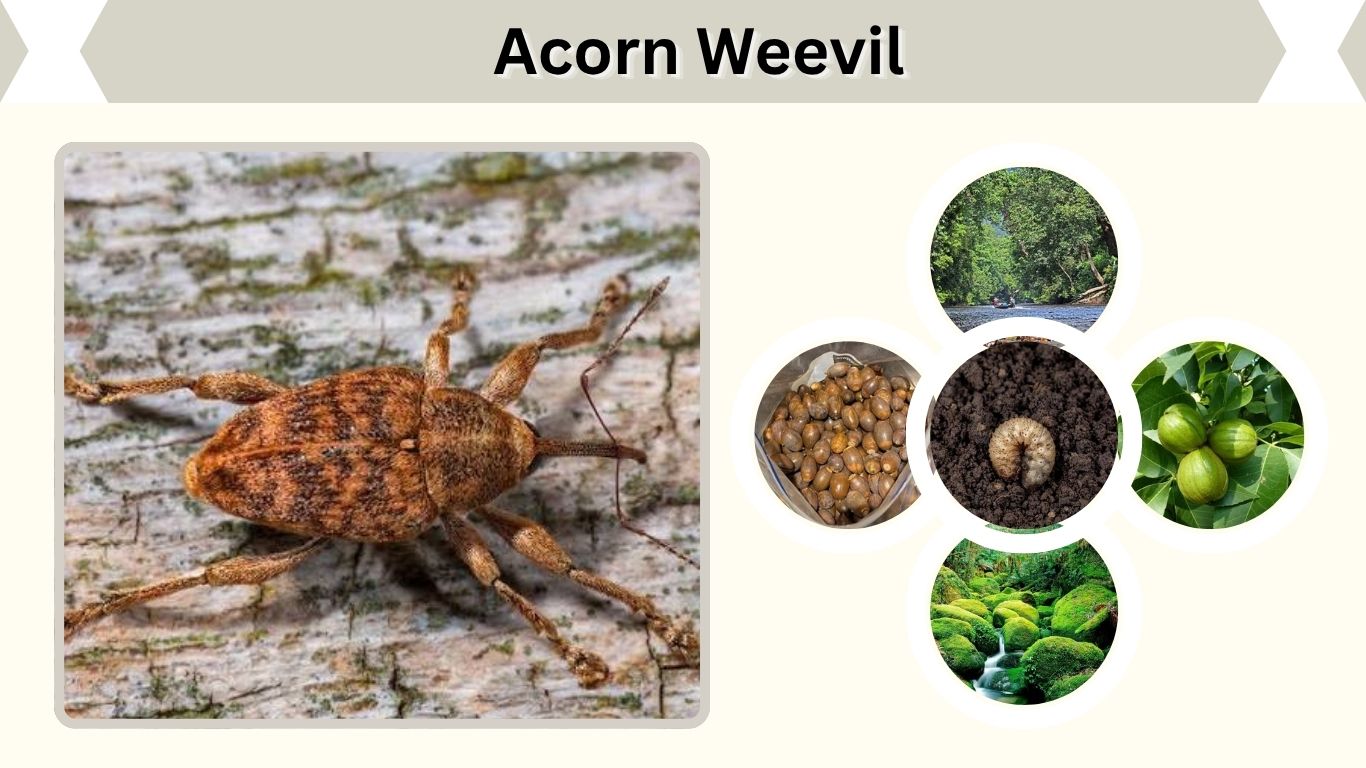
Acorn weevils are small, long-snouted beetles commonly found around oak trees and fallen acorns. Female weevils drill tiny holes into developing acorns to lay eggs, while their larvae feed on the nutmeat inside. You may discover creamy-white grubs crawling from collected acorns or notice round exit holes in fallen nuts. Although these insects can ruin acorns intended for planting, they do not harm people or damage oak trees directly. This guide covers acorn weevil identification, life cycle, habitats, feeding habits, and effective control methods.
What Is an Acorn Weevil?
An acorn weevil is a small beetle belonging to the genus Curculio in the family Curculionidae. Several species are called acorn weevils, including Curculio glandium in Europe and Curculio occidentalis in western North America.
These beetles are recognized by their unusually long, curved snouts, which females use to drill into developing acorns. Their larvae develop inside nuts before entering the soil to complete their life cycle.
Acorn Weevil Identification
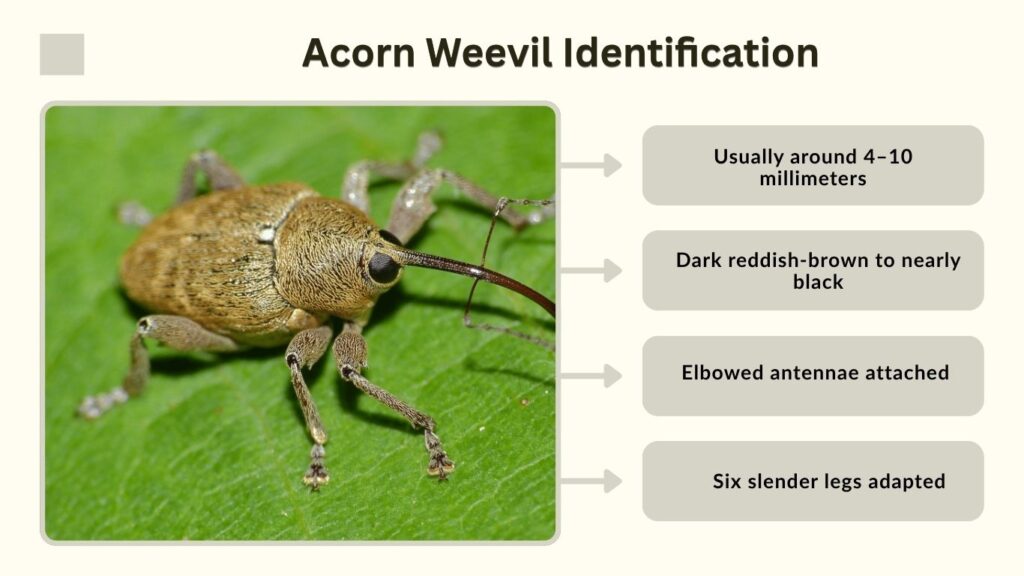
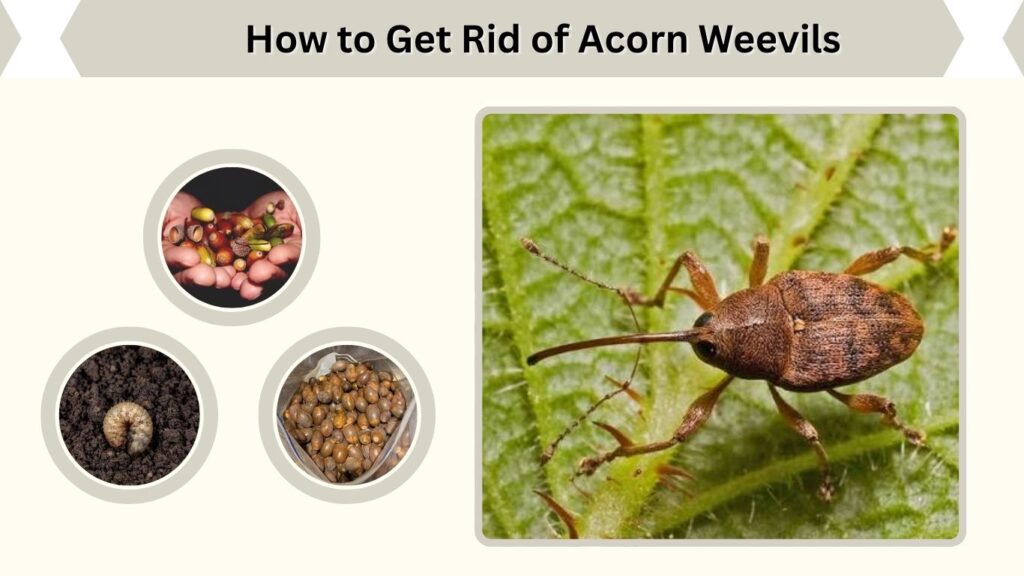
Acorn weevils have distinctive features that make them relatively easy to recognize. Their long snouts, rounded bodies, and thin legs create an unusual appearance. However, identifying the exact species may require careful examination because many nut weevils look similar.
What Does an Adult Acorn Weevil Look Like?
- Size: Usually around 4–10 millimeters long, depending on species.
- Color: Brown, reddish-brown, tan, or grayish-brown.
- Body: Rounded, compact, and covered with fine scales.
- Snout: Extremely long, narrow, and slightly curved.
- Antennae: Elbowed antennae attached along the snout.
- Legs: Six slender legs adapted for climbing.
- Wings: Functional wings that allow adults to fly.
Female acorn weevils generally have longer snouts than males. In some species, the female’s snout may exceed her body length.
Acorn Weevil Larvae Identification
Acorn weevil larvae are creamy-white, legless grubs with brownish heads. Their bodies are soft, curved, and slightly wrinkled.
Mature larvae are commonly around 6–10 millimeters long. They feed inside acorns and eventually chew circular exit holes through the shells.
Acorn Weevil Life Cycle
Acorn weevils undergo complete metamorphosis, passing through egg, larva, pupa, and adult stages. Their life cycle can take several years because larvae spend extended periods underground. Development time varies among species and environmental conditions.
Egg and Larval Development
Female acorn weevils use their long snouts to drill into developing acorns, usually during summer.
After creating an opening, females deposit eggs inside the nut. The eggs hatch, and the larvae begin consuming the nutritious internal tissues.
Larvae develop within the acorns until they are mature enough to leave. They typically emerge during autumn after the acorns have fallen.
Pupal and Adult Stages
Mature larvae burrow into the soil, where they remain inside underground chambers.
They may spend one or more years underground before pupating. Adult beetles eventually emerge and return to oak trees to feed and reproduce.
What Do Acorn Weevils Eat?
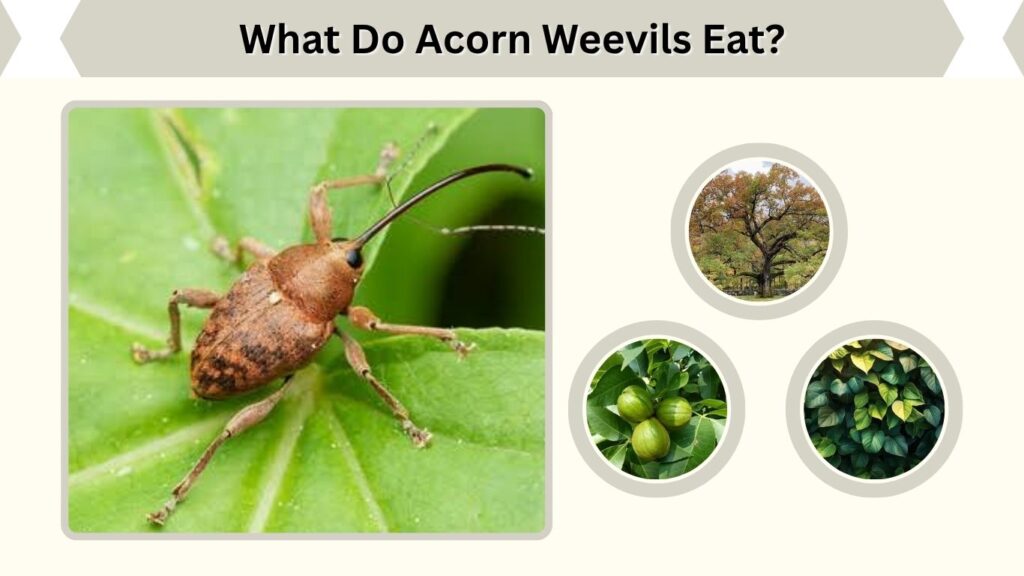
Acorn weevils depend heavily on oak trees for reproduction. Their larvae primarily consume the internal tissues of developing acorns.
Adult weevils may feed on acorn tissues, while females drill openings to deposit eggs.
Closely related nut weevils also attack hickory nuts, chestnuts, and hazelnuts, depending on the species.
Larval feeding can destroy the contents of an acorn, preventing it from germinating successfully. However, the insects generally do not damage the leaves, branches, or trunks of healthy oak trees.
Acorn Weevil Damage to Acorns
Acorn weevil damage mainly affects the nuts rather than the oak tree itself. Larvae feed internally, making infestations difficult to recognize before the grubs emerge.
Heavily infested acorns often become unsuitable for planting or wildlife food storage.
Common Signs of Acorn Weevil Infestation
- Round exit holes: Small circular openings appear after larvae leave.
- White grubs: Cream-colored larvae may emerge from fallen acorns.
- Hollow interiors: Infested acorns can lose much of their nutmeat.
- Internal debris: Larval feeding leaves waste material inside.
- Poor germination: Damaged acorns may fail to produce seedlings.
- Damaged kernels: The internal tissue appears eaten or fragmented.
Not every acorn containing a small opening is necessarily infested with weevils. Other insects can produce similar damage.
Where Do Acorn Weevils Live?
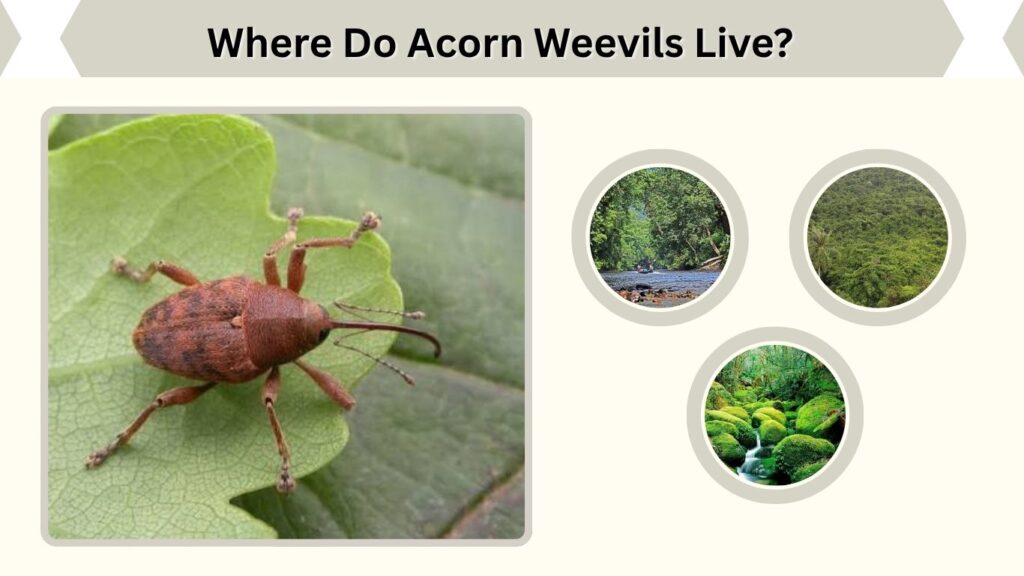
Acorn weevils occur in oak woodlands, forests, parks, and residential areas containing oak trees.
Different species inhabit North America, Europe, and other regions where suitable host trees grow.
Adults are commonly observed on oak foliage, branches, and developing acorns during warmer months.
Larvae live inside acorns before moving underground, where they remain protected from unfavorable weather.
In the United States, acorn weevils occur in regions including Texas, California, and many eastern states, although the species present vary geographically.
Acorn Weevils in the House
Acorn weevils sometimes appear indoors when homeowners bring collected acorns inside for decorations, crafts, or storage.
Larvae may emerge from the nuts and crawl across floors or nearby surfaces while searching for suitable soil.
These insects do not normally establish breeding populations indoors. They cannot infest furniture, clothing, or stored household grains.
Removing infested acorns and vacuuming visible larvae is usually sufficient to resolve the problem.
How to Get Rid of Acorn Weevils
Acorn weevil control is challenging because larvae remain protected inside acorns or underground. Chemical treatments are generally impractical for homeowners with mature oak trees.
Managing infested acorns is usually the most effective approach for reducing nuisance problems.
Natural Acorn Weevil Control Methods
- Collect fallen acorns: Gather nuts regularly during autumn.
- Remove infested nuts: Discard acorns containing larvae or exit holes.
- Inspect stored acorns: Check collected nuts before bringing them indoors.
- Vacuum larvae: Remove grubs that emerge inside buildings.
- Dispose of damaged nuts: Seal infested material in a bag before disposal.
- Avoid unnecessary spraying: Routine insecticide treatment of large oak trees is generally not recommended.
Freezing collected acorns can kill larvae when the nuts are intended for crafts, but freezing also damages their suitability for planting.
How to Prevent Acorn Weevil Infestations
Preventing acorn weevils entirely is difficult because adult beetles naturally inhabit oak ecosystems. However, proper collection and storage practices can reduce the number of larvae emerging from harvested acorns.
Effective Prevention Tips
- Inspect acorns carefully before collecting them.
- Collect freshly fallen acorns promptly.
- Separate damaged acorns from apparently healthy ones.
- Avoid storing collected acorns in open containers indoors.
- Check acorns intended for planting for signs of infestation.
- Remove unwanted fallen nuts from patios and storage areas.
Healthy oak trees generally require no special treatment because acorn weevil feeding primarily affects seed production rather than tree health.
FAQs
1. Do Acorn Weevils Bite Humans?
No, acorn weevils do not normally bite humans. Their long snouts are designed for drilling into acorns and feeding on plant material. They are harmless to people and pets, although their larvae can destroy developing acorn seeds.
2. Can Acorn Weevils Fly?
Yes, adult acorn weevils have functional wings and can fly. They use flight to locate suitable oak trees and develop acorns. Their long snouts do not prevent them from flying or moving around branches and foliage.
3. How Long Do Acorn Weevils Live?
The complete acorn weevil life cycle may last several years. Larvae spend a substantial portion of their development underground before pupating. Adult lifespan is considerably shorter, and the exact timing varies among species and environmental conditions.
4. Are Acorn Weevil Larvae Harmful?
Acorn weevil larvae are harmless to humans and pets. However, they consume the internal tissues of acorns, potentially destroying the seeds. Heavy infestations can reduce the number of viable acorns available for natural oak regeneration.
5. What Do Acorn Weevils Turn Into?
Acorn weevil larvae eventually transform into pupae underground. After completing metamorphosis, they become adult beetles with hardened wing covers, six legs, and distinctive long snouts. Adults emerge from the soil and reproduce around oak trees.
