
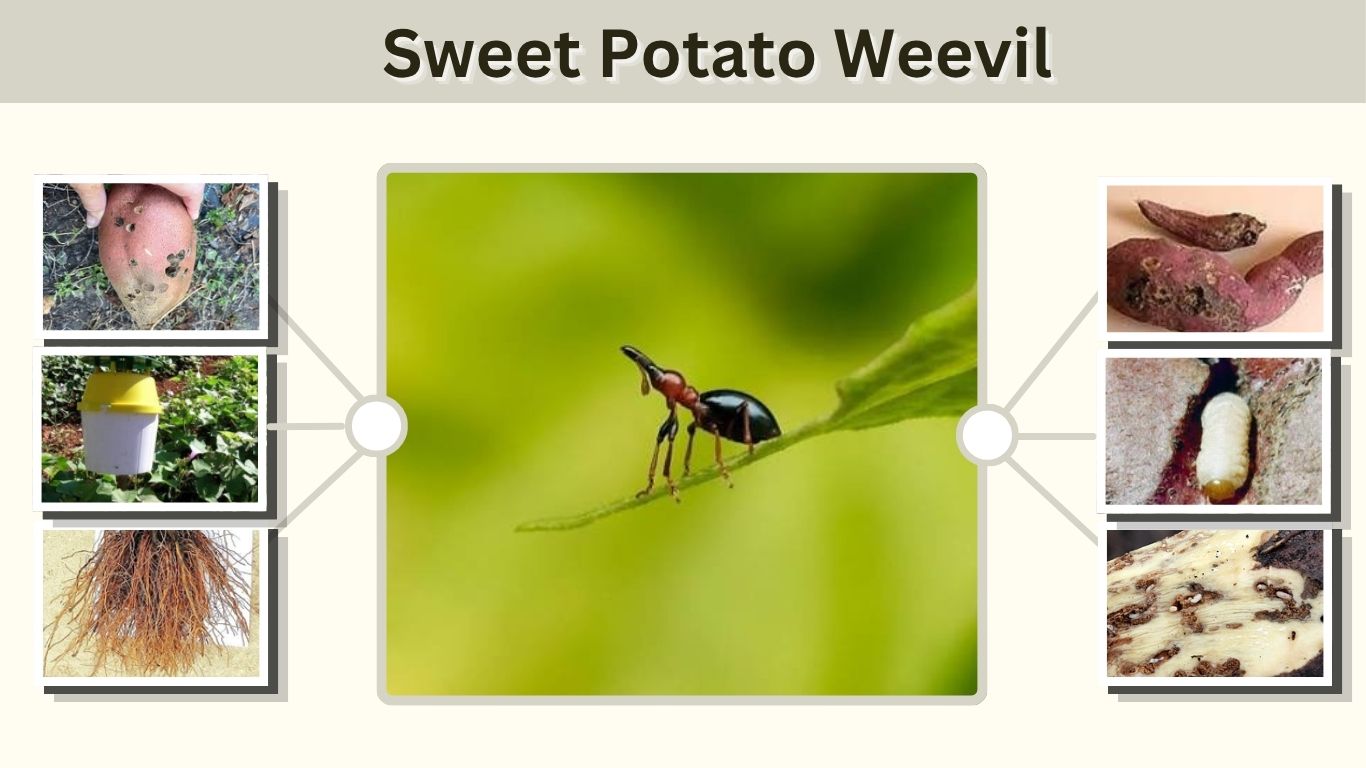
Sweet potato weevils are destructive agricultural pests that attack sweet potato vines and underground storage roots. Their larvae tunnel through plant tissues, causing internal damage, discoloration, and an unpleasant bitter taste. These small, ant-like beetles are particularly troublesome in tropical and subtropical regions where sweet potatoes are widely cultivated. Early identification and proper management are essential for preventing serious crop losses. This guide explains sweet potato weevil identification, life cycle, larvae, damage symptoms, pheromone traps, chemical treatments, and effective control methods for protecting sweet potato plants.
What Is a Sweet Potato Weevil?
The sweet potato weevil (Cylas formicarius) is a small beetle belonging to the family Brentidae and order Coleoptera. It is among the most damaging insect pests of sweet potatoes worldwide. Adults feed on vines and storage roots, while developing larvae tunnel inside plant tissues. Infestations can remain hidden until the crop is harvested.
Sweet Potato Weevil Identification
Adult sweet potato weevils have several distinctive characteristics that make them relatively easy to recognize.
- Scientific Name: Cylas formicarius
- Family: Brentidae
- Order: Coleoptera
- Body Length: Approximately 5–8 mm
- Body Color: Reddish-brown thorax and legs with metallic blue-black wing covers
- Body Shape: Slender, elongated, and ant-like
- Snout: Long, narrow, slightly curved mouthpart
- Antennae: Elbowed antennae positioned along the snout
Where Do Sweet Potato Weevils Live?
Sweet potato weevils commonly inhabit sweet potato fields, gardens, and storage areas containing infested roots.
They are widespread across tropical and subtropical regions, including parts of Asia, Africa, the Caribbean, and the southern United States.
Adults often shelter beneath leaves, within vines, or near the soil surface. Females access underground roots through cracks in dry soil, allowing them to deposit eggs directly into the developing crop.
Types of Sweet Potato Weevils
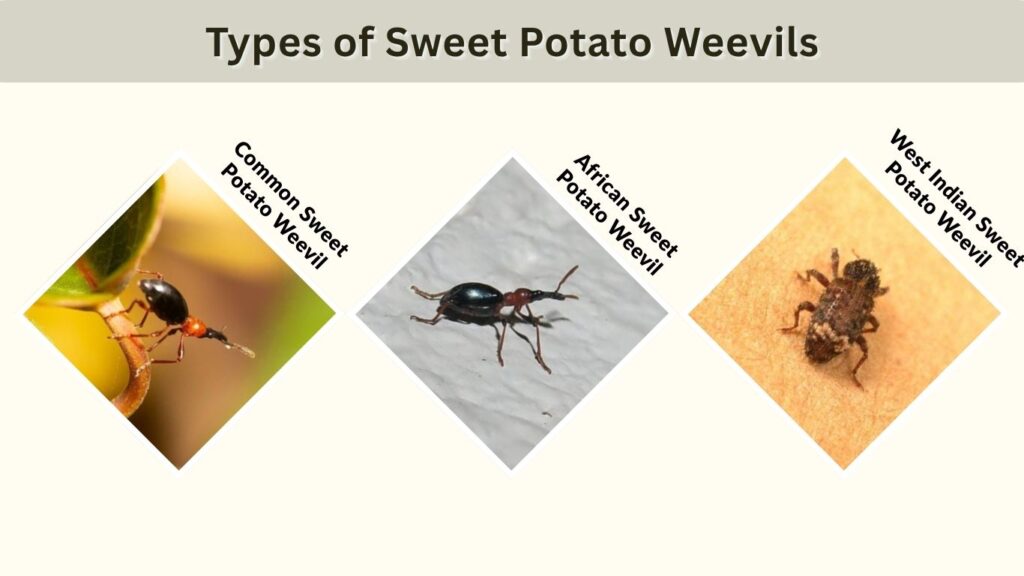
Several closely related weevil species damage sweet potato crops worldwide. Although their appearance and geographical distribution differ, they cause similar problems by feeding inside vines and storage roots. Understanding the main species helps growers identify infestations and select suitable management strategies.
Common Sweet Potato Weevil (Cylas formicarius)
The common sweet potato weevil is widespread in tropical and subtropical regions.
Adults have reddish-brown thoraxes, dark metallic wing covers, and slender snouts. Females lay eggs inside vines and roots, where larvae develop and feed.
This species is particularly important in Asia, parts of Africa, the Caribbean, and the United States.
African Sweet Potato Weevil (Cylas puncticollis)
The African sweet potato weevil is a major pest of sweet potato production in sub-Saharan Africa.
Adults are generally larger and uniformly dark or black, making them distinguishable from the common sweet potato weevil.
Larvae tunnel through storage roots and cause extensive feeding damage. Another important African species is Cylas brunneus.
West Indian Sweet Potato Weevil (Euscepes batatae)
The West Indian sweet potato weevil, historically known as Euscepes postfasciatus, is another serious root-damaging pest.
It has a relatively compact, grayish-brown body with lighter markings on its wing covers.
Its larvae develop inside sweet potato roots and vines, producing internal tunnels similar to those caused by other sweet potato weevils.
Sweet Potato Weevil Life Cycle
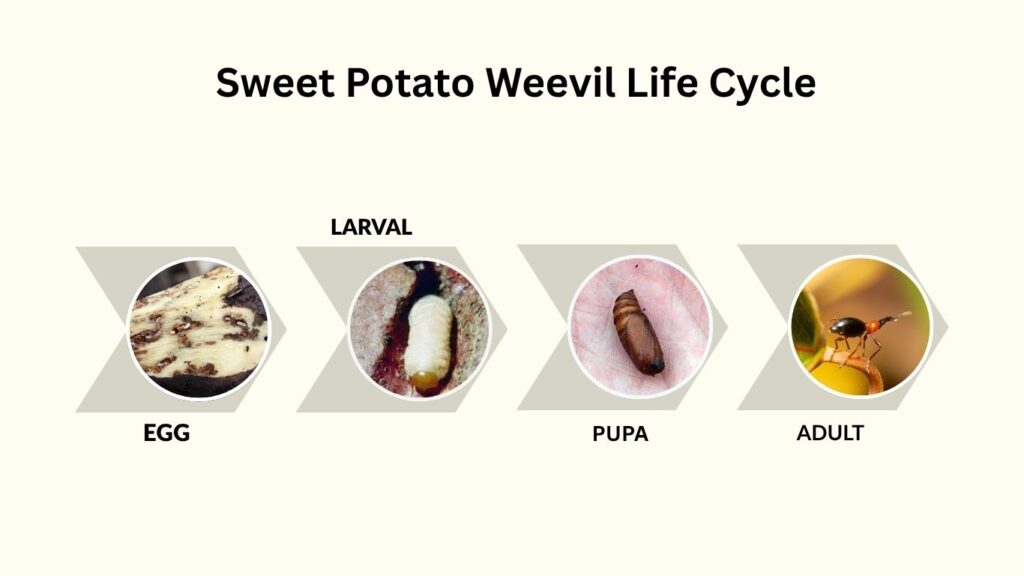
The sweet potato weevil undergoes complete metamorphosis, passing through egg, larval, pupal, and adult stages. Its development takes place largely within sweet potato vines and storage roots. Warm temperatures favor faster development, allowing populations to increase rapidly during suitable growing conditions.
Four Stages of Sweet Potato Weevil Development
- Egg Stage: Female weevils create small cavities in roots or vines and deposit individual eggs. The openings are often sealed with fecal material. Eggs commonly hatch within approximately one week under warm conditions.
- Larval Stage: Newly hatched larvae tunnel into plant tissues and feed internally. This stage usually lasts two to three weeks, depending on temperature and host conditions.
- Pupal Stage: Mature larvae form pupae inside their feeding tunnels. The pupal stage generally lasts about one week under favorable conditions.
- Adult Stage: Adult beetles emerge from the plant material, feed, mate, and reproduce. Adults can survive for several months under suitable conditions.
How Long Is the Sweet Potato Weevil Life Cycle?
Under favorable warm conditions, the sweet potato weevil may complete development from egg to adult in approximately four to six weeks.
Development becomes slower when temperatures decrease. Since adults can reproduce repeatedly and different developmental stages overlap, several generations may occur throughout the growing season.
This continuous reproduction makes the pest particularly difficult to eliminate once it becomes established.
Sweet Potato Weevil Damage and Symptoms
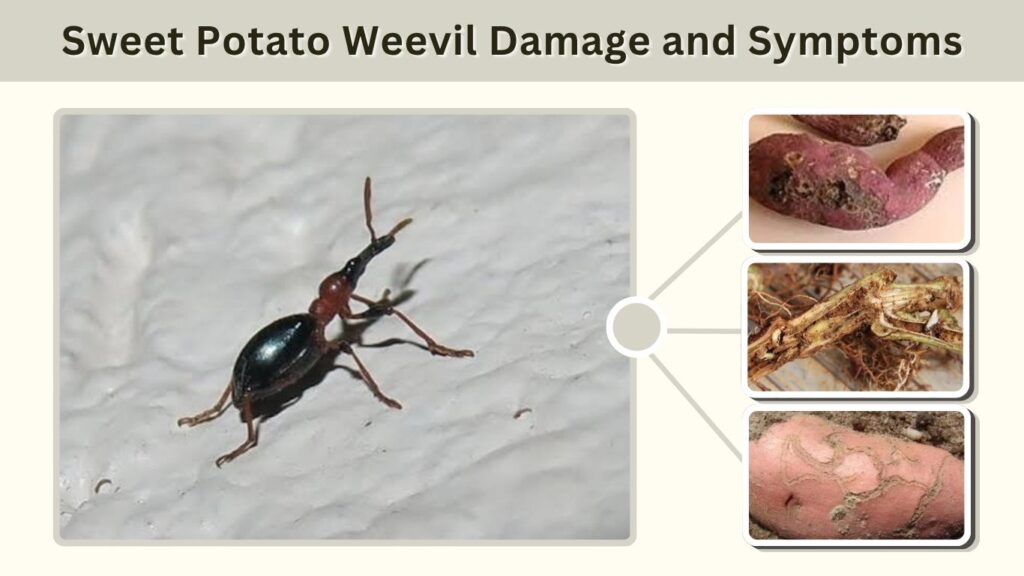
Sweet potato weevil damage occurs both above and below ground. Adult beetles create small feeding punctures, while larvae tunnel through vines and storage roots. Because much of the damage develops underground, affected plants may initially appear healthy despite significant internal infestation.
Common Signs of Sweet Potato Weevil Damage
- Small Feeding Holes: Adult weevils create punctures on vines and exposed storage roots.
- Internal Tunnels: Larvae produce irregular passages inside sweet potato roots.
- Brown Discoloration: Damaged root tissues develop dark brown or blackened areas.
- Bitter Taste: Infested roots produce defensive chemicals that create unpleasant flavors and odors.
- Cracked Vines: Larval feeding may cause vine swelling, cracking, and deformities.
- Wilting Leaves: Heavy infestations can produce yellowing, wilting, or reduced plant growth.
- Root Decay: Damaged tissues become more vulnerable to secondary infections and rotting.
How Do Sweet Potato Weevils Affect Crop Quality?
Larval feeding reduces the marketability and quality of harvested sweet potatoes. Even relatively small amounts of feeding can cause roots to develop a strong bitter taste.
Internal tunnels also create entry points for microorganisms that accelerate deterioration.
Severe infestations can result in substantial economic losses because damaged roots may become unsuitable for human consumption or animal feed.
How to Get Rid of Sweet Potato Weevils
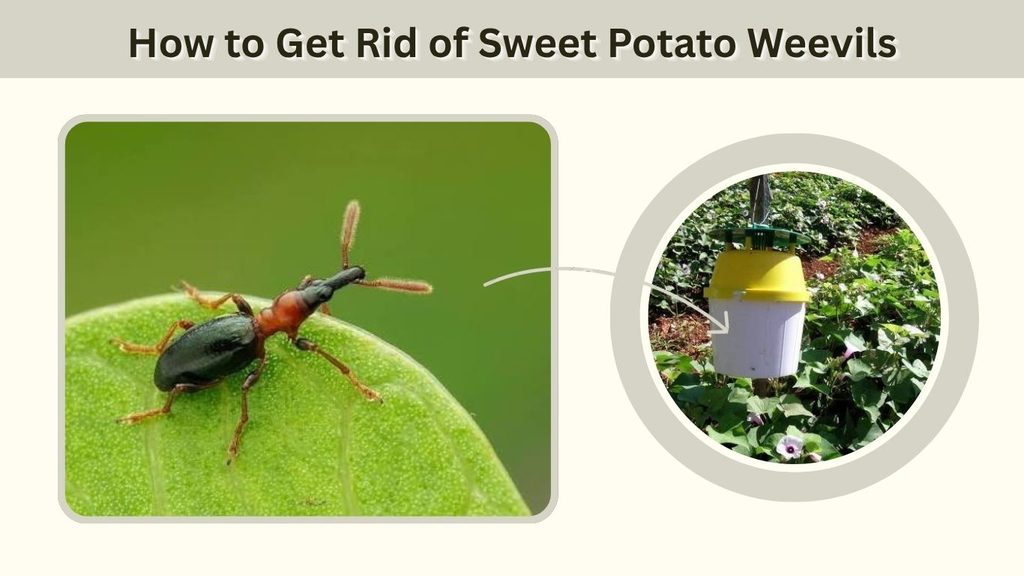
Effective sweet potato weevil control requires combining several management approaches. Because larvae remain hidden inside roots and vines, treating adult beetles alone is rarely sufficient. Field sanitation, pheromone trapping, timely harvesting, and carefully selected chemical treatments can help reduce infestation levels.
Natural Sweet Potato Weevil Control Methods
Several practical cultural practices help farmers reduce sweet potato weevil populations without relying entirely on insecticides.
- Use Healthy Planting Material: Select pest-free vine cuttings from reliable sources.
- Rotate Crops: Avoid growing sweet potatoes repeatedly in the same field.
- Remove Infested Roots: Collect and destroy damaged roots instead of leaving them in the soil.
- Maintain Soil Moisture: Reduce soil cracking through appropriate irrigation and mulching.
- Hill Soil Around Plants: Keep developing storage roots covered to limit access by female weevils.
- Harvest Promptly: Remove mature sweet potatoes rather than leaving them in the ground unnecessarily.
- Eliminate Host Weeds: Control nearby wild morning glory and other susceptible Ipomoea plants.
Sweet Potato Weevil Pheromone Traps
Pheromone traps are useful for monitoring adult sweet potato weevils and may help reduce their populations.
These traps contain synthetic versions of the female sex pheromone, which attracts male beetles. Growers place traps around production areas to detect activity and estimate infestation pressure.
Mass trapping can also contribute to control when used as part of a coordinated management program. However, pheromone traps do not directly eliminate larvae already feeding inside sweet potato roots.
Sweet Potato Weevil Chemical Control
Insecticides may help suppress adult sweet potato weevils before they lay eggs. Treatments applied to planting material or soil may also be used in some commercial production systems.
However, larvae protected deep inside roots are difficult to reach with contact insecticides.
Growers should use only pesticides registered for sweet potatoes and the target pest in their location. Always follow label directions, application timing, protective equipment requirements, and preharvest intervals.
Biological Control of Sweet Potato Weevils
Biological control involves using natural enemies and microorganisms to suppress pest populations.
The entomopathogenic fungus Beauveria bassiana has shown potential against sweet potato weevils under suitable conditions. Certain predatory insects and entomopathogenic nematodes may also contribute to control.
However, their effectiveness varies with environmental conditions, pest species, and application methods. Biological treatments generally work best alongside other integrated pest management practices.
How to Prevent Sweet Potato Weevil Infestations
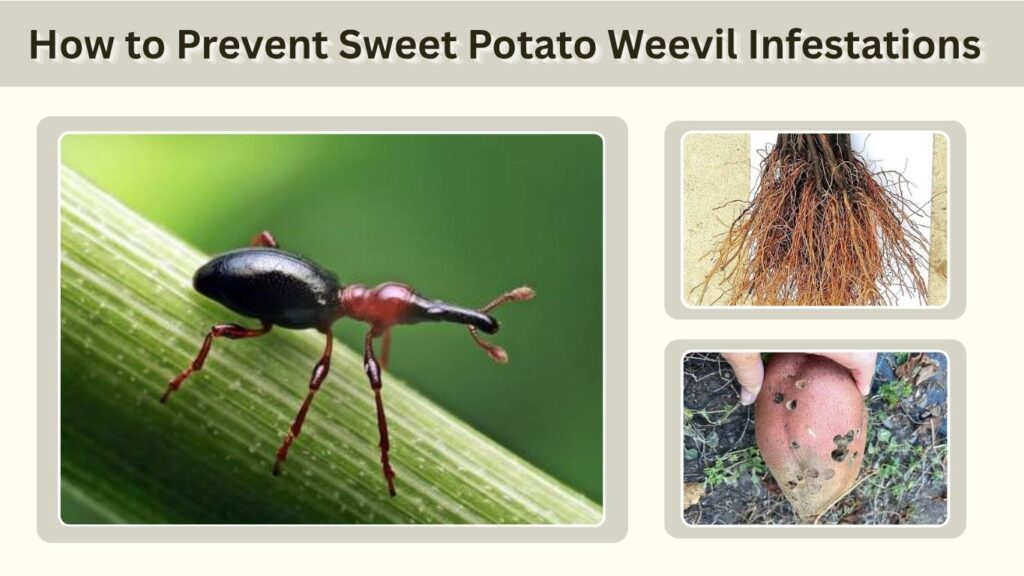
Preventing sweet potato weevils is easier than controlling an established infestation. Good agricultural practices can limit pest movement, reduce breeding sites, and protect developing storage roots. Prevention should begin before planting and continue through harvesting and storage.
Preventing Infestations During Growing
Healthy planting material is essential for preventing the introduction of sweet potato weevils. Growers should purchase certified or inspected pest-free vines and avoid transferring plants from infested fields.
Keeping roots covered with soil also reduces access by egg-laying females. Regular irrigation, appropriate mulching, and timely harvesting help prevent the soil cracks that expose developing roots.
Protecting Harvested Sweet Potatoes
Harvested sweet potatoes should be inspected for feeding holes, damaged areas, and signs of larvae. Infested roots must be separated and discarded safely.
Clean storage containers and remove leftover plant material before storing new crops. Avoid moving potentially infested roots into pest-free growing regions, particularly where agricultural quarantine regulations apply.
FAQs
1. Do Sweet Potato Weevils Bite Humans?
Sweet potato weevils are not considered dangerous to humans and do not normally bite people. They primarily feed on sweet potato plants rather than human skin. Their greatest threat is agricultural damage, especially when larvae destroy valuable underground storage roots.
2. What Kills Sweet Potato Weevils?
Registered insecticides, appropriate biological treatments, and cultural management can help control sweet potato weevils. Removing infested roots, rotating crops, using pheromone traps, and maintaining healthy planting material are especially important. Combining these practices provides better protection than relying on one treatment.
3. Can Sweet Potato Weevils Live Inside a House?
Sweet potato weevils may enter homes through infested sweet potatoes brought indoors for storage. They generally do not establish household infestations without suitable host material. Removing infested roots and cleaning storage areas usually prevents their continued presence.
4. Are Sweet Potatoes With Weevils Safe to Eat?
Sweet potatoes damaged by weevils should not be eaten. Larval feeding causes the roots to produce bitter defensive compounds and can encourage secondary decay. Cooking does not reliably make heavily infested roots suitable for consumption, so affected roots should be discarded.
5. How Do Sweet Potato Weevil Pheromone Traps Work?
Sweet potato weevil pheromone traps release synthetic chemicals that imitate the female beetle’s sex pheromone. Male weevils are attracted to the traps and captured. These devices help monitor pest activity and can support population reduction when combined with other control methods.
