
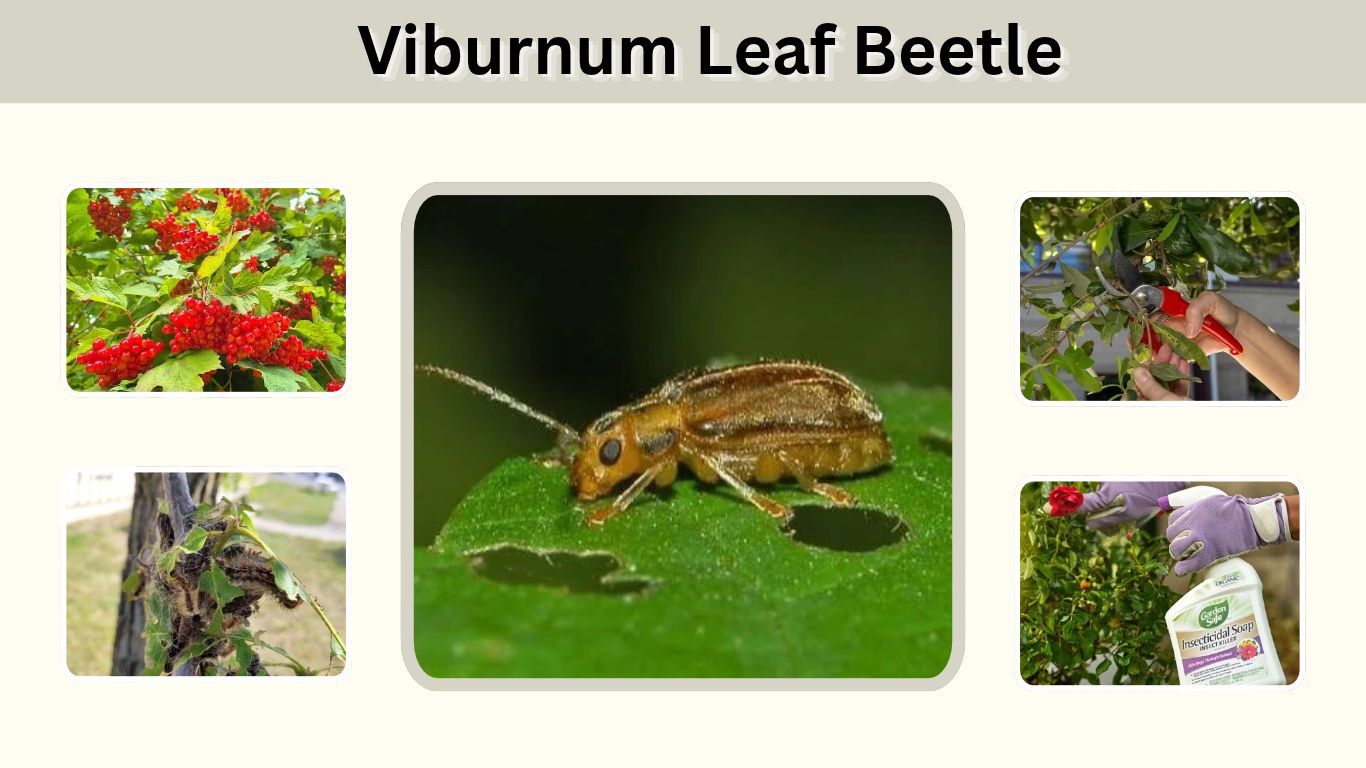
The viburnum leaf beetle is a destructive garden pest that can strip viburnum shrubs of their leaves in just a few weeks. Both larvae and adults feed on foliage, leaving holes, skeletonized leaves, and weakened branches. Originally native to Europe and Asia, this insect has spread through parts of North America, threatening ornamental and native viburnums. Identifying its eggs and larvae early makes control much easier. This guide explains viburnum leaf beetle damage, life cycle, treatment options, and practical ways to protect susceptible shrubs.
What Is a Viburnum Leaf Beetle?
The viburnum leaf beetle (Pyrrhalta viburni) is a small, leaf-eating beetle belonging to the family Chrysomelidae. It feeds almost exclusively on plants in the genus Viburnum, including popular ornamental shrubs and several native species.
Native to Europe and parts of Asia, this insect became established in North America and is considered an invasive pest there. Severe infestations can weaken shrubs through repeated defoliation.
Viburnum Leaf Beetle Size and Appearance
Adult viburnum leaf beetles measure approximately 4.5–6.5 millimeters long. They have elongated, yellowish-brown bodies with slightly darker wing covers.
Unlike many colorful leaf beetles, their muted appearance makes them difficult to notice among leaves and branches.
How to Identify Viburnum Leaf Beetles
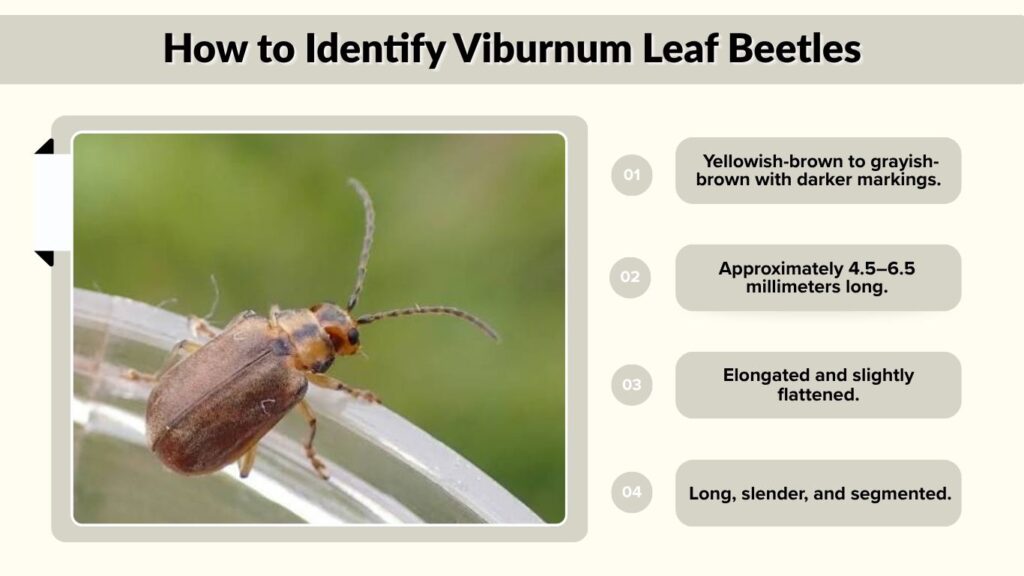
Viburnum leaf beetles can be identified by examining adults, larvae, and egg-laying sites. Each developmental stage has distinct characteristics. Recognizing these differences is particularly useful because larvae cause extensive damage before adult beetles appear during summer.
Key Identification Features
- Adult color: Yellowish-brown to grayish-brown with darker markings.
- Adult size: Approximately 4.5–6.5 millimeters long.
- Body shape: Elongated and slightly flattened.
- Antennae: Long, slender, and segmented.
- Larvae: Yellowish-green or light brown with rows of black spots.
- Larval size: Mature larvae can reach approximately 10–11 millimeters.
- Egg sites: Small, dark, capped cavities arranged along young twigs.
What Do Viburnum Leaf Beetle Larvae Look Like?
Young larvae are tiny and pale greenish-yellow. As they grow, dark spots become increasingly visible along their bodies.
They usually feed on the undersides of viburnum leaves, creating small holes that gradually expand. Their appearance sometimes causes gardeners to mistake them for caterpillars.
What Damage Do Viburnum Leaf Beetles Cause?
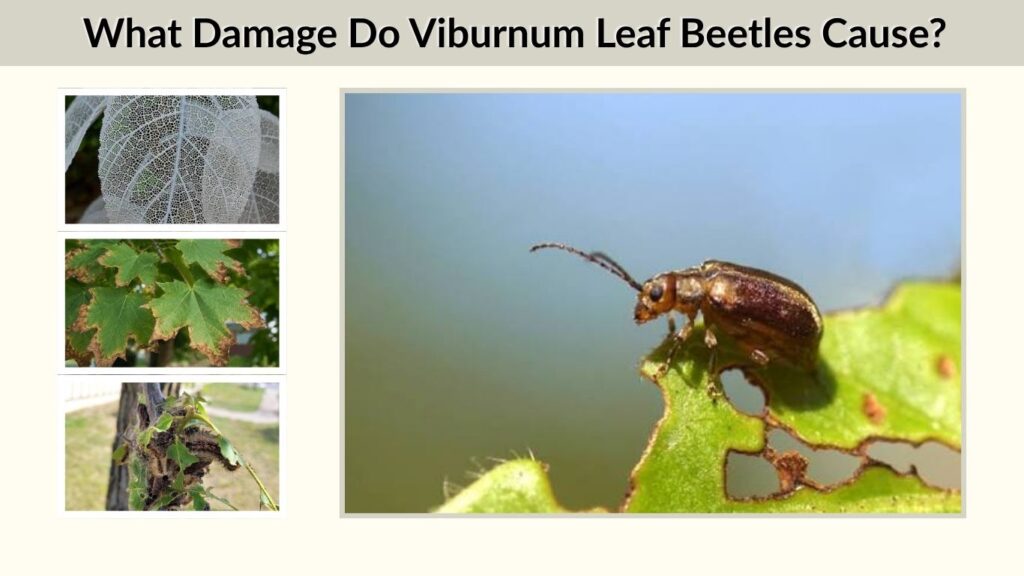
Viburnum leaf beetle damage primarily affects shrub foliage. Both larvae and adults consume leaves, but larvae usually cause the most severe damage during spring.
Heavily infested shrubs may lose most of their foliage before summer, reducing their ability to produce energy through photosynthesis.
Common Signs of Viburnum Leaf Beetle Damage
- Skeletonized leaves: Larvae consume soft leaf tissue, leaving prominent veins intact.
- Irregular holes: Adult beetles chew elongated or rounded openings.
- Brown leaf edges: Damaged foliage may become discolored and dry.
- Extensive defoliation: Severe infestations can remove most leaves.
- Reduced growth: Repeated feeding weakens developing branches.
- Twig damage: Egg-laying cavities appear on young stems.
Can Viburnum Leaf Beetles Kill Shrubs?
Yes, repeated severe infestations can eventually kill susceptible viburnum shrubs.
Plants may produce replacement leaves after the first attack, but this requires additional energy. When heavy defoliation continues for two or three consecutive years, weakened shrubs may develop dieback or die entirely.
Viburnum Leaf Beetle Life Cycle
The viburnum leaf beetle completes one generation annually. Its development includes the egg, larval, pupal, and adult stages.
Understanding this seasonal pattern helps gardeners apply treatments when insects are most vulnerable.
Eggs and Larval Development
Adult females lay eggs inside small cavities they chew into young viburnum twigs during summer and autumn.
The eggs remain protected throughout winter and usually hatch around April or May, depending on regional temperatures.
Newly emerged larvae begin feeding on developing leaves. After several weeks, mature larvae enter the soil and pupate.
Adult Emergence and Reproduction
Adult beetles generally emerge between late June and July. They continue feeding on viburnum foliage throughout summer.
Females eventually begin laying eggs in young twigs, completing the annual cycle. Each female can deposit hundreds of eggs during her lifetime.
How to Get Rid of Viburnum Leaf Beetles
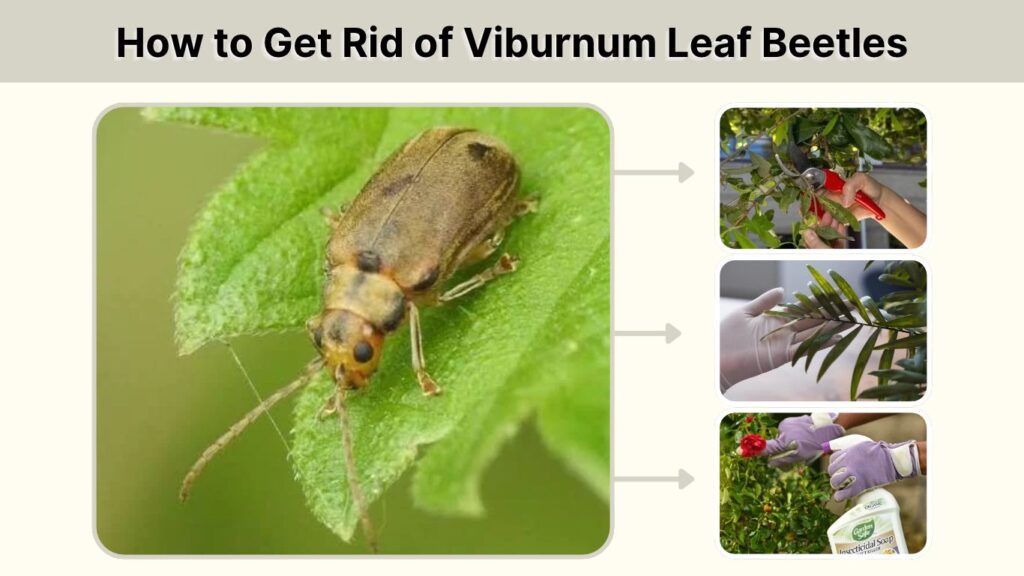
Successful viburnum leaf beetle control requires targeting the insects at appropriate developmental stages. Removing overwintering eggs and controlling young larvae are usually more effective than attempting to eliminate mobile adult beetles.
Combining several management methods provides better long-term protection than relying on one treatment.
Effective Viburnum Leaf Beetle Control Methods
- Prune infested twigs: Between autumn and early spring, remove young stems containing dark egg-laying cavities.
- Destroy removed branches: Dispose of infested material so surviving eggs cannot hatch near susceptible shrubs.
- Inspect new leaves: Check foliage regularly during spring for emerging larvae.
- Remove larvae manually: Handpick visible larvae when infestations are small.
- Use insecticidal soap: Apply a labeled product directly to young larvae, including leaf undersides.
- Encourage natural predators: Lady beetles, lacewings, and predatory bugs can reduce beetle populations.
- Monitor adult beetles: Continue inspecting shrubs during summer to identify renewed feeding and egg laying.
Best Time to Control Viburnum Leaf Beetles
Autumn through early spring is ideal for removing egg-infested twigs.
In spring, newly hatched larvae are generally easier to control than mature larvae or adults. Treatment timing should follow local growing conditions rather than calendar dates alone.
Best Insecticides for Viburnum Leaf Beetle Treatment
Insecticides may be useful when infestations are extensive and nonchemical methods provide insufficient protection.
Several products can control viburnum leaf beetle larvae, but effectiveness depends on the insect’s developmental stage, application coverage, and product formulation.
Does Neem Oil Kill Viburnum Leaf Beetles?
Neem-based products may help suppress young viburnum leaf beetle larvae when applied according to their labels.
However, neem oil is less dependable against mature larvae and adult beetles. Thorough coverage and repeat applications may be necessary.
Spinosad and Systemic Insecticides
Spinosad can control feeding larvae and is sometimes effective against adults.
Certain systemic insecticides containing imidacloprid can also provide control where legally registered. However, systemic treatments pose risks to pollinators and require particular caution.
Avoid applying insecticides to flowering shrubs visited by bees. Always follow local regulations and product-label instructions.
Which Viburnum Varieties Are Resistant to Leaf Beetles?
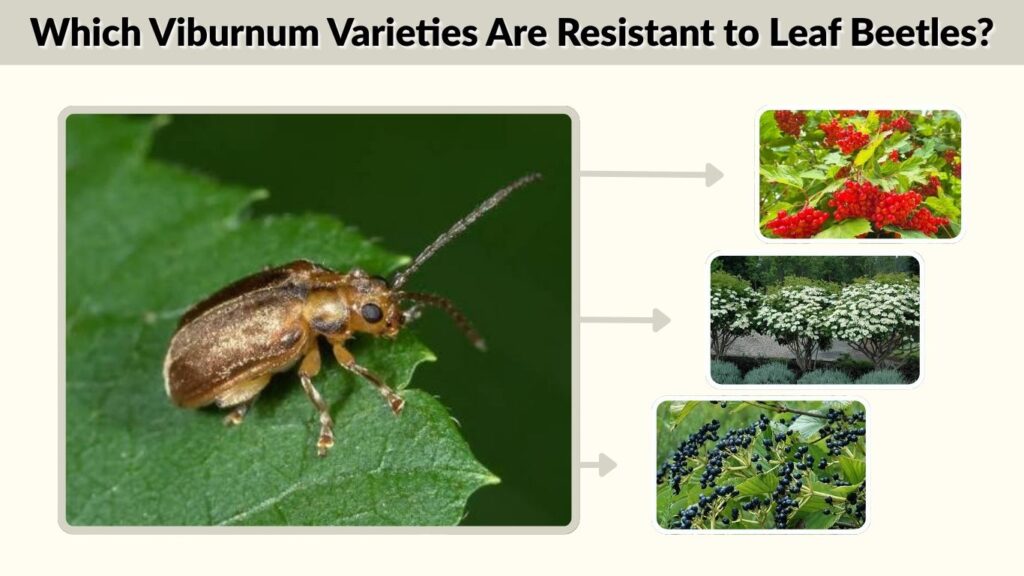
Viburnum susceptibility differs considerably among species. Some shrubs suffer repeated severe damage, while others experience little feeding.
Choosing less susceptible varieties is one of the most practical long-term management strategies, especially in regions where viburnum leaf beetles are established.
Susceptible and Resistant Viburnum Varieties
- Arrowwood viburnum (Viburnum dentatum): Highly susceptible, including the popular Blue Muffin cultivar.
- European cranberrybush (Viburnum opulus): Highly susceptible to repeated defoliation.
- American cranberrybush (Viburnum opulus var. americanum): Highly susceptible.
- Mapleleaf viburnum (Viburnum acerifolium): Susceptible.
- Blackhaw viburnum (Viburnum prunifolium): Moderately susceptible.
- Koreanspice viburnum (Viburnum carlesii): Relatively resistant.
- Doublefile viburnum (Viburnum plicatum): Relatively resistant.
- Leatherleaf viburnum (Viburnum rhytidophyllum): Relatively resistant.
Where Are Viburnum Leaf Beetles Found?
Viburnum leaf beetles are widespread in parts of Europe and occur in several regions of North America.
In the United States, established populations have been reported in New York, Michigan, Wisconsin, Illinois, Ohio, Minnesota, and other northern and northeastern states.
The beetle also occurs in Canada, including Ontario and several other provinces. Its distribution continues to change as populations spread into suitable habitats.
FAQs
1. What Kills Viburnum Leaf Beetles?
Young viburnum leaf beetle larvae can be controlled using appropriately labeled insecticidal soap, spinosad, or certain other insecticides. Pruning egg-infested twigs during winter is particularly effective. Combining seasonal monitoring with physical removal provides better long-term management.
2. Does Neem Oil Work on Viburnum Leaf Beetles?
Neem oil may suppress young viburnum leaf beetle larvae when applied thoroughly. However, effectiveness varies with the product and developmental stage. It is generally less reliable against mature beetles, making early treatment and regular monitoring especially important.
3. Can Viburnum Recover From Leaf Beetle Damage?
Yes, many viburnum shrubs recover after occasional defoliation, especially when growing conditions remain favorable. However, repeated severe infestations can weaken or kill susceptible varieties. Removing overwintering eggs and controlling larvae helps protect shrubs during subsequent growing seasons.
4. Do Viburnum Leaf Beetles Attack Other Plants?
Viburnum leaf beetles feed almost exclusively on plants belonging to the genus Viburnum. They do not normally damage unrelated garden plants. However, different viburnum species exhibit varying susceptibility, with arrowwood and European cranberrybush among the most vulnerable.
5. How Do You Prevent Viburnum Leaf Beetle Infestations?
Inspect young twigs for overwintering eggs, prune infested branches, and monitor emerging leaves during spring. Planting resistant viburnum varieties can also reduce future problems. Encouraging beneficial insects and avoiding unnecessary broad-spectrum pesticides supports natural pest control.
