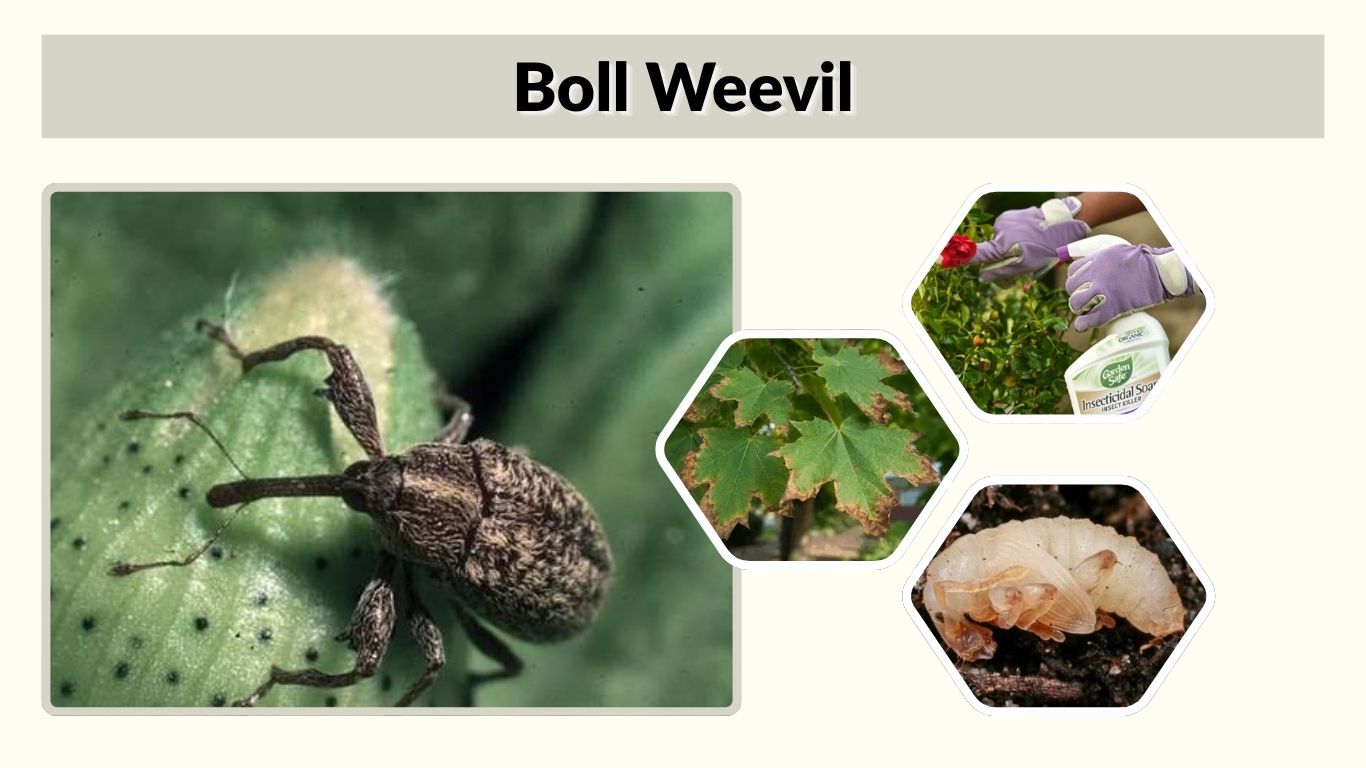
The boll weevil is a small, destructive beetle best known for causing severe damage to cotton crops. Recognized by its long snout and brownish body, this insect became one of the most serious agricultural pests in American history. Although boll weevils are harmless to humans, their feeding and egg-laying activities can destroy cotton flower buds and reduce yields. Understanding their appearance, life cycle, habitat, and feeding behavior is essential for effective management. This guide explores boll weevil identification, cotton damage, control methods, and fascinating historical facts.
What Is a Boll Weevil?
The boll weevil (Anthonomus grandis) is a beetle belonging to the family Curculionidae, commonly known as weevils or snout beetles. It primarily feeds and reproduces on cotton plants, particularly developing flower buds and bolls.
Originally from Mexico and nearby regions, the boll weevil entered the United States during the late nineteenth century. It spread rapidly across cotton-growing states, causing extensive agricultural and economic damage.
Boll Weevil Scientific Classification
Boll weevils belong to the order Coleoptera and the genus Anthonomus. Their scientific name is Anthonomus grandis.
They are true beetles rather than flies, ants, or other insects. Their elongated snouts distinguish them from many other agricultural pests.
What Does a Boll Weevil Look Like?
Boll weevils are relatively small insects with oval bodies and distinctive elongated snouts. Their coloration ranges from reddish-brown to grayish-brown, helping them blend into cotton plants.
Adults are commonly observed around cotton flower buds, where they feed and deposit eggs.
Key Identification Features
- Body size: Approximately 3–7 millimeters long.
- Body color: Reddish-brown, gray, or dark brown.
- Snout: Long, curved mouthpart used for feeding and drilling holes.
- Antennae: Elbowed antennae attached along the snout.
- Wings: Hardened wing covers protecting functional flight wings.
- Legs: Six segmented legs adapted for climbing plants.
- Body shape: Compact, oval, and slightly rounded.
Boll Weevil Larvae Identification
Boll weevil larvae are small, creamy-white, legless grubs with brownish heads.
Their bodies curve into a C-shape, making them resemble other beetle larvae. However, boll weevil larvae develop inside cotton flower buds and bolls rather than feeding openly on leaves.
What Damage Do Boll Weevils Cause to Cotton?
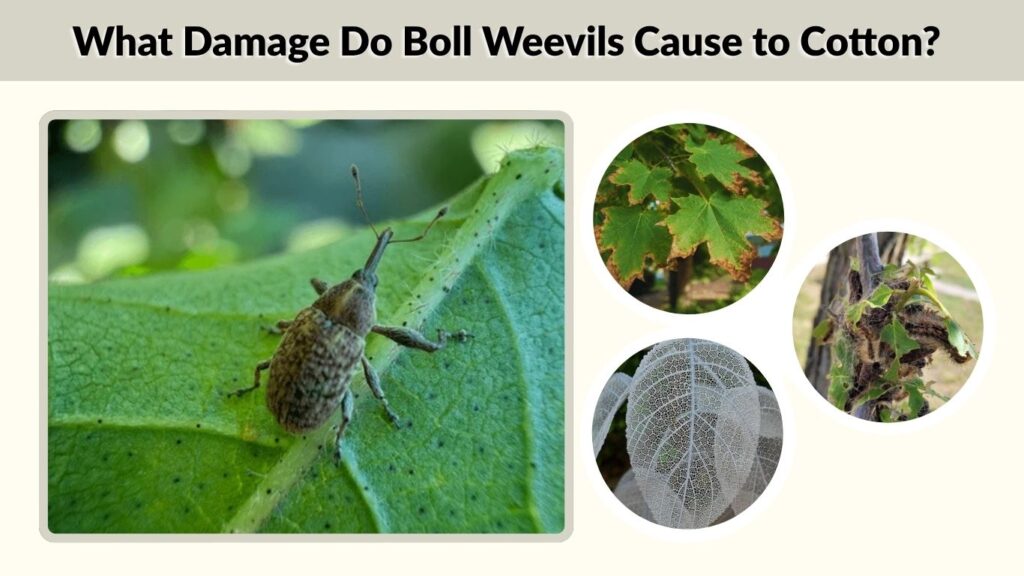
Boll weevils damage cotton through both adult feeding and larval development. Adults create small punctures in flower buds, while females deposit eggs inside developing plant structures.
After hatching, larvae consume internal tissues, disrupting normal cotton development and potentially causing substantial crop losses.
Common Signs of Boll Weevil Damage
- Feeding punctures: Small holes appear on cotton flower buds and developing bolls.
- Egg-laying marks: Females seal egg-laying holes with material that forms darkened spots.
- Flared squares: Damaged cotton flower buds develop spreading outer bracts.
- Premature shedding: Infested flower buds frequently drop from plants.
- Damaged bolls: Developing cotton bolls may become weakened or contaminated.
- Reduced yields: Severe infestations decrease the number of harvestable cotton bolls.
Can Boll Weevils Destroy Entire Cotton Crops?
Yes, uncontrolled boll weevil populations can cause extensive crop damage.
Repeated attacks prevent plants from producing healthy flowers and developing mature bolls. Historically, severe infestations caused major financial losses for cotton farmers throughout the southern United States.
Boll Weevil Life Cycle
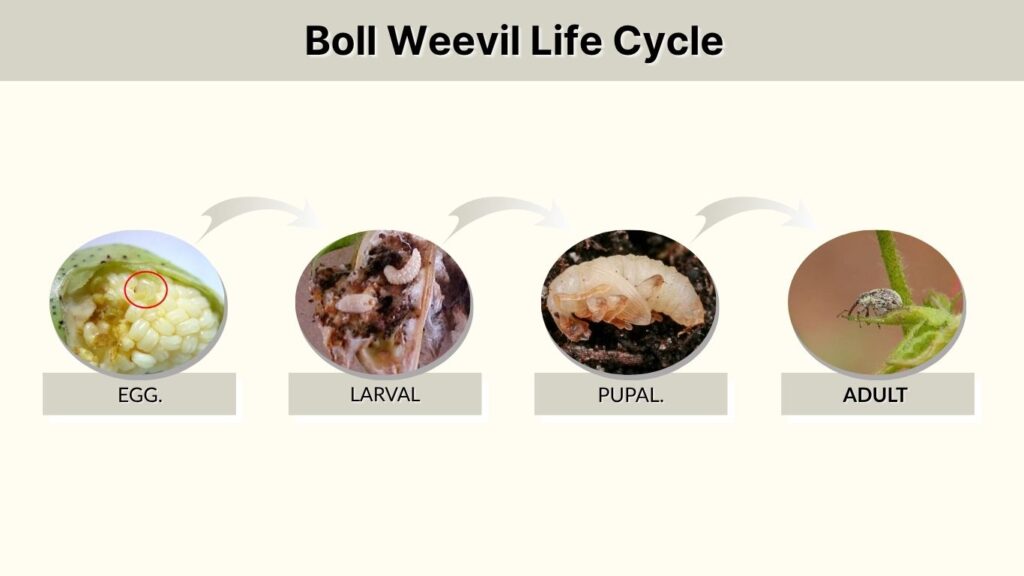
The boll weevil undergoes complete metamorphosis through four developmental stages: egg, larva, pupa, and adult.
Its reproductive cycle can progress rapidly under warm conditions, allowing several generations to develop during a growing season.
Four Stages of the Life Cycle
- Egg stage: Females drill into cotton squares or bolls and deposit individual eggs. These generally hatch within several days.
- Larval stage: Cream-colored larvae feed internally for approximately 7–14 days.
- Pupal stage: Mature larvae pupate inside the same flower bud or boll for several additional days.
- Adult stage: Fully developed beetles emerge, feed, mate, and produce another generation.
How Long Do Boll Weevils Live?
Adult boll weevils may survive for several weeks, depending on temperature, food availability, and environmental conditions.
Some adults enter a state of reduced activity during unfavorable seasons, helping them survive until suitable cotton plants become available again.
Where Do Boll Weevils Live?
Boll weevils primarily inhabit regions where cotton is cultivated. Their survival depends heavily on suitable host plants and environmental conditions.
Historically, they occurred throughout the southern United States, including Texas, Mississippi, Alabama, and Georgia.
Boll Weevils in Texas and Other States
Boll weevils once occurred across nearly every major American cotton-producing region.
However, extensive eradication programs have eliminated established populations from more than 99% of U.S. cotton acreage.
The Lower Rio Grande Valley of Texas remains the principal region where eradication activities continue.
How to Get Rid of Boll Weevils
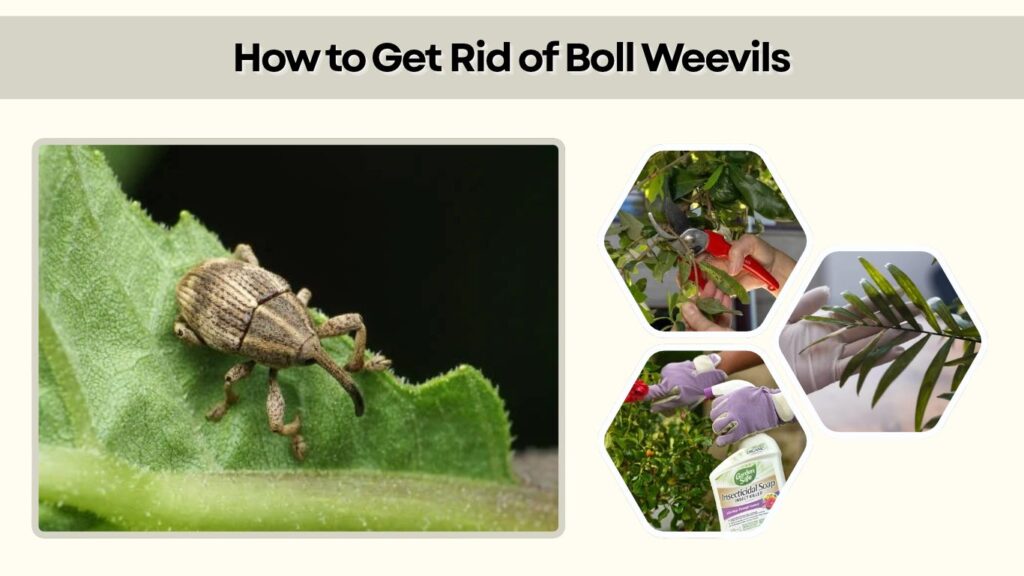
Boll weevil control requires consistent monitoring and coordinated pest-management practices. Because larvae develop inside cotton buds and bolls, controlling them after they enter plant tissues is difficult.
Management programs focus on detecting adults, preventing reproduction, and reducing opportunities for populations to survive between growing seasons.
Effective Boll Weevil Control Methods
- Monitor cotton fields: Use approved pheromone traps to detect adult boll weevils.
- Inspect flower buds: Examine cotton squares for feeding and egg-laying punctures.
- Remove crop residues: Follow local recommendations for destroying cotton stalks after harvest.
- Control volunteer cotton: Eliminate unwanted cotton plants that may support surviving beetles.
- Follow planting schedules: Coordinate planting and harvesting with regional pest-management programs.
- Use approved insecticides: Apply registered products only when recommended by agricultural authorities.
- Report suspected infestations: Notify local agricultural officials to prevent further spread.
Boll Weevil Eradication Program
The United States began a coordinated Boll Weevil Eradication Program in 1978.
The program combines pheromone trapping, targeted insecticide applications, crop monitoring, and cooperation among growers.
Its success has dramatically reduced boll weevil populations and helped protect American cotton production.
Why Is There a Boll Weevil Monument in Alabama?
The Boll Weevil Monument in Enterprise, Alabama, is one of America’s most unusual agricultural landmarks.
Although boll weevils devastated local cotton production, their arrival encouraged farmers to diversify their crops.
History of the Boll Weevil Statue
The monument was dedicated on December 11, 1919, to recognize the economic transformation that followed the boll weevil infestation.
Many farmers began cultivating peanuts instead of depending entirely on cotton. This diversification helped strengthen the local agricultural economy.
The statue became a symbol of resilience, adaptation, and opportunity during difficult times.
Are Boll Weevils Dangerous to Humans?
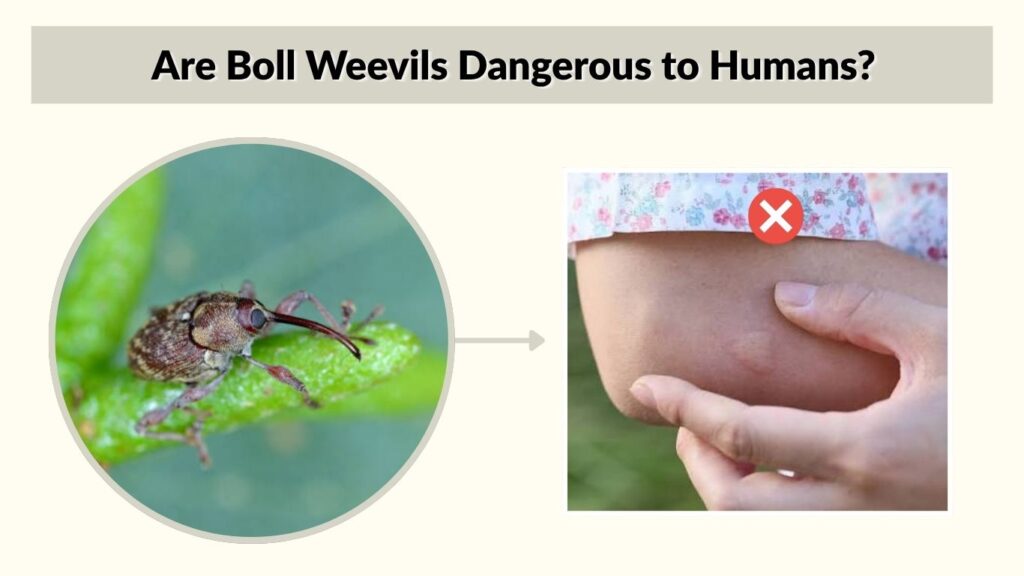
Boll weevils are not considered dangerous to humans. They do not possess venomous stingers and are not known for transmitting human diseases.
Their primary impact is agricultural rather than medical.
Can Boll Weevils Infest Flour?
True cotton boll weevils do not normally infest flour, rice, or stored household grains.
Small beetles discovered inside flour are more likely to be grain weevils or other pantry pests.
Accurate identification is important because these insects require different control methods.
FAQs
1. What Is a Boll Weevil?
A boll weevil is a small, snout-nosed beetle scientifically known as Anthonomus grandis. It feeds and reproduces on cotton plants, especially flower buds and developing bolls. Historically, it caused extensive damage throughout cotton-growing regions of the United States.
2. Can Boll Weevils Bite Humans?
Boll weevils are not known for biting humans and do not possess venomous stingers. Their mouthparts are adapted for feeding on cotton plants rather than attacking animals. They are primarily agricultural pests and pose little direct danger to people.
3. Are Boll Weevils Still Found in the United States?
Yes, boll weevils still occur in limited areas of the United States, particularly the Lower Rio Grande Valley of Texas. Eradication programs have eliminated established populations from most American cotton-growing regions, although monitoring continues to prevent reinfestation.
4. Why Is the Boll Weevil Famous in Alabama?
The boll weevil became famous in Enterprise, Alabama, because its destruction of cotton crops encouraged farmers to diversify into peanuts and other agricultural products. Residents erected the Boll Weevil Monument in 1919 to commemorate this remarkable economic transformation.
5. What Is the Best Way to Control Boll Weevils?
Effective control combines pheromone trapping, early detection, cotton stalk destruction, and coordinated agricultural management. Registered insecticides may also be necessary under official eradication programs. Farmers should follow regional agricultural regulations and report suspected infestations promptly.