
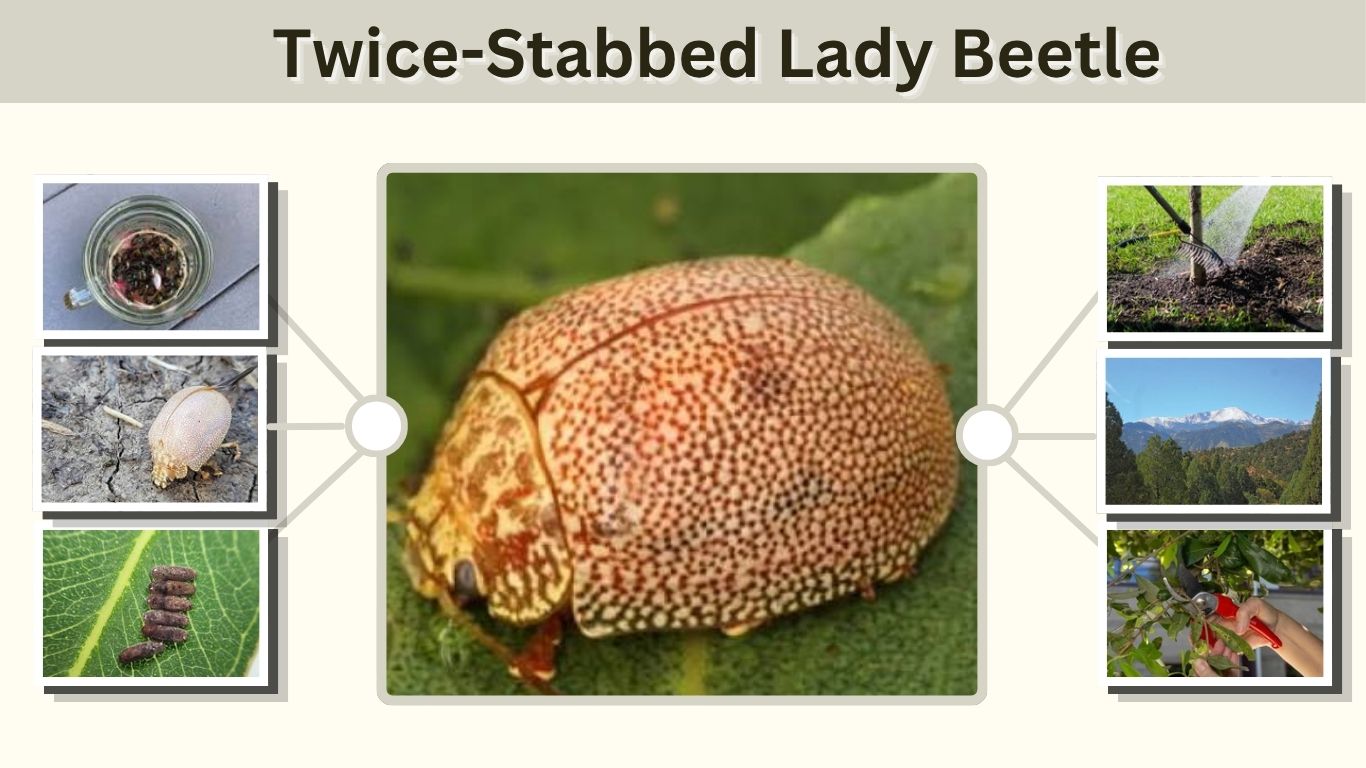
The eucalyptus tortoise beetle is a leaf-feeding insect known for its rounded, shell-like body and ability to damage eucalyptus trees. Native to Australia, these beetles have spread to regions including New Zealand and California, where some species have become important forestry and landscape pests. Both adults and larvae feed on eucalyptus foliage, producing irregular holes and scalloped leaf edges. Heavy infestations can weaken trees and reduce their growth. Understanding eucalyptus tortoise beetle identification, larvae, life cycle, habitat, damage, and control methods is essential for protecting eucalyptus trees.
What Is a Eucalyptus Tortoise Beetle?
The eucalyptus tortoise beetle belongs to the leaf beetle family Chrysomelidae. Its common name comes from its rounded, dome-shaped body, which resembles a miniature tortoise shell. These beetles feed mainly on eucalyptus leaves and are most active during warmer growing seasons.
The name refers to several related beetles rather than one species worldwide. In New Zealand, the best-known eucalyptus tortoise beetle is Paropsis charybdis. In California, the name commonly refers to Trachymela sloanei.
Eucalyptus Tortoise Beetle Identification
Common identification characteristics include:
- Body shape: Rounded, convex, and tortoise-like.
- Size: Approximately 6–14 mm, depending on the species.
- Color: Brown, reddish-brown, yellowish, or mottled gray.
- Wing covers: Hardened, rounded coverings that protect the wings.
- Antennae: Relatively short to moderately long, depending on species.
- Habitat: Eucalyptus foliage, bark, and surrounding leaf litter.
- Diet: Young and mature eucalyptus leaves.
Their appearance can resemble that of ladybugs, but eucalyptus tortoise beetles are plant feeders rather than beneficial aphid predators.
Eucalyptus Tortoise Beetle Scientific Name
The scientific name depends on the region and species involved.
| Scientific name | Common identification | Region |
| Paropsis charybdis | Eucalyptus tortoise beetle | New Zealand, Australia |
| Trachymela sloanei | Australian eucalyptus tortoise beetle | California, Australia, New Zealand |
| Paropsisterna m-fuscum | Southern eucalyptus leaf beetle | California, Australia |
| Paropsis atomaria | Dotted paropsine leaf beetle | Australia, California |
Paropsisterna m-fuscum has also been documented under the older combination Chrysophtharta m-fuscum. These related species share similar feeding habits but have differences in appearance, distribution, and behavior.
Where Do Eucalyptus Tortoise Beetles Live?
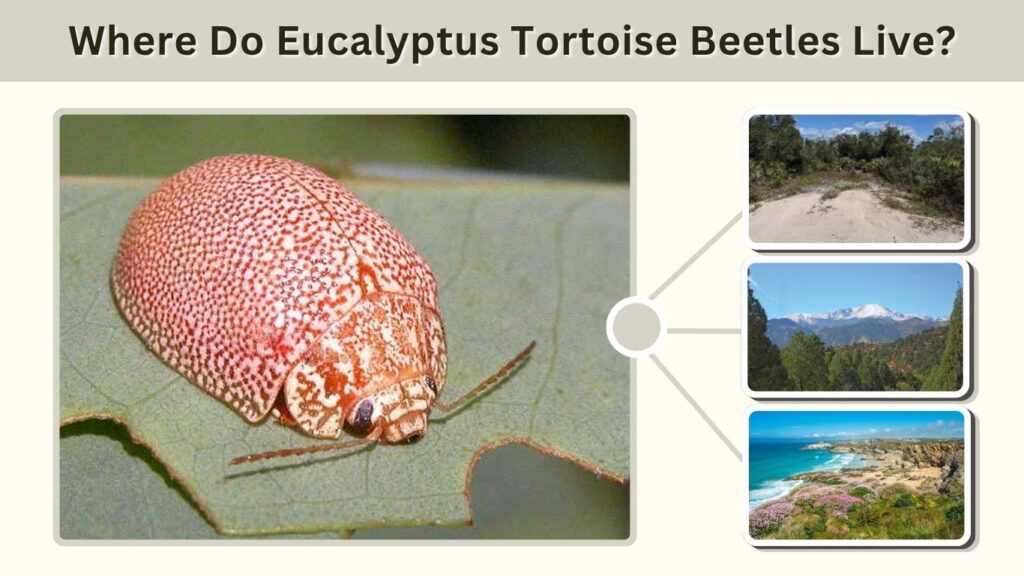
Eucalyptus tortoise beetles primarily inhabit areas where eucalyptus trees grow. Their native populations occur in Australia, while introduced populations have established themselves in several other regions.
Beetles may live on leaves, hide beneath loose bark, or overwinter in leaf litter near eucalyptus trees. Their presence often depends on local temperatures and the availability of suitable host species.
Eucalyptus Tortoise Beetle in California
The Australian tortoise beetle, Trachymela sloanei, was first detected in California’s Riverside County in 1998. It subsequently spread into other eucalyptus-growing regions of the state.
Another species, Paropsisterna m-fuscum, was first discovered in Orange County in 2003. Both species can cause noticeable foliage damage, particularly in ornamental and commercially cultivated eucalyptus.
Eucalyptus Tortoise Beetle in New Zealand
Paropsis charybdis was first recorded near Christchurch, New Zealand, in 1916. Since then, it has spread through many eucalyptus-growing regions.
It is considered a significant pest in New Zealand because repeated feeding can reduce foliage, damage young shoots, and affect commercial eucalyptus production.
Eucalyptus Tortoise Beetle Larvae
Eucalyptus tortoise beetle larvae are responsible for much of the feeding damage observed on eucalyptus trees. Unlike adults, larvae have elongated, soft bodies that resemble small caterpillars. They feed directly on leaves and develop through several stages before becoming adults.
How to Identify the Larvae
The appearance of eucalyptus tortoise beetle larvae varies by species.
- Body color: Yellowish, greenish-gray, reddish-brown, or pinkish.
- Head: Often darker than the body.
- Markings: Some species have black spots or dark stripes.
- Legs: Three pairs of jointed thoracic legs.
- Feeding behavior: Young larvae frequently consume tender foliage.
- Defense: Paropsis charybdis larvae can release a strong-smelling defensive secretion.
Young larvae sometimes feed together before spreading across surrounding foliage as they mature.
Eucalyptus Tortoise Beetle Life Cycle
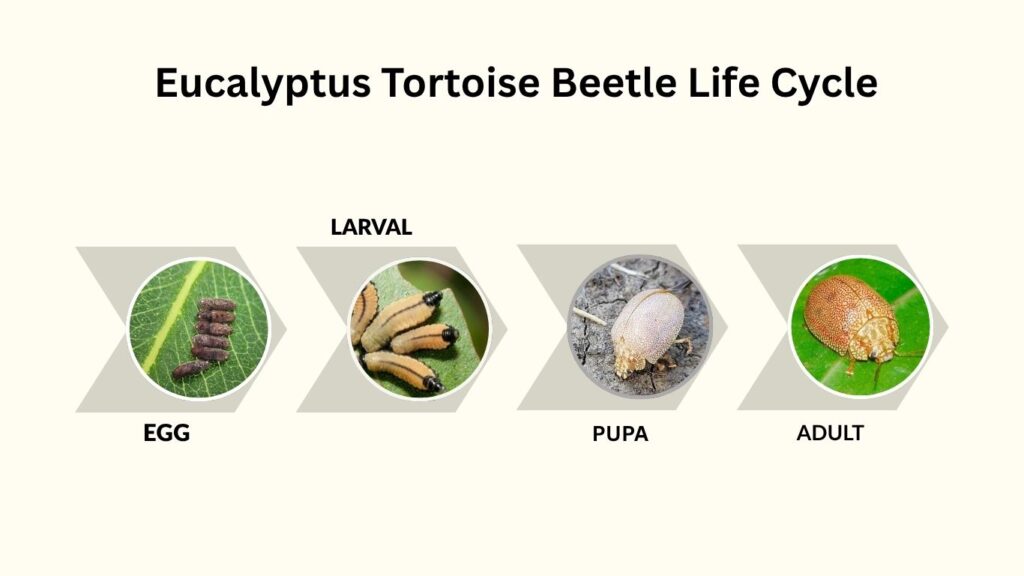
The eucalyptus tortoise beetle undergoes complete metamorphosis, developing through four stages: egg, larva, pupa, and adult. Its development rate depends on species, temperature, and environmental conditions. Understanding these stages helps identify infestations before serious defoliation occurs.
Four Stages of Development
1. Egg stage: Females lay groups of eggs on eucalyptus leaves or, in some species, beneath loose bark. Paropsis charybdis eggs generally hatch after approximately 14–21 days.
2. Larval stage: Newly hatched larvae begin feeding on foliage. They pass through four growth stages, becoming larger and consuming more leaves.
3. Pupal stage: Mature larvae move into leaf litter, soil, or sheltered locations to pupate. Inside the pupa, the insect develops its adult structures.
4. Adult stage: Adult beetles emerge, feed on eucalyptus foliage, and reproduce. Some species survive winter beneath bark or in leaf litter.
What Damage Do Eucalyptus Tortoise Beetles Cause?
Eucalyptus tortoise beetle damage occurs when adults and larvae consume leaf tissue. Feeding usually begins along leaf margins, producing irregular notches. Severe infestations can remove much of the foliage, exposing branches and reducing the tree’s ability to photosynthesize.
Common Signs of Infestation
Look for the following symptoms:
- Semicircular holes along leaf edges.
- Irregular, scalloped leaf margins.
- Damaged young shoots and tender foliage.
- Groups of larvae feeding on leaves.
- Premature leaf loss during heavy infestations.
- Bare branches after repeated defoliation.
Can Eucalyptus Tortoise Beetles Kill Trees?
Healthy, established eucalyptus trees often tolerate moderate beetle feeding. However, repeated severe defoliation can weaken trees, reduce growth, and increase vulnerability to environmental stress.
In New Zealand, Paropsis charybdis can cause serious damage to susceptible eucalyptus plantations. In California, leaf damage from Trachymela sloanei is often primarily cosmetic, although extensive feeding may contribute to tree stress.
How to Control Eucalyptus Tortoise Beetles
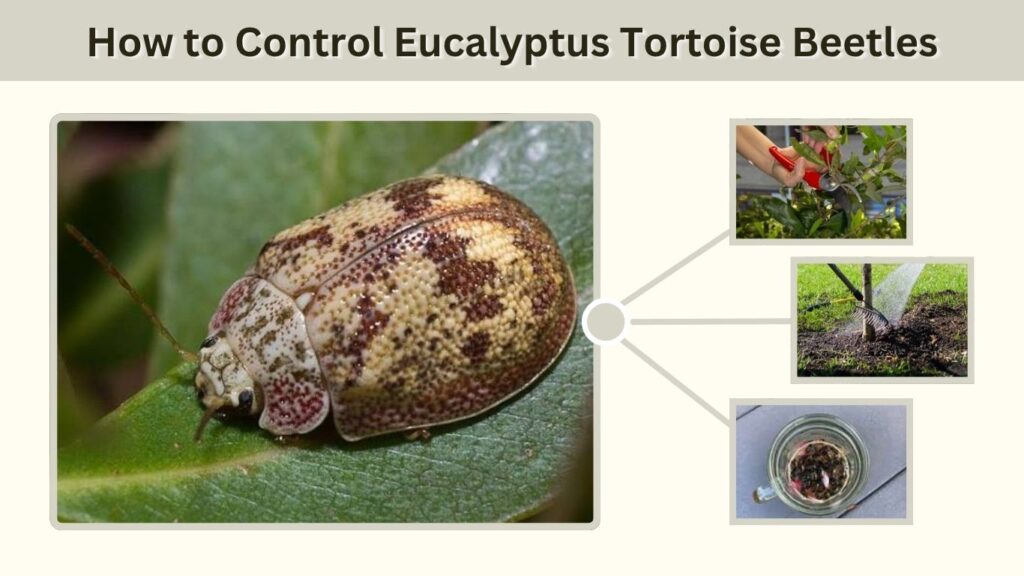
Eucalyptus tortoise beetle control should begin with identifying the species and evaluating the severity of damage. Small populations generally do not require chemical treatment, especially on established landscape trees. However, eucalyptus plantations and commercial foliage operations may need more extensive management.
Natural and Preventive Control Methods
Several practical approaches can help reduce damage:
- Inspect eucalyptus foliage: Check leaves regularly for eggs, larvae, and feeding damage.
- Maintain tree health: Provide suitable irrigation and proper growing conditions.
- Remove beetles manually: Handpick accessible beetles and larvae from small trees when practical.
- Protect natural enemies: Avoid unnecessary broad-spectrum insecticide applications.
- Monitor new growth: Young leaves attract feeding larvae and can reveal developing infestations.
- Choose less susceptible trees: Where appropriate, select eucalyptus species with lower vulnerability to local beetles.
Biological Control
Biological control involves using natural enemies to reduce pest populations.
In New Zealand, the egg parasitoid Enoggera nassaui has helped suppress Paropsis charybdis populations. Other beneficial insects, including predatory ladybirds and parasitoid wasps, can also contribute.
Preserving beneficial insects is important because inappropriate pesticide use can disrupt existing biological control.
Pesticides for Eucalyptus Tortoise Beetles
Chemical treatments may be considered when infestations cause substantial economic damage. However, pesticides should be selected according to the beetle species, eucalyptus planting type, and applicable local regulations.
Some professional management programs use registered insecticides, but broad-spectrum treatments may harm beneficial insects. Consult a qualified pest management professional before treating large eucalyptus trees or commercial plantations.
Why Was the Eucalyptus Tortoise Beetle Misidentified in 1916?
The eucalyptus tortoise beetle discovered in New Zealand in 1916 was later incorrectly identified as Paropsis dilatata. This identification appeared in scientific records during the early twentieth century.
In 1963, taxonomic research established that the New Zealand insect was actually Paropsis charybdis.
This correction is important because Paropsis dilatata and Paropsis charybdis are separate species rather than alternative scientific names for the same beetle.
FAQs
1. Are Eucalyptus Tortoise Beetles Harmful to Humans?
Eucalyptus tortoise beetles are not generally considered dangerous to humans. They do not have stingers and primarily feed on eucalyptus leaves. Although some larvae release defensive chemicals when disturbed, these insects are not regarded as significant household or human health pests.
2. What Do Eucalyptus Tortoise Beetles Eat?
Eucalyptus tortoise beetles primarily consume eucalyptus foliage. Young larvae often prefer tender new leaves, while adults may feed on both young and mature foliage. Their feeding produces distinctive holes, irregular notches, and scalloped edges, especially when several beetles occupy the same tree.
3. How Long Do Eucalyptus Tortoise Beetles Live?
Lifespan varies depending on species and climate. Paropsis charybdis generally has an annual cycle that includes overwintering adults, while some California species develop more rapidly and produce multiple generations each year. Temperature, food availability, and seasonal conditions influence their survival.
4. How Do You Identify Eucalyptus Tortoise Beetle Eggs?
Eucalyptus tortoise beetle eggs commonly appear in small groups on eucalyptus foliage or beneath loose bark. Their colors vary between species, ranging from pale pinkish-brown to bright orange. Eggs often become darker as they approach hatching, making mature egg clusters easier to recognize.
5. What Is the Best Way to Get Rid of Eucalyptus Tortoise Beetles?
Maintaining healthy eucalyptus trees and protecting natural predators are effective first steps. Small infestations often require no treatment, while severely affected commercial trees may need professional pest management. Regular inspections help identify developing populations before they cause extensive foliage loss.
