
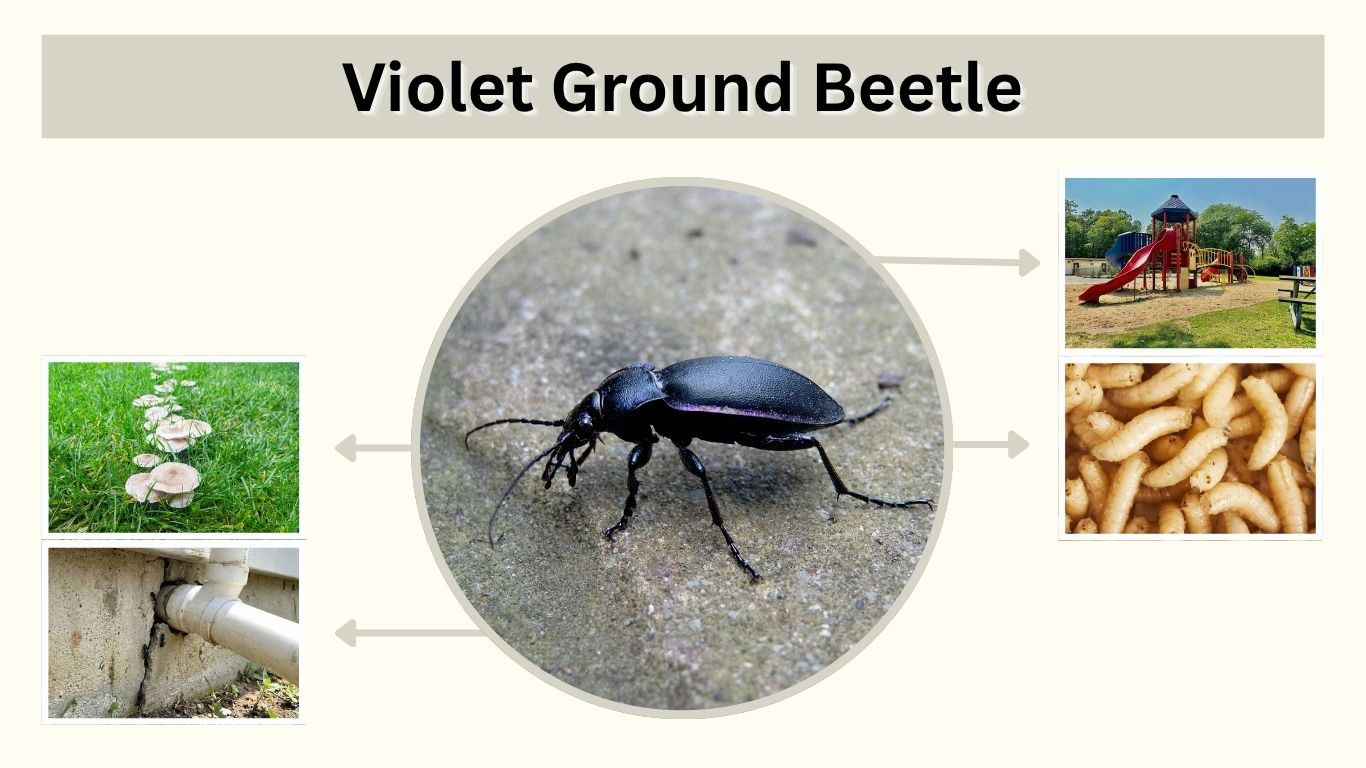
The violet ground beetle is a large, flightless predator recognized by its dark body and shimmering purple edges. Common in the United Kingdom, it searches gardens, woodlands, and grasslands for slugs, worms, and insect larvae. Although its powerful jaws may look alarming, this beetle usually avoids people and provides valuable natural pest control. It can also be confused with the ridged violet ground beetle, a closely related species. Learning its size, identifying features, life cycle, feeding habits, and defensive behavior makes it easier to recognize and protect.
What Is a Violet Ground Beetle?
The violet ground beetle (Carabus violaceus) belongs to the family Carabidae, a large group of mostly ground-dwelling beetles. It is a native European species widely found across mainland Britain.
Unlike plant-eating beetles, violet ground beetles are carnivorous. They use their powerful jaws and long legs to chase smaller invertebrates.
Their distinctive purple-edged bodies make them among the more recognizable ground beetles in the UK. However, their dark coloration means they can appear almost completely black in poor lighting.
How to Identify a Violet Ground Beetle
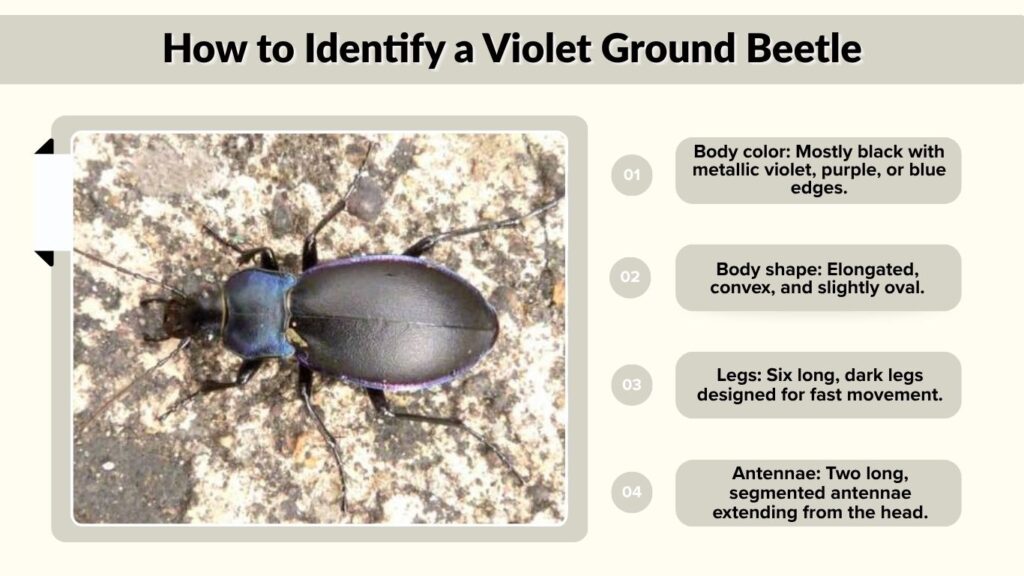
Violet ground beetles are large, sturdy insects with elongated bodies and slightly rounded wing covers. Their metallic purple edges are their most recognizable characteristic.
Violet Ground Beetle Identification Features
- Body color: Mostly black with metallic violet, purple, or blue edges.
- Body shape: Elongated, convex, and slightly oval.
- Legs: Six long, dark legs designed for fast movement.
- Antennae: Two long, segmented antennae extending from the head.
- Wing covers: Dark, relatively smooth elytra with fine surface texture.
- Head: Strong mandibles for capturing and consuming prey.
Violet Ground Beetle Size
Adult violet ground beetles typically measure 20–30 mm long, making them relatively large among British ground beetles.
Females may appear broader than males, although body size alone is not a reliable way to distinguish their sex.
Their dark, glossy appearance and long legs can make them look larger when moving quickly across soil or garden pathways.
Violet Ground Beetle vs. Ridged Violet Ground Beetle
Two closely related species share the violet ground beetle name in Britain. They can be difficult to distinguish without examining the surface of their wing covers.
Violet Ground Beetle (Carabus violaceus)
This species has a relatively smooth, rounded body with violet or blue metallic edging. Its wing covers have fine granulation rather than strongly raised ridges.
It is frequently encountered in gardens, meadows, woodlands, and farmland. It is generally more common than its ridged relative in many British lowland habitats.
Ridged Violet Ground Beetle (Carabus problematicus)
The ridged violet ground beetle has similar purple markings but noticeably textured wing covers.
Its elytra display raised ridges and small depressions, creating a rougher appearance.
This species is particularly associated with woodland, moorland, and heathland. It occurs in Scotland and other parts of Britain, especially in suitable upland habitats.
Both species are flightless predators, and both are beneficial to their surrounding ecosystems.
Where Do Violet Ground Beetles Live?
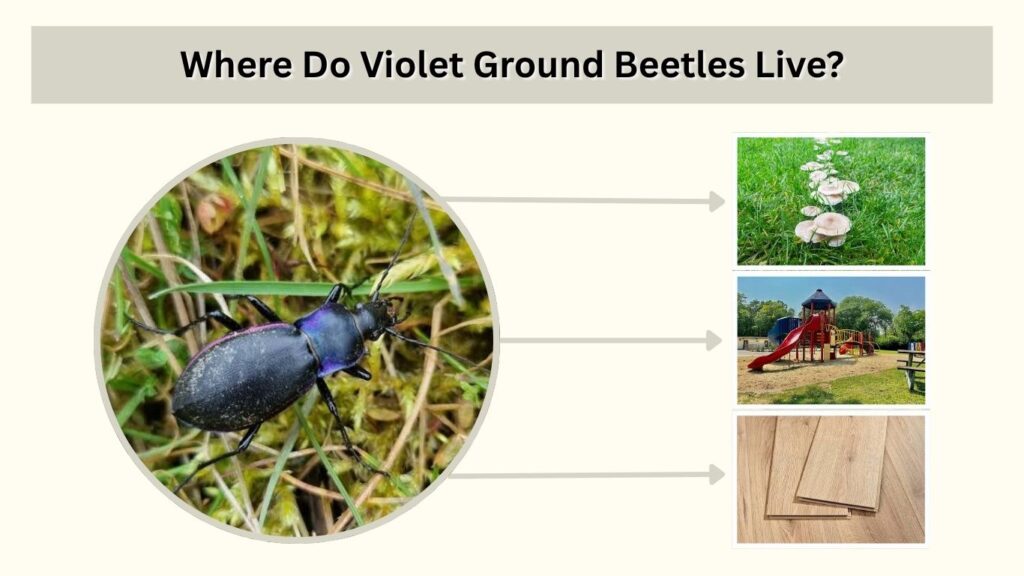
Violet ground beetles occupy various habitats throughout Britain and parts of continental Europe. They prefer environments offering shelter, prey, and suitable ground conditions.
Violet Ground Beetle Habitat in the UK
They commonly inhabit gardens, woodland floors, parks, grasslands, and field margins.
During daylight, adults often remain beneath fallen logs, stones, bark, or accumulated leaves. These sheltered places protect them from predators and unfavorable weather.
They are most frequently encountered at night, when they search for food across the ground.
In Scotland, both violet ground beetle species occur, although their local distribution varies with habitat and elevation.
What Do Violet Ground Beetles Eat?
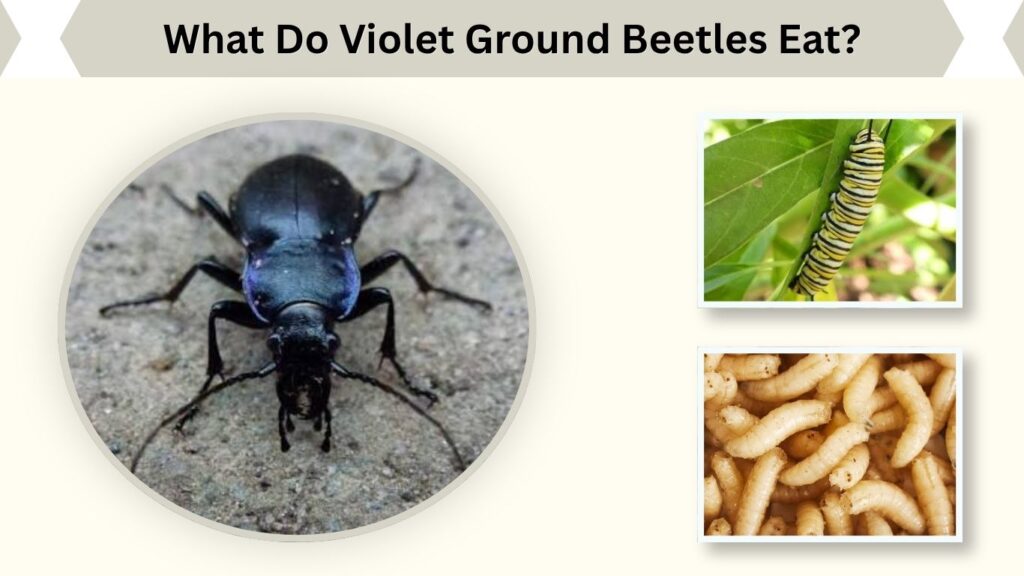
Violet ground beetles are active predators that help reduce populations of soft-bodied invertebrates. They feed mainly at ground level, searching through vegetation and damp leaf litter.
Common Foods of Violet Ground Beetles
- Slugs: Soft-bodied garden slugs are important prey.
- Snails: Smaller snails may be attacked and eaten.
- Caterpillars: Ground-dwelling moth larvae provide another food source.
- Earthworms: These can be consumed when encountered.
- Other insect larvae: Various soft-bodied larvae are potential prey.
How Do Violet Ground Beetles Hunt?
These beetles rely on their long legs, sensitive antennae, and powerful mandibles to find and capture food.
They usually hunt after dark, moving across the soil and investigating sheltered areas.
Once prey is detected, the beetle grips it using its jaws and begins feeding. Their predatory behavior makes them particularly valuable in gardens where slugs and caterpillars damage plants.
Violet Ground Beetle Larvae and Life Cycle
Like other ground beetles, violet ground beetles undergo complete metamorphosis. Their development includes egg, larval, pupal, and adult stages.
What Do Violet Ground Beetle Larvae Look Like?
Violet ground beetle larvae are elongated, segmented insects with noticeable heads and strong jaws.
Their bodies are generally dark above, with three pairs of legs near the head. Unlike caterpillars, they do not have fleshy abdominal prolegs.
They live mainly within soil, leaf litter, and other sheltered ground habitats, where they hunt smaller invertebrates.
The larvae are predators rather than plant feeders, contributing to natural pest control before reaching adulthood.
Four Stages of the Violet Ground Beetle Life Cycle
- Egg: Females generally lay eggs in soil or organic material, often during autumn in Britain.
- Larva: After hatching, larvae feed actively and pass through several growth stages.
- Pupa: Mature larvae pupate in sheltered locations, usually within soil.
- Adult: Newly developed beetles emerge, begin hunting, and eventually reproduce.
In Britain, Carabus violaceus commonly breeds in autumn, with larvae developing through winter and adults emerging during spring.
Adults can survive beyond one breeding season and may overwinter in protected habitats.
Are Violet Ground Beetles Dangerous?
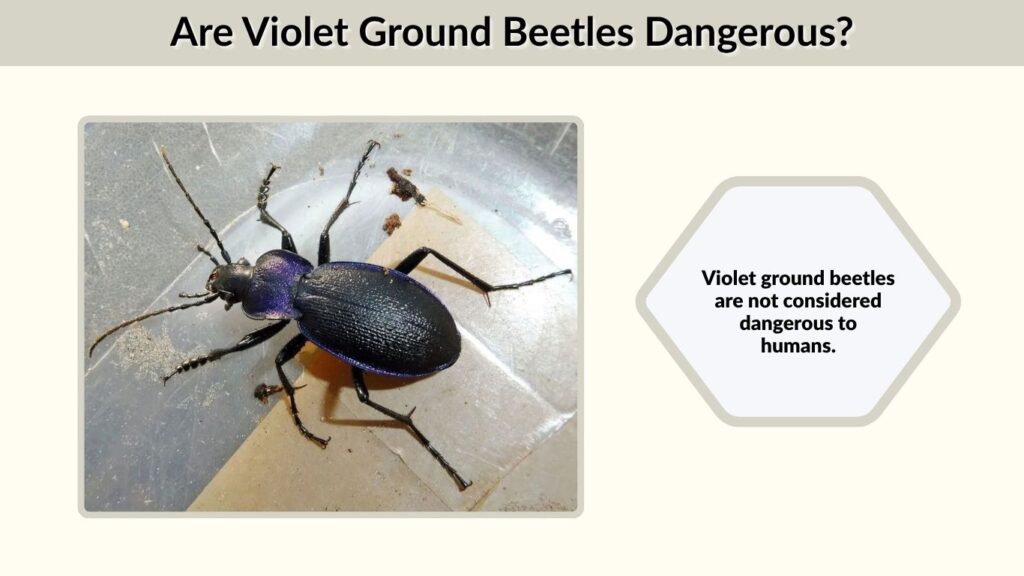
Violet ground beetles are not considered dangerous to humans. They do not attack people deliberately and are not known to transmit diseases through ordinary contact.
However, like many predatory beetles, they possess defensive behaviors that help protect them from threats.
Do Violet Ground Beetles Bite?
Violet ground beetles have strong mandibles and may deliver a defensive bite if squeezed or handled roughly.
Such bites are uncommon and are generally not medically significant. These beetles are not venomous.
If bitten, wash the affected skin with soap and water. Seek medical advice if significant swelling, worsening pain, or signs of infection develop.
Why Do Violet Ground Beetles Smell?
Ground beetles possess specialized defensive glands that can release unpleasant-smelling chemicals when threatened.
These secretions help discourage predators and may irritate sensitive skin.
Avoid handling beetles unnecessarily, and wash your hands if you accidentally contact their defensive fluids.
Violet Ground Beetle in the House
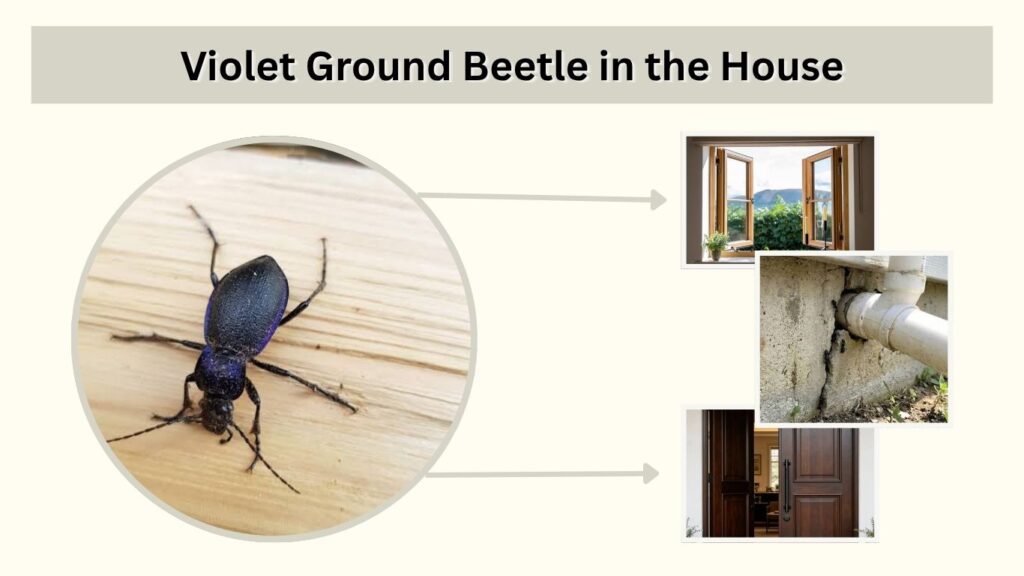
Finding a violet ground beetle indoors usually indicates an accidental entry rather than a household infestation.
These insects naturally live outdoors and do not normally reproduce inside furniture, carpets, or stored food.
How to Remove a Violet Ground Beetle Safely
- Cover the beetle: Place a glass or small container over it.
- Slide paper underneath: Use stiff paper to lift it without direct contact.
- Release outdoors: Choose a sheltered garden area with vegetation.
- Prevent entry: Seal visible gaps around doors and windows.
There is usually no reason to apply insecticides when a single beetle enters a home.
Are Violet Ground Beetles Good for Gardens?
Violet ground beetles are beneficial predators because they consume slugs, caterpillars, and other invertebrates that may damage garden plants.
They also contribute to biodiversity by forming part of the natural food web.
Gardeners can encourage these beetles by maintaining leaf litter in suitable areas, providing log piles, and avoiding unnecessary pesticide applications.
Because they cannot fly, connected green spaces are particularly important for their movement between habitats.
FAQs
1. Can Violet Ground Beetles Fly?
No. Violet ground beetles are flightless. Their wing covers are fused, so they depend on walking and running to travel between suitable habitats.
2. Are Violet Ground Beetles Rare in the UK?
No. Carabus violaceus is relatively common and widespread across mainland Britain. The similar Carabus problematicus is generally less common in many lowland areas.
3. How Long Do Violet Ground Beetles Live?
Adult violet ground beetles can survive through more than one breeding season. Their lifespan varies depending on environmental conditions, food availability, and survival during winter.
4. Are Violet Ground Beetles Poisonous?
They are not considered poisonous through ordinary contact. However, their defensive chemical secretions may cause irritation, so handling them directly is best avoided.
5. What Attracts Violet Ground Beetles to Gardens?
Suitable shelter, undisturbed soil, leaf litter, and plentiful prey such as slugs and insect larvae can attract violet ground beetles to gardens.
