
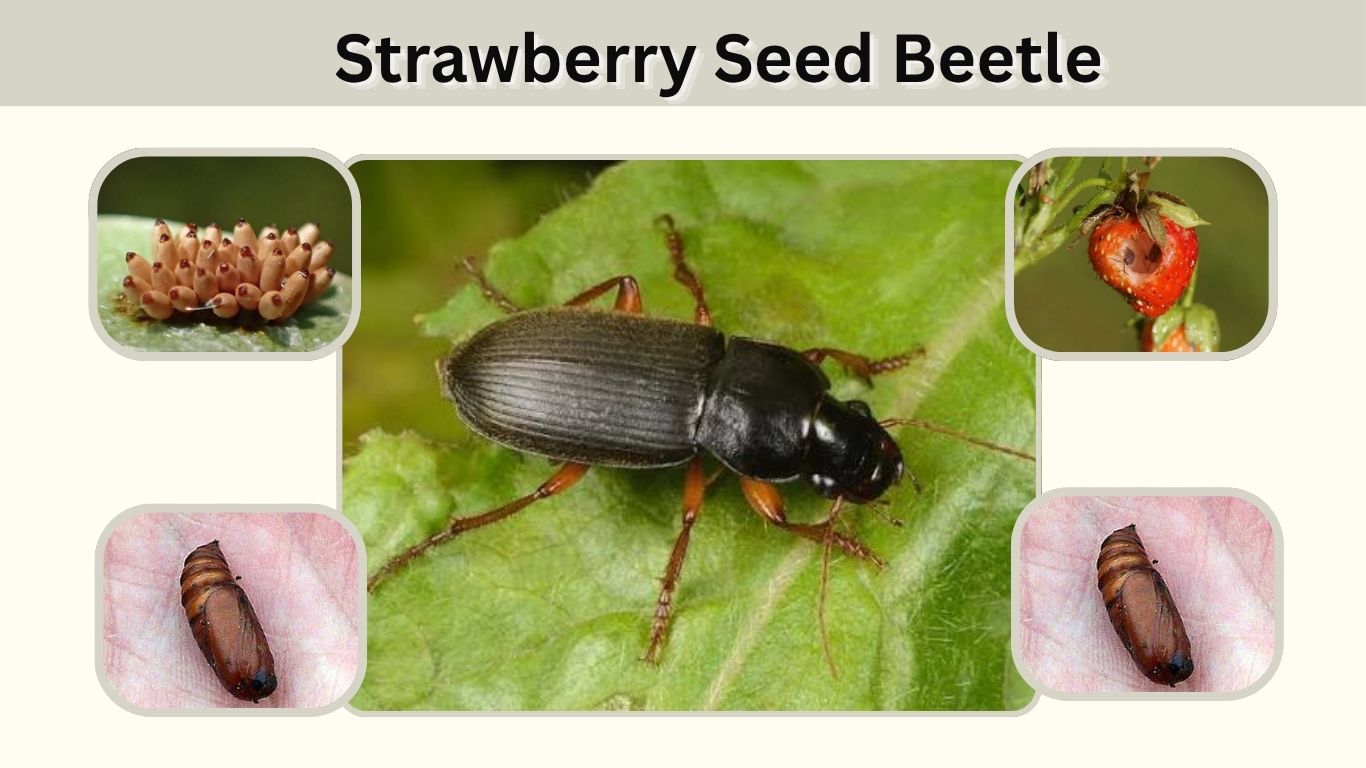
The strawberry seed beetle (Harpalus rufipes) is a dark ground beetle commonly found in gardens, agricultural fields, and around homes. It feeds on plant seeds and sometimes damages ripe strawberries by removing seeds from their surfaces. Although its appearance resembles a small cockroach, it is not a typical household pest. These beetles also consume certain insects and weed seeds, making their role in gardens more complicated. This guide covers identification, size, larvae, diet, strawberry damage, bites, indoor sightings, and practical control methods.
What Is a Strawberry Seed Beetle?
The strawberry seed beetle belongs to the family Carabidae, which includes thousands of ground beetle species. Its scientific name is Harpalus rufipes, and it is also called the strawberry ground beetle.
Native to Europe and introduced into North America, this species commonly inhabits agricultural fields, gardens, and grasslands.
Unlike many strictly predatory ground beetles, strawberry seed beetles have an omnivorous diet. They consume plant seeds and various small invertebrates. Their seed-feeding behavior can make them both beneficial and occasionally troublesome.
How to Identify a Strawberry Seed Beetle
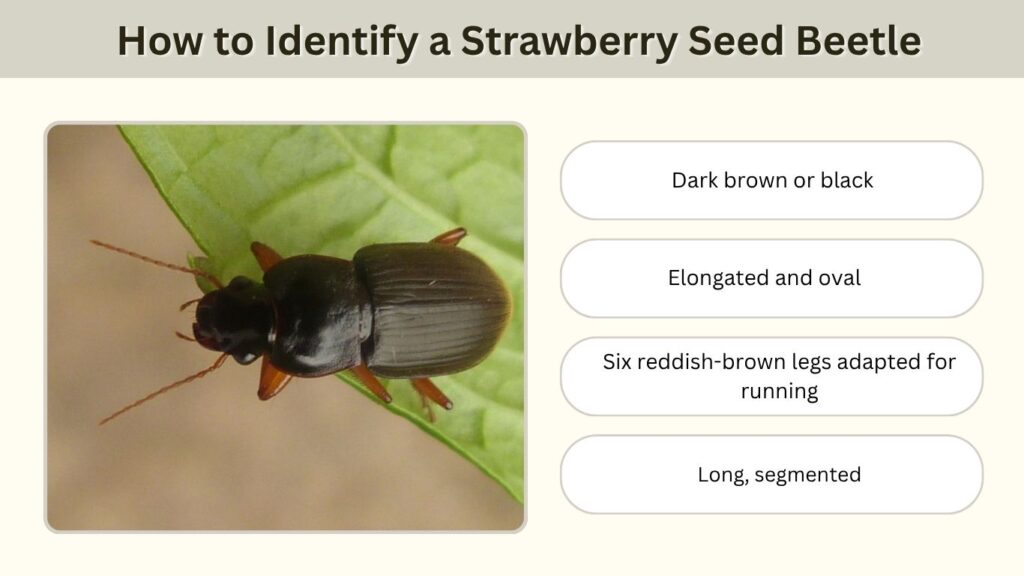
Strawberry seed beetles have elongated, dark bodies with reddish-brown legs and antennae. Their appearance resembles other ground beetles, but several characteristics help distinguish them.
Strawberry Seed Beetle Identification Features
- Body color: Dark brown or black, sometimes appearing slightly shiny.
- Body shape: Elongated and oval, with a relatively broad abdomen.
- Legs: Six reddish-brown legs adapted for running.
- Antennae: Long, segmented, and reddish-brown.
- Wing covers: Longitudinal grooves with fine yellowish hairs.
- Head: Strong mandibles suitable for feeding on seeds and insects.
Strawberry Seed Beetle Size
Adult strawberry seed beetles generally measure 11–16 mm long, approximately 0.4–0.6 inches.
Females may have somewhat broader bodies, but males and females look very similar. Their size, dark coloration, and reddish legs help distinguish them from smaller household beetles.
Where Do Strawberry Seed Beetles Live?
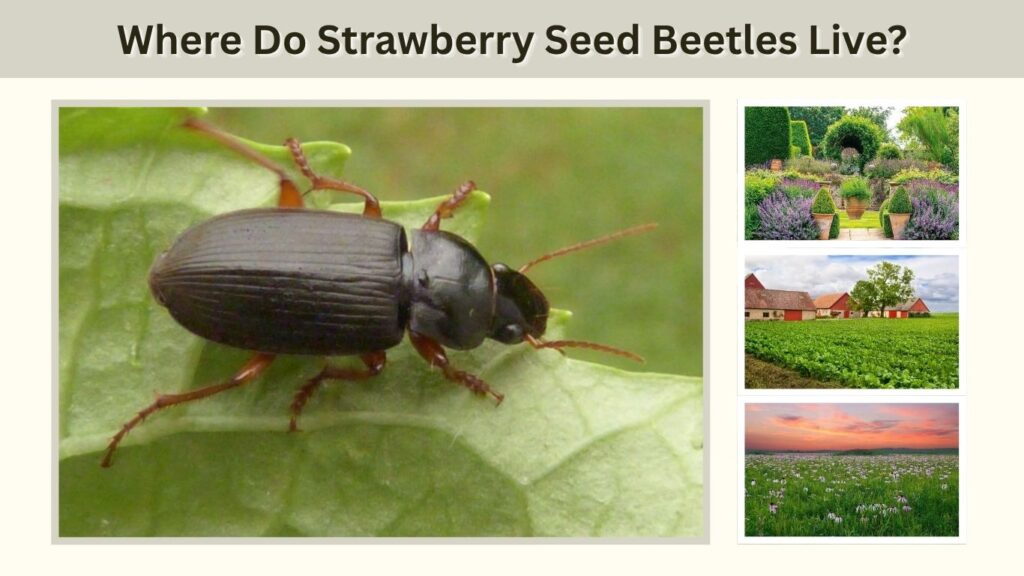
Strawberry seed beetles prefer open environments with available seeds, vegetation, and protective ground cover.
They commonly occur in gardens, farmland, grasslands, parks, and field margins. During the day, they often hide beneath stones, logs, leaves, or other ground debris.
Adults are particularly active at night, searching for food across the soil surface. They may also fly toward artificial lights.
In the UK, strawberry seed beetles are common and widespread. They occur throughout much of Europe and have established populations in parts of North America.
What Do Strawberry Seed Beetles Eat?
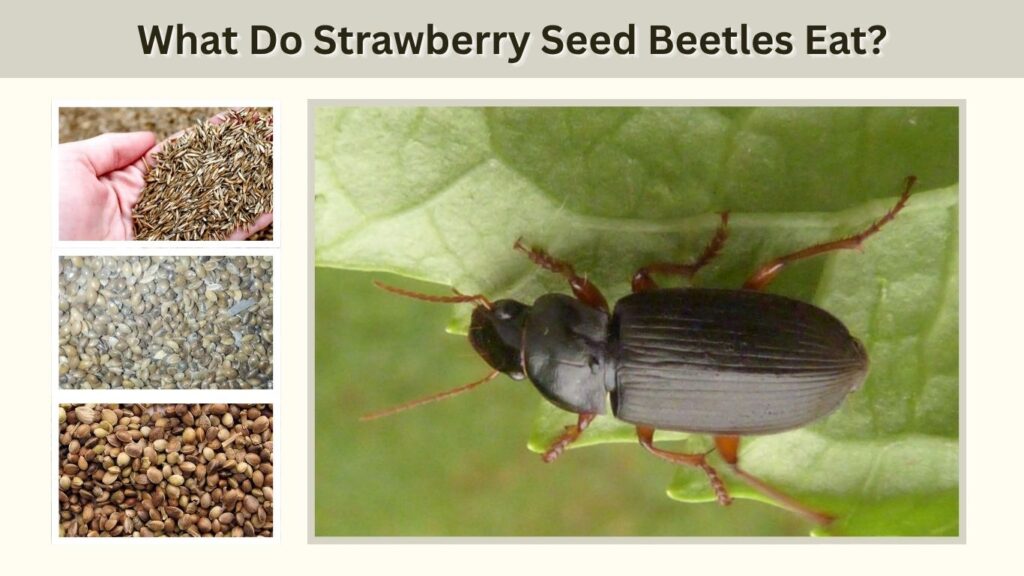
Strawberry seed beetles consume both plant and animal material. Seeds are particularly important in their diet, although adults can also feed on small invertebrates.
Common Foods of Strawberry Seed Beetles
They feed on grass seeds, weed seeds, and the exposed seeds of strawberries. They may also consume aphids, small insect larvae, and other suitable soft-bodied prey.
Their feeding habits are beneficial when they remove weed seeds or pest insects from agricultural environments.
However, when adults feed on ripe strawberries, they can damage fruit and reduce its marketable quality.
Strawberry Seed Beetle Damage to Strawberries
Strawberry seed beetles sometimes damage ripe fruit by feeding on the small seed-like structures covering its surface. These structures are botanically called achenes.
Signs of Strawberry Seed Beetle Damage
- Missing seeds: Small surface achenes appear removed.
- Tiny holes: Feeding can leave shallow pits in the fruit.
- Damaged flesh: Areas surrounding missing seeds may become visibly injured.
- Uneven appearance: Affected strawberries may develop irregular surface patches.
How Serious Is the Damage?
Damage varies depending on beetle abundance and fruit availability. A few beetles may cause little noticeable harm, while larger populations can reduce strawberry quality.
Damaged areas may also become vulnerable to decay.
However, missing seeds do not always indicate strawberry seed beetles. Birds and other organisms can produce similar symptoms, so observing the insects is important before choosing a control method.
Strawberry Seed Beetle Larvae and Life Cycle
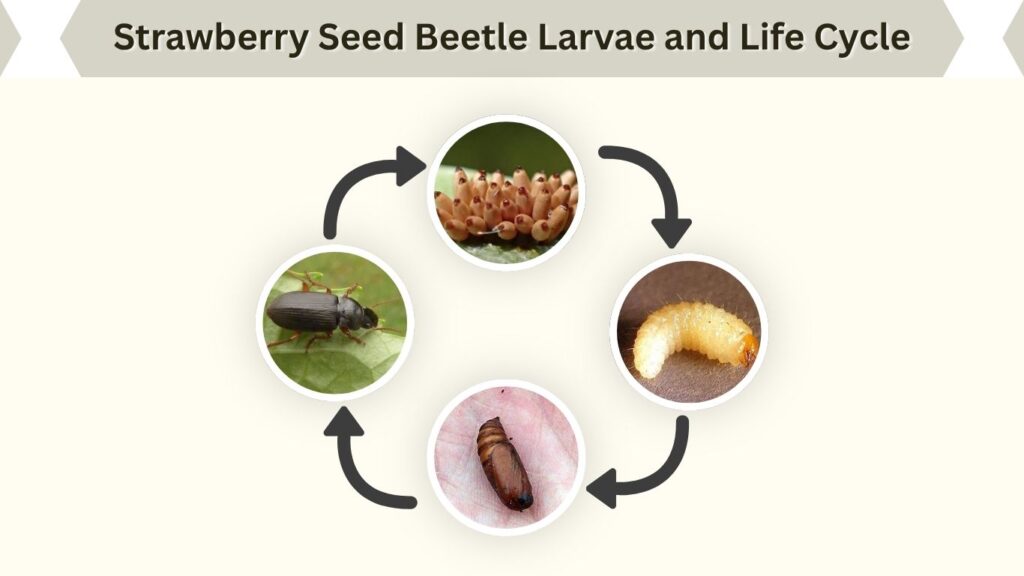
Strawberry seed beetles undergo complete metamorphosis, developing through egg, larval, pupal, and adult stages.
What Do Strawberry Seed Beetle Larvae Look Like?
Their larvae are elongated, segmented, and equipped with strong jaws. They have three pairs of legs near the head and lack the fleshy abdominal legs found on caterpillars.
Larvae spend much of their development underground. Studies have shown that they collect seeds from the soil surface and store them inside vertical burrows.
Grass and weed seeds provide important food during development.
Strawberry Seed Beetle Life Cycle
- Egg: Females lay eggs in soil, generally during the warmer breeding season.
- Larva: Young beetles feed and grow underground, often storing seeds within burrows.
- Pupa: Mature larvae transform into pupae in protected soil chambers.
- Adult: Developed beetles emerge and begin searching for food and mates.
Development varies with temperature and local conditions. In Britain, larvae commonly overwinter, while adults can survive from one breeding season to another.
Strawberry Seed Beetle in the House
Finding a strawberry seed beetle indoors usually results from accidental entry. These insects naturally live outdoors and do not normally reproduce inside homes.
Why Do Strawberry Seed Beetles Enter Houses?
They may enter through open doors, damaged window screens, or gaps around foundations.
Outdoor lighting can attract beetles toward buildings, particularly during warm nights.
An occasional indoor sighting does not mean that a breeding infestation has developed.
How to Get Rid of Strawberry Seed Beetles in Your House
- Remove individual beetles: Capture them with a container and release them outside.
- Seal entry points: Repair cracks around doors, windows, and foundations.
- Reduce outdoor lighting: Turn off unnecessary lights near entrances.
- Remove nearby debris: Keep excessive leaf litter and wood piles away from foundations.
- Maintain window screens: Repair holes and ensure screens fit securely.
Chemical treatments are usually unnecessary because strawberry seed beetles cannot establish typical indoor infestations.
Strawberry Seed Beetle vs. Cockroach
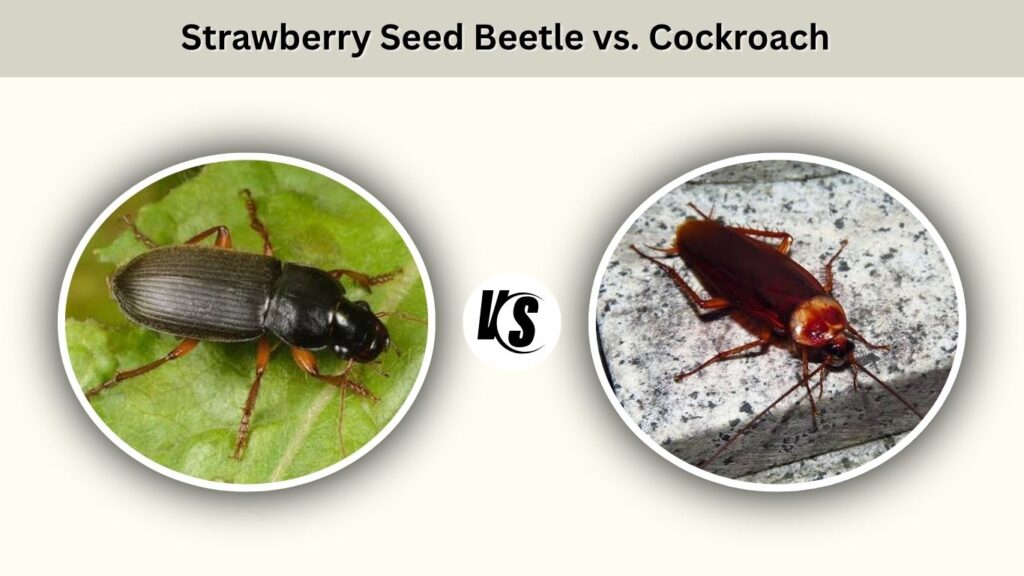
Strawberry seed beetles can resemble small cockroaches because of their dark bodies and rapid movement.
However, beetles have hardened forewings that meet in a straight line along the back. Cockroaches generally have flatter bodies, longer antennae, and a broad shield covering part of the head.
Cockroaches may reproduce inside buildings, while strawberry seed beetles normally remain outdoor insects.
Correct identification helps prevent unnecessary household pesticide applications.
Do Strawberry Seed Beetles Bite?
Strawberry seed beetles are not aggressive toward humans. They do not seek blood meals or deliberately attack people.
However, like other ground beetles, they possess strong mandibles and may pinch the skin when trapped or handled roughly.
They are not venomous, and bites are uncommon.
If bitten, clean the affected skin with soap and water. Seek medical attention if significant swelling, worsening redness, or an unusual reaction develops.
How to Get Rid of Strawberry Seed Beetles in Gardens
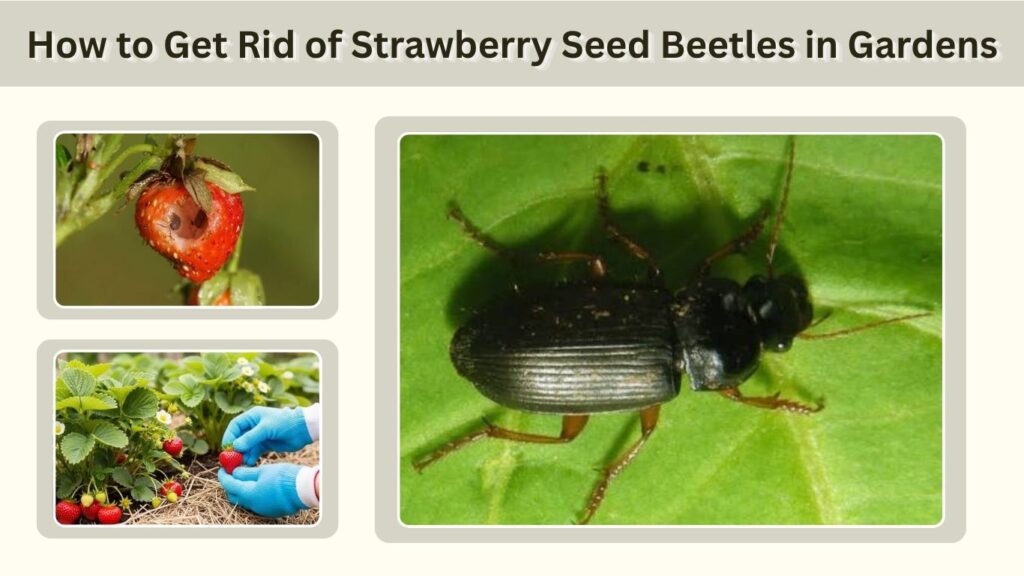
Garden control should focus on protecting fruit rather than eliminating every ground beetle. Strawberry seed beetles also consume weed seeds and some insect pests.
Strawberry Seed Beetle Control Methods
- Inspect plants regularly: Look for feeding beetles around ripening strawberries, especially after dark.
- Harvest ripe fruit promptly: Reduce the time ripe strawberries remain available for feeding.
- Remove damaged berries: Collect fallen or decaying fruit to maintain garden hygiene.
- Monitor beetle activity: Observe plants before deciding whether treatment is necessary.
- Avoid unnecessary pesticides: Broad-spectrum treatments may also harm beneficial garden insects.
Physical removal may be practical for small gardens. For persistent commercial crop damage, seek local agricultural extension advice before applying pest-control products.
Are Strawberry Seed Beetles Beneficial?
Strawberry seed beetles have both beneficial and potentially harmful effects.
By consuming weed seeds, they may help reduce the soil seed bank in agricultural fields. They can also feed on certain pest insects.
However, their ability to damage ripening strawberries means gardeners should monitor populations during harvest season.
Protecting fruit while tolerating harmless beetle activity is generally the most balanced approach.
FAQs
1. Are Strawberry Seed Beetles Dangerous?
No. Strawberry seed beetles are generally harmless to people and pets. They may pinch defensively when handled but are not venomous.
2. Can Strawberry Seed Beetles Fly?
Yes. Adult strawberry seed beetles can fly, although they are commonly observed running across the ground.
3. Do Strawberry Seed Beetles Infest Houses?
They may enter houses repeatedly, but they do not normally reproduce indoors or damage household materials.
4. Do Strawberry Seed Beetle Larvae Eat Strawberries?
Larvae mainly feed on seeds collected from the ground. Damage to ripe strawberries is primarily associated with adult feeding.
5. Should You Kill Strawberry Seed Beetles?
Usually, no. They provide ecological benefits by consuming weed seeds and some insects. Control is best reserved for situations involving confirmed crop damage.
