
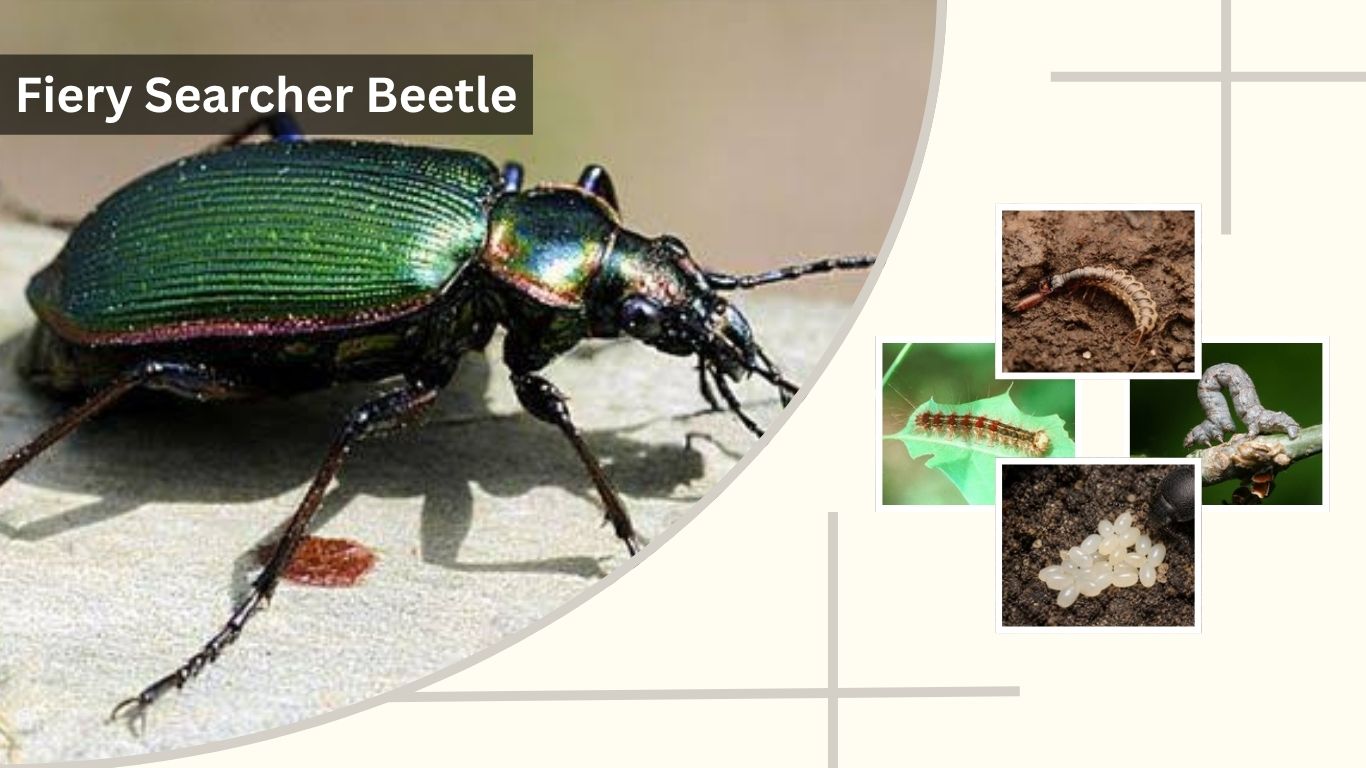
The fiery searcher beetle is one of North America’s most colorful ground beetles, recognized for its metallic green wings and striking purple body. Also known as the caterpillar hunter, this fascinating insect plays an important role in controlling harmful caterpillar populations. Although its appearance may seem intimidating, it is generally beneficial to gardens and forests. Understanding the fiery searcher beetle’s identification, habitat, feeding habits, bite risks, and life cycle reveals why this remarkable predator deserves attention.
What Is a Fiery Searcher Beetle?
The fiery searcher (Calosoma scrutator) is a large predatory ground beetle belonging to the family Carabidae. Unlike many ground beetles that primarily search for prey on the ground, this species can climb trees and shrubs to capture caterpillars. Its colorful appearance, strong jaws, and active hunting behavior make it distinctive among North American beetles.
Fiery Searcher Beetle Identification
The fiery searcher beetle has several physical characteristics that make identification relatively easy.
- Scientific name: Calosoma scrutator
- Common names: Fiery searcher, caterpillar hunter, searcher beetle
- Body length: Approximately 25–35 mm (1–1.4 inches)
- Body color: Metallic green with reddish-gold or copper-colored edges
- Thorax: Shiny blue, violet, or purple with colorful margins
- Legs: Long, strong, and usually dark blue or violet
- Wing covers: Hard, ridged, and noticeably glossy
- Antennae: Slender, segmented, and dark-colored
The beetle’s brilliant metallic appearance is especially noticeable in sunlight. Its powerful mandibles help it capture and consume caterpillars.
Scientific Classification
The fiery searcher belongs to the order Coleoptera and genus Calosoma, a group commonly called caterpillar hunters.
Its scientific name, Calosoma scrutator, distinguishes it from similar beetles such as Calosoma wilcoxi. Both species have attractive metallic colors, but the fiery searcher is generally larger.
Where Do Fiery Searcher Beetles Live?
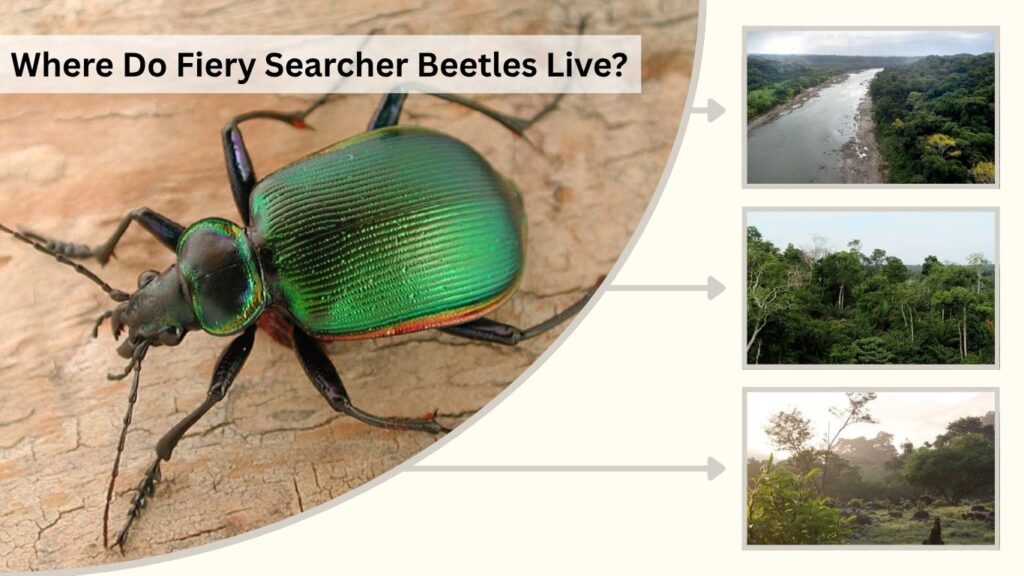
Fiery searcher beetles inhabit several regions of North America, particularly places with abundant vegetation and caterpillar populations. They prefer environments that provide sufficient prey, protective cover, and suitable soil for reproduction. Although classified as ground beetles, they regularly climb vegetation while hunting, making them adaptable predators in gardens, woodlands, and other green spaces.
Geographic Range
The fiery searcher beetle is widespread across the eastern United States and also occurs in parts of the central and western regions.
Its distribution extends into southern Canada, Mexico, and parts of Central and South America. It has been documented in states such as Missouri, Ohio, Florida, Texas, and North Carolina.
Populations are generally more common in eastern North America, where deciduous forests and productive habitats provide suitable conditions.
Preferred Habitat and Activity
Fiery searchers frequently inhabit gardens, fields, orchards, forest edges, and deciduous woodlands.
During daylight hours, adults often shelter beneath fallen logs, stones, leaf litter, or other natural debris. They usually become more active after dark, searching the ground and climbing trees.
Adults may also appear near outdoor lights, particularly during warmer months.
What Does the Fiery Searcher Beetle Eat?
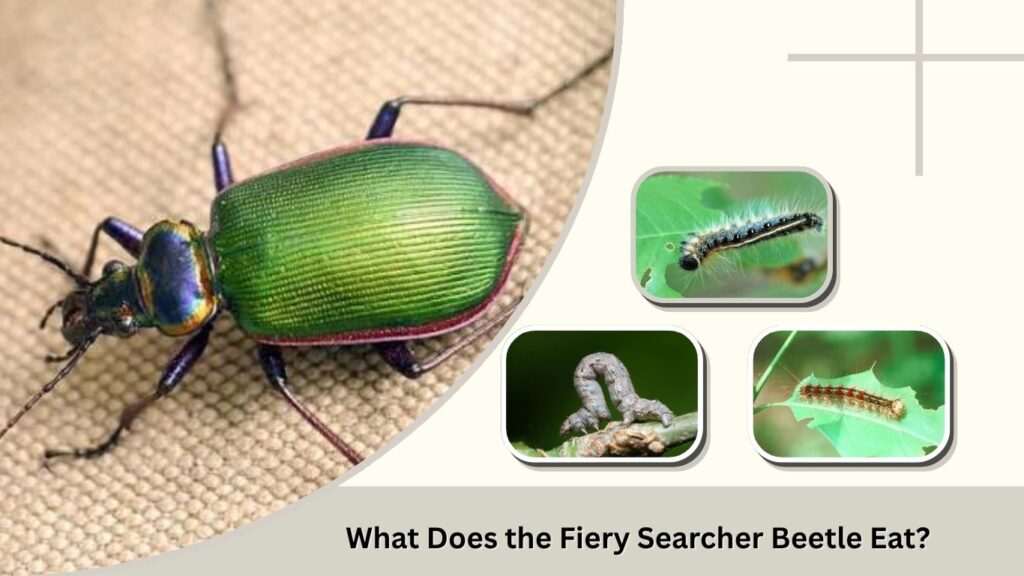
The fiery searcher is primarily carnivorous and specializes in hunting caterpillars. Both adults and larvae consume insects, making this beetle an important natural predator. Unlike plant-feeding beetles, fiery searchers generally do not damage leaves, flowers, or vegetables. Their diet largely consists of soft-bodied insects found on trees, shrubs, and surrounding vegetation.
Caterpillars and Other Prey
Fiery searcher beetles commonly feed on:
- Tent caterpillars
- Spongy moth caterpillars
- Cankerworms
- Other moth larvae
- Certain insect pupae
- Some additional soft-bodied insect prey
Caterpillars are especially important because they provide the nutrients necessary for growth and reproduction.
Adult fiery searchers may consume hundreds of caterpillars throughout their lives, while developing larvae can also eat substantial numbers.
How Fiery Searcher Beetles Hunt
Fiery searchers use their strong legs and powerful jaws to capture prey.
An adult may climb a tree trunk or search along branches until it encounters a caterpillar. Once the beetle catches its target, it grips the prey with its mandibles and begins feeding.
Their ability to hunt both on the ground and in trees makes them particularly effective predators of leaf-feeding caterpillars.
Can a Fiery Searcher Beetle Bite Humans?
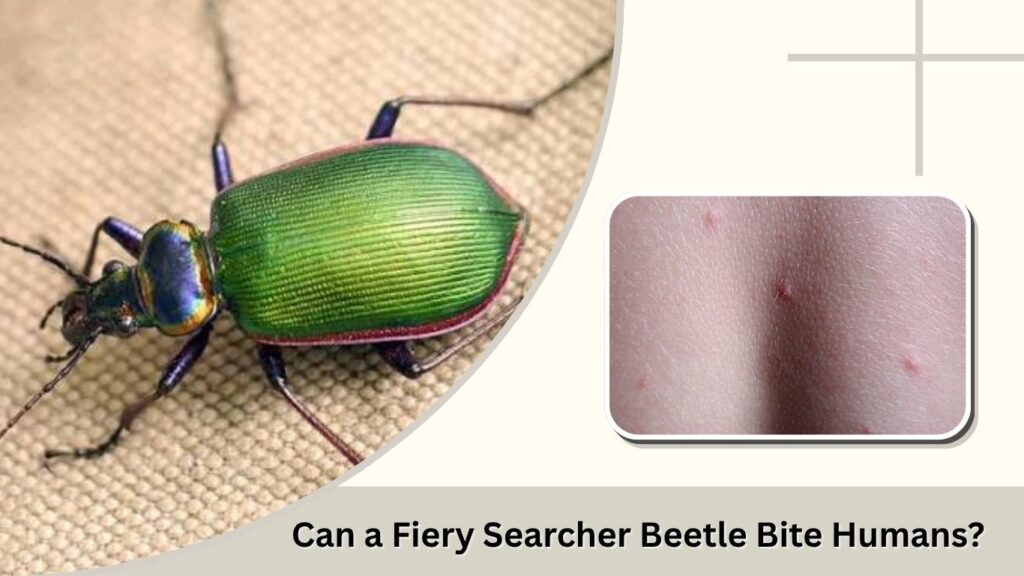
Yes, a fiery searcher beetle can bite humans, especially when handled or threatened. Its strong mandibles are designed for capturing caterpillars but can also pinch human skin. However, fiery searchers are not aggressive toward people and generally attempt to escape rather than attack. Their defensive behavior mainly occurs when they are trapped or disturbed.
Are Fiery Searcher Beetle Bites Dangerous?
A fiery searcher beetle bite can be painful, but the species is not known to inject venom.
The bite may cause temporary discomfort, mild redness, or localized irritation. Severe reactions are not typical.
If bitten, gently wash the affected area with soap and water. Seek medical attention if unusual swelling, worsening pain, or signs of infection develop.
Avoid picking up these beetles with bare hands, as unnecessary handling increases the chance of being bitten.
Why Do Fiery Searcher Beetles Smell Bad?
Fiery searcher beetles possess defensive glands that release a strong-smelling chemical fluid when threatened.
The secretion produces an unpleasant musky odor and helps discourage predators.
This defensive fluid can also irritate sensitive skin, so handling the beetle is best avoided.
The strong smell is a natural defense mechanism rather than an indication that the beetle is dangerous or harmful to gardens.
Fiery Searcher Beetle Life Cycle
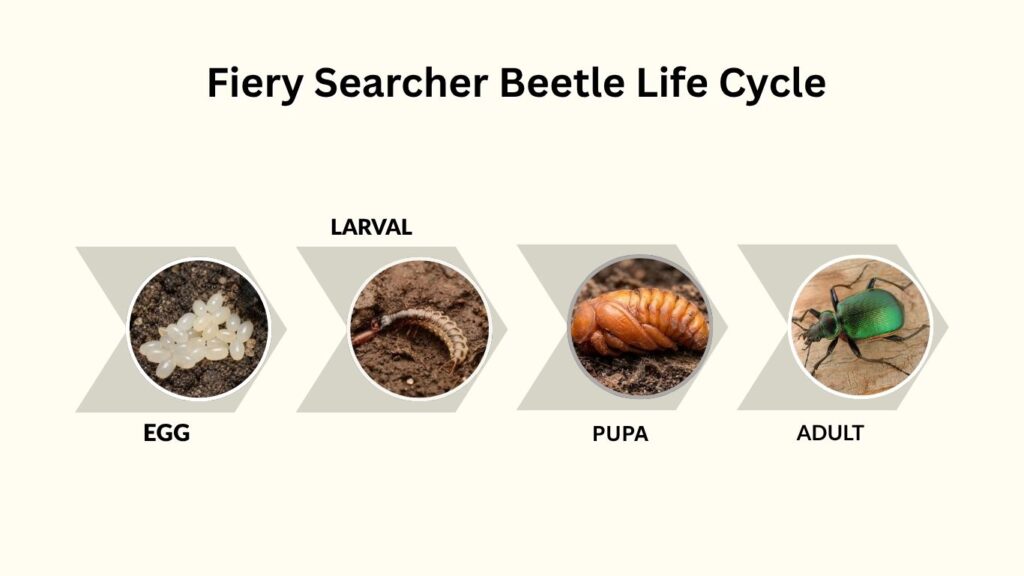
The fiery searcher beetle undergoes complete metamorphosis, developing through four distinct stages: egg, larva, pupa, and adult. Each stage contributes to the beetle’s development and survival. The species generally completes development from egg to adult within a season, although adults can survive for several years under favorable environmental conditions.
Egg Stage
Female fiery searcher beetles deposit individual eggs in the soil, usually during the warmer months.
The eggs are elongated, pale, and slightly yellowish. Their underground location provides some protection during early development.
Depending on temperature, the eggs generally hatch within approximately 3–15 days.
Larval Stage
Newly hatched fiery searcher larvae initially appear pale but quickly develop darker body coloration.
The larvae are elongated, segmented, and equipped with strong jaws for capturing prey.
They pass through three larval growth stages, known as instars. During this period, they actively hunt caterpillars and other suitable insects.
Unlike the colorful adults, fiery searcher larvae have darker, less reflective bodies.
Pupal Stage
Once fully developed, the larva burrows into the soil and constructs a small earthen chamber.
Inside this chamber, it transforms into a pupa.
The pupal stage generally lasts approximately 10–15 days, although environmental conditions can influence development.
During this period, the insect develops its adult body structures.
Adult Stage
After emerging from the soil, the adult fiery searcher begins hunting and eventually reproducing.
Adults are remarkably long-lived compared with many insects. They commonly survive around two years, with some reported to live longer.
Mature beetles can overwinter in sheltered locations, including underground, before becoming active again during warmer weather.
Are Fiery Searcher Beetles Good for Gardens?
Fiery searcher beetles are beneficial insects because they naturally reduce caterpillar populations. Some caterpillars damage trees, shrubs, and garden plants by feeding on foliage. By hunting these insects, fiery searchers contribute to ecological balance and may help reduce pest pressure. Their presence generally indicates that the surrounding environment supports insect diversity and natural predators.
Benefits of Fiery Searcher Beetles
One major advantage of fiery searchers is their ability to hunt caterpillars that defoliate trees.
Species such as tent caterpillars and spongy moth caterpillars can cause substantial damage when populations become large.
Fiery searchers help limit these populations through predation.
They also contribute to healthy food webs by serving as both predators and prey within their ecosystems.
How to Encourage Fiery Searcher Beetles
Gardeners can support fiery searchers by maintaining habitats with natural shelter and diverse vegetation.
Leaving some leaf litter, undisturbed soil, and fallen wood provides hiding places for ground beetles.
Reducing unnecessary broad-spectrum insecticide applications can also help protect beneficial predators.
Providing suitable habitat is generally preferable to collecting or attempting to raise wild fiery searchers in captivity.
Interesting Facts About Fiery Searcher Beetles
The fiery searcher has several unusual features that distinguish it from other beetles. Its brilliant coloration is only one of its fascinating characteristics. From its climbing abilities to its defensive chemicals, this species demonstrates remarkable adaptations for hunting and survival. These features make it an interesting subject for nature enthusiasts and insect observers.
Unique Characteristics
- Brilliant metallic colors: Its green wing covers and purple thorax make it one of the more visually distinctive North American ground beetles.
- Excellent climbing ability: Unlike many ground beetles, adults climb trees to find caterpillars.
- Long adult lifespan: Some individuals can survive for several years.
- Powerful mandibles: Their jaws are adapted for gripping and consuming insect prey.
- Chemical defense: Threatened beetles can release unpleasant-smelling secretions.
- Natural pest control: Both adult beetles and larvae prey on caterpillars that may damage vegetation.
FAQs
1. Are fiery searcher beetles poisonous?
Fiery searcher beetles are not known to be venomous. However, they can bite when threatened and release defensive chemicals that may irritate the skin.
2. Can fiery searcher beetles fly?
Yes, fiery searcher beetles have functional wings and can fly, although they generally spend more time walking and climbing while hunting.
3. What attracts fiery searcher beetles?
Fiery searchers are attracted to habitats with abundant caterpillars and suitable shelter. Adults may also be attracted to outdoor lights.
4. What are the natural predators of fiery searcher beetles?
Fiery searchers may be preyed upon by insect-eating vertebrates and other predators. Their strong jaws and unpleasant defensive secretions help protect them.
5. Should I remove a fiery searcher beetle from my garden?
Usually, no. Fiery searcher beetles are beneficial predators that help control caterpillar populations. They are generally best left undisturbed in outdoor habitats.
