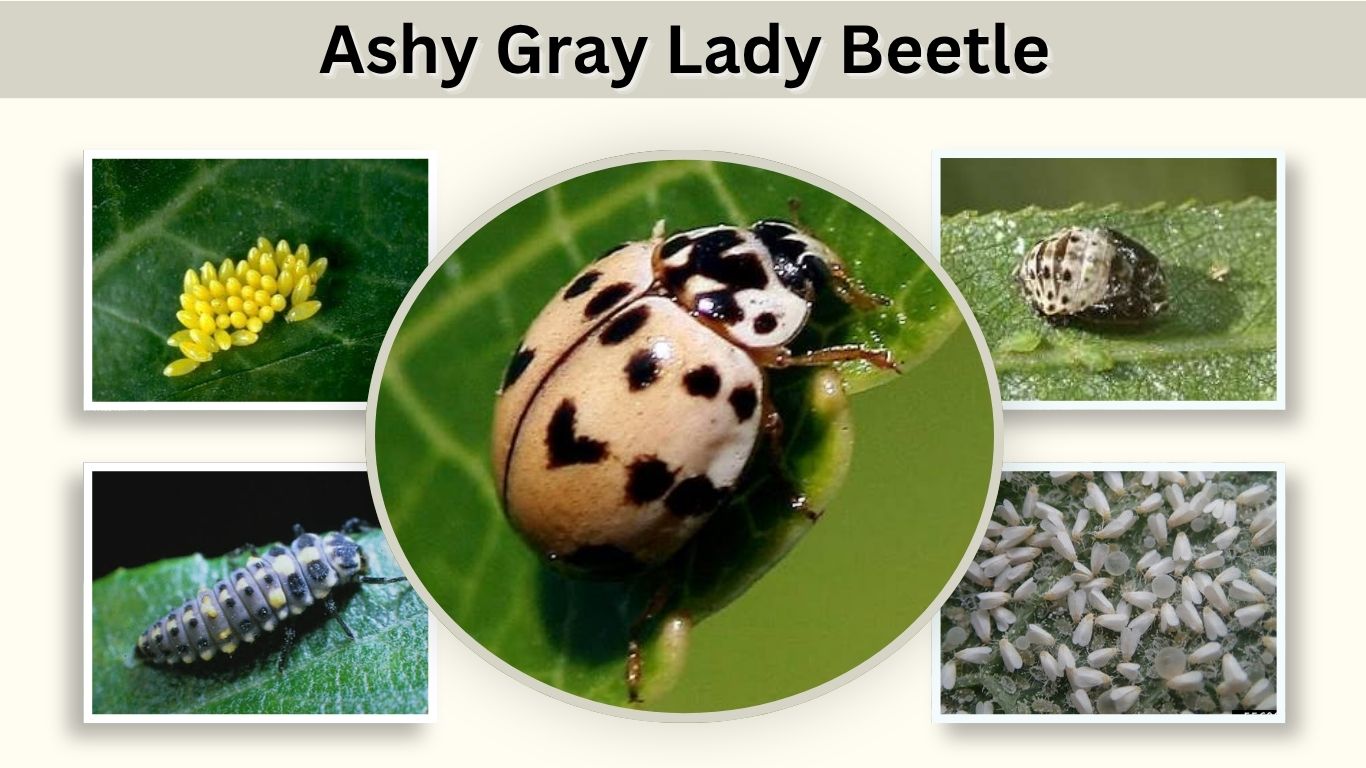
The ashy gray lady beetle (Olla v-nigrum) is a fascinating insect recognized by its pale gray body, black spots, and beneficial feeding habits. Unlike traditional red ladybugs, this species displays unusual color variations, including a black form with red markings. Commonly found in gardens, forests, and agricultural landscapes, these beetles help control harmful plant pests. Understanding the ashy gray lady beetle’s identification, larvae, life cycle, habitat, bite, and spiritual meaning can help you recognize and appreciate this remarkable insect.
What Is an Ashy Gray Lady Beetle?
The ashy gray lady beetle is a small predatory insect belonging to the family Coccinellidae. Its scientific name is Olla v-nigrum, and it is found throughout much of the Americas. Although its appearance differs from familiar red ladybugs, it shares their beneficial feeding behavior and plays an important role in controlling soft-bodied plant pests.
Scientific Classification
- Common name: Ashy Gray Lady Beetle
- Scientific name: Olla v-nigrum
- Kingdom: Animalia
- Phylum: Arthropoda
- Class: Insecta
- Order: Coleoptera
- Family: Coccinellidae
- Genus: Olla
Why Is It Called Ashy Gray?
Its common name describes the pale gray or ash-colored appearance of the typical adult. The black spots scattered across its wing covers create a distinctive pattern. However, not every individual is gray. Some have black bodies with two red spots, demonstrating the species’ remarkable color variation.
Ashy Gray Lady Beetle Identification
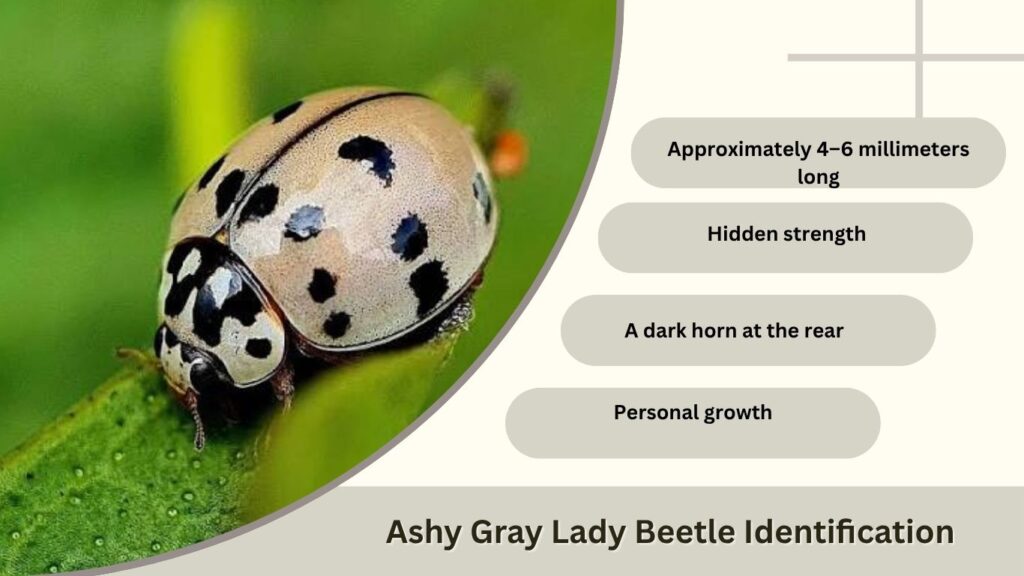
Identifying an ashy gray lady beetle requires examining its size, coloration, body shape, and markings. Most adults have a rounded, dome-shaped body with pale wing covers covered in black spots. However, several color variations exist, which can sometimes make identification confusing for beginners observing lady beetles in gardens or wooded areas.
Physical Appearance
- Body size: Approximately 4–6 millimeters long.
- Body shape: Oval, rounded, and dome-shaped.
- Main color: Pale gray, pinkish gray, or creamy white.
- Spots: Usually more than twelve black markings.
- Wings: Two hardened wing covers protecting delicate flight wings.
- Head: Small, often featuring pale and dark markings.
- Legs: Six relatively short legs.
Ashy Gray Lady Beetle Color Variations
The typical form has pale gray wing covers decorated with dark spots. Another form features larger black blotches alongside smaller markings.
A darker variation is almost entirely black with two reddish spots on its wing covers. This form resembles certain twice-stabbed lady beetles, but differences in body shape and pale head or thorax markings help distinguish them.
Ashy Gray Lady Beetle Larvae Identification
Ashy gray lady beetle larvae look dramatically different from adults. Their elongated bodies and segmented appearance resemble miniature alligators rather than rounded ladybugs. These young beetles are active predators that search for aphids and other small insects. Recognizing the larvae is important because gardeners sometimes mistake beneficial lady beetle larvae for harmful pests.
What Do Ashy Gray Lady Beetle Larvae Look Like?
Young larvae are primarily black and measure approximately 1.5 millimeters long.
As they develop, their bodies become dark gray or black with noticeable whitish and yellow markings. Mature larvae can reach approximately 7 millimeters.
They have three pairs of legs, elongated segmented bodies, and relatively smooth surfaces compared with the strongly spiny larvae of some other lady beetle species.
What Do Ashy Gray Lady Beetle Larvae Eat?
Ashy gray lady beetle larvae feed primarily on aphids, psyllids, and other small, soft-bodied insects.
They actively search plant leaves and stems for prey, using their chewing mouthparts to consume insects. Their feeding helps reduce pest populations before the larvae eventually transform into adults.
Ashy Gray Lady Beetle Life Cycle
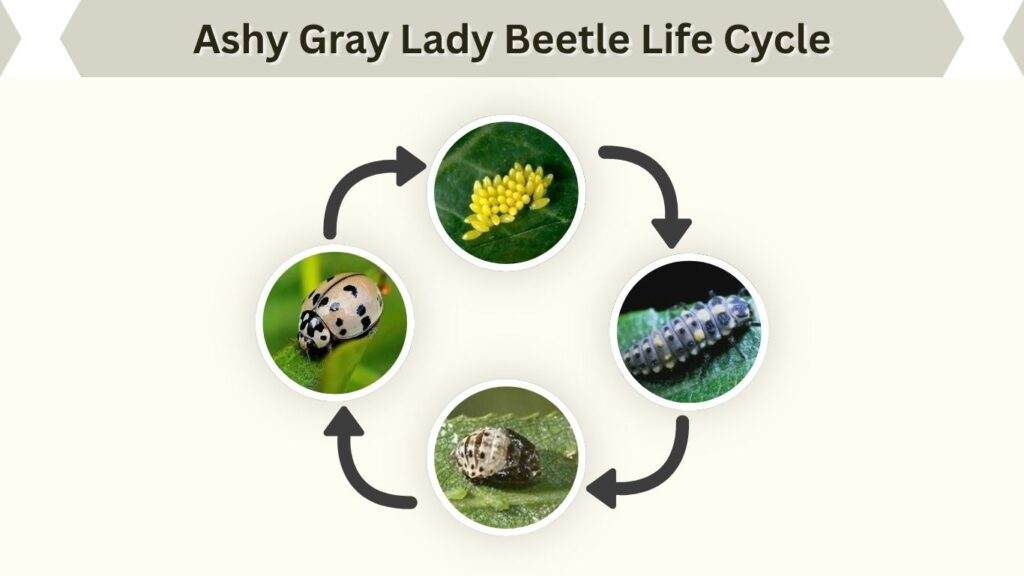
The ashy gray lady beetle undergoes complete metamorphosis, developing through four distinct stages: egg, larva, pupa, and adult. Its development depends on temperature and food availability. Under favorable conditions, it can complete development relatively quickly, allowing multiple generations to appear throughout the growing season in suitable climates.
Four Stages of Development
- Egg: Females deposit small yellowish eggs in loose groups on plant surfaces, commonly near suitable prey. A group may contain approximately 12–36 eggs.
- Larva: Newly hatched larvae emerge and begin feeding. They develop through four progressively larger larval stages, called instars.
- Pupa: Mature larvae attach themselves to leaves or stems and transform into rounded pupae. Internal changes produce the adult beetle.
- Adult: Fully developed beetles emerge with functional wings and eventually reproduce, beginning another generation.
How Long Is the Life Cycle?
Under favorable temperatures averaging approximately 77°F (25°C), development from egg to reproductive adult can take around three weeks.
Cooler conditions or limited prey may slow development. The species can produce multiple generations annually, especially in warmer regions with abundant food.
Ashy Gray Lady Beetle Habitat and Diet
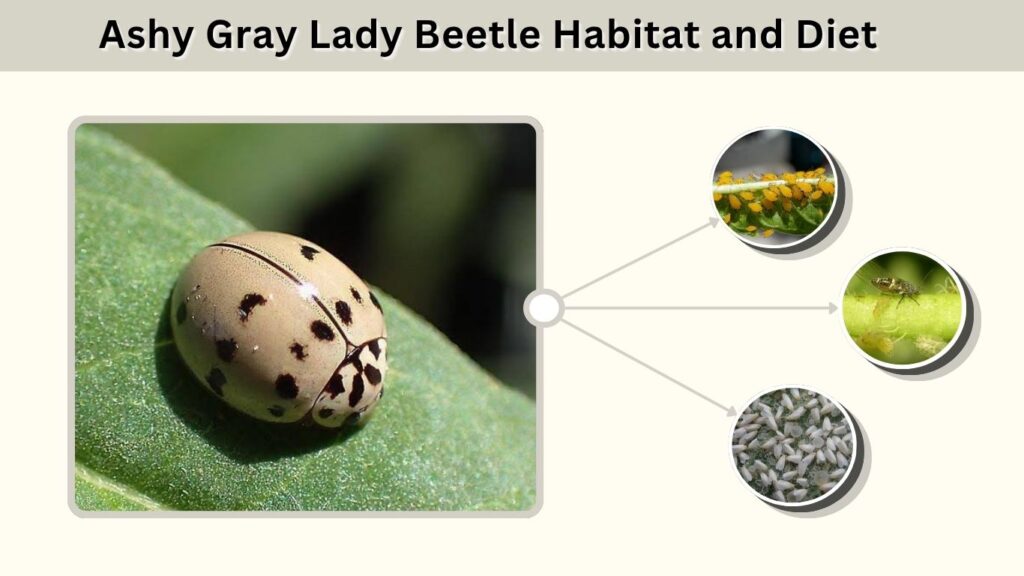
Ashy gray lady beetles primarily inhabit environments containing trees, shrubs, and other vegetation. Their presence is strongly associated with populations of small plant-feeding insects. Both adults and larvae are beneficial predators, making them valuable in gardens, orchards, and natural ecosystems where aphids and related pests occur.
Where Do Ashy Gray Lady Beetles Live?
These beetles occur across much of the United States and extend into Central and South America.
They are commonly encountered on landscape trees, fruit trees, shrubs, and woody plants. Adults frequently explore leaves and branches while searching for prey or suitable egg-laying locations.
What Do Ashy Gray Lady Beetles Eat?
Their diet includes several common plant pests:
- Aphids
- Psyllids
- Whiteflies
- Other small, soft-bodied insects
Their feeding behavior makes them useful natural predators. Gardeners can encourage these beneficial beetles by reducing unnecessary insecticide use and maintaining suitable plant habitats.
Are Ashy Gray Lady Beetles Poisonous or Harmful?
Ashy gray lady beetles are not considered dangerous to humans. They do not sting, attack people, or damage household structures. However, like other lady beetles, they possess chewing mouthparts and may use defensive chemicals to discourage predators. Understanding these characteristics helps distinguish harmless encounters from situations that require caution.
Do Ashy Gray Lady Beetles Bite?
Ashy gray lady beetles are not aggressive toward people, and bites are uncommon.
Although their mouthparts can potentially produce a minor pinch during rough handling, they do not inject venom. Their larvae are also not known to pose a significant biting hazard to humans.
Are Ashy Gray Lady Beetles Poisonous?
They are not considered a significant poisoning risk through ordinary contact. However, lady beetles may contain distasteful defensive substances that discourage predators.
Avoid deliberately crushing or eating these insects. Individuals with sensitive skin should wash exposed areas if irritation occurs after handling.
Are Ashy Gray Lady Beetles Harmful to Cats?
An ashy gray lady beetle crawling near a cat is generally not a concern.
However, cats should be discouraged from eating beetles because defensive secretions may irritate the mouth or digestive system. Species-specific toxicity information is limited. If a cat develops persistent drooling, vomiting, or mouth discomfort after eating beetles, contact a veterinarian.
Ashy Gray Lady Beetle Spiritual Meaning
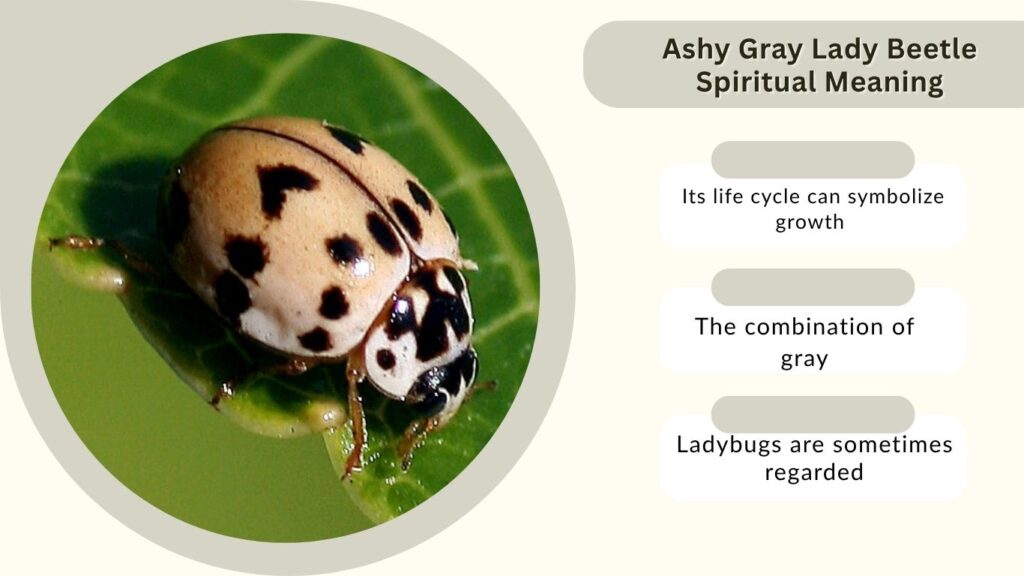
Ladybugs have long been associated with positive symbolism in various cultures. The ashy gray lady beetle’s unusual coloration can inspire interpretations involving transformation, harmony, and protection. These meanings reflect personal beliefs rather than scientific characteristics or universally established traditions specific to this species.
Common Symbolic Interpretations
- Transformation: Its life cycle can symbolize growth and personal change.
- Balance: The combination of gray and black may represent harmony.
- Protection: Ladybugs are sometimes regarded as symbols of safety.
- Good fortune: An unexpected lady beetle encounter may be interpreted as a positive sign.
There is no scientific evidence that encountering an ashy gray lady beetle predicts future events. Its ecological significance comes from its role as a natural predator.
FAQs
1. Are Ashy Gray Lady Beetles Rare?
Ashy gray lady beetles are not generally considered rare throughout their distribution. However, their abundance varies depending on habitat, season, and prey availability. They may be less noticeable than brightly colored ladybugs because their pale coloration helps them blend into surrounding vegetation.
2. Can Ashy Gray Lady Beetles Fly?
Yes, adult ashy gray lady beetles can fly. Their hardened outer wings, called elytra, protect delicate flight wings underneath. Flying allows adults to move between plants, search for food, locate mates, and establish populations in new habitats.
3. Are Ashy Gray Lady Beetle Larvae Harmful?
No, ashy gray lady beetle larvae are beneficial predators rather than harmful garden pests. They feed on aphids, psyllids, and other small insects that damage plants. Although their unusual appearance may seem intimidating, they generally pose little risk to humans.
4. How Long Do Ashy Gray Lady Beetles Live?
The total lifespan varies with temperature, food availability, and environmental conditions. Development from egg to reproductive adult can take approximately three weeks under favorable temperatures, but adult longevity varies. There is no single reliable lifespan that applies to every individual.
5. What Should I Do If I Find an Ashy Gray Lady Beetle?
If you discover an ashy gray lady beetle outdoors, leave it undisturbed whenever possible. These insects naturally reduce populations of harmful plant pests. If one enters your home, gently collect it in a container and release it near suitable vegetation.