
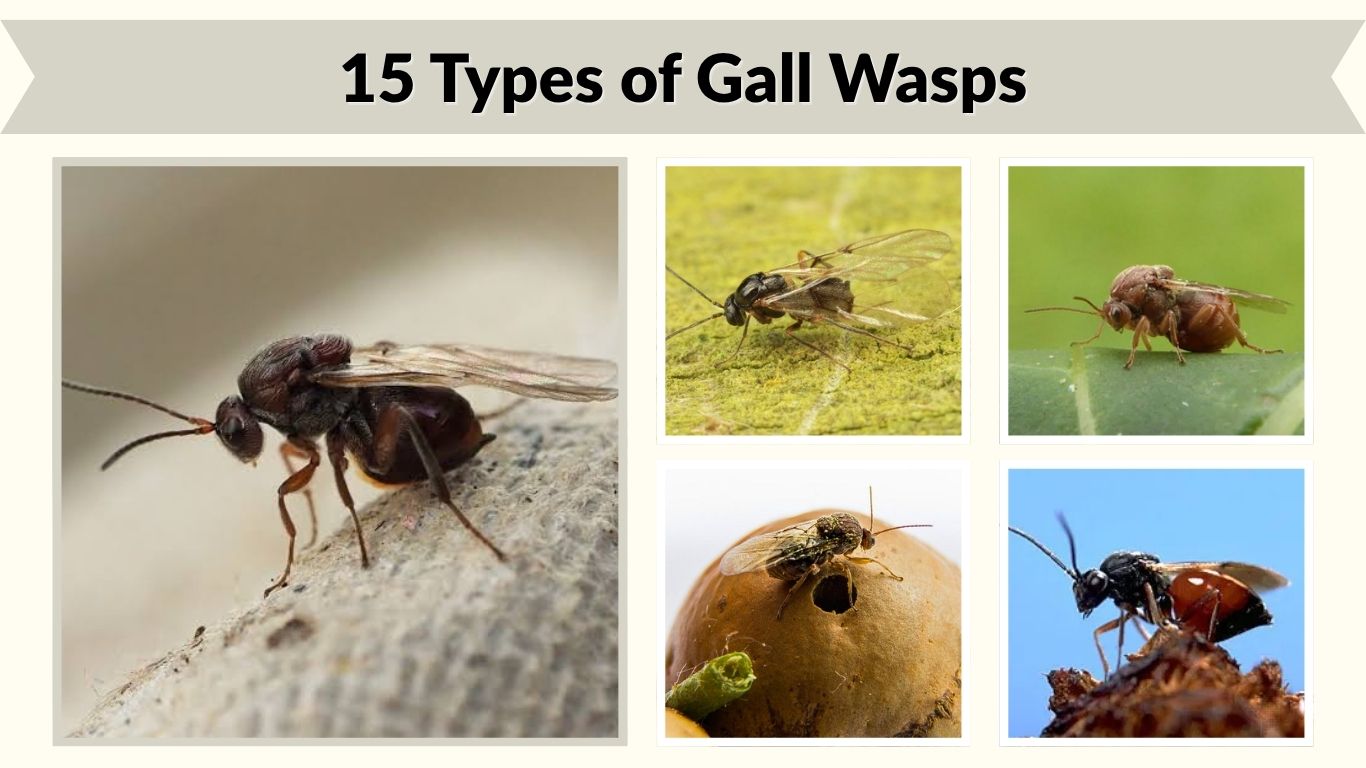
Gall wasps are fascinating insects known for creating unusual growths on oak trees, roses, and other plants. These tiny wasps produce galls in various shapes, sizes, and colors, ranging from marble-like balls to fluffy, moss-like structures. Although most species are harmless to humans and healthy trees, some can cause noticeable plant damage. In this guide, we’ll explore 15 types of gall wasps, including their identification, habitats, behavior, and life cycles, to help you recognize these remarkable insects in nature.
1. Oak Apple Gall Wasp (Biorhiza pallida)
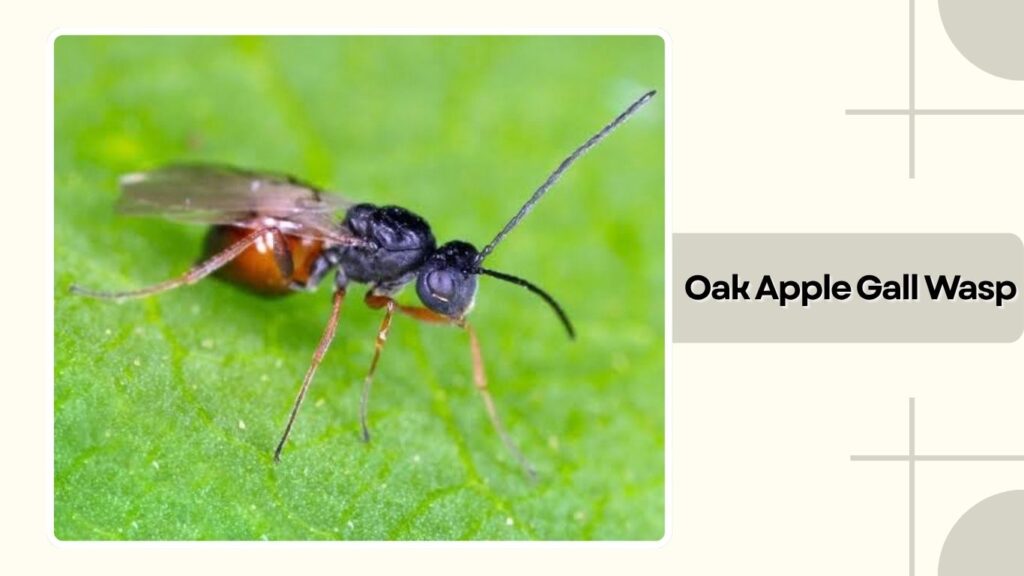
The Oak Apple Gall Wasp (Biorhiza pallida) is a small insect belonging to the family Cynipidae. It is best known for producing large, apple-shaped galls on oak trees. These unusual growths provide food and protection for developing larvae. Although the galls may look like a disease, they generally cause little harm to healthy oak trees. This species is especially common in European woodlands and gardens.
Identification
- Scientific Name: Biorhiza pallida
- Family: Cynipidae
- Adult Size: Approximately 2–3.5 mm in the sexual generation
- Adult Color: Golden-brown to chestnut
- Gall Size: Up to 4–5 cm in diameter
- Gall Appearance: Round, spongy, and apple-like
- Gall Color: Pale green, pinkish, cream, or brown
- Distinctive Feature: Large galls containing multiple larval chambers
Habitat and Distribution
Oak Apple Gall Wasps are widely distributed throughout Europe, particularly in Britain. They inhabit deciduous woodlands, parks, gardens, and countryside areas where oak trees grow.
They primarily use native oak species, including English oak and sessile oak. Their distinctive galls usually appear on young twigs and developing buds during spring.
Behavior and Diet
Oak Apple Gall Wasps are solitary insects, although several larvae may develop inside the same gall. Females deposit eggs in suitable oak tissues, and the developing larvae stimulate the tree to produce protective growths.
The larvae feed on nutritious tissues inside their galls. Adult wasps are short-lived and focus primarily on reproduction. These insects are not aggressive toward humans and rarely cause significant damage to healthy oak trees.
Lifespan and Life Cycle
The Oak Apple Gall Wasp has a complex life cycle involving alternating sexual and asexual generations.
Wingless asexual females emerge from underground root galls and lay eggs in oak buds. Their offspring develop inside large oak apple galls, eventually producing winged males and females.
After mating, females lay eggs on oak roots, beginning another generation. Development in underground root galls can take two or more years.
2. Oak Marble Gall Wasp (Andricus kollari)
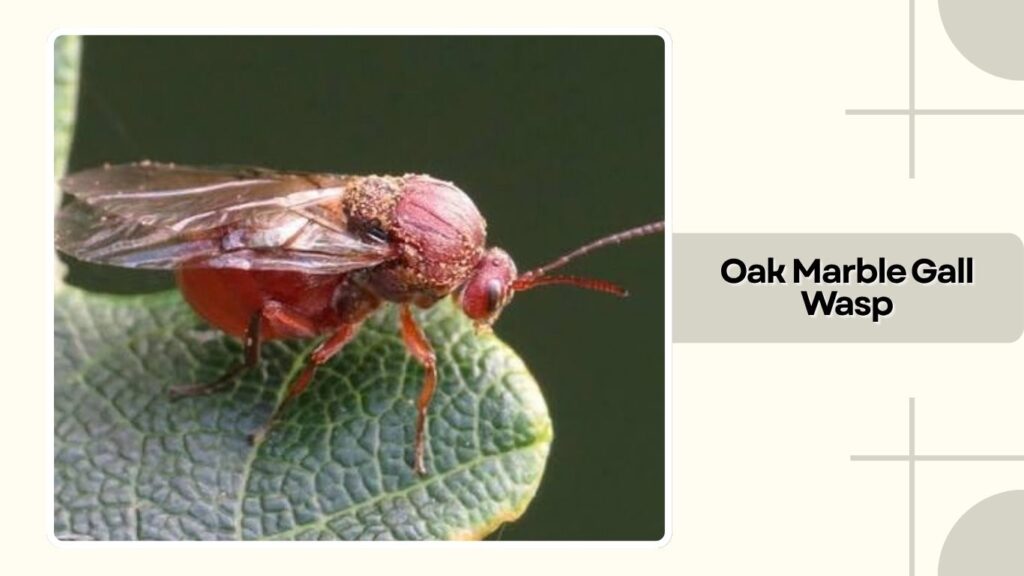
The Oak Marble Gall Wasp (Andricus kollari) is a tiny insect belonging to the family Cynipidae. It is recognized for producing hard, rounded galls resembling small marbles on oak trees. These woody structures develop from oak buds and protect the growing larvae. Although their unusual appearance can concern gardeners, oak marble galls rarely cause significant damage to healthy trees.
Identification
- Scientific Name: Andricus kollari
- Family: Cynipidae
- Adult Size: Approximately 2–3 mm
- Adult Color: Dark brown to black
- Gall Size: Approximately 10–25 mm in diameter
- Gall Shape: Hard, smooth, and spherical
- Gall Color: Initially green, gradually turning brown
- Distinctive Feature: Marble-shaped woody galls on oak twigs
Habitat and Distribution
Oak Marble Gall Wasps are widespread throughout Europe, including the United Kingdom. They inhabit deciduous forests, parks, gardens, and countryside environments where oak trees grow.
Their life cycle involves native oaks, including English oak, and Turkey oak. The familiar marble-shaped galls usually develop on oak twigs during summer and remain attached long after the insects emerge.
Behavior and Diet
Oak Marble Gall Wasps spend most of their development inside protective galls. Females deposit eggs in suitable oak buds, stimulating the formation of rounded woody structures.
Each marble gall generally contains a single developing larva that feeds on specialized plant tissues. Adult wasps are short-lived and primarily concerned with reproduction.
These insects do not attack humans and usually have minimal effects on oak tree health.
Lifespan and Life Cycle
The Oak Marble Gall Wasp alternates between sexual and asexual generations.
During spring, males and females emerge from small galls in Turkey oak buds. After mating, females lay eggs in buds of other suitable oak trees.
The resulting larvae develop inside marble galls throughout summer. Asexual females emerge around autumn and lay eggs in Turkey oak buds, beginning the cycle again.
3. Knopper Gall Wasp (Andricus quercuscalicis)
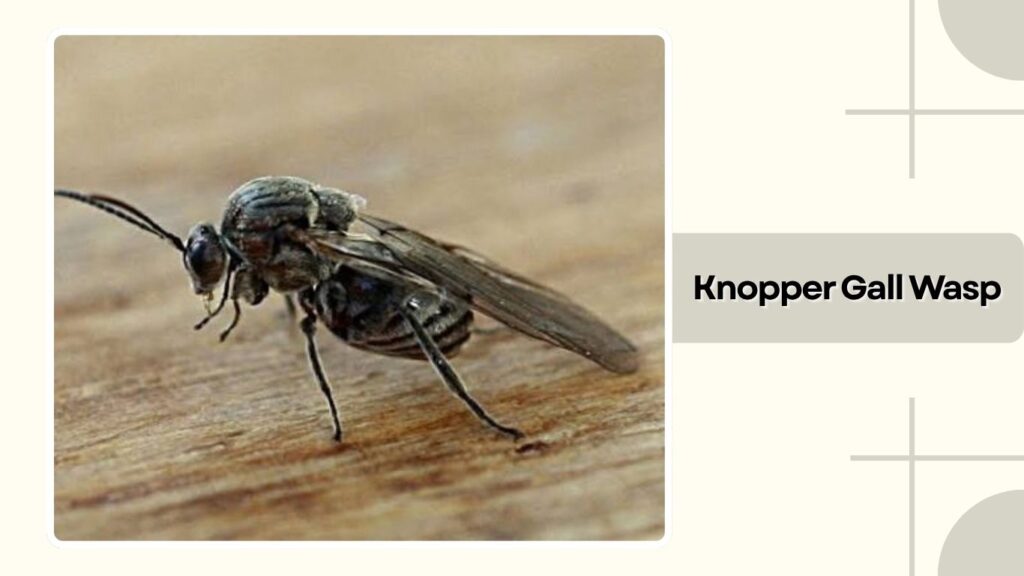
The Knopper Gall Wasp (Andricus quercuscalicis) is a distinctive species known for transforming developing oak acorns into irregular, ridged growths called knopper galls. These unusual structures often resemble miniature walnuts or distorted acorns. The species belongs to the Cynipidae family and depends on different oak species to complete its reproductive cycle. Although infestations can reduce acorn production, healthy oak trees generally remain unaffected.
Identification
- Scientific Name: Andricus quercuscalicis
- Family: Cynipidae
- Adult Size: Approximately 2–3 mm
- Adult Color: Dark brown to black
- Gall Location: Developing oak acorns
- Gall Shape: Irregular, folded, and strongly ridged
- Gall Color: Yellowish-green initially, turning grayish-brown
- Distinctive Feature: Deformed acorns with woody, wrinkled growths
Habitat and Distribution
Knopper Gall Wasps are found across parts of Europe, including Britain, where they became established during the twentieth century.
They commonly inhabit woodland edges, parks, gardens, and landscapes containing pedunculate oak and Turkey oak.
Pedunculate oak provides developing acorns for the conspicuous knopper galls, while Turkey oak supports the alternate generation in its male flowers.
Behavior and Diet
Knopper Gall Wasps reproduce by depositing eggs into suitable oak tissues. Their larvae stimulate the growth of abnormal plant structures that offer nourishment and protection.
Each knopper gall usually supports a developing larva feeding on tissues inside the distorted acorn.
Adult wasps spend little time outside their protective structures and mainly focus on finding suitable reproductive sites. They pose no direct danger to humans.
Lifespan and Life Cycle
Knopper Gall Wasps undergo alternating sexual and asexual generations.
During spring, the sexual generation develops inside small galls on Turkey oak catkins. After mating, females lay eggs in developing acorns of pedunculate oak.
The larvae cause the acorns to develop distinctive ridged galls that mature through summer and autumn.
The asexual generation generally overwinters inside fallen knopper galls, with females emerging the following spring to begin another cycle.
4. Cherry Gall Wasp (Cynips quercusfolii)
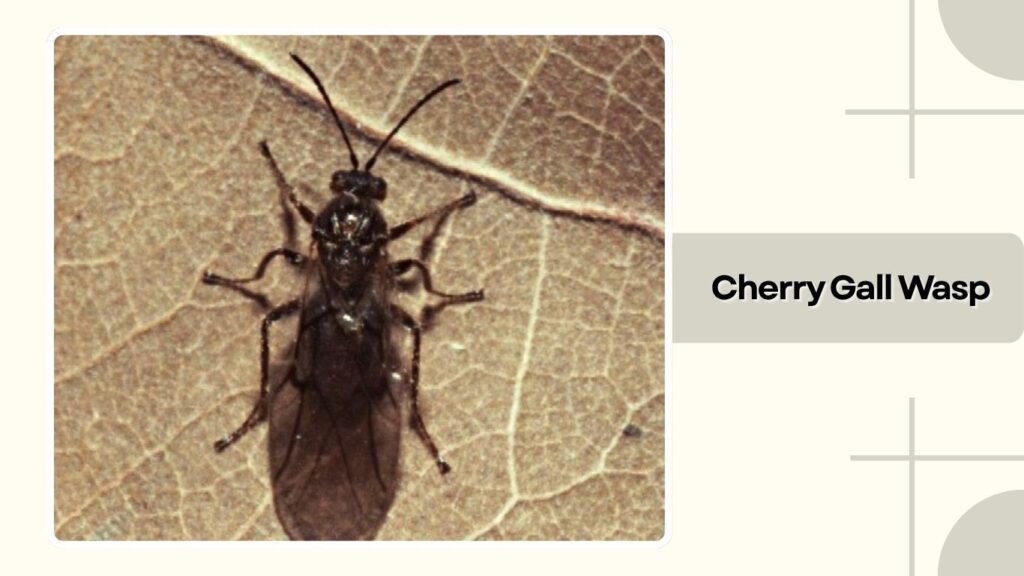
The Cherry Gall Wasp (Cynips quercusfolii) is a small gall-forming insect recognized for producing rounded, cherry-like growths on oak leaves. These colorful galls may appear green, yellow, pink, or reddish as they mature. Each gall provides food and shelter for a developing larva. Despite their noticeable appearance, cherry galls are generally harmless to established oak trees and contribute to woodland biodiversity.
Identification
- Scientific Name: Cynips quercusfolii
- Family: Cynipidae
- Adult Appearance: Small, dark-colored wasp
- Gall Size: Approximately 15–25 mm in diameter
- Gall Shape: Rounded and cherry-like
- Gall Color: Green, yellow, pink, reddish, or brown
- Gall Location: Usually on the underside of oak leaves
- Distinctive Feature: Smooth or slightly textured spherical leaf galls
Habitat and Distribution
Cherry Gall Wasps occur throughout much of Europe, including the United Kingdom.
They are commonly associated with oak woodlands, parks, gardens, and hedgerows. Their principal host trees include English oak and sessile oak.
The most recognizable cherry galls develop along the veins on the undersides of oak leaves, particularly during summer and autumn.
Behavior and Diet
Cherry Gall Wasps are generally solitary during development, with each gall containing one larva.
Females deposit eggs into selected oak tissues, and the developing larvae stimulate the production of nutrient-rich galls.
The larvae remain inside these protective structures while feeding on plant tissues. The gall protects them against unfavorable weather and some predators.
Adult wasps do not normally threaten people, and their presence rarely affects the overall health of mature oak trees.
Lifespan and Life Cycle
Cherry Gall Wasps have alternating sexual and asexual generations.
The asexual generation develops inside large cherry galls during summer and autumn. These galls often remain attached to fallen leaves throughout winter.
After emerging, asexual females lay eggs in oak buds, producing a smaller and less noticeable spring generation.
Males and females emerge from these spring galls, mate, and produce the next generation of cherry galls on oak leaves.
5. Common Spangle Gall Wasp (Neuroterus quercusbaccarum)
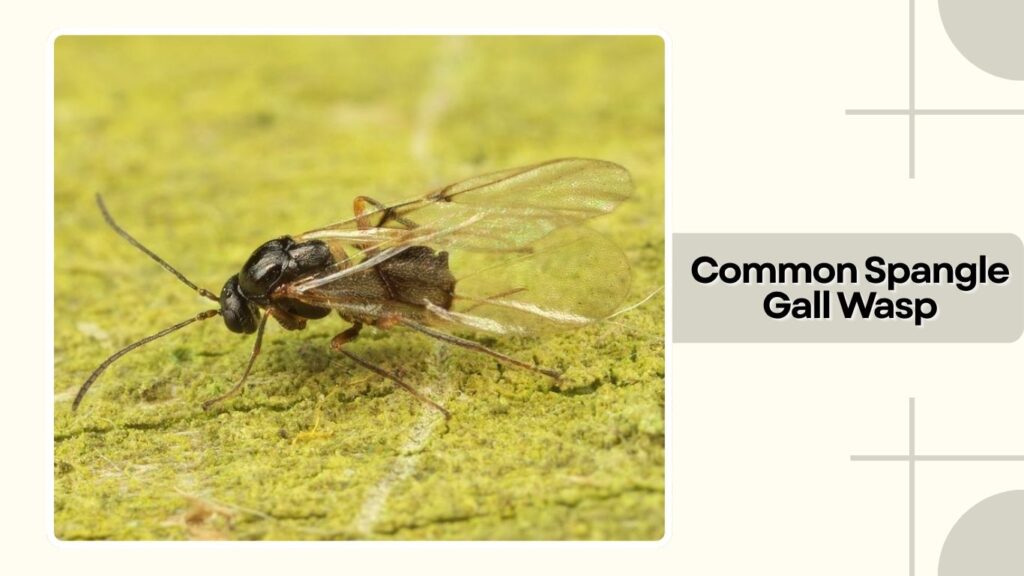
The Common Spangle Gall Wasp (Neuroterus quercusbaccarum) is a tiny species that creates small, flattened, disc-shaped galls on oak leaves. These structures often appear in groups on the underside of leaves, resembling miniature buttons or decorative scales. The species belongs to the family Cynipidae and has an unusual reproductive cycle involving two different gall forms. Despite their abundance, these insects rarely harm oak trees.
Identification
- Scientific Name: Neuroterus quercusbaccarum
- Family: Cynipidae
- Adult Appearance: Tiny, dark-colored gall wasp
- Gall Size: Usually 3–4 mm in diameter
- Gall Shape: Flattened, circular discs
- Gall Color: Yellowish-green, orange-brown, or reddish-brown
- Gall Location: Primarily beneath oak leaves
- Distinctive Feature: Disc-shaped galls with fine hairs and a raised center
Habitat and Distribution
Common Spangle Gall Wasps are widely distributed across Europe, particularly in Britain.
They inhabit oak woodlands, gardens, parks, hedgerows, and other environments where suitable host trees grow.
English oak and sessile oak are common hosts. Their distinctive spangle galls can become extremely abundant on the undersides of leaves during late summer and autumn.
Behavior and Diet
The Common Spangle Gall Wasp develops inside small protective galls created through interactions between its larvae and oak tissues.
Female wasps deposit eggs in young oak tissues, triggering the formation of specialized structures that surround and nourish the larvae.
Each spangle gall typically contains one larva. These insects are not aggressive and do not sting humans.
Their galls also provide habitat for other small organisms, including parasitic wasps and insects that share gall tissues.
Lifespan and Life Cycle
The Common Spangle Gall Wasp completes a cycle involving sexual and asexual generations.
During autumn, mature spangle galls fall from oak leaves and remain among fallen leaf litter.
Asexual females emerge in spring and deposit eggs into developing oak flowers or related tissues.
These eggs produce rounded, berry-like structures called currant galls, from which males and females emerge during early summer.
After mating, females lay eggs on oak leaves, producing the next generation of spangle galls.
6. Silk Button Gall Wasp (Neuroterus numismalis)
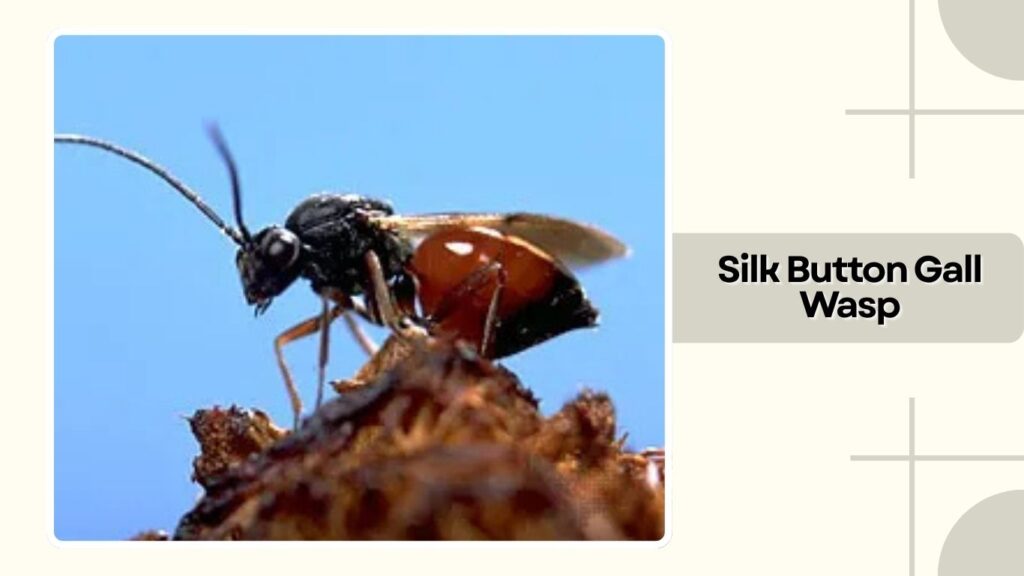
The Silk Button Gall Wasp (Neuroterus numismalis) is a small gall-forming insect famous for producing golden-brown, button-shaped galls on oak leaves. These miniature structures feature a central depression surrounded by fine, silky hairs. The species belongs to the Cynipidae family and is commonly encountered in European oak woodlands. Its distinctive galls provide shelter and nutrition for developing larvae without causing serious damage to healthy trees.
Identification
- Scientific Name: Neuroterus numismalis
- Family: Cynipidae
- Adult Size: Approximately 2–3 mm
- Adult Color: Brown to dark brown
- Gall Size: Usually around 3 mm in diameter
- Gall Shape: Circular with a deep central depression
- Gall Color: Golden-brown to reddish-brown
- Distinctive Feature: Button-shaped galls covered with fine golden hairs
Habitat and Distribution
Silk Button Gall Wasps occur throughout much of Europe, including the United Kingdom.
They commonly inhabit deciduous woodlands, gardens, parks, and hedgerows containing oak trees.
English oak and sessile oak provide suitable environments for their development. The familiar silk button galls appear on the undersides of oak leaves, particularly during late summer and early autumn.
Behavior and Diet
Silk Button Gall Wasps spend their immature stages protected inside small plant galls.
Females deposit eggs into developing oak tissues, stimulating the formation of distinctive circular structures around the larvae.
Each silk button gall contains a single larva that feeds on specialized plant tissues.
These wasps are harmless to humans and generally cause no significant damage to their host trees.
The galls can appear in large numbers, sometimes covering substantial portions of an oak leaf.
Lifespan and Life Cycle
The Silk Button Gall Wasp undergoes alternating sexual and asexual generations.
During autumn, mature silk button galls detach from oak leaves and fall to the ground. Developing wasps remain protected inside them throughout winter.
Asexual females usually emerge between late winter and early spring.
They lay eggs in developing oak tissues, producing small blister-like galls associated with the sexual generation.
Male and female wasps emerge during the warmer months. After mating, females lay eggs that produce the next generation of silk button galls.
7. Oyster Gall Wasp (Neuroterus anthracinus)
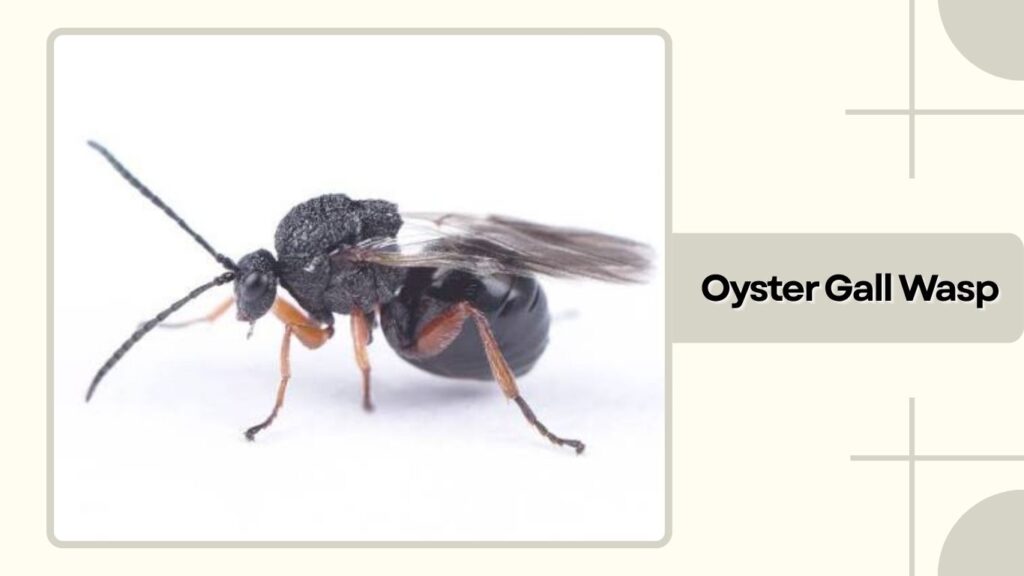
The Oyster Gall Wasp (Neuroterus anthracinus) is a tiny insect belonging to the family Cynipidae. It is best known for producing small, oyster-shaped galls on the undersides of oak leaves. These unusual growths provide nourishment and protection for developing larvae. Although oyster galls may appear in large numbers, they generally cause little damage to healthy oak trees.
Identification
- Scientific Name: Neuroterus anthracinus
- Family: Cynipidae
- Adult Appearance: Tiny, dark-colored wasp
- Gall Size: Approximately 2–4 mm
- Gall Shape: Oval, bean-shaped, or oyster-like
- Gall Color: Cream, pink, reddish, or brown
- Gall Location: Undersides of oak leaves
- Distinctive Feature: Small galls surrounded by two flaps of leaf tissue
Habitat and Distribution
Oyster Gall Wasps are widely distributed throughout Europe, particularly in the United Kingdom. They are commonly found in deciduous forests, parks, gardens, and countryside areas containing oak trees.
English oak and sessile oak are important host species. The distinctive galls develop along the main veins on the undersides of leaves, usually becoming noticeable during summer and autumn.
Behavior and Diet
Oyster Gall Wasps spend much of their development inside protective plant galls. Female wasps lay eggs in suitable oak tissues, causing the surrounding cells to form specialized growths.
Each oyster gall typically contains one larva that feeds on nutritious plant tissues. Adult wasps are short-lived and primarily concerned with reproduction.
These insects are harmless to humans and rarely affect the overall health of mature oak trees.
Lifespan and Life Cycle
The Oyster Gall Wasp has a life cycle involving alternating sexual and asexual generations.
Asexual females emerge from oyster galls and lay eggs in developing oak buds. These eggs produce small, temporary structures known as April-bud galls.
During spring, male and female wasps emerge from these bud galls and mate. Fertilized females then lay eggs in oak leaves, producing another generation of oyster galls.
8. Oak Artichoke Gall Wasp (Andricus foecundatrix)
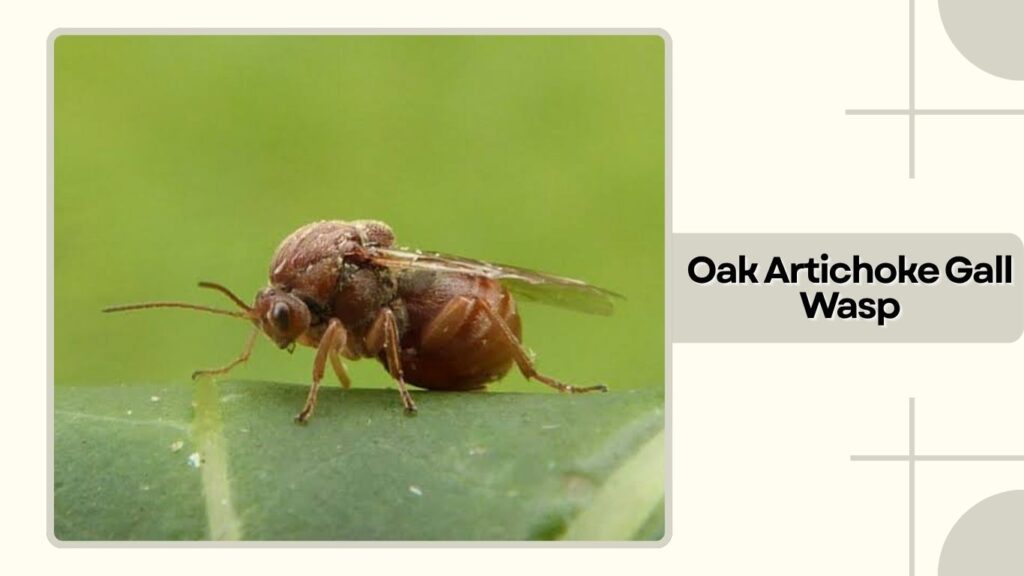
The Oak Artichoke Gall Wasp (Andricus foecundatrix), formerly known as Andricus fecundator, is a small insect recognized for producing artichoke-shaped galls on oak trees. These distinctive growths develop from oak buds and feature overlapping, leaf-like scales. The species belongs to the family Cynipidae and undergoes a fascinating reproductive cycle involving two different gall forms. Despite their unusual appearance, these galls rarely threaten healthy oak trees.
Identification
- Scientific Name: Andricus foecundatrix
- Family: Cynipidae
- Adult Appearance: Small, dark-colored wasp
- Gall Size: Up to approximately 30 mm long
- Gall Shape: Artichoke-like with overlapping scales
- Gall Color: Green initially, becoming brown
- Gall Location: Oak buds and young shoots
- Distinctive Feature: Layered, cone-shaped galls resembling miniature artichokes
Habitat and Distribution
Oak Artichoke Gall Wasps occur throughout much of Europe, including Britain. They commonly inhabit deciduous woodlands, gardens, parks, and hedgerows containing suitable oak trees.
Their primary hosts include English oak and sessile oak. The artichoke-shaped galls develop from terminal or lateral buds, particularly on young trees and lower branches.
Behavior and Diet
Oak Artichoke Gall Wasps reproduce by laying eggs inside developing oak tissues. The larvae stimulate abnormal plant growth, producing protective structures that resemble miniature artichokes.
Each gall contains a smaller, hardened inner chamber where a single larva develops and feeds on specialized plant tissue.
Adult wasps are generally solitary, and their activity mainly involves finding suitable places to reproduce.
Lifespan and Life Cycle
The Oak Artichoke Gall Wasp alternates between sexual and asexual generations.
The large artichoke galls develop during spring and summer. By late summer or autumn, their hardened inner chambers fall to the ground, where larvae continue developing.
Asexual females usually emerge the following spring, although some individuals remain inside for longer.
These females lay eggs in oak catkins, producing small hairy galls. Male and female wasps emerge from these galls, mate, and lay eggs in oak buds to begin another generation.
9. Rose Bedeguar Gall Wasp (Diplolepis rosae)
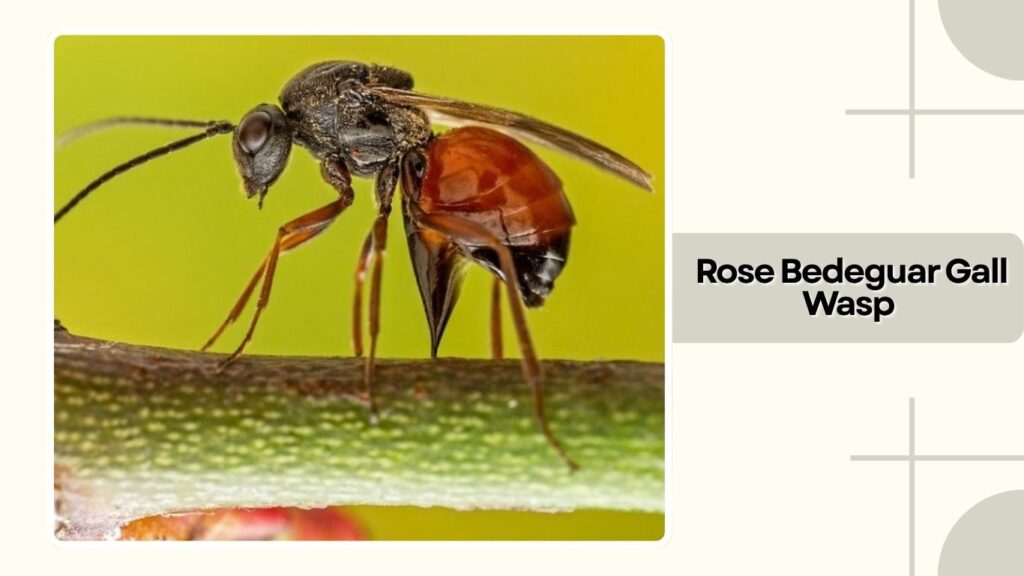
The Rose Bedeguar Gall Wasp (Diplolepis rosae) is a fascinating insect known for producing unusual, moss-like galls on wild rose plants. These colorful growths are commonly called Robin’s pincushions because of their dense covering of branched hairs. Unlike many oak gall wasps, this species develops primarily on roses. Its remarkable galls provide shelter for several larvae and create miniature habitats for other insects.
Identification
- Scientific Name: Diplolepis rosae
- Traditional Family: Cynipidae
- Adult Size: Females approximately 4 mm long
- Adult Color: Black with reddish-brown markings
- Gall Size: Sometimes reaching 10 cm across
- Gall Shape: Rounded, moss-like, and bushy
- Gall Color: Green, pink, red, or brown
- Distinctive Feature: Dense clusters of long, branched hairs surrounding multiple larval chambers
Habitat and Distribution
Rose Bedeguar Gall Wasps occur across Europe and parts of Asia. They are commonly found in woodland edges, hedgerows, grasslands, and gardens where wild roses grow.
Dog rose (Rosa canina) is an important host plant, although other wild rose species may also support their development.
The distinctive galls generally appear on young shoots and buds during spring and summer.
Behavior and Diet
Rose Bedeguar Gall Wasps stimulate abnormal growth in rose tissues when their larvae begin developing.
Unlike many gall-forming species, several larvae can develop within a single bedeguar gall. Each larva occupies a separate chamber and feeds on nutritious plant tissue.
The hairy exterior provides some protection against environmental conditions and predators.
These galls may also contain parasitic wasps and other insects that inhabit the same structure.
Lifespan and Life Cycle
The Rose Bedeguar Gall Wasp generally completes one generation annually.
Females lay eggs in developing rose buds during spring. As the larvae feed, the plant produces distinctive hairy galls that gradually enlarge throughout summer.
The larvae remain inside their chambers during autumn and overwinter within the dried galls.
Adult wasps emerge the following spring or early summer. Reproduction occurs mainly through parthenogenesis, allowing females to produce offspring without mating. Male wasps are extremely rare.
10. Horned Oak Gall Wasp (Callirhytis cornigera)
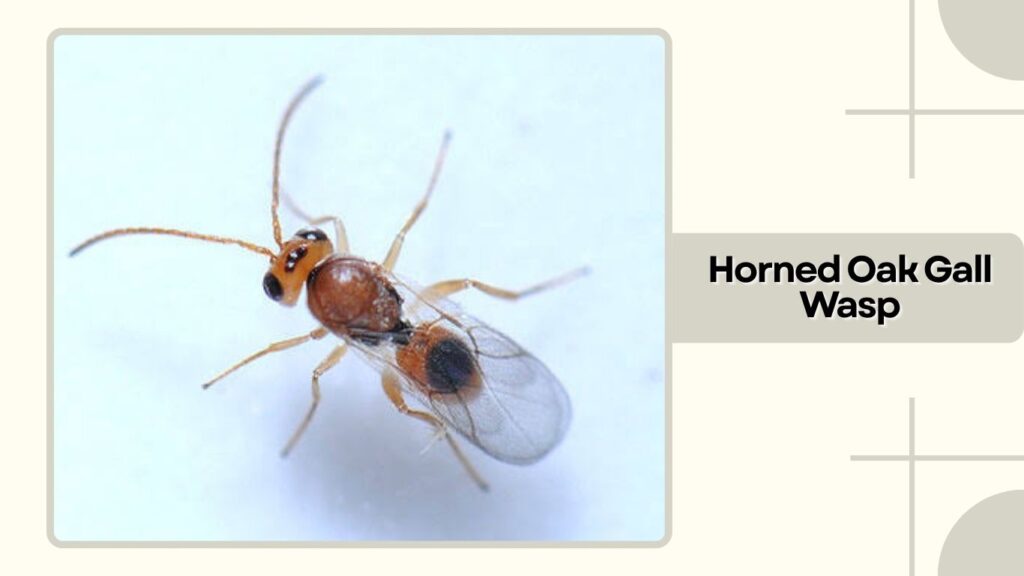
The Horned Oak Gall Wasp (Callirhytis cornigera) is a small North American insect recognized for producing large, woody galls with distinctive horn-like projections. These unusual structures develop on oak twigs and branches, sometimes creating significant deformities. Unlike many harmless leaf gall species, heavy infestations can damage oak trees by weakening branches and causing dieback. The species belongs to the family Cynipidae.
Identification
- Scientific Name: Callirhytis cornigera
- Family: Cynipidae
- Adult Appearance: Small, dark-colored wasp
- Gall Size: Mature woody galls may approach golf-ball size
- Gall Shape: Irregular, rounded, and swollen
- Gall Color: Greenish when young, becoming woody brown
- Gall Location: Oak twigs and small branches
- Distinctive Feature: Narrow horn-like projections extending from mature galls
Habitat and Distribution
Horned Oak Gall Wasps are native to eastern North America, occurring in parts of the United States and southern Canada.
They commonly inhabit deciduous forests, suburban landscapes, parks, and residential areas containing susceptible oak trees.
Pin oak is an important host, although other oak species, including willow oak, may also be affected.
The woody galls develop on twigs and often remain visible for years after the insects emerge.
Behavior and Diet
Horned Oak Gall Wasps spend most of their immature lives inside protective plant structures. Females deposit eggs into oak tissues, initiating the development of abnormal growths.
Multiple larvae may occupy separate chambers within a large woody gall.
Each larva feeds on specialized tissues while remaining protected from environmental conditions.
Heavy infestations can disrupt normal branch development and cause twig dieback, especially in highly susceptible trees.
Lifespan and Life Cycle
The Horned Oak Gall Wasp has a complex life cycle involving alternating leaf and twig gall generations.
Females emerging from woody galls lay eggs in developing oak buds. Their offspring form small leaf galls, producing male and female wasps during late spring.
After mating, females deposit eggs into young twigs.
The resulting woody galls develop slowly, taking approximately three years before adult emergence.
Mature galls produce characteristic hollow horns that allow adult females to escape and begin the cycle again.
11. Gouty Oak Gall Wasp (Callirhytis quercuspunctata)
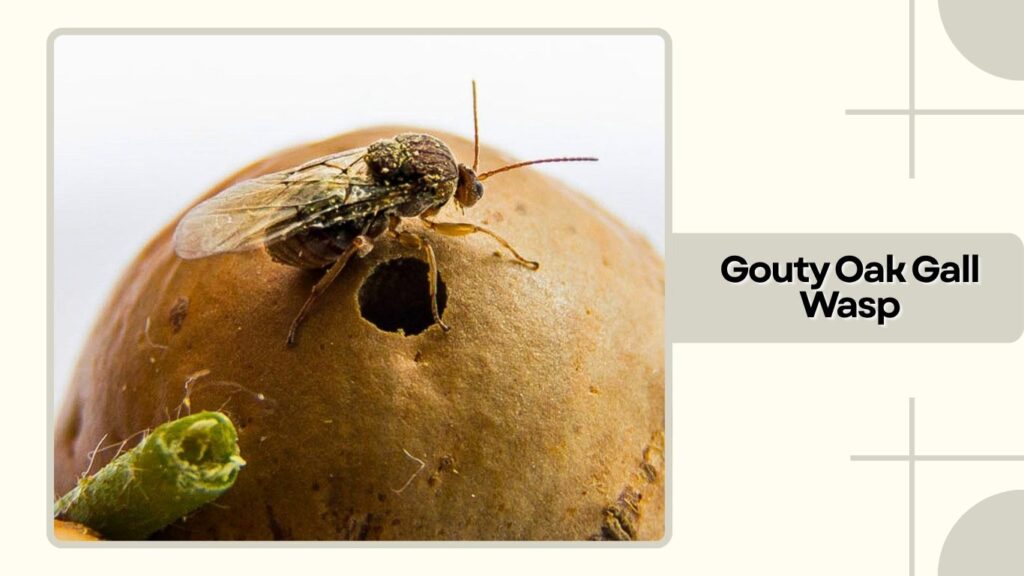
The Gouty Oak Gall Wasp (Callirhytis quercuspunctata) is a small insect responsible for producing irregular, swollen growths on oak branches. These woody structures are known as gouty oak galls because they resemble enlarged joints. The species belongs to the Cynipidae family and is particularly associated with North American oak trees. Although minor infestations may be tolerated, severe outbreaks can weaken branches and reduce tree health.
Identification
- Scientific Name: Callirhytis quercuspunctata
- Family: Cynipidae
- Adult Appearance: Tiny, dark-colored wasp
- Gall Shape: Rounded, irregular, and swollen
- Gall Texture: Hard, woody, and rough
- Gall Color: Initially greenish, eventually brown
- Gall Location: Oak twigs and branches
- Distinctive Feature: Thick, gout-like woody swellings without the projecting horns of horned oak galls
Habitat and Distribution
Gouty Oak Gall Wasps occur throughout parts of eastern North America, including regions of the United States and southern Canada.
They inhabit deciduous woodlands, urban parks, landscaped properties, and residential areas containing susceptible oak species.
Common hosts include pin oak, scarlet oak, northern red oak, and black oak.
Their woody galls often become more noticeable during autumn and winter when oak trees lose their leaves.
Behavior and Diet
Gouty Oak Gall Wasps reproduce by depositing eggs in suitable oak tissues. Developing larvae stimulate abnormal cell growth, causing the formation of hard, swollen galls.
Each larva occupies an individual chamber and feeds on nutritious plant tissues.
Multiple larvae may develop within the same woody swelling, depending on its size.
The insects do not pose a direct threat to humans, but extensive gall formation can weaken small branches and interfere with healthy tree growth.
Lifespan and Life Cycle
The Gouty Oak Gall Wasp has a complex reproductive cycle involving alternating generations.
One generation develops in small, less noticeable leaf galls, while another develops inside large woody swellings on twigs.
Adult females deposit eggs into suitable oak tissues, and the developing larvae gradually stimulate gall formation.
Development within woody galls can extend over multiple years.
When adults mature, they emerge through small openings in the galls and continue the reproductive cycle. Heavy infestations may persist for several seasons because larvae develop at different stages.
12. Hedgehog Gall Wasp (Acraspis erinacei)
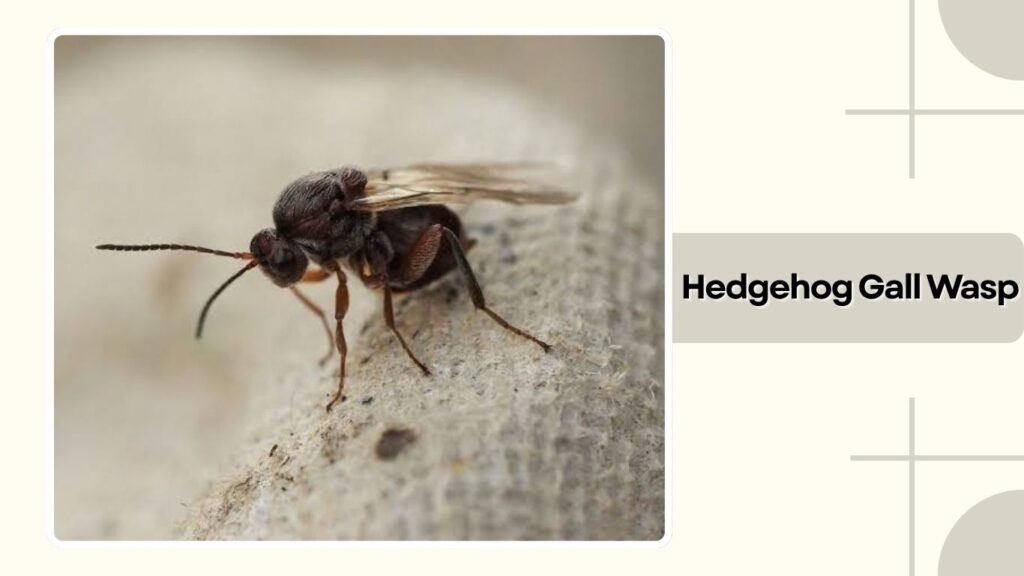
The Hedgehog Gall Wasp (Acraspis erinacei) is a small insect belonging to the family Cynipidae. It is famous for producing unusual, spiny galls on oak leaves that resemble miniature hedgehogs. These distinctive growths are covered with reddish or orange hairs and provide protection for developing larvae. Although their appearance may seem alarming, hedgehog galls generally cause little damage to healthy oak trees.
Identification
- Scientific Name: Acraspis erinacei
- Family: Cynipidae
- Adult Appearance: Tiny, dark-colored wasp
- Gall Size: Approximately 6–13 mm in diameter
- Gall Shape: Rounded or oval with dense hairs
- Gall Color: Yellowish, orange, or reddish-brown
- Gall Location: Oak leaves, particularly near veins
- Distinctive Feature: Hedgehog-like galls covered with reddish hairs
Habitat and Distribution
Hedgehog Gall Wasps are primarily found in eastern North America, particularly in regions containing white oak trees.
They inhabit deciduous forests, woodland edges, parks, gardens, and suburban landscapes where suitable host trees grow.
White oak (Quercus alba) is an important host species. The distinctive galls typically develop on oak leaves during summer and become more noticeable as their reddish hairs mature.
Behavior and Diet
Hedgehog Gall Wasps spend most of their immature development inside protective plant galls.
Females deposit eggs in oak tissues, and the developing larvae stimulate the formation of rounded growths covered with fine hairs.
Unlike many single-chambered oak galls, a hedgehog gall may contain three to five individual larval chambers.
The larvae feed on specialized plant tissues inside their chambers. Adults are harmless to humans and generally do not damage healthy oak trees.
Lifespan and Life Cycle
The Hedgehog Gall Wasp undergoes alternating sexual and asexual generations.
During autumn, asexual females emerge from mature hedgehog galls and deposit eggs in developing oak buds.
Their offspring form small, blister-like galls within bud scales during spring.
Male and female wasps emerge from these structures, mate, and initiate another generation.
The resulting larvae produce the distinctive hairy galls on oak leaves, completing the seasonal reproductive cycle.
13. Jumping Gall Wasp (Neuroterus saltatorius)
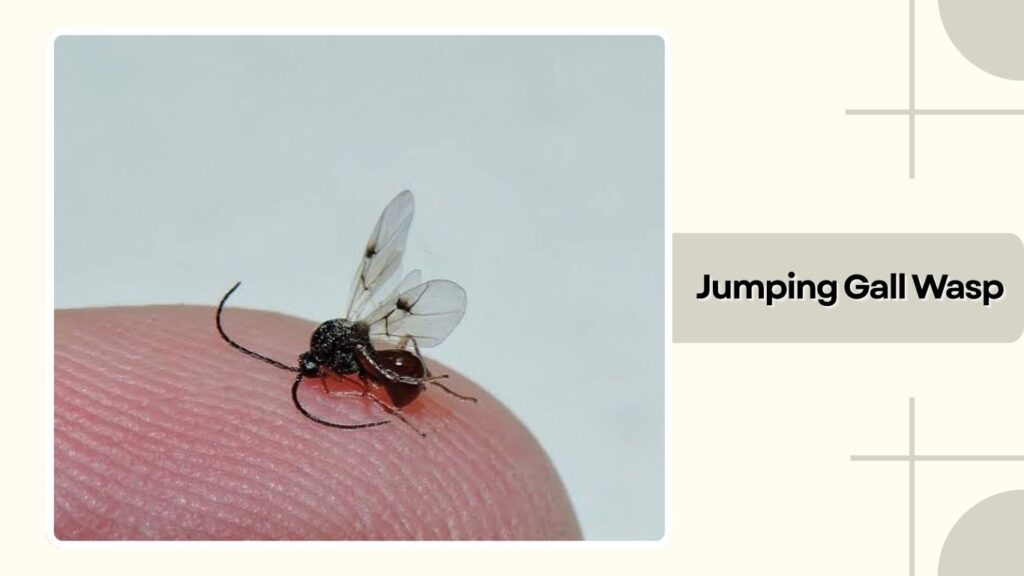
The Jumping Gall Wasp (Neuroterus saltatorius) is a remarkable gall-forming insect known for producing tiny galls capable of jumping across the ground. These unusual structures resemble miniature seeds and develop on oak leaves. The movement occurs when larvae inside the galls shift their bodies forcefully. This distinctive behavior helps the insects reach protective ground cover, making them one of the most fascinating members of the Cynipidae family.
Identification
- Scientific Name: Neuroterus saltatorius
- Family: Cynipidae
- Adult Size: Asexual females approximately 0.75 mm long
- Adult Color: Brownish-black with reddish-brown legs
- Gall Size: Approximately 0.75–1.5 mm
- Gall Shape: Small, rounded, and seed-like
- Gall Color: Yellowish-brown or mustard-colored
- Gall Location: Undersides of oak leaves
- Distinctive Feature: Detached galls jump because of larval movements
Habitat and Distribution
Jumping Gall Wasps are native to western North America, particularly California, Oregon, Washington, and parts of Texas.
They also occur in parts of western Canada, especially Vancouver Island. Similar jumping galls have been reported in eastern North America, although some may belong to related species.
Important host trees include valley oak, blue oak, Oregon white oak, and other members of the white oak group.
Behavior and Diet
Jumping Gall Wasps develop inside tiny structures produced by their host trees.
Females lay eggs on young oak tissues, and the emerging larvae stimulate gall formation.
Each jumping gall contains a single larva that feeds on specialized plant tissues.
Once the gall detaches from the leaf, the larva moves forcefully inside its chamber, causing the entire structure to jump.
This movement may help the gall settle into protective leaf litter.
Lifespan and Life Cycle
The Jumping Gall Wasp completes an annual life cycle involving sexual and asexual generations.
Asexual females emerge in spring and deposit eggs in developing oak leaves. Their offspring produce small clustered galls containing the sexual generation.
After emerging and mating, females lay eggs on leaf undersides.
The resulting larvae develop inside tiny, detachable galls during summer.
These galls fall to the ground, where their occupants complete development and overwinter before emerging the following spring.
14. Wool Sower Gall Wasp (Callirhytis seminator)
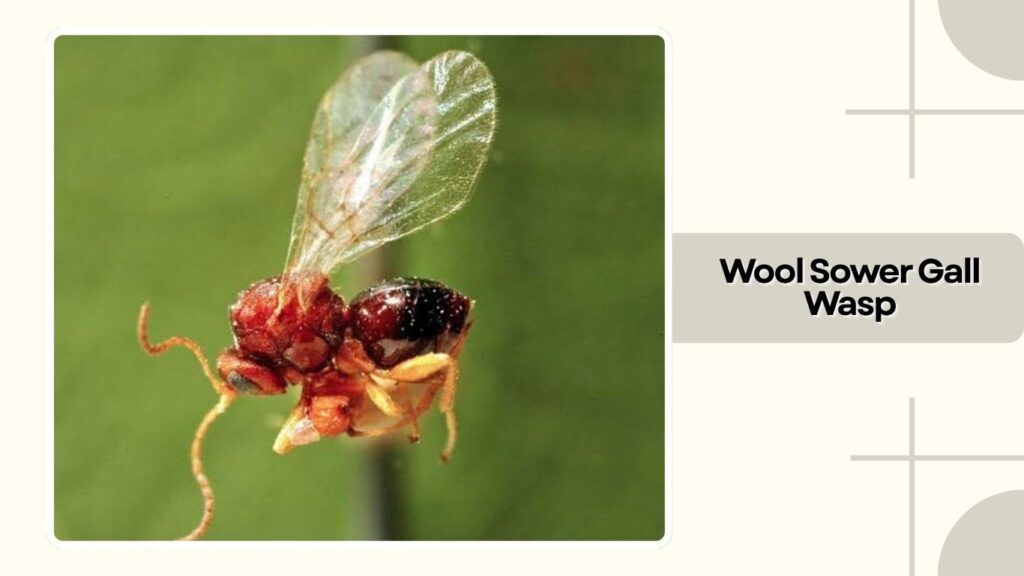
The Wool Sower Gall Wasp (Callirhytis seminator) is a small North American insect known for producing fluffy, cotton-like galls on oak trees. These unusual structures resemble miniature wool balls and sometimes display pink or reddish markings. The species belongs to the family Cynipidae and is also associated with the name oak seed gall. Its distinctive growths protect developing larvae while contributing to the ecological diversity of oak woodlands.
Identification
- Scientific Name: Callirhytis seminator
- Family: Cynipidae
- Adult Size: Approximately 3 mm long
- Adult Color: Dark brown
- Gall Shape: Rounded, fluffy, and cotton-like
- Gall Color: Initially white, developing pink markings before turning brown
- Gall Location: Oak twigs and branches
- Distinctive Feature: Wool-like galls containing multiple seed-shaped larval chambers
Habitat and Distribution
Wool Sower Gall Wasps occur in eastern North America, particularly in areas containing white oak trees.
They inhabit deciduous forests, parks, gardens, suburban neighborhoods, and natural oak woodlands.
White oak (Quercus alba) is their primary host, although swamp white oak and chestnut oak have also been recorded as hosts.
The wool-like galls are most commonly observed during spring and early summer, often developing on young twigs and branches.
Behavior and Diet
Wool Sower Gall Wasps stimulate the formation of protective growths through interactions between their developing larvae and oak tissues.
Each fluffy gall contains several hard, seed-like structures. Inside these individual chambers, small white larvae feed on specialized plant tissues.
The woolly exterior surrounds the developing insects and offers some protection from predators and environmental conditions.
Adult wasps are tiny, nonaggressive insects that pose no danger to humans.
Lifespan and Life Cycle
The Wool Sower Gall Wasp has a reproductive cycle associated with alternating generations, as seen in many other oak gall wasps.
The distinctive woolly galls appear during spring, containing developing larvae inside seed-like chambers.
As the larvae mature, they transform into pupae and eventually emerge as adult wasps, often during June or early July.
Adults reproduce and initiate another generation on suitable oak tissues.
However, the gall form produced by the alternate generation has not been clearly established, leaving part of this species’ life cycle incompletely understood.
15. Acorn Plum Gall Wasp (Amphibolips quercusjuglans)
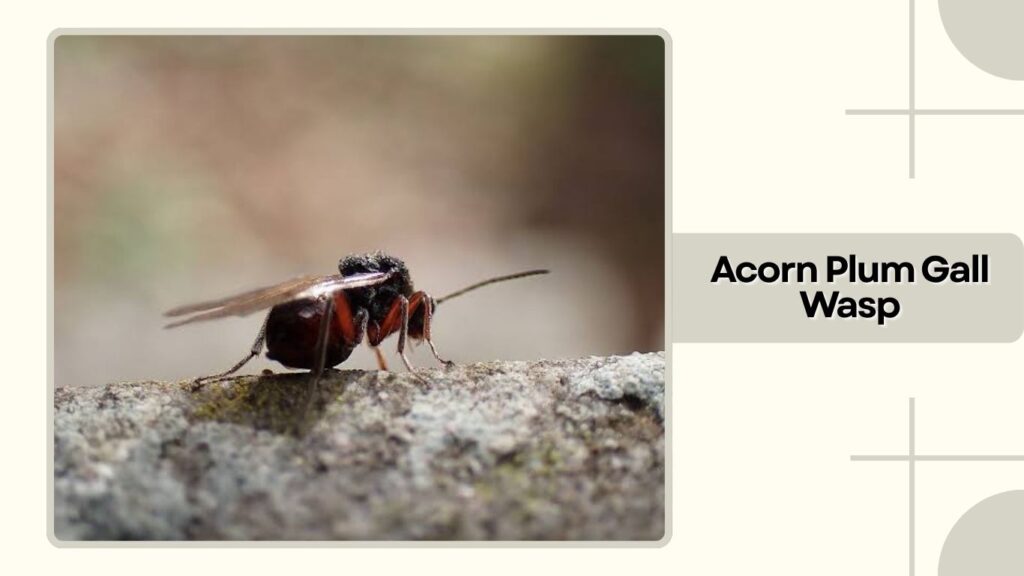
The Acorn Plum Gall Wasp (Amphibolips quercusjuglans) is a gall-forming insect recognized for producing rounded, plum-like growths on developing oak acorns. These unusual structures often appear bright red or pink before becoming brown as they age. The species belongs to the family Cynipidae and is native to North America. Although its galls may interfere with individual acorns, they generally pose little threat to the overall health of established oak trees.
Identification
- Scientific Name: Amphibolips quercusjuglans
- Family: Cynipidae
- Adult Size: Females approximately 6 mm long
- Adult Color: Predominantly black with yellowish-brown legs
- Gall Size: Approximately 15–25 mm in diameter
- Gall Shape: Smooth, rounded, and plum-like
- Gall Color: Pink, bright red, or reddish-brown
- Gall Location: Oak acorn cups
- Distinctive Feature: Fleshy, plum-shaped galls containing a central larval chamber
Habitat and Distribution
Acorn Plum Gall Wasps occur primarily in eastern and central North America.
They inhabit deciduous forests, oak-dominated woodlands, parks, and residential landscapes where suitable host trees produce acorns.
Northern red oak is an important host species, while black oak, scarlet oak, and related oaks have also been associated with these galls.
The distinctive growths appear on developing acorn cups during spring and summer, becoming more noticeable as they enlarge and change color.
Behavior and Diet
Acorn Plum Gall Wasps reproduce by depositing eggs into suitable oak tissues.
As the larvae develop, they stimulate surrounding plant cells to produce rounded, fleshy galls resembling small plums.
Each gall typically contains a single central chamber where a larva feeds on specialized plant tissue.
The gall provides both nourishment and protection throughout development.
These insects are not aggressive toward humans. However, their activity can prevent affected acorns from developing normally.
Lifespan and Life Cycle
The Acorn Plum Gall Wasp undergoes alternating sexual and asexual generations.
After mating, sexual females deposit eggs in oak root tissues, where the next generation develops.
Wingless asexual females eventually emerge and climb suitable oak trees to deposit eggs in developing acorn cups.
The resulting larvae stimulate the formation of distinctive red, plum-shaped galls.
As the galls mature, they become firmer and may detach from the acorns.
Winged males and females eventually emerge, mate, and begin the reproductive cycle again.
FAQs
1. What are gall wasps?
Gall wasps are small insects belonging mainly to the family Cynipidae. Many species stimulate plants to produce unusual growths called galls. These structures provide food and shelter for developing larvae. Oak trees are among their most common host plants.
2. Are gall wasps harmful to humans?
No. Gall wasps are generally harmless to humans. Most gall-forming species do not sting people or display aggressive behavior. Their primary activity involves reproduction and development inside plant tissues.
3. Do gall wasps damage oak trees?
Most gall wasps cause little damage to healthy, mature oak trees. However, species such as the Horned Oak Gall Wasp and Gouty Oak Gall Wasp can cause branch swelling, twig dieback, and structural damage during heavy infestations.
4. How long do gall wasps live?
Adult gall wasps generally live for a relatively short period, often days to weeks. However, their complete life cycles vary considerably. Some species complete a cycle within a year, while others spend two or more years developing inside protective galls.
5. How do you get rid of gall wasps on trees?
Most gall wasps do not require treatment. Maintaining healthy trees through proper watering, mulching, and general care is usually sufficient. Severely affected twigs can sometimes be pruned during dormancy. Chemical treatments are rarely necessary because developing larvae remain protected inside their galls.
