
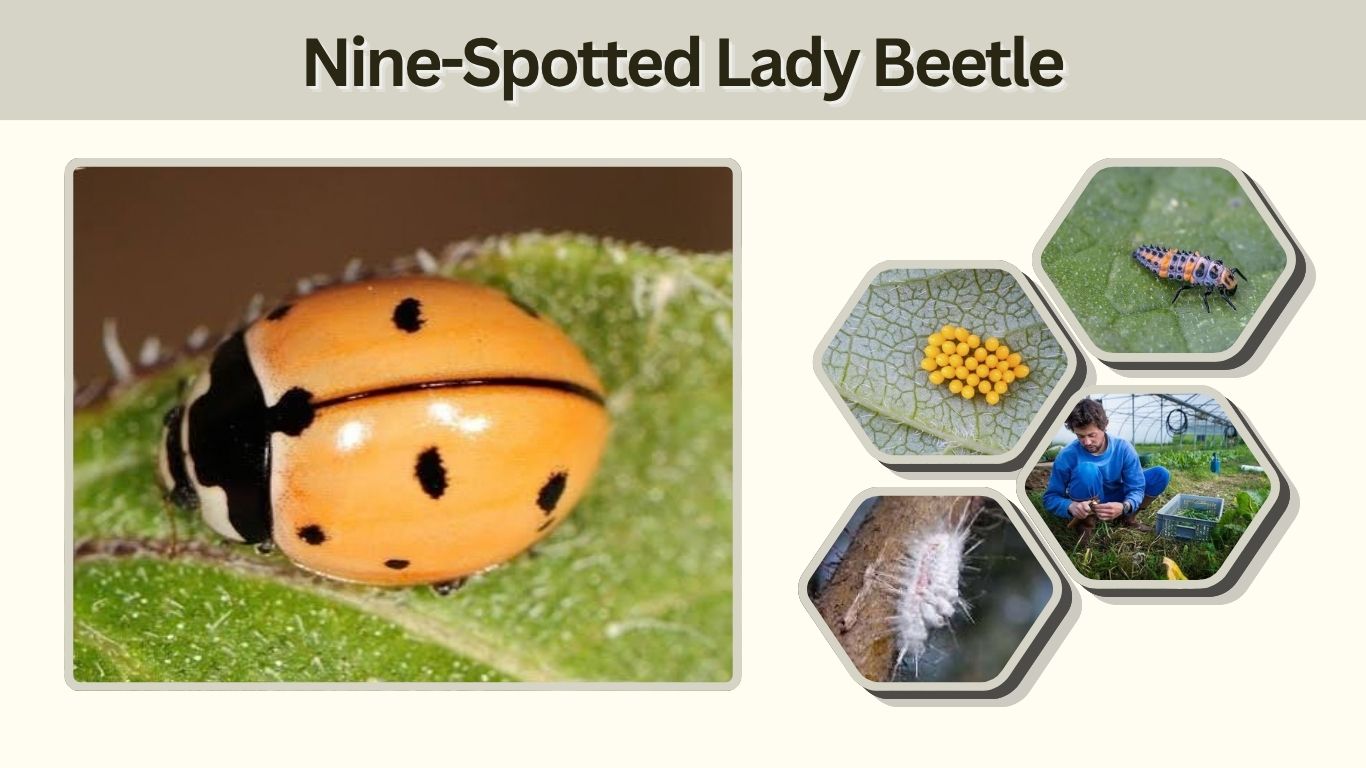
The nine-spotted lady beetle (Coccinella novemnotata) is a native North American ladybug once widespread across farms, gardens, and grasslands. Recognized by its orange-red wing covers and usually nine black spots, this beneficial beetle feeds heavily on aphids and other soft-bodied insects. Despite its former abundance, sightings have become uncommon across much of its range, particularly in eastern North America. Questions about its bite, toxicity, Ontario distribution, and conservation status are increasingly relevant. This guide explains how to identify the species, understand its behavior, and appreciate its ecological importance.
What Is a Nine-Spotted Lady Beetle?
The nine-spotted lady beetle is a small predatory insect belonging to the lady beetle family, Coccinellidae. Often called the nine-spotted ladybug or C-9, it is native to North America and plays an important role in controlling agricultural pests. Once among the most familiar ladybugs in the northeastern United States, this species has experienced substantial population declines.
Scientific Name and Classification
The scientific name of the nine-spotted lady beetle is Coccinella novemnotata. It was first scientifically described in 1793 by Johann Friedrich Wilhelm Herbst.
The beetle belongs to the order Coleoptera, which includes all beetle species.
Its common name refers to the nine dark spots typically visible across its hardened forewings. However, some individuals have fewer spots or may lack visible spots entirely.
Nine-Spotted Lady Beetle Identification
Several physical characteristics help distinguish this species from other ladybugs.
- Scientific name: Coccinella novemnotata
- Family: Coccinellidae
- Body length: Approximately 4.7–7 mm.
- Body shape: Small, oval, and moderately rounded.
- Wing color: Pale orange, orange-red, or reddish.
- Black spots: Usually nine, with four on each wing cover and one central spot.
- Head: Black with pale markings between the eyes.
- Wing covers: A distinctive narrow, dark line runs along the center where they meet.
Nine-Spotted Lady Beetle Habitat and Range
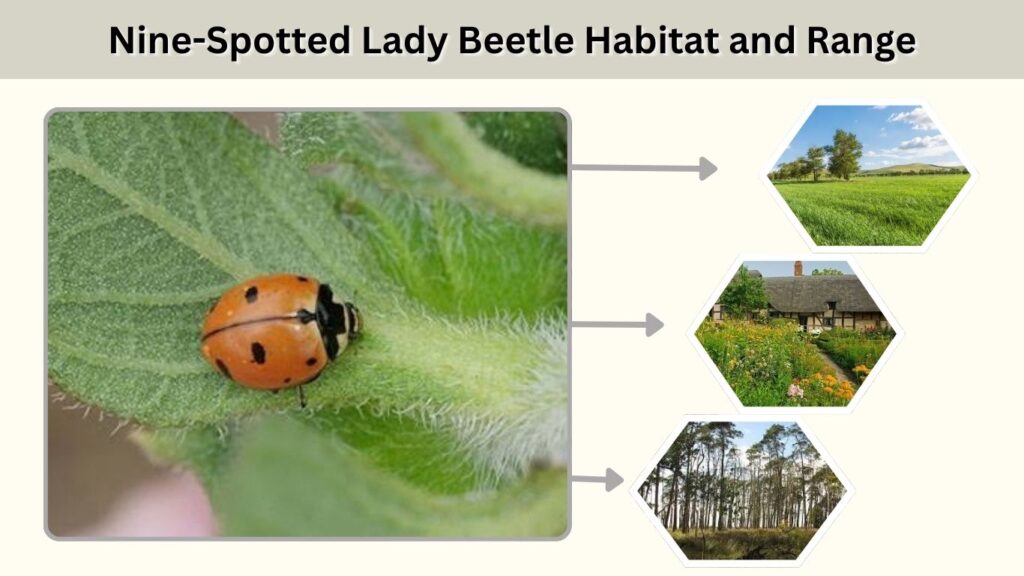
Historically, the nine-spotted lady beetle occupied a broad geographical range throughout North America. It occurred across much of the continental United States and southern Canada, inhabiting agricultural land, grasslands, forests, and gardens. However, its distribution has changed dramatically over recent decades. Many formerly common populations have disappeared, making confirmed modern observations particularly valuable to conservation researchers.
Where Do Nine-Spotted Lady Beetles Live?
These beetles inhabit environments that support aphids and other small insects.
Common habitats include:
- Agricultural fields: Farms growing crops such as alfalfa and potatoes.
- Grasslands: Open areas containing grasses and flowering plants.
- Gardens: Vegetation supporting populations of aphids.
- Meadows: Wildflower-rich areas with diverse insect communities.
- Woodlands: Forest edges and other vegetated environments.
- Riparian habitats: Plant communities near rivers and streams.
Nine-Spotted Lady Beetle in Ontario
The nine-spotted lady beetle was historically widespread throughout southern Ontario and occurred as far north as the eastern shores of Lake Superior.
However, Ontario’s government reports that the species has not been confirmed in the province since 1987.
It was officially listed as endangered in Ontario in 2017. Although small, undiscovered populations may remain, its current presence is uncertain.
Nine-Spotted Lady Beetle in the United States
The species historically occurred across much of the United States.
It is particularly significant in New York, where it became the official state insect in 1989.
After disappearing from confirmed New York records for 29 years, the species was rediscovered on Long Island in 2011.
Its continued rarity has encouraged research and conservation efforts.
What Do Nine-Spotted Lady Beetles Eat?
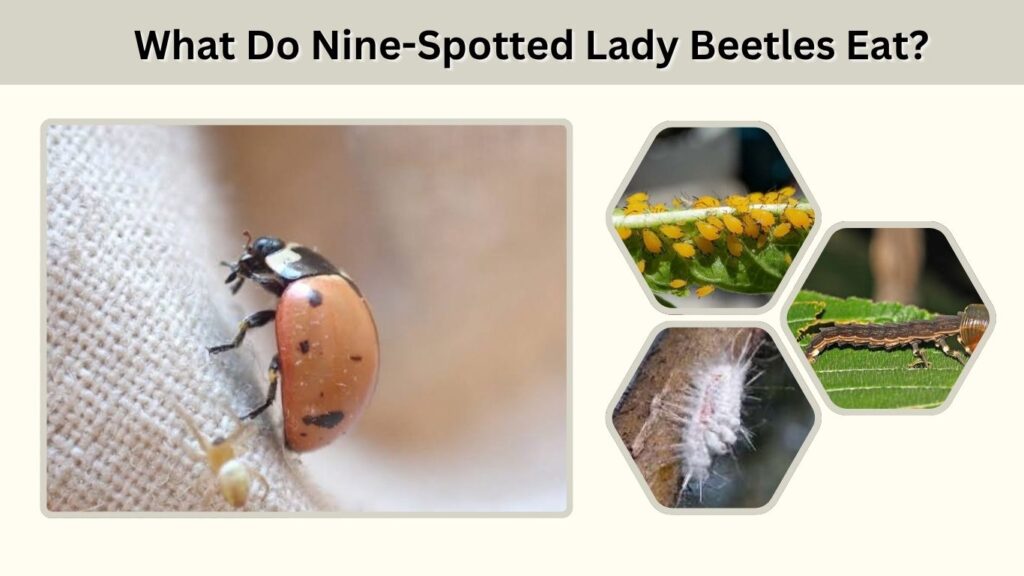
Nine-spotted lady beetles are beneficial predators that feed primarily on aphids and other soft-bodied insects. Both adults and larvae actively search plants for prey, helping reduce populations of insects that damage agricultural crops and garden vegetation. Their natural pest-control abilities once made them especially valuable in farming landscapes. Their diet depends largely on prey availability and seasonal conditions.
Aphids and Other Small Insects
Aphids are among the primary food sources of the nine-spotted lady beetle.
These small insects feed on plant sap and can weaken crops when populations become excessive.
Nine-spotted lady beetles consume aphids directly, while their larvae actively hunt prey on leaves and stems.
Their feeding habits help reduce pest pressure without requiring chemical treatments.
Importance in Natural Pest Control
Nine-spotted lady beetles contribute to biological pest control by limiting populations of plant-feeding insects.
Their presence supports biodiversity and healthier agricultural ecosystems.
The decline of native lady beetles raises concerns about changes in predator communities, particularly where introduced species have become dominant.
Nine-Spotted Lady Beetle Lifecycle and Behavior
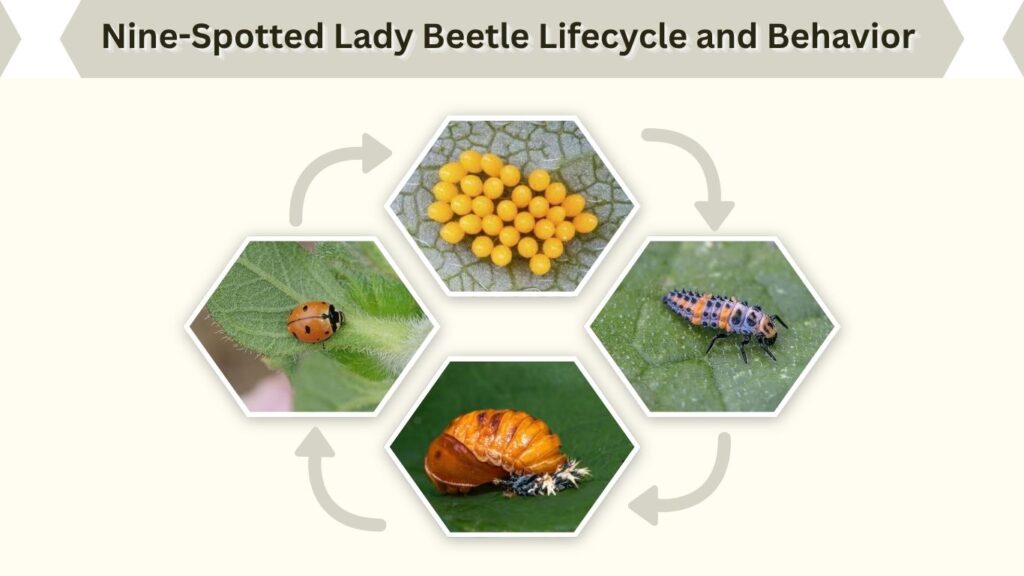
Like other lady beetles, Coccinella novemnotata undergoes complete metamorphosis, passing through four distinct developmental stages. Females deposit eggs near suitable food sources, allowing emerging larvae to begin feeding soon after hatching. Development depends on temperature, available prey, and environmental conditions. Adults can survive unfavorable periods through dormancy, helping populations persist between growing seasons.
Four Stages of the Lifecycle
The nine-spotted lady beetle develops through the following stages:
- Egg: Females deposit clusters of small eggs near aphid populations.
- Larva: Newly hatched larvae actively hunt aphids and other soft-bodied prey.
- Pupa: The insect undergoes transformation while attached to a suitable surface.
- Adult: The mature beetle emerges with functional wings and reproductive capabilities.
Under favorable conditions, development from egg to adult may take approximately two to four weeks.
Lifespan and Seasonal Behavior
Adult nine-spotted lady beetles may live for several months, although survival varies with environmental conditions.
They can enter dormancy during unfavorable periods, including winter.
Adult activity generally increases when temperatures become suitable and insect prey is abundant.
Are Nine-Spotted Lady Beetles Poisonous or Dangerous?
Nine-spotted lady beetles are not considered dangerous to humans during ordinary contact. Like many ladybugs, they possess chemical defenses that discourage predators from eating them. These substances can produce an unpleasant taste or odor, but they are not venomous insects. Understanding the difference between defensive toxicity, biting, and stinging helps prevent unnecessary fear when encountering these beneficial beetles.
Are Nine-Spotted Lady Beetles Poisonous?
Nine-spotted lady beetles can release foul-tasting defensive chemicals when threatened.
These secretions make the insects less appealing to predators such as birds and other insect-eating animals.
However, they are not considered poisonous to humans through normal skin contact.
Avoid deliberately consuming lady beetles, and wash your hands after handling insects.
Do Nine-Spotted Lady Beetles Bite?
Nine-spotted lady beetles have small chewing mouthparts used primarily for feeding on other insects.
Like other lady beetles, they may occasionally pinch or nibble when handled, although documented bites from this particular species are uncommon.
They do not possess stingers and are not known to cause serious injuries through biting.
Why Are Nine-Spotted Lady Beetles Endangered?
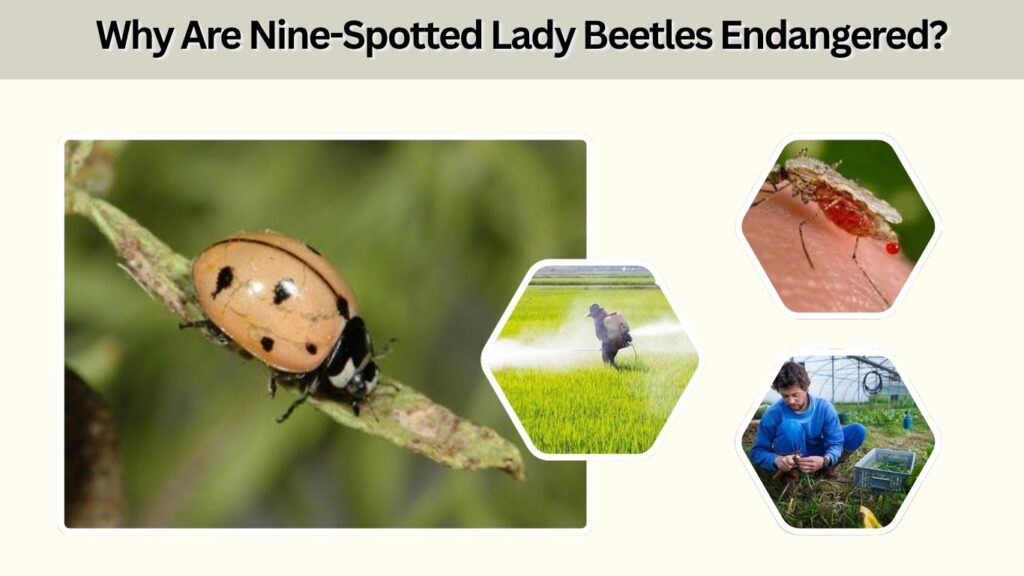
Nine-spotted lady beetles were historically among North America’s most widespread native ladybugs. Their populations declined sharply beginning in the late twentieth century, particularly across eastern regions. Scientists continue investigating the causes, including competition from introduced lady beetles, environmental changes, and pesticide exposure. Their decline highlights the importance of conserving native insect diversity and maintaining healthy habitats.
Causes of Population Decline
Researchers have identified several possible factors contributing to the species’ decline.
Introduced lady beetles, including the seven-spotted lady beetle and multicolored Asian lady beetle, may compete with native species for food.
Other possible factors include habitat alteration, pesticide exposure, disease transmission, and changes in agricultural practices.
The precise contribution of each factor remains uncertain.
How to Help Protect Nine-Spotted Lady Beetles
Conservation efforts benefit from public participation and responsible habitat management.
- Protect native vegetation: Maintain diverse plants that support insect populations.
- Reduce unnecessary pesticides: Avoid treatments that harm beneficial insects.
- Preserve natural habitats: Support meadows, grasslands, and suitable garden environments.
- Report sightings: Submit clear photographs to recognized citizen-science projects.
- Avoid collecting rare beetles: Observe suspected nine-spotted lady beetles without disturbing them.
Are Nine-Spotted Lady Beetles for Sale?
Nine-spotted lady beetles are not commonly available through ordinary commercial insect suppliers.
Because they are rare and protected in some jurisdictions, collecting or purchasing wild individuals may raise legal and conservation concerns.
In Ontario, the species is legally protected under endangered-species legislation.
Conservation programs and authorized researchers are more appropriate sources of information about captive breeding and species recovery.
FAQs
The nine-spotted lady beetle attracts considerable interest because of its rarity, distinctive markings, and historical importance. Readers frequently ask whether it is poisonous, whether it can bite, and where surviving populations occur. Questions about its scientific name and endangered status are also common. The following answers summarize important details about this declining native North American beetle.
1. What Is the Scientific Name of the Nine-Spotted Lady Beetle?
The scientific name is Coccinella novemnotata. It belongs to the family Coccinellidae and is also commonly called the nine-spotted ladybug or C-9.
2. Is the Nine-Spotted Lady Beetle Poisonous to Humans?
No, it is not considered poisonous through normal human contact. However, it produces defensive chemicals that make it unpleasant for predators to eat.
3. Can a Nine-Spotted Lady Beetle Bite?
It has chewing mouthparts and may occasionally nibble when handled. Such encounters are uncommon and are not generally considered dangerous.
4. Is the Nine-Spotted Lady Beetle Extinct in Ontario?
The species is not officially declared extinct in Ontario. It is listed as endangered, although its last confirmed provincial record dates to 1987. Undetected populations may still exist.
5. Why Is the Nine-Spotted Lady Beetle So Rare?
Its populations have declined substantially since the 1980s. Possible causes include competition with introduced lady beetles, habitat changes, pesticide exposure, and pathogens. Researchers have not established a single definitive cause.
