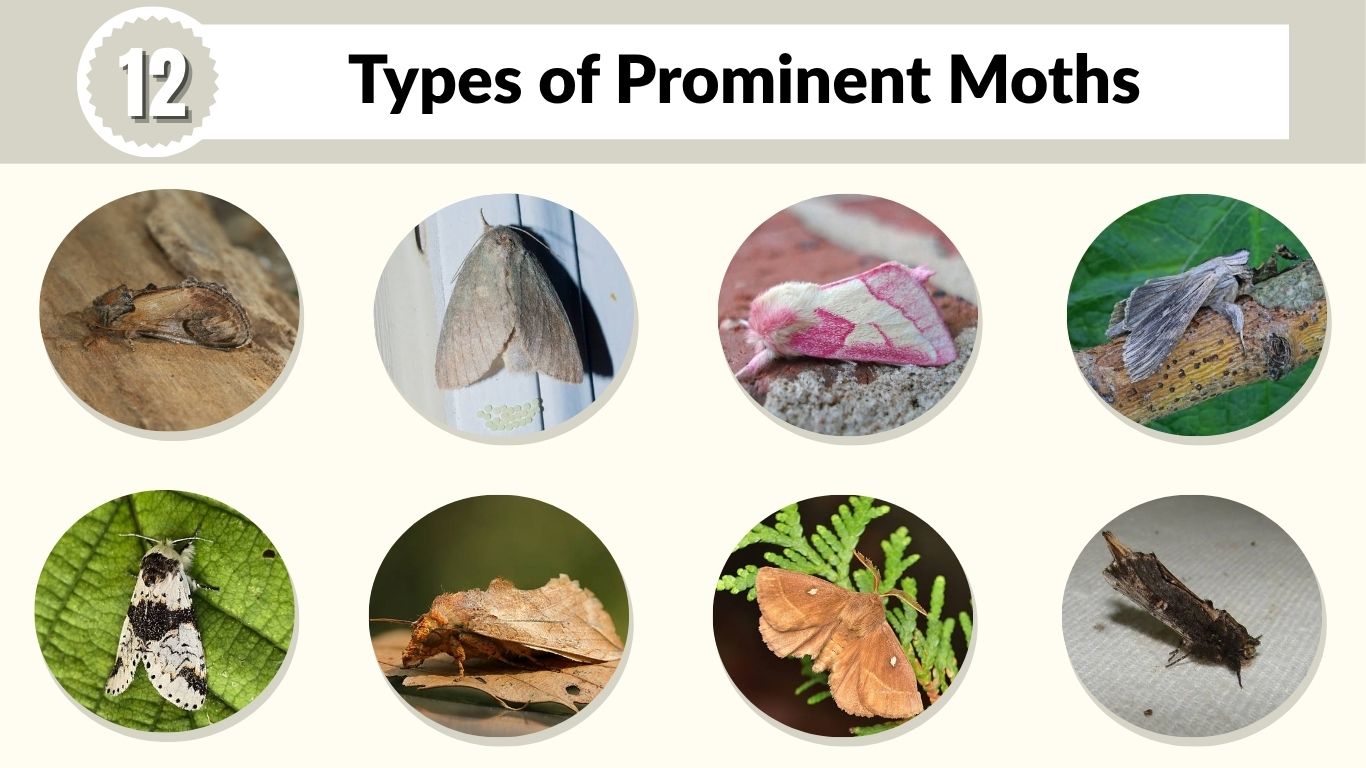
Prominent moths are fascinating members of the Notodontidae family, known for their unusual wing shapes, bark-like camouflage, and distinctive caterpillars. Some species are dull gray or brown, while others display striking pink, yellow, or patterned wings. In this guide, you will discover 12 types of prominent moths, including the White-dotted Prominent, Pink Prominent, Linden Prominent, and more, along with their identification features, habitats, diets, behavior, and life cycles.
1. White-dotted Prominent
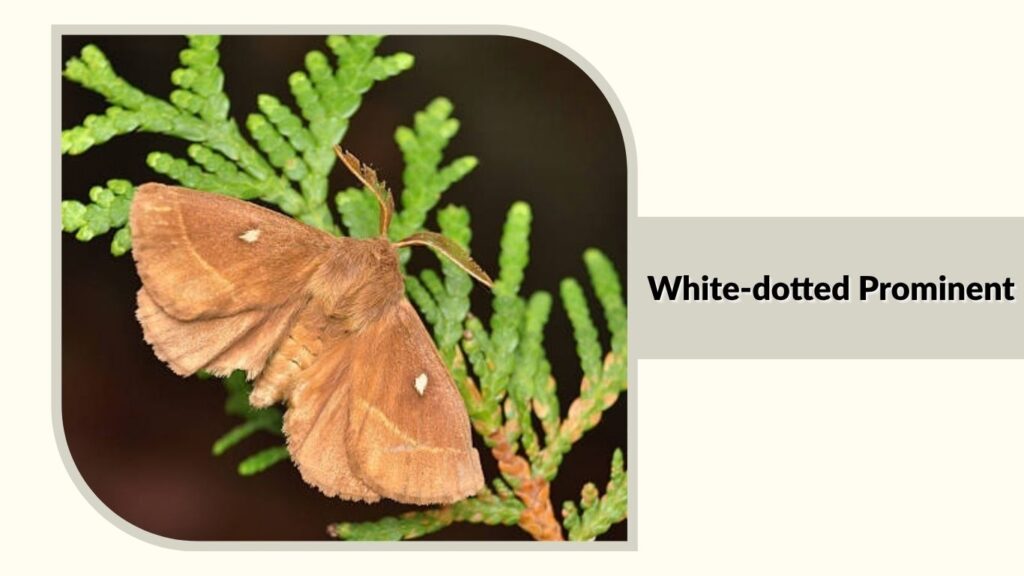
The White-dotted Prominent is an attractive forest moth in the prominent moth family. It is recognized by its warm brown to yellowish coloration and the pair of small white spots on its forewings. This moth is widely associated with deciduous woodland, where its caterpillars feed on the leaves of several common trees. Adults are most noticeable during the warmer months.
Identification
The White-dotted Prominent has several distinctive features that make identification easier:
- Color: Usually yellowish brown, tan, rusty brown, or orange-brown.
- White dots: Two small, shiny white spots are normally visible on each forewing.
- Wing pattern: Thin darker lines cross the forewings and create subtle divided sections.
- Wing shape: The outer forewing edge has a slightly uneven or saw-toothed appearance.
- Size: The forewing is generally about 22–27 mm long.
- Body: The thorax looks thick and somewhat raised or humped when the moth is resting.
Habitat and Distribution
White-dotted Prominents are primarily associated with forests and wooded habitats containing deciduous trees. They occur widely across North America, including much of Canada and the United States. Woodland edges, parks, gardens, and areas with mature host trees may also provide suitable habitat. Adults are generally active from late spring through summer, although the exact flight period varies by region.
Behavior and Diet
The caterpillars are plant feeders and commonly consume leaves from oak and other deciduous trees. Other recorded host plants include birch, alder, maple, cherry, chestnut, plum, rose, and willow. Adults are mostly nocturnal and can sometimes be attracted to artificial lights at night.
Lifespan and Life Cycle
The life cycle begins when adult females lay eggs on or near suitable host plants. After hatching, the caterpillars feed on foliage and grow through several developmental stages before pupating. The species can produce two generations in some areas. It survives winter mainly in the pupal stage in the ground, with adults emerging again when seasonal conditions become favorable.
2. Saddled Prominent
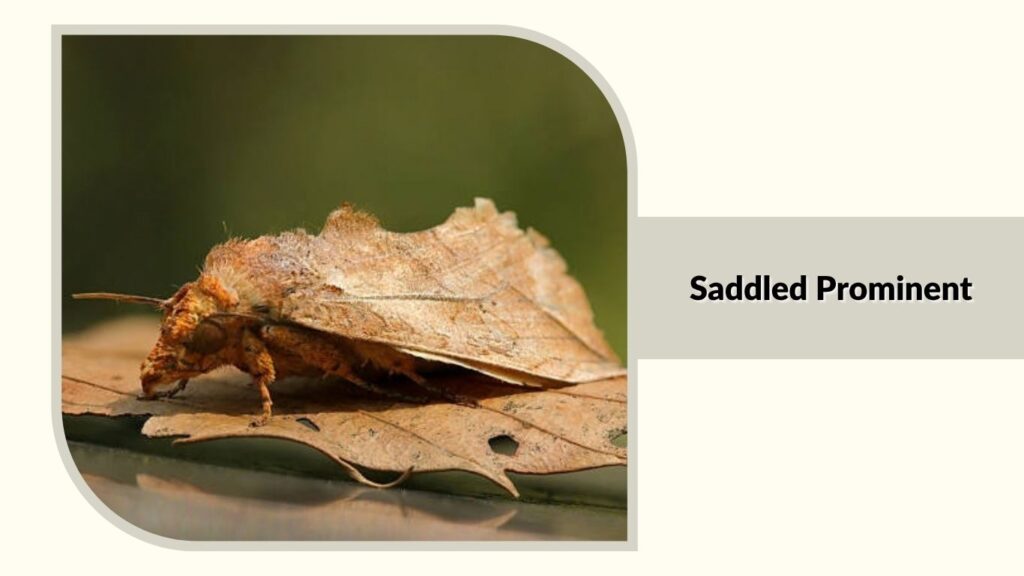
The Saddled Prominent is a medium-sized woodland moth recognized for its subdued gray-brown coloration and well-camouflaged appearance. It belongs to the prominent moth family and occurs widely across eastern North America. Its caterpillar is more colorful than the adult and develops distinctive markings that help explain the “saddled” common name. The species uses many deciduous trees as larval food plants.
Identification
Several features can help identify a Saddled Prominent:
- Color: Adults are generally gray, brown, or grayish tan.
- Wings: Forewings have irregular dark markings that resemble tree bark.
- Body: The body is thick and somewhat furry, typical of prominent moths.
- Resting position: Adults usually hold their wings roof-like over the body.
- Caterpillar: Larvae may show a noticeable saddle-like pattern along the back.
- Size: Adults are medium-sized compared with many other woodland moths.
Habitat and Distribution
Saddled Prominents mainly inhabit deciduous forests, woodland edges, parks, and other places where suitable host trees grow. Their range covers much of eastern North America, with occasional records farther west. Adults may be observed from spring through early fall, although the exact flight season varies with climate and latitude.
Behavior and Diet
Adults are primarily nocturnal and may come to outdoor lights after dark. Caterpillars feed on a wide variety of woody plants. Recorded hosts include maple, oak, birch, beech, walnut, hickory, apple, chestnut, dogwood, persimmon, hazel, and witch hazel. This broad diet allows the species to survive in many types of deciduous woodland.
Lifespan and Life Cycle
Females lay eggs on suitable host plants, where newly hatched caterpillars begin feeding on foliage. The larvae grow through several molts before reaching full size and eventually pupating. The pupal stage provides protection while transformation into the adult moth takes place. Depending on climate, adults can appear across several months of the warmer season.
3. Double-toothed Prominent
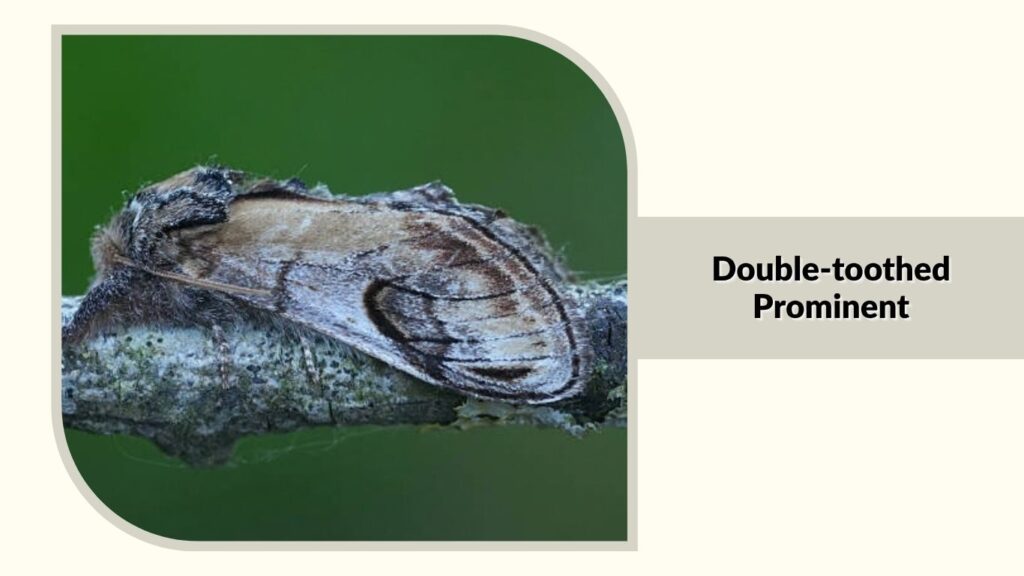
The Double-toothed Prominent is one of the more easily recognized prominent moths of eastern North America. Its name refers to the strongly toothed dark band crossing the forewings. Interestingly, the caterpillar also has tooth-like projections that resemble the serrated edges of elm leaves, its primary food source. This combination of color, shape, and camouflage makes the species especially distinctive.
Identification
Important identification features include:
- Wingspan: Approximately 30–40 mm.
- Forewing color: Mostly grayish brown with darker brown areas.
- Dark band: A blackish double-toothed band crosses the forewing.
- White markings: Pale or white edging may occur alongside the toothed band.
- Hindwings: Usually brown and darker toward the outer edge.
- Caterpillar: Green larvae have distinctive serrated humps along the back.
Habitat and Distribution
This moth is strongly associated with deciduous woodland containing elm trees. It occurs widely throughout eastern North America, from parts of Canada south into the United States. It may also occur in wooded suburbs, parks, forest edges, and other habitats where mature elms are available. Adults are commonly recorded between spring and late summer.
Behavior and Diet
Double-toothed Prominents are mainly active at night. During the day, their gray-brown wings help them blend against bark and other natural surfaces. Caterpillars feed primarily on elm leaves. Their unusual body outline resembles the double-serrated edges of elm foliage, providing an effective form of camouflage while feeding.
Lifespan and Life Cycle
The life cycle includes egg, caterpillar, pupa, and adult stages. Females place eggs near suitable elm foliage. Caterpillars are most frequently observed from summer into early fall. After completing their feeding period, mature larvae pupate and later emerge as adults. Seasonal timing varies depending on temperature and geographic location.
4. Black-Spotted Prominent
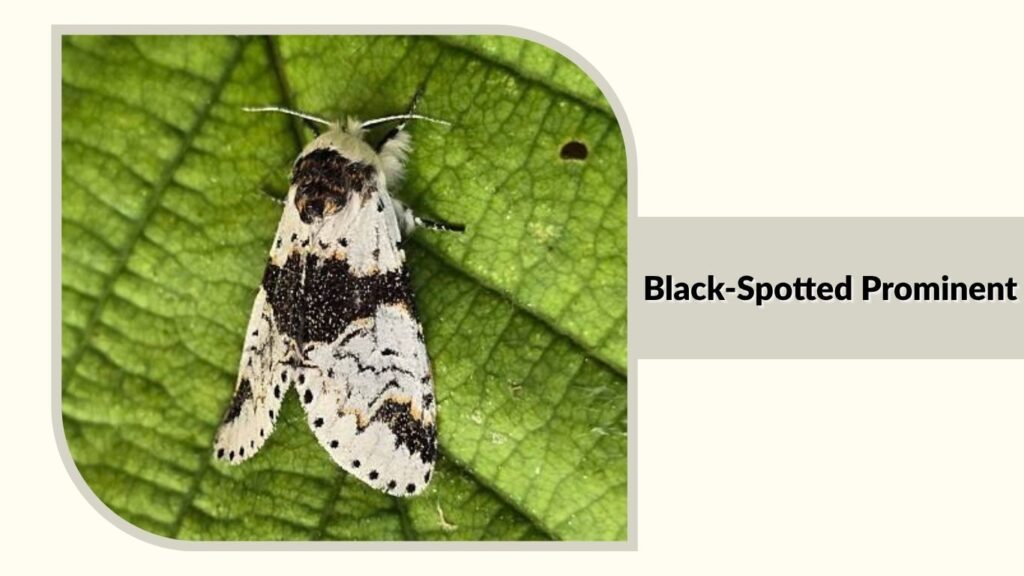
The Black-Spotted Prominent is an attractive North American moth characterized by dark oval spots near the outer portion of its wings. Males and females can look noticeably different, making the species an interesting example of sexual dimorphism among prominent moths. Its caterpillars depend largely on plants in the legume family for food.
Identification
Look for the following characteristics:
- Wingspan: Usually around 30–41 mm.
- Black spots: Distinct oval black spots occur near the lower terminal area.
- Male coloration: Males tend to have gray forewings with black streaking.
- Female coloration: Females often show more yellowish-brown shading.
- Hindwings: Males generally have pale or whitish hindwings, while females are grayer.
- Wing lines: Curved lines and darker markings add to the mottled appearance.
Habitat and Distribution
Black-Spotted Prominents occur across a large portion of eastern and central North America. Their range extends from southern Canada through much of the eastern United States and south toward Florida and Texas. They can inhabit woodland edges, open forests, fields, and other locations where their larval host plants grow. Adults generally fly from spring through late summer.
Behavior and Diet
The adults are mainly nocturnal and spend daylight hours resting quietly on vegetation or tree surfaces. Caterpillars feed on various legumes. Known host plants include clover, locust, lespedeza, and wild indigo. Their feeding behavior connects them closely with habitats where these plants naturally occur.
Lifespan and Life Cycle
Females begin the next generation by depositing eggs near suitable host plants. After hatching, the caterpillars feed and molt several times as they grow. Mature larvae eventually enter the pupal stage, during which their bodies reorganize into the adult form. Adults then emerge, mate, and repeat the cycle during suitable seasonal conditions.
5. Gray-Patched Prominent
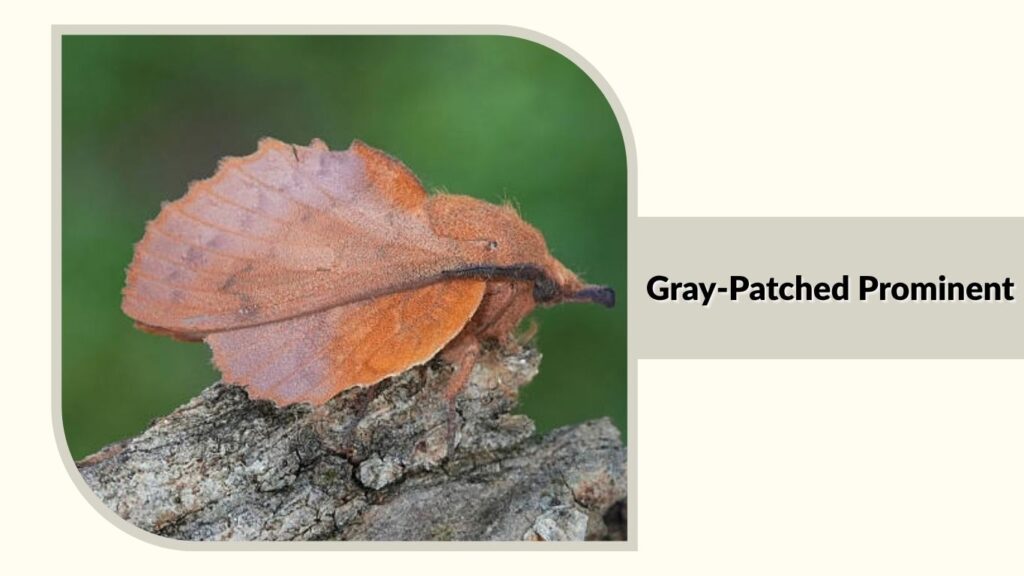
The Gray-Patched Prominent gets its common name from the broad pale gray area that contrasts with the darker brown portions of its forewings. Its subdued pattern provides excellent camouflage on bark and other woodland surfaces. This North American species is most often associated with hardwood forests, where its caterpillars use several deciduous plants as food sources.
Identification
Useful features for identification include:
- Overall color: A mixture of brown, gray, and pale gray.
- Gray patch: A noticeable broad pale-gray band or patch crosses the central wing area.
- Pattern: Darker brown markings break up the outline of the wings.
- Body: Thick-bodied with a fuzzy or hairy appearance.
- Resting posture: Wings are normally held over the body in a tent-like position.
- Camouflage: Wing colors closely resemble weathered bark and dead vegetation.
Habitat and Distribution
The Gray-Patched Prominent occurs in eastern North America. Its recorded range extends from parts of eastern Canada south through the eastern United States to northern Florida and west toward Michigan and eastern Texas. Mesic hardwood forests appear to provide particularly suitable habitat.
Behavior and Diet
Adults are nocturnal and may be attracted to lights. During daylight, they remain relatively inactive and depend on camouflage for protection. Recorded caterpillar host plants include beech and plants within the hickory and legume groups. The larvae feed directly on leaves and obtain the energy needed for development from their host plants.
Lifespan and Life Cycle
Like other prominent moths, this species undergoes complete metamorphosis. Eggs hatch into leaf-feeding caterpillars that pass through several growth stages. Once mature, the larvae pupate and undergo transformation before emerging as winged adults. Adult activity is seasonal and varies across the moth’s large geographic range.
6. Elegant Prominent
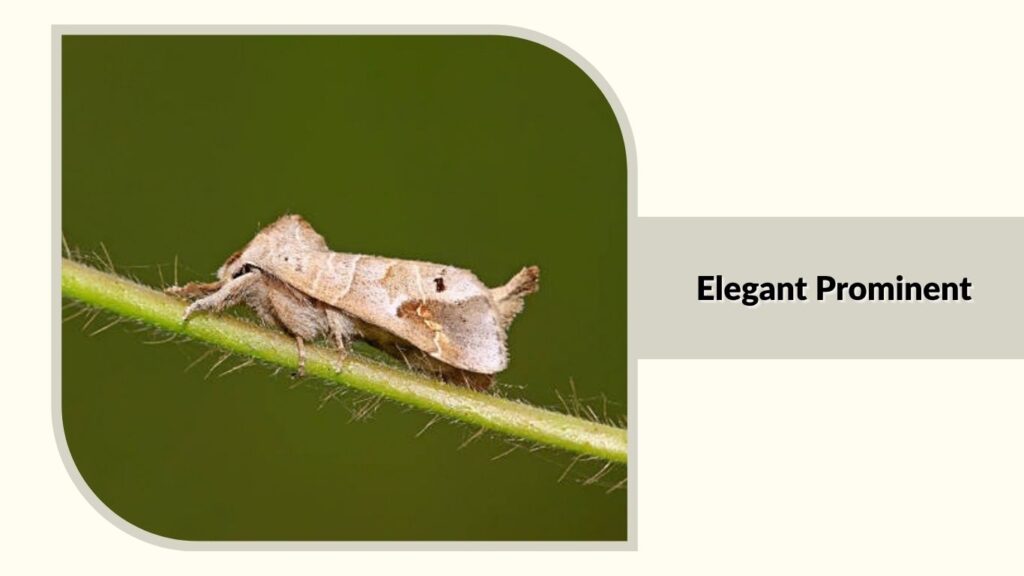
The Elegant Prominent is a distinctive member of the prominent moth family found in North America. Although its coloration is relatively subtle, its patterned wings, stout body, and classic prominent-moth shape give it an attractive appearance. The species was traditionally placed in the genus Odontosia, but more recent classifications place it in Pheosidea. Its caterpillars are particularly associated with poplar and aspen trees.
Identification
The Elegant Prominent can be recognized by several features:
- Color: Usually grayish brown, brown, or muted reddish brown.
- Forewings: Patterned with irregular darker and lighter lines.
- Wing shape: Forewings have an angular profile typical of prominent moths.
- Body: Stout and furry, particularly around the thorax.
- Camouflage: The mottled pattern helps adults resemble bark or dried leaves.
- Resting posture: Wings fold roof-like over the body when the moth is inactive.
Habitat and Distribution
Elegant Prominents are associated mainly with deciduous and mixed woodland. Records occur across parts of both Canada and the northern and eastern United States. Their close relationship with poplar and aspen means forests, woodland openings, and areas where these trees grow provide important habitat. Adults are most commonly encountered during the warmer portion of the year.
Behavior and Diet
Adults are primarily nocturnal and may visit artificial lights. Their cryptic coloration provides protection while resting during daylight. Caterpillars feed mainly on trees in the poplar group, with quaking aspen recorded as an important host. The larvae spend much of their development feeding on foliage before becoming mature enough to pupate.
Lifespan and Life Cycle
The life cycle begins with eggs placed on or close to suitable host foliage. Caterpillars hatch and begin feeding, passing through successive molts as they increase in size. Once larval development is complete, they pupate. Adults emerge later to mate and produce the next generation, completing the familiar egg-to-larva-to-pupa-to-adult cycle.
7. Georgian Prominent
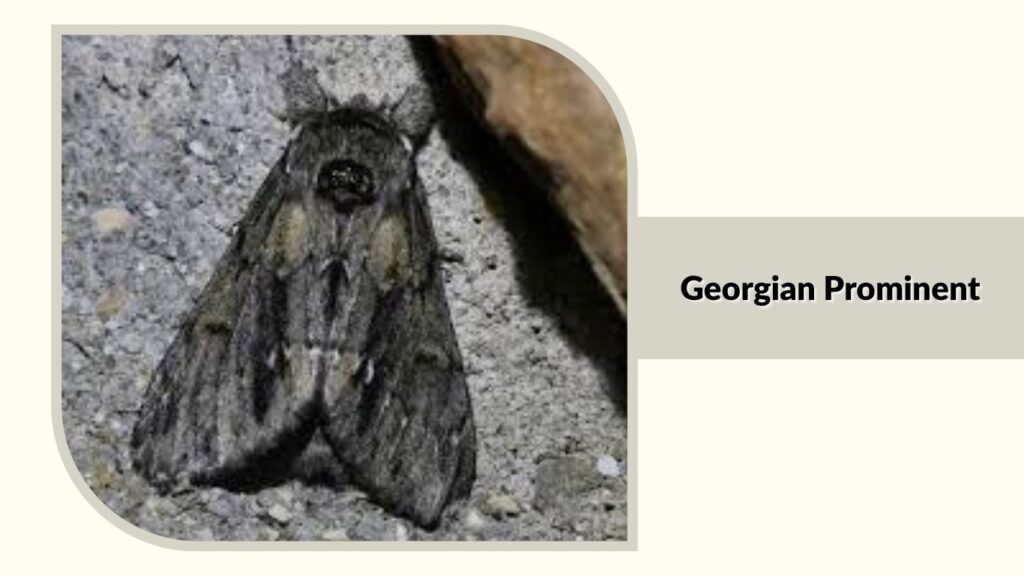
The Georgian Prominent is a well-camouflaged North American prominent moth whose wing colors can vary considerably between individuals. Adults may appear yellowish beige, greenish gray, gray-brown, or a combination of these shades. Jagged wing lines, dark streaks, and a raised scale tuft add to its distinctive appearance. Oak trees are especially important to the caterpillars.
Identification
Key identifying characteristics include:
- Wingspan: Generally about 34–37 mm, although some references report larger individuals.
- Color: Yellowish beige, greenish gray, or grayish brown.
- Wing lines: Jagged black lines cross the forewings and may have pale edging.
- Basal patch: A dull yellowish patch often occurs near the base of the forewing.
- Dark streaks: Short black markings may occur near the outer wing.
- Scale tuft: A triangular tuft of dark scales projects upward when the wings are held in their resting position.
Habitat and Distribution
The Georgian Prominent occupies a broad area of North America. Its range stretches from eastern Canada south through Florida and west across much of the continent, although it is largely absent from the Pacific Northwest. Oak woodlands, hardwood forests, forest edges, and areas with mature oak trees provide suitable habitat. Adults generally fly from spring through summer.
Behavior and Diet
Adults are mainly active after dark and may be attracted to artificial lights. Their mottled coloration provides strong camouflage when they rest against tree bark during the day. Caterpillars feed on the leaves of oak trees, making oak-rich habitats particularly valuable for reproduction and larval development.
Lifespan and Life Cycle
Females lay eggs on or near suitable oak foliage. After hatching, young caterpillars begin consuming leaves and continue feeding as they pass through multiple larval stages. Mature caterpillars eventually pupate, allowing the transformation into adults to occur. The timing of adult emergence differs geographically, with southern populations often having a longer active season than populations in cooler northern areas.
8. Linden Prominent
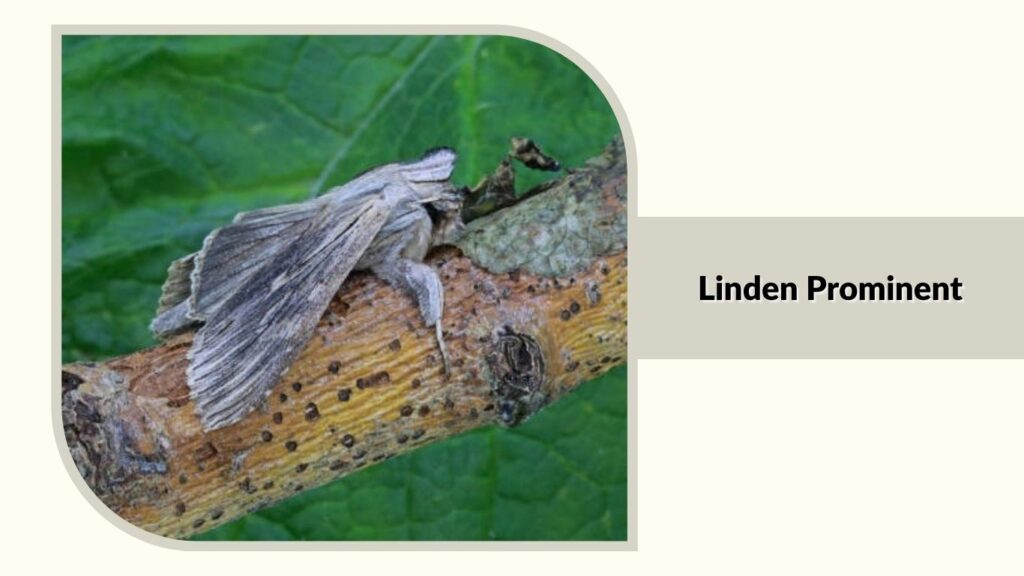
The Linden Prominent is a medium-sized North American moth closely associated with linden, also known as basswood trees. Its muted gray and brown coloration provides excellent camouflage against tree bark, while several dark cross-lines add detail to the forewings. Because its caterpillars rely strongly on linden foliage, this moth is most often encountered in deciduous habitats where these trees are established.
Identification
The Linden Prominent has several useful identification features:
- Wingspan: About 34–44 mm.
- Forewing color: Mainly gray, gray-brown, or muted brown.
- Wing markings: Several dark transverse lines cross the forewings.
- Diagnostic feature: A triple antemedial line begins strongly but fades before crossing the entire wing.
- Body: Thick and somewhat furry, especially around the thorax.
- Caterpillar: Mature larvae may become yellowish with reddish patches and markings.
Habitat and Distribution
Linden Prominents occur primarily in eastern North America. Their range extends from parts of Texas and Florida northward into New Brunswick and west toward Ontario and Minnesota. They favor deciduous forests, wooded parks, and similar habitats containing basswood or linden trees. Adults generally appear from spring through summer, although seasonal timing varies by location.
Behavior and Diet
Adults are nocturnal and are most active after sunset. During the daytime, their subdued wing patterns help them remain inconspicuous against bark and vegetation. The caterpillars specialize mainly on linden or basswood trees and consume their leaves. Larvae often feed high in the canopy, which can make them difficult to notice despite being present in an area.
Lifespan and Life Cycle
Females lay eggs on the leaves of suitable host trees. Caterpillars hatch and feed on foliage through several developmental stages before moving toward the ground to pupate. The species typically overwinters as a pupa in the soil. Adults emerge the following spring, and southern populations may produce two generations within a year.
9. Pink Prominent
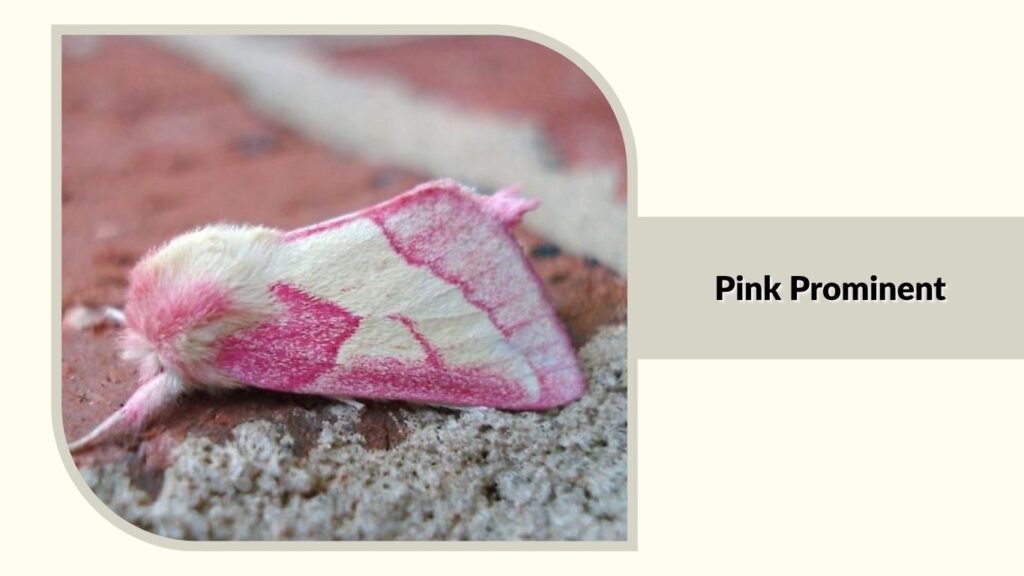
The Pink Prominent is one of the most colorful members of the prominent moth family. Instead of the gray and brown camouflage typical of many related species, this moth displays striking pink and creamy yellow wings. Its appearance can resemble the unrelated Rosy Maple Moth, although the wing patterns differ. The species occurs in eastern North America and is strongly associated with oak-rich habitats.
Identification
Important features of the Pink Prominent include:
- Wingspan: Approximately 30–36 mm.
- Main colors: Bright pink combined with pale yellow or cream.
- Forewings: Broad pink areas are separated by lighter yellowish bands.
- Thorax: Usually furry and colored pink or yellowish pink.
- Hindwings: Generally paler than the forewings.
- Overall appearance: Much brighter and more colorful than most prominent moth species.
Habitat and Distribution
Pink Prominents occur across eastern North America. Records extend from Nova Scotia and southern Ontario through the eastern United States, reaching northern Florida and extending west into parts of Illinois, Kansas, and Texas. They are associated particularly with woodlands and other habitats containing oak trees. Adults can be encountered from approximately April through September.
Behavior and Diet
Like many prominent moths, adults are mainly nocturnal and may be attracted to artificial lights. Their caterpillars primarily feed on oak leaves. Older literature also listed viburnum as a host, although later sources caution that some of those records may have resulted from caterpillar misidentification. Oak therefore remains the most reliable host association for the species.
Lifespan and Life Cycle
The Pink Prominent undergoes complete metamorphosis through egg, caterpillar, pupa, and adult stages. Females place eggs where newly hatched caterpillars can reach suitable foliage. Larvae spend their growing period feeding mainly on oak leaves before pupating. Adult activity stretches across the warmer months, with timing varying according to regional climate.
10. Drab Prominent
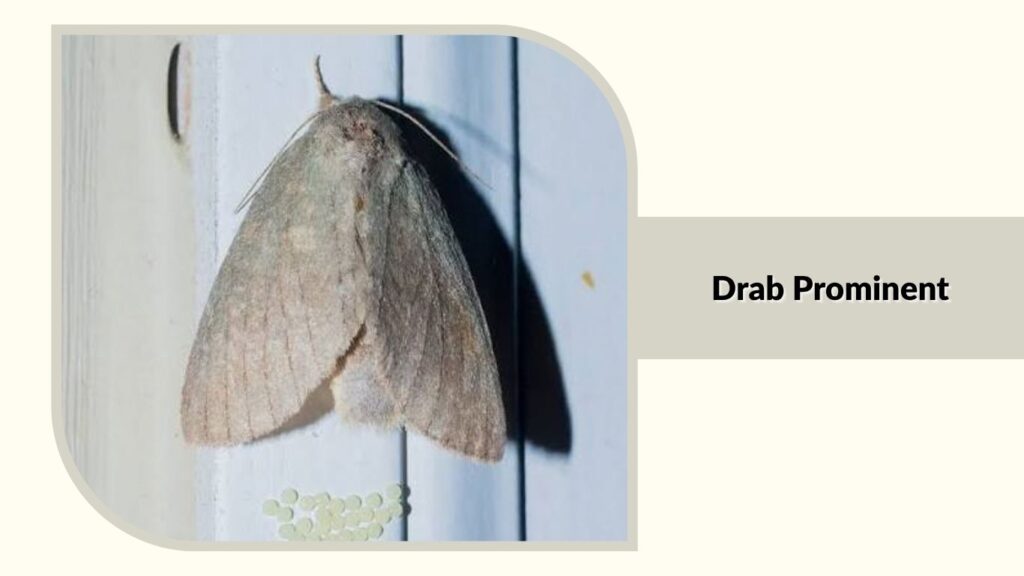
The Drab Prominent has a much more understated appearance than the Pink Prominent. Its dull gray, olive-gray, or greenish wings allow it to disappear visually against bark and foliage. Despite the common name, close examination reveals subtle lines, dark points, and occasionally warm orange-brown markings on the body. This species is widespread across much of eastern and central North America.
Identification
Look for these characteristics when identifying a Drab Prominent:
- Color: Dull green, olive-gray, or gray-brown.
- Wing pattern: Generally plain, with faint antemedial and postmedial lines.
- Vein markings: Small black-and-white points may be visible along wing veins.
- Body marking: An orange or bronze-brown patch may occur near the front of the abdomen.
- Legs: Forelegs often look thick and hairy.
- Antennae: Males can show noticeably feathered antennae.
Habitat and Distribution
The Drab Prominent occurs from the northeastern United States south toward Florida and west through the central states to Nebraska and Texas. Other records extend into southern Canada. It is commonly associated with wooded landscapes, streamside forests, parks, and places where its host trees grow.
Behavior and Diet
Adults are nocturnal and may be attracted to lights at night. Their plain coloration is highly effective for hiding against natural surfaces during daylight. Caterpillars feed mainly on trees in the genus Platanus, which includes sycamores and plane trees. Some historical records also mention certain poplars, but modern host databases emphasize Platanus as the primary host group.
Lifespan and Life Cycle
Females lay eggs on or near suitable host foliage. The larvae emerge and spend their main growth period feeding on leaves. After progressing through several molts, mature caterpillars enter the pupal stage before becoming adults. The species may produce two or more generations annually in warmer portions of its range, while cooler regions generally have a shorter reproductive season.
11. Double-lined Prominent
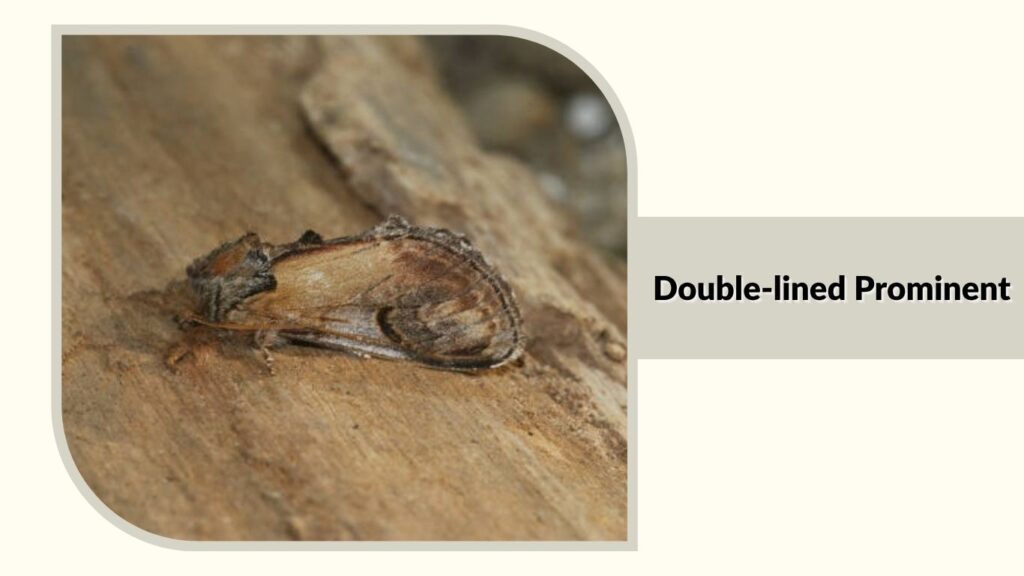
The Double-lined Prominent is a gray to brownish-gray moth whose name refers to the pronounced cross-lines on its forewings. Its subtle coloration makes it easy to overlook when resting on trees. This species occupies deciduous forests and treed parks over a broad portion of North America, and its caterpillars use several common hardwood trees as food plants.
Identification
The Double-lined Prominent can be recognized by:
- Wingspan: Usually about 32–40 mm.
- Forewing color: Gray to brownish gray.
- Central area: The middle portion of the wing is often darker.
- Wing lines: Antemedial and postmedial lines are noticeable and broadly scalloped.
- Postmedial line: Typically contains two inward-curving sections.
- Reniform spot: Usually faint and not strongly defined.
Habitat and Distribution
This moth occurs across a large part of eastern and central North America. Its distribution extends from eastern Canada through much of the United States, reaching Florida and Texas in the south and farther west across the central regions. Deciduous forests and tree-filled parks are especially suitable habitats because they provide the hardwood species needed by developing caterpillars.
Behavior and Diet
Adults are mainly nocturnal and often remain motionless on bark or vegetation during daylight. Caterpillars feed on leaves from several hardwood groups. Recorded hosts include elm, oak, basswood, hickory and related trees, with some sources also reporting beech and birch. This relatively broad host range helps the species occupy many types of deciduous woodland.
Lifespan and Life Cycle
Eggs hatch into leaf-feeding caterpillars that grow through multiple larval stages before pupating. Adults may be present from April through October in warmer southern areas, while northern populations generally fly from June through August. This difference reflects the longer growing season available in warmer climates.
12. Morning-glory Prominent
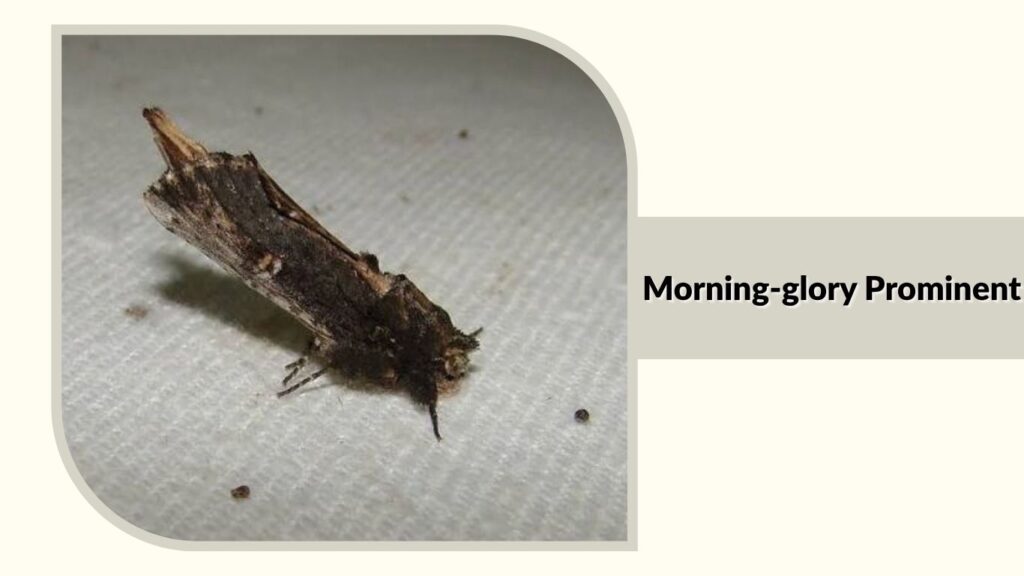
The Morning-glory Prominent is a widespread North American species with highly variable gray and brown wing patterns. Despite its common name, modern references indicate that its caterpillars mainly use woody plants rather than morning-glory vines. The caterpillar is particularly distinctive, featuring an unusual hump and contrasting green sections near the front of the body.
Identification
Several characteristics help identify this species:
- Wingspan: Approximately 36–47 mm.
- Forewings: Usually grayish brown with black streaks and small dark spots.
- Pattern: Wing markings are variable and may appear weak or heavily shaded.
- Hindwings: Usually dirty white in males and darker gray in females.
- Caterpillar body: Brownish with green sections near the thorax.
- Distinctive hump: The caterpillar has a prominent hump on the fifth abdominal segment.
Habitat and Distribution
Morning-glory Prominents are found throughout the United States and across southern Canada. They primarily inhabit deciduous forests but may also occur around wooded parks, yards, and forest edges. Adults are active at night and readily come to lights. Southern adults may fly from April through September, while northern populations are generally seen from June through August.
Behavior and Diet
The caterpillars have a broad diet involving woody plants. Known hosts include maple, oak, elm, birch, beech, rose, and several other trees and shrubs. Although the moth’s common name suggests an association with morning glory, modern caterpillar references question whether morning glory is actually an important host. Adults are nocturnal and use their mottled coloration as daytime camouflage.
Lifespan and Life Cycle
Females lay eggs on appropriate host vegetation. Caterpillars may be encountered from approximately May through October, depending on location. After completing larval development, they pupate and eventually emerge as adults. Northern populations generally produce one generation each year, and the species can overwinter in the pupal stage.
FAQs
1. What are prominent moths?
Prominent moths are members of the family Notodontidae, a large moth family containing thousands of species worldwide. Many adults have thick bodies and gray or brown wings, while some species have unusually colorful or strongly patterned caterpillars.
2. Why are they called prominent moths?
Many species possess a tuft of scales or hairs near the rear edge of the forewing. When the moth rests, this tuft can project upward and form a noticeable bump or “prominence,” which contributed to the group’s common name.
3. Are prominent moths dangerous to humans?
Most prominent moths are harmless to people. Adults do not sting or bite humans, and the species covered here are mainly important as natural members of forest ecosystems. Caterpillars are best observed without unnecessary handling, as with any unfamiliar insect.
4. What do prominent moth caterpillars eat?
Their diet varies by species. Prominent moth caterpillars commonly feed on deciduous trees such as oak, maple, elm, birch, basswood, beech, sycamore, and hickory. Some species specialize on only one or a few host groups, while others can use many different woody plants.
5. When are prominent moths most active?
Adult prominent moths are generally nocturnal, so they become most active after sunset. Many species can be attracted to porch lights, moth lights, or other artificial lighting. Their exact flight season depends on the species and region, but many North American prominents are most frequently encountered from spring through late summer.