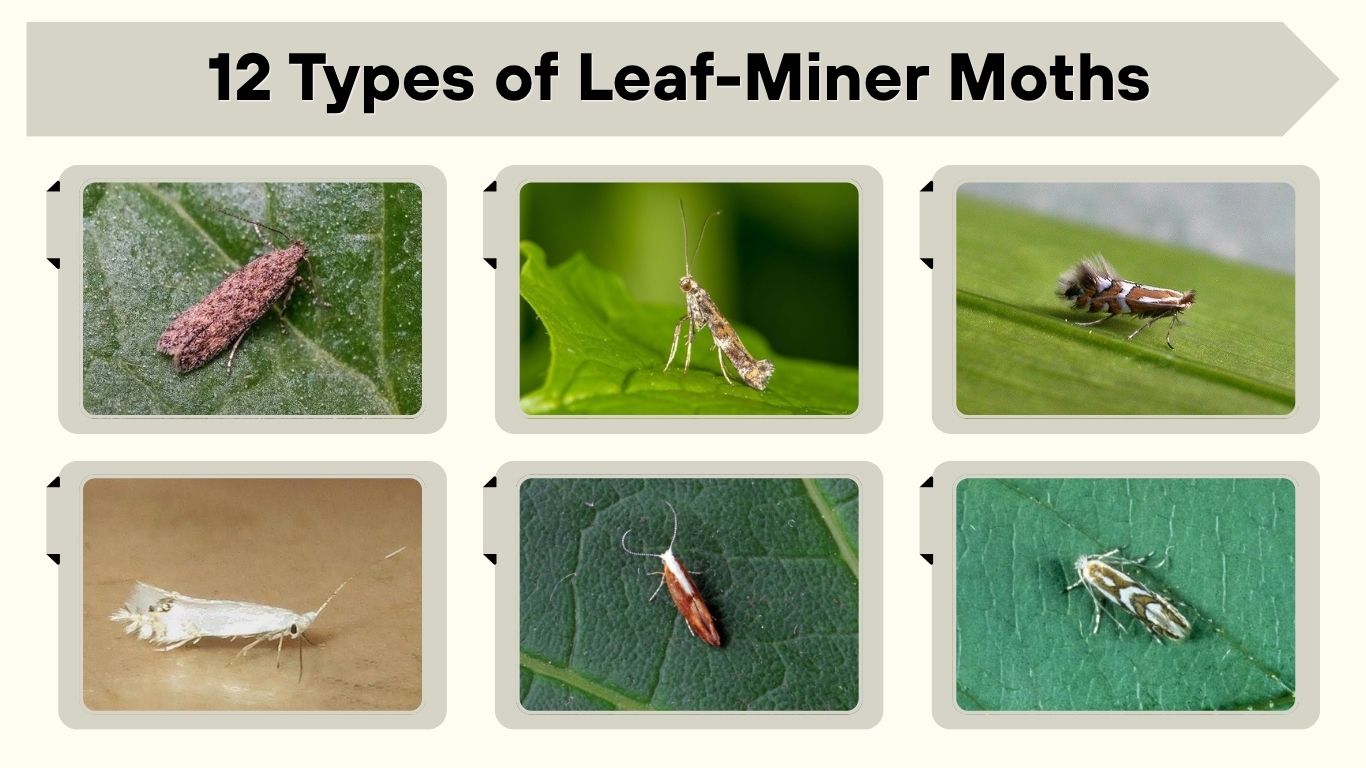
Leaf-miner moths are small insects whose larvae live and feed inside leaves, creating distinctive trails, blotches, and discolored patches. Different species specialize in different host plants, including azaleas, citrus, birch, grapes, lilacs, coffee, and tomatoes. Although many leaf-miner moths mainly cause cosmetic damage, some can seriously affect plant health when infestations become heavy. In this guide, you will discover 12 types of leaf-miner moths, along with their identification features, habitat, behavior, diet, lifespan, and life cycle.
1. Azalea Leaf Miner
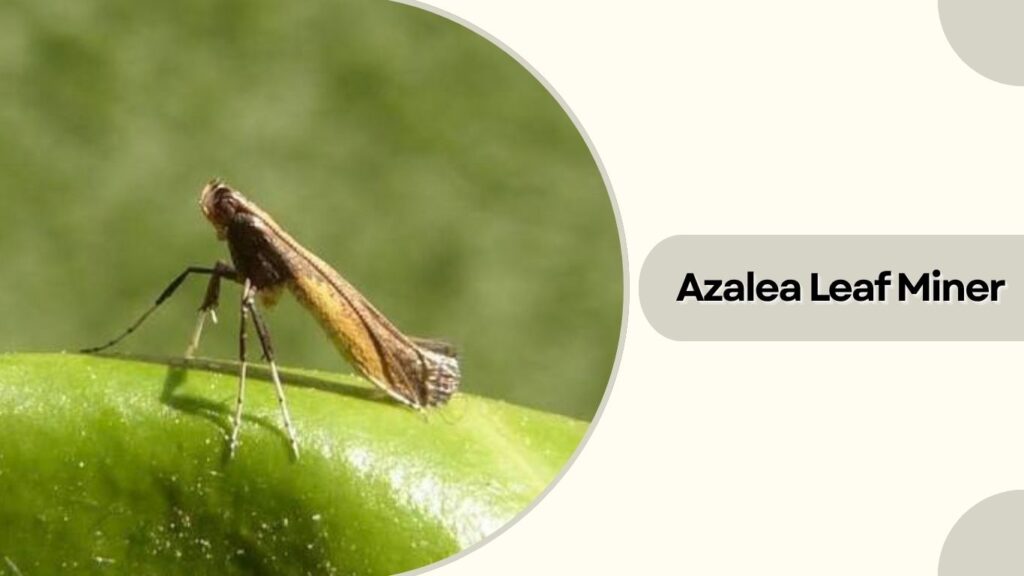
The Azalea Leaf Miner is a small moth best known for the damage its larvae cause to azalea leaves. Rather than feeding openly on the leaf surface, young larvae tunnel between the upper and lower layers of the leaf, creating pale or brownish mines. As they develop, they may roll or fold parts of the leaf for shelter while continuing to feed. Heavy infestations can make ornamental azaleas look unhealthy, although established plants usually survive.
Identification
- Adult moths are very small and slender.
- Wings are narrow and usually brownish or golden-brown.
- Larvae are tiny, pale yellow to greenish caterpillars.
- Early feeding creates narrow or blotchy mines inside leaves.
- Older larvae may fold or roll leaf edges together.
- Damaged leaves can become brown, curled, or distorted.
- Azalea plants are the primary host.
Habitat and Distribution
Azalea leaf miners are mainly found wherever cultivated azaleas and related ornamental shrubs are grown. They commonly occur in gardens, landscaped yards, nurseries, parks, and residential planting beds. Because their larvae remain protected inside leaves during the early stages of development, infestations can sometimes go unnoticed until visible discoloration or leaf curling appears. Warm conditions and abundant host plants can support repeated generations during the growing season.
Behavior and Diet
The larval stage causes almost all noticeable plant damage. Newly hatched larvae enter the leaf tissue and consume soft internal cells while leaving much of the outer surface intact. As they become larger, they may leave the mine and create folded or rolled leaf shelters. Adults do not damage azalea foliage in the same way; their main role is reproduction and locating suitable plants on which to lay eggs.
Lifespan and Life Cycle
The life cycle begins when female moths lay eggs on azalea leaves. After hatching, larvae tunnel into the leaves and begin feeding. Older caterpillars continue feeding in protected leaf folds before eventually pupating. Adult moths later emerge, mate, and start another generation. Depending on temperature and local climate, several generations may develop within one growing season, allowing populations to increase quickly when conditions are favorable.
2. Citrus Leafminer
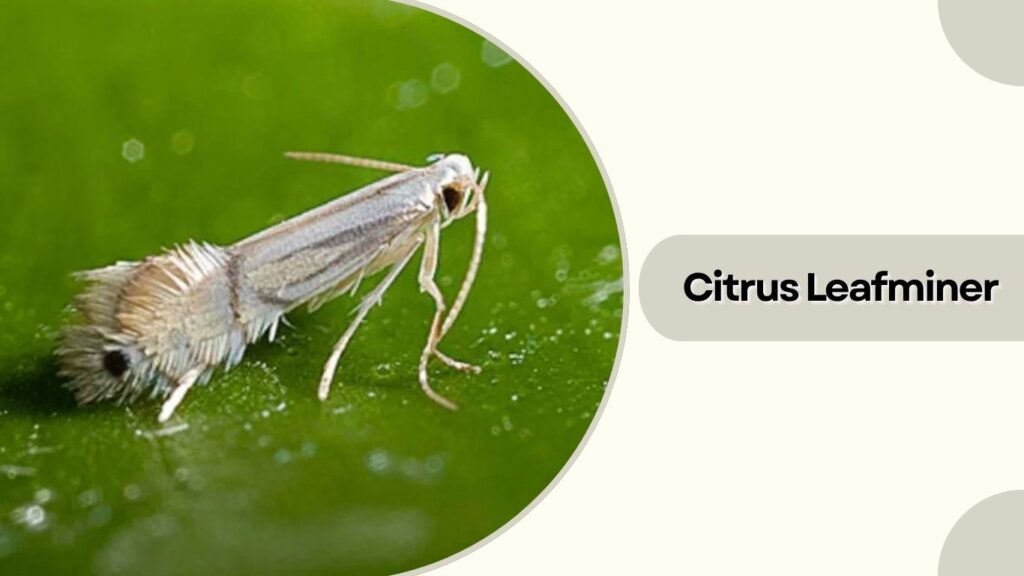
The Citrus Leafminer is a tiny moth whose larvae tunnel through young citrus leaves, leaving distinctive winding trails. It commonly affects oranges, lemons, limes, mandarins, and other citrus plants. Damage is especially noticeable on fresh, tender growth because the larvae feed within the leaf tissue. Mature trees usually tolerate light infestations, but young citrus plants can suffer distorted leaves and reduced healthy growth when populations become high.
Identification
- Adults are very small, narrow-bodied moths.
- Wings appear silvery-white with darker markings.
- Larvae are tiny, pale yellow or greenish caterpillars.
- Mines appear as twisting, silvery trails across leaves.
- Young leaves may curl, wrinkle, or become distorted.
- Larvae are usually hidden inside the leaf tissue.
- Citrus plants are the main hosts.
Habitat and Distribution
Citrus leafminers occur in many warm regions where citrus trees are cultivated. They are commonly found in orchards, home gardens, nurseries, and landscaped areas. The moth prefers locations where tender new citrus growth is continuously available. Warm temperatures allow populations to develop rapidly, making infestations more common during active growing periods.
Behavior and Diet
Females lay eggs on young citrus leaves. After hatching, the larvae immediately enter the leaf and begin feeding between its outer surfaces. Their feeding produces long, winding tunnels that become more visible as the larva grows. The larvae primarily attack soft new foliage rather than mature, hardened leaves.
Lifespan and Life Cycle
The life cycle includes egg, larva, pupa, and adult stages. Larvae pass through several growth stages while feeding inside the leaf. Before pupating, they often move toward the edge of the leaf and cause it to curl slightly. Adults emerge afterward and begin another generation. Several generations can occur during warm weather.
3. Horse-Chestnut Leaf-Miner
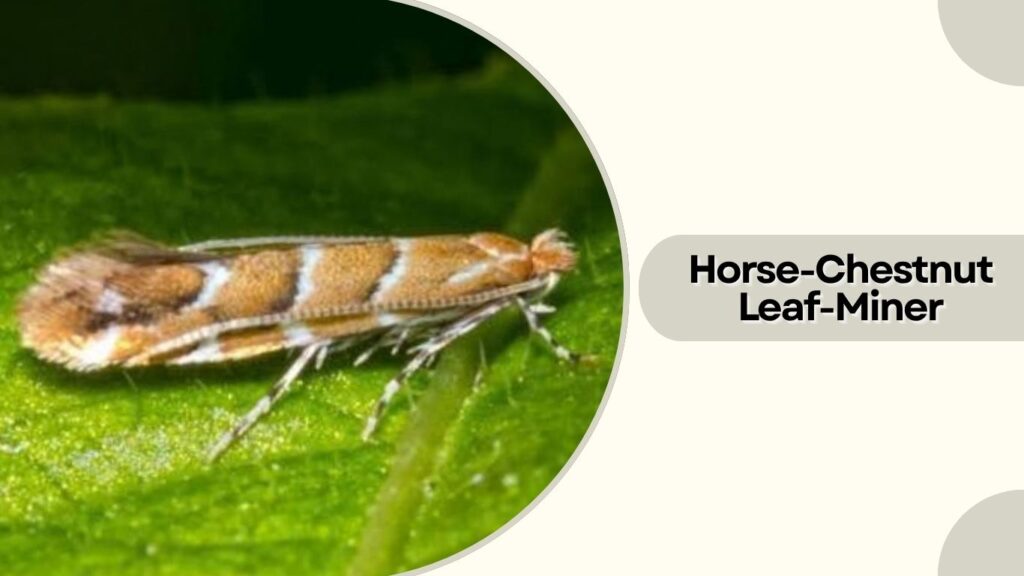
The Horse-Chestnut Leaf-Miner is a small moth recognized for producing large brown patches on horse-chestnut leaves. Although the adult moth is tiny, its larvae can cause extensive visible damage when many individuals infest a tree. Leaves may turn brown well before autumn, giving heavily affected trees a scorched appearance. The insect mainly affects the tree’s appearance, though repeated severe infestations can place additional stress on affected trees.
Identification
- Adults are tiny moths with reddish-brown wings.
- Wings show contrasting white or pale bands.
- Larvae are small and remain hidden within leaves.
- Mines develop into irregular pale or brown patches.
- Several mines may occur on a single leaf.
- Heavy infestations can brown much of the foliage.
- Horse-chestnut is the principal host tree.
Habitat and Distribution
This leaf-miner is widely associated with horse-chestnut trees in parks, gardens, roadsides, woodland edges, and urban landscapes. It has spread through many parts of Europe and can become extremely abundant where horse-chestnut trees are common. Fallen leaves beneath infested trees provide important overwintering sites.
Behavior and Diet
Larvae feed inside the leaf, consuming internal tissues while remaining protected between the leaf surfaces. As they grow, their feeding area expands, forming visible blotch mines. Several larvae may occupy different sections of the same leaf, creating extensive discoloration during heavy infestations.
Lifespan and Life Cycle
Females deposit eggs on horse-chestnut leaves. The larvae hatch and feed inside the foliage for several weeks before pupating within the mine. Adults later emerge and reproduce. Multiple generations may occur during the growing season. Pupae can survive winter inside fallen leaves, allowing the moths to appear again the following year.
4. Apple Leaf Miner
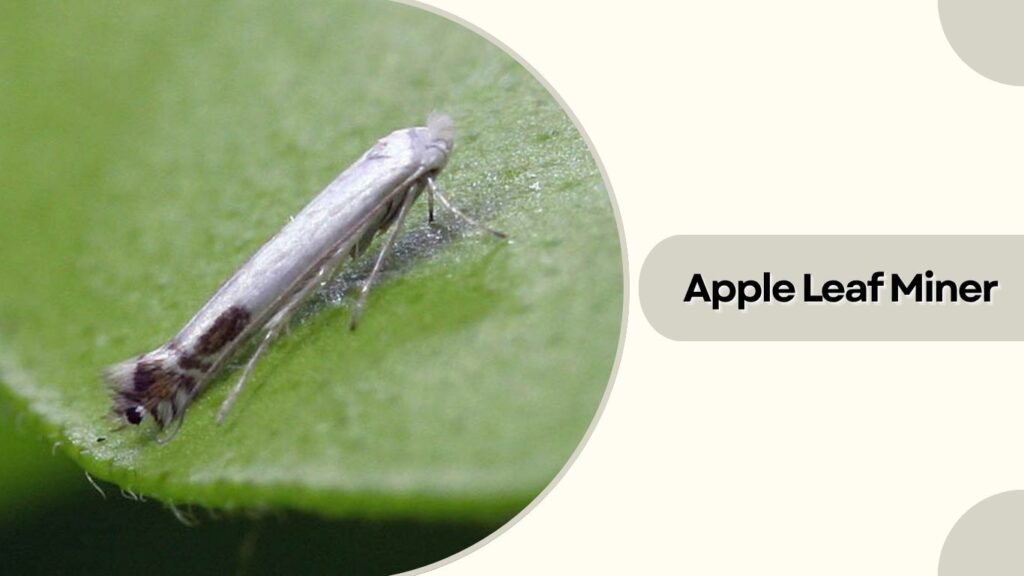
The Apple Leaf Miner refers to small moths whose larvae feed within apple leaves, producing visible tunnels or blotch-like mines. These insects are more noticeable in orchards and gardens when their populations become high. Although moderate leaf mining rarely destroys established apple trees, extensive feeding can reduce the amount of healthy leaf tissue available for photosynthesis and may weaken young or heavily stressed plants.
Identification
- Adult moths are very small and difficult to notice.
- Wings are generally narrow and muted in color.
- Larvae are tiny and pale.
- Feeding creates tunnels or blotches inside apple leaves.
- Mines may become brown as damaged tissue dries.
- Larvae usually remain protected within the leaf.
- Apple trees are among their important hosts.
Habitat and Distribution
Apple leaf miners can be found in orchards, backyard fruit gardens, nurseries, and areas containing wild or cultivated apple trees. Their distribution varies depending on the particular leaf-mining moth species involved. Areas with large numbers of untreated host trees can support persistent populations from year to year.
Behavior and Diet
After hatching, young larvae penetrate the apple leaf and consume the soft tissues between its surfaces. Their feeding pattern creates characteristic mines that gradually increase in size. Because the larvae remain enclosed within the leaf, they are protected from many environmental conditions and some predators.
Lifespan and Life Cycle
Adults lay eggs on or near suitable leaves. Larvae hatch and begin mining soon afterward. After completing their feeding stages, they pupate either within the leaf or in another protected location, depending on the species. Adult moths eventually emerge and reproduce. Some species produce multiple generations annually, while others complete fewer cycles.
5. Rose Leaf Miner
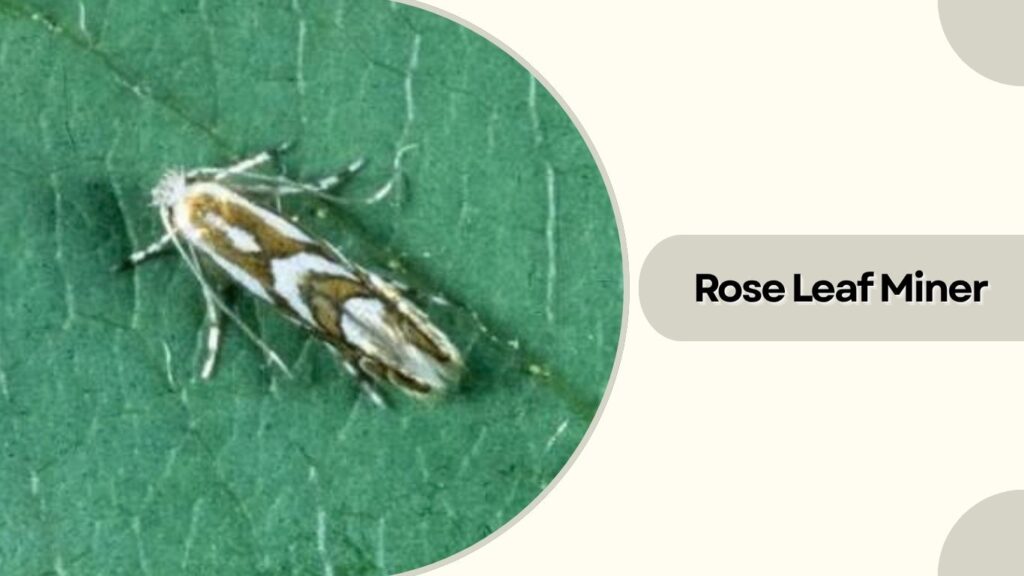
The Rose Leaf Miner is a small moth associated with roses and related plants. Its larvae feed inside rose leaves, forming narrow tracks or broader discolored areas. The damage is usually cosmetic, but a large number of larvae can make rose bushes appear unhealthy and may reduce leaf quality. Regular inspection of new growth can help reveal infestations before extensive mining develops throughout a plant.
Identification
- Adult moths are extremely small.
- Their wings are narrow and usually dull or lightly patterned.
- Larvae are tiny, pale caterpillars.
- Mines appear as pale, winding tracks or blotches.
- Damaged sections can later turn brown.
- Leaves may occasionally become distorted.
- Roses serve as important host plants.
Habitat and Distribution
Rose leaf miners are most likely to occur in gardens, nurseries, landscaped areas, and places where ornamental roses grow in large numbers. They may also occur on wild relatives of cultivated roses. Populations can increase in sheltered gardens where host plants remain available throughout much of the growing season.
Behavior and Diet
Young larvae enter rose leaves soon after hatching and feed on internal tissues. Because they stay between the upper and lower leaf surfaces, they can be difficult to see directly. The visible mine usually reveals their presence before the insect itself is noticed.
Lifespan and Life Cycle
The cycle starts with eggs deposited on suitable foliage. Larvae hatch, enter the leaf, and feed while gradually increasing the size of the mine. Once mature, they prepare for pupation. Depending on the species, pupation can occur within the leaf or in nearby sheltered material. Adults emerge and reproduce, sometimes allowing multiple generations within a season.
6. Firethorn Leaf Miner
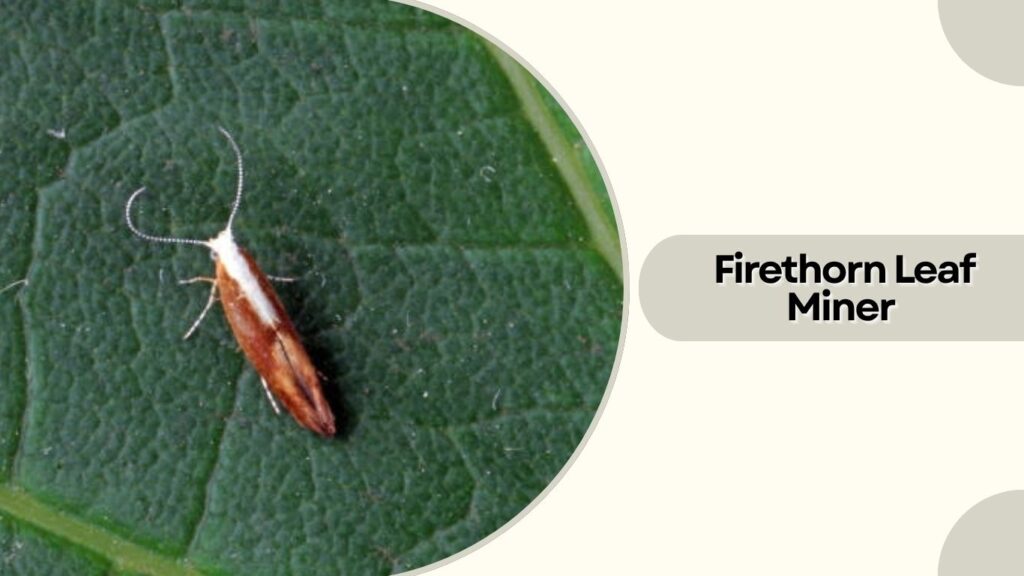
The Firethorn Leaf Miner is a small moth associated with firethorn, or Pyracantha, shrubs. Its larvae develop inside the leaves and create visible mines as they feed. Because firethorn is frequently used for hedges and ornamental landscaping, infestations are often noticed in gardens and urban areas. The damage usually affects appearance more than overall plant survival, although repeated heavy attacks may reduce the quality of the foliage.
Identification
- Adult moths are tiny and slender.
- Wings are usually brownish with lighter markings.
- Larvae are small and pale.
- Leaf mines may appear narrow at first.
- Mines can expand into larger discolored patches.
- Affected leaves may brown prematurely.
- Firethorn shrubs are important host plants.
Habitat and Distribution
Firethorn leaf miners occur wherever suitable Pyracantha plants grow. Typical habitats include gardens, residential hedges, parks, nurseries, and commercial landscapes. Dense plantings can provide abundant food for larvae and allow populations to remain established in the same location for several seasons.
Behavior and Diet
Larvae spend most of their feeding period protected inside the leaf. They consume the internal tissues while leaving much of the outer leaf surface intact. As feeding progresses, the mine becomes larger and easier to see. Adults are much less conspicuous and may remain unnoticed around infested shrubs.
Lifespan and Life Cycle
Females lay their eggs on host foliage. After hatching, larvae tunnel into the leaf and begin feeding. Mature larvae eventually stop feeding and enter the pupal stage. Adults later emerge to mate and produce another generation. Seasonal timing varies with climate, but more than one generation can develop where conditions remain warm enough.
7. Common Birch Leaf-Miner
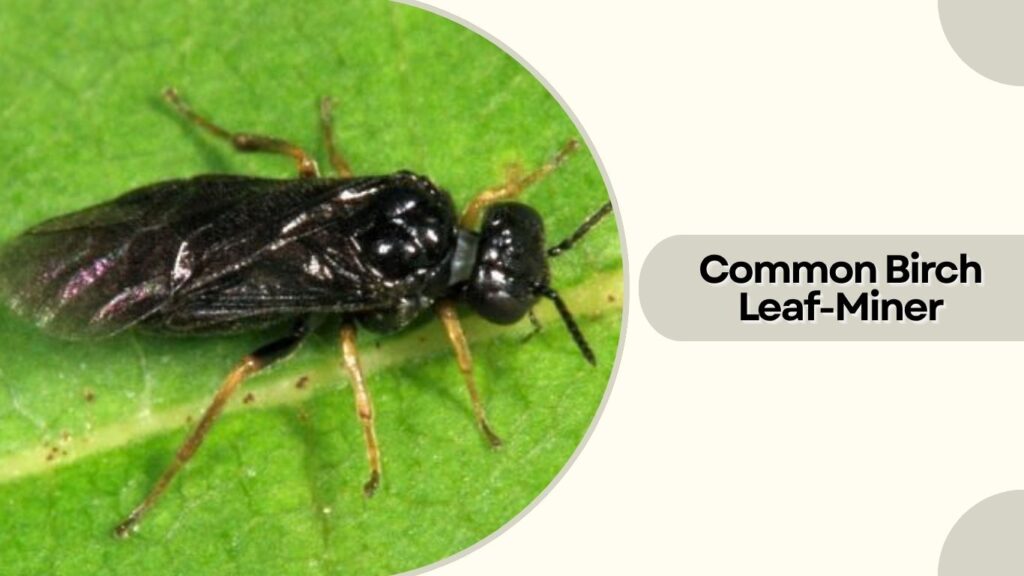
The Common Birch Leaf-Miner is associated with birch trees and is recognized by the pale or brown mines created within their leaves. The larvae feed between the leaf surfaces, sometimes causing large areas of foliage to look scorched or discolored. Healthy mature birches can usually tolerate moderate feeding, although repeated or severe infestations may reduce the tree’s appearance and place additional stress on young specimens.
Identification
- Adults are very small and often go unnoticed.
- Larvae are tiny, pale, and leaf-dwelling.
- Mines first appear as light-colored patches.
- Damaged areas may later turn brown.
- Several larvae can occur within one leaf.
- Heavily mined leaves may dry prematurely.
- Birch trees are the primary hosts.
Habitat and Distribution
Birch leaf miners are found in areas containing cultivated or naturally occurring birch trees. They may occur in forests, parks, gardens, streetscapes, and residential landscapes. Their abundance can vary greatly from year to year depending on weather, natural enemies, and the availability of suitable host foliage.
Behavior and Diet
After eggs hatch, larvae enter birch leaves and begin feeding on internal tissue. Mines enlarge as the larvae grow, eventually becoming easily visible from the outside. Multiple larvae can produce extensive damage across a single leaf. Despite the noticeable appearance, moderate infestations generally do not kill established trees.
Lifespan and Life Cycle
Adults appear during the growing season and lay eggs on developing birch foliage. Larvae hatch and feed within the leaves before completing their development. Mature individuals eventually pupate, often in protected locations associated with the host tree or surrounding material. New adults emerge later, and depending on the species and climate, another generation may develop before the season ends.
8. Sycamore Leaf-Miner
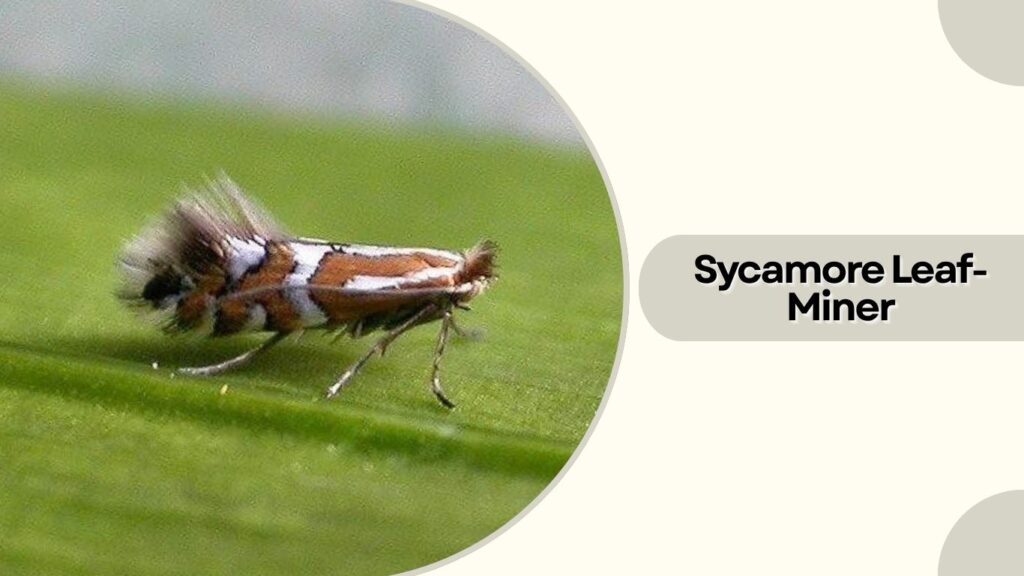
The Sycamore Leaf-Miner is a small moth whose larvae develop within the leaves of sycamore and related maple trees. Their feeding produces pale or brown patches that can become especially noticeable during summer. Although an infestation may make a tree look unhealthy, moderate leaf mining usually causes more cosmetic damage than serious harm. Large numbers of larvae, however, can reduce the amount of healthy leaf tissue remaining on affected trees.
Identification
- Adult moths are very small and slender.
- Wings are generally narrow with subtle markings.
- Larvae are tiny and pale-colored.
- Mines appear as pale patches within the leaf.
- Older mines often turn yellowish or brown.
- Several mines may occur on a single leaf.
- Sycamore and related maple trees are common hosts.
Habitat and Distribution
Sycamore leaf miners occur wherever suitable host trees grow. They may be found in parks, gardens, woodland edges, residential neighborhoods, and streets lined with sycamore or maple trees. Urban plantings can provide particularly abundant food sources because many host trees may grow close together. Infestations are usually easiest to notice during the warmer months when larvae are actively feeding.
Behavior and Diet
The larvae feed entirely or primarily within leaf tissue. After hatching, they enter the leaf and consume soft internal cells while remaining protected by the outer surfaces. As the larvae continue feeding, their mines enlarge and become increasingly visible. Adult moths cause little or no direct leaf damage and mainly focus on mating and egg laying.
Lifespan and Life Cycle
The life cycle begins when adult females place eggs on suitable foliage. Larvae hatch and enter the leaves, where they complete their feeding stages. Mature larvae eventually pupate either within the leaf or in a nearby protected location. Adults emerge afterward and reproduce. Depending on the species and climate, one or several generations may develop during the year.
9. American Grape Leaf Miner
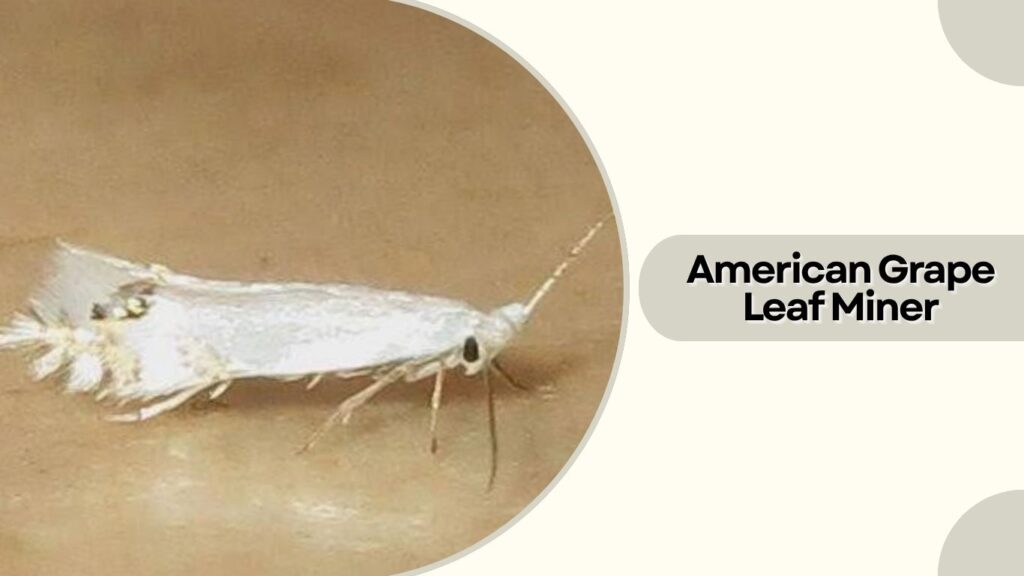
The American Grape Leaf Miner is a small moth associated with grapevines. Its larvae feed between the surfaces of grape leaves, producing expanding blotch-like mines. Wild grapes and cultivated grapevines can both serve as hosts. Most infestations affect the appearance of foliage rather than destroying the entire plant, but high populations may reduce healthy leaf area and become more concerning in vineyards or young grape plantings.
Identification
- Adults are tiny moths with narrow wings.
- Wings may appear brown, gray, or lightly patterned.
- Larvae are small and usually pale or yellowish.
- Mines often begin as small discolored areas.
- Feeding creates larger blotches as larvae develop.
- Damaged tissue may eventually become brown and dry.
- Grapevines are the principal host plants.
Habitat and Distribution
These leaf miners are associated with places where grapes naturally or commercially grow. Habitats include vineyards, home gardens, woodland edges, hedgerows, and areas containing wild grapevines. Populations may be more noticeable where host vines grow densely and provide abundant foliage for egg laying and larval development.
Behavior and Diet
Young larvae enter grape leaves shortly after hatching. They remain inside the leaf while consuming internal tissues, which protects them from many external threats. The mine expands as the caterpillar grows. A heavily infested leaf may contain several mined areas, reducing the amount of green tissue available for normal photosynthesis.
Lifespan and Life Cycle
Adults lay eggs on grape foliage during suitable weather. Newly hatched larvae penetrate the leaf and begin mining. After completing their larval development, they pupate and later emerge as adults. The new moths mate and continue the cycle. More than one generation can occur in climates with long, warm growing seasons.
10. Lilac Leafminer
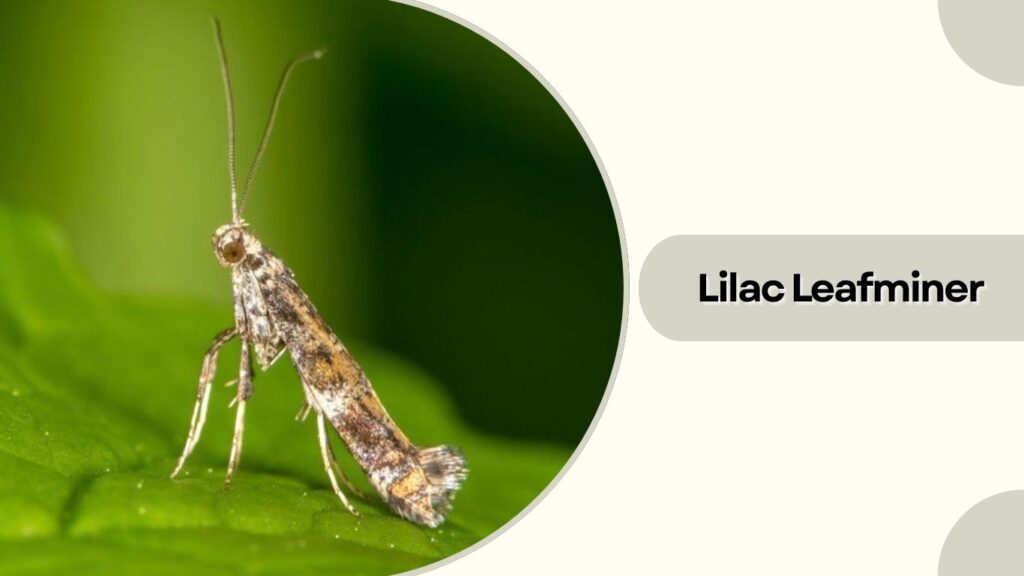
The Lilac Leafminer is a small moth whose caterpillars feed on lilac leaves. Young larvae initially mine inside the leaf, producing pale or brown patches. As they grow older, the caterpillars may leave the mines and roll or fold portions of the leaf together for protection while continuing to feed. Infestations can make ornamental lilacs look unattractive, especially when many leaves become curled or discolored.
Identification
- Adult moths are small with narrow wings.
- Their coloring is generally brownish or grayish.
- Young larvae are pale and extremely small.
- Early damage appears as blotches within leaves.
- Older larvae may roll or fold the leaf.
- Damaged foliage may become brown or distorted.
- Lilac is one of the most important host plants.
Habitat and Distribution
Lilac leafminers are most commonly encountered in gardens, parks, nurseries, and landscaped properties containing ornamental lilac bushes. They may also occur wherever related host shrubs grow. Because lilacs are widely planted as ornamental plants, the moth can occur in both urban and suburban environments.
Behavior and Diet
Young caterpillars begin feeding within the leaf, where they create mines by consuming internal tissues. Older larvae may change their feeding behavior and use silk to fold or roll leaves. They continue feeding from the protected shelter, sometimes leaving irregular damaged sections around the folded area.
Lifespan and Life Cycle
Females deposit eggs on host foliage. After hatching, the young larvae enter the leaf and feed internally. As they mature, they may leave the mine and continue developing within rolled foliage. The larvae eventually pupate, after which adult moths emerge. Depending on seasonal conditions, multiple generations may occur before cold weather ends their activity.
11. Coffee Leaf Miner
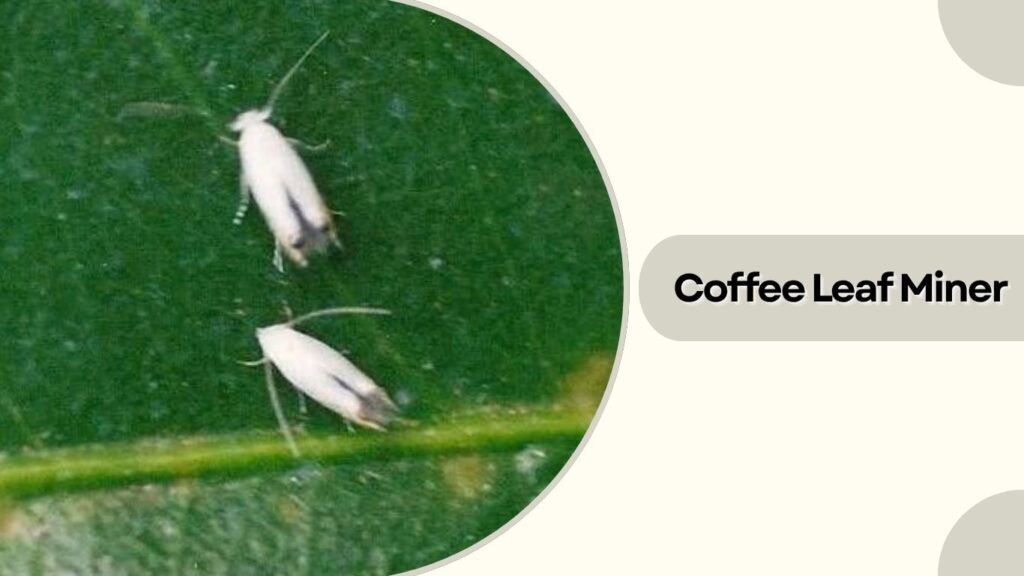
The Coffee Leaf Miner is an important leaf-mining moth associated with coffee plants. Its larvae live inside coffee leaves and feed on the internal tissues, producing pale patches that later become brown and dry. Unlike many leaf miners that mainly cause cosmetic problems, heavy coffee leaf miner infestations can reduce healthy foliage, cause premature leaf drop, and potentially affect the productivity of coffee plants.
Identification
- Adults are extremely small moths.
- Wings are narrow and generally light or pale-colored.
- Larvae are small and live inside coffee leaves.
- Early mines appear as light-colored patches.
- Older mines become brown and dry.
- Severe attacks may cause premature leaf loss.
- Coffee plants are their main hosts.
Habitat and Distribution
Coffee leaf miners occur primarily in coffee-growing regions, particularly in warm tropical and subtropical climates. They are associated with commercial coffee plantations as well as smaller farms and home-grown coffee plants. Their abundance can vary with temperature, rainfall, agricultural practices, predators, and the availability of fresh coffee foliage.
Behavior and Diet
Females lay eggs on coffee leaves, and the newly hatched larvae quickly enter the leaf tissue. They consume the internal cells while protected beneath the outer leaf layers. As their feeding continues, the mined area expands and eventually becomes necrotic. Numerous mines can reduce the functional green surface of the leaf.
Lifespan and Life Cycle
Coffee leaf miners pass through egg, larval, pupal, and adult stages. Larvae complete several developmental stages while feeding within coffee foliage. Once fully grown, they leave the feeding stage and pupate. Adults emerge, mate, and lay new eggs. Warm conditions can allow several overlapping generations to occur throughout the year.
12. Tomato Leafminer
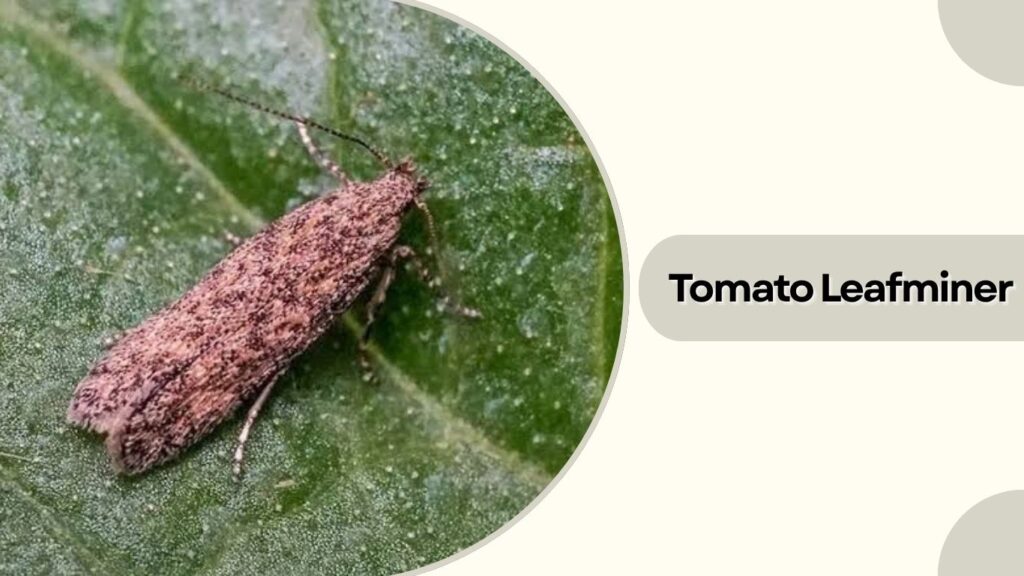
The Tomato Leafminer is a small moth whose larvae can cause significant damage to tomato plants. The caterpillars feed inside leaves, creating irregular mines, but they may also attack stems, flowers, and fruits depending on the species involved. Tomato leafminers can multiply rapidly in favorable climates, making them more serious agricultural pests than many ornamental leaf-mining moths.
Identification
- Adult moths are small and usually grayish or brownish.
- Wings are narrow and held close to the body.
- Larvae are small caterpillars that begin pale in color.
- Leaf mines are irregular and often blotch-shaped.
- Damaged leaves can dry and die.
- Larvae may sometimes enter stems or fruits.
- Tomatoes are a major host plant.
Habitat and Distribution
Tomato leafminers are associated with agricultural fields, greenhouses, gardens, nurseries, and locations where tomatoes and related plants are cultivated. Some important species occur across tropical, subtropical, and temperate farming regions. Greenhouses can provide especially favorable conditions because temperatures remain warm and host plants may be continuously available.
Behavior and Diet
After hatching, larvae enter tomato foliage and begin feeding between the leaf surfaces. Their mines expand as they grow. Later-stage larvae may attack additional plant tissues, depending on the species. Heavy infestations can destroy large amounts of foliage and reduce the plant’s ability to grow normally and produce healthy fruit.
Lifespan and Life Cycle
Female moths lay eggs on tomato plants, often on leaves and young growth. Larvae hatch and pass through several feeding stages before reaching maturity. Pupation may occur on the plant, within plant material, or in the soil. Adults later emerge and reproduce. Under warm conditions, the life cycle can be completed quickly, allowing many generations in a single year.
FAQs
1. What is a leaf-miner moth?
A leaf-miner moth is a small moth whose larvae spend part of their development feeding inside leaves. The larvae consume tissues between the upper and lower leaf surfaces, producing visible tunnels, trails, or blotches called leaf mines.
2. Are leaf-miner moths harmful to plants?
Most light infestations mainly cause cosmetic damage. However, severe infestations can reduce photosynthesis, cause premature leaf drop, and weaken young or stressed plants. Agricultural species such as tomato or coffee leaf miners can sometimes cause economically important damage.
3. What do leaf-miner moths eat?
Adult moths usually cause little plant damage. Their larvae are the primary feeding stage and eat soft tissues inside the leaves of specific host plants. Different leaf-miner species specialize in plants such as citrus, birch, grape, lilac, coffee, tomato, or azalea.
4. How can you identify leaf-miner damage?
Look for winding white or silvery trails, pale blotches, brown patches, curled leaves, or transparent areas within foliage. In many cases, a tiny larva or dark waste material can be seen inside the mine when the leaf is held toward the light.
5. Do leaf-miner moths have more than one generation per year?
Many species can produce multiple generations, particularly in warm climates. Others may have only one or a few generations annually. Temperature, host availability, species, and local climate all influence how quickly the life cycle is completed.