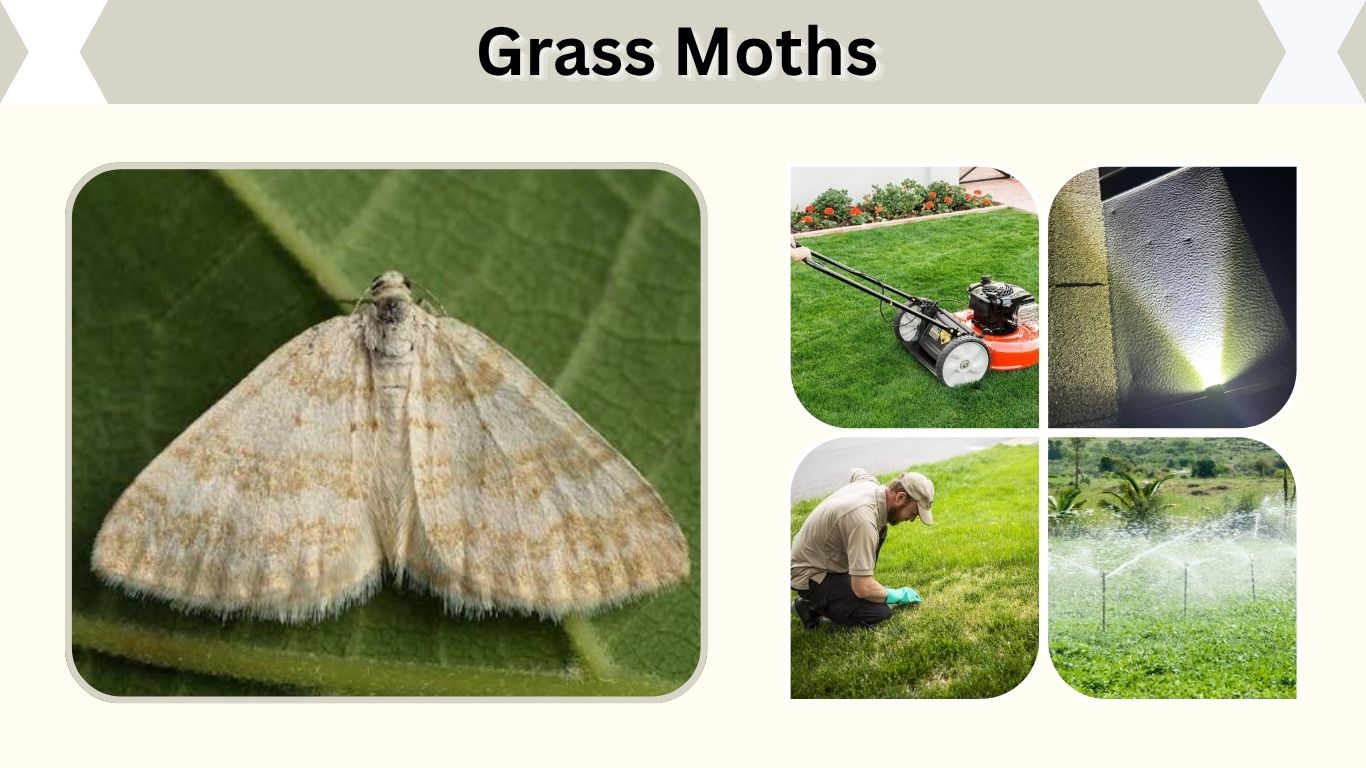
Grass moths are the small moths that flutter up when you walk across a lawn or brush past long grass. Their sudden appearance can suggest trouble, especially when brown patches develop nearby. However, the flying adults usually are not responsible for chewing grass; the caterpillars of certain species cause that damage. Identifying the insects and checking for active feeding helps you avoid unnecessary spraying. This guide explains grass moth identification, their life cycle, natural predators, and practical ways to protect a lawn when treatment is justified.
What Are Grass Moths?
Grass moths are not a single species. The name commonly describes small moths associated with grasses, including many members of the family Crambidae. Familiar grass-veneer moths belong to the subfamily Crambinae. Some have caterpillars known as sod webworms, but the wider family includes insects with different feeding habits. Seeing a crambid moth does not automatically mean your lawn needs treatment.
Scientific Names and Common Names
Crambus is one grass moth genus. Another lawn pest, the tropical sod webworm, is Herpetogramma phaeopteralis. “Grass moth,” “lawn moth,” and “sod webworm moth” are common names, not interchangeable scientific names. BugGuide classification
Regional Differences
Grass moth species differ between North America, the UK, and New Zealand. For example, Britain’s satin grass-veneer, Crambus perlella, is a familiar grassland moth. Local identification matters before applying lawn pest advice from another region. NatureSpot species account
Grass Moths Identification
Look at resting posture, wing markings, and flight behavior rather than color alone. Many grass moths look narrow when perched because their wings wrap closely around the body. They may escape with a short flight when disturbed, then settle nearby. The caterpillars are harder to find because many lawn species remain concealed near the soil surface during the daylight hours.
Adult Features to Look For
- Color: White, cream, tan, gray, or brown, sometimes with pale stripes.
- Shape: Often slender, with wings folded tightly over the body.
- Head: Projecting mouthparts can create a snoutlike appearance.
- Movement: Short, low flights over grass when disturbed.
- Activity: Many become active around dusk or visit lights.
Tropical sod webworm moths are an exception to the narrow resting shape: their wings form a broader triangle.
Caterpillar Identification
Typical sod webworms have brownish, grayish, or greenish bodies with dark spots. Mature larvae often reach roughly ¾–1 inch. Look for them near grass bases and in silk shelters. University of Minnesota identification guide
Do Grass Moths Damage Lawns?
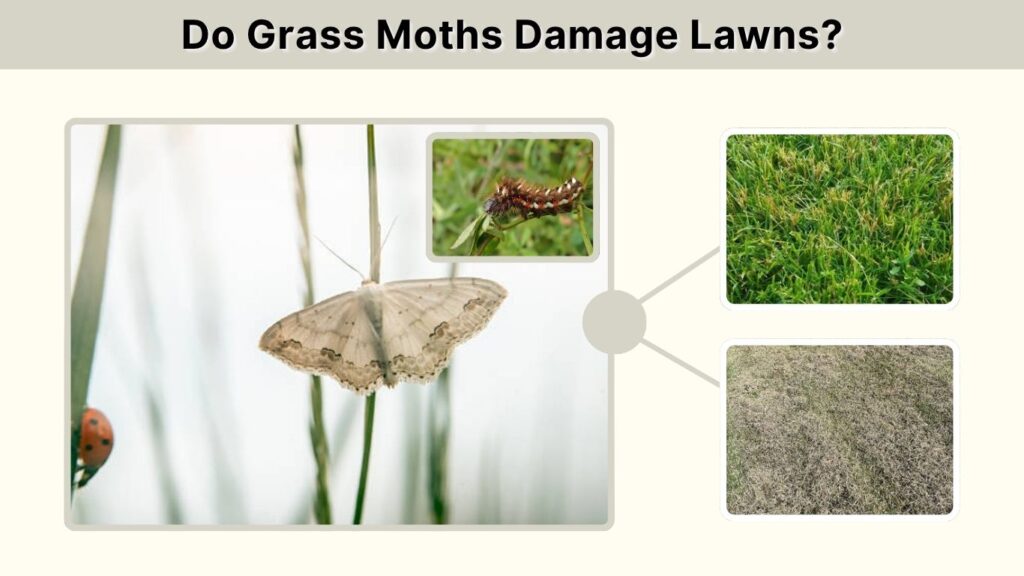
The damaging stage of typical lawn moths is the caterpillar, not the flying adult. Larvae chew grass blades, sometimes leaving patches that look closely clipped or scorched. However, drought, disease, and other insects can produce similar discoloration. Confirm caterpillars and feeding injury before blaming moths, especially when the only evidence is a few adults flying above an otherwise healthy lawn.
Signs of Sod Webworm Feeding
- Grass blades with notched edges or missing sections.
- Irregular brown patches that gradually enlarge.
- Shortened grass beside taller, unaffected areas.
- Fine silk around grass bases or within thatch.
- Caterpillars feeding after dark.
These clues are more useful together than any single symptom. University of Maryland damage guide
St. Augustinegrass and Bermuda Lawns
Tropical sod webworms can damage St. Augustinegrass and bermudagrass in warm regions, including Texas. Susceptibility varies with the moth species, grass variety, and lawn condition; one treatment plan will not fit every turfgrass. Texas A&M AggieTurf
Grass Moth Life Cycle and Diet
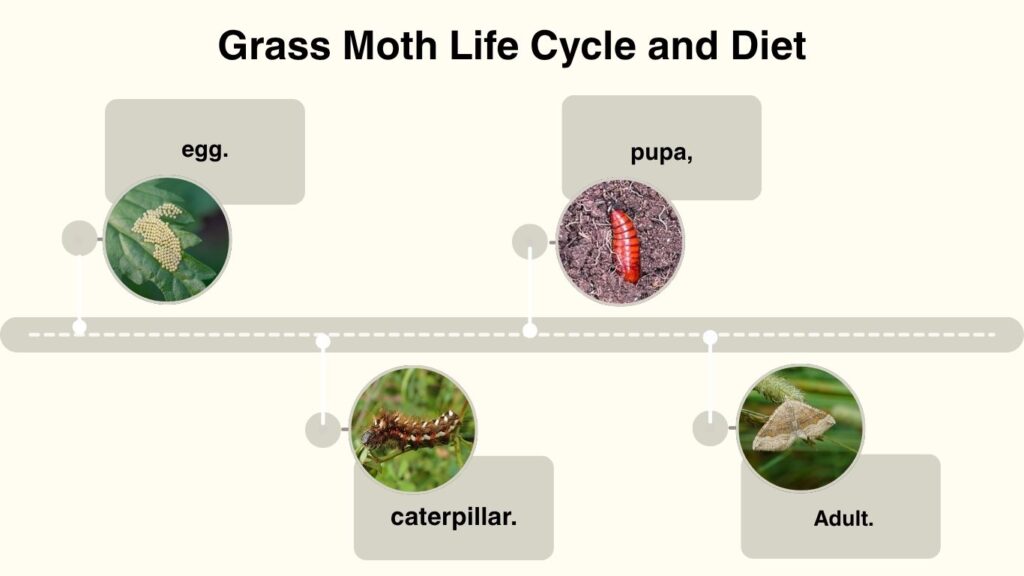
Grass moths develop through four stages: egg, caterpillar, pupa, and adult. These stages explain why visible moths and noticeable lawn injury may occur at different times. Caterpillars need food to grow, while adults reproduce and disperse. The number of generations and timing of activity depend on species and climate, so there is no single calendar that applies to every lawn.
Eggs, Caterpillars, and Cocoons
Females deposit eggs on or around grasses. After hatching, many sod webworm larvae feed at night and shelter in silk during the day. They later pupate near the soil or thatch. Some species overwinter as larvae; warm regions may support several generations annually. UC IPM life cycle
What Do Grass Moths Eat?
Grass-feeding caterpillars consume plant tissue, commonly leaves. Adult diets differ: some lawn moths take liquids such as dew. Adults do not chew grass blades; caterpillar feeding causes the familiar clipped appearance. Utah State University
How to Get Rid of Grass Moths
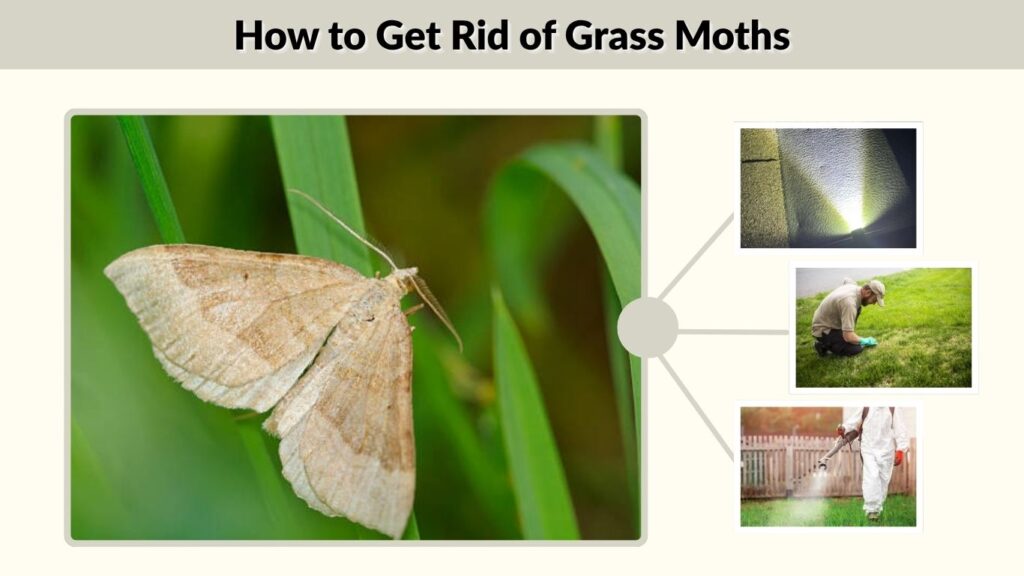
Effective control begins with deciding whether a damaging infestation exists. Killing moths flying above the lawn does not reliably address caterpillars sheltering below. A healthy lawn with scattered adults may need no treatment. Where larvae are causing increasing injury, identify the pest, assess the affected area, and choose measures appropriate to the insect’s stage and your local turf conditions first.
Check Before Treating
- Inspect the edges of damaged patches after dusk with a flashlight.
- Part the grass and check for caterpillars, silk, and chewed blades.
- Ask a local extension service about sampling methods and treatment thresholds.
- Treat confirmed problem areas rather than automatically spraying the entire lawn.
A soap flush can help reveal larvae, but use an extension’s specified method rather than treating detergent as a routine lawn insecticide.
Treatment Options
Products containing Bacillus thuringiensis subsp. kurstaki may control young sod webworm larvae when labeled for that use. Beneficial nematodes such as Steinernema carpocapsae are another option, but require suitable moisture and application conditions.
If another insecticide is necessary, select one registered locally for the pest and turf site. Follow label directions, including watering and reentry restrictions; these differ between products. UC IPM management guidance
Prevention and Natural Predators
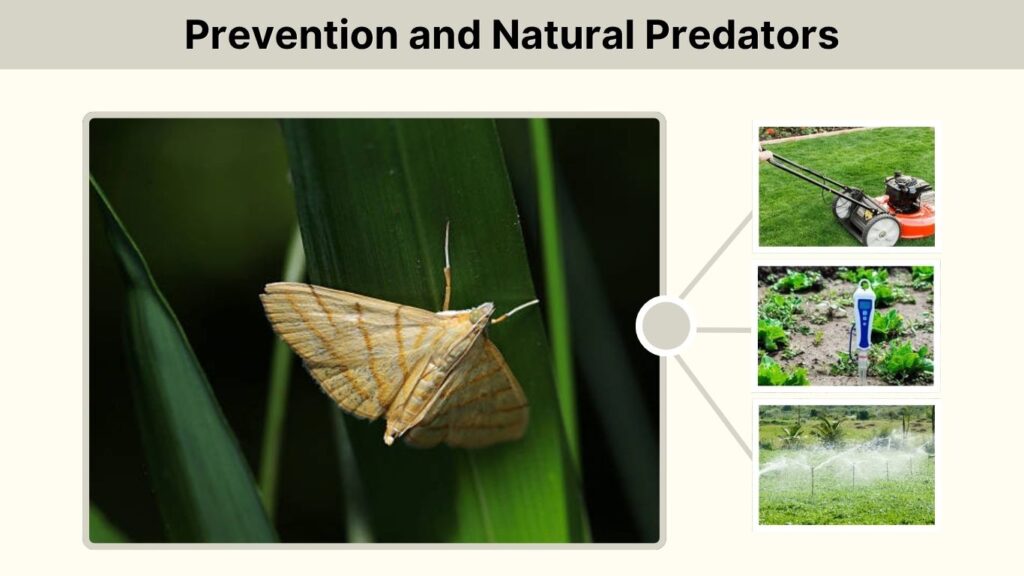
A resilient lawn can tolerate some insect feeding without losing its appearance or requiring pesticides. Prevention therefore means maintaining suitable growing conditions and protecting organisms that help limit pests. It does not mean eliminating every moth from the garden. Regular observation helps you spot developing damage early while allowing harmless or low populations to remain part of the local ecosystem.
Lawn Care That Helps
- Mow at the recommended height for your grass species.
- Irrigate according to soil moisture and local guidance.
- Avoid excessive fertilizer.
- Manage excessive thatch using methods suitable for your turf.
- Check stressed areas regularly for fresh feeding.
Healthy grass often withstands modest webworm activity. Colorado State University
What Eats Grass Moths?
Birds and predatory arthropods consume moths or their immature stages. Spiders, ground beetles, and other predators attack lawn caterpillars; parasitoid wasps and flies can also reduce them. Avoid unnecessary broad-spectrum spraying, which can remove helpful insects along with pests. UF/IFAS natural controls
Frequently Asked Questions
Most concerns about grass moths involve sudden numbers, pale wing colors, or the possibility of losing a lawn. The answers below clarify those common situations. Keep the distinction between adults and caterpillars in mind, and avoid diagnosing damage from moth sightings alone. Photographs of both the insect and affected grass can help a local specialist recommend a more appropriate response.
Why Are Grass Moths Everywhere Suddenly?
A seasonal emergence can produce many adults at once. Walking or mowing also flushes resting moths from cover. High adult numbers justify checking for larvae, not automatic spraying.
Are White Grass Moths Harmful?
White or cream wings occur in several species. Color alone cannot establish whether their caterpillars threaten your lawn.
Should I Kill Grass Moths on Sight?
Usually not. Confirm damaging larvae first. Adult moths alone are not reliable evidence that treatment is necessary.
Will Damaged Grass Grow Back?
Often, if feeding mainly affects leaves and the lawn remains healthy. Severe damage or additional stress can slow recovery and may require further care.
How Long Does a Grass Moth Infestation Last?
Duration varies with species, weather, and overlapping generations. Monitor fresh feeding and larval numbers rather than assuming the problem ends when fewer adults are visible.