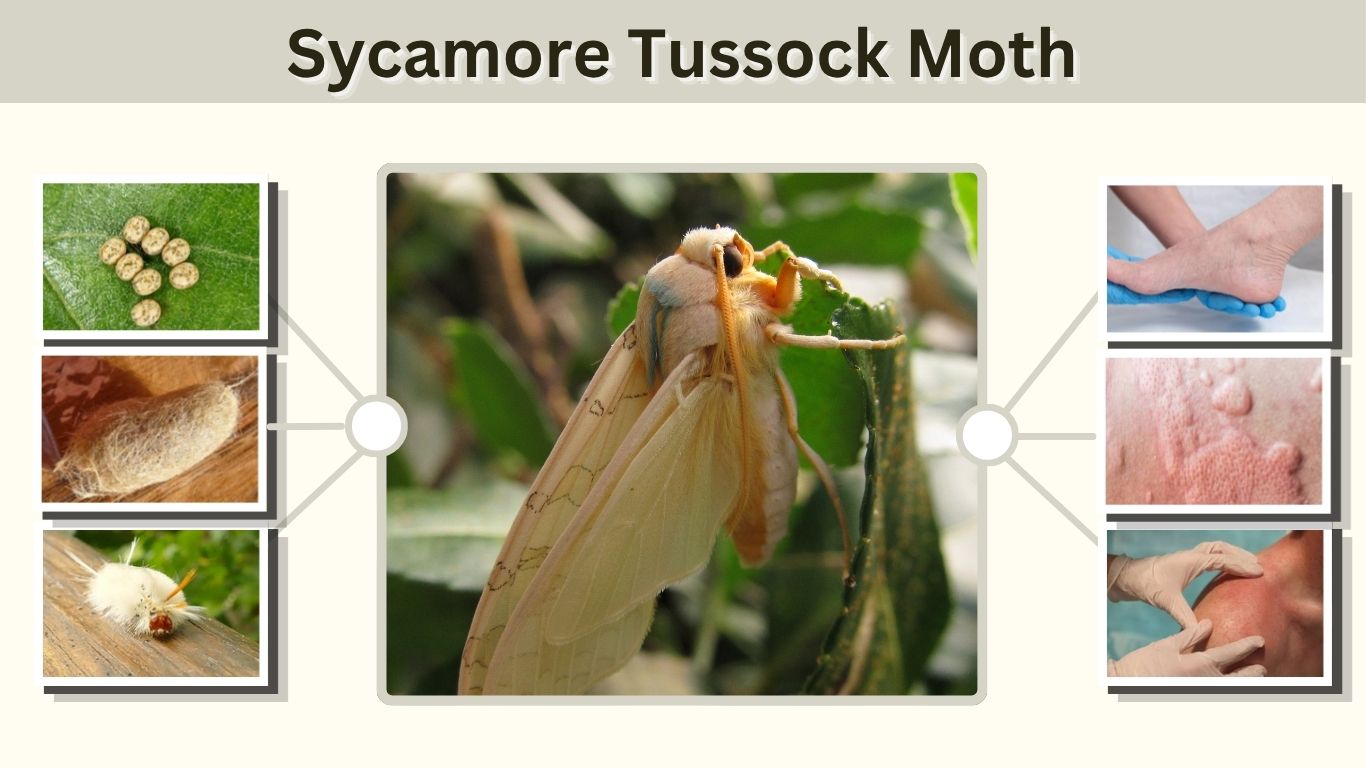
The sycamore tussock moth is best recognized by its fluffy caterpillar, which carries pale hairs and distinctive orange tufts. Often found around sycamore trees, this insect raises questions about identification, feeding damage, and whether touching it can cause a rash. Its soft appearance is misleading: caterpillar hairs can irritate sensitive skin, so handling is best avoided. Understanding its habits helps you respond sensibly without treating every sighting as an infestation. This guide explains what to look for, how it develops, and what to do after contact.
Sycamore Tussock Moth Identification
The scientific name of the sycamore tussock moth is Halysidota harrisii. It belongs to the tiger moth group within the family Erebidae. Identifying the caterpillar is generally easier than identifying the adult because closely related moths share similar wing patterns. Look at the arrangement and color of the longer hair tufts, and note which tree the caterpillar is feeding on.
Caterpillar Features
- Body covering: Dense white, cream, or pale yellow hairs.
- Front tufts: Long white and orange or rusty hair pencils near the head.
- Rear tufts: Long white hairs extending behind the body.
- Useful clue: Feeding on sycamore supports identification, although the host alone is not conclusive.
Adult Moth and Similar Species
Adults have pale yellowish wings with darker bands forming a tiled pattern. Their wingspan is approximately 2 inches, or 50 millimeters.
The banded tussock moth, Halysidota tessellaris, is a separate species. Its caterpillar typically has black and white pencils, while the sycamore species has orange and white pencils. Ordinary adult photographs often cannot distinguish them reliably.
Sycamore Tussock Moth Habitat and Caterpillar Diet
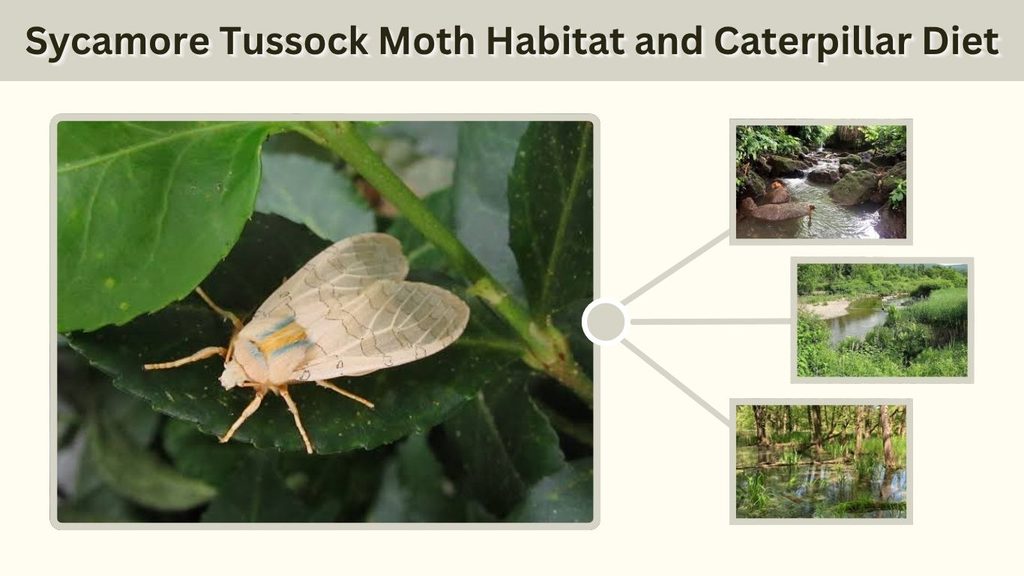
This moth is closely associated with its host trees, so its habitat and diet are connected. River corridors, wooded floodplains, parks, and planted landscapes can provide suitable feeding sites. Finding a caterpillar on a fence or pavement does not mean it eats those materials. It may have fallen from nearby foliage or moved away from the tree where it developed.
What Do Sycamore Tussock Moth Caterpillars Eat?
American sycamore leaves are the principal food. Feeding on London plane trees, which are sycamore hybrids, is also documented. They are leaf eaters, not wood borers or household fabric pests.
Young larvae can skeletonize leaves, leaving veins behind. Older caterpillars consume larger portions of the leaf.
Where Are They Found?
The species occurs across much of eastern North America. Verified observations include Michigan and southeastern Canada. Its presence depends on suitable hosts, so it will not occur equally throughout every region.
Are Sycamore Tussock Moth Caterpillars Poisonous?
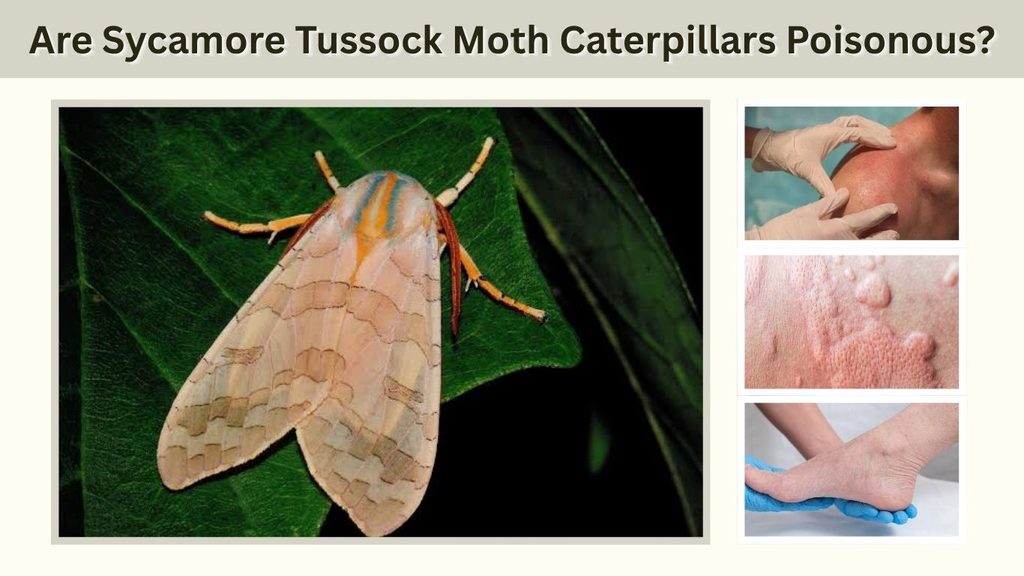
The practical concern is contact with irritating hairs. Calling the caterpillar simply poisonous does not explain that risk, and calling it harmless can encourage unsafe handling. Some people develop little irritation, while others experience an itchy rash or swelling. Avoid touching the caterpillar, rubbing it against skin, or letting children handle it, even when it looks soft and completely inactive.
Do They Sting or Bite?
A reported “sting” may describe discomfort after hairs contact the skin rather than a conventional sting. Hair penetration and individual sensitivity can produce reactions without proving venom was injected. Biting is not the usual concern when handling these caterpillars.
Possible Skin Reactions
- Itching and redness around the contact area.
- Raised bumps, welts, or hives.
- Local swelling or a burning sensation.
A published case report documents a skin reaction following contact with this species, confirming that its hairs should be treated cautiously.
Sycamore Tussock Moth Rash Treatment
After contact with a hairy caterpillar, focus on removing remaining hairs and protecting the irritated skin. Avoid scratching or rubbing, which may worsen discomfort. These measures are general first aid for caterpillar exposure, not a diagnosis of every rash. If symptoms are significant, persist, or worsen, contact a healthcare professional or poison information service for advice appropriate to your situation.
Immediate First Aid
- Remove the caterpillar with paper or a twig, avoiding bare hands.
- Gently lift hairs from intact skin with adhesive tape, using fresh pieces.
- Wash the area carefully with soap and water.
- Apply a cool compress wrapped in cloth.
- Ask a pharmacist about suitable itch relief if needed.
Do not use adhesive tape on the eyes or broken skin. General hair removal and washing guidance is provided by Poison Control.
When to Seek Medical Help
Seek emergency care for breathing difficulty, throat swelling, or faintness. Eye exposure, severe pain, or extensive blistering also requires prompt medical assessment. Remove and wash contaminated clothing to reduce further contact.
Sycamore Tussock Moth Life Cycle
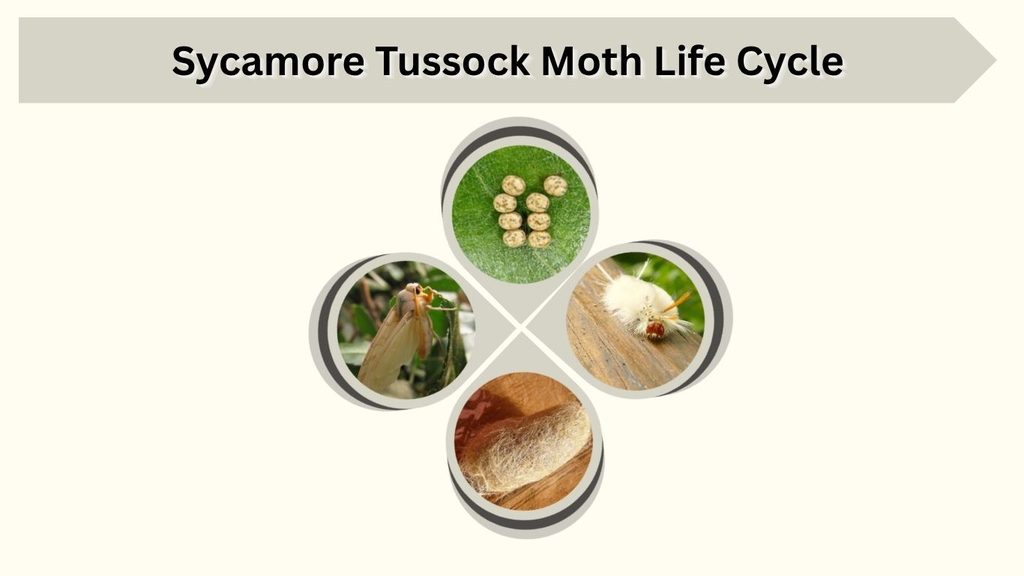
Like other moths, this species develops through egg, caterpillar, pupa, and adult stages. The caterpillar is the growing and feeding stage; the winged adult is the reproductive stage. Seasonal timing varies geographically, so a sighting in one state does not establish a universal calendar. Two generations occur across much of its range, with caterpillars appearing during summer and fall periods.
Eggs and Growing Caterpillars
Females deposit eggs on host tree bark or leaf undersides. Young caterpillars may feed together before dispersing as they grow. They shed their skins during development, then eventually stop feeding and prepare to pupate.
Cocoons and Overwintering
The caterpillar spins a cocoon incorporating its hairs. Inside, it becomes a pupa. The overwintering generation remains in cocoons through winter, with adults emerging the following growing season. Avoid handling cocoons because incorporated hairs can still irritate skin.
How to Manage Sycamore Tussock Moth Caterpillars
A few caterpillars rarely justify treating an entire tree. Start by checking how much foliage has actually been eaten and whether people are likely to touch the insects. Established trees can often tolerate limited feeding. Management should therefore focus on preventing accidental contact and monitoring damage, while more substantial or repeated defoliation deserves an assessment of the tree’s overall health.
Practical Steps Around the Home
- Leave caterpillars alone when they are away from frequently touched surfaces.
- Use a twig or stiff card to relocate individuals from seating or doorways.
- Keep children from handling caterpillars or hairy cocoons.
- Wear gloves and use tools if cocoon removal is necessary.
- Monitor young trees for substantial leaf loss.
When Is Treatment Necessary?
Seek advice from an extension service or qualified arborist if defoliation becomes extensive. Outbreaks are uncommon, and spraying large trees is often impractical. Avoid routine insecticide applications based only on a few sightings.
FAQs
Most questions about this moth concern touching the caterpillar, recognizing its markings, or deciding whether a tree needs protection. The answers below summarize those practical points. Remember that several fuzzy caterpillars look similar, and photographs do not always show the features needed for identification. When uncertain, avoid handling the insect and seek identification using clear photographs and your general location.
Can You Touch a Sycamore Tussock Moth Caterpillar?
Avoid bare skin contact. Its hairs can cause irritation or hives, and you cannot predict your sensitivity from someone else’s experience.
Does It Turn Into a Butterfly?
No. It becomes a moth with pale, patterned wings. The caterpillar and adult are different life stages of the same species.
Does It Have Black Hair Pencils?
Orange and white pencils are characteristic. Conspicuous black and white front pencils suggest the similar banded tussock moth instead.
Will It Kill a Sycamore Tree?
Limited feeding usually does not threaten an established tree. Extensive or repeated leaf loss warrants closer assessment, particularly on a stressed tree.
Can an Empty Cocoon Cause Irritation?
Yes. Hairs can remain in the cocoon after the moth emerges. Avoid touching or crushing it with bare hands.