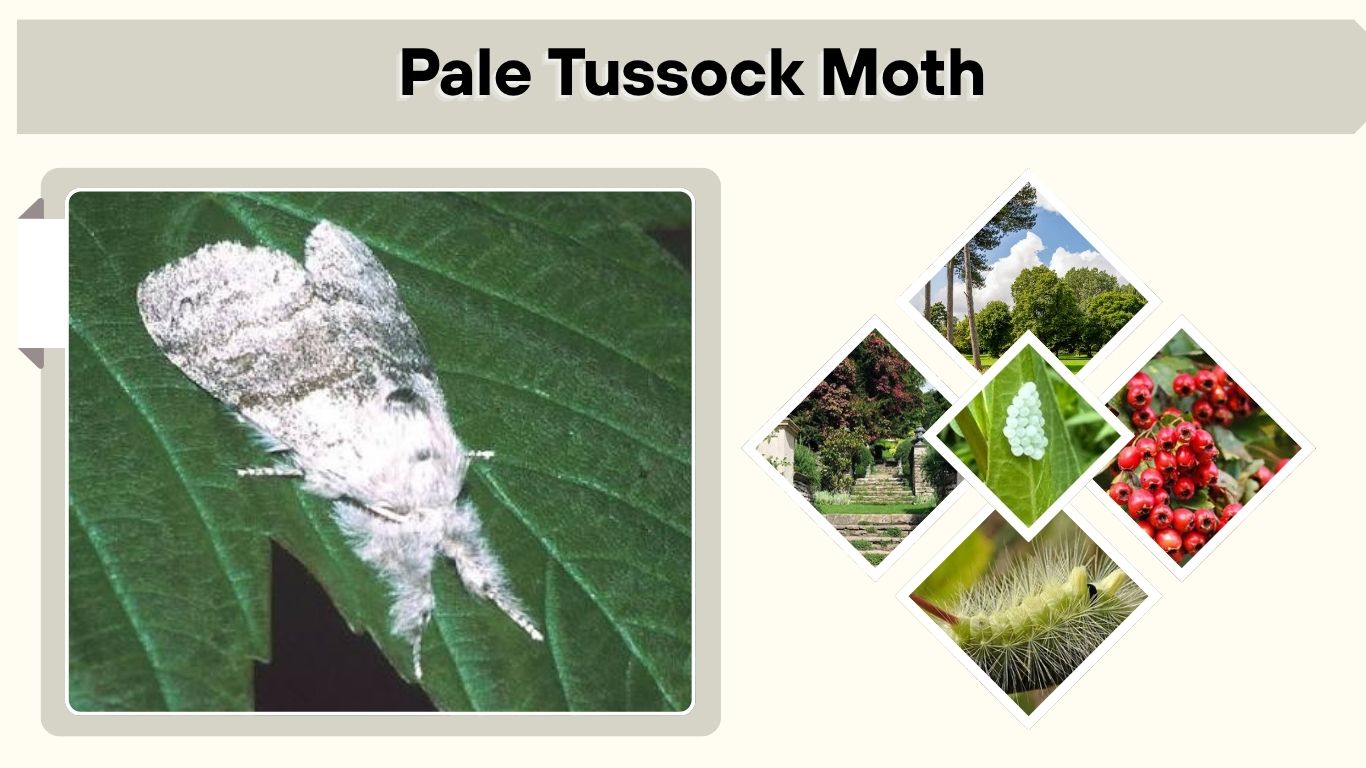
The pale tussock moth (Calliteara pudibunda) is a distinctive moth found across the UK, Ireland, and much of Europe. Adults are pale gray to whitish, while the caterpillars are much more colorful, with long hairs, bright tufts, and a noticeable red tail tuft. These caterpillars feed on many trees and shrubs and are often seen wandering before pupation. Although they are not considered dangerously poisonous, their hairs may irritate sensitive skin and can sometimes cause an itchy rash after direct contact.
Pale Tussock Moth Identification and Size
The pale tussock moth belongs to the family Erebidae and is best known for the unusual appearance of its caterpillar. Adult moths are far less colorful, with pale gray wings marked by darker wavy lines. Males and females differ noticeably in size and body shape, while larvae change appearance slightly as they pass through several developmental stages.
Pale Tussock Moth Identification
Typical adult features include:
- Scientific name: Calliteara pudibunda
- Family: Erebidae
- Color: Pale gray, whitish, or gray-brown
- Forewings: Marked with darker wavy cross-lines
- Hindwings: Pale gray or whitish
- Body: Hairy and relatively thick
- Wingspan: Roughly 35–60 mm
- Activity: Mostly nocturnal
- Range: UK, Ireland, Europe, and parts of Asia
Females are usually larger and heavier-bodied than males.
Male vs Female Pale Tussock Moth
Male pale tussock moths are typically smaller and have strongly feathered antennae, which help them detect female pheromones.
Females have broader bodies because they carry eggs and generally possess less-feathery antennae.
Coloration can vary, but both sexes usually show pale gray forewings with darker markings.
Pale Tussock Moth Caterpillar Identification
The caterpillar is much more eye-catching than the adult moth. It is usually pale green, yellowish, or sometimes grayish and covered with long hairs. Several dense tufts run along the back, giving the larva its characteristic “tussock” appearance. A reddish or pinkish tuft at the rear is another particularly useful identification feature.
Pale Tussock Caterpillar Features
Look for:
- Green, yellow, or pale gray body
- Four dense hair tufts along the back
- Long fine hairs around the body
- Black markings between body segments
- Red, pink, or reddish-brown rear tuft
- Hairy head and sides
- Length up to roughly 40–45 mm when mature
Color varies among individuals, so the arrangement of the tufts is usually more useful than body color alone.
Pale Tussock Moth Larvae
Young larvae are smaller and may look less dramatic than fully grown caterpillars.
As they molt, their characteristic dorsal tufts become more noticeable.
Mature caterpillars are frequently seen away from their food plants when they begin searching for protected places to pupate.
This wandering behavior is one reason people sometimes find them on paths, walls, fences, or garden furniture.
Are Pale Tussock Moth Caterpillars Poisonous?
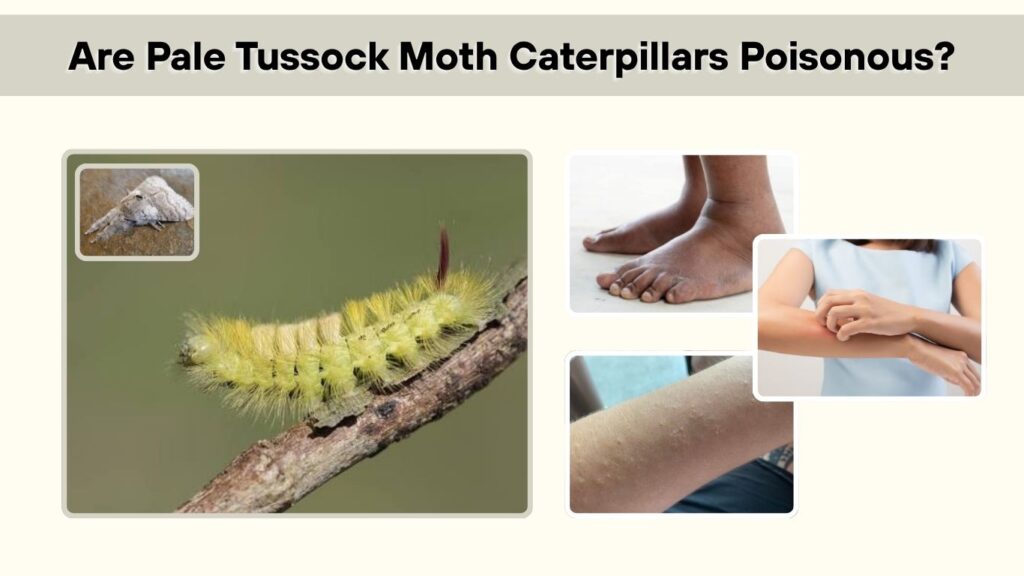
Pale tussock moth caterpillars are not generally regarded as dangerously poisonous, but their hairs can cause skin irritation in some people. The reaction is mechanical or inflammatory rather than a severe toxic poisoning. Sensitivity varies greatly, so one person may handle a caterpillar without obvious symptoms while another may develop itching, redness, or a noticeable rash.
Pale Tussock Caterpillar Rash
Possible skin reactions include:
- Itching
- Redness
- Small raised bumps
- Mild burning sensation
- Localized swelling
- Irritated or sensitive skin
The hairs may become embedded in the skin and continue causing discomfort for a period after contact.
Avoid rubbing the affected area, because this can push hairs farther into the skin.
Does a Pale Tussock Caterpillar Sting?
The caterpillar does not sting like a bee or wasp.
Instead, irritation comes from contact with its defensive hairs.
It is safest to avoid picking up hairy caterpillars with bare hands, especially if you have sensitive skin or a history of reactions to insects.
If severe swelling, breathing difficulty, eye exposure, or widespread symptoms develop, medical advice should be sought.
Pale Tussock Moth Habitat and Distribution
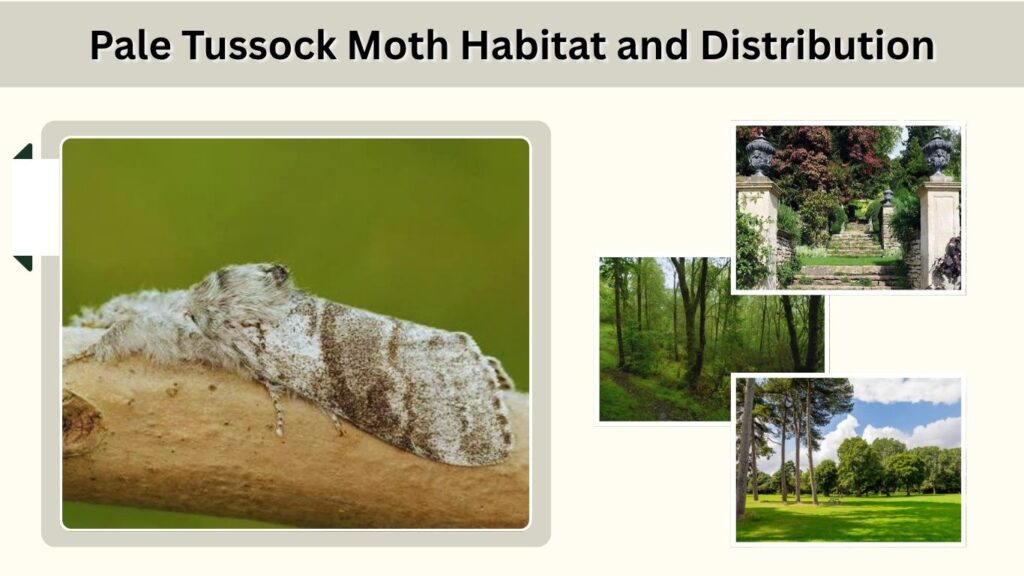
Pale tussock moths occupy wooded and semi-wooded habitats where their caterpillar food plants are abundant. They are regularly found in gardens and parks as well as natural woodland. Their ability to feed on many different deciduous trees and shrubs allows them to survive in a wide range of environments across Britain and other parts of Europe.
Where Pale Tussock Moths Live
Common habitats include:
- Deciduous woodland
- Gardens
- Parks
- Hedgerows
- Orchards
- Scrubland
- Woodland edges
- Tree-lined roads
- Large urban green spaces
Adults are most often encountered during late spring and early summer.
Pale Tussock Moth in the UK and Ireland
The species is widely distributed in southern and central parts of Britain and also occurs in Ireland.
It may be more common in areas containing mature broadleaf trees.
Caterpillars are generally most noticeable in summer and early autumn, when they have grown large enough to be easily spotted on foliage or moving across the ground.
What Do Pale Tussock Moth Caterpillars Eat?
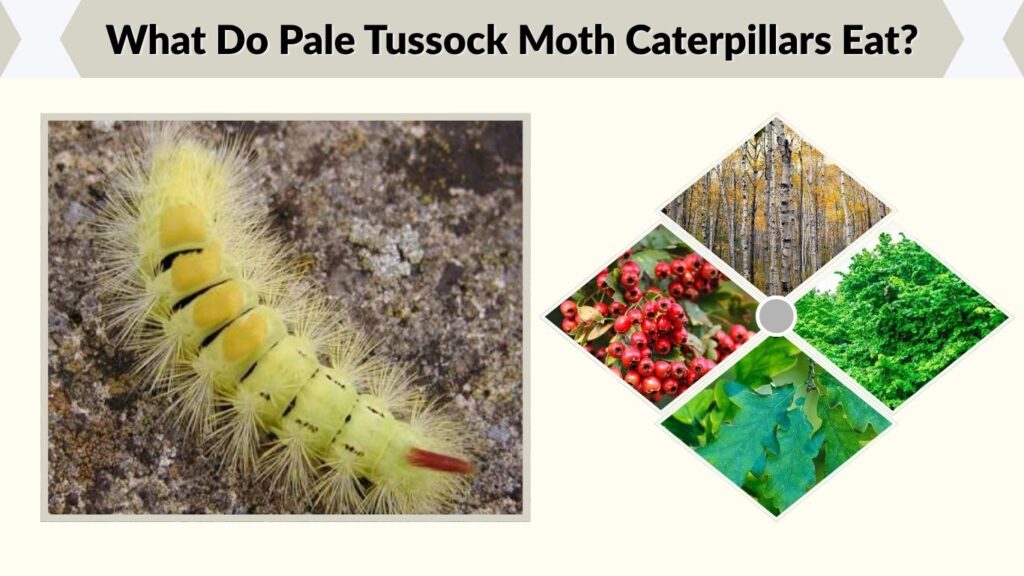
Pale tussock caterpillars are generalist leaf feeders. Rather than relying on one host plant, they can feed on many deciduous trees and shrubs. This flexible diet helps the species occupy parks, gardens, forests, and hedgerows. Adults, like many moth species, feed little compared with the caterpillar stage, which is responsible for most growth and energy storage.
Pale Tussock Caterpillar Food Plants
Common food plants include:
- Oak
- Birch
- Hazel
- Hawthorn
- Blackthorn
- Willow
- Beech
- Apple
- Lime
- Rowan
- Various other deciduous trees and shrubs
The larvae mainly consume leaves.
Feeding Behavior
Caterpillars spend much of their development feeding openly on foliage.
They may occur singly rather than in large groups.
As they grow, they consume greater amounts of leaf material and molt several times.
Once fully developed, feeding stops and the caterpillar leaves the plant to find a suitable location for pupation.
Pale Tussock Moth Life Cycle
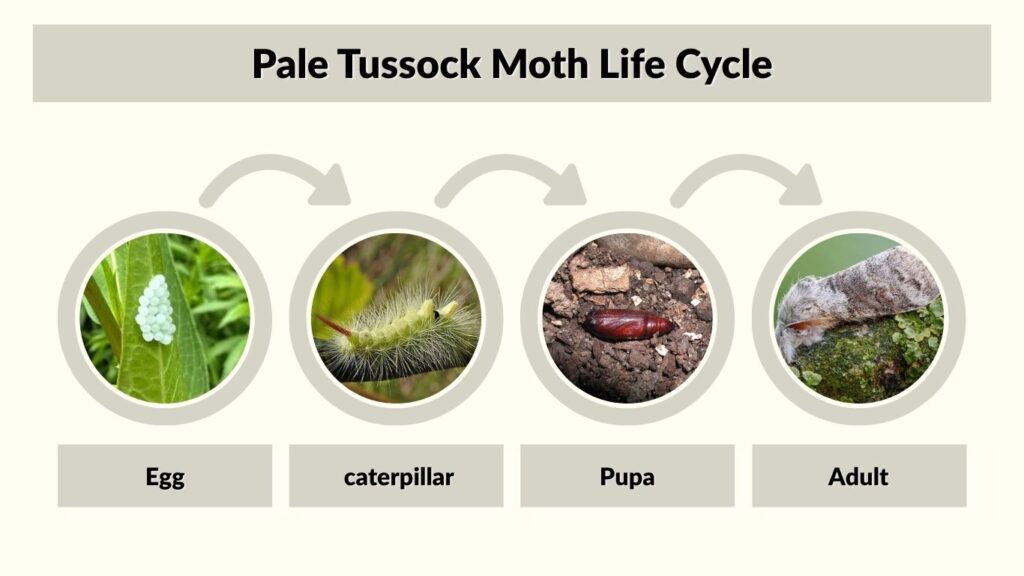
The pale tussock moth undergoes complete metamorphosis, passing through egg, caterpillar, pupa, and adult stages. Most development occurs during the warmer months. The species generally spends winter in the pupal stage, protected inside a cocoon. Adult moths emerge when conditions become suitable and begin the reproductive cycle again.
Pale Tussock Moth Life Cycle Stages
The main stages are:
- Egg: Females lay clusters of eggs after mating.
- Larva: Caterpillars hatch and begin feeding on foliage.
- Growth: Larvae molt repeatedly and develop their characteristic tufts.
- Mature caterpillar: Feeding eventually stops.
- Cocoon: The larva creates a protective silk structure.
- Pupa: Transformation occurs inside the cocoon.
- Adult: The moth emerges and searches for a mate.
In much of its range, the species normally produces one generation each year.
Pale Tussock Moth Cocoon and Pupa
The mature caterpillar forms a cocoon in a sheltered location, often among leaves, bark, debris, or vegetation.
Hairs from the caterpillar may become incorporated into the cocoon.
Inside, the larva transforms into a pupa.
The pupal stage commonly survives winter, with the adult moth emerging the following spring or early summer.
Pale Tussock Moth Behavior and Reproduction
Adult pale tussock moths are mainly active after dark. Males use their highly feathered antennae to detect chemical signals released by females. After mating, females lay eggs on suitable vegetation where newly hatched larvae will have immediate access to food. Adults live for a relatively short period because reproduction, rather than prolonged feeding, is their primary role.
Mating Behavior
Male moths may fly considerable distances while searching for females.
Female moths are heavier and generally less active flyers.
Once mating occurs, the female lays her eggs on or near potential larval food plants.
The eggs later hatch into tiny caterpillars that begin feeding and gradually develop the characteristic hairy appearance of mature larvae.
FAQs
Pale tussock moths attract attention mainly because their caterpillars look unusual and appear heavily armed with hairs. Most questions involve whether they are poisonous, whether they sting, what they eat, and where they occur. Understanding their defensive hairs and seasonal life cycle makes these colorful caterpillars easier to observe safely.
Are Pale Tussock Moth Caterpillars Poisonous?
They are not considered dangerously poisonous, but their hairs may irritate human skin and cause itching or a rash in sensitive individuals.
Can a Pale Tussock Caterpillar Sting?
No. It does not possess a bee-like stinger. Contact with its hairs can nevertheless cause skin irritation.
What Do Pale Tussock Caterpillars Eat?
They feed on many deciduous plants, including oak, birch, hazel, hawthorn, willow, apple, and beech.
Where Are Pale Tussock Moths Found?
They occur across much of Europe, including the UK and Ireland, mainly in woodland, gardens, parks, hedgerows, and other areas with broadleaf trees.
What Does a Pale Tussock Moth Caterpillar Turn Into?
After finishing its feeding stage, the caterpillar forms a cocoon and becomes a pupa. It later emerges as a pale gray adult pale tussock moth.