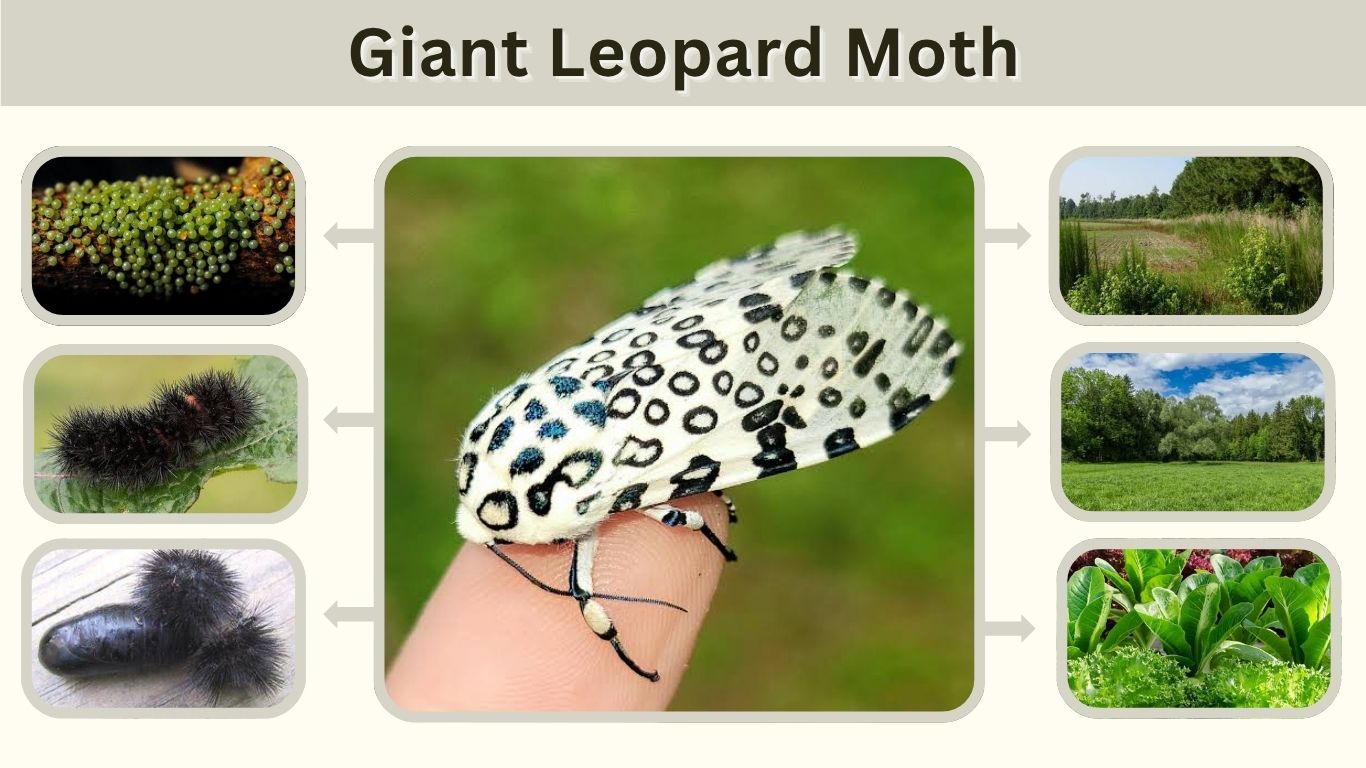
The giant leopard moth (Hypercompe scribonia) is a striking North American moth recognized by its bright white wings covered with black spots and rings. Its caterpillar looks completely different, appearing as a large black woolly bear with stiff bristles and reddish-orange skin visible when it curls up. Despite its intimidating appearance, this moth is generally harmless to people. This guide covers giant leopard moth identification, size, caterpillar diet, habitat, life cycle, eggs, cocoon, toxicity, and other interesting facts.
Giant Leopard Moth Identification and Appearance
Adult giant leopard moths are among the easiest tiger moths to recognize because of their bold black-and-white pattern. They belong to the family Erebidae and subfamily Arctiinae. The caterpillar, however, is dark and hairy, so people often mistake it for other woolly bear caterpillars. Looking at several physical characteristics makes identification much easier.
Adult Giant Leopard Moth Identification
- Scientific name: Hypercompe scribonia
- Wing color: Bright white
- Wing markings: Numerous black spots and hollow black rings
- Body: Mostly white with dark markings
- Abdomen: Dark blue or metallic-looking with orange markings
- Legs: White with dark bands
- Antennae: More strongly feathered in males
- Activity: Mostly nocturnal
When disturbed, adults may reveal their colorful abdomen beneath the wings. The combination of white wings and irregular black markings gives the species its “leopard” name.
Giant Leopard Moth Size
The giant leopard moth is relatively large compared with many common backyard moths. Adults typically have a wingspan of approximately 2 to 3 inches, although individual size varies.
Females generally have heavier bodies because they carry eggs, while males often have more noticeable antennae. The substantial size and contrasting wing pattern make adults especially noticeable when they rest near outdoor lights.
Giant Leopard Moth Antenna
Antennae can help distinguish males from females. Male giant leopard moths generally have broader, more feather-like antennae that contain numerous sensory structures.
These structures help males detect chemical signals released by females. Female antennae are usually narrower and less feathery. Antenna shape can therefore be useful when trying to determine the sex of an adult moth.
Giant Leopard Moth Caterpillar Identification
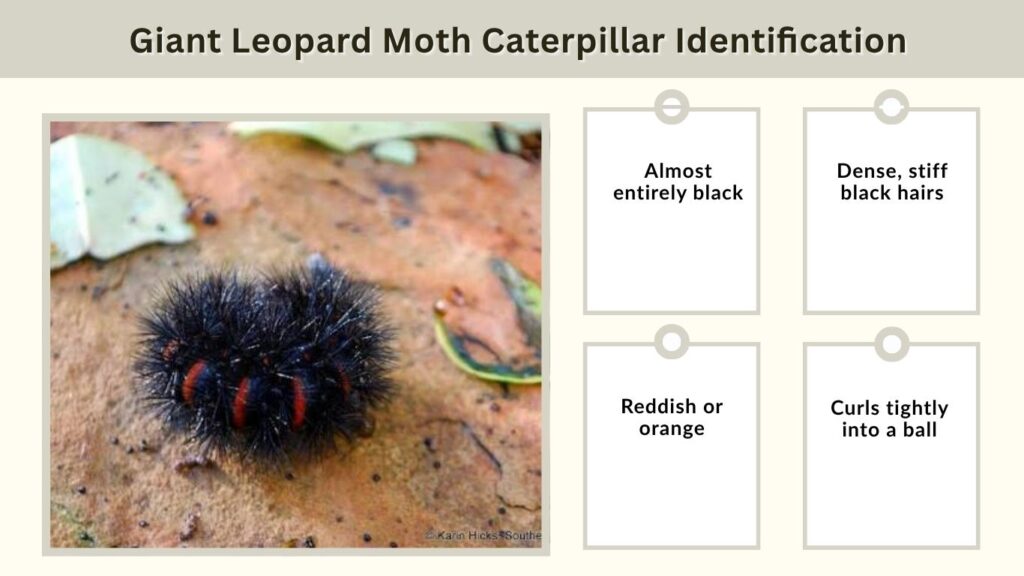
The giant leopard moth caterpillar is commonly called a giant woolly bear because its body is covered with dense black bristles. It can look dangerous at first glance, especially when it curls into a defensive ball. However, the caterpillar does not have the specialized venomous spines found on some dangerous caterpillar species.
What Does the Caterpillar Look Like?
- Color: Almost entirely black
- Bristles: Dense, stiff black hairs
- Skin underneath: Reddish or orange
- Body shape: Thick and cylindrical
- Defensive posture: Curls tightly into a ball
- Size: Can grow to roughly 2 inches or more
- Head: Dark and often partly hidden by the body hairs
When the caterpillar curls up, the red-orange bands between its body segments become easier to see. This is one of its most useful identification features.
Giant Leopard Moth Caterpillar vs Woolly Bear
The term “woolly bear” is used for several hairy moth caterpillars, so confusion is common. The familiar banded woolly bear usually has both black and rusty-orange sections of hair.
The giant leopard moth caterpillar, by comparison, appears almost completely black from the outside. Its reddish coloring is mainly visible underneath or between the body segments when the caterpillar bends or rolls into a ball.
Are Giant Leopard Moth Caterpillars Poisonous?
Giant leopard moth caterpillars are not considered poisonous or venomous. Their dark bristles mainly provide physical protection from predators rather than delivering venom.
The hairs are generally not true stinging spines. However, people with sensitive skin may experience minor irritation after handling hairy caterpillars. It is therefore better to observe them without excessive touching.
What Do Giant Leopard Moth Caterpillars Eat?
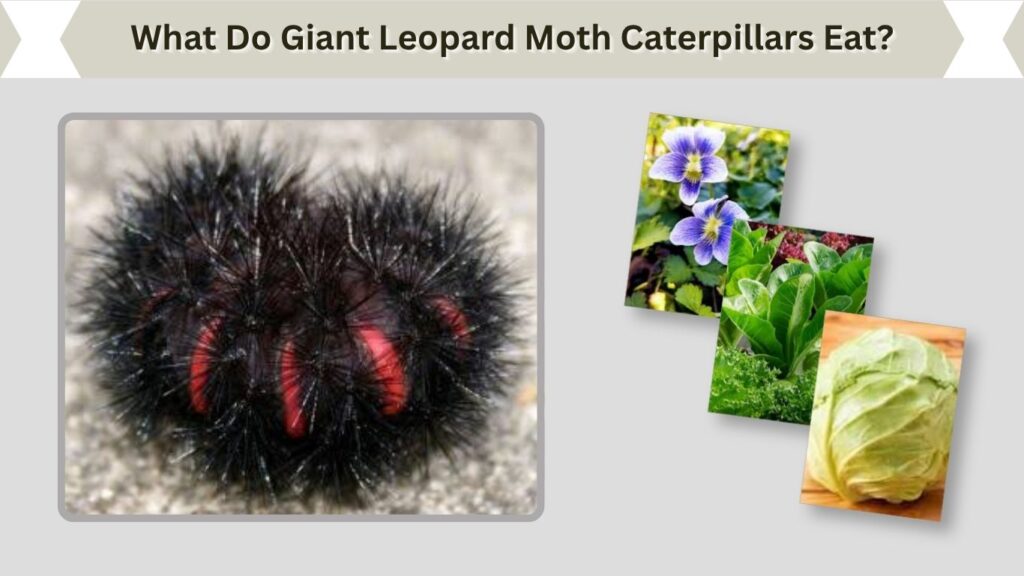
Giant leopard moth caterpillars are generalist herbivores, meaning they can feed on many different plants rather than depending on a single host species. They usually consume leaves from low-growing plants, shrubs, and certain trees. Their broad diet helps explain why they can occur in gardens, fields, woodland edges, parks, and other habitats containing diverse vegetation.
Common Caterpillar Foods
Giant leopard moth caterpillars may feed on:
- Dandelion
- Plantain
- Violet
- Lettuce
- Cabbage
- Citrus leaves
- Willow
- Maple
- Magnolia
- Broadleaf garden plants
Their exact food choices vary by location and plant availability. Caterpillars generally feed on foliage rather than flowers, nectar, or animal material.
Giant Leopard Moth Host Plants
Unlike moths whose caterpillars depend on only one plant species, giant leopard moth larvae use numerous host plants. This flexibility can allow them to survive in both natural and human-modified landscapes.
They are sometimes encountered walking across sidewalks, lawns, or driveways while searching for food, shelter, or a suitable place to pupate.
What Do Adult Giant Leopard Moths Eat?
Adult feeding behavior is much less noticeable than caterpillar feeding. Adults primarily exist to reproduce, and they do not cause meaningful damage to plants.
Most plant consumption occurs during the larval stage. The caterpillar must store enough energy to support pupation and eventually become a reproductive adult moth.
Giant Leopard Moth Life Cycle
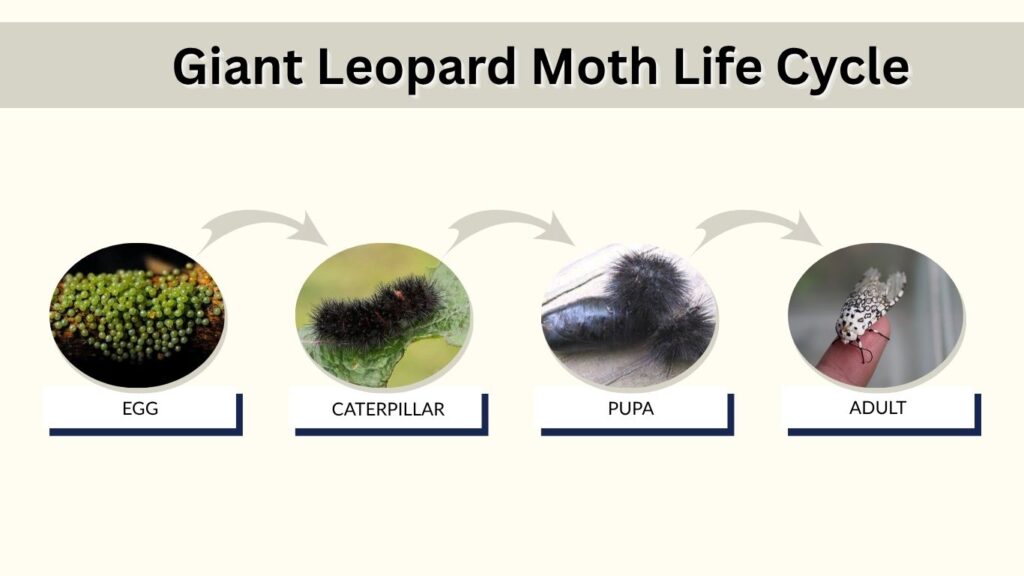
Like all moths and butterflies, the giant leopard moth undergoes complete metamorphosis. It passes through four major stages: egg, larva, pupa, and adult. The caterpillar stage is especially noticeable because larvae may remain active for an extended period and can overwinter before completing development when temperatures become favorable again.
Giant Leopard Moth Eggs
Female giant leopard moths lay clusters of small eggs on or near suitable host plants. The eggs are typically rounded and pale when newly laid.
After incubation, tiny caterpillars emerge and begin feeding on nearby vegetation. They grow through several molts, shedding their outer skin as their bodies become larger.
Caterpillar Stage
The larval stage lasts much longer than the adult stage. Caterpillars spend most of their time feeding and accumulating energy.
As temperatures decrease, mature caterpillars may seek protected areas beneath leaves, logs, bark, or other natural debris. They can overwinter as larvae and resume activity when warmer conditions return.
Giant Leopard Moth Cocoon and Pupa
When ready to pupate, the mature caterpillar creates a loose cocoon containing silk and some of its own hairs.
Inside the cocoon, the caterpillar transforms into a pupa. Major internal changes occur during this stage as larval structures are reorganized into the body of an adult moth.
Adult Moth
The fully developed adult eventually emerges from the cocoon. After its wings expand and harden, it becomes capable of flight.
Adults are largely nocturnal and may be attracted to outdoor lights. Their primary goal during this stage is finding a mate and reproducing, allowing the life cycle to begin again.
Giant Leopard Moths Habitat, Range, and Behavior
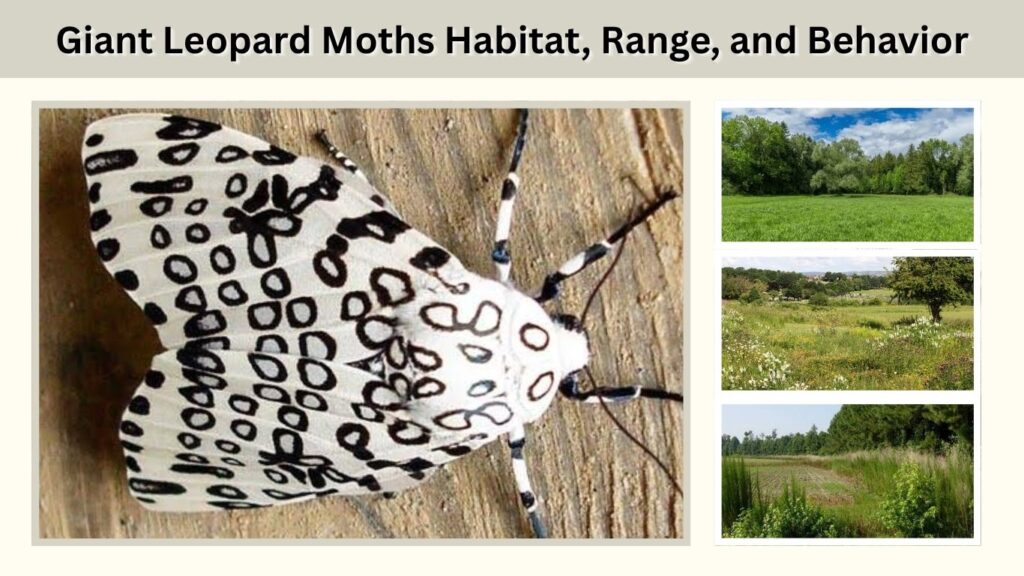
Giant leopard moths occupy a wide variety of environments because their caterpillars can feed on numerous plants. They are most closely associated with eastern and southern parts of North America and are frequently noticed during warmer months. Gardens and residential properties can also provide suitable habitat when host plants and sheltered places are available.
Where Do Giant Leopard Moths Live?
They may occur in:
- Woodlands
- Forest edges
- Meadows
- Fields
- Gardens
- Parks
- Suburban yards
- Roadsides
Their range includes much of the eastern United States, with populations extending southward toward Mexico. They are particularly familiar in warmer southern regions but can occur farther north where conditions are suitable.
Giant Leopard Moth in Florida and Texas
Florida and Texas provide favorable climates and abundant vegetation for giant leopard moths. Caterpillars may be encountered throughout gardens, yards, and natural areas.
Adults are often noticed near porch lights because many moths use celestial light for nighttime orientation and can become confused by artificial lighting.
Are Giant Leopard Moths Rare?
Giant leopard moths are not generally considered rare across their established range. However, individual adults may seem uncommon because they are nocturnal and spend much of the daytime hidden.
Caterpillars can sometimes be easier to find, particularly when they wander across exposed surfaces looking for shelter or pupation sites.
Are Giant Leopard Moths Dangerous?
Despite their dramatic markings and intimidating caterpillars, giant leopard moths pose very little danger to humans. Neither the adult nor caterpillar is known for attacking people. The species relies primarily on appearance, defensive behavior, and body hairs rather than biting, stinging, or venom delivery.
Do Giant Leopard Moths Bite or Sting?
Adult giant leopard moths do not sting and are not aggressive toward people. Their mouthparts are not adapted for defensive biting.
The caterpillar also lacks a true stinger. Its bristles may feel stiff or uncomfortable against sensitive skin, but they are different from the venomous spines of genuinely stinging caterpillars.
Are They Dangerous to Dogs?
The caterpillar is not considered highly poisonous to dogs. However, pets should generally be discouraged from chewing or swallowing any hairy caterpillar.
The bristles could irritate a dog’s mouth or digestive system. If a pet develops excessive drooling, vomiting, swelling, or difficulty breathing after eating an unknown caterpillar, contacting a veterinarian is appropriate.
Interesting Giant Leopard Moth Facts
The dramatic transformation from an almost entirely black caterpillar to a brilliant white adult makes this species particularly interesting. Its appearance changes so dramatically that many people never realize the caterpillar and adult belong to the same species.
Quick Facts
- Giant leopard moths are also called eyed tiger moths.
- Their scientific name is Hypercompe scribonia.
- Adults have white wings covered with black spots and rings.
- Caterpillars are commonly called giant woolly bears.
- Orange-red skin appears between the caterpillar’s segments.
- Caterpillars may overwinter before pupating.
- Males usually have more strongly feathered antennae.
- Adults are mostly active at night.
- They are attracted to artificial lights.
- The species is not considered dangerous to humans.
FAQs
1. Is a giant leopard moth caterpillar poisonous?
No. Giant leopard moth caterpillars are not considered poisonous or venomous. Their stiff hairs are primarily defensive, although they may irritate especially sensitive skin.
2. What do giant leopard moth caterpillars eat?
They eat leaves from many plants, including dandelions, violets, plantain, willow, maple, cabbage, citrus, and various garden plants.
3. How big is a giant leopard moth?
Adult giant leopard moths generally have a wingspan of around 2 to 3 inches, making them relatively large compared with many common moth species.
4. Do giant leopard moth caterpillars sting?
No. They do not possess the specialized venomous stinging spines found in dangerous caterpillars. Their stiff hairs can occasionally cause minor mechanical irritation.
5. Are giant leopard moths rare?
No. They are not generally considered rare within their natural range, although adults can seem uncommon because they are mainly nocturnal and often remain hidden during daylight.