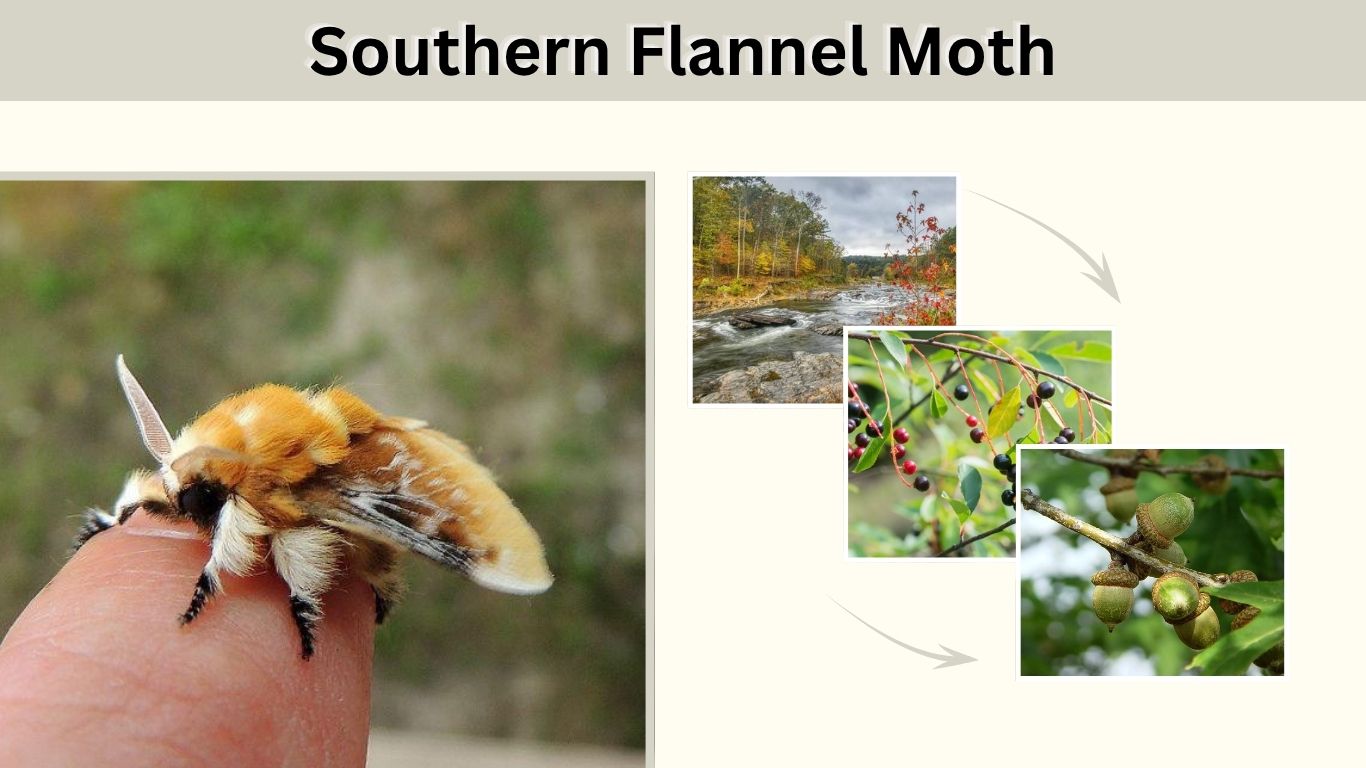
The southern flannel moth (Megalopyge opercularis) is a small, fuzzy moth best known for its unusually hairy and venomous caterpillar. Often called the puss caterpillar or asp, the larval stage can deliver an intensely painful sting when its hidden spines touch the skin. Adults, however, are harmless and covered in soft, woolly hairs. Found mainly across the southern United States and parts of Mexico and Central America, this fascinating species has a distinctive appearance, unusual life cycle, and important safety considerations.
Southern Flannel Moth Identification
Southern flannel moths belong to the family Megalopygidae, a group commonly called flannel moths because adults have thick, fur-like scales. The adult and caterpillar look dramatically different, making identification challenging. The caterpillar appears soft enough to touch, but venomous spines are hidden beneath its dense coat and should never be handled with bare skin.
Adult Southern Flannel Moth Identification
Adult southern flannel moths can be recognized by several characteristics:
- Scientific name: Megalopyge opercularis
- Family: Megalopygidae
- Small to medium-sized moth
- Thick, furry-looking body
- Yellowish, orange, cream, or brown coloration
- Short, rounded wings
- Darker patches may appear on the wings
- Legs are covered with dense hair-like scales
- Females are generally larger and more robust than males
The fuzzy appearance of the adult sometimes causes people to assume it can sting, but the adult does not possess the venomous spines responsible for caterpillar stings.
Southern Flannel Moth Size
Adults are relatively small. Their wingspan is generally around 1 to 1.5 inches, although exact size varies between individuals.
The caterpillar commonly reaches approximately 1 inch long when mature. Its thick covering of hair makes it appear larger than its actual body.
Southern Flannel Moth Caterpillar
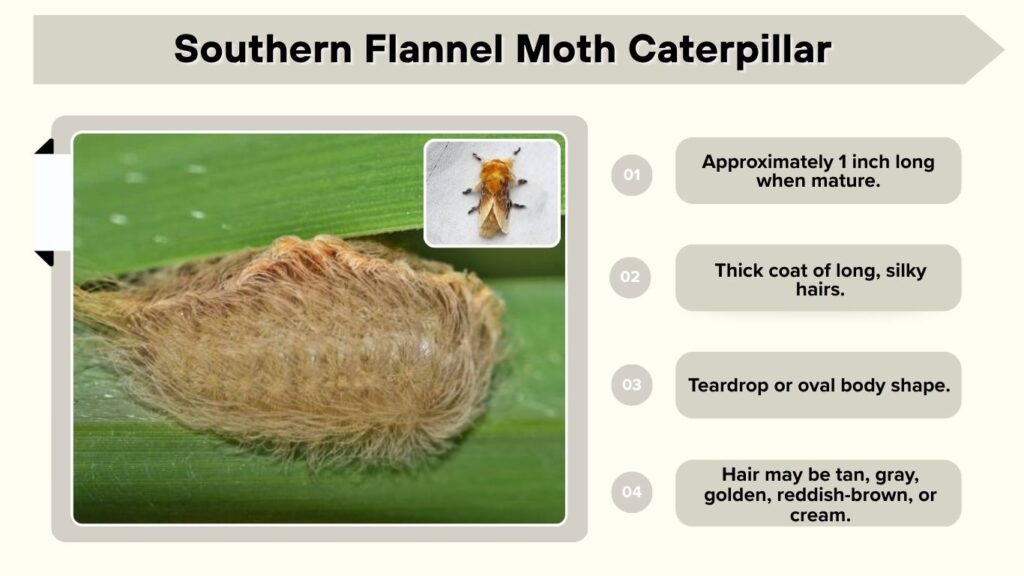
The southern flannel moth caterpillar is far more famous than the adult moth. Known as the puss caterpillar, woolly slug, or asp, it has an unusually dense coat of silky hairs. Its teardrop-like body and soft appearance can make it especially tempting for children to touch, which is dangerous because venomous spines are concealed underneath the outer hairs.
Southern Flannel Moth Caterpillar Identification
Look for these characteristics:
- Approximately 1 inch long when mature
- Thick coat of long, silky hairs
- Teardrop or oval body shape
- Hair may be tan, gray, golden, reddish-brown, or cream
- A tail-like tuft may extend from the rear
- Legs and body are mostly hidden beneath the coat
- Young larvae may appear less densely covered than mature ones
Color alone should never be used for identification because individual caterpillars can vary significantly.
Why Is It Called a Puss Caterpillar?
The caterpillar received the name “puss caterpillar” because its dense fur resembles the soft coat of a cat.
In some areas, particularly Texas and neighboring states, people commonly call it an “asp.” The nickname reflects its reputation for delivering an unexpectedly painful venomous sting.
Despite its soft appearance, touching one is strongly discouraged.
Is the Southern Flannel Moth Poisonous or Venomous?
People frequently describe the southern flannel moth as poisonous, but “venomous” is more accurate when discussing its caterpillar. The larva has hollow or venom-associated spines hidden underneath its long hairs. Physical contact can cause these structures to penetrate the skin and produce an immediate painful reaction. Adults do not have the same dangerous defensive system.
How Dangerous Is the Caterpillar?
A southern flannel moth caterpillar sting may cause:
- Immediate intense burning pain
- Redness around the contact area
- Swelling
- Raised bumps or welts
- Tingling
- Headache
- Nausea in stronger reactions
- Pain spreading beyond the contact site
Reaction severity varies according to the amount of contact, location of the sting, and individual sensitivity.
Can a Southern Flannel Moth Bite?
The caterpillar is not known for biting people as a defensive strategy. What many people describe as a “bite” is actually contact with its venomous spines.
The adult southern flannel moth does not bite or sting people. It is the caterpillar that represents the primary concern.
Southern Flannel Moth Caterpillar Sting Treatment
Contact with a puss caterpillar can be surprisingly painful. The first priority is removing any remaining spines without rubbing them farther into the skin. Symptoms may remain localized, although some people experience stronger reactions that require medical attention.
What to Do After a Sting
- Move away from the caterpillar without touching it again.
- Avoid rubbing or scratching the affected skin.
- Use adhesive tape to gently lift remaining spines from the skin.
- Wash the area carefully with soap and water.
- Apply a cold pack wrapped in cloth to reduce discomfort.
- Monitor the reaction closely.
- Seek medical attention if symptoms become severe.
When to Seek Medical Help
Get prompt medical attention if the person develops difficulty breathing, severe swelling, intense or worsening pain, dizziness, vomiting, or widespread symptoms.
Children should be monitored particularly carefully because their smaller body size and sensitivity can make reactions more concerning.
Anyone with a history of serious allergic reactions should treat unusual systemic symptoms seriously.
Southern Flannel Moth Habitat and Range
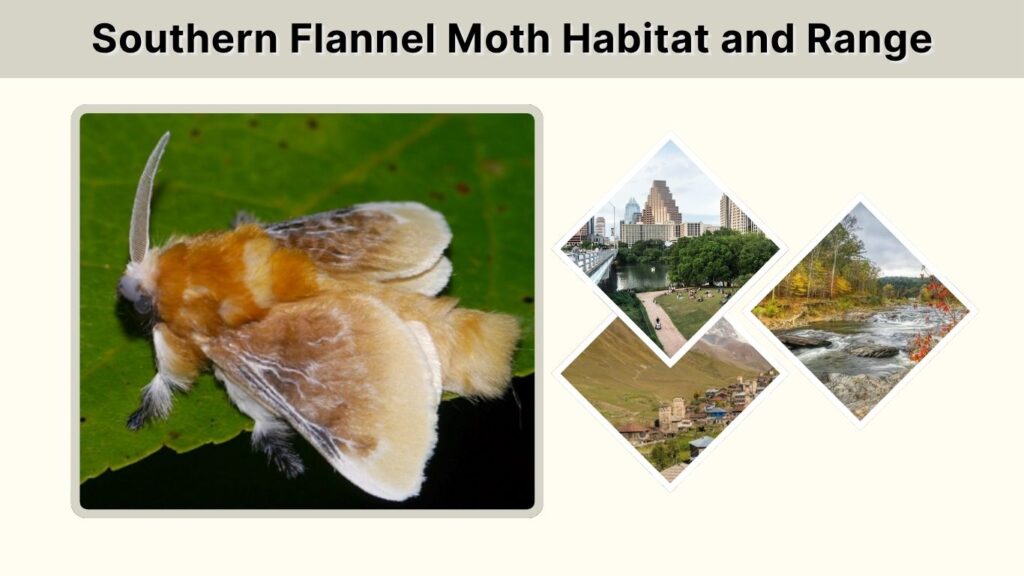
Southern flannel moths favor warm climates where suitable trees and shrubs provide food for developing larvae. They may occur in forests, parks, yards, gardens, school grounds, and residential landscapes. Because their caterpillars feed on several common ornamental and shade trees, encounters with people can occur even in heavily populated neighborhoods.
Where Do Southern Flannel Moths Live?
They are most strongly associated with:
- Texas
- Florida
- Louisiana
- Georgia
- Tennessee
- Oklahoma
- Arkansas
- North Carolina
- Other parts of the southeastern United States
- Mexico and parts of Central America
Occasional records may occur farther outside the core southern range.
Common Caterpillar Habitat
Caterpillars may be found on trees and shrubs in:
- Residential yards
- Parks
- Forest edges
- Gardens
- School grounds
- Urban landscapes
- Wooded neighborhoods
They may also fall from trees or crawl onto fences, outdoor furniture, clothing, and other nearby surfaces.
What Do Southern Flannel Moth Caterpillars Eat?
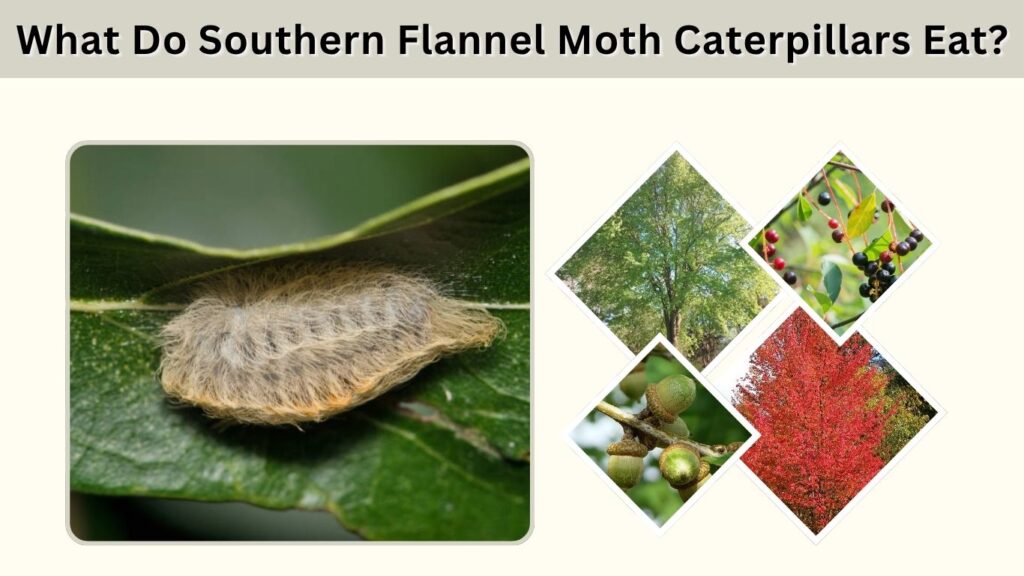
The caterpillar feeds on leaves from a variety of trees and shrubs. Unlike many caterpillars restricted to one narrow host group, southern flannel moth larvae can use several different woody plants. Their broad diet helps explain why they can appear in suburban yards and landscaped areas where multiple suitable host plants are available.
Common Host Plants
Caterpillars may feed on:
- Oak
- Elm
- Hackberry
- Maple
- Sycamore
- Pecan
- Citrus
- Rose
- Other trees and woody shrubs
What Do Adult Southern Flannel Moths Eat?
Adults have a much shorter feeding period than caterpillars and primarily exist to reproduce. Feeding behavior in adult flannel moths is much less conspicuous than larval feeding.
Most of the species’ visible plant damage occurs during the caterpillar stage, when developing larvae consume foliage needed for growth.
Southern Flannel Moth Life Cycle
Like other moths, the southern flannel moth undergoes complete metamorphosis. Its development includes egg, larva, pupa, and adult stages. The caterpillar spends much of its development feeding and growing before creating a protective cocoon. Adults eventually emerge to reproduce and begin the next generation.
Life Cycle Stages
- Egg: Females lay eggs on or near suitable host plants.
- Larva: Caterpillars hatch and feed on leaves while passing through several growth stages.
- Cocoon: Mature larvae create tough cocoons attached to plants or protected surfaces.
- Pupa: Transformation into the adult moth occurs inside the cocoon.
- Adult: Adults emerge, mate, and females eventually lay eggs.
Southern Flannel Moth Cocoon
The cocoon is usually tough and may incorporate silk along with hairs from the caterpillar.
Old cocoons can remain attached to bark, branches, or other surfaces after the adult has emerged. Because caterpillar hairs may remain around pupation sites, unnecessary handling of unidentified fuzzy cocoons should be avoided.
Southern Flannel Moth Predators and Defenses
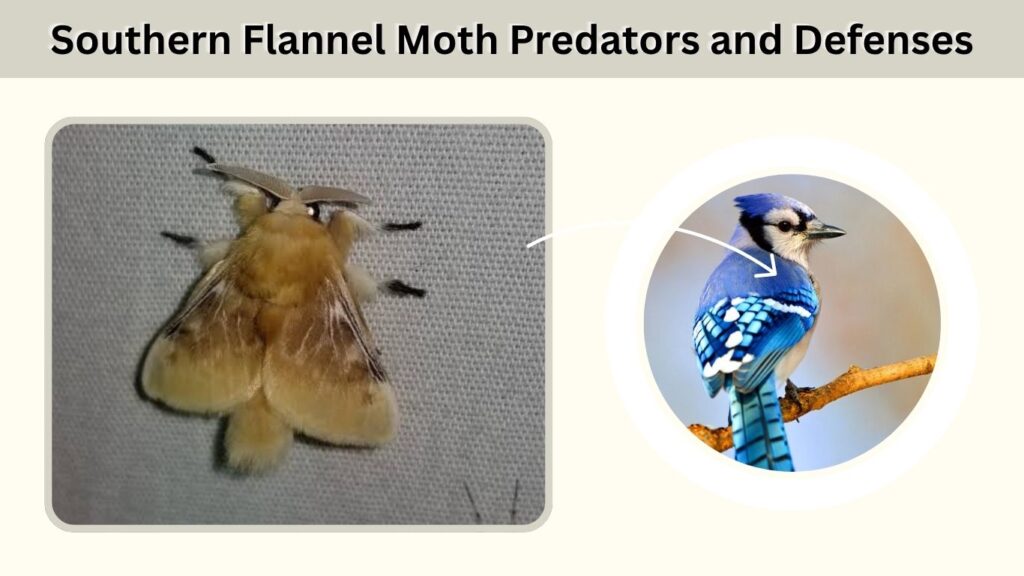
Despite its venomous caterpillar stage, the southern flannel moth remains part of a larger food web. Birds, predatory insects, parasitoids, and other natural enemies can affect caterpillars and pupae. Its dense coat and hidden venomous spines provide an important defense that discourages many predators from attempting to eat it.
Main Defensive Features
- Dense protective coat of hairs
- Venom-associated spines beneath the hairs
- Painful reaction after physical contact
- Camouflage against bark and vegetation
- Protective cocoon during pupation
The caterpillar does not chase or deliberately attack people. Stings are defensive and happen when its body is accidentally touched, pressed, brushed, or handled.
How to Get Rid of Southern Flannel Moth Caterpillars
Finding one caterpillar does not always mean treatment is necessary. However, numerous larvae around frequently used areas can pose a safety concern, particularly where children or pets spend time. Avoid handling caterpillars directly and focus on reducing accidental contact while assessing whether control is actually needed.
Safe Control Tips
- Never remove caterpillars with bare hands.
- Keep children away from infested trees.
- Prevent pets from investigating caterpillars.
- Wear gloves and protective clothing during yard work.
- Carefully remove isolated caterpillars using long tools when necessary.
- Avoid standing directly beneath heavily infested branches.
- Consider professional pest control for large infestations near homes or public areas.
Unnecessary broad pesticide applications should be avoided because they may harm beneficial insects along with the target caterpillars.
FAQs
1. Is the southern flannel moth poisonous?
The adult moth is not considered dangerous to touch. The caterpillar is venomous rather than poisonous because its hidden spines can inject or introduce venom when they penetrate the skin.
2. Does the southern flannel moth sting?
The adult moth does not sting. Its caterpillar, commonly called a puss caterpillar or asp, has venomous spines capable of causing a painful sting-like reaction.
3. Where are southern flannel moth caterpillars found?
They occur mainly in warm parts of the southern and southeastern United States, especially areas such as Texas, Florida, Louisiana, Georgia, and surrounding states.
4. What does a southern flannel moth caterpillar sting feel like?
People often describe immediate intense burning or stinging pain. Redness, swelling, welts, and pain spreading from the original contact area may also occur.
5. Can you touch a southern flannel moth caterpillar?
No. Avoid touching the caterpillar even though it appears soft and furry. Venomous spines hidden beneath the hairs can penetrate skin and cause significant pain.