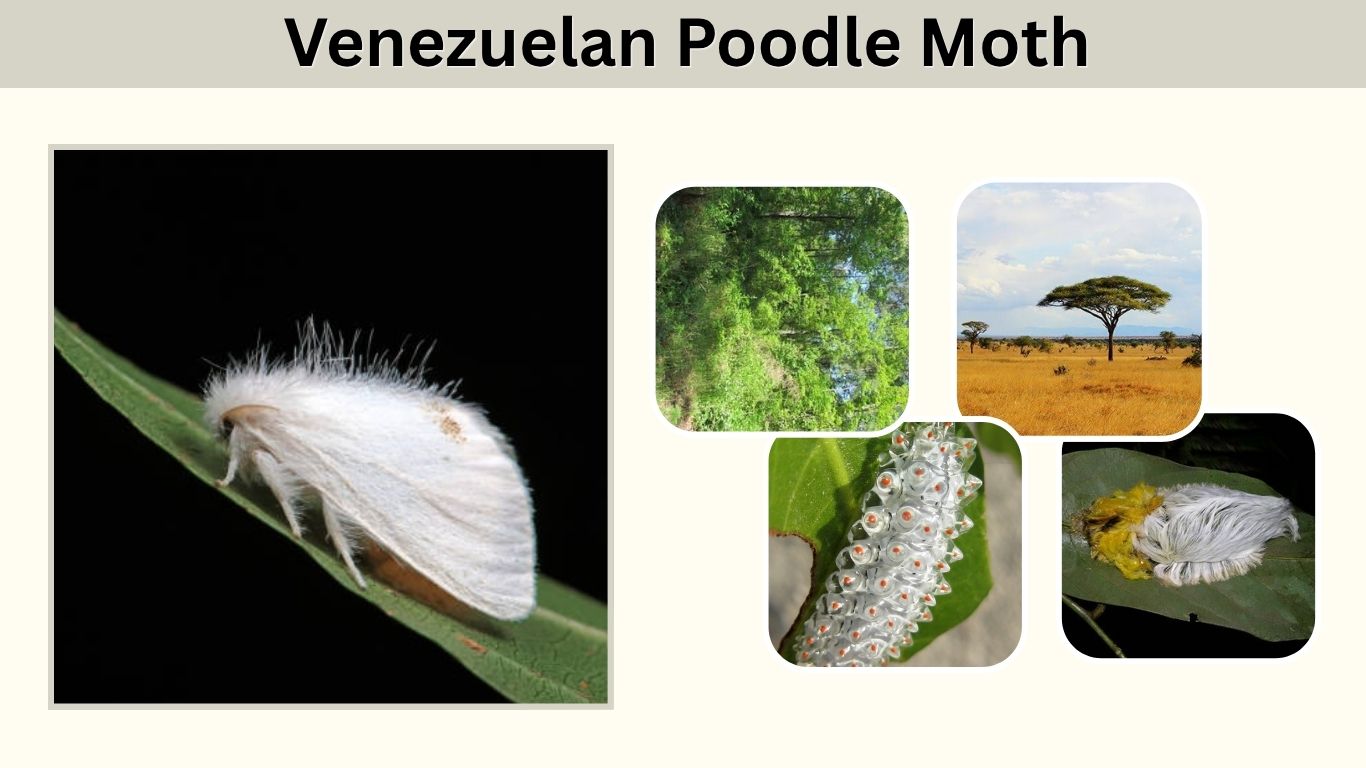
The Venezuelan poodle moth is one of the internet’s most mysterious moths, famous for its fluffy white body, dark eyes, and feather-like antennae. The original moth was photographed in Venezuela in 2009, but scientists have never formally established “Venezuelan poodle moth” as a species name. Its unusual appearance has inspired countless photos, illustrations, and even hoaxes online. Below, we separate what is actually known about this remarkable moth from the many unconfirmed claims surrounding its size, habitat, diet, and life cycle.
What Is the Venezuelan Poodle Moth?
The Venezuelan poodle moth is the informal name given to an unusual white moth photographed by zoologist Arthur Anker during a trip to Venezuela in 2009. The specimen was seen in the Gran Sabana region, associated with Canaima National Park. Its photographs later became widely circulated online because the moth appeared unusually fluffy and almost toy-like. Its precise taxonomic identity remains uncertain.
Quick Facts
- Common name: Venezuelan poodle moth
- Animal group: Moth
- Order: Lepidoptera
- Possible family: Lasiocampidae
- Possible genus: Artace
- Discovery/photo date: 2009
- Location: Gran Sabana region of Venezuela
- Scientific species name: Not confirmed
- Exact size: Not reliably documented
- Diet: Unknown
- Lifespan: Unknown
- Danger to humans: No evidence that the photographed moth is dangerous
Anker reportedly considered the moth possibly related to the genus Artace, with Artace cribraria mentioned as a comparison rather than a confirmed identification.
Is the Venezuelan Poodle Moth Real?
Yes, the moth shown in Arthur Anker’s original photographs is real. What is misleading is the way the name is sometimes presented online. “Venezuelan poodle moth” is a popular nickname rather than a formally established scientific species name. Numerous unrelated fluffy moth photographs have also been labeled as Venezuelan poodle moths, creating considerable confusion.
Why People Think It Is a Hoax
The moth looks unusually cute and mammal-like, so many viewers assume its photographs were digitally created. Its fluffy scales, large-looking dark eyes, and feathered antennae can make it resemble a miniature fantasy creature.
However, the original photographs existed before today’s widespread AI-generated animal imagery became common. The uncertainty concerns which species the moth belongs to, rather than whether Arthur Anker actually photographed a moth.
Are All Venezuelan Poodle Moth Photos Real?
No. Many images appearing under this name depict other moth species, artistic recreations, manipulated photographs, or AI-generated creatures.
This is especially important when looking at extremely fluffy white or pink moths with exaggerated eyes, ears, paws, or mammal-like faces. Those images should not automatically be treated as photographs of Anker’s Venezuelan moth.
Venezuelan Poodle Moth Identification
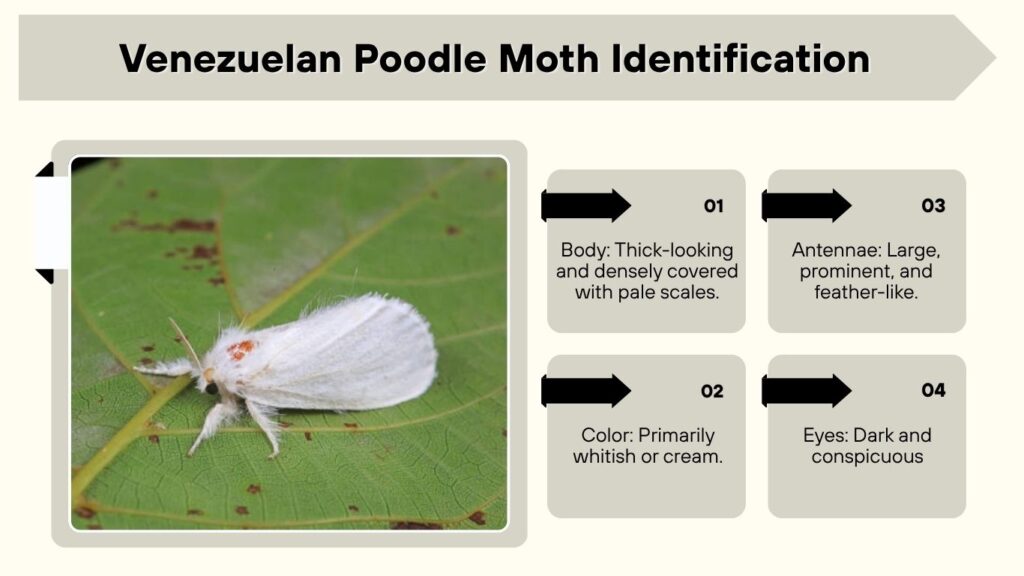
The moth became famous primarily because of its unusual physical appearance. Its body is covered in pale, hair-like scales, while its conspicuous antennae contribute strongly to its distinctive look. Because there is no formally described species tied conclusively to the nickname, identification should be based primarily on the original photographed animal rather than viral artwork.
What Does a Venezuelan Poodle Moth Look Like?
- Body: Thick-looking and densely covered with pale scales
- Color: Primarily whitish or cream
- Antennae: Large, prominent, and feather-like
- Eyes: Dark and conspicuous
- Legs: Pale and noticeably hairy
- Wings: Light-colored and less dramatically fluffy than the body
- Overall appearance: Compact, fuzzy, and somewhat poodle-like
Feathery antennae occur in many moths and are particularly useful for detecting chemical signals in the environment.
Is There a Pink Venezuelan Poodle Moth?
There is no reliable evidence establishing a naturally pink form as the same mysterious moth photographed in Venezuela. Images labeled “pink Venezuelan poodle moth” commonly circulate online, but color alone cannot establish that they represent this unidentified Venezuelan animal.
Venezuelan Poodle Moth Size
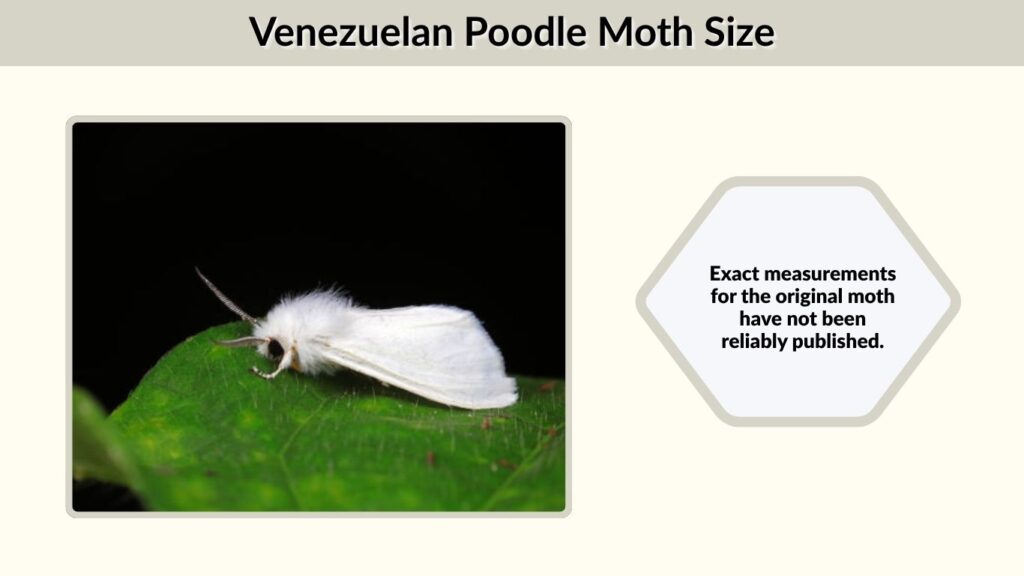
Exact measurements for the original moth have not been reliably published. Consequently, claims giving an exact body length, wingspan, or weight should be treated cautiously. The photograph itself does not provide enough standardized scale information to calculate precise dimensions.
How Big Is a Venezuelan Poodle Moth?
Some websites provide specific measurements, but there is no formally described specimen associated with the popular name from which a dependable standard size can be established.
It is therefore more accurate to say that the exact Venezuelan poodle moth size remains unknown.
What About Its Wings?
The original photographs show normally structured moth wings covered with pale scales. Their appearance is much less exaggerated than in many viral illustrations.
Without a collected and formally measured specimen, however, an authoritative wingspan cannot be assigned to the moth simply from online photographs.
Venezuelan Poodle Moth Habitat
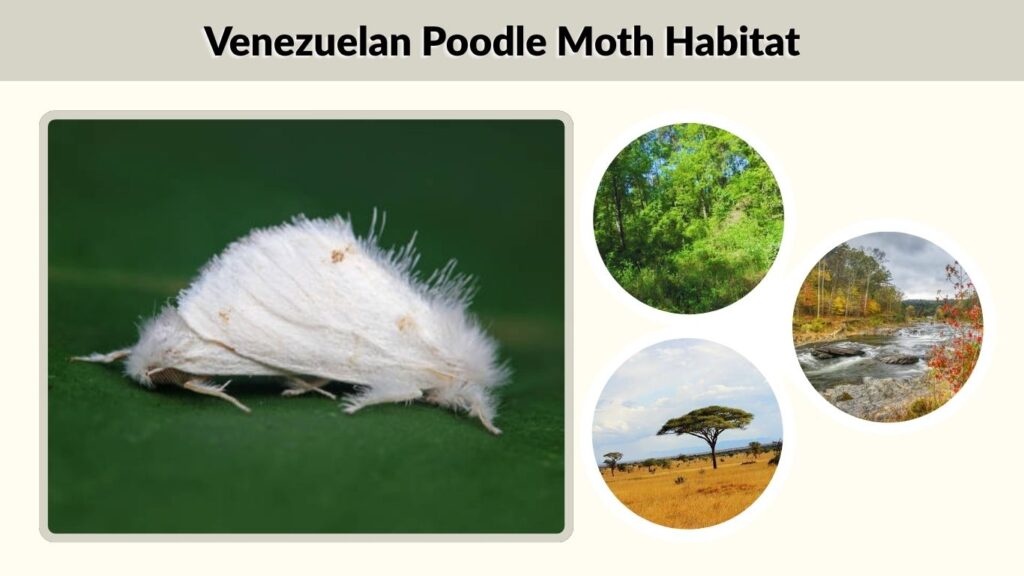
The strongest location information comes from Anker’s 2009 photographs in Venezuela’s Gran Sabana, connected with the Canaima National Park region. Beyond that observation, there is not enough published information to define the animal’s complete geographic range or preferred microhabitat.
Where Does the Venezuelan Poodle Moth Live?
The original moth was photographed in Venezuela, in the tropical Gran Sabana landscape.
It is frequently described as living in Venezuelan tropical forests, but a single photographic observation cannot tell researchers whether the moth occupies forests, savannas, forest edges, or several habitat types across a larger range.
Is It Found Only in Venezuela?
That remains unknown.
Because its species identity has not been conclusively determined, scientists cannot confidently map its distribution. If the moth eventually proves to belong to an already-known species, its geographic range could potentially extend beyond the location where it was photographed.
Diet, Caterpillar, and Life Cycle
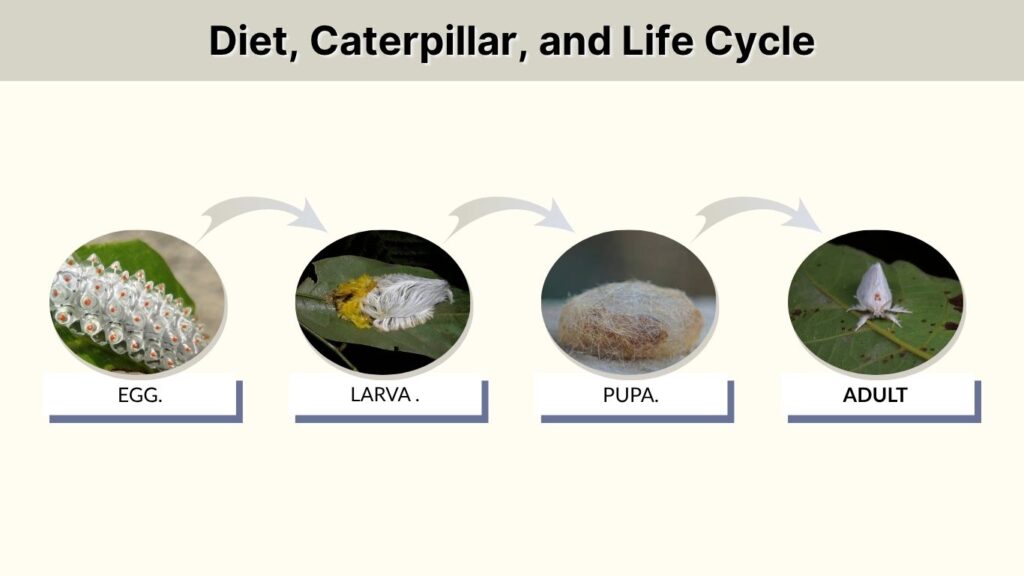
Very little can safely be said about the biology of the Venezuelan poodle moth itself. Because researchers do not have a confirmed species identity associated with the nickname, details about its larval host plants, caterpillar appearance, reproduction, eggs, adult feeding behavior, and development remain largely undocumented.
What Does the Venezuelan Poodle Moth Eat?
Its specific diet is unknown.
Moth diets vary considerably. Many caterpillars eat leaves or other plant material, while adult moth feeding behavior differs by species. Without identifying the Venezuelan poodle moth conclusively, assigning particular flowers, leaves, fruits, or other foods to it would be speculation.
What Does Its Caterpillar Look Like?
No caterpillar has been conclusively linked to the original photographed moth.
Pictures labeled “Venezuelan poodle moth caterpillar” therefore should not automatically be accepted as its larvae. Scientists would need a confirmed taxonomic identification or documented rearing from caterpillar to adult before making that connection.
Venezuelan Poodle Moth Life Cycle
Like other moths, the animal would undergo complete metamorphosis:
- Egg
- Larva or caterpillar
- Pupa
- Adult moth
However, the duration and appearance of each stage specifically for the Venezuelan poodle moth have not been documented.
Venezuelan Poodle Moth Facts: Known vs. Unknown
Much of the fascination surrounding this moth comes from how little scientists actually know about it. Separating confirmed observations from speculation helps prevent internet myths from becoming accepted as biological facts.
What We Know
- A distinctive pale moth was photographed in Venezuela in 2009.
- Arthur Anker took the widely circulated original photographs.
- The observation came from the Gran Sabana/Canaima region.
- The moth has conspicuous feathery antennae and dense pale scales.
- Experts have suggested a possible relationship with Artace moths.
What Remains Unknown
- Its exact species
- A confirmed scientific species name
- Exact body size
- Exact wingspan
- Larval host plants
- Adult diet
- Caterpillar appearance
- Lifespan
- Predators
- Complete geographic distribution
- Population size
- Conservation status
Are Venezuelan Poodle Moths Dangerous?
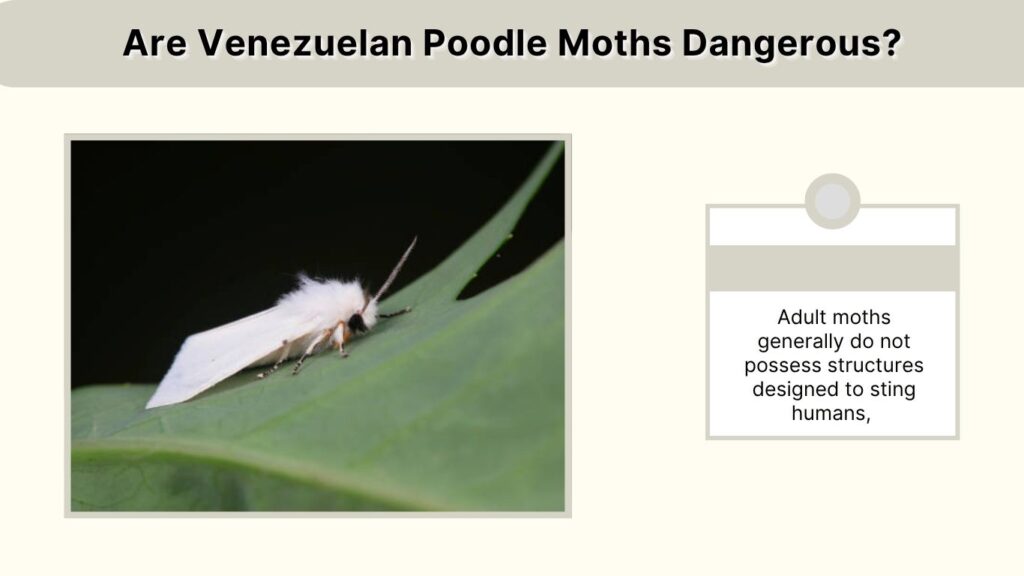
There is no credible evidence that the photographed adult moth represents a dangerous or poisonous animal. Adult moths generally do not possess structures designed to sting humans, and nothing documented about this particular moth indicates otherwise.
Can a Venezuelan Poodle Moth Bite?
There is no evidence showing that it poses a biting threat to people.
Because the moth’s exact identity is unresolved, it is better to avoid absolute claims about every aspect of its biology. Still, there is currently no reason to regard the photographed adult as a dangerous moth.
Is It Poisonous?
No evidence has established the Venezuelan poodle moth as poisonous or venomous.
Confusion may occur because the caterpillars of some unrelated moth species possess irritating or venomous hairs. No such caterpillar has been confirmed for the Venezuelan poodle moth.
Can You Buy or Keep a Venezuelan Poodle Moth as a Pet?
There is no established legitimate pet trade for a scientifically confirmed species called the Venezuelan poodle moth. Advertisements offering live moths, eggs, or caterpillars under this name should therefore be approached carefully.
Venezuelan Poodle Moth for Sale
Because the animal has not been conclusively identified as a distinct species, sellers cannot easily demonstrate that an insect being offered is genuinely the same moth photographed in Venezuela.
Most products sold under the name are more likely to be plush toys, artwork, models, or merchandise rather than verified live specimens.
Is It Endangered?
Its conservation status cannot currently be reliably determined. Scientists would first need to establish exactly what species it is and understand its distribution and population before assessing whether it is rare, threatened, or common.
FAQs
1. Is the Venezuelan poodle moth real?
Yes. Arthur Anker photographed the real moth in Venezuela in 2009. However, its popular name is not a formally confirmed scientific species name.
2. What is the scientific name of the Venezuelan poodle moth?
It does not have a confirmed species-level scientific name associated with the nickname. It has been suggested that the moth may be related to the genus Artace.
3. How big is a Venezuelan poodle moth?
Its exact size has not been reliably documented. Specific measurements commonly repeated online should therefore be treated as estimates rather than established facts.
4. Where does the Venezuelan poodle moth live?
The famous specimen was photographed in the Gran Sabana region of Venezuela, associated with Canaima National Park. Its full geographic distribution remains unknown.
5. What does the Venezuelan poodle moth eat?
Its specific diet is unknown because its exact species has not been conclusively identified and its feeding biology has not been documented.